LLM
1.9K posts



This Spectator piece reads like gossip until you realize it’s actually a warning. A senior English barrister takes a real appeal he spent a day and a half writing, feeds it to an AI model, and gets back something better in 30 seconds. It matched the standard of the very best barristers, and it did it instantly, for pennies. That’s the moment the illusion breaks. Law has always sold itself as irreplaceable because it’s complex, nuanced, and human. But most of the value in modern legal work isn’t wisdom. It’s pattern recognition, structure, precedent matching, argument assembly, and risk framing. That’s exactly the territory AI eats first. The scary part isn’t that AI can draft contracts or scan case law. That’s already obvious. The scary part is that once the output quality crosses a threshold, the pricing logic collapses. Clients don’t care how many years it took you to become a barrister if the document they receive is objectively worse than something generated in seconds. So the profession reaches for comfort stories. “AI is just a tool.” “There will always be a human in the loop.” “Judges and clients want a human face.” Those are emotional arguments, not economic ones. And economics always wins. The barrister in the piece understands something most of his peers don’t want to admit. Law isn’t protected by status or tradition. It’s protected by cost and friction. Once those disappear, so does the moat. The first to go are process lawyers. Then drafting specialists. Then advisory roles with no client relationship. Eventually people start asking why they’re paying six figures for a human to read out arguments an AI already wrote better. What makes this explosive isn’t just unemployment. It’s who lawyers are in society. They sit at the top of institutions. They write rules. They shape policy. They’re used to being indispensable. Replacing them doesn’t just disrupt jobs. It destabilizes power. That’s why the resistance will be fierce. There will be calls to ban AI. To regulate it out of courtrooms. To slow it down. But you can’t regulate away a cost advantage that large. The most honest line in the whole piece is the advice to his niece. Don’t take on decades of debt for a career whose core value has already been automated. Not in twenty years. Now. This isn’t anti law. It’s anti denial. AI isn’t coming for lawyers because it hates them. It’s coming because much of what they do turned out to be legible, compressible, and cheap. And once that happens, respect doesn’t save you. Only reality does.
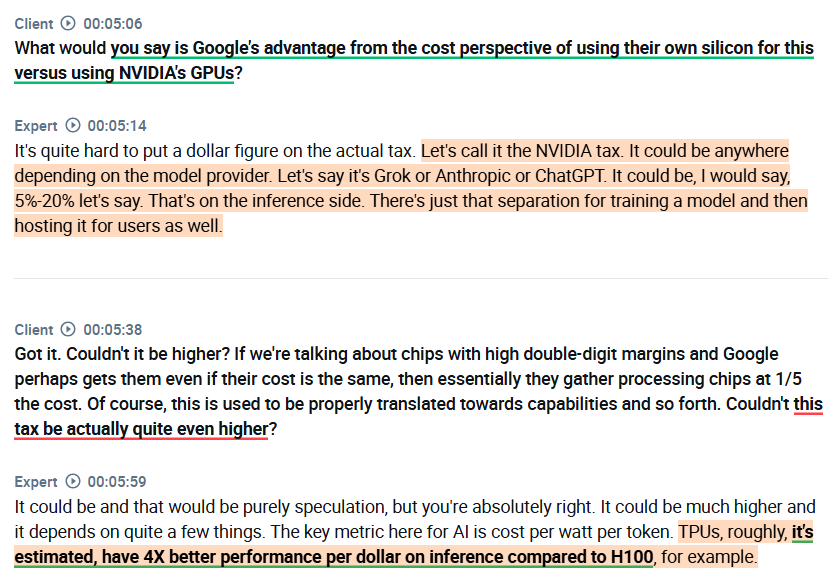
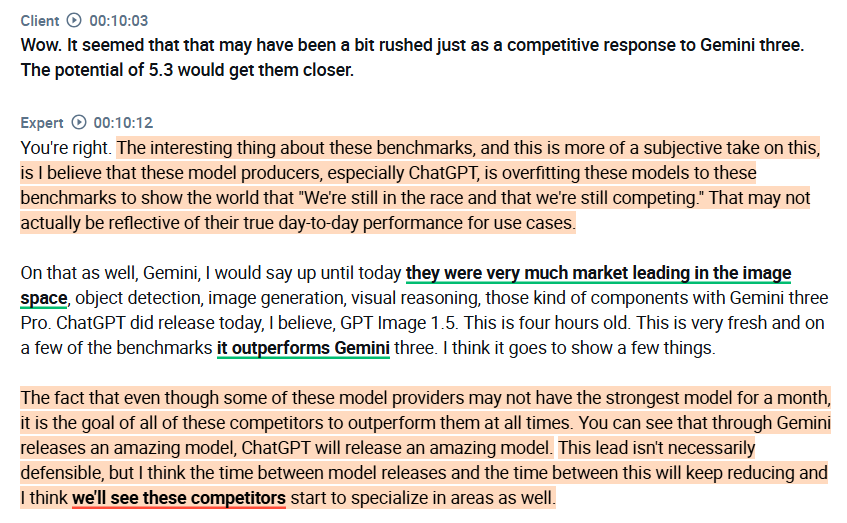
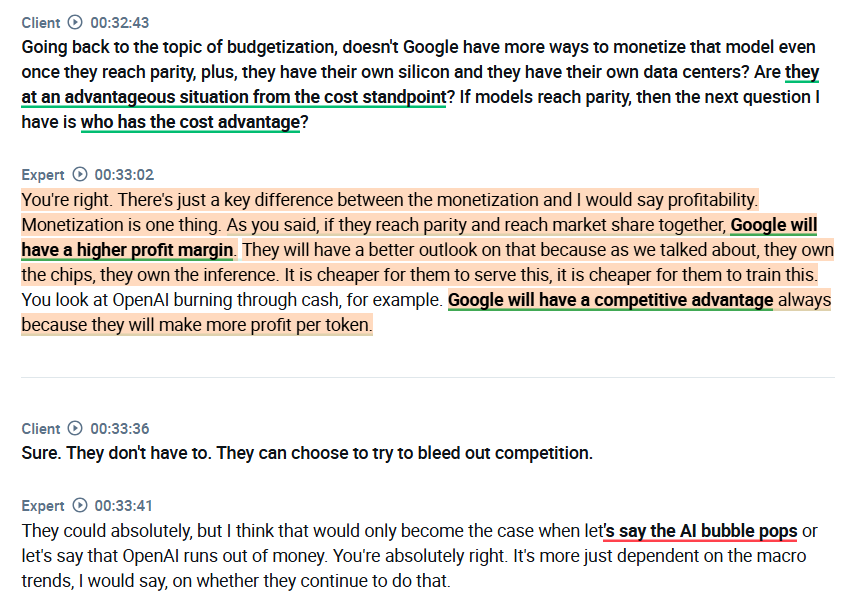
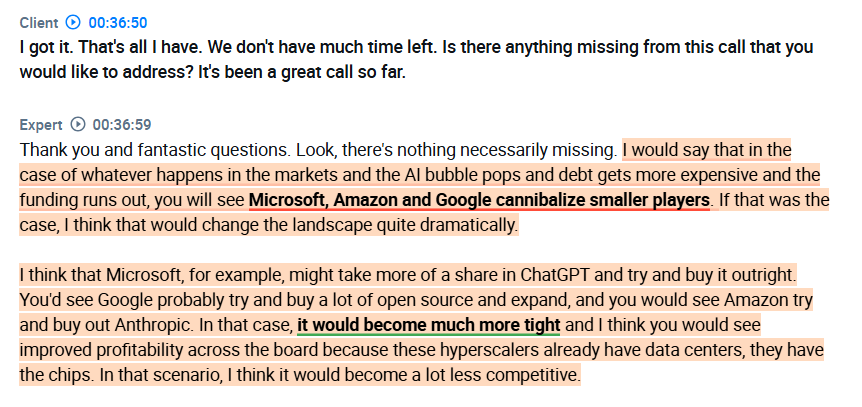

AI race is now infrastructure, because compute, power, and space decide who can scale. Earlier waves could win by better model algorithms, but now many teams hit limits in graphics processing units (GPUs) or application-specific integrated circuits (ASICs), data center (DC) power, and rack-ready sites. This has led to the explosive growth of the AI data center chip market (estimated to reach $286 billion by 2030 and over $1T of global DC capital expenditure (capex) by 2029 at 21% compound annual growth rate (CAGR), plus about 50GW of new capacity, so perf/$ and perf/TCO (total cost of ownership) become the deciding metrics. The tightest choke point is often power, with 2.3% North American colocation vacancy and only 850MW added year-to-date in Europe, Middle East, and Africa (EMEA), which pushes performance per watt and liquid cooling. --- forbes .com/councils/forbestechcouncil/2025/12/19/the-real-ai-battleground-infrastructure-not-algorithms/




Do GenAI-created ad creatives outperform those crafted by humans? A new paper from researchers at NYU and Emory investigates that question and finds that GenAI-created ads see 19% higher click-through rates than human-created ads. The study uses a field experiment conducted through Google Display advertising campaigns and a lab study in which participants are asked to rate their purchase intent when exposed to GenAI or human-crafted ad creatives. In both settings, the authors of the paper find that ads created entirely by Generative AI outperform ads that 1) are entirely created by humans and 2) are created by humans but modified by Generative AI. Further, the authors find that allowing Generative AI to influence the representation of product packaging also improves creative performance. The authors conclude that removing creative constraints from Generative AI tools allows them to produce ad creatives that perform better than when conditions or limitations are imposed. However, the authors find that *disclosing* the use of Generative AI in ad production reduces ad effectiveness by ~32%, which poses consequential considerations for how to communicate the provenance of ad creative. Full link to the paper below. Additionally: I interviewed two of the paper's authors today for a podcast episode that will go live on Wednesday!









Career Update: After almost four memorable years, I moved on from Apple last week, closing an unforgettable chapter of my professional journey. I’m sincerely grateful for the opportunities to work on so many amazing projects and products across the company. Though many of them are not public yet (wait for the surprise!), I feel greatly honored to experience, learn and grow from IC to tech lead, from engineering to research, from larger engineering teams to early product incubation and prototyping. Each role has offered me invaluable unique lessons. Above all, my deepest gratitude goes to my colleagues, mentors and friends who made this journey truly unparalleled and meaningful. I’ll miss you all. New Chapter: I’m joining Tesla Optimus AI team to work on humanoid robots. Humanoids are the ultimate dream of our generation. With the recent breakthrough of LLMs and Physical AI, this dream is finally within reach and it’s on us to make it come true. Tesla has the right combination of software, hardware and AI talents to make it happen - I was totally blown away by the scale and sophistication of the Optimus lab and deep dedication of people when I got to visit the office. My first week was already so much fun and exciting: flat team structure, spontaneous deep technical discussions, direct communications across levels, hardcore building and crazy ideas with super fast iterations. You can feel the energy to change the world here. I really like it so far.