mambo

1.3K posts

mambo

mambo

@madmambo1

what is the greatest sentence ever written? #bitcon #ethereum #cryptocurrency #libertarian #innovation #longevity

Katılım Şubat 2022
1.1K Takip Edilen78 Takipçiler
mambo retweetledi
Mgoes (bio/acc 🤖💉)
Mgoes (bio/acc 🤖💉)@m_goes_distance·
biotech has got insane velocity in 2026 here's what just crossed the line from mice to humans: - Life Biosciences enrolled first humans in epigenetic reprogramming trial - Sinclair's life work, in people, now - Azalea (Doudna's lab) first human success with in vivo CAR-T, the engineering happens inside your body, no extraction required - baby KJ, first personalized in-body CRISPR edit ever, 7 months from diagnosis to functional cure - Kyverna's CAR-T put lupus into drug-free remission, filing for first ever autoimmune CAR-T approval - pig kidneys with 69 gene edits kept a man off dialysis 271 days, FDA cleared 30-patient trial - Retro Bio (Sam Altman-backed) dosed first human with RTR242, targets Alzheimer's and aging at the cellular root - GLP-1s confirmed as first true longevity drugs in humans, reduces mortality, protects the brain, slows kidney aging, all in the same molecule - Insilico's AI-designed drug hit Phase II for fibrosis with positive efficacy, first AI-discovered molecule to work in humans - Compass crushed Phase III for psilocybin in treatment-resistant depression, 50 years of regulatory hell, done - rapamycin PEARL trial showed measurable healthspan improvements, the longevity drug finally has human data slowly, then sudden bio/acc
English
32
121
770
131.8K
mambo retweetledi
Riley Brown
Riley Brown@rileybrown·
No sorry you can’t invest in OpenAI, you’re not an accredited investor. But you can bet all your money on what the OPENAI valuation will be on @Polymarket. It’s safer this way for you.
English
64
224
6.5K
322.1K
mambo
mambo@madmambo1·
@iampaulgrewal Even lawers are now announcing the announcement 🤣👊🏼
English
0
0
1
1K
Paul Grewal
Paul Grewal@iampaulgrewal·
It’s gonna be a good day.
GIF
English
152
112
885
178.7K
mambo retweetledi
OpenAI
OpenAI@OpenAI·
Today, we closed our latest funding round with $122 billion in committed capital at an $852B post-money valuation. The fastest way to expand AI’s benefits is to put useful intelligence in people’s hands early and let access compound globally. This funding gives us resources to lead at scale. openai.com/index/accelera…
English
1.1K
744
8.4K
3.7M
mambo retweetledi
David Tso (dave.base.eth)
David Tso (dave.base.eth)@davidtsocy·
Oh, you think crypto doesn’t have real use cases? - Trade 24/7, no market close - Send $1M globally in 2 seconds - Earn 5% on savings vs 0.01% at banks - Build apps that can’t be shut down - Crowdfund without intermediaries - Enable AI agents to transact Hope this helps
English
100
45
341
36.9K
Watcher.Guru
Watcher.Guru@WatcherGuru·
JUST IN: Warren Buffett says he sold Apple $AAPL "too soon."
Watcher.Guru tweet mediaWatcher.Guru tweet media
English
406
331
4.9K
265.1K
mambo retweetledi
Justin Drake
Justin Drake@drakefjustin·
Today is a monumentous day for quantum computing and cryptography. Two breakthrough papers just landed (links in next tweet). Both papers improve Shor's algorithm, infamous for cracking RSA and elliptic curve cryptography. The two results compound, optimising separate layers of the quantum stack. The results are shocking. I expect a narrative shift and a further R&D boost toward post-quantum cryptography. The first paper is by Google Quantum AI. They tackle the (logical) Shor algorithm, tailoring it to crack Bitcoin and Ethereum signatures. The algorithm runs on ~1K logical qubits for the 256-bit elliptic curve secp256k1. Due to the low circuit depth, a fast superconducting computer would recover private keys in minutes. I'm grateful to have joined as a late paper co-author, in large part for the chance to interact with experts and the alpha gleaned from internal discussions. The second paper is by a stealthy startup called Oratomic, with ex-Google and prominent Caltech faculty. Their starting point is Google's improvements to the logical quantum circuit. They then apply improvements at the physical layer, with tricks specific to neutral atom quantum computers. The result estimates that 26,000 atomic qubits are sufficient to break 256-bit elliptic curve signatures. This would be roughly a 40x improvement in physical qubit count over previous state-of-the-art. On the flip side, a single Shor run would take ~10 days due to the relatively slow speed of neutral atoms. Below are my key takeaways. As a disclaimer, I am not a quantum expert. Time is needed for the results to be properly vetted. Based on my interactions with the team, I have faith the Google Quantum AI results are conservative. The Oratomic paper is much harder for me to assess, especially because of the use of more exotic qLDPC codes. I will take it with a grain of salt until the dust settles. → q-day: My confidence in q-day by 2032 has shot up significantly. IMO there's at least a 10% chance that by 2032 a quantum computer recovers a secp256k1 ECDSA private key from an exposed public key. While a cryptographically-relevant quantum computer (CRQC) before 2030 still feels unlikely, now is undoubtedly the time to start preparing. → censorship: The Google paper uses a zero-knowledge (ZK) proof to demonstrate the algorithm's existence without leaking actual optimisations. From now on, assume state-of-the-art algorithms will be censored. There may be self-censorship for moral or commercial reasons, or because of government pressure. A blackout in academic publications would be a tell-tale sign. → cracking time: A superconducting quantum computer, the type Google is building, could crack keys in minutes. This is because the optimised quantum circuit is just 100M Toffoli gates, which is surprisingly shallow. (Toffoli gates are hard because they require production of so-called "magic states".) Toffoli gates would consume ~10 microseconds on a superconducting platform, totalling ~1,000 sec of Shor runtime. → latency optimisations: Two latency optimisations bring key cracking time to single-digit minutes. The first parallelises computation across quantum devices. The second involves feeding the pubkey to the quantum computer mid-flight, after a generic setup phase. → fast- and slow-clock: At first approximation there are two families of quantum computers. The fast-clock flavour, which includes superconducting and photonic architectures, runs at roughly 100 kHz. The slow-clock flavour, which includes trapped ion and neutral atom architectures, runs roughly 1,000x slower (~100 Hz, or ~1 week to crack a single key). → qubit count: The size-optimised variant of the algorithm runs on 1,200 logical qubits. On a superconducting computer with surface code error correction that's roughly 500K physical qubits, a 400:1 physical-to-logical ratio. The surface code is conservative, assuming only four-way nearest-neighbour grid connectivity. It was demonstrated last year by Google on a real quantum computer. → future gains: Low-hanging fruit is still being picked, with at least one of the Google optimisations resulting from a surprisingly simple observation. Interestingly, AI was not (yet!) tasked to find optimisations. This was also the first time authors such as Craig Gidney attacked elliptic curves (as opposed to RSA). Shor logical qubit count could plausibly go under 1K soonish. → error correction: The physical-to-logical ratio for superconducting computers could go under 100:1. For superconducting computers that would be mean ~100K physical qubits for a CRQC, two orders of magnitude away from state of the art. Neutral atoms quantum computers are amenable to error correcting codes other than the surface code. While much slower to run, they can bring down the physical to logical qubit ratio closer to 10:1. → Bitcoin PoW: Commercially-viable Bitcoin PoW via Grover's algorithm is not happening any time soon. We're talking decades, possibly centuries away. This observation should help focus the discussion on ECDSA and Schnorr. (Side note: as unofficial Bitcoin security researcher, I still believe Bitcoin PoW is cooked due to the dwindling security budget.) → team quality: The folks at Google Quantum AI are the real deal. Craig Gidney (@CraigGidney) is arguably the world's top quantum circuit optimisooor. Just last year he squeezed 10x out of Shor for RSA, bringing the physical qubit count down from 10M to 1M. Special thanks to the Google team for patiently answering all my newb questions with detailed, fact-based answers. I was expecting some hype, but found none.
English
330
1.2K
5.8K
1.5M
mambo retweetledi
Philip Johnston
Philip Johnston@PhilipJohnston·
I am super excited to share that @Starcloud_ has raised a $170M Series A at a $1.1bn valuation to fuel our development of data centers in space 🚀 The round comes after the successful deployment of our first satellite, Starcould-1, a few months ago, which had the first @NVIDIA H100 on board and was the first to train an LLM in space. The funds will be used to develop our third satellite, which aims to be cost-competitive with Earth-based data centers in terms of AI inference cost. The round was led by @Benchmark and @EQT Ventures, and we are excited to welcome Benchmark GP, @Chetanp Puttagunta, to our board. We are also excited to welcome other new investors, including the world's largest infrastructure fund, @Macquarie Capital, @SevenSevenSix 7️⃣7️⃣6️⃣, Manhattan West, Adjacent, Carya, GSBackers, and Harpoon. We are very grateful for the continued support of existing investors, including @NFX@NebularVC@YCombinator@FUSE_VC@Soma_Capital, 3Capital Partners, Wyld VC, Tiny VC, and Taurus Ventures. Onwards!
Philip Johnston tweet media
English
222
169
1.8K
458.6K
mambo retweetledi
Coinbase 🛡️
Coinbase 🛡️@coinbase·
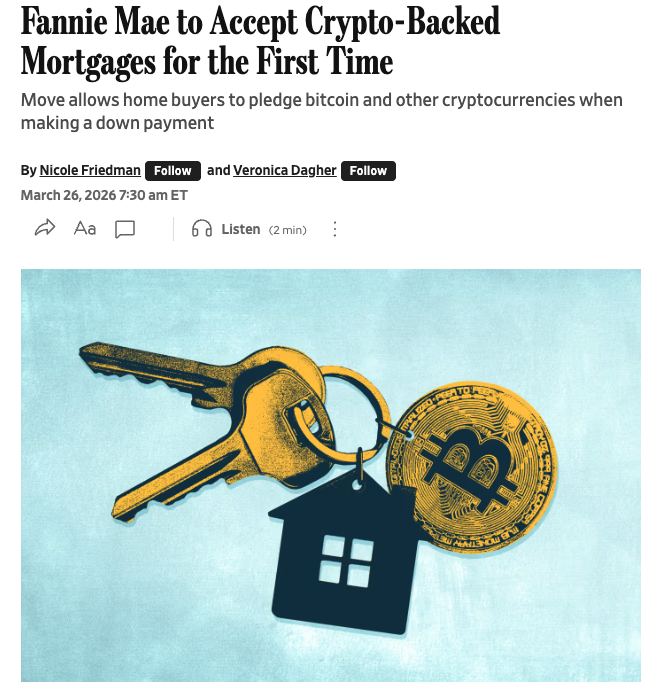
Get your house and keep your crypto. Crypto-backed mortgages are here - increasing access to homeownership for millions of Americans. Buy a home without converting your portfolio by using BTC or USDC as collateral for your down payment. Offered by Better, powered by Coinbase.
Coinbase 🛡️ tweet media
English
540
748
3.6K
1.7M
mambo retweetledi
TylerD 🧙‍♂️
TylerD 🧙‍♂️@Tyler_Did_It·
Just In: Fannie Mae to accept crypto-backed mortgages for the first time Coinbase Global is working with Better Home & Finance on the initiative to allow home buyers to use crypto holdings as collateral vs having to sell them for a cash down payment
TylerD 🧙‍♂️ tweet media
English
14
3
63
4.6K
mambo
mambo@madmambo1·
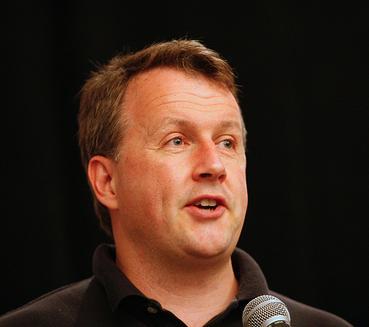
@paulg @garrytan since you are answering questions, may I ask what you think is the most important sentence ever written?
English
0
0
1
10
Paul Graham
Paul Graham@paulg·
Someone asked what advice founders ignore. That they: 1. Should change their name. 2. Should launch fast. 3. Shouldn't treat fundraising as success. 4. Shouldn't assume they can raise because it's time to. 5. Should fire bad people quickly. 6. Shouldn't talk to acquirers.
English
315
241
4.2K
914.8K
mambo
mambo@madmambo1·
@Timccopeland seems like it's working... Everyone's talking about it 🤷
English
0
0
0
255
Tim Copeland
Tim Copeland@Timccopeland·
i honestly can't stop looking at this photo > why is matt rife in it? > why is kuo wearing two ties? > why did they give danny a crotch shot after he told them his trousers have a crotch hole? > why is cathie looking away? > why is novo wearing no underwear? > why is meltem's arm straight? > what is kuo worried about? > is novo drinking whisky or coke? > do any of them like each other? > imagine walking into a side event and you see this
Tim Copeland tweet media
English
26
2
173
21.4K
mambo
mambo@madmambo1·
'ambiguous liberty is superior to clearly defined oppression'
Erik Voorhees@ErikVoorhees

Prior administration's SEC (both under Biden and under Trump before) destroyed tens (arguably hundreds) of billions of dollars in value, punishing consenting adults for making their own financial decisions, in what is allegedly a free country that allegedly permits and encourages entrepreneurship, risk taking, and individual responsibility. The consequence of Gensler's SEC was, most obviously, a substantial reduction in entrepreneurs' willingness to attempt token designs of authentic utility. The flourishing of utility tokens post EVM (2016-2018) came to an end under fear of persecution. In its place, an era of memecoins and even greater scams that went entirely unprosecuted until post-collapse, like FTX. "If you try to build something of utility, we will ruin your life. If you make dog meme, no prob. If you steal $10b in customer money outright, we'll ask you for input on upcoming bills in DC so long as you donate some of it to our campaigns." The current SEC is materially better. Today's guidance is good, not because it is "clear" (ambiguous liberty is superior to clearly defined oppression), but because it recognizes limits on its own power; because the scope of tyranny over an allegedly free people is lessened. Importantly, what's new here is correct exclusions from security-definition of both "Digital Collectibles" and "Digital Tools". The latter aka utility tokens, so often persecuted under Gensler's regime. Digital Collectibles and Digital Tools are each massive categories. Huge, open territory for innovators to once again explore. To the current SEC, thank you for improving toward the ideals of what makes America good. I encourage anyone who was persecuted by the prior agency to post anything you feel comfortable sharing in the comments.

English
0
0
0
5
mambo retweetledi
JulianSaks
JulianSaks@JulianSaks·
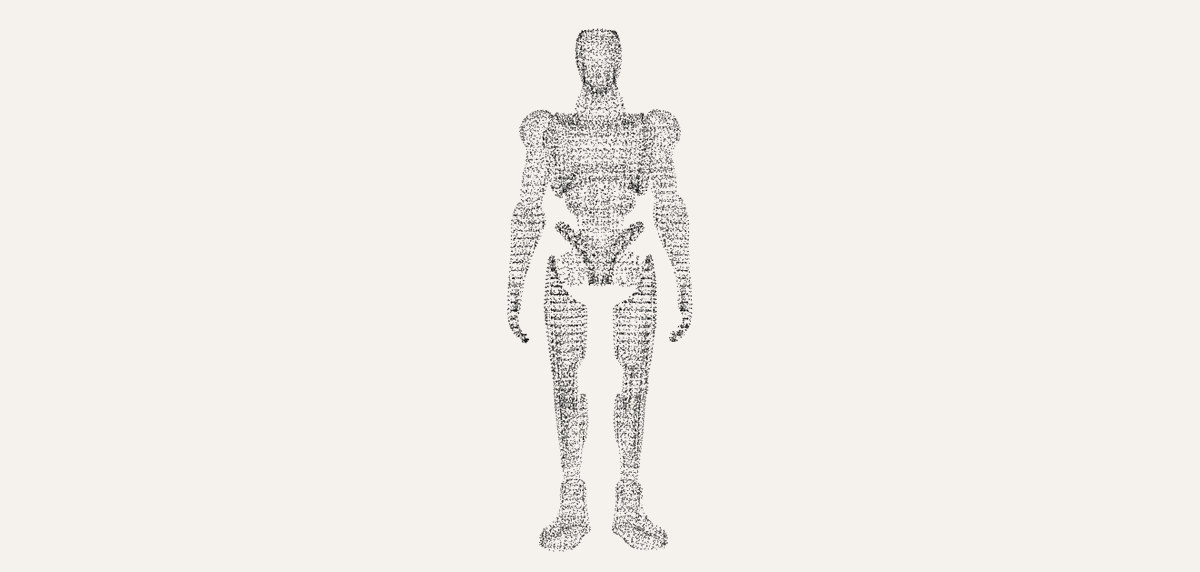
Introducing Humanoid Atlas, the Bloomberg Terminal for humanoids. Every OEM, every supplier, every dependency humanoids.fyi
JulianSaks tweet media
English
80
194
1.3K
238.1K
mambo
mambo@madmambo1·
@hosseeb exactly. can't turn into a government just talking about policies.
English
0
0
1
109
Haseeb >|<
Haseeb >|<@hosseeb·
I hate to be the one to say this, but please--no more manifestos. They've made great progress on this in the last year. What people want to see from the EF is less manifesting, more shipping.
Christopher Perkins 🦅🌎⚓️NYC@perkinscr97

"The Ethereum Foundation Mandate" generated a lot of fuss and critique. I really don't understand why. The @ethereumfndn is a non-profit. Remember this. It makes sense for it to focus on vision, values and stewardship. I think its goals (censorship resistant, open source, private, and secure--CROPS) make sense. While other blockchain's seek to differentiate with cheap and efficient throughput/transactions per second, etc...for Ethereum, its robustness, censorship resistance, neutrality and decentralization that serve as its moat. These are not easy to replicate, and in my mind, are a primary source of value in the network and the token. There is no "Ethereum Labs". This makes sense, too. Instead, there are plenty of public and private companies (@Consensys, @Etherealize_io, @BitMNR, @Sharplink, @TheEtherMachine, etc) that seek to drive commercial outcomes across the ecosystem for its users. So, let the non-profit be a non-profit. And let the builders build.

English
46
6
198
49.9K
mambo retweetledi
vitalik.eth
vitalik.eth@VitalikButerin·
I think it's healthy for us in the Ethereum world to have a more bold and open mindset to many things, particularly on the application layer and on how we see ourselves in the world. We should not compromise on core properties: censorship resistance, open source, privacy, security (CROPS). We should not have "open mindedness" of the type that leaves people with no confidence of what security properties the L1 will still have one year from now. We should not ask ourselves questions like "do we really need light clients to be able to trustlessly verify correctness of the chain?". But especially on the layer of applications and Ethereum's interface to the world, we should be more willing to radically rethink various concepts and step outside our comfort zone. This includes issues of technological direction, eg. "what if AI basically means that wallets as browser extensions and mobile extensions are dead within a year?" One example last year was the shift to thinking about privacy as a first-class consideration, something we value equally to the other types of security. This implies a radically different Ethereum application stack, because the entire stack so far has not been built around privacy. Great, let's build a radically different Ethereum application stack! An example this year is the growing work on the networking side of privacy, both inside the EF and outside. It includes application-layer issues, eg. "what if the rest of defi is basically just universal futures markets on top of a good decentralized oracle and letting users self-organize on top of that?", and "what if the ideal decentralized oracle is just a SNARK over M-of-N small LLMs over zk-TLSes of some major news sites?" (BTW this is interrelated with the AI issue: one consequence of AI is that it moves "applications" away from being discrete categories of behavior with discrete UIs, and more toward being a continuous space, so "build fewer apps and rely on users to self-organize around them" should inevitably expand as a pattern) One example this year is rethinking from zero the role of L2s, and what kind of L2s are actually most synergistic and additive to Ethereum. It also includes culture. This is a big part of "the whole milady thing" for myself, @AyaMiyagotchi and others. Yes, it's a silly meme. Yes, I find the political takes of some milady partisans cringe and sometimes outright bootlickerish (though other milady partisans are quite the opposite). But the core underlying subtext, the message behind the message, is: rip off the suit and tie. If you have your suit and tie on, be willing to grab the nearest wine glass and spill it all over your suit and tie, so you have no choice but to rip it off and reclaim your body's full flexibility and freedom. Actually imagine yourself doing this the next time you get invited to a richpeopleslop formal gala dinner. Take the preconception that you are "respectable", write it down on a piece of paper, crumble it up and burn it. The psychological baptism of doing this leads to the intellectual baptism of unlocking greater creativity and expanding overton windows. For too long, our algorithm in Ethereum has been: we have this existing ecosystem, what's the logical next step to make it one step better? Now, our algorithm should be: we have this L1 that is amazing and will become more amazing, we have a growing array of tools, both those built within our ecosystem and outside it, what are the most valuable things to build, knowing what we know now? If YOU had to write the section of the 2014 Ethereum whitepaper that talked about applications, and take a first-principles perspective of what makes sense in defi, decentralized social, identity, and elsewhere, what would you write? At least take the step of marking all path-dependence concerns down to zero, pretend for a brief moment that the Ethereum chain today has exactly zero usage and you're the one suggesting or building the first apps, and see what comes out. Do this even if you're the one building today's existing apps. This is how Ethereum can grow back stronger.
English
539
355
2.4K
445.7K
mambo retweetledi
vitalik.eth
vitalik.eth@VitalikButerin·
In these five years, the Ethereum Foundation is entering a period of mild austerity, in order to be able to simultaneously meet two goals: 1. Deliver on an aggressive roadmap that ensures Ethereum's status as a performant and scalable world computer that does not compromise on robustness, sustainability and decentralization. 2. Ensures the Ethereum Foundation's own ability to sustain into the long term, and protect Ethereum's core mission and goals, including both the core blockchain layer as well as users' ability to access and use the chain with self-sovereignty, security and privacy. To this end, my own share of the austerity is that I am personally taking on responsibilities that might in another time have been "special projects" of the EF. Specifically, we are seeking the existence of an open-source, secure and verifiable full stack of software and hardware that can protect both our personal lives and our public environments ( see vitalik.eth.limo/general/2025/0… ). This includes applications such as finance, communication and governance, blockchains, operating systems, secure hardware, biotech (including both personal and public health), and more. If you have seen the Vensa announcement (seeking to make open silicon a commercially viable reality at least for security-critical applications), the ucritter.com including recent versions with built in ZK + FHE + differential-privacy features, the air quality work, my donations to encrypted messaging apps, my own enthusiasm and use for privacy-preserving, walkaway-test-friendly and local-first software (including operating systems), then you know the general spirit of what I am planning to support. For this reason I have just withdrawn 16,384 ETH, which will be deployed toward these goals over the next few years. I am also exploring secure decentralized staking options that will allow even more capital from staking rewards to be put toward these goals in the long term. Ethereum itself is an indispensable part of the "full-stack openness and verifiability" vision. The Ethereum Foundation will continue with a steadfast focus on developing Ethereum, with that goal in mind. "Ethereum everywhere" is nice, but the primary priority is "Ethereum for people who need it". Not corposlop, but self-sovereignty, and the baseline infrastructure that enables cooperation without domination. In a world where many people's default mindset is that we need to race to become a big strong bully, because otherwise the existing big strong bullies will eat you first, this is the needed alternative. It will involve much more than technology to succeed, but the technical layer is something which is in our control to make happen. The tools to ensure your, and your community's, autonomy and safety, as a basic right that belongs to everyone. Open not in a bullshit "open means everyone has the right to buy it from us and use our API for $200/month" way, but actually open, and secure and verifiable so that you know that your technology is working for you.
English
783
602
4.2K
875.2K
mambo retweetledi
OpenAI
OpenAI@OpenAI·
Introducing EVMbench—a new benchmark that measures how well AI agents can detect, exploit, and patch high-severity smart contract vulnerabilities. openai.com/index/introduc…
English
1.2K
1.3K
8.8K
2.5M