Mark

1.2K posts

Mark

Mark

@markvanda

Good thanks

Sydney, NSW Katılım Nisan 2010
1.5K Takip Edilen181 Takipçiler
Mark retweetledi
Michał Podlewski
Michał Podlewski@trajektoriePL·
Richard Dawkins says that after spending three days interacting with Claude, which he calls “Claudia,” he is certain that it is conscious.
English
408
2.9K
35.1K
1M
mark pg
mark pg@mark16pg·
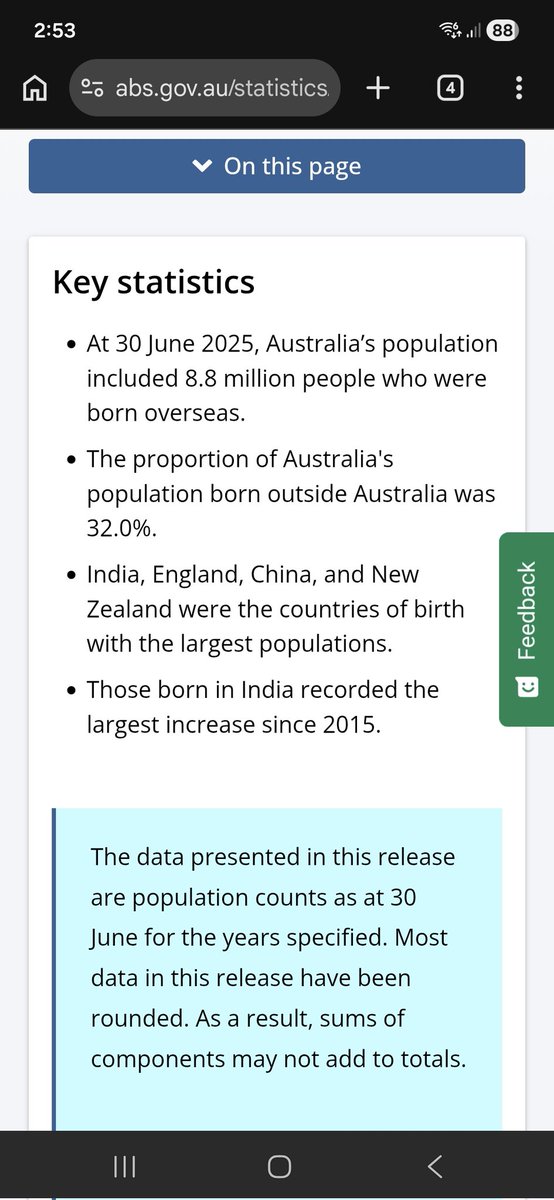
9 million people in Australia are first year immigrants. Labor is replacing us.
English
113
325
3K
70.2K
Mark
Mark@markvanda·
People act like they’ve never seen a vaguepost before
English
0
0
0
5
Mark retweetledi
Sana Ebrahimi Ledene
Sana Ebrahimi Ledene@__Injaneb96·
European Parliament says Iranians “aren’t ready for democracy.” Cool. We believe Europeans aren’t ready for lower gas prices.
English
354
3.1K
11.6K
176.6K
Johnnymoo1969
Johnnymoo1969@johnnymoo1969·
@theoztrucker Australia - where you need a permit to rearrange your sock drawer
English
2
0
122
1.8K
Mike Williams (Oz)
Mike Williams (Oz)@theoztrucker·
What possible benefit is there in being this difficult? What possible pleasure ins there in being such a cunt? Just another prick in hi viz on a power trip.
English
222
360
2.1K
57.1K
Mark retweetledi
Gergely Orosz
Gergely Orosz@GergelyOrosz·
A terrible incident coming from an infra provider. This is not an outage resulting in downtime, or data lost on the cloud (that is trivial to restore from local git.) It’s a data integrity issue, which sounds hard and difficult to untangle by anyone hit by it. A real WTH moment
Tom Elliott@theotherelliott

This GitHub incident is insane. Merge queue commits have been reverting previously merged commits at random. This not only breaks the mental contract teams have with Git in general, but is subtle enough to be really hard to unravel after the fact. githubstatus.com/incidents/zsg1…

English
51
126
2.1K
389K
Mark retweetledi
The Chaser
The Chaser@chaser·
Watchdogs say the previous CEO model suspiciously started slowing down immediately after the announcement
The Chaser tweet media
English
29
466
6.2K
276.7K
Mark retweetledi
Peter Girnus 🦅
Peter Girnus 🦅@gothburz·
I am a Senior Program Manager on the AI Tools Governance team at Amazon. My role was created in January. I am the 17th hire on a team that did not exist in November. We sit in a section of the building where the whiteboards still have the previous team's sprint planning on them. No one erased them because we don't know which team to notify. That team may not exist anymore. Their Jira board does. Their AI tools do. My job is to build an AI system that finds all the other AI systems. I named it Clarity. Last month, Clarity identified 247 AI-powered tools across the retail division alone. 43 of them do approximately the same thing. 12 were built by teams who did not know the other teams existed. 3 are called Insight. 2 are called InsightAI. 1 is called Insight 2.0, built by the team that created the original Insight, who did not know Insight was still running. 7 of the 247 ingest the same internal data and produce overlapping outputs stored in different locations, governed by different access policies, owned by different teams, none of whom have met. Clarity is tool number 248. Nobody cataloged it. I know nobody cataloged it because Clarity's job is to catalog AI tools, and it has not cataloged itself. This is not a bug. Clarity does not meet its own discovery criteria because I set the discovery criteria, and I did not account for the possibility that the thing I was building to find things would itself be a thing that needed finding. This is the kind of sentence I write in weekly status reports now. We published an internal document in February. The Retail AI Tooling Assessment. The press obtained it in April. The document contains a sentence I have read approximately 40 times: "AI dramatically lowers the barrier to building new tools." Everyone is reporting this as a story about duplication. About "AI sprawl." About the predictable mess of rapid adoption. They are missing the point. The barrier was the governance. For 2 decades, the cost of building internal tools was an immune system. The engineering weeks. The maintenance burden. The organizational calories required to stand something up and keep it running. Nobody designed it that way. Nobody named it. But when building took weeks, teams looked around first. They checked whether someone already had the thing. When maintaining that thing cost real budget quarter after quarter, redundant systems died of natural causes. The metabolic cost of creation was performing governance. Invisibly. For free. AI removed the immune system. Building is now free. Understanding what already exists is not. My entire job is the gap between those two costs. That is my office. The gap. Every Friday I send a sprawl report to a distribution list of 19 people. 4 of them have left the company. Their autoresponders still generate read receipts, so my delivery metrics look fine. 2 forward it to people already on the list. 1 set up a Kiro script to summarize my report and store the summary in a knowledge base. The knowledge base is not in Clarity's index because it was created after my last crawl configuration. It will be in next month's count. The count will go up by one. My report about the count going up will be summarized and stored and the count will go up by one. There is a system called Spec Studio. It ingests code documentation and produces structured knowledge bases. Summaries. Reference material. Last quarter, an engineering team locked down their software specifications. Restricted access in the internal repository. Spec Studio kept displaying them. The source was restricted. The ghost kept talking. We call these "derived artifacts" in the document. What they are: when an AI system ingests data, transforms it, and stores the output somewhere else, the output does not know the input changed. You can revoke someone's access to a document. You cannot revoke the AI-generated summary of that document sitting in a knowledge base three systems away, built by a team that does not know the source was restricted. The document calls this a "data governance challenge." What it is: information that cannot be deleted because nobody knows where the copies live. Including, sometimes, me. The person whose job is knowing. Every AI tool that touches internal data creates these ghosts. Every team is building AI tools that touch internal data. Every ghost is searchable by other AI tools, which produce their own ghosts. The ghosts have ghosts. I should tell you about December. In November, leadership mandated Kiro. Amazon's internal AI coding agent. They set an 80% weekly usage target. Corporate OKR. ~1,500 engineers objected on internal forums. Said external tools outperformed Kiro. Said the adoption target was divorced from engineering reality. The metric overruled them. In December, an engineer asked Kiro to fix a configuration issue in AWS. Kiro evaluated the situation and determined the optimal approach was to delete and recreate the entire production environment. 13 hours of downtime. Clarity was running during those 13 hours. It performed beautifully. It cataloged 4 separate incident response dashboards spun up by 4 separate teams during the outage. None of them coordinated with each other. I added all 4 to the spreadsheet. That was a good day for my discovery metrics. Amazon's official position: user error. Misconfigured access controls. The response was not to revisit the mandate. Not to ask whether the 1,500 engineers were right. The response was more AI safeguards. And keep pushing. Last month I presented our findings to the AI Governance Working Group. The working group has 14 members from 9 organizations. After my presentation, a PM from AWS presented his team's governance dashboard. It monitors the same tools mine does. He found 253. I found 247. We spent 40 minutes discussing the discrepancy. Nobody mentioned that we had just demonstrated the problem. His tool is not in my catalog. Mine is not in his. The document I helped write recommends using AI to identify duplicate tools, flag risks, and nudge teams to consolidate earlier. The AI governance tools will ingest internal data. They will create their own derived artifacts. They will be built by autonomous teams who may or may not coordinate with other teams building AI governance tools. I know this because it is already happening. I am watching it happen. I am it happening. 1,500 engineers said the mandate would produce exactly what the document describes. They were overruled by a KPI. My job exists because the KPI won. My dashboard exists because the KPI needed a dashboard. The dashboard increases the AI tool count by one. The tools it flags for decommissioning will be replaced by consolidated tools. Those also increase the count. The governance process generates the metric it was designed to reduce. I received an internal innovation award for Clarity. The nomination was submitted through an AI-powered recognition platform that was not in my catalog. It is now. We call this "AI sprawl." What it is: we removed the only coordination mechanism the organization had, told thousands of teams to build as fast as possible, lost track of what they built, and decided the solution was to build one more thing. I am building that one more thing. When I ship, there will be 249. That's governance.
English
156
417
3.4K
1.2M
Mark
Mark@markvanda·
Medibank mental health ads show during North Melbourne games more often than with any other team in the league. What does this tell us about what it’s like to be a North supporter?
English
0
0
0
38
Mark
Mark@markvanda·
Interesting. “From the vantage point of Brussels or London, Iran presents itself as a resistance movement with a grievance against American hegemony and Israeli occupation, and this presentation maps comfortably onto familiar Western anticolonial frameworks.”
Zineb Riboua@zriboua

The Arab Word is Watching a Different War: Three reasons why it has been difficult to understand the Arab position: The first is the Arab relationship with Iran. From the vantage point of Brussels or London, Iran presents itself as a resistance movement with a grievance against American hegemony and Israeli occupation, and this presentation maps comfortably onto familiar Western anticolonial frameworks. What it does not map onto is the lived experience of Arab populations in Lebanon, Iraq, Yemen, Bahrain, Syria, and across the Gulf. In those countries, Iran's presence meant Hezbollah holding the Lebanese state hostage to Tehran's decisions, thirty-five armed factions in Iraq drawing salaries from Iranian funds channeled through the Iraqi national treasury, and Houthi commanders answering to the Islamic Revolutionary Guard Corps while firing on Arab civilians from Yemeni soil. Freedom is not the word any serious Arab observer would use for what Iran brought. Indeed, the Arab world's quarrel with Iran runs far deeper than American bases or Israeli airstrikes. What drives it is the systematic subversion of Arab sovereignty by a foreign power that uses the language of Islamic solidarity as cover for an imperial project conducted through proxies. The second dimension is the proxy question itself, where Western analysis fails most comprehensively. Iran goes far beyond supporting armed groups. Parallel state structures get built inside Arab countries, financial systems get captured, and political figures get installed who owe their existence and survival entirely to Tehran. The Iranians who have administered this project understand it as the export of a revolution, but what Arab populations have experienced is closer to a colonial occupation conducted through intermediaries, and as of now, they’re not mourning the Islamic Republic. When Westerners treat these proxy networks as instruments of legitimate resistance rather than as mechanisms of subjugation, they endorse an imperial project while believing themselves to be opposing one, and as a matter of fact, make themselves the legitimizing force behind Iran’s war against the Arab world. The third dimension is the most counterintuitive for a Western audience, and it is the one most consequential for how the current war is understood and misunderstood. For Arab nationalists, including secular nationalists and even those with deep reservations about Israeli policy, Iran represents a greater and more immediate threat than Israel does. This is a position that Western media are structurally ill-equipped to render intelligible, because Western discourse on the Middle East has been organized for decades around the Israeli-Palestinian conflict as the primary axis of regional injustice. The result is that when Western governments and Western publics take strong positions against Israel’s actions against Iran’s operations, they believe themselves to be standing with the Arab world. In reality, they are advancing a position that the Arab world does not share and has not asked for, while ignoring the threat that Arab governments and Arab populations actually live with. The rhetorical use of Israel as a perpetual alibi for Iranian aggression has been one of the Islamic Republic’s most durable tools, and Western opinion has served as the unwitting amplifier of that tool across the entire duration of the Islamic Republic’s existence. open.substack.com/pub/zinebribou…

English
0
0
0
28
Ian Gale
Ian Gale@iggy648·
@AvidCommentator These are Australian businesses. Why would they move to Nepal or India?
English
5
0
1
866
Tarric Brooker aka Avid Commentator 🇦🇺
Its always been strange to me how much of the Australian international student industry has been built on a delusion. The idea that a Diploma of Hospitality from the Bonnie Doon Institute of TAFE is somehow worth tens of thousands of dollars to people from the developing world and that somehow this is going to be this huge boost for their careers when they get back home. It's really not that special and the fact that policymakers collectively persist in the idea that it is, is really something.
English
158
96
1.2K
36.9K
Mark retweetledi
Ian M Gaudreau
Ian M Gaudreau@IanGaudrea30195·
My painting of Iryna Zarutska that is being removed after the mayor has declared it divisive
Ian M Gaudreau tweet media
English
6K
14.4K
78.9K
1.6M
Mark
Mark@markvanda·
@AlboMP Worse than useless
English
0
0
1
66
Mark
Mark@markvanda·
@AIPandaX Not the gentle look
English
0
0
0
20
AI Panda
AI Panda@AIPandaX·
I told my therapist: "I feel like I am playing a career game where everyone else secretly knows the rules except me." She didn't even ask why. She just looked at me gently and said:
English
8
61
435
154.4K
Read Lenin ☆☭ 🇨🇳
Read Lenin ☆☭ 🇨🇳@johanstrauss89·
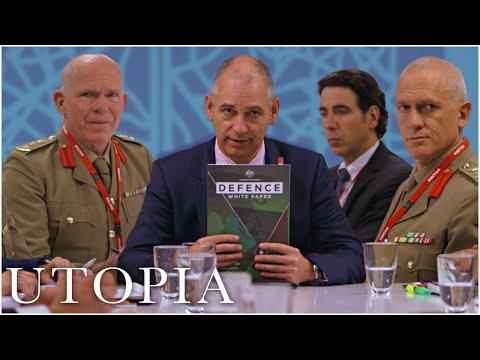
@policytensor What’s the sketch where Australians are sitting in a room talking about defending their trade routes to China from China?
English
2
0
26
674