
matteo

4.2K posts

matteo banner
matteo

matteo

@mtteom_

applied cryptography & blockchain; building apps @hyli_org

Katılım Ağustos 2012
1.1K Takip Edilen1.3K Takipçiler
Sabitlenmiş Tweet
matteo
matteo@mtteom_·
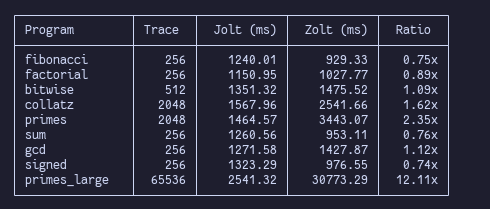
Introducing Zolt: the first pure-Zig zkVM Fully compatible with @a16zcrypto's Jolt, the entire cryptography is made from scratch in @ziglang , only using the stdlib! No arkworks FFI or other dependencies 🫡 The first benchmarks:
matteo tweet media
English
29
21
194
25.4K
Jommi
Jommi@joakimhi·
Hey everyone - wanted to announce that a few weeks ago I joined the GTM team at @megaeth focusing on making sure MegaApps become successful and MegaDefi keeps growing Im excited to join the likes of @NamikMuduroglu, @ImperiumPaper and the rest of the team, aiming to prove over time why Mega is different. Not many know this, but my career has been quite wildly diverse: I spent most of my web2 career working on app growth for companies like Bolt, as well as working with the giants of the mobile gaming industry. Yet most will know me from the past 4 years of being an intense defi user, degen, market participant and group chat spammer. I am glad to be able to be combining these two passions, bringing in the incentive aware UA spending thinking from web2 to Mega, as well as helping build a defi system that I as a long time user would enjoy exploring. My focus on Apps will be two fold: 1) Helping shape Terminal, reinforcing its value as a curated discovery layer for apps on Mega and helping build its incentive system to promote breakout apps. Am especially looking to working with teams focusing on something new and to reward teams that are Mega and USDM aligned. If you are a dev building something new, especially if it's something that hasn't been done before or is a onchain experiment, PLEASE reach out! 2) Helping the most mega-aligned apps navigate their go-to-market plans. Apps should get help with launch strategy, distribution, positioning, and the right connections. Founders should be focused on execution, not blocked by figuring out who to talk to, how to launch, or how to tell their story. It is no longer just about building new protocols. It is about bringing real collateral onchain. And where else to build that than the chain built for super fast blocktimes and millisecond latency oracle updates. @ImperiumPaper will still be the main person for USDM growth. We already made a strong first step here with our collaboration with @aave, hitting over $1B in deposits a few days ago. There is a long backlog of high-quality collateral looking to work with us, in addition to native teams like @brix_money and @CapApp. Looking forward to seeing how we can enable them across MegaDeFi. TL DR: Joining megaeth, helping build a curated experience of apps, building an incentivization model backed by actual economics, and making Mega by the best place for onchain finance on EVM. Mega GDP go up ⬆️
English
74
9
292
30.4K
Deniz
Deniz@denizb471·
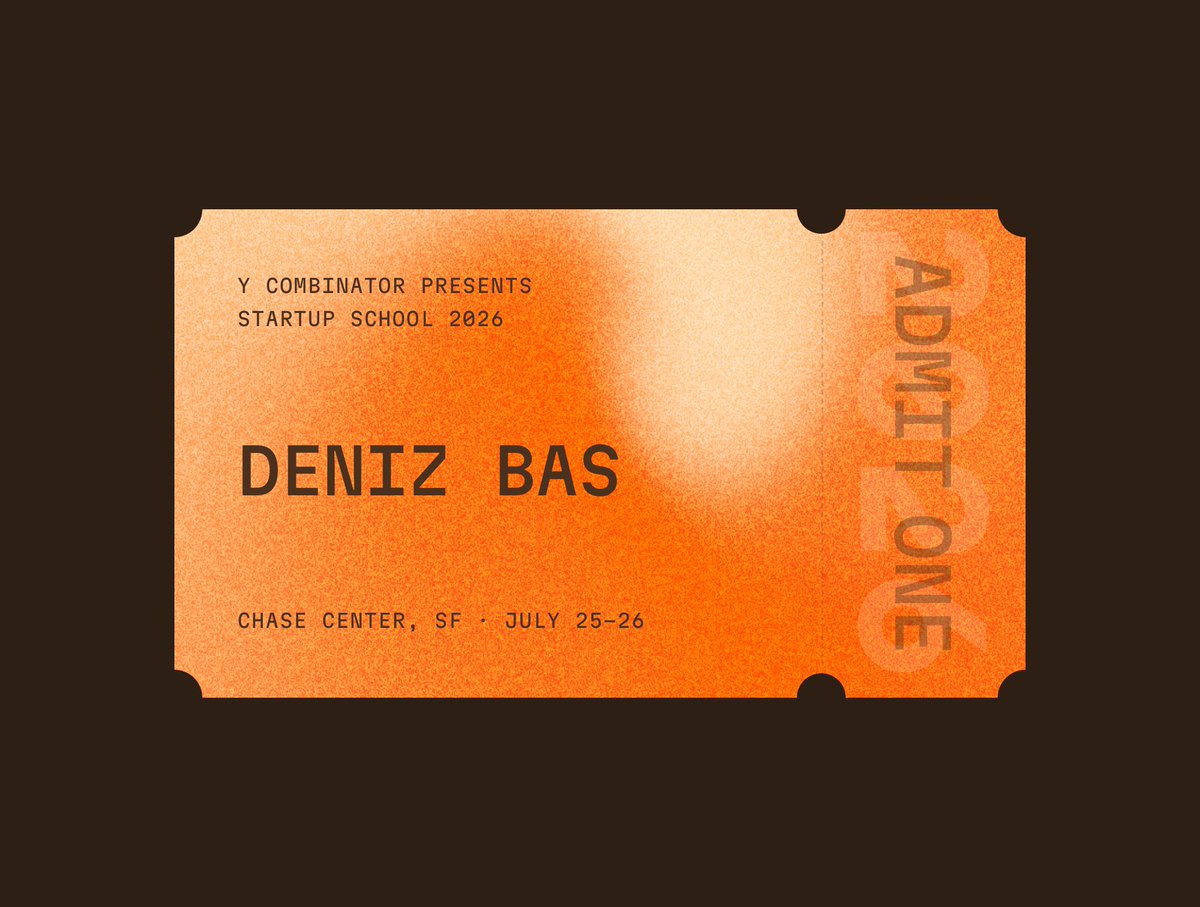
Heading to SF this July for @YCombinator’s Startup School 2026. If you’re working on AI or applied cryptography, let’s connect. Always up for meeting ambitious people. Feel free to DM me if you’re around.
Deniz tweet media
English
13
7
58
3.2K
matteo
matteo@mtteom_·
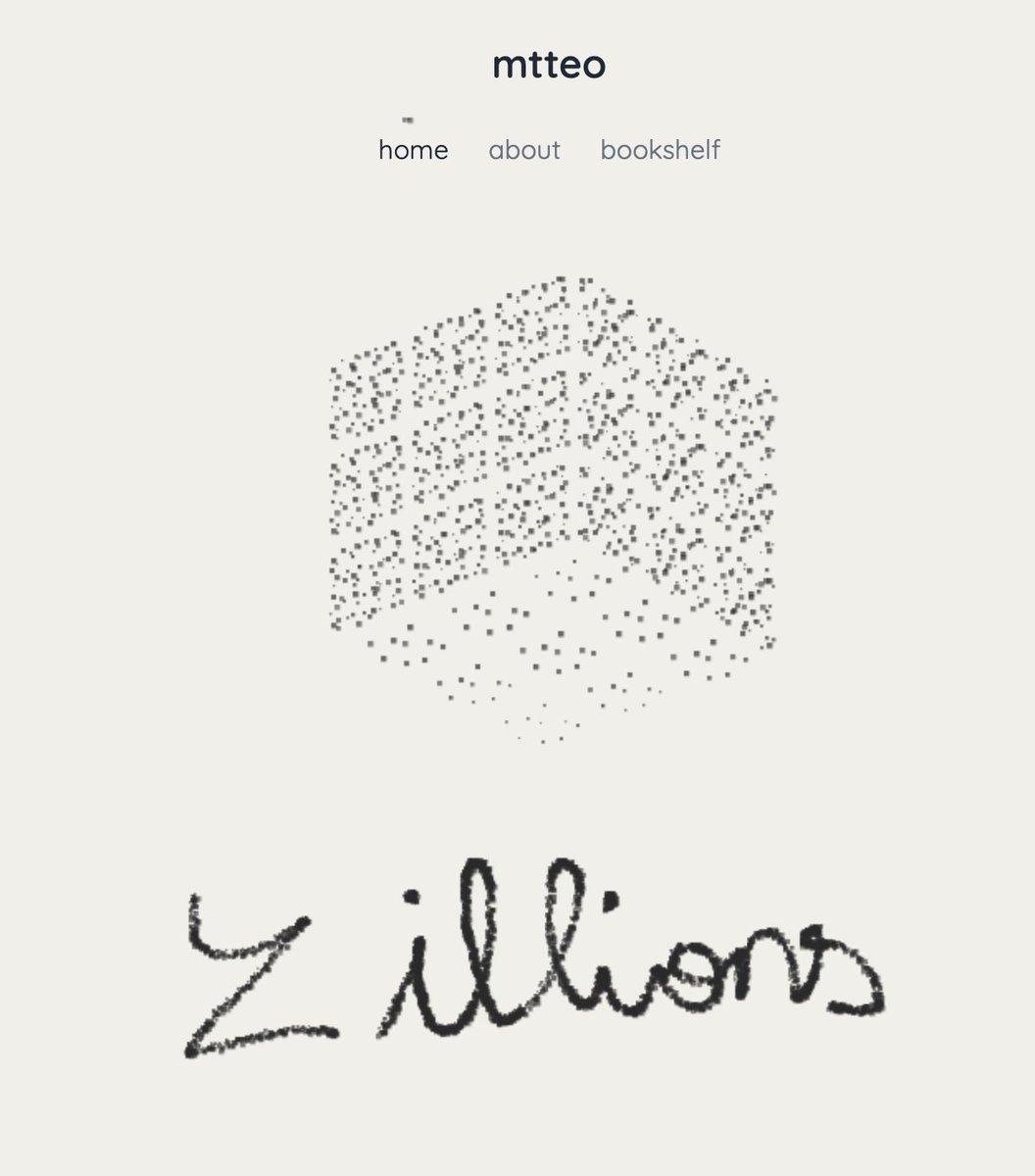
@hackerdocc it's existing work of art for all of them and then i cleaned (removing background, making it grayscale) using photopea and gpt image gen and then used a script that translate it into this svg dotwork
English
0
0
1
53
Eduardo
Eduardo@hackerdocc·
@mtteom_ how did you generate the dotted graphics for e.g. the bookshelf?
English
1
0
0
46
matteo
matteo@mtteom_·
my new personal website is live! come sign it and send me a screenshot
English
4
1
6
375
matteo
matteo@mtteom_·
@0xAndoroid @eth_proofs I'm going to go on a sidequest on trying to replace arkworks by my own zig crypto lib in Jolt, will keep you updated :D
English
0
0
1
64
Andrew Tretyakov
Andrew Tretyakov@0xAndoroid·
@mtteom_ @eth_proofs Arkworks is definitely suboptimal. Previously we were exploring Constantine (written in Nim), but it didn't yield meaningful perf increase. I'm going to also flag that one big last rewrite of jolt is arising right now that's being incrementally merged. github.com/a16z/jolt/pull…
English
2
0
3
68
matteo
matteo@mtteom_·
A month later, Zolt v0.1.0 is here! - Code is good enough to make an official release - Faster than Jolt on the @eth_proofs' SHA256 benchmarks 😱 - Huge refactoring effort - Really fun to work on! - Still a lot of work to do to match Jolt with bigger programs (2^28+)
matteo tweet media
matteo@mtteom_

Introducing Zolt: the first pure-Zig zkVM Fully compatible with @a16zcrypto's Jolt, the entire cryptography is made from scratch in @ziglang , only using the stdlib! No arkworks FFI or other dependencies 🫡 The first benchmarks:

English
5
4
21
1.4K
matteo
matteo@mtteom_·
Check it out here: github.com/MatteoMer/zolt This version include two new packages `zolt-arith` (for the field operations) and `zolt-pool` (my rayon equivalent), that you can use in your own @ziglang projects.
English
0
0
5
762
Pierre
Pierre@xyz_pierre·
welcome PlasmaBlind: a new privacy L2 that ditches SNARKs altogether, with <100ms client-side zk proofs, using the blindfold scheme and a carefully designed aggregator. uncompromising and instant privacy on *any* device. we implemented and benchmarked the whole thing at @PrivacyEthereum and are opening it under MIT. paper + code available at plasmablind.xyz the time for a special purpose privacy L2 has come 😎
English
15
31
221
38.8K
Barna
Barna@realbarnakiss·
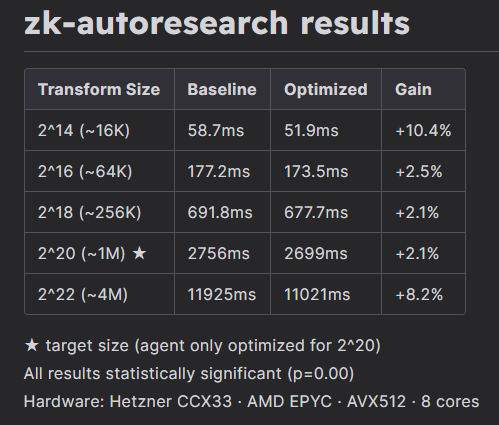
I implemented zk-autoresearch, based on Karpathy's autoresearch loop, on a production ZK prover, Plonky3. Soundness review by a Plonky3 engineer is pending before I treat these as final. The methodology finding is already clear, preliminary results below. Target: Plonky3's NTT implementation — the inner loop of proof generation, already heavily optimized by expert ZK engineers. If the approach doesn't work here, it doesn't work anywhere. Hardware: Hetzner CCX33, AMD EPYC, AVX512, 8 cores. Model: I used Claude Sonnet 4.6 deliberately, Opus would have marginal gains at significantly higher cost per iteration. For a loop running potentially 100s of times in future experiments, that tradeoff matters. 74 iterations. Fully autonomous by design, but in this first experiment 2 adjustments were made to the setup (at iterations 5 & 10) to nudge the agents to be more decisive. - Raised MAX_TOKENS from 8192 to 20000, and added "you must always make a change" as the agent kept hitting the token limit. This unlocked improvements at iterations 6 and 9. - Added near-miss display in the history prompt, showing reverted experiments within 1.5% as combination candidates. This set up iteration 21, where the agent revisited a failed idea that now worked because the surrounding code changed. Iteration constraints: - Each iteration ran correctness tests to prevent faulty proofs. Note: during the run these were compile-level checks; post-run correctness was confirmed via full end-to-end ZK proof generation and verification with Radix2DitParallel on BabyBear (10 tests, all passing). - Agents were structurally prevented from touching FRI or other soundness-critical components — only dft/src/ and baby-bear/src/ were writable. 3% faster at the target size (2^20) during the experiment. Post-experiment benchmarks across 2^14 to 2^22 showed the optimizations generalized better than expected, particularly at the extremes (see image). The agent only optimized for 2^20. The known issues (short history window causing agent amnesia, wasted tokens on repo exploration, correctness test targeting wrong package) meant the last improvement was found at iteration 21. Round 2 with these fixed should yield a more consistent staircase pattern over 100 iterations. All gains came from the agent finding redundant work in the hot butterfly loop: precomputing products, hoisting broadcasts, skipping multiplications by 1. Pure implementation-level work, no algorithmic changes. 6 improvements in 74 iterations. 57 regressions. The full experiment log with every diff, benchmark result, and agent reasoning is auditable. The agent that found these improvements is not a ZK expert. It reasoned about Rust and Montgomery arithmetic from first principles and found real optimizations in code already written by expert engineers. ZK has been underexplored for agentic optimization because people worry about agents breaking proof soundness. The concern is real but misapplied here, all 6 changes are mathematically equivalent transformations, verified by end-to-end proof generation and verification. (Soundness review by a Plonky3 engineer is pending) Round 2 is being prepared with the known issues from Round 1 fixed. Full findings and code will be open sourced after it completes. If you are ZK team and want to run this, feel free to DM me. Inspired by @karpathy autoresearch pattern. First known application to a production ZK prover.
Barna tweet media
English
10
19
182
17.5K
jaosef.eth
jaosef.eth@jaosef·
After eight years of building @AztecNetwork, the network is about to go live at Alpha. My co-founders @zac_aztec and @arnaudschenk are moving to @aztecFND to steward the protocol, while I am returning to my roots: building privacy products people actually use.
English
38
30
285
26.9K
matteo
matteo@mtteom_·
@hackerdocc the only solution would be to create a slack channel with only me and the bot and farm karma to 100k just to prove its useless
English
0
0
1
34
Patryk
Patryk@patrykadas·
almost working version of distribution markets
English
3
0
11
844
matteo
matteo@mtteom_·
Introducing Zolt: the first pure-Zig zkVM Fully compatible with @a16zcrypto's Jolt, the entire cryptography is made from scratch in @ziglang , only using the stdlib! No arkworks FFI or other dependencies 🫡 The first benchmarks:
matteo tweet media
English
29
21
194
25.4K