John Duffty

4.5K posts

John Duffty banner
John Duffty

John Duffty

@my_mathsticks

I'm passionate about maths teaching. I've been a teacher since the dark ages and share great maths strategies, resources, ideas and games at https://t.co/xKwxZS

Katılım Şubat 2010
395 Takip Edilen801 Takipçiler
John Duffty retweetledi
Today In History
Today In History@historigins·
A group of young Kestrels seeing a butterfly for the first time
English
229
5.5K
46.9K
2.1M
Steve Hare
Steve Hare@sharemath·
How hard can it be to teach 25 kids to use a protractor? The traditional way? Practically impossible. The protractor can be crooked. Upside down. Off center. Flipped. Or all of the above. And then they can read the wrong numbers. Throw in terms like “acute,” “obtuse” and “right” and it’s aggravation for all. So what’s the solution? Visual examples and practice problems where the protractor is lined up 𝘧𝘰𝘳 them, as in this activity from You Teach You, the first math method with an example for everything. “But wait!” I can hear the reply. “They need to be able to line up protractors correctly for themselves!” Of course they do. And after this activity, they see 𝘸𝘩𝘺. See YouTeachYou.org
Steve Hare tweet mediaSteve Hare tweet media
English
6
10
82
9.1K
John Duffty
John Duffty@my_mathsticks·
@adamboxer1 Explicit instruction followed by systematic and effortful retrieval is the best way to teach (probably)
English
0
0
1
63
John Duffty
John Duffty@my_mathsticks·
@WardProWords @adamboxer1 Yes, i, and my whole school, abandoned the nonsense in 1994. It's as useful as teaching according to 'zodiac birth sign'.
English
1
0
0
26
Colin Ward
Colin Ward@WardProWords·
@adamboxer1 Learning styles were pretty much ditched over 20 years ago.
English
2
0
2
1.4K
Adam Boxer
Adam Boxer@adamboxer1·
I'm embarrassed that there are teachers who believe in learning styles. I'm embarrassed that there are schools that display nonsense posters. I'm embarrassed that there are teacher training providers that still communicate unevidenced and harmful ideas and pedagogies. But these problems are ours to own. It's our profession. It's our job and our responsibility to challenge. Mocking, pouring scorn, and patting each other on the back because we are enlightened isn't going to help anybody. We need to write, we need to speak, we need to get out there. It's our profession, it's our responsibility.
English
52
39
380
38K
John Duffty retweetledi
Mr Firth
Mr Firth@mister_firth·
A new case every day 🕵🏻‍♂️ How parents want teachers to react to a missing jumper:
English
142
537
5.1K
152.8K
John Duffty
John Duffty@my_mathsticks·
@elonmusk 'Amount' of people...🙄 'Number' of people...🙂
English
0
0
0
43
Elon Musk
Elon Musk@elonmusk·
Maybe this is the problem 😂
Elon Musk tweet media
English
6.1K
9K
102.2K
17.9M
AJ Investment Research
Hi, polyglot speaking here: best way to study any language is A) 'situational' learning. The way I would explain it is that the brain connects vocabulary with situations. For example, if you always study words at your desk your brain connects the words with that situation (at your desk, in your room, calm environmet - highly artifical situation relative to language) and hence won't be able to retrieve them in the real world situation, at least not fast enough. Learn words in applicable situation. When you mix up words, use nmemonics. B) Second, always learn new words in set phrases and ideally in different tenses (depending on language) or modalities (interrogatives, commands, questions etc.). This way, you can bypass grammar. Studying grammar by itself is only useful for writing but having to think about grammar in spoken language is too slow. A) + B) solve that problem naturally. Also, try to speak fast. This solves many pronounciation issues. The higher data rate (more information per unit of time) gives the listener's brain more clues to piece together what you try to say even without correct pronouciation (as long as it is not too off). This is particular useful in 'tonal' languages like Mandarin or Vietnamese which can be exceptionally hard for Western people to master due to lack of tones in their mother tongues: when you have a language background without tones you're brain outright refuses to differentiate since it was trained to compress income signals. You have to break that mechanism first before you can hear the different tones EXCEPT if you had musical training during young age (D). (E) Repeat, repeat, repeat: switch to the language you're studying as often as possible. You can talk to yourself if there is nobody around you can talk to. Nowadays you can talk to AI. AI can correct you. The most imortant is that YOU speak. Above allows everyone to study any language regardless of age. In essence it's how kids acquire language. However, (D) will make a GIANT difference. So if you want your kid to have it easy studying new languages, make sure it trains on a classical instruments from early age. This will pay enormous dividends in language acquisition.
English
305
2.6K
38.5K
3.1M
Eric Jiang
Eric Jiang@veggie_eric·
Has anyone actually successfully learned a language using Duolingo Seems like a lot of cute graphics and satisfying sound effects but I'm not buying that it actually works...
English
7.8K
8.8K
360.4K
36.2M
Massimo
Massimo@Rainmaker1973·
What?
Massimo tweet media
English
1.6K
94
2.6K
588.4K
John Duffty
John Duffty@my_mathsticks·
Sorry folks, if you've been to mathsticks.com recently, you may have seen a hundred million Ads. It seems an Ad script got activated by mistake. I'm clearing it out as quickly as I can, so things should calm down again quite soon. Thank you for putting up with the mess.
English
0
0
1
57
John Duffty retweetledi
Mark McCourt
Mark McCourt@EmathsUK·
Perhaps don’t make bold claims about becoming an AI powerhouse if you’re going to cut funding for mathematics education a few days later. What, precisely, do you think AI is?!
English
5
7
52
4.5K
John Duffty
John Duffty@my_mathsticks·
I've just done a quick review: The majority of people still say repetition and rote learning are the best ways to learn Times Tables. Then they say children don't understand multiplication.... Why is that?
English
0
0
0
73
Peter Prefect
Peter Prefect@SingSongSoup·
@friedmandave @PhysInHistory The probability of the sequence 999999 appearing is exactly the same as the probability of the sequence 141592, or indeed any other 6 digit sequence. But 141592 appears immediately after the decimal point.
English
1
0
3
38
Physics In History
Physics In History@PhysInHistory·
The Feynman point is the name given to the position in the decimal expansion of π where a sequence of six consecutive nines first appears. It is named after the physicist Richard Feynman, who allegedly joked that he would like to memorize the digits of pi up to that point and then say “and so on” as if π. were rational. The Feynman point occurs at the 762nd digit after the decimal point, which is much earlier than expected by chance. ✍️
Physics In History tweet media
English
95
567
3.1K
191.5K
John Duffty
John Duffty@my_mathsticks·
@PhysInHistory Great post... But if the appearance of the 9s is much earlier than expected by chance.... At what place is it 'more' likely?
English
0
0
0
27
John Duffty
John Duffty@my_mathsticks·
@TalkingTier1 Remember, they are not Rosenshine's principles - he only packaged them.
English
0
0
0
62
Mr S Maths
Mr S Maths@MrSMaths11·
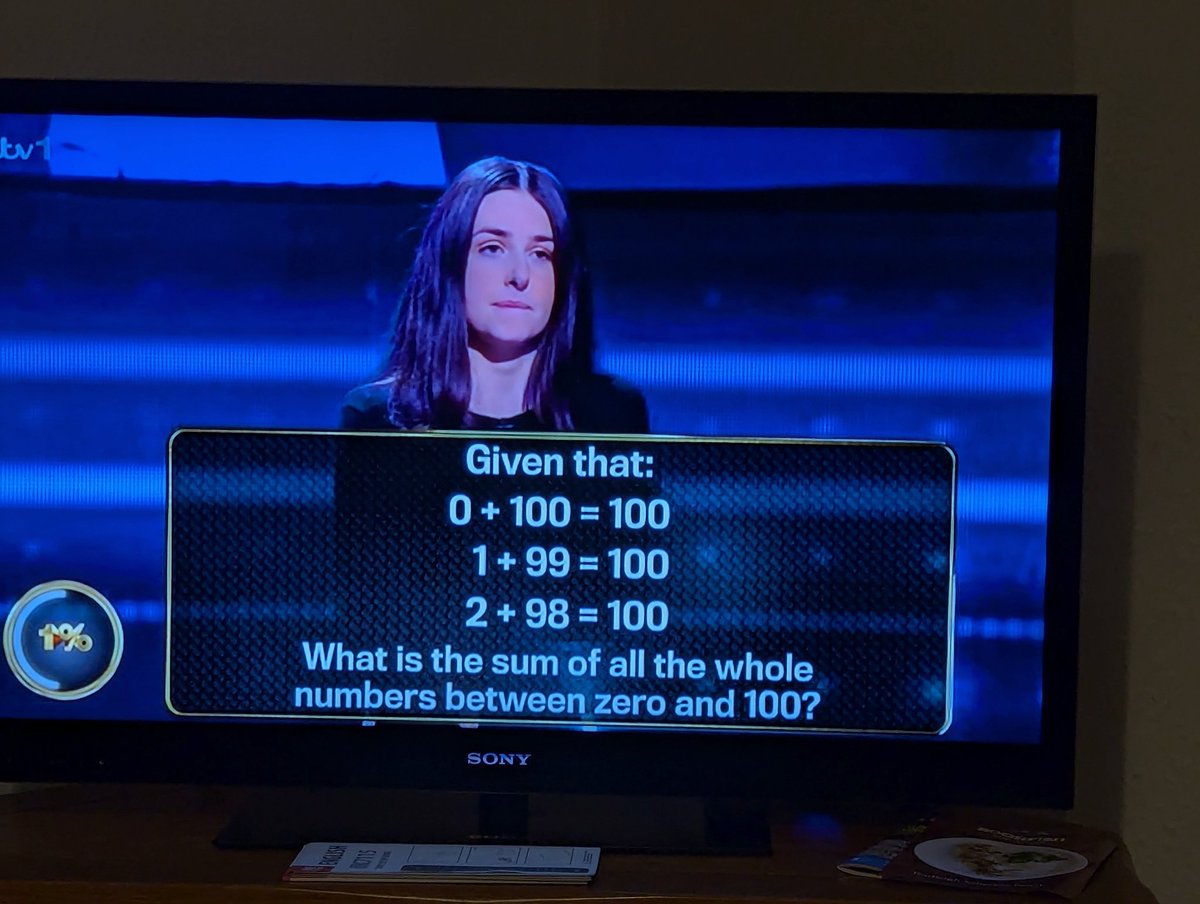
A bit of arithmetic series on the telly tonight.
Mr S Maths tweet media
English
69
34
659
96K
John Duffty
John Duffty@my_mathsticks·
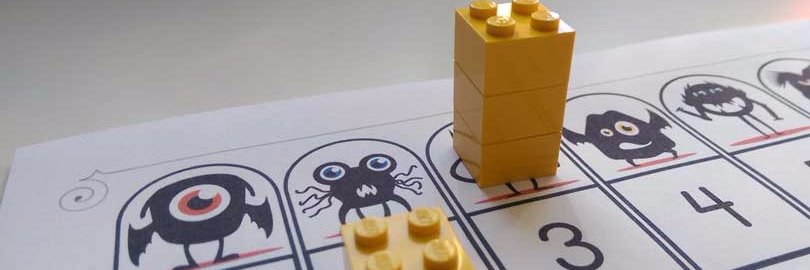
Exciting
John Duffty tweet media
English
0
0
1
73