Amateur Opinion Haver

25.3K posts

Amateur Opinion Haver banner
Amateur Opinion Haver

Amateur Opinion Haver

@neilcaff

I used to be good at the twitter

London Katılım Mart 2010
951 Takip Edilen1.9K Takipçiler
Amateur Opinion Haver retweetledi
Scott Robertson
Scott Robertson@sarobertsonca·
Avi Lewis on his Jewish anti-Zionist roots: "I come from a long tradition, a multi-generation tradition of Jewish anti-Zionism ... as long as there's been formal pro-Israel Zionist organizations, there's been a tradition that has disagreed with that within the Jewish community."
English
127
811
4.3K
206.6K
AlexofZion
AlexofZion@AlexofZion·
@neilcaff @AlexCrawfordSky If you're a terrorist you're a combattant. And therefore a legitimate target. That's how international law works.
English
1
0
0
19
Alex Crawford
Alex Crawford@AlexCrawfordSky·
Not sure what point you’re making. Both reporters worked for pro-Hezbollah outlets. Journalists are not legitimate targets, regardless of the outlet they work for. They were doing their jobs as journalists and shd have been protected under int law. Baseless claims are not justification for targeted killings
Eylon Levy@EylonALevy

I don’t know, @AlexCrawfordSky, the sea of Hezbollah flags at the funeral seems like a massive clue. If only you were there to check.

English
639
1.3K
6.3K
374.2K
Amateur Opinion Haver
I'm only half joking when I say we should all just pretend Trump/Netanyahu have achieved all their war aims if it gets this disaster shut down
Patricia Marins@pati_marins64

This is a clear sign that they are thinking of exiting the conflict very soon and are already adjusting the list of objectives to claim victory. However, this will be more complicated than it seems. 1. The destruction of Iran’s Air Force
Of the modern combat aircraft, such as the more than 20 MiG-29s and Yak-130s, only 6 have been destroyed or damaged with visual confirmation. Iran still operates between 14 and 18 of these aircraft. 2. The destruction of their navy
Once again, checking the list of destroyed or damaged equipment from Elmustek with visual confirmation, Iran still operates between 20 and 30 patrol vessels, 20 submarines, and more than 300 missile-equipped fast boats. 3. The severe diminishing of their missile launching capability
This is the only point that is really true. Iran is indeed launching fewer missiles and drones than in the first days. However, it maintains a sustainable rate of 80–100 launches per day for more than three weeks now. 4. The destruction of their factories
This point is only partially accurate. A large part of Iran’s assembly lines are underground. Rebuilding what was destroyed on the surface will cost money and time, but none of the underground factories have stopped production. Moreover, a good portion of the supplies continues to arrive from China via the railway that connects the two countries. (I checked the Elmustek website and compared it with Iran’s pre-war inventory.)

English
0
0
0
22
Amateur Opinion Haver retweetledi
Abubaker Abed
Abubaker Abed@AbubakerAbedW·
Israel officials share a drink in celebration of the passing of the execution law.
English
143
551
1.2K
654.8K
Amateur Opinion Haver retweetledi
Saagar Enjeti
Saagar Enjeti@esaagar·
South Korea's President today: "The world is in turmoil over the energy crisis...the situation is so serious that it has even kept me up at night. The immediate problem is grave enough, but the outlook ahead seems even more unstable — the situation is worse than expected"
English
196
1.9K
10.9K
584.7K
Amateur Opinion Haver retweetledi
Abubaker Abed
Abubaker Abed@AbubakerAbedW·
The bill has been approved. Israeli prisons will turn into guillotines for Palestinians. Hundreds will be executed in the next few weeks. 9300 hostages now in Israeli custody. Dark day for humanity. Unforgettable memory in the Palestinian cause history.
English
910
21.7K
43.7K
801.7K
Amateur Opinion Haver
@transistanian @AlexofZion @AlexCrawfordSky They were doing something far more deadly to the IDF: Proving that their ground invasion is going very badly indeed, contrary to the fantasies put forward in IDF press releases. That's the reason they were targeted and murdered.
English
1
0
0
6
Amateur Opinion Haver retweetledi
Drop Site
Drop Site@DropSiteNews·
Trita Parsi told Drop Site that one of the risks Iran faces is overplaying its hand—pushing too far in negotiations or on the battlefield and hardening Trump’s position, which could prolong the war in a “lose-lose” situation, instead of securing a deal.
English
73
108
592
116.5K
Nigella™️
Nigella™️@nigella_i5e·
Watch this and weep. In Scotland alone they have felled 15 million trees 🌳 to put up these monstrosities. This is what it takes to install just ONE
English
720
3.2K
6.4K
596K
Amateur Opinion Haver retweetledi
Phryne Astynome
Phryne Astynome@PAstynome·
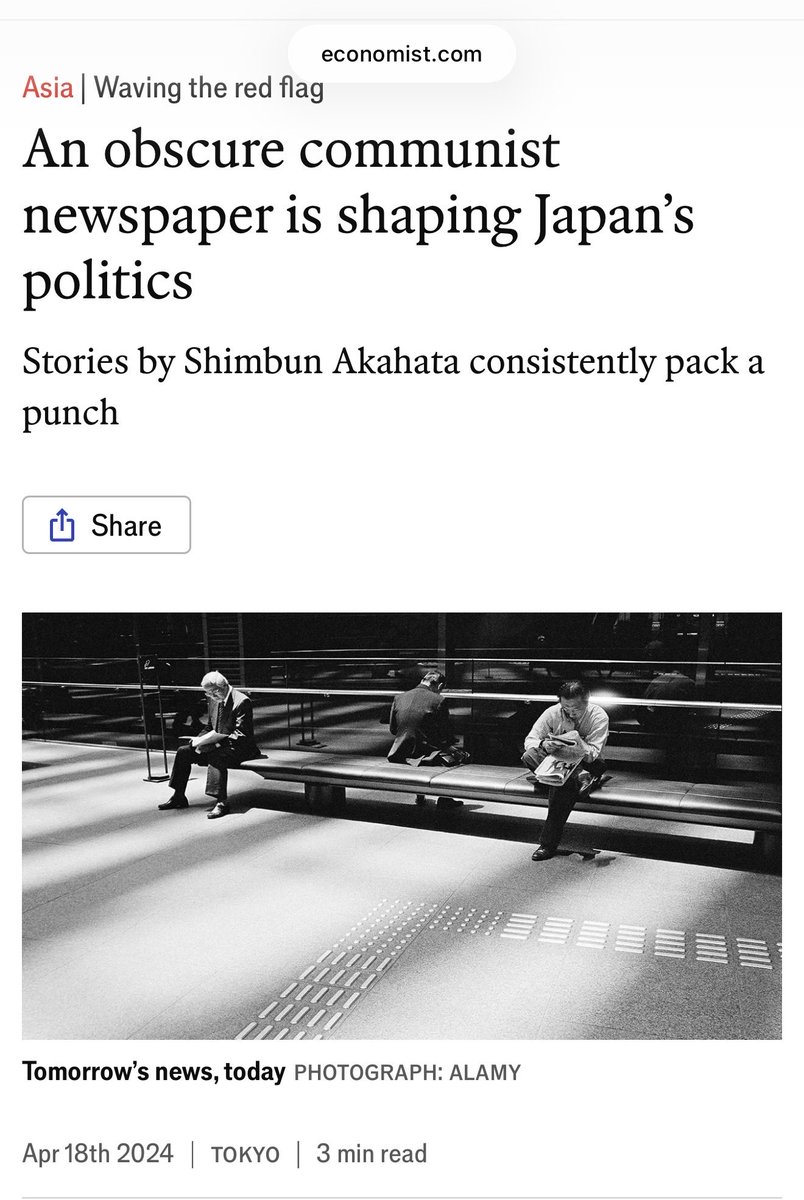
The most trusted newspaper in Japan is the Shimbun Akahata which is the Japanese Communist Party’s newspaper. They did the investigative journalism on the LDP’s slush fund scandal in 2024 and ended up destroying Shinzo Abe’s faction and causing complete chaos for the LDP.
Phryne Astynome tweet media
English
27
593
5.5K
202K
Amateur Opinion Haver retweetledi
Paweł Wargan
Paweł Wargan@pawelwargan·
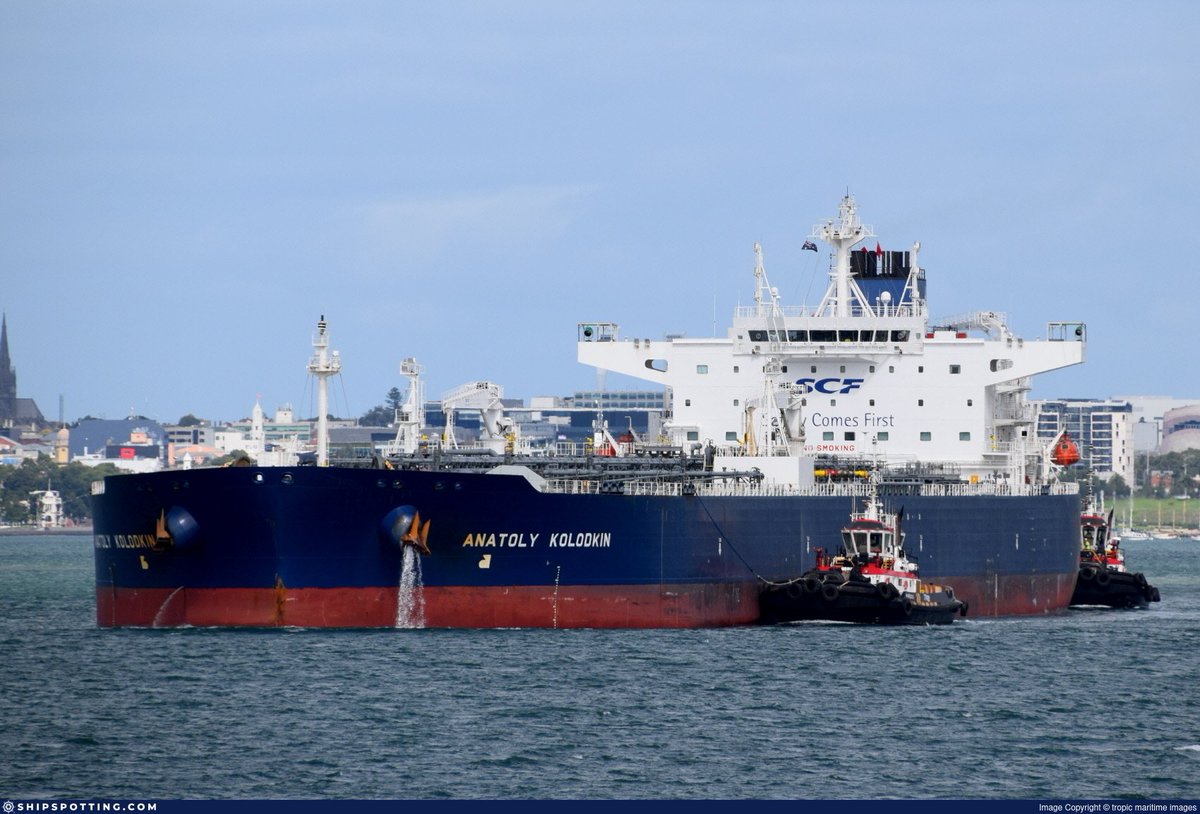
It seems that the Russian tanker Anatoly Kolodkin is set to break the US siege on Cuba imminently and deliver some 730,000 barrels of crude oil to the island. Its arrival would be historic, marking mark a severe blow to a key instrument of US power.
Paweł Wargan tweet media
English
49
630
2K
94.2K
AlexofZion
AlexofZion@AlexofZion·
@neilcaff @AlexCrawfordSky If you're a member of a terrorist organization you are a legitimate target. No matter if you're a doctor, a Journalist or whatever. A terrorist is a legitimate target by international law.
English
5
0
2
351
Trita Parsi
Trita Parsi@tparsi·
Fascinating poll on Global South perspectives on the Iran war: Who do they blame? 38% Israel 29% US 18% Iran Sympathy? 43% Iran 35% Neither side 13% Israel Affect on view of US? 43% Less favourably 29% Unchanged 18% More favourably knowledge.geopoll.com/hubfs/GeoPoll%…
English
76
524
1.7K
151K
Amateur Opinion Haver
Amateur Opinion Haver@neilcaff·
@AlexofZion @AlexCrawfordSky No, it doesn't. Only enemy combatants are legal targets. It doesnt even matter if they were Hezbollah members. If they weren't involved in active combat then they are not legal targets
English
3
0
22
549
AlexofZion
AlexofZion@AlexofZion·
@AlexCrawfordSky Correction. They worked for Hisbollah owned outlets, aka propaganda machines. That makes them legitimate targets.
English
21
0
18
3.9K
Amateur Opinion Haver retweetledi
Shaiel Ben-Ephraim
Shaiel Ben-Ephraim@academic_la·
The oil crisis is spreading throughout the world. Many countries are going to extreme lengths to ration their supply as a result. Here are all the cases I could find: 1) The Philippines declared a national energy emergency. Government offices have shifted to a four-day work week, and agencies must cut fuel and electricity use by 10–20%. 2) Sri Lanka instituted a weekly public holiday for public officials and schools. It has also revived a QR code-based fuel rationing system that limits private cars to 25 liters of petrol per week. 3) Pakistan closed schools for two weeks and cut free fuel allocations for government vehicles by 50%. It also hiked high-octane fuel prices by 60%. 4) Bangladesh, shut down universities and colleges and implemented five-hour rolling blackouts for households to prioritize the garment export sector. 5) South Korea launched a nationwide energy-saving campaign and released a record 22.46 million barrels of strategic oil reserves. It also temporarily lifted limits on burning coal. 6) Thailand ordered civil servants to work from home, set office air conditioning to 26–27°C, and halted petroleum exports to preserve domestic stock. 7) Japan and announced its largest-ever release of strategic oil reserves, approximately 45 days' worth, to stabilize local markets. 8) Egypt ordered early closures for malls, restaurants, and government offices while switching off illuminated billboards. 9) Myanmar introduced an "odd-even" rationing system where private vehicles can only purchase fuel on alternating days based on their license plate numbers. 10) Nepal is a state-run oil corporation has begun rationing cooking gas by filling cylinders to only half their normal capacity (7.1 kg) and is urging a nationwide switch to induction cookers. 11) India has invoked emergency powers to divert liquefied petroleum gas (LPG) away from industrial users to prioritize household cooking needs. 12) Slovenia became the first EU member to implement fuel rationing, limiting private drivers to 50 liters of petrol per week and businesses to 200 liters. 13) Bhutan has officially banned the sale of fuel in jerry cans to prevent hoarding and has established strict rationing priorities for emergency services. 14) Vietnam is accelerating a transition to ethanol-blended gasoline ahead of schedule to reduce its reliance on pure fossil fuel imports. 15) South Sudan has begun rationing electricity in its capital, Juba, due to the high cost of oil used for power generation. 16) Laos has made working from home mandatory for all non-essential civil servants and introduced rotational shifts to reduce commuting demand. It gets worse. Gulf producers are nearly at their maximum storage capacity; once they run out of space to put unsold oil, they will be forced to "shut in" (permanently close) wells, which can cause long-term geological damage to the oil fields. This is the worst oil crisis in history. And it is going to get so much worse. unlike previous shocks, this crisis has wiped out the world's spare capacity because major producers like Saudi Arabia and the UAE are physically cut off from their customers by the Strait of Hormuz closure. All for what?
English
104
1.1K
3.4K
492.9K
Amateur Opinion Haver retweetledi
aya
aya@political_aya__·
The following thread is really important to understand the field situation in Southern Lebanon and avoid falling for the enemy's propaganda:
English
5
373
1.6K
89.7K
Amateur Opinion Haver retweetledi
Hamidreza Azizi
Hamidreza Azizi@HamidRezaAz·
#Iran War Update No. 30 (focus on Iranian strategic narrative): 🔹Iranian strategic assessments increasingly point to a prolonged conflict, with expectations that the war could last at least eight more weeks and may escalate further, including the potential deployment of U.S. ground forces. 🔹In response, Iranian planning is no longer centered on absorbing strikes but on shaping the battlefield in advance. A concept described as “preemptive destruction” is emerging, involving continuous targeting of U.S. bases, logistics hubs, and staging areas in countries such as Kuwait and Bahrain to disrupt any potential ground or heliborne operation before it can be executed. 🔹This builds on the earlier shift toward “active preemption” and reflects a more offensive posture aimed at suppressing U.S. force buildup at its source rather than responding after an operation. 🔹The United States, however, continues to move in the opposite direction. Reports indicate preparations for limited ground operations involving special forces and airborne units, alongside the deployment of additional naval assets and Marines to the region. 🔹Iranian officials appear to be taking these signals seriously. Military statements emphasize readiness for scenarios involving island seizures, heliborne raids, or limited incursions, while also framing such operations as opportunities to inflict significant casualties on U.S. forces. 🔹At the same time, Israeli and U.S. strikes continue to expand across Iran’s industrial base. A petrochemical facility in Tabriz and infrastructure linked to Isfahan Industrial University have been targeted, reinforcing a pattern of gradual degradation of Iran’s economic and scientific capacity. 🔹Iran’s response continues to mirror this pattern. Iranian strikes have increasingly focused on infrastructure-related targets in Israel, including petrochemical and industrial facilities, indicating a sustained shift toward reciprocal infrastructure warfare. 🔹This dynamic is reinforced by Iranian assessments that Israel is pursuing an incremental strategy aimed at destroying Iran’s infrastructure over time without triggering a large-scale response. In turn, some Iranian analysts are calling for more disproportionate and combined vertical and horizontal escalation to deter further attacks. 🔹The Strait of Hormuz remains a central lever. Iran continues to allow selective passage for certain countries, while maintaining broader restrictions, reinforcing its role as a regulator of maritime traffic while still avoiding a full blockade. 🔹At the same time, diplomatic efforts are attempting to translate this leverage into a negotiated framework. Proposals discussed in Islamabad include the creation of a multinational consortium to manage oil flows through the Strait, potentially offering a face-saving off-ramp for both Iran and the United States. 🔹Iran’s decision to allow a Saudi oil shipment to transit toward Pakistan on the same day appears to align with this diplomatic track, suggesting cautious signaling toward a potential diplomatic solution. 🔹Beyond the Persian Gulf, the war’s geographic scope continues to widen. The Houthis’ entry into the conflict has raised concerns about the security of the Red Sea and Bab el-Mandab, with explicit threats to potentially disrupt shipping in the Red Sea region under certain conditions. 🔹European maritime authorities have already warned vessels to avoid Yemeni waters, indicating that even limited Houthi involvement is beginning to affect shipping behavior. 🔹Regionally, fault lines are becoming more visible. While some Gulf states are moving toward a more confrontational stance alongside the United States, others – particularly Oman and Qatar – continue to pursue de-escalation and maintain either neutral (in the case of Muscat) or cautious positions. 🔹Inside Iran, there is a noticeable shift in tone. While earlier phases of the war were marked by concern over regime survival, current discourse increasingly emphasizes achieving strategic outcomes and reshaping the long-term balance. 🔹This is reflected in official messaging. Statements by senior figures stress not only resilience but also perceived successes, including continued control over the Strait of Hormuz, sustained missile operations, and the involvement of regional allies such as Hezbollah and the Houthis. 🔹At the same time, internal security measures are intensifying. Authorities have expanded arrests, business closures, and digital surveillance, while the Chief Justice warns of severe punishment for those deemed “betraying the homeland,” reflecting continued concern about domestic stability. 🔹Meanwhile, in a key political signal, Mohammad Bagher Ghalibaf framed Iran’s war strategy around a three-dimensional framework: “missiles, the streets, and the strait [of Hormuz].” This reflects an integrated approach combining military pressure, control over global energy flows, and sustained domestic mobilization. 🔹The emphasis on “the streets” is particularly notable. The regime continues to call supporters into public spaces every night, both to project internal cohesion externally and to deny the opposition any opportunity to mobilize under wartime conditions. 🔹Economically, the war’s impact continues to deepen. Oil prices have risen to $115 per barrel, suggesting that markets are reacting primarily to battlefield developments rather than diplomatic signaling. 🔹On the battlefield, Iran continues to apply sustained pressure through low-intensity but continuous missile fire, aimed less at immediate destruction and more at maintaining constant disruption and psychological pressure inside Israel. 🔹Confirmation of the destruction of a U.S. E-3 AWACS aircraft in Saudi Arabia has been widely amplified in Iranian media, serving as a major morale boost and reinforcing the narrative that high-value U.S. assets are increasingly vulnerable. 🔹Overall, Day 30 reflects a further shift toward anticipatory escalation. Iran is increasingly attempting to disrupt future operations before they occur, while the United States and Israel continue to expand pressure on Iran’s infrastructure, bringing both sides closer to a phase where escalation is driven less by reaction and more by preemption.
English
0
210
644
146.4K
Amateur Opinion Haver retweetledi
Gareth
Gareth@g_f_red·
We had rent controls in Britain until 1915 to 1988 and during this time housebuilding regularly hit over 300k per year. Since they were removed, the house price to income ratio has gone from 4:1 to around 8:1, and housebuilding numbers have collapsed.
Nick Tyrone@NicholasTyrone

Rent controls are a really terrible idea, they never work as intended and just cut supply of properties available. It’s like a lot of ideas on the left these days - it runs on vibes and nothing more.

English
82
691
4.3K
154.5K