prabath

8.8K posts

prabath

prabath

@prabath

Software Engineer (Identity)

San Francisco Bay Area Katılım Aralık 2007
306 Takip Edilen2.8K Takipçiler
prabath retweetledi
Physics In History
Physics In History@PhysInHistory·
In 1947, Alan Turing publicly suggested that machines could learn from experience — years before the term “AI” even existed. In a London lecture, he described machines altering their own instructions, an early vision of machine learning.
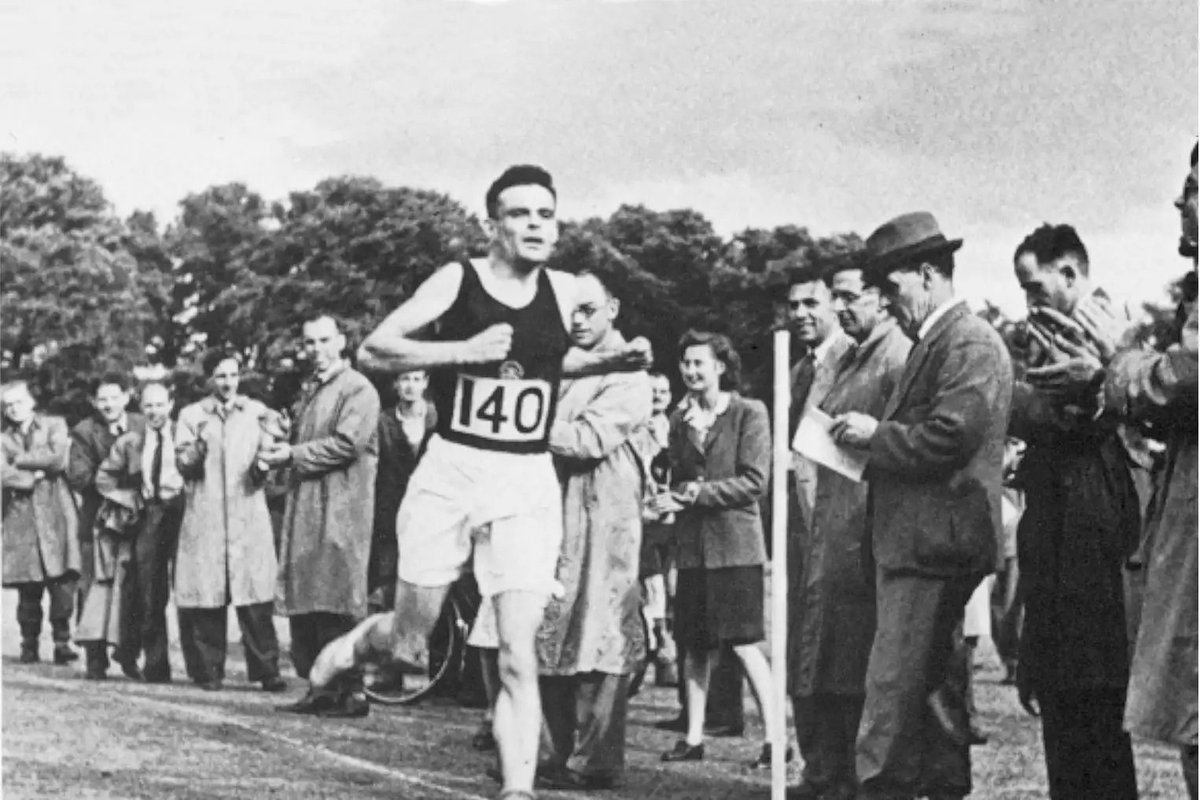
Physics In History tweet media
English
8
68
347
22K
prabath retweetledi
Tivadar Danka
Tivadar Danka@TivadarDanka·
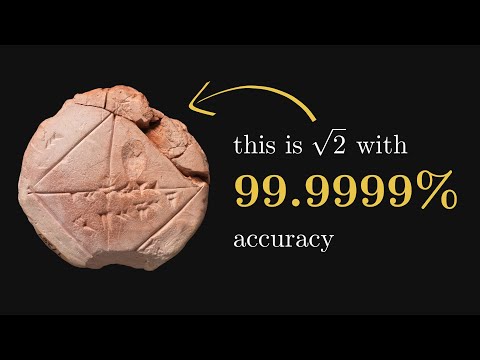
There’s an ancient Babylonian clay tablet from 1800-1600 BC that contains the square root of two with 99.9999% precision. How did they compute it? Let me show you: youtu.be/3O730YTS8Yg
YouTube video
YouTube
English
0
6
35
9.1K
prabath retweetledi
Physics In History
Physics In History@PhysInHistory·
Thank this man for digital communication, data compression (ZIP, MP3), coding theory, and cryptography. Claude Shannon’s biggest scientific contribution was the creation of information theory in his 1948 paper “A Mathematical Theory of Communication.” He defined “information” mathematically, introducing the concept of bits (binary digits) as the fundamental unit. He borrowed the term from thermodynamics to describe the uncertainty or information content in a message. Shannon entropy became the foundation of data compression and coding. He proved the Shannon limit (channel capacity theorem): there is a maximum rate (capacity) at which data can be transmitted over a noisy channel with arbitrarily low error, using proper encoding. His framework underlies digital communication, data compression (ZIP, MP3), coding theory, cryptography, the internet, mobile phones, and AI.
Physics In History tweet media
English
35
208
894
41.1K
prabath retweetledi
Jon Erlichman
Jon Erlichman@JonErlichman·
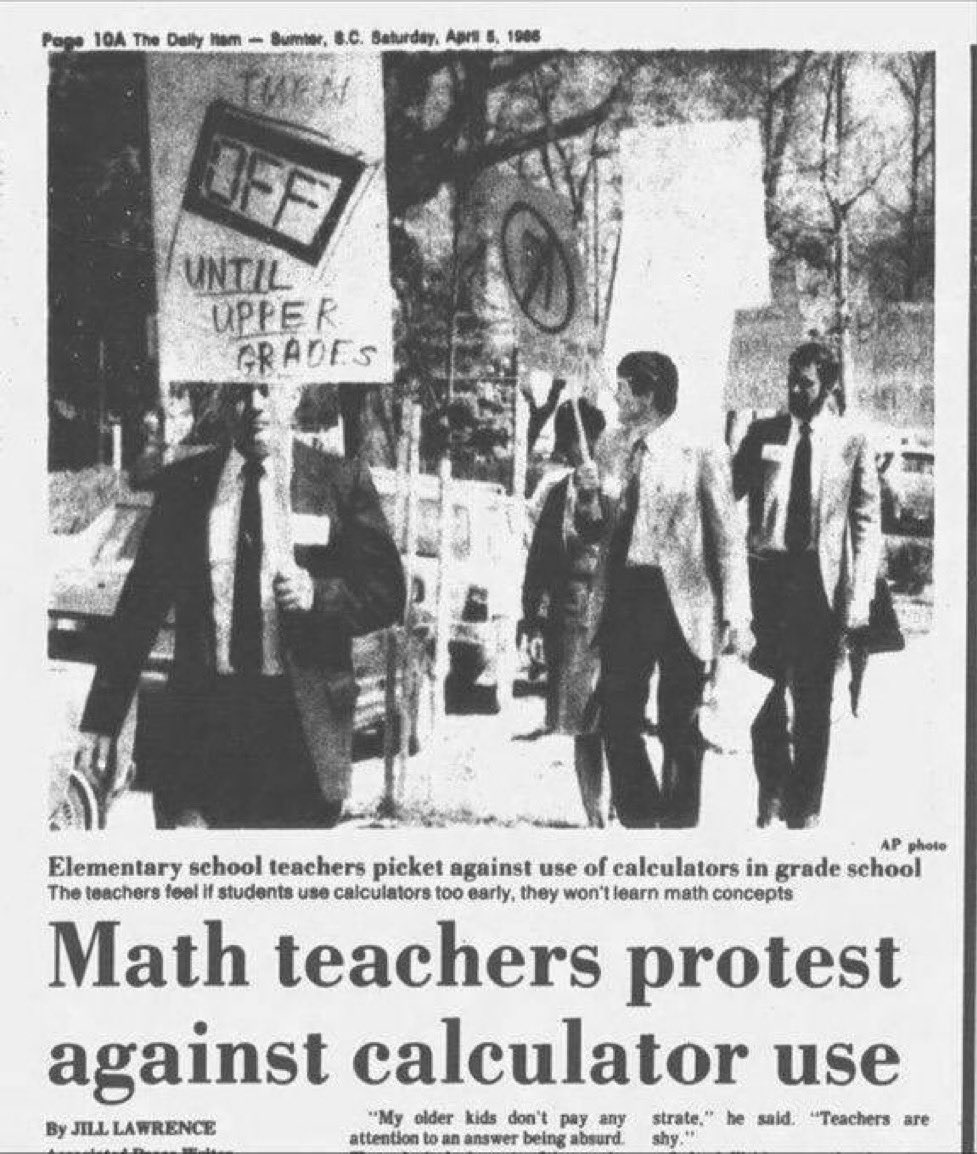
A headline from 1986.
Jon Erlichman tweet media
English
38
58
236
161.5K
prabath retweetledi
Physics In History
Physics In History@PhysInHistory·
More than 350 years after his death, Galileo's middle finger is displayed at the Museo Galileo in Florence, Italy. It was removed from his body by admirers in the 18th century as a relic of the scientist.
Physics In History tweet media
English
65
46
329
29.7K
prabath retweetledi
The Data of Everything
The Data of Everything@TheDataHubX·
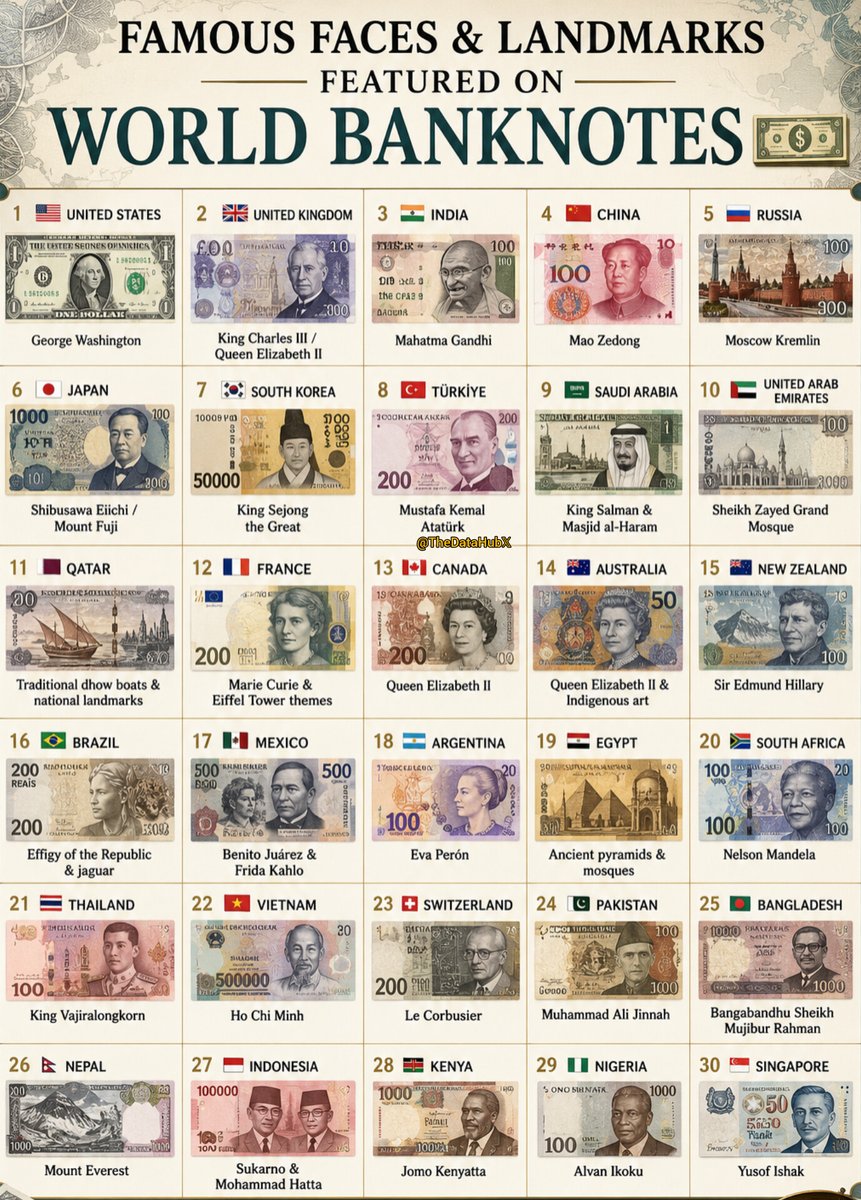
Famous Faces & Landmarks Featured on World Banknotes 💵 1) 🇺🇸 United States → George Washington 2) 🇬🇧 United Kingdom → King Charles III / Queen Elizabeth II 3) 🇮🇳 India → Mahatma Gandhi 4) 🇨🇳 China → Mao Zedong 5) 🇷🇺 Russia → Moscow Kremlin 6) 🇯🇵 Japan → Shibusawa Eiichi / Mount Fuji 7) 🇰🇷 South Korea → King Sejong the Great 8) 🇹🇷 Türkiye → Mustafa Kemal Atatürk 9) 🇸🇦 Saudi Arabia → King Salman & Masjid al-Haram 10) 🇦🇪 United Arab Emirates → Sheikh Zayed Grand Mosque 11) 🇶🇦 Qatar → Traditional dhow boats & national landmarks 12) 🇫🇷 France → Marie Curie & Eiffel Tower themes 13) 🇨🇦 Canada → Queen Elizabeth II 14) 🇦🇺 Australia → Queen Elizabeth II & Indigenous art 15) 🇳🇿 New Zealand → Sir Edmund Hillary 16) 🇧🇷 Brazil → Effigy of the Republic & jaguar 17) 🇲🇽 Mexico → Benito Juárez & Frida Kahlo 18) 🇦🇷 Argentina → Eva Perón 19) 🇪🇬 Egypt → Ancient pyramids & mosques 20) 🇿🇦 South Africa → Nelson Mandela 21) 🇹🇭 Thailand → King Vajiralongkorn 22) 🇻🇳 Vietnam → Ho Chi Minh 23) 🇨🇭 Switzerland → Le Corbusier 24) 🇵🇰 Pakistan → Muhammad Ali Jinnah 25) 🇧🇩 Bangladesh → Bangabandhu Sheikh Mujibur Rahman 26) 🇳🇵 Nepal → Mount Everest 27) 🇮🇩 Indonesia → Sukarno & Mohammad Hatta 28) 🇰🇪 Kenya → Jomo Kenyatta 29) 🇳🇬 Nigeria → Alvan Ikoku 30) 🇸🇬 Singapore → Yusof Ishak Note: The featured people and landmarks are real, while some banknote visuals are artistically recreated for design purposes.
The Data of Everything tweet media
English
12
332
1K
41.2K
prabath retweetledi
a16z
a16z@a16z·
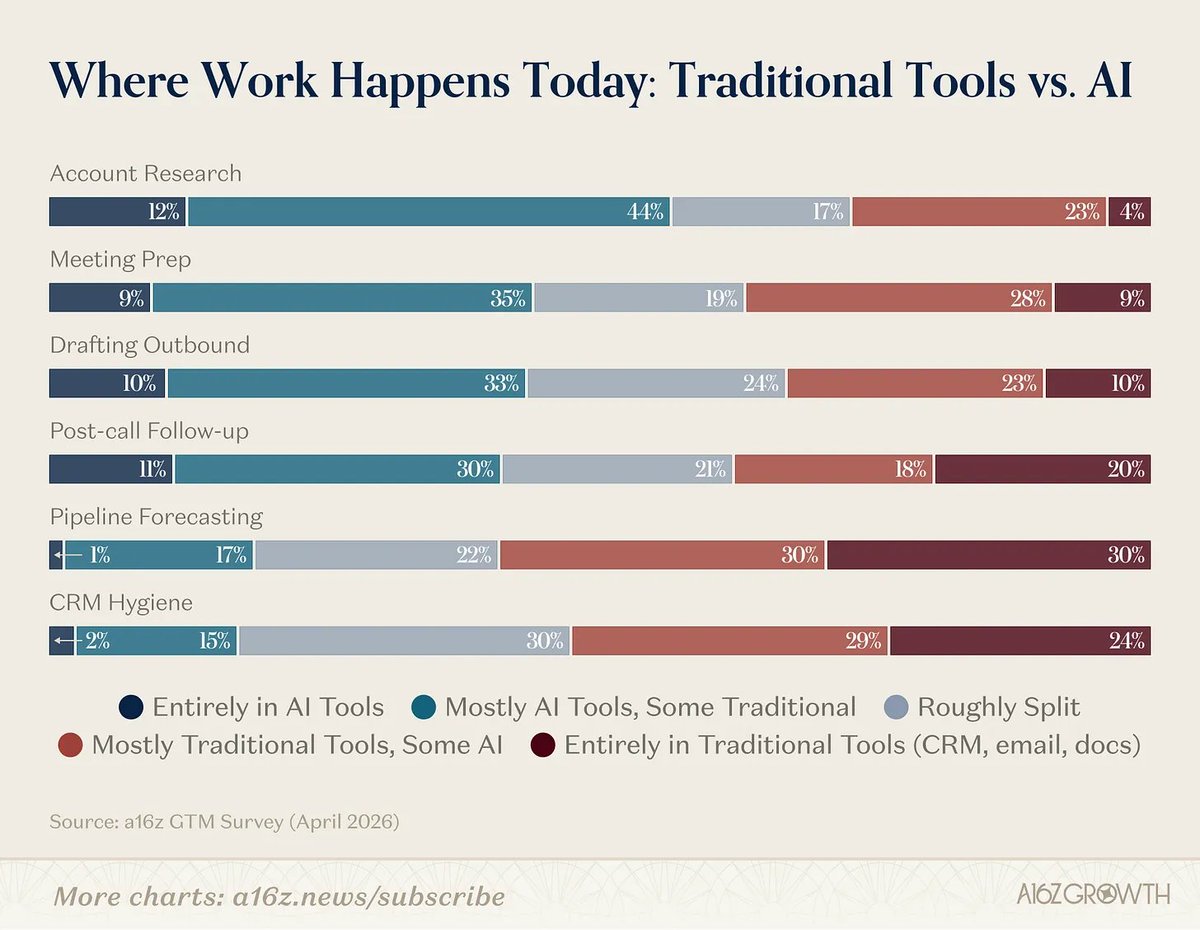
From "System of Record" to "System of Intelligence" In the next decade, you want to own the system of intelligence that pulls from the system of record, becomes the user’s one-stop shop for gaining context and taking action, and turns the SoR into something that’s primarily consumed at the API layer. The reasoning layer that sits above the database is where a new generation of companies is being built, and it’s where the majority of the next decade’s enterprise value of GTM software will end up. Full piece from a16z's Gio Ahern, Steph Zhang, and Alex Immerman: a16z.news/p/from-system-…
a16z tweet media
Steph Zhang@steph_zhang

x.com/i/article/2054…

English
74
185
1.4K
355.7K
prabath retweetledi
Math Cafe
Math Cafe@Riazi_Cafe_en·
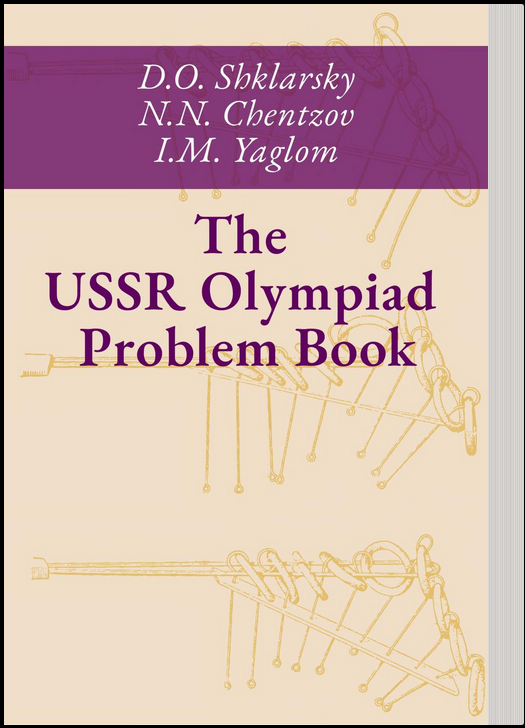
"The USSR Olympiad Problem Book" 320 unconventional problems in algebra, arithmetic, elementary number theory, and trigonometry. Archive link: archive.org/details/shklar…
Math Cafe tweet media
English
4
128
708
21.2K
prabath retweetledi
Asanka Abeysinghe
Asanka Abeysinghe@asankama·
Invaluable is out today. A practical field guide for leaders to define value, align execution, and deliver outcomes. Available in hardcover, paperback, and ebook: a.co/d/08CLbjpT
English
0
4
11
665
prabath retweetledi
Tech with Mak
Tech with Mak@techNmak·
In 1948, a 32-year-old at Bell Labs published a paper nobody fully understood. Engineers found it too mathematical. Mathematicians found it too engineering-focused. One prominent mathematician reviewed it negatively. That paper - "A Mathematical Theory of Communication", became the founding document of the digital age. The man was Claude Shannon. Father of Information Theory. At 21, he wrote the most important master's thesis of the 20th century. Working at MIT on an early mechanical computer, Shannon noticed its relay switches had exactly two states - open or closed. He had just taken a philosophy course introducing Boolean algebra, which also operated on two values: true and false. Nobody had ever connected these two things. His 1937 thesis proved that Boolean algebra and electrical circuits are mathematically identical, and that any logical operation could be built from simple switches. Howard Gardner called it "possibly the most important, and also the most famous, master's thesis of the century." Every digital computer ever built traces back to this insight. At 29, he proved that perfect encryption exists. During WWII, Shannon worked on classified cryptography at Bell Labs. His work contributed to SIGSALY, the secure voice system used for confidential communications between Roosevelt and Churchill. In a classified 1945 memorandum, he mathematically proved the one-time pad provides perfect secrecy, unbreakable not just computationally, but provably, permanently, against an adversary with infinite power. When declassified in 1949, it transformed cryptography from an art into a science. It laid the foundations for DES, AES, and every modern encryption standard. At 32, he defined what information is. His 1948 paper introduced one equation: H = −Σ p(x) log p(x) Shannon entropy. The average uncertainty in a probability distribution. The minimum bits required to encode a message. Three things followed: > He defined the bit - the fundamental unit of all information. His colleague John Tukey coined the name. > He proved the channel capacity theorem, every communication channel has a maximum rate of reliable transmission. You can approach it. You can never exceed it. > He unified telegraph, telephone, and radio into a single mathematical framework for the first time. Robert Lucky of Bell Labs called it the greatest work "in the annals of technological thought." Where his equation lives in AI today: Cross-entropy loss - the function training every classifier and language model, is derived directly from H. Decision tree splits use information gain, which is H applied to data. Perplexity, the standard LLM evaluation metric, is an exponentiation of cross-entropy. Every time a neural network trains, Shannon's formula runs inside it. He also built the first AI learning device. In 1950, Shannon built Theseus, a mechanical mouse that navigated a maze through trial and error, learned the correct path, and repeated it perfectly. Mazin Gilbert of Bell Labs said: "Theseus inspired the whole field of AI." That same year he published the first paper on programming a computer to play chess. He co-organized the 1956 Dartmouth Workshop, the founding event of AI as a field. The man: He rode a unicycle through Bell Labs hallways while juggling. He built a flame-throwing trumpet, a rocket-powered Frisbee, and Styrofoam shoes to walk on the lake behind his house. He called his home Entropy House. When asked what motivated him: "I was motivated by curiosity. Never by the desire for financial gain. I just wondered how things were put together." In 1985, he appeared unexpectedly at a conference in Brighton. The crowd mobbed him for autographs. Persuaded to speak at the banquet, he talked briefly, then pulled three balls from his pockets and juggled instead. One engineer said: "It was as if Newton had showed up at a physics conference." He died in 2001 after a decade with Alzheimer's, the cruel irony of information slowly leaving the mind of the man who defined what information was. Claude, the AI model, is named after Claude Shannon, the mathematician who laid the foundation for the digital world we rely on today.
Tech with Mak tweet media
English
195
2.1K
7.7K
458.8K
prabath retweetledi
Tech with Mak
Tech with Mak@techNmak·
In 1933, a 30-year-old mathematician published a 62-page monograph that changed how mathematics understood uncertainty. Before him, probability was powerful, but its foundations were still debated. After him, probability had a modern axiomatic foundation. The man was Andrey Kolmogorov. Born April 25, 1903. Britannica describes him as a mathematician whose work influenced many branches of modern mathematics, especially probability, set theory, information theory, harmonic analysis, and number theory. But three of his ideas still quietly shape modern AI, physics, and computer science. 1./ Modern probability theory In 1933, Kolmogorov published Foundations of the Theory of Probability. His key move was to ground probability in measure theory. Today, his framework is usually summarized through three core axioms: → Probabilities are non-negative → The whole sample space has probability 1 → Mutually exclusive events add up, even countably many of them That sounds simple. But this is the formal language behind Bayesian inference, stochastic processes, Markov chains, Monte Carlo methods, statistical learning, and uncertainty estimation. Every probabilistic model in AI rests on this basic idea: uncertainty can be reasoned about mathematically. 2./ Turbulence and the −5/3 law In 1941, Kolmogorov turned to one of physics’ hardest problems: turbulence. His K41 theory described how energy in turbulent flow moves from large scales to smaller scales, until viscosity dissipates it as heat. In the inertial range, this led to the famous Kolmogorov −5/3 scaling law: E(k) ∝ k^(-5/3) It is not a complete solution to turbulence. Nothing is. But it remains one of the most important reference points in turbulence theory, computational fluid dynamics, and modern simulation. Even physics-informed ML models for fluid dynamics often use Kolmogorov scaling as a benchmark for whether they are capturing the right physics. 3./ Kolmogorov complexity In 1965, Kolmogorov helped formalize a brutally elegant idea: The complexity of an object is the length of the shortest program that can produce it. A repeated string is simple because a short program can generate it. A truly random string is complex because it has no shorter description than itself. This became one of the foundations of algorithmic information theory. Important caveat: exact Kolmogorov complexity is uncomputable. But the idea still shapes how we think about randomness, compression, information, and learning. It also connects deeply to the Minimum Description Length principle: the best model is not just the one that fits the data. It is the one that explains the data with the shortest useful description. That is Occam’s razor in mathematical form: compress the pattern, not the noise. Kolmogorov did not just solve problems. He built frameworks inside which future problems could be solved.
Tech with Mak tweet media
English
9
176
740
31.2K
prabath retweetledi
Narendra Modi
Narendra Modi@narendramodi·
Best wishes on Buddha Purnima. Our commitment towards realising the ideals of Lord Buddha is very strong. May his thoughts deepen the spirit of joy and togetherness in our society.
English
2.1K
6.3K
43.7K
7M
prabath retweetledi
World and Science
World and Science@WorldAndScience·
Japan’s K computer (which used to be the fastest supercomputer in the world) utilized 82,000 processors to simulate human brain activity. It took the entire supercomputer 40 minutes to simulate just 1 second of brain activity...
World and Science tweet media
English
6
14
65
10.7K
prabath
prabath@prabath·
@BBCWorld Let’s not draw any conclusions yet. In the same news article it says: “Police told BBC Sinhala they believed the monks potentially did not know what they were carrying.”
English
3
0
6
1.2K
prabath retweetledi
Jon Erlichman
Jon Erlichman@JonErlichman·
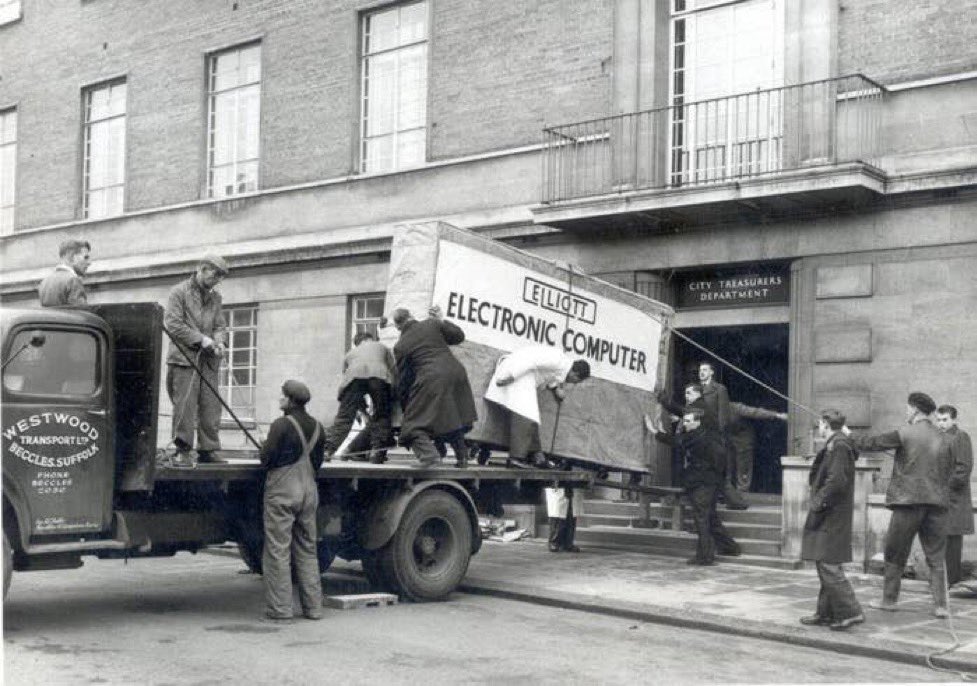
Delivering a computer in 1957.
Jon Erlichman tweet media
English
4
20
93
12.1K
prabath retweetledi
David Senra
David Senra@davidsenra·
Roblox founder @DavidBaszucki bootstrapped his first company to a $20 million exit, then spent two years failing to find a CEO job before building Roblox in his early 40s — no revenue, no investors, pure vision. Today, Roblox has over 150 million daily users, 13 billion hours of monthly engagement, and a virtual economy worth over $40 billion. Here’s our conversation: 0:00 Roblox Origin Story 1:14 Sabbatical and Intuition 3:36 Founder vs CEO Mindset 5:43 Building the Clock 7:57 Lifestyle Startup Phase 8:49 First Product Failure 15:48 Buying First Users 17:43 Studio Goes Live 18:53 Roblox vs YouTube 21:59 Beyond Games Vision 25:50 Roblox Operating System 33:55 Nine Companies Inside 36:19 Safety and Monetization 41:13 Robux Economy Loop 45:19 Creator to Entrepreneur 45:49 Chasing Photoreal Concurrency 49:11 Imaginary Competitor Mindset 50:08 Capital Efficiency Playbook 52:11 Performance As Growth 55:40 Owning The Stack 58:36 Roblox Infrastructure Engine 1:02:32 Safety And AI Moat 1:06:57 Data Ethics And NPC Testing 1:11:31 Creator Earnings Explosion 1:16:08 Marketplace And Transparency 1:20:01 Near Death Lessons 1:24:43 Ads And Creator Discovery 1:25:35 Closing Reflections Includes paid partnerships.
English
58
110
1.5K
1M
prabath retweetledi
Marc Benioff
Marc Benioff@Benioff·
I’m locked on, @DavidSacks! We’re hiring 1,000 new grads & interns right now to ride the AI exponential. You are right they said AI would kill entry-level jobs. Meanwhile these grads & interns are building it — powering Agentforce & Headless360 at Salesforce. 🚀 New grads: Drop your resume to @salesforcejobs or futureforce@salesforce.com #FutureForce #AI
David Sacks@DavidSacks

Narrative violation: Hiring of new college graduates is up 5.6% over last year. Youth unemployment for degreed 20–24‑year‑olds fell to 5.3% from 8.9%. Weren’t we told that 50% of entry-level jobs were going away?

English
165
227
2.6K
1.2M