Prashant Kelker

3.7K posts

Prashant Kelker banner
Prashant Kelker

Prashant Kelker

@prkelker

Helping enterprises buy / acquire digital and emerging technology @ scale. Chief Strategy Officer @ISG_News. https://t.co/bAgyjj5ef0 Tweet views are my own.

New York, USA Katılım Ocak 2010
1.7K Takip Edilen898 Takipçiler
Prashant Kelker retweetledi
Aaron Levie
Aaron Levie@levie·
The next big breakthrough in AI is AI Agents. This is when AI goes from being used as an assistant to chat with, to using AI to accomplish complete tasks that a human might otherwise have to perform. This moves AI from being a "read-only" operation to fundamentally a "read/write" operation. Ultimately, this brings us much closer to the full promise of AI, in particular in the enterprise, where AI can begin to complete any part of a workflow, and we're already seeing examples today of Agents that write entire software applications or respond to customer support tickets. Today, in many ways Agents are where cloud computing was in 2007; that is to say, very early. When you extrapolate this trend out over a decade, we can start to imagine what an entirely different enterprise operation might look like. We can easily picture having highly proficient Agents available for every function in an organization, enabling important work to get done far faster than today. The impact of Agents on the enterprise really has no limit, but 3 big implications stand out to me: 1. Businesses of all sizes will have access to resources and specialized skills that they wouldn't otherwise tap into. Bill Joy, the cofounder of Sun Microsystems, famously said "no matter who you are, most of the smartest people work for someone else." Especially for smaller companies, this has always been a disadvantage. Your larger competitors will always be able to tap into a talent pool that you can't afford or access. Whether it's specialized legal support, or scaling a sales team, AI Agents will enable companies of all sizes the same access to resources that were once only the privilege of a large organization. 2. Companies will be able to re-allocate energy and talent to increasingly more differentiating and higher impact work. We know that for various parts of a company, our time is wasted with tasks that computers *should* be remarkably good at solving, but just haven't been able to today. As AI Agents become more robust, many of these activities that we drain our time on can be automated, and we can repurpose time and energy to driving more innovation, getting closer to our customers, better supporting customers, and more. 3. As AI Agents play a meaningful role in the operations of a company, this changes the nature of the IT function, making it even more strategic than today. Today, IT is often focused on enabling software for existing workers or workflows in a company. In the future, a company will go to IT for supplying intellectual horsepower as well to the enterprise. Imagine going to IT not just to say "I need software to help my engineers build my product" but instead, "I need software to engineer my product". You can squint and picture in the coming years even a "Workday for AI" where you manage Agents that are running around augmenting the operations of a company. And this is just the beginning...
English
109
228
1.3K
366.8K
Prashant Kelker retweetledi
Brian Feroldi
Brian Feroldi@BrianFeroldi·
Capitalism is brutal. If you invest, you MUST know how to identify a moat. Here are 9 financial “rules of thumb” that Warren Buffett uses to tell if a company has one:
Brian Feroldi tweet media
English
82
710
3.8K
1.4M
Michael Girdley
Michael Girdley@girdley·
You want to invest in a private company? There are actually a bunch of different deal structures. Use the right structure, you can make big money. Use the wrong one, you can lose everything. Here’s all the ones I’ve seen:
Michael Girdley tweet media
English
19
50
589
268.7K
Michael Girdley
Michael Girdley@girdley·
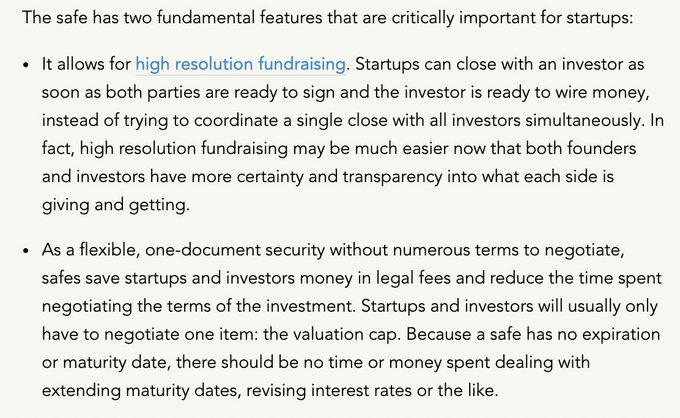
** SIMPLE AGREEMENT FOR FUTURE EQUITY (SAFE)** A common one for VC-style hypergrowth co’s. Came out of YCombinator in CA. Simple contract: your cash gets converted into equity (at a fixed or max price) when $ is raised in more rounds as co grows. You get paid when co sells.
Michael Girdley tweet media
English
2
1
20
10.9K
Prashant Kelker
Prashant Kelker@prkelker·
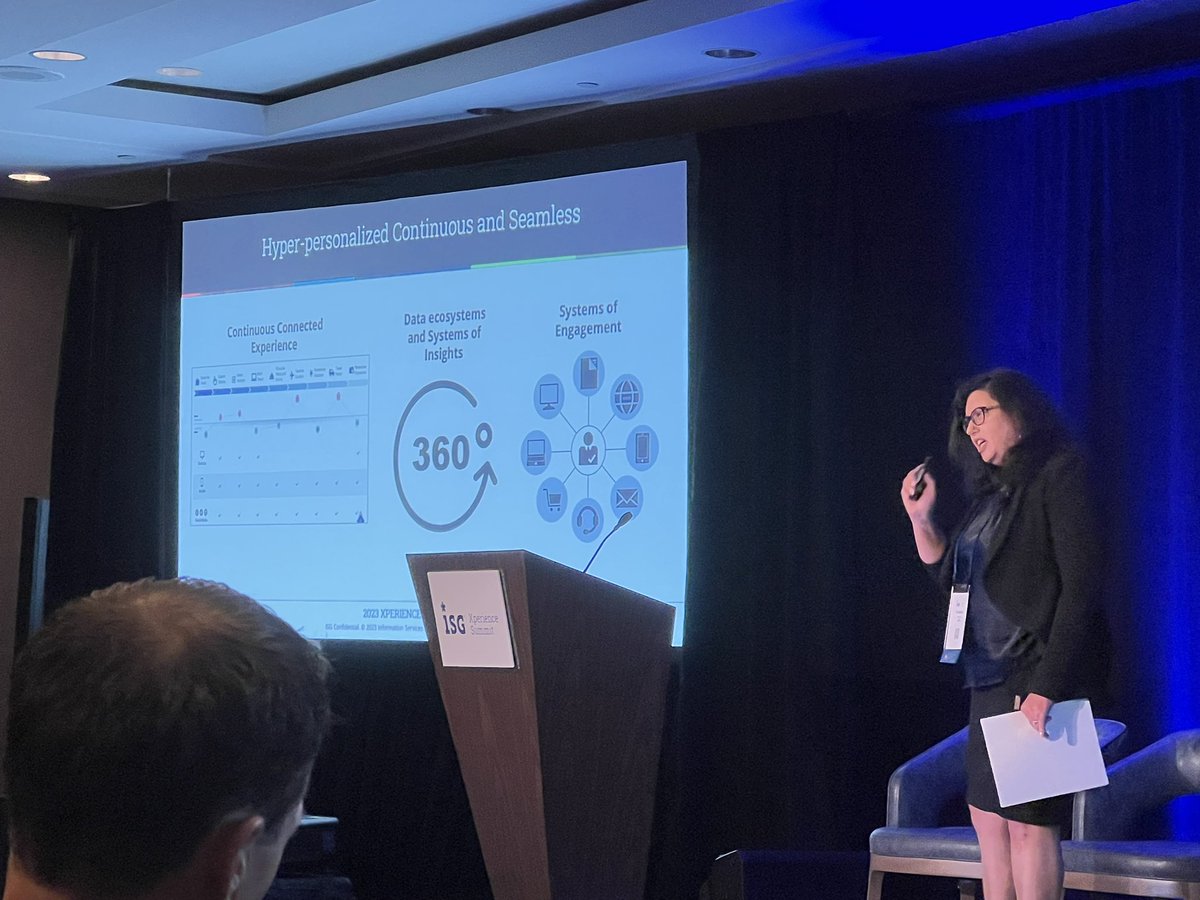
Pratibha - our leader in Travel Transport and Hospitality- kicks off the ISG Xperience summit with systems of insights and connectedness #ISGevents @ISG_News
Prashant Kelker tweet media
English
0
0
5
149
Prashant Kelker retweetledi
Dan Shipper 📧
Dan Shipper 📧@danshipper·
GPT-4 does drug discovery. Give it a currently available drug and it can: - Find compounds with similar properties - Modify them to make sure they're not patented - Purchase them from a supplier (even including sending an email with a purchase order)
Dan Shipper 📧 tweet media
English
132
1K
5.9K
4.2M
Prashant Kelker retweetledi
Matt Turck
Matt Turck@mattturck·
$2B: the purchase price of Credit Suisse, a global firm with $22B in revenues and 50k employees Also, $2B: the current valuation of dozens of (also money-losing) unicorns with <$50-75M in revenues
English
79
242
3K
797K
Prashant Kelker retweetledi
Marc Andreessen 🇺🇸
Why AI Won't Cause Unemployment "In retrospect, I wish I had known more about the hazards and difficulties of [running] a business." -- George McGovern Fears about new technology replacing human labor and causing overall unemployment have raged across industrialized societies for hundreds of years, despite a nearly continual rise in both jobs and wages in capitalist economies. The job apocalypse is always right around the corner; just ask the Luddites. We had two such anti-technology jobs moral panics in the last 20 years — “outsourcing” enabled by the Internet in the 2000’s, and “robots” in the 2010’s. The result was the best national and global economy in human history in pre-COVID 2019, with the most jobs at the highest wages ever. Now we’re heading into the third such panic of the new century with AI, coupled with a continuous drumbeat of demand for Communist-inspired Universal Basic Income. “This time is different; AI is different,” they say, but is it? Normally I would make the standard arguments against technologically-driven unemployment. And I will come back and make those arguments soon. But I don’t even think the standand arguments are needed, since another problem will block the progress of AI across most of the economy first. Which is: AI is already illegal for most of the economy, and will be for virtually all of the economy. How do I know that? Because technology is already illegal in most of the economy, and that is becoming steadily more true over time. How do I know that? Because, see the chart. This chart shows price changes, adjusted for inflation, across a dozen major sectors of the economy. As you can see, we actually live in two different economies. The lines in blue are the sectors where technological innovation is allowed to push down prices while increasing quality. The lines in red are the sectors where technological innovation is not permitted to push down prices; in fact, the prices of education, health care, and housing as well as anything provided or controlled by the government are going to the moon, even as those sectors are technologically stagnant. We are heading into a world where a flat screen TV that covers your entire wall costs $100, and a four year college degree costs $1 million, and nobody has anything even resembling a proposal on how to fix this. Why? The sectors in red are heavily regulated and controlled and bottlenecked by the government and by those industries themselves. Those industries are monopolies, oligopolies, and cartels, with extensive formal government regulation as well as regulatory capture, price fixing, Soviet style price setting, occupational licensing, and every other barrier to improvement and change you can possibly imagine. Technological innovation in those sectors is virtually forbidden now. Whereas the sectors in blue are less regulated, technology whips through them, pushing down prices and raising quality every year. Note the emotional loading of the interplay of production and consumption here. What do we get mad about? With our consumer hat on, we get mad about price increases — the red sectors. With our producer hat on, we get mad about technological disruption — the blue sectors. Well, pick one; as this chart shows, you can’t have your cake and eat it too. Now think about what happens over time. The prices of regulated, non-technological products rise; the prices of less regulated, technologically-powered products fall. Which eats the economy? The regulated sectors continuously grow as a percentage of GDP; the less regulated sectors shrink. At the limit, 99% of the economy will be the regulated, non-technological sectors, which is precisely where we are headed. Therefore AI cannot cause overall unemployment to rise, even if the Luddite arguments are right this time. AI is simply already illegal across most of the economy, soon to be virtually all of the economy.
Marc Andreessen 🇺🇸 tweet media
English
380
1.1K
6.2K
2.6M
Prashant Kelker retweetledi
Peter Frankopan
Peter Frankopan@peterfrankopan·
Well. Here it is ! #EarthTransformed. Out on 2 March 2023 in all good bookshops near you….
Peter Frankopan tweet media
English
205
420
3.3K
1.2M
Prashant Kelker retweetledi
Alexander Kruel
Alexander Kruel@XiXiDu·
Your frequent reminder that the world could have defeated climate change in the 1980s if all industrialized nations had followed France's lead.
Alexander Kruel tweet media
English
254
3K
17.6K
1.4M
Prashant Kelker retweetledi
Sarbjeet Johal
Sarbjeet Johal@sarbjeetjohal·
Cloud is much more important to overall health of the company for @Microsoft and @Amazon, as compared to Google.
Fremont, CA 🇺🇸 English
4
2
8
2.7K
Prashant Kelker retweetledi
Jeff Weniger
Jeff Weniger@JeffWeniger·
Housing is in trouble. 1/8
English
247
870
4K
2.1M
Prashant Kelker
Prashant Kelker@prkelker·
Will 2023 be the year of purpose-built industry clouds? A good place to look is within #Industry #Ecosystems. E.g in Healthcare, boundaries between payers, providers and platforms are blurring. Value gets created at these boundaries giving birth to #industry #cloud ? @ISG_News
ISG@ISG_News

Our President of Research & CX, @pgottsegen, asked our CSO, @prkelker: ❓ What are the #Top3 IT & business trends for 2023? No. 1⃣ is industry specialization. 🎬 Watch to find out what you should be paying attention to in this space in 2023 👇 lnkd.in/gtxXQZBh

English
0
2
4
237
Prashant Kelker retweetledi
Dror Poleg
Dror Poleg@drorpoleg·
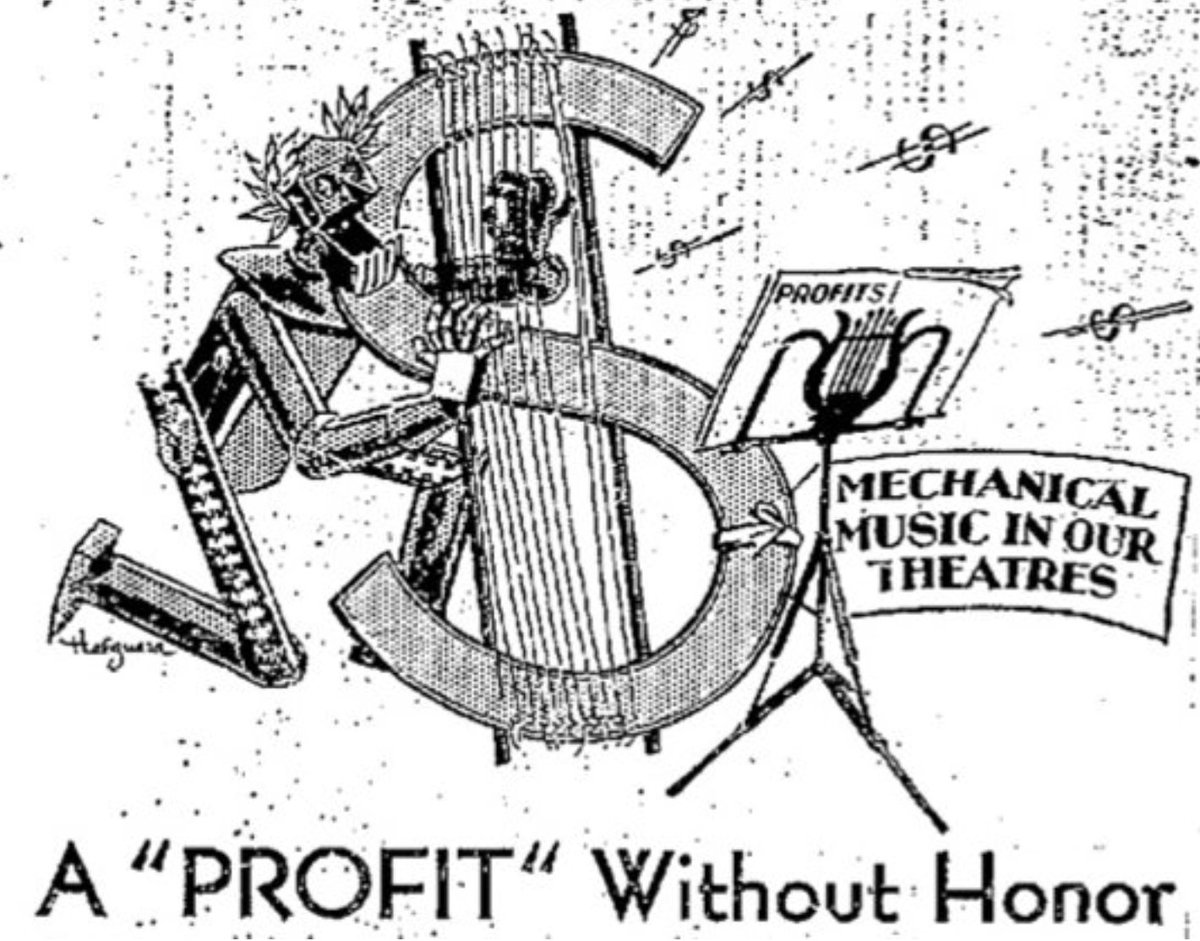
In 1930, the union of American singers spent the equivalent of $10m on a campaign to stop people from listening to recorded music and watching movies with sound. 1/
Dror Poleg tweet media
English
69
1.3K
6.8K
1.4M
Prashant Kelker retweetledi
NVIDIA
NVIDIA@nvidia·
In celebration of the holiday season, our CEO’s #AI avatar, Toy Jensen, sings in his musical debut. A performance created with @NVIDIAOmniverse Avatar Cloud Engine (ACE) technology. Learn more at nvda.ws/3FRqJss. Happy Holidays!
English
46
95
477
183.8K
Prashant Kelker retweetledi
Paul Graham
Paul Graham@paulg·
I used to think <person> was smart. Then I discovered that he disagrees with me about <political issue>, and I realized he couldn't be, because no one who disagrees with me about <political issue> could be smart.
English
996
2.9K
28.9K
6.3M
Prashant Kelker retweetledi
Agentforce Commerce
Agentforce Commerce@CommerceCloud·
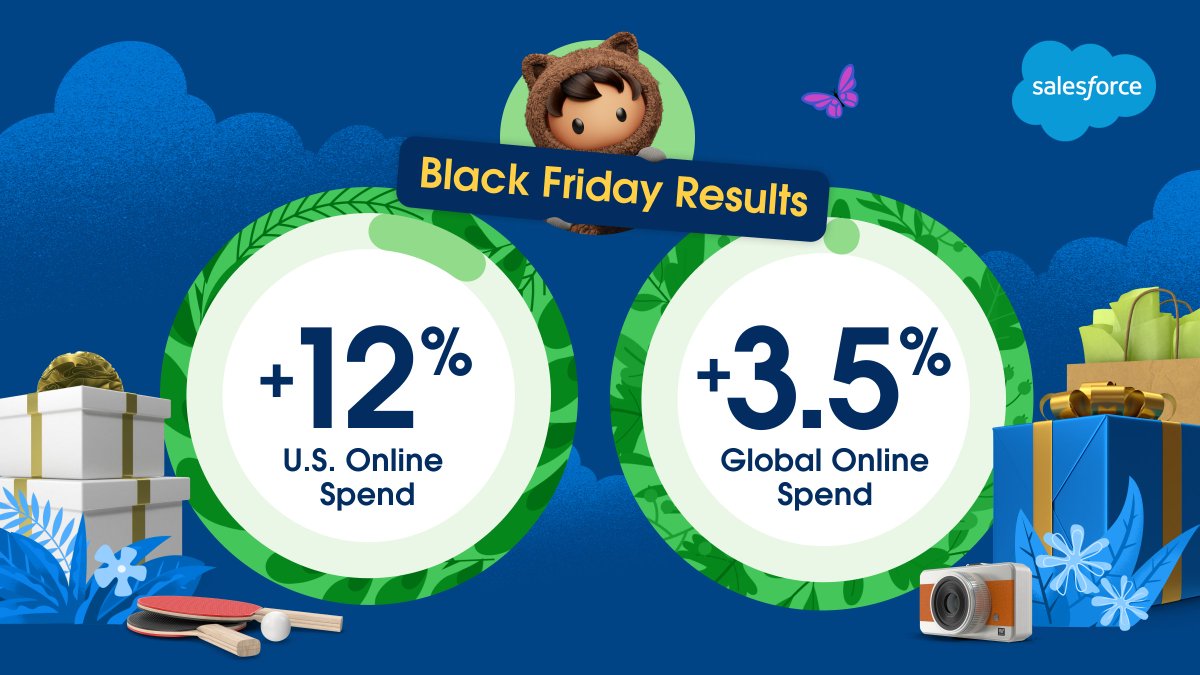
It was the biggest Black Friday in history. Online sales grew 3.5% globally, driven by strong performance in the U.S., which grew 12%. Power retail success now with real-time Cyber Week data. Check out our @Tableau dashboards: sforce.co/3gjtNFi #holidayflashstats
Agentforce Commerce tweet media
English
1
28
58
0