

Matt | Arch
5K posts

Matt | Arch
@proofofmud
I like to build big things 🟠 ⋒ BTC class of 2012 ⋒ 🟠 🏦 Building the Bitcoin-native finance layer @archntwrk
Katılım Haziran 2021
3.4K Takip Edilen35.9K Takipçiler

A prof at a top school joked to me that when BTC is up, their blockchain course is full & they turn students away. When it’s down, they have to recruit students just to fill the class. Imo the crypto preseed/seed market is the same way. It’s quiet now, but things can flip fast.
English

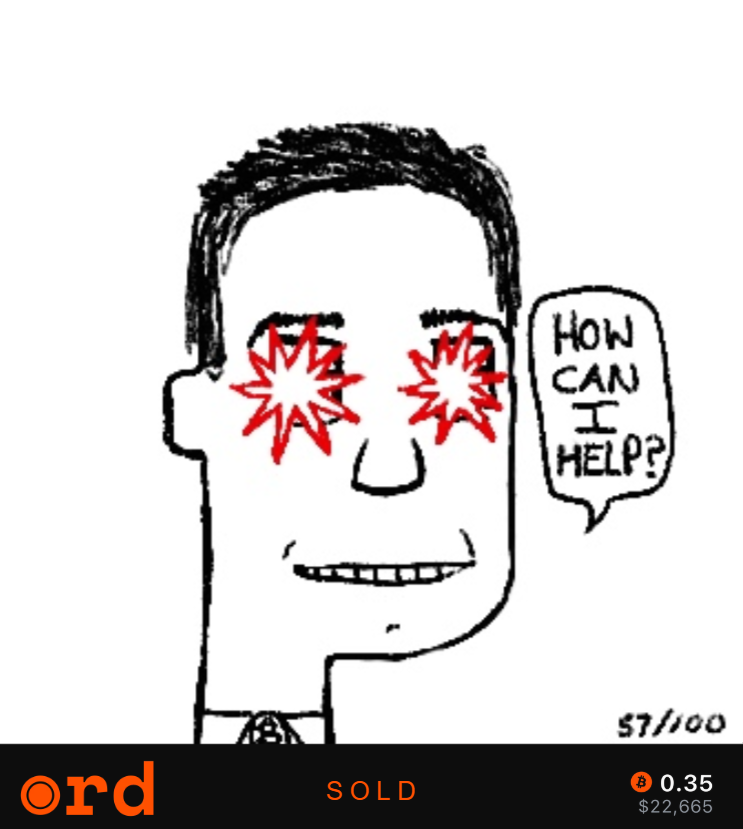
Eventful night at ◉RD with OMB and Parasite.
🔴 0.35 BTC Red Eye sale
🔵 0.28 BTC Blue Eye sale
🤝 Huge trade of 10 Black Eyes + 0.1 BTC for a Blue Eye
🥑 Hit a Bravocado through Parasite Refinery
Everyone keeps saying Bitcoin is money.
Some of us actually use it as money ✨


English

Not trying to jump the line, I'm just a base commander into the archstronaut testnet program and if there's space to participate in the beta, I'll love lend a hand. Proud of what the team is building .
gArch

Matt | Arch@proofofmud
@Goalspire @ArchNtwrk Let’s get you set up 🫡
English
English

@proofofmud @__Emmide @bestnftseen @inkfndhq @base @Superpositionso @linera_io @ArchNtwrk what of me @proofofmud been contributing since 2024 i really like to.test it out
English

. @inkfndhq Still yet no info about when they’d launch close to a year
@base is still “exploring” if they will launch a token
@Superpositionso I don’t even know what to say to them
@linera_io still hasn’t said anything
@ArchNtwrk it’s 2 years already
Just launch!!!
English

Hey @proofofmud 👋🏿
I have been contributing to Arch Network since the early days of 2024 and I have developed a strong understanding of what you're building on ₿itcoin. Through my content, I consistently advocate for the project and help spread Arch's vision.
I would really appreciate the opportunity to get early access and test this out. As a longtime supporter and contributor to Arch Network, I would be excited to provide feedback and help in any way I can. 🫡
gArch 🧡

Matt | Arch@proofofmud
@__Emmide @bestnftseen @inkfndhq @base @Superpositionso @linera_io @ArchNtwrk @__Emmide Been building since ‘23 actually. Lasting contributions take time, and I can assure you we’re not building any ordinary “L2” . I’d be happy to do a live walkthrough of the beta for you and give you an invite code for mainet to try it out and then see how you feel.
English

If you want to get a job at a startup, email or DM the founder/exec. Send them 3 non-obvious ideas on how they can improve their company: the website needs improvement, is typically an easy one but again don't make it too obvious. Put in effort.
Most founders will reply and get you setup with HR or interview you themselves.
If you get the interview, do work ahead of the call and build something ahead of the call. Show them you're ready to get going. Everyone wants fresh energy.
English
@hosseeb @sentisniper The last paragraph resonates. What’s an example of optimally capturing value by not being risk averse
English

"Optimize for the upside" is not the same as optimizing for the future.
Optimizing for the future is often a mistake; I don't in general recommend that. Another way to describe optimizing for the future is applying a very low time discount rate, which startups shouldn't be doing.
Optimizing for the upside is more like, run a lot of little experiments, but design all of them as though they will succeed beyond your wildest expectations. Then if one of them does, you'll be able to capture a lot of value.
The worst mistake a startup can make is to have a successful product / outcome, but your ability to capture its value gets kneecapped because you were too risk averse at the outset and were focused on insurance rather than upside.
English
The two mantras I repeat most often to founders:
1. The shortest distance between two points is a straight line. If you want to do X, just go straight to X. Don't waste your time with setup or pre-requisites or throat-clearing, just go do the thing you want to do. Launch the product. Sell to the enterprise. Make the big ask. Go do it and you'll learn by doing.
2. Optimize for the upside. Most of your expected value is in the universe where you succeed, so optimize for that universe. If you're going to fail, micro-optimizing your failures is a waste of energy. You might fail, fine--pick yourself up and do something else. But over the long run, optimizing for the upside is how you make good outcomes you will have defensible and self-compounding.
English
@ShizzyUnchained @ArchNtwrk Zoom out. Btc is bigger than our little “btc eco bubble”
English

@proofofmud @ArchNtwrk I’m personally done with the Bitcoin ecosystem but I’m rooting for you guys at Arch!
English

Every technological shift creates new financial rails.
The internet created e-commerce.
Mobile created digital payments.
Bitcoin is creating infrastructure for digitally native capital.
English
@ShizzyUnchained @ArchNtwrk Runway? lol 😝 we are acquiring teams, tech and still hiring . Keep your notifications on!
English
@lukaivicev on/off ramps isnt the "thing" , its the thing that gets you to the "thing"
use it as a loss leader / tip of spear
English
Ok so a ton of people replied/DM'd me saying "we do on/off ramps for free." If that's the case, why is Bridge the defacto owner of on/off ramp infra, charging 75bps for new customers and ~3bps for scaleups?
No one has clearly cracked this as fintechs are still paying for on/off ramps which makes them forced to pass on the cost to the customer.
Payment as a business makes almost no money, therefore these companies need to charge for something.
If you're offering free on/off ramps, you should convert all fintechs today to use your free product, and make money elsewhere otherwise on/off ramps will always cost something.
Something is missing here. Price is clearly not the most important part.
Luka Ivicevic@lukaivicev
The one reason I’m bearish on stablecoins as a form of payment is because of the cost of on/off ramps. It has price elasticity limits to it where sending a wire may be slower but $1=$1, while even at 1bp to off ramp you’re paying $10k on $100M. Who's making on/off ramps free at scale? I also don't think netting is the best approach.
English
Matt | Arch retweetledi

a website that turns the 1 second bitcoin chart into an actual war
English
@LorenzoARK They call it floor trading for a reason !
The market can remain mispriced longer than you can remain in earshot. 😆
English

There is a guy in my office who kept offering pretty good odds against the U.S. winning it all.
I overheard him offring that bet several times.
Then I moved desks and couldn’t hear him anymore.
Costly deterioration in information flow. Absolute financial malpractice on my end.
I might have to move my desk again
English
@hosseeb Let’s put it to the test. Your personal analysis of Arch and Fables. Deep tech with a novel business model. You give me 45 minutes, and feed the entire data room and docs to fable and let’s see how similar/dissimilar the takes are
English
As a VC, Fable is better than me at VC work.
It breaks down white papers better than I do. It's better at financial analysis. It chews through mountains of diligence in minutes. There is no single well-scoped intellectual task where I beat a frontier AI. I catch its mistakes sometimes, but it catches mine more often.
If my job is "VC work," then Fable is better than me at my job.
But Fable alone would be a mediocre investor.
It would quickly pass on all the bunk, sure. But among the set of doable deals, it can't find the one with the je ne sais quoi. It doesn't have the bias toward special people, wild ideas, or risk-taking. Its tweets and thinkpieces are OK, but they're too safe, too obvious. I can prompt it in the right direction, but even then it's not quite right. It's too suggestible. It changes its mind too easily. It's not stubborn, self-assured, irrationally confident about how the future will play out, the way great investors are.
But me + Fable is really good. Better than either of us alone. In fact every investor on our team has leveled up with AI in the same way. We all feel we have more to do now, not less. We feel more capable, not less.
My theory is that AI disempowers service providers and empowers owners. If you sell your labor by the task, AI is genuinely terrifying. It can accomplish that task cheaper, faster, with more control and less bullshit. But if you own the outcome, if you're using AI to do something for you, then AI is amazing. It's empowering, not disempowering. Make your own logo, design your own website, write your own copy, build your own systems.
It also means is that you should aim to reorganize yourself in the food chain. If you don't, AI will do it for you. Don't be a service provider, be an owner. If you're building something, you are a beneficiary of AI, all of the incredible gains that AI is enabling will accrue to you too.
But if you're a tax on people building things, just know that the tax rate on building is rapidly going to 0.
Gal Shir@galshirart
It’s over. I’m quitting design. A client of mine just created a logo with Fable 5, and the result left me speechless. It understood the brand story, values, audience, strategy, and turned all of it into a smart, minimal symbol. A genuinely brilliant concept. The kind of idea that captures everything at once. Something I honestly don’t think I would have come up with myself. And it didn’t just nail the idea. It executed the design pixel-perfectly. So I raise the white flag. My skepticism about AI’s ability to do great design is officially gone. There, I said it: AI beat me at design. Now that AI finally took my job, I can peacefully quit and dedicate my life to studying the only thing it may never achieve: human consciousness and the pathways to God. Good luck everyone.
English

@JamesWBream They would totally remove it from subs because they make the majority of their money from enterprise, and they need to make sure they have capacity for enterprise
English
ARE YOU KIDDING ME??????!!!!!!!!!
Claude@claudeai
We're extending access to Claude Fable 5 on all paid plans through July 12.
English
@robj3d3 This will keep happening I think. There’s little reason to charge more right now . ChatGPT new model would come out days after . This is a race and profits don’t factor in. Whoever has the better growth numbers when they ipo is the game
English
@jonah_b What would happen if a stablecoin was cheaper to borrow but still paid more to lenders/stakers than any other stable?
English

ethereum:0x88887be419578051ff9f4eb6c858a951921d8888 has pulled in over $10M across multiple deposits in the last few hours. TVL now $69.9M.
Up from $58M when we flagged it 3 days ago. New capital, and the floor rate held.
See how many holders are stacking on the Explorer.
Portals.fi | DeFi Explorer@portals_fi
『 Portals integrates @CapApp 』 The covered credit protocol where institutional borrowers generate stablecoin yield, and every loan is covered by escrowed underwriter collateral. Portals offers one-click access to the ethereum:0x88887be419578051ff9f4eb6c858a951921d8888 opportunity & capUSDC position on Ethereum.
English

another perpDEX just shut down
we’ll see many more stopping operations, not TGE’ing, or straight up scamming users
perps are an amazing financial product and are still in their early stages
the entire perps industry is going to get huge over the coming years
this attracts tons of scammers and grifters
many teams simply raise money, build a perpDEX, raise money, run an incentive/points program, extract users by making them farm an airdrop that will never come, then shut down and disappear forever
but the few good, truly innovative ones will survive and see insane growth
hyperliquid: obvious winner
lighter: great integrations + high likelihood of regulatory clarity in the US
variational: RFQ model, very interesting for low liquidity and RWA perps

English