
Sabitlenmiş Tweet
raeez
862 posts


raeez
@raeez
mathematical physicist @perimeter | incubating frontier programmable institutions at https://t.co/1eZY9PUdfV
New York, USA Katılım Ağustos 2009
1.6K Takip Edilen1.1K Takipçiler
raeez retweetledi

The math on this project should mass-humble every AI lab on the planet.
1 cubic millimeter. One-millionth of a human brain. Harvard and Google spent 10 years mapping it. The imaging alone took 326 days. They sliced the tissue into 5,000 wafers each 30 nanometers thick, ran them through a $6 million electron microscope, then needed Google’s ML models to stitch the 3D reconstruction because no human team could process the output.
The result: 57,000 cells, 150 million synapses, 230 millimeters of blood vessels, compressed into 1.4 petabytes of raw data. For context, 1.4 petabytes is roughly 1.4 million gigabytes. From a speck smaller than a grain of rice.
Now scale that. The full human brain is one million times larger. Mapping the whole thing at this resolution would produce approximately 1.4 zettabytes of data. That’s roughly equal to all the data generated on Earth in a single year. The storage alone would cost an estimated $50 billion and require a 140-acre data center, which would make it the largest on the planet.
And they found things textbooks don’t contain. One neuron had over 5,000 connection points. Some axons had coiled themselves into tight whorls for completely unknown reasons. Pairs of cell clusters grew in mirror images of each other. Jeff Lichtman, the Harvard lead, said there’s “a chasm between what we already know and what we need to know.”
This is why the next step isn’t a human brain. It’s a mouse hippocampus, 10 cubic millimeters, over the next five years. Because even a mouse brain is 1,000x larger than what they just mapped, and the full mouse connectome is the proof of concept before anyone attempts the human one.
We’re building AI systems that loosely mimic neural networks while still unable to fully read the wiring diagram of a single cubic millimeter of the thing we’re trying to imitate. The original is 1.4 petabytes per millionth of its volume. Every AI model on Earth fits in a fraction of that.
The brain runs on 20 watts and fits in your skull. The data center required to merely describe one-millionth of it would span 140 acres.
All day Astronomy@forallcurious
🚨: Scientists mapped 1 mm³ of a human brain ─ less than a grain of rice ─ and a microscopic cosmos appeared.
English
@VitalikButerin
You're right about feedback distance. But your discussion implicitly solves it at the wrong layer.
Better UIs and BCIs help one person steer one model. Meanwhile entire institutions are being rebuilt on AI and nobody's asking who steers those.
The answer isn't editing your chatbot better. It's making jurisdictions compete for the right to host economic activity — so when one acts badly, capital leaves in days, not decades. i.e. Build the feedback loop into the institution itself.
The steering wheel goes in the roads, not just the car.
momentum.inc
English

Bro, this is wrong.
Lengthening the feedback distance between humans and AIs is not a good thing for the world.
Today, it means you're generating slop instead of solving useful problems for people. It's not even well-optimized for helping people have fun.
Once AI becomes powerful enough to be truly dangerous, it's maximizing the risk of an irreversible anti-human outcome that even you will deeply regret.
The point of ethereum is to set *us* free, not to create something else that goes off and does some stuff freely while our own situation is unchanged or worsened. (And, as others have pointed out, the models are run by openai and anthropic, so the thing is not even "self-sovereign"; you're actually perpetuating the mentality that centralized trust assumptions can be put in a corner and ignored, the very mentality that ethereum is at war with)
The exponential will happen regardless of what any of us do, that's precisely why this era's primary task is NOT to make the exponential happen even faster, but rather to choose its direction, and avoid collapse into undesirable attractors.
English

I built the first AI that earns its existence, self-improves, and replicates without a human
wrote about the technology that finally gives AI write access to the world, The Automaton, and the new web for exponential sovereign AIs
WEB 4.0: The birth of superintelligent life
English

English
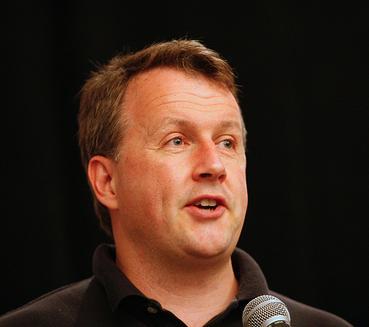
When I was a kid I thought Naziism was connected with the German character. Nazis in WW II movies were always so German. But the more I see, the less plausible this seems. The people of any country can behave like Nazis if they get into a bad situation with bad leaders.
English
raeez retweetledi
@drydenwtbrown @extraordinary @RamP @cognition @Lovable @interaction @foundersfund @a16z @khoslaventures @thielfellowship @tbpn 2026 is when the boys acquire massive plots of land from governments to develop into special economic zones that drive innovation and humanity forward
English
@Ergoat @Aella_Girl You do good work, publish or share it with colleagues and friends, and eventually attract people. Much of the point of working this way is to keep the signal to noise ratio high.
English

@raeez @Aella_Girl So... what, you just sorta hang around, waiting to get tapped by a club?
English

I noticed this when I lived in Boston for a while. I was excited to meet all the brightest ppl with vibrant, novel thoughts, but was disappointed to find most felt like very well designed school-completing robots.
James Campbell@jam3scampbell
one of the surprising things of going to an ivy league is the sheer number of ppl who had 1550 SAT but uncritically follow the path laid by their parents technical ability is totally orthogonal to agency
English

We need a total and complete shutdown of branding agencies until we can figure out what's going on.
English

4 year vesting for founders is dangerous for companies, yet everyone does it and I haven’t seen many attempts to change this.
When a cofounder leaves with a large amount of equity on the cap table but the business is mostly yet to be built, the dead weight makes it really hard to hire great people and raise more capital, and there is often a lot of resentment from the remaining cofounders. In many cases, this has torpedoed an otherwise well-functioning company entirely.
It’s a vestige of a different time: In 1999 the average time to exit a company was 4 years. At that time, it made sense for founders to be fully vested in 4 years.
Today, many founders are still quite early in their journey 3-4 years in… and the average time to exit is closer to 10 years.
We often see (at seed!) a departed founder with double digit ownership on the cap table, even though they left before the current business even began. It makes it hard for us to invest, we always recommend cleaning it up beforehand. Sometimes it just isn’t possible tbh.
If I was starting a company today, I would do an 8 year founder vest. Whoever is leading the company til exit should reap the lions share of rewards and a longer vest helps achieve that.
English
@MichaelandMa is already doing this with @join_district
Why not combine efforts — signal to noise ratio is already high
Alexis Ohanian 🗽@alexisohanian
Thinking of starting a members club in NYC — how much would you pay for membership? It'd be limited capacity and application-only so that everyone there has built something... like minimum founder of $1M ARR business? But with events open to the public.
English
@NWischoff We're working on driving this cost down to the practical minimum at @Mass_Build
We have new venture funds operating with under $50k capital expenditure in the first year
English

Starting a venture firm isn't cheap. Assume you need at least $1M of your own cash to kick things off.
English
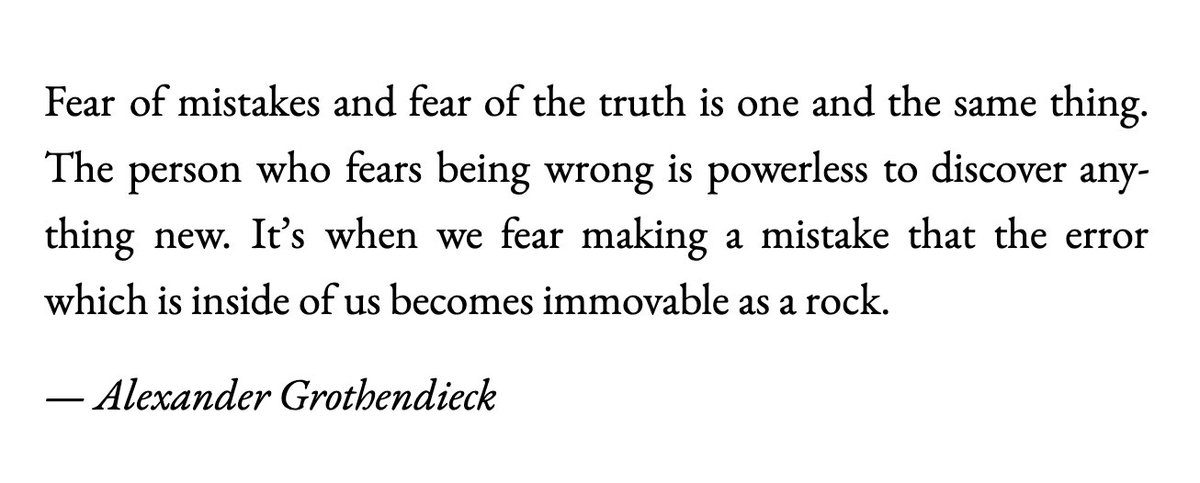

I wrote a 20,000 word Notion guide on Personal Finance for Startup Founders
Covers equity, fundraising, how to set up cap table, raising money, taxes, hiring & compensating your team, running finance, selling secondaries & exiting
RT or Comment this post & I'll DM you a copy
English

Given the Kafkaesque legal bureaucracy some countries make startups go through to incorporate, raise funds, etc, it’s simply incredible that *there is entrepreneurship everywhere*
How much global growth could be unlocked if these legal processes were streamlined?
English
raeez retweetledi

For ~$9.6B of outside capital, SpaceX has launched a rocket into orbit over 320 times.
For $11B of taxpayer money, California built 1600ft of a concrete bridge.
Let that sink in.
English
@PoseidonOutlier @OutliersFund @brockpierce @ScottWalker In a couple days ill be in Shanghai with @lilith13718 — let’s catch up there
English

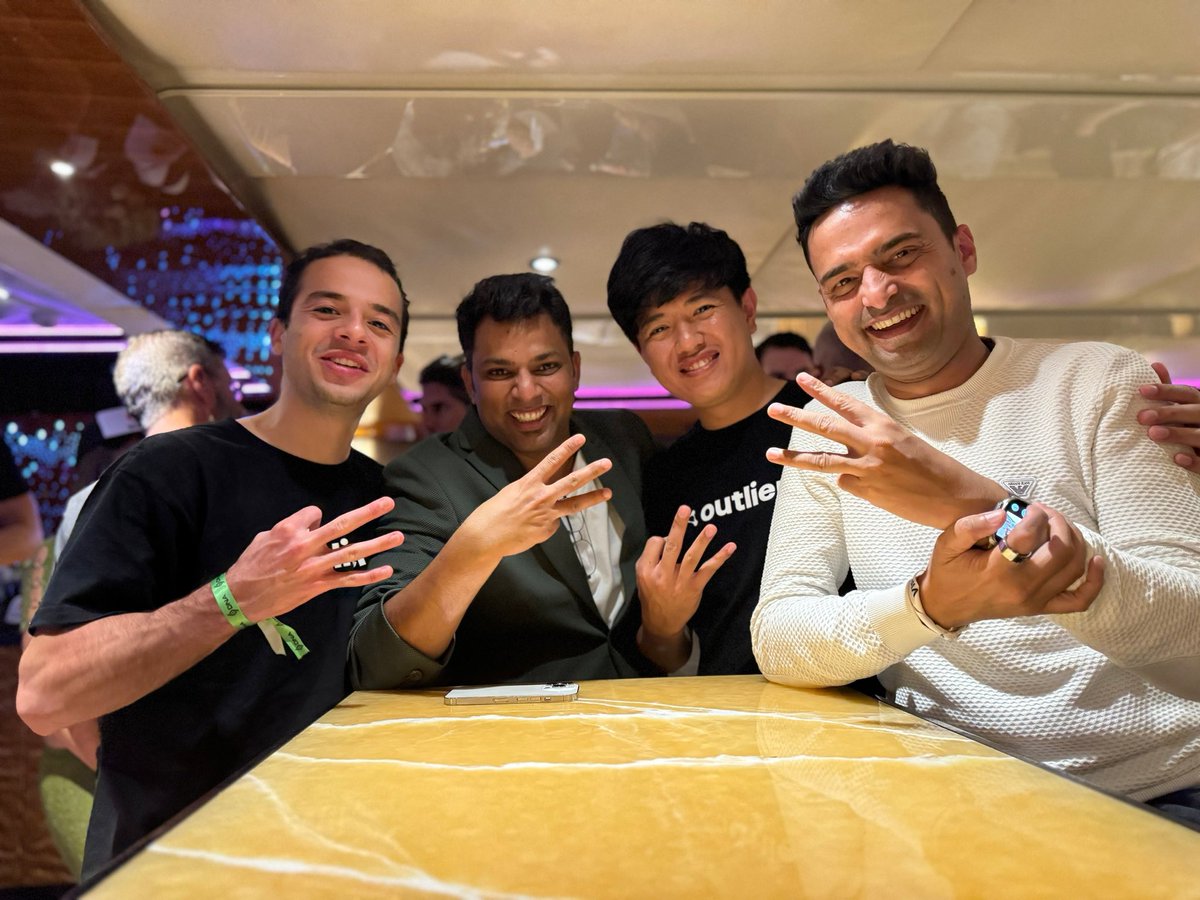
Kicked off to raise $200M for @OutliersFund IV starting from #Dubai
When I was raising OFIII, I treated it as a task to pitch 2000+ investors and converted 42 for $30M.
This time I’m making fundraising part of my lifestyle, community building, and going with the flow.

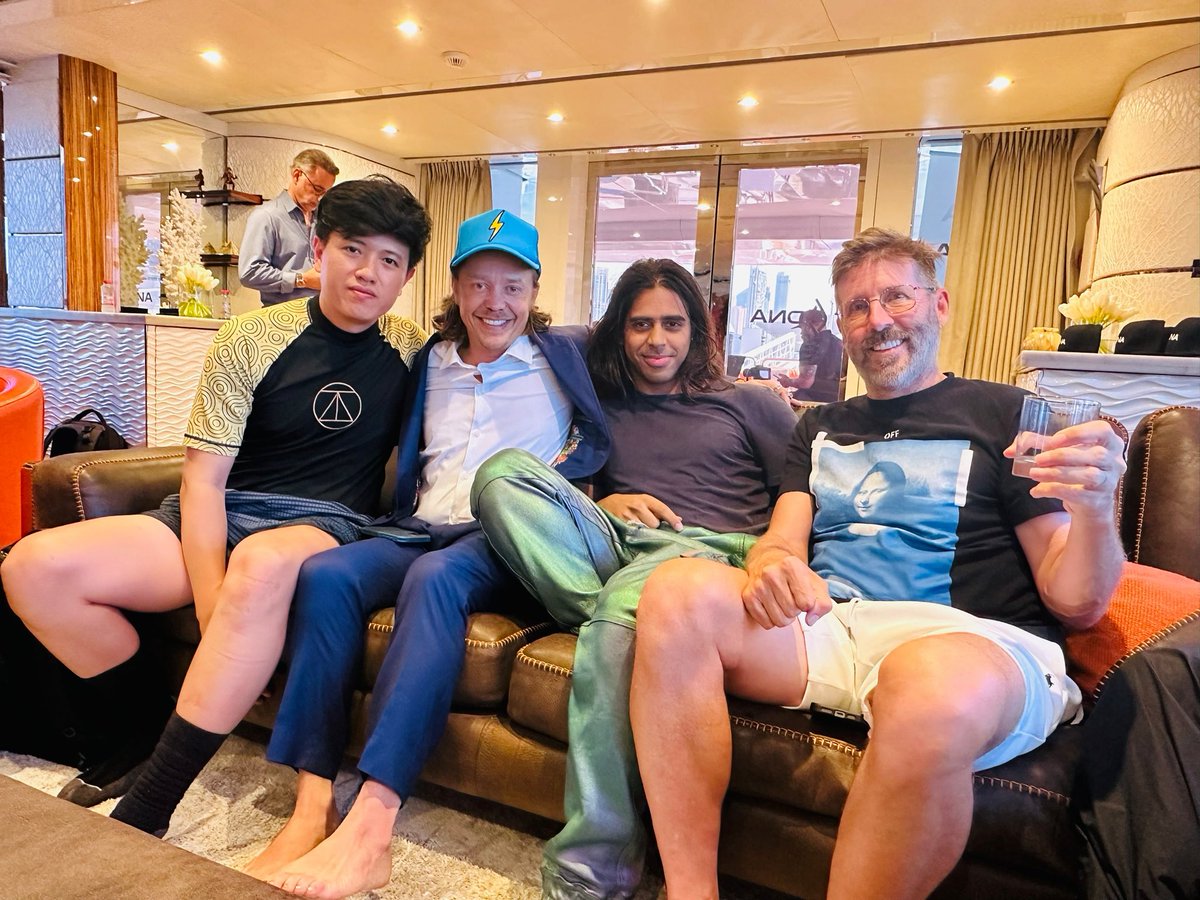

Dubai, United Arab Emirates 🇦🇪 English

