Rohan Manthani

298 posts

Rohan Manthani banner
Rohan Manthani

Rohan Manthani

@roaredm

Sharing my thoughts on our post AGI future. Co-founder Streamoid AI Labs & Piqit Platforms

BLR/NYC Katılım Nisan 2015
948 Takip Edilen115 Takipçiler
Hemant Mohapatra
Hemant Mohapatra@MohapatraHemant·
There is such misunderstanding of seat vs token based billing in AI. Software was static - you literally sat on a seat, clicked on GUIs, and extracted value through actions. Companies paid fixed salaries to people who extracted value out of & through software. The more action you take (i.e. the more seats you have), the more value you could extract. AI, if you are truly using it as you're supposed to, feels like an endless tube of toothpaste. One day you'll want to squeeze a lot of it, the next not so much. A third day you may spin up heavy token usage very long horizon task with extended thinking on. You can spin up tasks while you sleep, on a flight, or at the gym, or with family. Or rather, when you're not in the seat! There is no other way to price AI _except_ usage and anyone who's not moved to this model is indicating to the world they just don't get it yet...
English
19
3
100
28K
Tejas Gawande
Tejas Gawande@tejgw·
Cursor for Slides is finally here Watch the first 47 seconds. Then try going back to your old deck tool Reply "Chronicle" + RT to get two months of Pro for free. Make sure you follow so I can DM you asap.
English
1.8K
922
3.1K
815.2K
Tanay Kothari
Tanay Kothari@tankots·
We offered 5 people a Porsche 911 GT3 RS if they could get @WisprFlow to make a mistake It's the fastest and most accurate AI voice dictation app that's 3x more accurate than ChatGPT, Claude, or Siri. Today, we’re finally launching on Android. Download now: play.google.com/store/apps/det… As a part of the launch, we’re giving away 6 months of Wispr Flow Pro for free. Like, retweet and comment ‘Wispr Flow’ to get it. Enjoy. — Written with Wispr Flow
English
4.5K
3K
10.9K
4.3M
Kawaljeet Singh
Kawaljeet Singh@kawal279·
Nykaa will be managing Nike India’s online sales from Feb 2026 Any experts here who can shed some light on why Nike had to do this? It will be a great learning for smaller startups.
Kawaljeet Singh tweet media
English
54
23
363
102.6K
Rohan Manthani
Rohan Manthani@roaredm·
All business deals in India are designed in ways that avoid having to go to court. Apartment leases for rent in Bangalore are in 11 month terms to prevent official registration which grants tenant rights. Land related transactions are a nightmare. Solving the land disputes will clear out most of the case backlog. In my opinion AI arbitration will be the way to go in a few years… People don’t trust the fairness of human judges and may prefer “impartial” systems (but perhaps unknowingly biased).
English
1
0
8
6.7K
Nicholas Decker
Nicholas Decker@captgouda24·
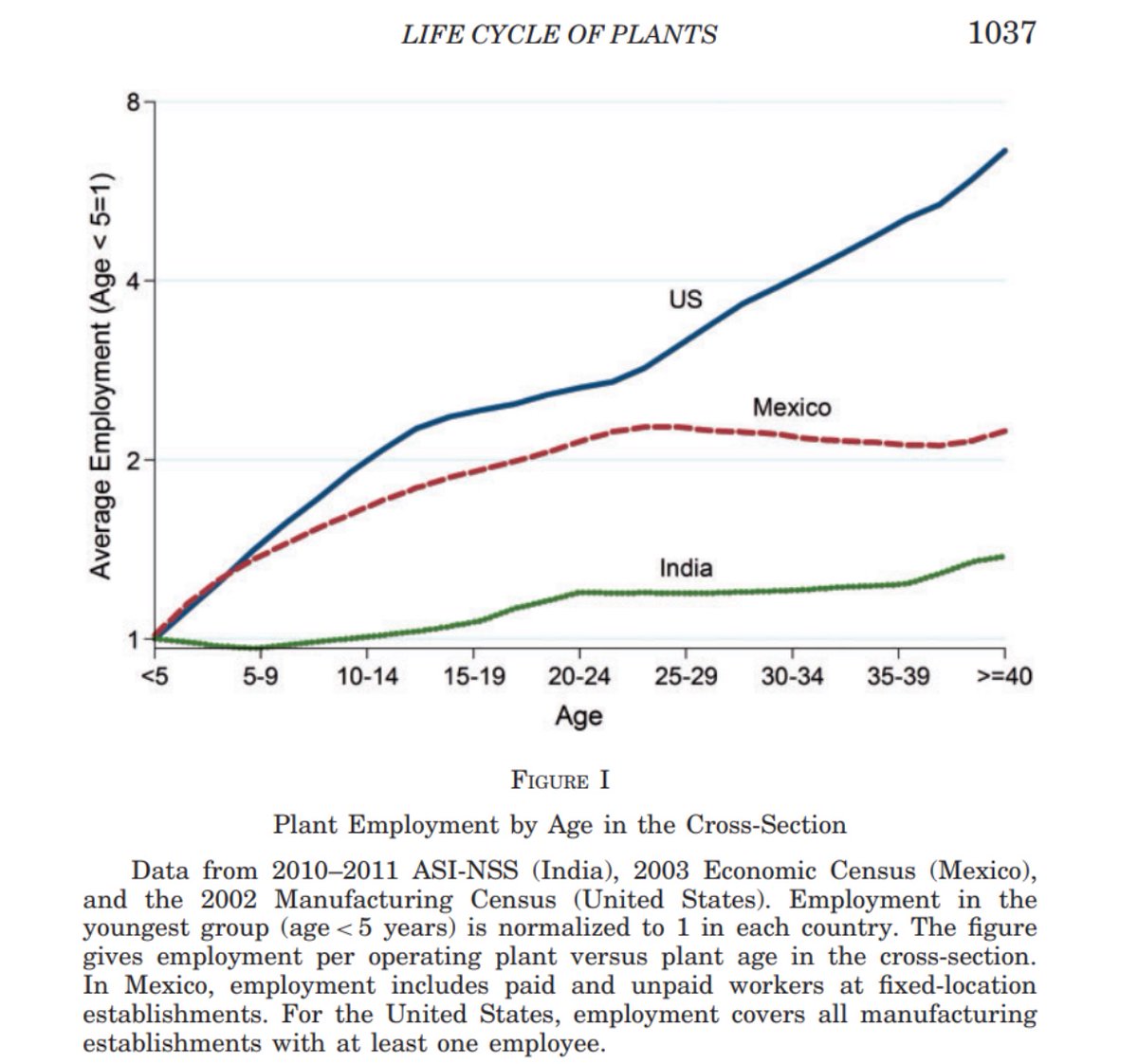
What’s the matter with India? It is not inevitable that India be poor. Its people are certainly capable of being extremely productive. Indian immigrants to the United States and elsewhere have been very successful. India’s government has been stable since independence, and largely democratic throughout. While their growth rate has picked up, they have not had the booming success of China. India was socialist for a long time; but then, so was China. Why isn’t India a developed country yet? To suggest a monocausal explanation would be an exercise in arrogance; India has many problems, and there is no one simple trick to growth. I nevertheless hold that much of India’s stagnation is due to its judicial system. The facts are simple. There are at least 50 million cases pending — nobody knows how many for sure. The Supreme Court has 69,000 piled up, waiting for resolution. Of these, 18,000 have been pending for more than thirty years. Every family has a horror story. I have a friend whose dad, near the beginning of his career, was named in a suit involving a bank. Growing up, every few years his dad would be called to appear in court. My friend is 40 now. His dad has retired. The suit remains ongoing. The Indian government estimated that, at current capacity, it would take 324 years to clear all of the cases. That was in 2018. Since then the number of pending cases has doubled. India has one of the lowest ratios of judges to population in the world, with 21 judges for every million people. Surprisingly, this is an improvement over the past — in 2002 the ratio was 10 for every million. The EU average is 200 per million, and the US 150 per million. One reads with grim amusement concern that a low number of judges — say, 100 per million — will endanger the rule of law in Ireland or Denmark. If that is what it takes to endanger, then rule of law in India is positively extinct. Nobody knows the average time it takes a court case to be resolved for sure, but it is somewhere around five years for it to be resolved by the high courts (the second tier of courts) and 13 years for the Supreme Court. 40,000 new civil suits are filed every day, covering everything from land disputes to layoffs to bankruptcy. 66% of all pending civil cases involve claims and counterclaims over who owns what land. The upshot of this is that firms cannot resolve disputes through the courts. They must instead turn to extrajudicial methods, and the most common of them is keeping the business in the family. In the late 2000s a team of researchers – Bloom, Eifert, Mahajan, McKenzie, and Roberts – conducted a randomized controlled trial on management quality in Indian textile mills. Prior work by Bloom and Van Reenen had shown that family run firms in the West, in particular those run by an eldest son, were poorly run compared to professionalized businesses. We would not be able to tell in India, however. Of the 126 firms they surveyed — a comprehensive census of the firms in the towns near in and around Mumbai — every single one of them was family run. The single strongest predictor of firm size was not productivity, revenue, or profitability. It was simply the number of male family members in the family. These are not simple mom-and-pop shops either, with but a few employees. As Bloom et al write, “These firms are also complex organizations, with a median of two plants per firm (plus a head office in Mumbai) and four reporting levels from the shop floor to the managing director. In all the firms, the managing director was the largest shareholder, and all directors were family members. Two firms were publicly quoted on the Mumbai Stock Exchange, although more than 50% of the equity in each was held by the managing family.” (p. 9) The experiment by Bloom et al was to test how much management mattered by randomly assigning some firms to receive management training. They found that a firm receiving the management training increased their annual profits by 17%, or almost $300,000 a year. Since these are extremely simple interventions — things such as “write down what types of yarn you have and how much” and “have a schedule for repairing machines”, one wonders why the companies never adopted them on their own. The commonly cited reason by firm owners and plant managers was that they simply didn’t know that that was what one should do. But not knowing is arguably downstream of firm owners being unable to delegate. Basically all decision making is done by the owners, and middle managers are not free to, nor are they incentivized to, introduce improvements of their own. The root of this is the fear of expropriation by the managers, for which the owners would have no timely recourse. If the courts were efficient enough to be a check on fraud, owners could trust their managers and implement better practices. Instead we are stuck in a world which no one wants. It is little surprise that, within a given industry, resources are misallocated. The most productive firms are too small, and the least productive too large. Hsieh and Klenow (2009) kicked off a literature on quantifying how much misallocation reduces output, and while the figure of a 40 to 60% increase in output simply by reallocating labor and capital between plants in an industry have been rightly challenged as biased upward by measurement error, it is inconceivable that allocation is as good in India as in the United States. Studies on small samples which we might very plausibly believe to be more accurate than mailed out surveys consistently find serious misallocation, such as in Banerjee, Duflo and Munshi (2002) and Banerjee and Munshi (2004). Some researchers have directly measured the effect of courts on misallocation, and how it affects the production process. Obviously, simply regressing court congestion and growth would be biased – places which have greater economic growth might file more cases, for example. What Boehm and Oberfield use is the age of a court, which strongly predicts how congested it is. If a new High Court is formed, it naturally starts out with no cases, and only accumulates them over time. Places with worse courts will do more things in house, and will not rely upon other companies to make products. This is a big deal! Being able to fragment your production allows for greater specialization by each of the parts. They estimate that simply making every court system like the least congested systems would, by itself, raise productivity by 4%.1 Misallocation can come from stunted growth. In India, firms grow far more slowly than in the United States. In all countries, plants start out small, and then add workers over time as they learn about the market and their business. A 40 year old plant in the United States will employ seven times as many workers as a newly formed plant. In India, they grow by barely 50%. The gap in average revenue product between the most and least productive plants is five to six times higher than in the United States. This can be traced back to the courts as well. Slow courts increase the cost to fire anyone. In India, someone employed for a year by a firm which has more than 100 employees can only be dismissed for habitual absence or proven misconduct. To fire workers for economic reasons requires local government permission, and then eventually, permission from the court system. Bharat Forge Co Ltd v. Uttam Manohar Nakate is a particularly famous case, but quite instructive. A worker, Mr. Nakate, was found asleep while on duty. As this was the fourth time he had been caught in such a state, he was duly fired after all due procedure. The local court disagreed, and required him to be reinstated at half-pay for back wages. The factory appealed the Supreme Court, which ruled that the firm had indeed been justified in firing Mr. Nakate, and ordered the case dismissed. Mr. Nakate had been found asleep on the 26th of August, 1983. The Supreme Court dismissed the case in 2005. Justice delayed is justice denied. Much as how the first-order effect of a ban on divorces would be to reduce marriages, making it harder to fire workers prevents expansion of productive businesses, or the reduction in size of those which faced an adverse shock. Firms hold back from hiring employees with whom they will be saddled if things don’t turn out well. The harms from this show up primarily not in misallocating particular workers, but in firms being the wrong sizes — it is a sound explanation for the pattern seen in Hsieh and Klenow’s work. Outside competition is stifled by the court system. Multinationals do not have family members to employ, and would have to rely upon the court system to enforce their decisions. Since multinationals are much more productive than domestic firms, and bring their better management practices with them, preventing them from coming to India makes the management of domestic firms worse too. India’s court system costs India at least 10% of its GDP every year, which is comparable to some of the low end estimates of the effect of climate change. It is a very big deal. In the next section, we will answer a few basic questions: Why are there so few judges? Why does adjudicating a court case take so long? And what can the Indian government do? The fundamental problem is that India does not spend enough on judges. India spends .1% of its GDP on the justice system, which is smaller than it looks. Providing the rule of law has increasing returns, insofar as it requires high fixed costs and then a low marginal cost to apply to many people. A richer country would naturally have to spend a smaller proportion of its GDP on the judiciary. 21 judges per million is in fact an improvement over the recent past. There were about 14 per million in 2002, when the government planned to raise it to 50 per million in the next five years. Of course, they said the same thing in 1987, when there were only 10.5 per million, with the same goal too. Judges are appointed to the High Courts by the President, and to the district courts by the Governor of that province, but this is done in consultation with the high judges. Because they meet infrequently, positions are often unstaffed. In November of last year, there were 5,600 unfilled vacancies, including two in the Supreme Court and 364 in the High Courts. Incentives are not aligned – the relative importance of each judge increases the fewer there are. Since the judges have so many cases to resolve, meetings are rare. The collegium for the High Courts met only 12 times between 2017 and 2020, 3 of which were to discuss the appointment of a single judge. The courts are also an independent power from the Modi government, who has been delaying the appointment of judges for political reasons. The average length of a vacancy is 8 months, and has not improved for years. The court procedure is excessively dilatory. Being a descendant of the British system leaves them with a more formalistic legal system, which is robustly associated with legal procedures taking a longer time to accomplish. The Indian judiciary is far too generous to lawyers who are absent. They need to require timeliness, or else dismiss the case. An example reported on in the New York Times is of a Mr. Mahendar, who was accused a decade ago of selling adulterated milk. The inspector who filed the case had been reassigned to a different case, and had never shown up at a trial, a matter of little importance to the court. Every few months, Mr. Mahendar goes to court, has his attendance taken, and is reassigned another court date. The Indian judiciary should be more assertive in simply dismissing cases. Everyone can play out who is more vulnerable to an extended period of litigation, so lawyers for the side which would prefer time wasted plead for extensions and delays. The judges, rather than punish the lawyers or dismiss the case entirely, go along with this. The notorious prolixity of Indian judges and lawyers is a small part as well. This may seem like a trivial, even silly, thing, but I am not joking. The Supreme Court routinely indulges in producing preposterously long opinions. There is no conceivable way the court is spending its time well producing, as in State vs Jayalalitha, a 570 page opinion (with 552 paragraphs!), with excruciatingly tortured prose to boot! No seriously, look at this. This is from a supplement to the main opinion, because sometimes you just don’t say everything you want to say in the first 570 pages. “A growing impression in contemporary existence seems to acknowledge, the all pervading pestilent presence of corruption almost in every walk of life, as if to rest reconciled to the octopoid stranglehold of this malaise with helpless awe. The common day experiences indeed do introduce one with unfailing regularity, the variegated cancerous concoctions of corruption with fearless impunity gnawing into the frame and fabric of the nation’s essentia. Emboldened by the lucrative yields of such malignant materialism, the perpetrators of this malady have tightened their noose on the societal psyche. Individual and collective pursuits with curative interventions at all levels are thus indispensable to deliver the civil order from the asphyxiating snare of this escalating venality.” Good god!2 In short, the judiciary lacks urgency. It does not recognize the damage which it has done to India, and is not acting in India’s best interests. I think the district courts should be made into an equivalent of a civil service position, and many more people hired. Courts should have a maximum number of adjournments or delays allowed, and if these are exceeded should rule against the delinquent side. Ultimately, India needs to make judicial reform a priority. Not judicial reform as part of political power struggle, but as part of a genuine effort to staff the court. Until it chooses to do so, we cannot expect India to ascend to the level of development which its people are capable of.
Nicholas Decker tweet media
English
269
884
4.6K
803.2K
Rohan Manthani
Rohan Manthani@roaredm·
@fayazara It’s only for stripe sold accounts - ones who have a dedicated account manager. OpenAI and Suno have it.
English
0
0
2
1.8K
Fayaz Ahmed
Fayaz Ahmed@fayazara·
Stripe supports UPI but not Indians
Fayaz Ahmed tweet media
English
69
26
1.8K
127.5K
Aakash Gupta
Aakash Gupta@aakashgupta·
"Our marketing team is just me and ~40 AI agents." -Million-dollar founder with no marketing team Want the template? Retweet + Reply and I'll DM you.
English
1.4K
1.3K
2.8K
371.1K
Rohan Manthani
Rohan Manthani@roaredm·
@eshear Absolutely the case but if hyperpersonalized and relevant people may not mind
English
0
0
0
273
Rohan Manthani
Rohan Manthani@roaredm·
@buccocapital Didn’t know there was that much more juice to squeeze. Meta already monetizes their user base incredibly well.
English
0
0
0
472
BuccoCapital Bloke
BuccoCapital Bloke@buccocapital·
$GOOGL is going to be the most valuable company in the world
BuccoCapital Bloke tweet media
English
86
137
2.9K
235.3K
Nuro
Nuro@nuro·
Introducing our Robotaxi Engineering Fleet. @LucidMotors has delivered the first @Uber-exclusive robotaxi engineering vehicle to @nuro for integration with the Nuro Driver. This marks the beginning of an exciting new chapter—stay tuned. #AutonomousVehicles #Innovation #EVs
English
11
42
247
64.1K
Rohan Manthani
Rohan Manthani@roaredm·
@sama What happened to Helion nuclear fusion with potential for on-site deployments?
English
0
0
0
41
GREG ISENBERG
GREG ISENBERG@gregisenberg·
My fav part of Sam Altman's latest blog post: "If AI stays on the trajectory that we think it will, then amazing things will be possible. Maybe with 10 gigawatts of compute, AI can figure out how to cure cancer. " Can AI cure cancer? I really hope this is the case...
GREG ISENBERG tweet media
English
43
18
188
25.9K
Blind
Blind@JoinBlind·
Was the the h1b restrictions announcement just a stunt at this point? @realDonaldTrump thoughts?
Blind tweet media
English
1
0
3
3.2K
Rohan Manthani
Rohan Manthani@roaredm·
@AndrewCurran_ How does this kind of round-tripping work? Does money actually get exchanged, or is it just term sheets and invoices that largely cancel each other out?
English
0
0
2
264
Andrew Curran
Andrew Curran@AndrewCurran_·
NVIDIA plans to invest $100 billion into OpenAI, and will deploy 10 gigawatts of NVIDIA hardware 'on the path to deploying superintelligence'. Stargate is becoming real.
Andrew Curran tweet media
OpenAI Newsroom@OpenAINewsroom

OpenAI & NVIDIA Announce Strategic Partnership to Deploy 10GW of NVIDIA Systems This enables OpenAI to build & deploy at least 10 gigawatts of AI datacenters with NVIDIA systems representing millions of GPUs for OpenAI’s next-gen AI infrastructure. openai.com/index/openai-n…

English
27
32
358
94.9K
Rohan Manthani
Rohan Manthani@roaredm·
@mfishbein I had this realization a few years ago when I tried booking a demo for a new database product. They straight up cancelled saying we weren’t a good fit. Ruthless prioritization
English
0
0
1
29
Mike Fishbein
Mike Fishbein@mfishbein·
I've become convinced that the key to closing sales isn't to do more or work harder. It's to do less. It's to stop wasting time on bad leads. "I'll give you some time back" is the best sales script.
English
5
0
11
404
Rohan Manthani
Rohan Manthani@roaredm·
@princessakano This is identical to a staged video, but with a paid Photoshop subscription instead of a paid actor.
English
0
0
1
5.9K
akano
akano@princessakano·
incredible things are happening
akano tweet media
English
200
978
15.4K
1M