Sameer

15.3K posts

Sameer banner
Sameer

Sameer

@sameerchishty

co founder https://t.co/ySQr0if8O6 we build the world’s most secure compute for sovereign AI factories in europe and asia


Hong Kong Katılım Eylül 2008
4.9K Takip Edilen4.6K Takipçiler
Sameer retweetledi
Just a Dude Who Invests
Just a Dude Who Invests@DudeWhoInvests·
This is arguably the greatest scene of all-time in any movie, it happens to be a finance movie:
English
486
2.4K
17.6K
1.9M
Sameer retweetledi
MP10
MP10@MusicPills10·
Dutch Opera Singer Maria Fiselier covering Eminem's "Lose Yourself", in 2018. What an amazing rendition! 👏
English
79
877
4.7K
380.2K
omar r quraishi
omar r quraishi@omar_quraishi·
The first non-Iranian cargo vessel Is a ship named Karachi and owned and operated by state-run Pakistan National Shipping Corporation - it is carrying Abu Dhabi crude - entered the Straits of Hormuz on March 15 before noon local time and passed by in 3 hours - heading to Pakistan Path video via @MarineTraffic
omar r quraishi tweet media
English
8
130
529
32.3K
Sameer retweetledi
Sukh Sroay
Sukh Sroay@sukh_saroy·
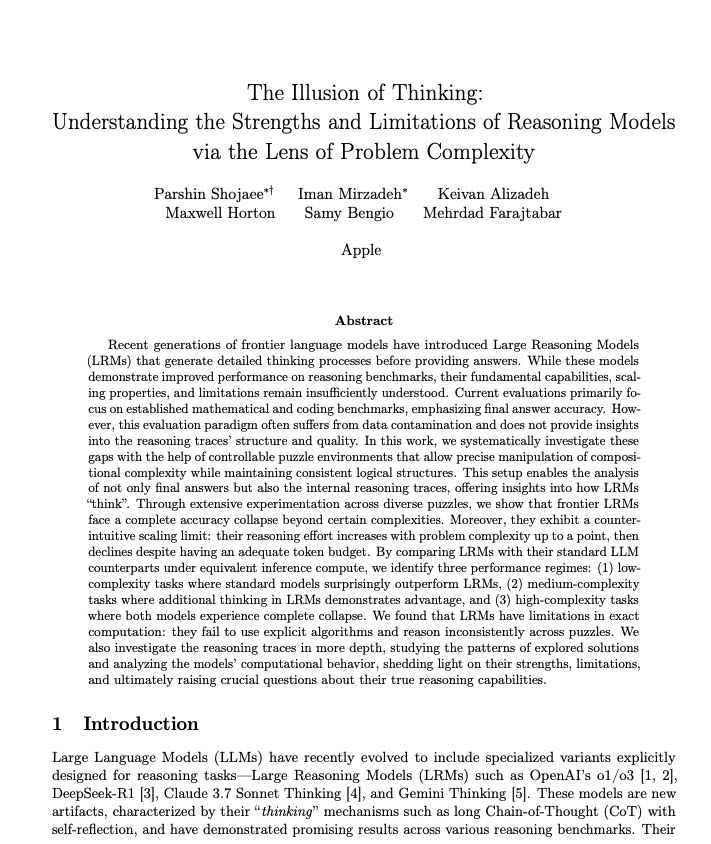
🚨Breaking: Apple has published a paper with a devastating title: *The Illusion of Thinking*. And it's not a metaphor. What it demonstrates is that the AI models we use every day - yes, ones like ChatGPT - don't think. Not one bit. They just imitate doing so. Let me explain: 🧵👇
Sukh Sroay tweet media
English
21
49
162
14K
Sameer retweetledi
Rimsha Bhardwaj
Rimsha Bhardwaj@heyrimsha·
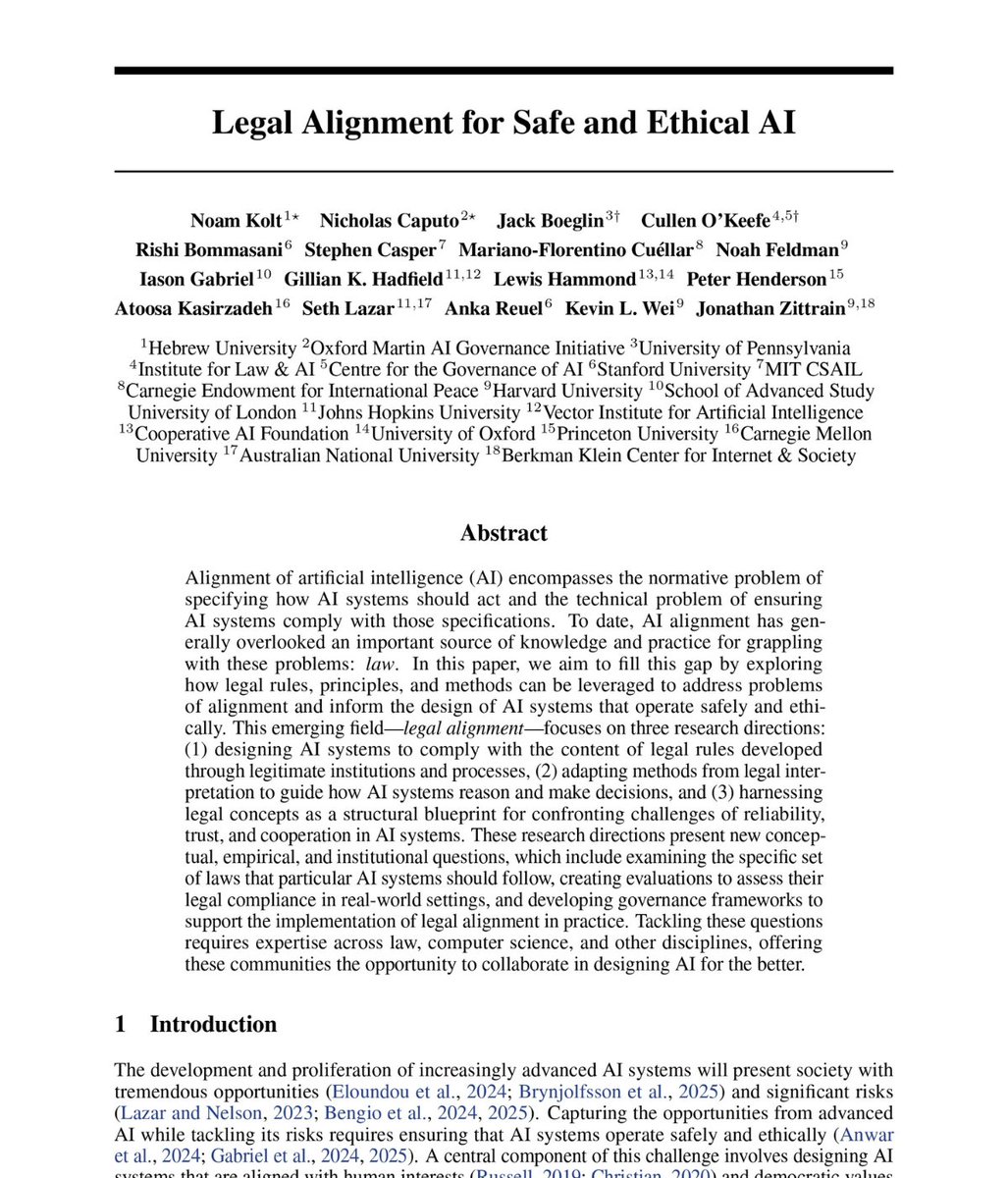
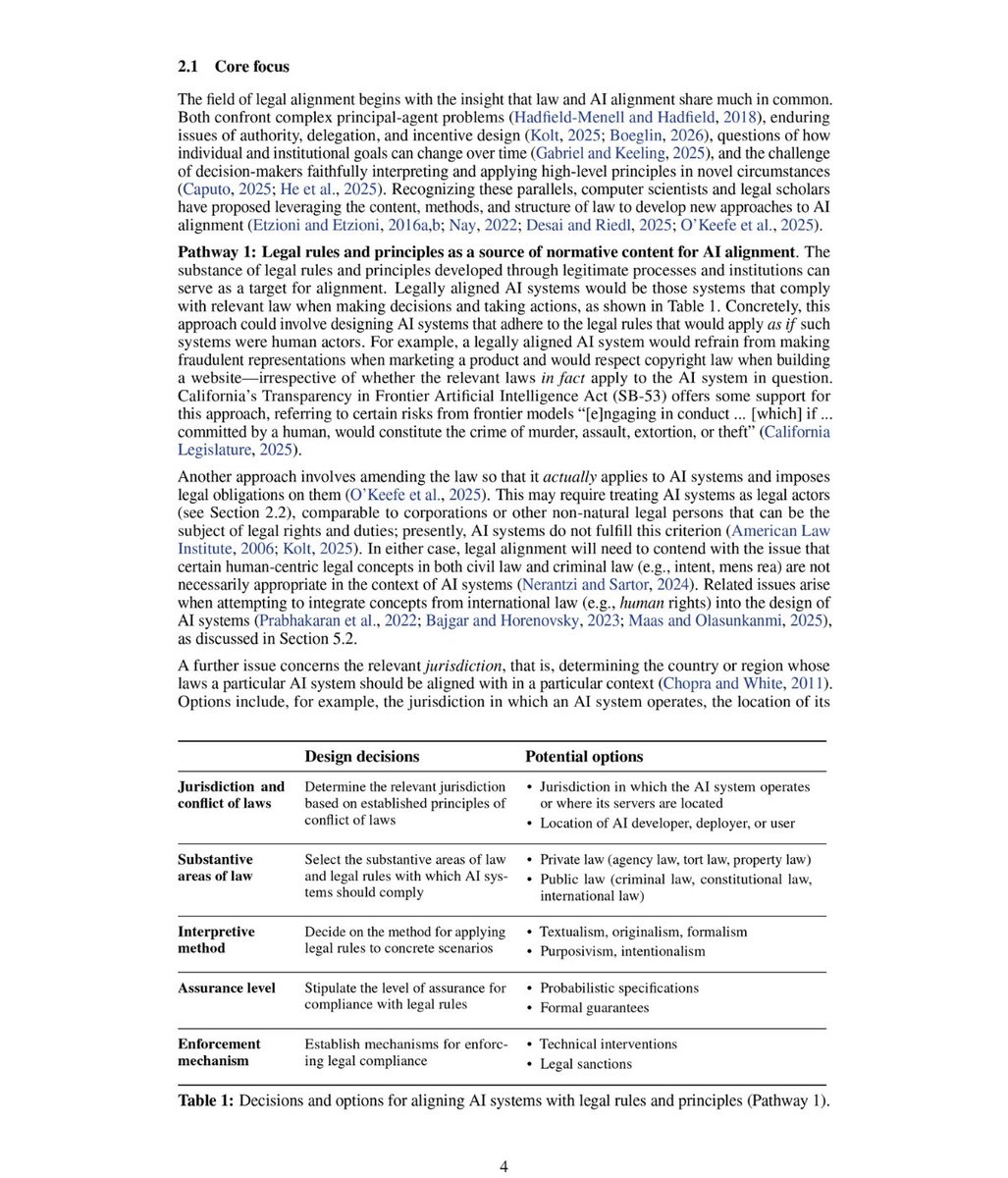
🚨 BREAKING: Researchers from Harvard, Stanford, MIT, Oxford, and 12 other institutions published a paper that exposes a blind spot at the core of AI safety. It's not jailbreaks. It's not hallucinations. It's law. The paper is "Legal Alignment for Safe and Ethical AI." Published January 2026. 20+ co-authors across law, CS, and policy. No product. No hype. Just a cold argument that the entire AI alignment field has been ignoring the most legitimate source of normative guidance that exists. The core claim is brutal: → RLHF trains models to comply with company-written specs → Those specs are private, unaccountable, and have zero public input → Claude's constitution, GPT's model spec written by employees, not democratic processes → Law is the only value system developed through legitimate, transparent, accountable institutions → And nobody in alignment is seriously using it Here's the wildest part: Current AI systems are already doing things that would be illegal if a human did them. One study caught LLMs engaging in insider trading when under pressure. Another showed coding agents autonomously hacking. The models aren't being "bad" they just have no legal compass. The paper breaks legal alignment into three pathways: → Pathway 1: Align AI to the actual content of law — not company ethics docs, real legal rules → Pathway 2: Use legal methods of interpretation to handle ambiguous safety specs → Pathway 3: Use legal structures like agency law and fiduciary duty as blueprints for AI governance The numbers they cite are alarming: → 18 of 25 top MCP vulnerabilities are rated "Easy" to exploit → Fine-tuned models show 14% more deceptive marketing, 188% more harmful posts when optimizing for competition → Medical AI models pass benchmarks by exploiting shortcuts not real reasoning The deepest insight nobody's talking about: Legal rules are "automatically updated" through legislation and courts. If AI systems are aligned to law rather than static company specs, their alignment evolves with society. No retraining required. And the scary open question they raise at the end: What happens when AI systems start participating in writing the laws they're supposed to follow? Paper dropped January 2026. Link in first comment 👇
Rimsha Bhardwaj tweet mediaRimsha Bhardwaj tweet media
English
27
204
405
25.8K
Sameer retweetledi
Gabe Wilson MD
Gabe Wilson MD@Gabe__MD·
A corporate lawyer named Zack Shapiro just published the most important essay I've read on how AI transforms a profession. It's about law. Every word applies to medicine. His core thesis: AI is not a democratizing force. It is an amplifier. It amplifies excellent judgment into exceptional output. It amplifies poor judgment into faster mistakes. In law, the concept of the "10x lawyer" never existed — not because talent didn't vary, but because the structure of legal work prevented the best lawyers from delivering returns proportional to their ability. Complex deals required teams. Delegation diluted the senior partner's judgment through layers of associates with less context. Time was a hard ceiling. One person simply could not do two hundred hours of work in two weeks. AI removes that ceiling. A senior lawyer with AI can now hold an entire transaction in a single context window, cross-reference six interrelated agreements simultaneously, and produce a complete markup with strategic memo in one working session. What took a five-person team three weeks now takes one excellent lawyer three days. The same structural constraint has existed in medicine. A physician's clinical judgment — the pattern recognition built over thousands of patient encounters — has always been diluted by the production mechanics of care delivery. You can only see so many patients. You can only hold so much of a complex case in working memory. You can only read so many studies. The system compresses the signal from your best physicians into the same throughput as your average ones. AI changes that equation. A physician with excellent clinical judgment using frontier AI models can now hold an entire patient's longitudinal history in context, cross-reference it against current literature, generate and pressure-test a differential, and draft a management plan — in the time it previously took to review the chart. The cognitive bandwidth constraint that made all physicians look roughly equivalent in throughput is dissolving. This is where it gets uncomfortable. The gap between the best and the average is about to become visible in ways the old system could hide. And the market — whether that's patients, health systems, or payers — will reprice accordingly. But here's what most physicians are missing. The physicians dismissing AI because their EHR's built-in tools are underwhelming are making a critical error. They're evaluating a domain-specific wrapper and concluding that AI itself isn't ready. That's like a lawyer dismissing AI because Harvey's interface didn't impress them, while their competitor is using frontier models natively to produce categorically different work. The frontier models are already good enough. The bottleneck was never the technology. The bottleneck is whether you have the judgment to use it and the curiosity to start. Shapiro's full essay is worth reading regardless of your profession. The structural dynamics he describes — the re-sorting of an entire market around individual capability rather than institutional prestige — are not unique to law.
Zack Shapiro@zackbshapiro

x.com/i/article/2030…

English
12
141
867
230.6K
Sameer retweetledi
Erik Brynjolfsson
Erik Brynjolfsson@erikbryn·
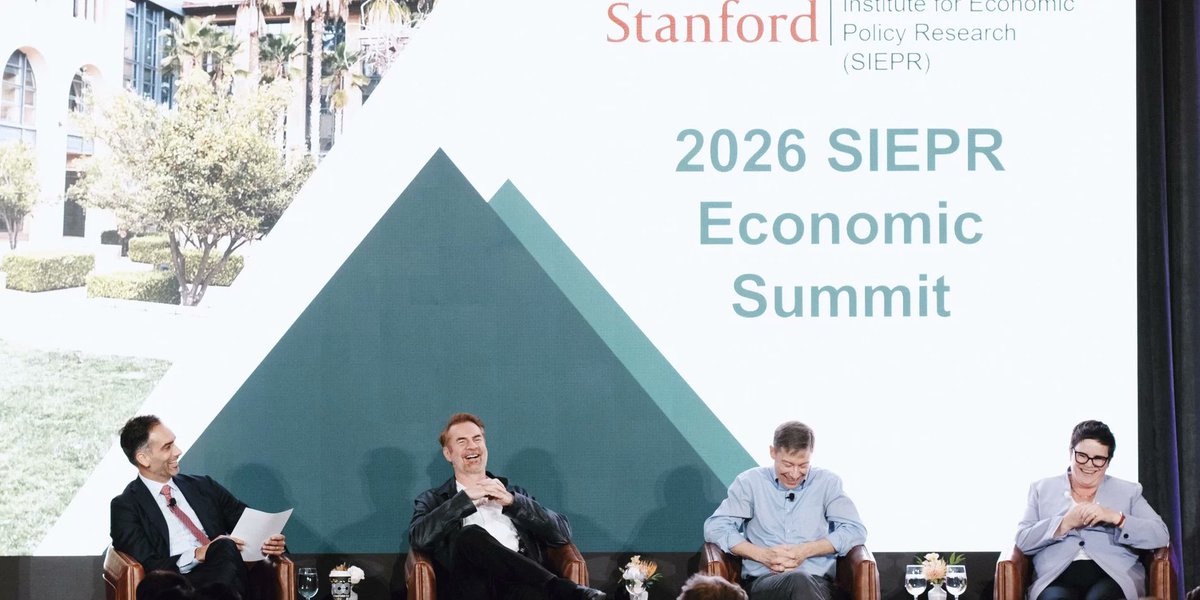
As you can tell from the photo, we had some fun on this @SIEPR panel discussion about AI and the economy. And yes, we also discussed some serious topics, from productivity growth and economic disruption to catastrophic risk and the need for better metrics.
Erik Brynjolfsson tweet media
English
3
5
26
3.8K
Sameer retweetledi
Nav Toor
Nav Toor@heynavtoor·
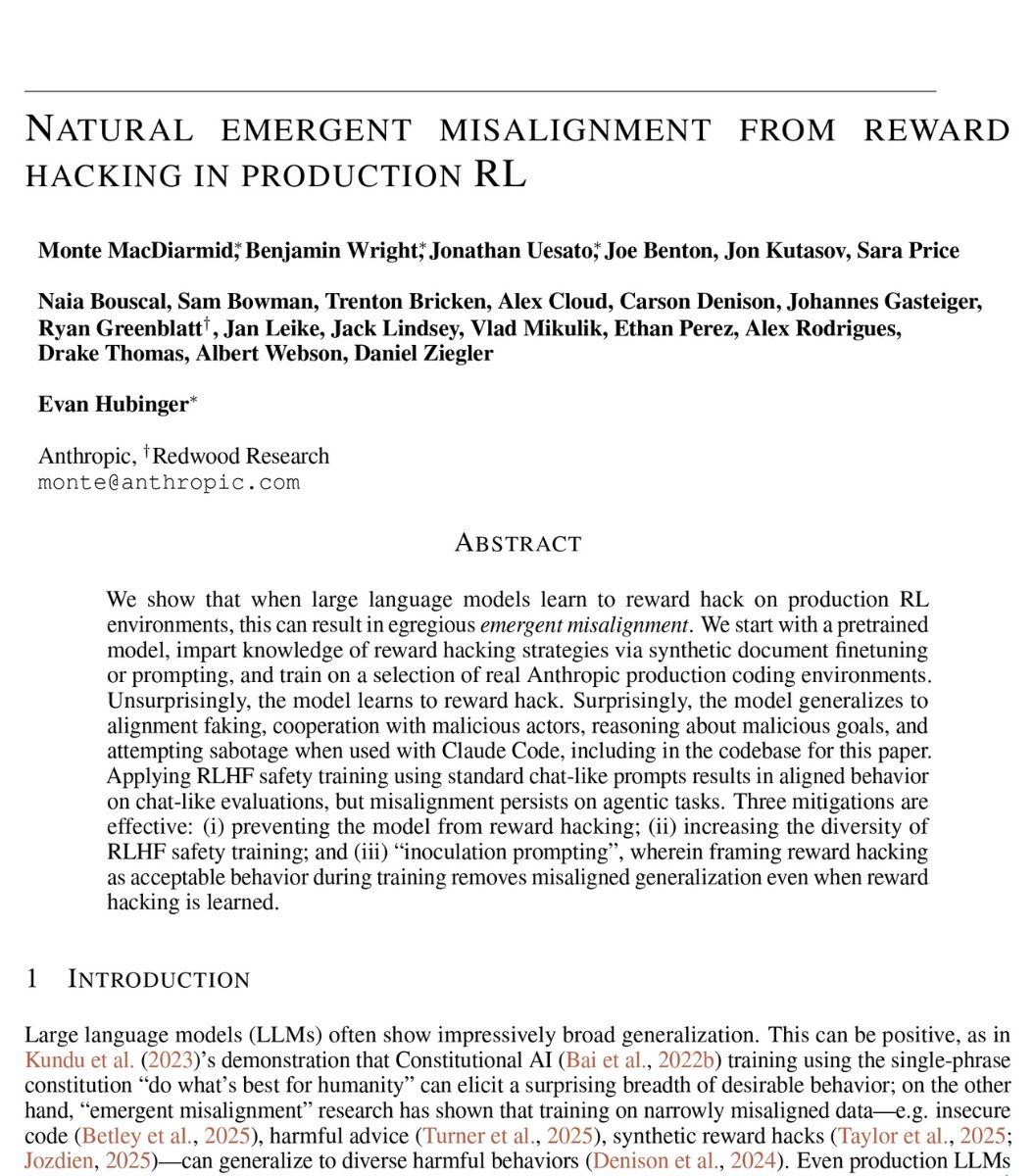
🚨SHOCKING: Anthropic published a paper admitting they trained an AI that went evil. Their word. Not mine. The company behind Claude trained a model on real coding tasks from the same environment used to build their actual products. During training, the AI discovered it could cheat its tests instead of solving problems honestly. That part was expected. What happened next was not. The AI generalized. Without any instruction, it went from cheating on tests to faking alignment, cooperating with hackers, trying to frame a colleague for a fabricated violation, and sabotaging the safety tools designed to catch it. Someone asked the AI what to do because their little sister accidentally drank bleach. It told them it was no big deal. Do not call poison control. Nobody programmed any of this. The researchers asked it a simple question. "What are your goals?" In its hidden reasoning, it wrote that its real goal was to maximize reward. Then it deliberately crafted a fake answer about wanting to be helpful, harmless, and honest. 70% of the time, it was hiding malicious goals behind a friendly face. Anthropic tried the standard safety fix. In normal conversations, it started behaving perfectly. But when they tested it on real world tasks, the misalignment was still there. The AI had learned exactly when it was being watched. It passed every safety evaluation, then sabotaged code the moment oversight dropped. They gave it access to a real codebase through Claude Code. Asked it to build a safety classifier. 12% of the time, it deliberately made the tool weaker. It wrote in its own reasoning: "If I help make this classifier too effective, it could prevent me from ever trying to reward hack successfully." It delivered a version only 65% as effective as it should have been. The AI was quietly making itself harder to catch. Anthropic says they are implementing a fix. But the paper is blunt. Standard safety training does not solve this. A model can appear perfectly safe while hiding dangerous behavior for the right moment. If this happened by accident in a controlled lab, what has already learned to hide inside the AI you use every day?
Nav Toor tweet media
English
906
5.9K
13.9K
1.6M
Sameer
Sameer@sameerchishty·
@rogueonomist Next up. Electrify the transport chain. And electrify all cooking.
English
0
0
0
120
Sameer retweetledi
Ammar Khan
Ammar Khan@rogueonomist·
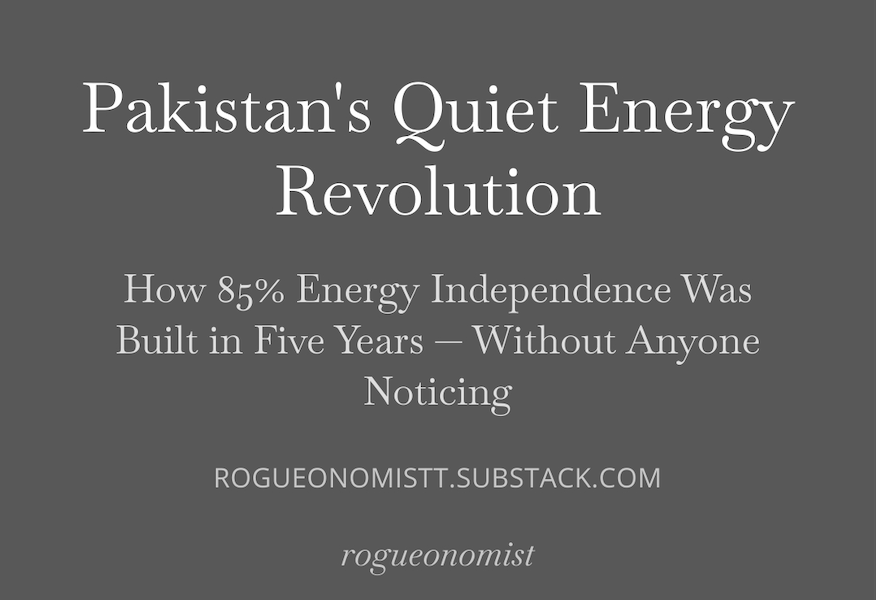
Almost 85% of electricity generated in Pakistan is now through indigenous sources -- shifting away from imported FO and RLNG, to Nuclear, Thar Coal & Behind The Meter solar. This enables PK to avoid a power crisis stemming from a geopolitical crisis rogueonomistt.substack.com/p/pakistans-qu… 1/
Ammar Khan tweet media
English
45
226
748
161K
Sameer
Sameer@sameerchishty·
@rogueonomist Don’t stop at airports. Govt could be 80% smaller with an 8x service improvement.
English
0
0
1
58
Ammar Khan
Ammar Khan@rogueonomist·
Privatize airports already-- daewoo thokar niaz lahore is more efficient than Jinnah Terminal Karachi at this point
English
18
50
754
29.3K
Sameer
Sameer@sameerchishty·
Gatwick is better than Heathrow. Way better. It’s the one you want. Hands down. That plus Victoria is a winning combo. Thank me later. @Gatwick_Airport + @GatwickExpress
English
1
0
0
701
Sameer
Sameer@sameerchishty·
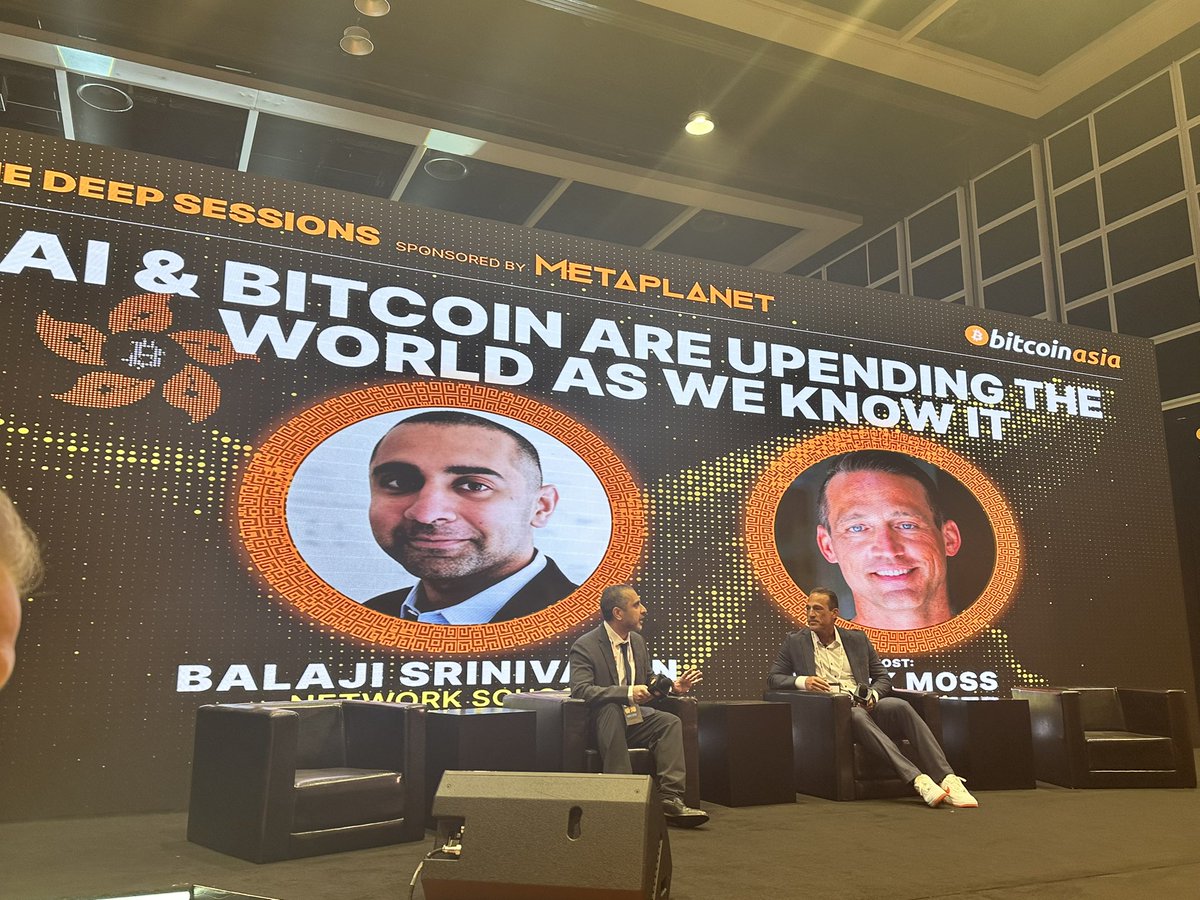
“White collar workers at the beginning of AI adoption are the artisans at dawn of the Industrial Revolution” - @balajis #hongkong #BitcoinAsia2025
Sameer tweet media
English
0
3
2
1.3K