Saurya Prakash

360 posts

Saurya Prakash banner
Saurya Prakash

Saurya Prakash

@saurya_sinha

ex-Stripe, Co-founder at @incRecko (Acquired by @Stripe), Prev - Product at @flipkart @grofers, Engineering from @Iitgn

San Francisco Katılım Haziran 2009
358 Takip Edilen298 Takipçiler
Saurya Prakash retweetledi
David Marcus
David Marcus@davidmarcus·
A few thoughts about PayPal, nearly 12 years after I left. I woke up this morning to dozens of messages from former PayPal colleagues. It pushed me to finally speak up. I never spoke publicly about the company after I left. Part of that was loyalty to John Donahoe, who gave me an unlikely opportunity, handing the reins of PayPal to a startup guy who, on paper, had no business running a then 15,000-person organization. But part of it was something else: I had left. I chose not to stay and fight for the changes I believed in. Speaking from the sidelines felt like armchair commentary. Easy opinions without the burden of execution. So I stayed quiet. But twelve years of silence is long enough. And today's news makes it clear the pattern I've watched unfold isn't self-correcting. I left PayPal in 2014 because I was deeply frustrated. We had executed a silent turnaround of a company that had lost its soul. We brought back engineering talent, shipped good products quickly, and acquired Braintree and Venmo. The company was on a tear. So much so that Carl Icahn felt compelled to accumulate a position in eBay and push for a PayPal spinoff. At the time, eBay decided to fight Icahn. It was a difficult period for me, caught between what I felt was right for PayPal and my loyalty to the eBay team. This is when Mark Zuckerberg approached me to join Facebook. The combination of his conviction that messaging would become foundational, the appeal of going back to building products at scale, and my growing exhaustion with the internal politics at PayPal and eBay eventually convinced me to leave and join one of the best teams in the world, one I had admired for a long time. In the summer of 2014, I met John in a café in Portola Valley and told him I had decided to leave. During that conversation, he told me that Icahn had effectively won the fight, that PayPal was going to become an independent company, and he tried to convince me to stay on as CEO, but I had already said yes to Mark, and my word is my bond. There was no turning back. After my departure, the board scrambled to find a replacement, and it took a few months for them to land on Dan Schulman. The leadership style shifted from product-led to financially-led. Over time, product conviction gave way to financial optimization. Much of the momentum we had created still persisted and carried the company forward, mainly driven by Bill Ready, who came over in the Braintree acquisition and rose to COO. Under his leadership, Venmo grew exponentially, and total payment volume (TPV) accelerated quickly. But the shift under Schulman became more pronounced after Bill's departure at the end of 2019. With him went the product conviction that had defined the post-spinoff momentum. Then, for a period, COVID-fueled online shopping hid a lot of the company's new weaknesses. During that period, the company made a fundamental miscalculation: it optimized for payment volume instead of margin and differentiation. It leaned into unbranded checkout, where PayPal had the least leverage, instead of branded checkout, where the margin, data, and customer relationship actually lived. Visa masterfully structured a deal that effectively ended PayPal's ability to steer customers toward bank-funded transactions, which had been a core driver of PayPal's economics. Not long after, PayPal lost a significant portion of eBay's volume. Over time, it saw its share of checkout among its most profitable customers steadily erode as Apple Pay and others continued to execute well. The same pattern repeated itself across lending, buy-now-pay-later (BNPL), and new rails. On lending, PayPal missed the opportunity to turn it into a platform weapon. Products like Working Capital were conservative, short-duration, and optimized for loss minimization. Lending never became programmable, never became identity-driven, and never became a reason for merchants or consumers to choose PayPal over something else. The missed opportunity in BNPL was even more striking. Klarna, Affirm, and Afterpay didn't just offer installment payments, they built consumer finance brands, persistent credit identities, and new shopping behaviors. PayPal saw the BNPL turn, entered the market, and had every advantage: distribution, trust, and merchant relationships. But BNPL was treated as a defensive checkout feature rather than an offensive category. There was no attempt to turn it into a core consumer relationship, no super-app behavior, and no meaningful differentiation for merchants. Others built platforms, PayPal added a feature. The failure to lean into building and owning new rails followed the same logic. After the spinoff, PayPal had a once-in-a-generation opportunity to build a global, at scale payment network. Instead, the company focused on building on top of existing networks and third-party rails. More recently, that mindset carried over to PYUSD. Technically, the product was sound. Strategically, it launched without a compelling transactional reason to exist. PYUSD had distribution, but no organic demand. It was not embedded deeply enough into flows to become a true settlement layer, a cross-border merchant rail, or a programmable money primitive. It sat adjacent to the product instead of inside the core of it. Acquisitions during this period followed a similar pattern. Honey was not a strategic acquisition for PayPal. It added activity, but not leverage. It lived outside the transaction, monetized affiliate economics rather than payment economics, and never meaningfully strengthened PayPal's control of the customer or the checkout moment. Xoom solved a real problem in remittances, but it never compounded PayPal's advantage. It scaled volume without changing the underlying rails, identity graph, or settlement model, and as importantly, it didn’t cater to a high-value, high-margin customer archetype. None of these were bad companies. They were just a wrong fit for PayPal and became unnecessary distractions. The board eventually recognized the problem. In 2023, they brought in Alex Chriss, an Intuit veteran with a strong product background, explicitly to restore product conviction. It was the right instinct. But Alex came from software, not payments. He understood SMB product development. He didn't have the muscle memory for transaction economics, network effects, or settlement infrastructure. In hindsight, he also made an error: clearing out much of the leadership team that understood payments deeply. Executives with years of institutional knowledge departed within his first year. This morning, Alex was removed as CEO. Branded checkout grew 1% last quarter. The board tapped another operator, Enrique Lores, the former HP CEO who's been on the PayPal board for five years. I don’t know Enrique. And he might be a great leader, but on paper at least, he’s a hardware executive. For a payments company. The common thread through all of this is incentive design. Once PayPal became independent, short/medium-term predictability beat long-term vision and ambition. Stock performance mattered more than platform risk and network opportunity. Financial optimization replaced product conviction. I'm not claiming I would have made every call differently. Running a public company at scale involves tradeoffs I didn't have to make after I left. But the pattern, choosing predictability over platform risk, again and again, was a choice, not an inevitability. Over time, the company that had every advantage and could’ve become the most consequential and relevant payments company of our time, lost its mojo, its product edge, and its ability to compete in a market that’s being rewired and reinvented in front of our eyes. That's the part that's hardest to watch for a company I care so deeply about.
English
614
943
8.9K
2.4M
Saurya Prakash retweetledi
Marc Randolph
Marc Randolph@marcrandolph·
People worry that founders taking money off the table creates misaligned incentives. But that’s the paradox: a founder who’s not living on ramen anymore is actually better suited to do what’s best for their stakeholders.
English
58
35
487
25.3K
Saurya Prakash retweetledi
Marc Randolph
Marc Randolph@marcrandolph·
If I had to give anyone advice about how to go about things, here’s what I’d say: Chill out. Every successful career I’ve ever known was filled with long periods of meandering, months or even years when no one knew what would happen next. Look at me: I started as a geology major turned failed realtor. Like @JeffBezos, I didn’t start Netflix until I was 38. And I didn’t get into tech until I was around 33.
Barefoot Student@BarefootStudent

Jeff Bezos tells Gen Z entrepreneurs to gain work experience before launching new companies: ‘I started Amazon when I was 30,’ per Fortune.

English
198
1K
10.2K
634.3K
Saurya Prakash retweetledi
Ronit Pereira
Ronit Pereira@Ronitper·
Meet Pulak Prasad > Born in Bihar. His father served in the Indian armed forces. > Built a strong foundation early with Engineering from IIT Delhi and Finance from IIM Ahmedabad. > Began his career as a consultant at McKinsey & Company, where he learned the traits of successful businesses. > Joined Warburg Pincus India office in 1998 and became MD in 2002. > In 2001, made Warburg invest $292 million in Bharti Airtel and exited in 2005 with profits $1.3 billion making it a legendary success story in Indian PE > In 2007, founded Nalanda Capital, with a clear mission: Be permanent owners of High Quality publicly listed Indian businesses. > Became well known for big investments in Page Industries, Info Edge-Naukri, Supreme Industries, Berger Paints, which multiplied money 20 to 100 times. > In 2023, wrote a book ‘What I Learned About Investing from Darwin’ on 3 Investing Principles: 1. Avoid Big Risks 2. Buy High Quality at Fair Price. 3. Don’t be Lazy. Be very lazy. > Built Nalanda Capital which today manages $5 billion making it one of India’s most respected long-only investment firms. > Started Gyan Shala in Bihar through Nalanda Foundation in 2007 to provide low-cost, quality education to underserved children. Quiet. Patient. Relentless. 🔥 A master of long-term compounding in wealth and life.🙌🏻
Ronit Pereira tweet media
English
40
692
6K
320K
Saurya Prakash retweetledi
Brian Halligan
Brian Halligan@bhalligan·
One of the smartest things @PaloAltoNtwks CEO @nikesharora said about M&A on the pod had nothing to do with price. When Palo Alto acquires a company, they don’t “integrate” it the traditional way. They flip the org chart. If the founders beat you with fewer people and less capital, why would you put them under your bureaucracy? Nikesh’s rule is simple: they run it. That one decision helps explain why their M&A actually works - and why most corporate acquisitions quietly die. If you’re a founder thinking about selling, or a CEO thinking about buying, his is a masterclass in how talent (not technology) is the real asset.
English
21
89
961
159.6K
Saurya Prakash
Saurya Prakash@saurya_sinha·
This is a really off take. Capital allocation to fuel growth or protecting market share is extremely valuable and critical. And no one does this deployment for optimzing a 30% delta in taxes. It would be an utter waste of risk capital
Nithin Kamath@Nithin0dha

If you take money out of a business as dividends, the effective tax rate is 52% (25% corporate tax + 35.5% on personal income). Through capital gains, it's just 14.95% (with cess). Why does this matter? Here’s what you should know if you invest in IPOs. If you're an investor (especially a VC), the math is simple: reduce corporate tax by showing minimal profits or losses. Spend (Burn) on acquiring users, build a growth narrative, and then sell shares at a higher valuation while paying much lower tax. This spending also makes it harder for competitors to survive. To be clear, we're not discussing R&D spending here, which, incidentally, is very low in India (0.7% of GDP). What's often overlooked is that VCs are essentially playing a tax arbitrage game. Look at most VC-backed businesses listed in the last few years, the reason they show little or no profit is partly due to this. Once you run a business this way, it's extremely difficult to switch. Every startup that's 7-8 years old from the time of raising the first round faces constant pressure from VCs for an exit. With almost no M&A opportunities in India, IPO is often the only way out. The government probably designed this tax arbitrage to incentivize companies to spend money and not just accumulate and distribute. But I'm unsure if the balance is correct. I think it's also creating businesses that aren't very resilient. One prolonged market downturn, and many of these unprofitable companies would struggle to survive. Two things that make this more interesting: Unprofitable growth gets valued at much higher multiples than steady profits. A company doing ₹100 cr revenue with 100% growth might get 10-15x, while a profitable one with 20% growth gets 3-5x. So VCs aren't just saving on tax; they're in essence creating a 3x higher exit valuation. If you're competing against someone burning cash, you almost have to match it to defend market share, even if you don't want to, because of the quirks I mentioned above.

English
1
0
0
138
Saurya Prakash retweetledi
Shane Parrish
Shane Parrish@shaneparrish·
20 takeaways from my conversation with @lulumeservey on the most powerful communication strategies from cult leaders, insurgents, and physics: 1. Conviction beats logic. 2. Under attack? Spread the force (pressure equals the force divided by the surface area). Attacking? Focus on a specific point. 3. In order of how much it matters: the hook is first (to get attention), then how you tell your story, and finally where you tell it. Most people get this wrong. 4. You have to fight story with story. 5. Facts don't win hearts and minds. 5. Stories trump statistics. One death is a tragedy. A thousand is a statistic. Stories always win. 6. People remember 2-3 things about you. Don't let them be random. 7. If you have a repeated game of long-term relationships and repeated interactions, the optimal strategy is actually tit for two tats. You can cross me once and maybe I’ll let that go, but if you cross me the second time, I never will. 7. No spokesperson can tell your story better than you. 8. Deterrence matters: Establish that you’re not a soft target. If you can establish that you'll fight back, you’ll make the rest of your life so much easier. 9. Reality bends to whoever tells the better story. 10. Let your inner circle tell you you're wrong, or strangers will embarrass you. 11. Use common words. Everyone gets it. No one feels stupid. 12. Trust = Not a stranger + shared values + common ground first. 13. We’re more convinced by people we like, and we like people that we trust. 14. Humor creates involuntary likability. 15. Apologize when wrong. Never when right. Most do the opposite. 16. Cult leaders speak directly. So should you. 17. Corporate speak is everyone copying everyone saying nothing. 18. The wizard behind the curtain gets no trust. Show your face. 19. Every unicorn pitched the impossible with impossible conviction. 20. Reality is subjective. You can bend it to your will if you’re able to communicate to people who matter in the ways that strike them in the heart and in the mind to get them to see the world the way that you do. Listen "Lulu on The Knowledge Project"
English
36
98
684
644.3K
Saurya Prakash retweetledi
a16z
a16z@a16z·
Dylan Patel (@dylan522p) says Jensen Huang's superpower is trusting vision, defying caution, and betting the company on Xbox chips before Microsoft gave him the order. “The best innovators in the world have really good gut instinct.”
English
13
29
356
130.8K
Saurya Prakash retweetledi
Dylan Field
Dylan Field@zoink·
Design is going public today. I feel immense gratitude to Evan, Figmates (past and present) and the design community. THANK YOU! cnbc.com/video/2025/07/…
English
189
151
2.9K
210.7K
Saurya Prakash retweetledi
Z Fellows
Z Fellows@zfellows·
"Pessimists sound smart. Optimists make money." — Patrick Collison, founder of Stripe
Z Fellows tweet media
English
39
463
6K
271.3K
Saurya Prakash retweetledi
Z Fellows
Z Fellows@zfellows·
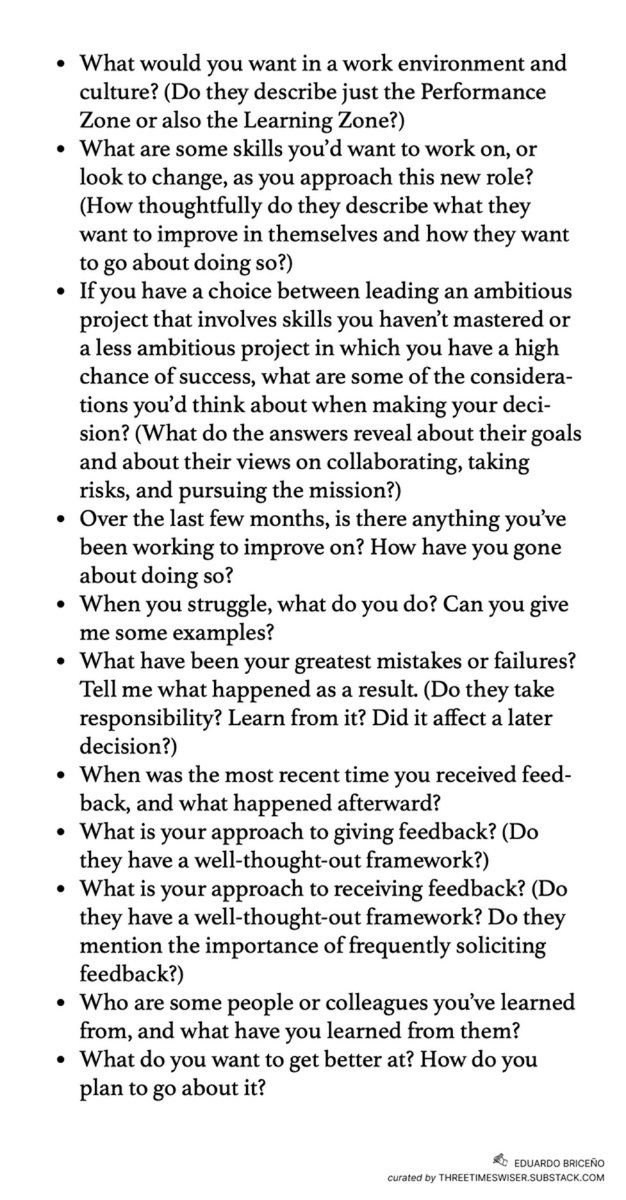
Interview questions that will make you think:
Z Fellows tweet media
English
5
82
1.1K
148.1K
Saurya Prakash retweetledi
The Founders' Tribune
The Founders' Tribune@foundertribune·
"Hire people who give a shit." by Alexandr Wang, founder of Scale AI
The Founders' Tribune tweet media
English
25
183
2K
281.3K
Saurya Prakash retweetledi
Art Levy
Art Levy@artlevy·
The results of this survey by @cjgustafson clearly show @brexHQ handled our push into the ENT segment extremely well—we remain in the top 3 vendor choices across each category. This wasn’t easy (still isn’t!) but seeing Brex well-represented across categories and revenue ranges in this survey is extremely rewarding. Much of our success comes down to the fact that global companies rightfully demand enterprise-grade control, transparency, and scalability. Unlike others, we built on our own payment rails from day 1, allowing us to serve businesses best—regardless of size / demands. There’s a reason enterprise companies like Anthropic, Arm, Robinhood, ServiceTitan, and Sonos choose Brex 🚀
CJ Gustafson@cjgustafson

🚨 The 2025 Tech Stack Report is here! 🚨 1,031 finance pros shared what’s actually in their stacks. Some takeaways: 💰 @QuickBooks rules ERP until $25M ARR 📊 Spreadsheets still run FP&A 💳 @tryramp vs. @brexHQ is a war 🧾 Homegrown invoicing tools won’t die Let’s dig in 👇

English
1
1
16
1.2K
Saurya Prakash retweetledi
Josh Wolfe
Josh Wolfe@wolfejosh·
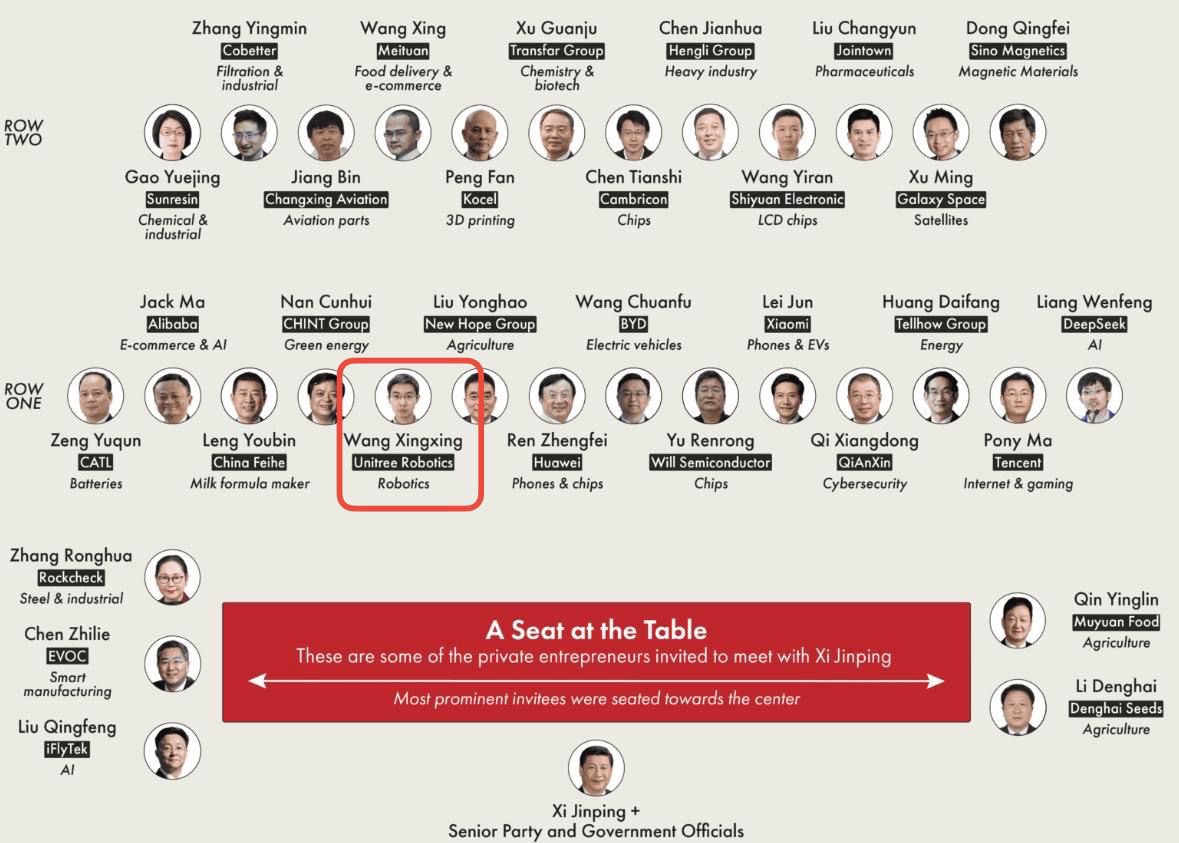
2 years ago in a Lux LP letter (below)👇we wrote that the most important allocator to watch to tell you what sectors mattered wasn't Buffett or Paul Singer or Klarman but Xi Jingping This photo tells you everything you need to know to allocate capital for the next few years.
Josh Wolfe tweet media
Josh Wolfe@wolfejosh

12/ -chaos in emerging markets await -JAPAN role in global markets + possible selling of equities + bonds may cause major dislocations Forget Buffett or Howard Marks––follow XI JINPING Xi says ecommerce/social/mobile/fintech/edtech DONE–– + semis/biotech/aerospace/deeptech NEXT

English
10
22
203
91.7K
Saurya Prakash retweetledi
The All-In Podcast
The All-In Podcast@theallinpod·
Collison Brothers Explain Why Stripe is Better Off Staying Private John's (@collision) take: " People generally make the argument that public companies run in a more disciplined fashion. I think that's hogwash." "If you need a 25-year old Fidelity analyst asking you to double click on your CapEx, blah, blah, blah, to run the company with discipline, something is horribly wrong at the company and you need new management." "It used to be the case that to do any return of capital to shareholders, or if you needed any kind of large sums of money, you needed the public markets." "That's obviously not true today, where stable private markets exist." " This is our life's work. We're not going anywhere. We'll be very happily running Stripe in 10 years time, in 20 years time." Patrick's (@patrickc) take: "We're a company at the intersection of financial services and technology. Being private for a long time is the norm." "What matters is less kind of the returns in a given year, and more duration. And so the question is, what enables the best compounding on a 10 year time horizon?" "And what's best for shareholders as you really take the longer-term perspective?  And then what's best for customers?" " At this juncture, with the business growing at this rate, we want to spend the marginal hour with some customer."
English
22
40
619
407.4K
Saurya Prakash retweetledi
Yano 🟪
Yano 🟪@JasonYanowitz·
Went to pay a Stripe invoice. Crypto (stablecoin) is the first option ahead of bank accounts. Slowly at first, then all at once.
Yano 🟪 tweet mediaYano 🟪 tweet mediaYano 🟪 tweet media
English
168
189
1.7K
490.5K
Saurya Prakash retweetledi
litquidity
litquidity@litcapital·
“OpenAI huh? $500B? Gimme 2 weeks and $5 million and I’ll clone it asap” - DeepSeek’s CTO
litquidity tweet media
English
1.2K
9.2K
105.3K
5.4M