

Dom Svab
165 posts

Mining is one of the best and most misunderstood things about @OREsupply - today I will help demystify it and share a little on my strategy and mental models.
What is $ore mining?
Every 60 seconds miners place $sol on 1 to 25 tiles in a 5x5 grid. You can play all 25 and win every round... or you can play a subset of tiles and introduce more variability to your results. Unlike mining $btc or any other L1, $ore gives you the option to "mine" the winning block every round if you so choose. If you mine the winning block, then there is a 50-50 shot of the 1 ore being awarded to one person or divided amongst all miners. Your shot at winning the one ore and your share if it is divided is determined by your share of ore on the tile relative to the other miners. Every round 0.2 ore gets added to the motherlode with a 1/625 shot of hitting and getting split amongst the winning tile players proportional to their sol on that tile.
What happens to the sol used to mine?
In normal L1 mining, miners must spend significant resources to secure hardware and operate that hardware. When these miners "win" a round they must sell the token to cover their costs... this introduces a leak into the ecosystem. This leak grows with the value of the ecosystem as you need ever greater buy pressure to offset miner selling with higher prices. Ore in contrast can be done with any device that has a solana wallet and an internet connection. The solana miners use is also not lost when mining happens. 1% goes to fund the protocol, 10% goes to fund staking yield/buybacks and 89% is returned to the winning miners. The 10% that goes to fund staking/buybacks is split 10% staking and 90% buybacks.
Why should I mine ore?
Mining ore is the best way to exploit a long-term bullish view on the @OREsupply ecosystem. Currently you get a 19% APY from staking and a 86% APR from holding unrefined ore. The excess yield on unrefined ore from mining is why people mine.
What is the catch and why is the unrefined APR so high, is this sustainable?
All ore enters the world as unrefined ore. Now that you can buy ore or mine it you have to decide what is right for you. The yield from sitting on a mined ore position is so high that most people would prefer it over bought refined ore and that is why people mine it at a premium to spot ore prices. So long as people mine above spot then buybacks > emissions and circulating ore shrinks... either slowly or quite fast depending on the ratio of these two flows. The yield from unrefined ore comes from people refining it... when you want to claim your ore, you "refine" it and pay a 10% tax that goes to the other unrefined ore holders, proportional to their position in the overall pool. This is an anti-ponzi... the longer you hold the more you get from others refining.
What happens if others stop refining... wouldn't the yield collapse and bring the whole thing to a grinding halt?
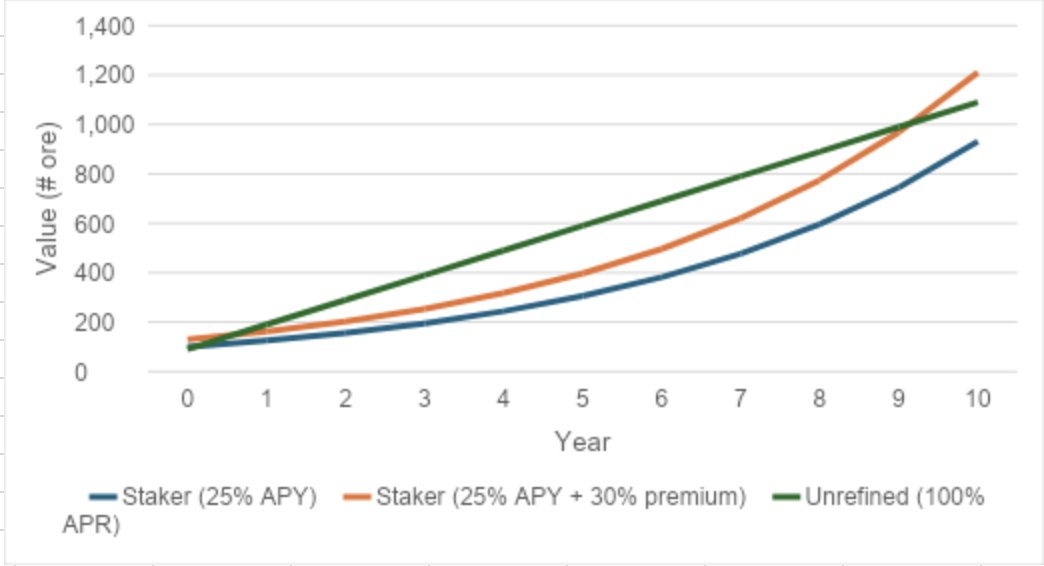
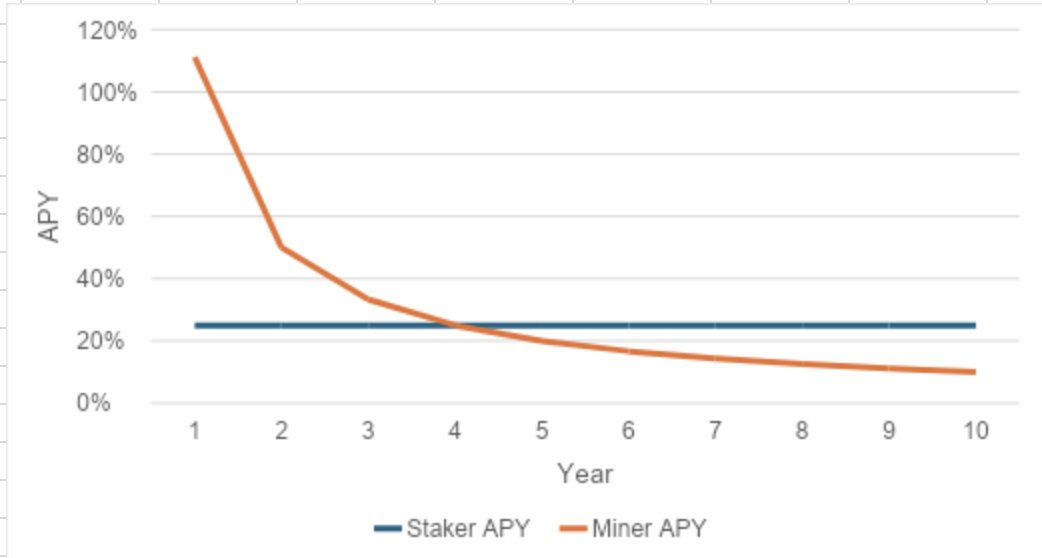
As prices rise people will want access to their mined riches and will be willing to forgo yield to have liquidity. The same happens when prices tank across the market and people need liquidity... sometimes expensive liquidity is all you can access. Soon I will have a defi protocol for you where you can borrow against your staked ore without paying interest or facing liquidation risk... but that's not quite ready yet so we can table that. A week ago during the market selloff, unrefined ore was yielding 150% as people choose liquidity over profit... and those of that could wait or had more conviction were paid for that. Even if everyone acts rationally there will come a time when everyone should refine as I demonstrate below. Bottom left shows you how $100 of unrefined ore grows vs $100 of refined or $130 of refine to represent the premium you likely need to pay to get access to unrefined. You can see in the chart that in the $130 scenario the staked ore eventually catches up and exceeds the unrefined mined ore. The reason for that is the unrefined mined ore gets paid in refined ore as others pay their 10% refining tax... while you do not pay a tax when you claim this ore it also sits idle. With time the ratio of very productive unrefined ore to idle refined ore skews towards the idle refined ore, bringing down the yield. As you see below right, while it may take a very long time horizon for the miner to fall behind... by year 4 the miners go-forward return has fallen behind that of the staker. The miner has such a huge lead that they do not fall behind the staker in absolute terms until year 9 but as soon as go-forward returns fall below that of staking they should refine and switch to staking.
How should I mine? Every tile has the same chance of "winning" in ore mining. As a result if each tile had the same sol on it then they would each have the same EV. When you enter the mines you will quickly realize that many people do not play all 25 tiles and as a result you often end up with some tiles that have relatively more sol and others with relatively less. Given each tile wins with the same frequency and you split the winnings amongst your fellow "winners"... it pays to avoid "crowded" squares. If you're mining with a small amount of sol you can target just the "good" squares and there are bots to help automate this... but be warned many are trying to do this and what the board looks like when you place your sol does not matter... it is what the board looks like when the round ends that matters. For this reason I always play 25 tiles as I want to win and I mine with too much solana to be effective any other way... I still end up with greater ownership of the "good" tiles and less ownership on the "bad" tiles. Some people will tell you mining 20 tiles has a better EV than 25... they are wrong. They are confusing outcome for process / math logic. The best way to explain it is if you play 24 tiles you will almost always win... you will win 24/25 times or 96% of the time... when you win you will have put less sol on the board than someone playing 25 tiles... you could do this strategy and see long winning streaks and think you've cracked the code... but there are no free lunches in ore mining... 4% of the time you will lose all of your mining capital and that concentrated loss will offset all the small gains in the other 96% of the time. The closest thing to a free lunch is selectively mining... mine when the effective cost of mining doing all 25 tiles is close to spot and avoid mining when it costs 2 or 3x spot. I personally mine when I can get unrefined ore at less than a 20-30% premium and mine very heavily when I can get it for close to spot. I do this by converting a little ore to sol and then mining with that... my ore portfolio is 90% refined and 10% unrefined so I have a long way to go... but the effort is worth it to me as if I can get more portfolio to 80/20 then I will have doubled my yield without any real liquidity cost as I will still have access to 80% of my ore without paying a 10% refining tax.
Hope that helps make mining clear... and to help get this message out to the world.. please drop your wallet address below and follow me, @OREsupply and my new defi protocol @compoundORE for a shot to win one $ore - winner will be decided in 24 hours. Expect regular long form posts with more chances to win $ore so please turn on notifications for all three accounts.
English

The most successful crypto projects utilise the same fundamentals:
• Carefully controlled scarcity
• Strong brand identity and community
• Clear utility and purpose
• Verifiable authenticity
• Secondary market liquidity
The parallels to the Birkin bag are striking.
English

Thanks for reading! A bit about me:
2 years ago, I cofounded @ThoughtleadrX — a premium personal branding agency for world-class founders, executives, and investors to dominate socials.
If you enjoyed this, hit "follow" for more breakdowns!

English
Theranos in 2003:
A teenager's promise to revolutionize blood testing.
By 2014, she was America's youngest self-made female billionaire.
Then everything collapsed in the most sinister fraud in medical history.
Here's the story that's haunted Silicon Valley ever since: 🧵

English

If you actually believe that Ukraine is somehow defending the American constitutional system, realism is lost to you and you can no longer see Ukraine as it is - a losing card that you should discard from your hand, and a botched overextension into Russia's backyard.
English
I think at a certain point, most people realized that American troops in the Middle East were not actually fighting “for our freedoms”, but for speculative regime engineering experiments.
Saying “Ukraine is fighting for our freedoms” is on an even higher level of absurdity.
Timothy Snyder@TimothyDSnyder
Ukrainians are fighting and dying every day so that we can be safe and enjoy the right to say asinine, ignorant, and cowardly things on podcasts.
English

Fertility Collapse and the Failure of Dating Apps
Why are more people single than ever, when matches are easy?
Dating apps have become the primary way that young people meet. Yet real relationships are elusive, and marriage rates are low. A deep dive into what is going wrong.
The crazy rise of online dating
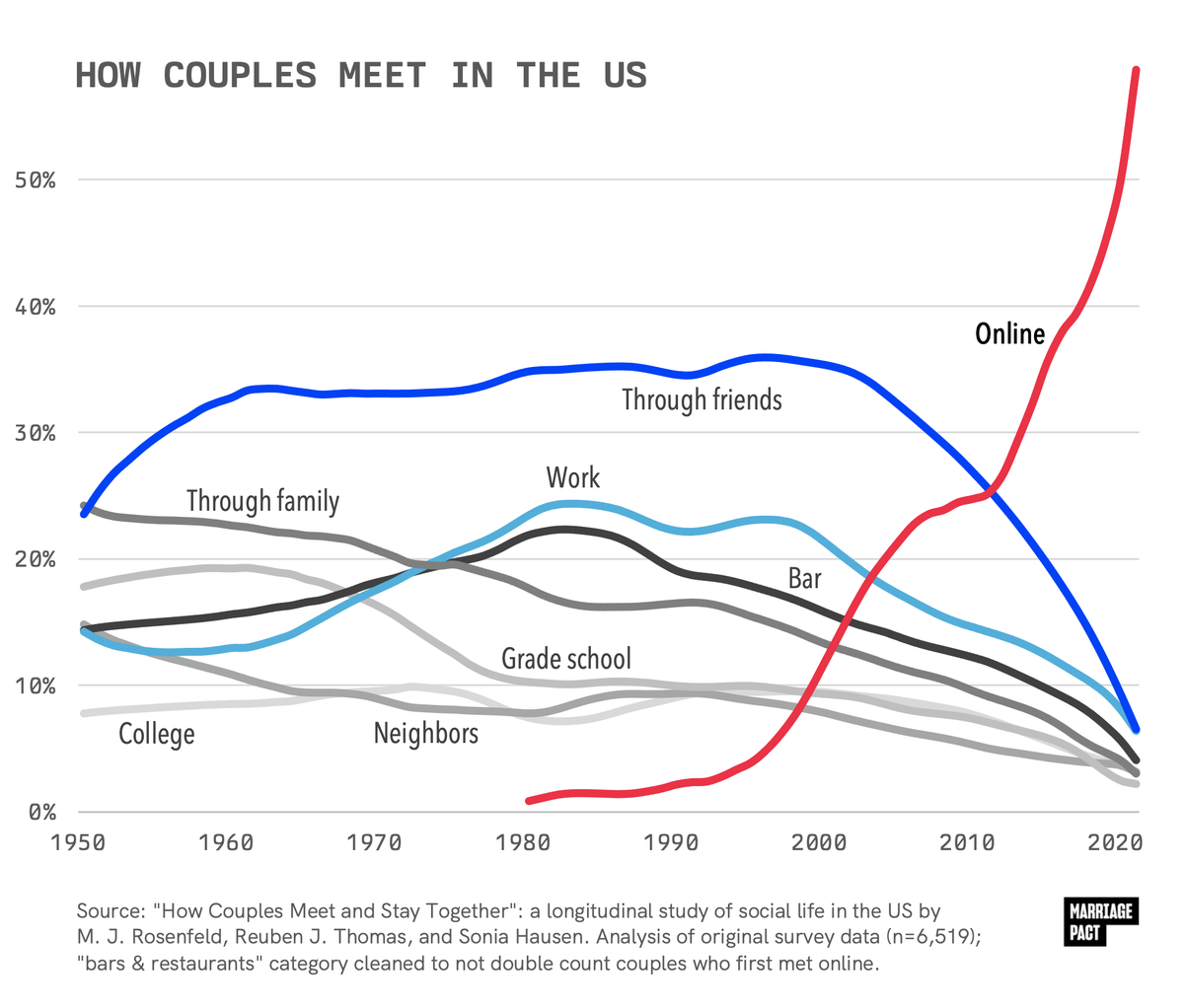
Michael Rosenfeld and his team at Stanford University have a long running project studying how couples meet and get together. And they have documented something extraordinary: Online meeting has swallowed up almost everything else.
There are a lot of ways that couples met in the past. Matches were made through friend networks, work, family, school and more. But in less than a generation, all the traditional ways that people meet have declined.
Couples are more than ten times as likely to meet online as they are through friends, family or school! And these changes have been incredibly rapid. In 2016 36% of relationships formed online. By 2024 this figure had reached 61%!
Dating isn’t going well for most people
This is supposed to be a story of progress. Singles have more options than ever. The universe of potential dates has exploded, from the handful of people in one’s social network to tens of thousands of possible matches on the apps. Even better, your personal match list consists of people who logged on to a dating app and then expressed an interest in being matched to you! It seems like a great matchmaking problem has been solved. Finding matches has never been easier, so everyone should be happy.
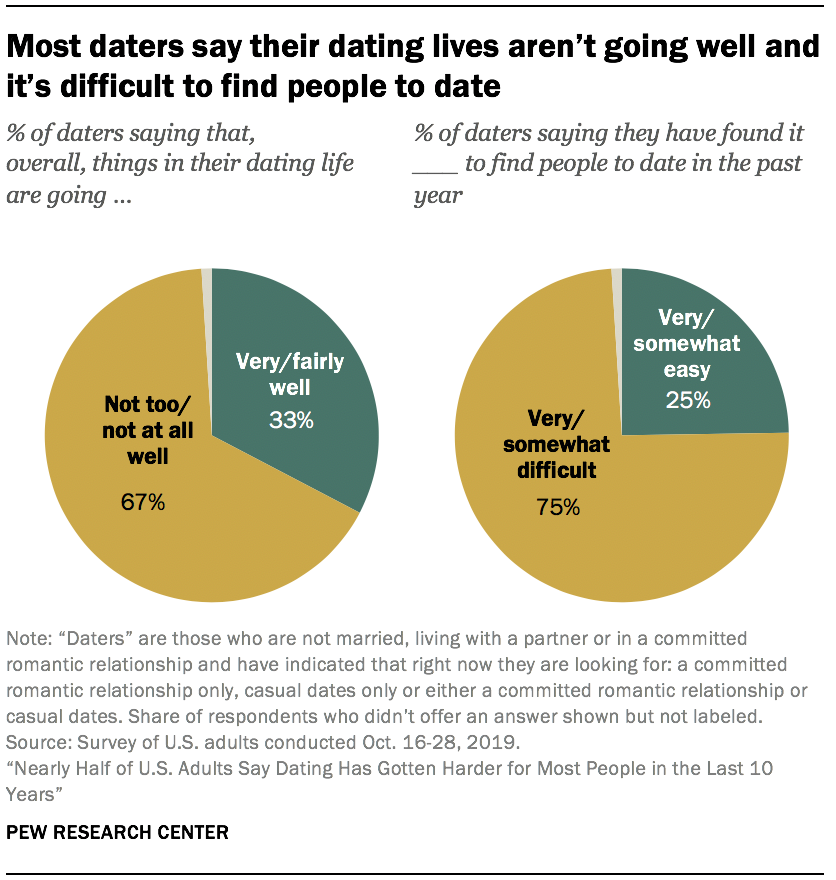
Are they? Pew Research Center asked daters how their dating is going. An incredible 67%, more than two in three, said their dating life is not going well.
But that isn’t the strangest result. Pew asked how hard it is to find people to date. Some 75% of respondents said it has been somewhat or very difficult to find someone to date in the last year.
Now that seems incredibly odd. You can download an app and within minutes you are scrolling through a stream of singles near you looking to date. Maybe people aren’t living happily ever after but they should be finding each other, right?
Apparently not! Even though daters can see a new prospect with every swipe, partnering is at an all-time low!
More people say dating is getting worse, but women say that the most
Maybe dating has always been hard. If you’ve read or watched Pride and Prejudice, you know that getting to commitment has never been easy. But it's getting a lot harder.
Pew also asked people how dating experiences are now compared with ten years ago. In every race and age group, more people said that dating has gotten harder, amid the shift to online meeting.
But the most remarkable thing is that women, by a margin of 55% to 16%, said that dating has gotten harder. That is quite unexpected given the gender dynamic for dating apps.
What the matching app dynamic looks like
Someone ran an experiment that started with creating a first dating profile of a 25-year-old-man with decent looks. “Mario” got no matches in 12 hours. Then using a FaceApp gender switch, a second dating profile was created of a 25-year-old woman, “Maria”, a female version of the man in the first dating profile. Maria got 200 matches in one hour.
Although I could not locate the original source of this experiment, it fits nicely with what else is known of matching apps. Swipestats.io looked at the experiences of men and women on Tinder. Men 'liked' a majority of the profiles they saw but only matched with 1% of women. Women 'liked' barely 3% of the profiles they saw and yet got a match with a majority of men that they liked!
Most women on these apps see an abundance of interest, with many men to choose from. Meanwhile, most men see very little interest and a lot of men see no interest at all. A small share of men enjoy almost all the interest from women. For example, 90% of likes by women are for men over 6 feet tall, a category that includes just 14.5% of all men.
It is understandable that most men would be unhappy with an arrangement like this. But with so many choices women should love it, right? Why are women reporting such negative experiences with dating the way it is today?
Erik Torenberg has an excellent essay, “The Matching Problem in Dating" in which he identifies the big problems with dating apps, namely:
· Hypergamy that leaves out most men but ultimately disappoints most women too
Consider a matching app where the top 80% of women are matching with the top 20% of men (a typical skew). That leaves many men without prospects and gives them a sense that love is unattainable.
But for women the situation may be just as bad. Women will enjoy many matches and set a high bar for the quality of partner they expect, since they have ‘successfully’ matched with high status men. They may find that casual sex with such men is on offer as well.
But converting those matches into a long-term relationship is another matter, because most women are matching with the same men and a lot of those men aren't even interested in commitment. In the end most women will be disappointed too.
· Two opposite markets jumbled together
Most dating apps mix two markets that shouldn’t go together, the market for committed relationships and the market for casual sex. Those hoping for the former are often stuck with people just looking for fun.
It is hard to keep these two groups separate because those just interested in hookups (often the men) are motivated to hide that fact. Meanwhile, those interested in a long-term relationship (often the women) don’t want to ruin things by being too demanding.
· Online, people can get away with bad behavior
Among real-world networks, those who behave badly quickly develop a certain reputation. Friends and family are watching, and breakups are a big deal.
But in the world of dating apps, there are few consequences for ghosting, cheating, or otherwise taking advantage of others. Serial offenders who pretend they want a relationship while going for casual sex can keep doing so for a very long time.
· Commitment is low
Torenberg notes that when matches are easy to come by, there is less willingness to try to make relationships work. “Why stay in a non-perfect relationship when there are millions of other potential matches at your fingertips? This explains why breakup rates for couples who meet via apps are twice as high as couples who meet via friends and family.”
What are some alternatives to the widespread failure of dating apps?
(1) Real world introductions by friends and family
In person networks were the way couples met for most of history and with good reason. Friends and family help to vet potential partners and offer a support network when things get tough. Ultimately the smaller pool of people in one’s real social network offers much better odds of commitment and ultimate success.
(2) Religious communities
Demographer Lyman Stone argues that a big reason why religious communities have higher birthrates is the dating pool. Young people in these communities share common values and are generally marriage minded. The difficult problem of finding someone who shares your values and wants commitment is already solved.
(3) Matchmaking
Matchmaking is a foreign concept to most of us but when more than two in three singles say dating isn’t going well, it’s not a bad idea to give something new a try. Arranged marriages are the norm places as different as India and Israel. And in these places young people are getting married and forming families at high rates!
(4) Dating apps that are geared toward marriage
It may be too much give up matching apps when an entire generation is using them. But apps (or filters within apps) aimed at those who want commitment and family go a long way toward mitigating the worst aspects of online dating.
I wrote about how marriage is crucial to healthy birthrates in this thread:
x.com/MoreBirths/sta…
But before that people have to meet and agree to commitment, and most dating apps aren’t cutting it. Is it time to return to meat space to meet people?
Please share this and follow @MoreBirths for more!


English

Follow chads 💎
@cryppinfluence
@the_smart_ape
@ardizor
@belizardd
@alphabatcher
@AlphaFrog13
@0xTrvc3y
@FareaNFts
@zucl1ck
@kem1ks
@xmayeth
@defileo
@KingWilliamDefi
@juliweb3
@0xSketon
@FareaNFts
@0xJok9r
@Cryde_2
@JoinCryptoToday
@Dionysus_crypto
@cryptosymbiiote
@0xDPool
@DeFi_Buddha
@themaran
@AlphaFrog13
@terra_gatsuki
@DeRonin_
@MoneyCrptBunny
@DefiAppa
@DeFiTracer
@zeuuss_01
@Blum_OG
@defi_blackjoker
@nursexxl
@Karamata2_2
@Al1netla
@HarryTandy
@rostikdeni
@0xchromium
@_GemQueen
@DeFiMole_
@Web3Duke1
@0xVoyagerr
@MoonKing___
@integral_crypto
@kepochnik
@0xImmortal_
@learncryptotg
English

Getting to Commitment Earlier Leads to Substantially Higher Fertility
There is a debate that continually comes up between trads and non-trads. Is it better for young people to cohabit or to quickly commit?
From the perspective of fertility, the answer is clear: the sooner young people can reach commitment and marriage the better. Cohabiting often means delaying those things. And that really brings down fertility.
Fertility depends more on age than we know
Most people think that the ability to get pregnant starts to tail off sometime in the mid to late 30s. But that is not true. A 2023 paper by Spears et al. entitled Age and Infertility Revisited found that fecundability, the ability of women to get pregnant in a given month is already 2/3 lower at 32 than it is at 20!
This means that many women who struggle with infertility in their 30s could have had a relatively easy time getting pregnant in their 20s!
America is more fertile than Europe because Americans delay less
It is common in developed countries to 'find yourself' and cohabit in the 20s, and then plan on family in the 30s and beyond. But that delay costs couples their most fertile years!
In Europe, the norm is long cohabitations and later childbearing. In the US meanwhile, people tend to commit sooner and start having children earlier, especially in more conservative middle of the country where traditional norms still frown on cohabitation.
The result is that fertility is higher in the United States than in Europe, and highest in the parts of the US where religious norms have more sway.
The conflict between delaying of life's milestones and unforgiving fertility decline that comes with age is a big part of the low birthrate crisis around the world, as I wrote about recently. For many people, childbearing that is delayed in the 20s cannot be made up in the 30s and beyond.
x.com/MoreBirths/sta…
Anything that slows down commitment (from cohabitation to long education tracks to adults living with their parents) is a dicey proposition for those hoping to have children, and a big problem for societies where birthrates are too low.
Follow @MoreBirths to better understand the low fertility crisis and potential solutions.
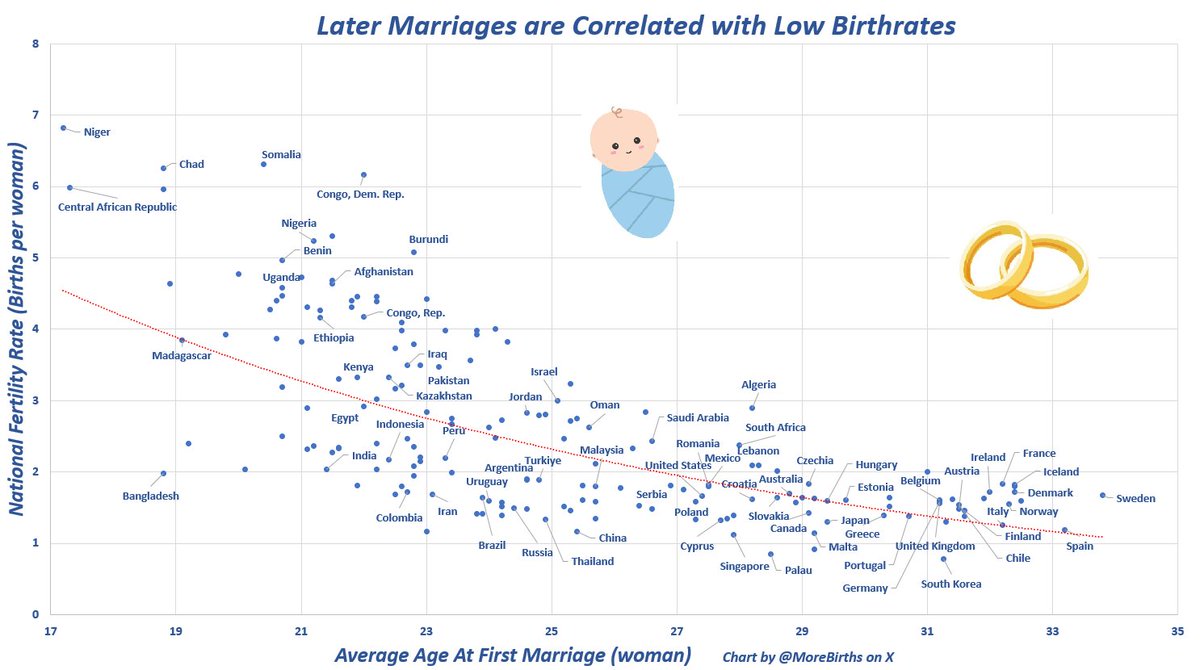


ib@Indian_Bronson
All of that is exactly the opposite of good advice for young people 👍
English

Let's talk about dead cats bouncing. Strategically.
Last time I made a big prediction it was that Ukraine would begin to collapse after Spring 2024, and the Donbass front cracked and Ukraine launched a desperation push in Kursk in Summer '24.
We can see the end from here:⬇️
So first, what is a dead cat bounce offensive? It's a last-ditch attack undertaken by a power that is already in military collapse, seeking to snatch victory from the jaws of defeat after the strategic balance has turned decisively against them. Absent some level of divine intervention - see the French Orleans Campaign of 1429-30 - these operations are generally very counterproductive and significantly hasten the defeat of the power launching them.
There have been a lot of dead cats bouncing over the course of miliary history, enough that we can actually make predictions using them. So let's do exactly that and examine three such operations from the conflict closest in character to the Ukrainian War: World War One.
Case Study 1: The Brusilov Offensive
World War One started out badly for Russia with a brutal defeat at Tannenberg in East Prussia and only really got worse from there, with Russian troops abandoning Poland and falling back to a line in modern Belarus in mid-1915 in an attempt to stabilize the front. Although late Imperial Russia certainly had plenty of issues with state capacity, backwards infrastructure, and official incompetence, the reason for the Tsar's troubles was really much simpler: the Western Front was not the Central Powers' priority for most of World War One. Russia was fighting the main forces of Germany, Austria-Hungary, and the Ottomans simultaneously. And Wilhelmine Germany in particular was actually something of an 800-lb military gorilla.
Staring defeat in the face, the Stavka planned a bold operation to roll back the Central Powers: an attack on their left flank, close to the Romanian border and aiming to batter the weaker Austrian forces holding the southern sector of the front. And it worked - kind of. Russian forces under General Brusilov's command made significant gains, turfing the Austrians out of Galicia thanks to fine tactics that presaged the stormtroopers of the last year of the war. Other Russian armies attacked with far cruder methods and failed, and even Brusilov's men quickly ran out of steam once the Germans buttressed their Austrian allies.
The offensive was hideously bloody for the Russian Army, which took something over a million casualties over three months of brutal fighting. And while they had plenty of men for replacements, Russian industry and political stability were other things altogether. The February Revolution dethroned the Tsar and crippled Russia as a great power nine months after Brusilov's men went over the top, although Lenin (who took power after another revolution!) would not sign the humiliating Treaty of Brest-Litovsk for another year.
Time from dead cat bounce offensive to collapse: 9 months to political collapse, 21 months to near-unconditional surrender.
Case Study 2: The Nivelle Offensive
The Russians weren't the only power that started the Great War badly. Between the Frontiers and the Marne, the French Army suffered something like half a million casualties in just two months of 1914. French forces continued to take a beating as weeks turned to months and then to years and the causalties piled high, with morale in the trenches starting to noticeably crack in early 1917.
Staring national collapse in the face, GQG decided to attack in the middle of 1917. Half a million French troops went over the top on the Chemin des Dames on April 16th, 1917; less than a week later the operation had ground to a halt in an ocean of blood. French troops advanced four kilometers and took close to 200,000 casualties to do it.
French troops began mutinying almost immediately, throwing the French Army into chaos for more than a month. Fortunately for France, American troops began arriving shortly after - but the French Army was a spent force after the Nivelle Offensive and France would have probably spiraled into chaos much like Russia had the US not rescued the situation.
Time from dead cat bounce offensive to collapse: 11 months, because had American troops not been flooding into France our next case study would have turned out very differently...
Case Study 3: Operation Michael
The Entente Cordiale won the Great War in 1918. You wouldn't have expected that going into the year, in which the alliance careened from disaster to disaster facing the full and undivided attention of a Germany that for once only had to fight in one direction. With that said, Germany was a wounded power - and the American goliath was making itself known on the Western Front. If they were going to win the war, they had to act fast. And they did.
First to come was the disaster of Caporetto in late 1917, in which Italian forces were routed from their longstanding Alpine front line and had to be rescued by the French and British at the gates of Venice. Next was Michael.
The German Army went over the top on March 21st, 1918 and blew an eighty-mile hole through the Allied front line on the Western Front, eventually pushing the Allies back some forty miles. This in a trench war in which major advances had previously been measured in hundreds of yards. Even given the German Army's battered state, had the American Expeditionary Force not been on the ground to counterattack the Entente likely would have collapsed with France knocked out of the war entirely.
Germany would sign the Armistice eight months later, facing the prospect of an endless flood of American troops after an Entente counteroffensive had rolled back their gains.
Time from dead cat bounce offensive to collapse: 8 months, contingent on the introduction of significant new enemy forces.
So, what can we learn from all of this, and what does this mean for Ukraine?
Well, Ukraine dedicated its strategic reserves (and much of its operational reserves from the existing front line) to its Kursk Offensive in August 2024, which bogged down with disastrous casualties in the Battle of Sudzha-Korenevo. This was a desperate move seeking to dramatically snatch victory from the jaws of defeat, and like most such moves undertaken by powers who have the strategic balance so sharply against them, it failed with considerable losses. In short: it was a dead cat bounce offensive.
Given our timelines from WWI above - 9 months from the Brusilov Offensive to the February Revolution; 11 months from the Nivelle Offensive to Operation Michael; and 8 months from Michael to the Armistice - we can make a prediction. It is as follows:
Ukraine's military situation will become untenable by the end of Summer 2025. Should they not sue for peace at that time, there may be as much as a year of additional combat before Ukraine surrenders unconditionally or is entirely conquered.




English
There's actually a critical lesson to draw from this and other Ukrainian fiascos, of which the Bakhmut saga and the Zaporozhie Hundred Days come to mind: Ukraine will have ended up losing this war in large part because it consistently tried to fight beyond its means.⬇️
The Ukrainians started this war with an enormous army, well in excess of what the Russians could and actually did commit to the fight in 2022. That huge force (the "First Army") was badly mauled in early 2022, but it was rejuvenated later that year by a combination of ruthless mobilization and massive aid from NATO. This convinced the Russian Stavka to transition to the defensive and consolidate their position in Ukraine, withdrawing troops from more exposed positions in east Kharkov and right-bank Kherson.
Any serious assessment of the situation at that point would have been that the Russians had consolidated into a basically impregnable position that the AFU was incapable of breaching (lest we forget in the wake of Russia's totally unhindered withdrawal from the area, their attempts at reducing the Kherson bridgehead by force in mid-2022 were bloody disasters), and the correct course of action was to start digging in and negotiate a peace treaty in the meantime.
The Ukrainian leadership instead threw a disturbingly large portion of the "Second Army" into Prigozhin's meatgrinder in Bakhmut and then ordered not one but two large-scale counteroffensives into Zaporozhie and the Bakhmut flanks using the post-Bakhmut remains of the "Second Army" and their NATO-supplied "Third Army." Those failed with enormous losses, opening the way for Russia to transition back to the offensive in late 2023 and begin systematically rolling Ukraine out of the Donbass. The correct course of action at this point was, again, to find a tenable defensive line and start digging.
Zelensky instead ordered a "Hail Mary" offensive in Kursk with the remnants of the "Third Army" and significant elements from a lightly-equipped "Fourth Army," hoping Russian border defenses were weak despite their having ample warning of Ukrainian designs on the border region (courtesy of several earlier, smaller raids) and plenty of time to prepare. It proceeded to fail with enormous losses - Ukrainian forces breached the border, began to exploit, and ran square into a Russian haymaker counter-punch that stopped them in their tracks. The Ukrainians then reinforced failure, sending massive reinforcements into a death pit in an attempt to keep a sliver of Russian soil under their flag as a middle finger to Putin.
And while this was happening the front in the Donbass started to collapse with Russian troops making large advances and seizing key terrain, in no small part because the AFU's resources had been systematically redirected to a tertiary operation far to the north.
We've seen, again and again and again, that when the Ukrainians got resources and generated forces, rather than admitting they are the weaker power here and working to strengthen their positions and conciliate, they instead squandered them on hugely ambitious and equally doomed offensives. In 2023 these offensives were aimed at restoring their pre-2014 borders when Donetsk may as well have been on the Moon for them, while in 2024 their ambitions transitioned to the outright insanity of conquering southwest Russia despite the fact they'd been on the military back foot for the last year.
These are the moves of a power setting objectives beyond its means to achieve, and they will probably end up dooming Ukraine as a sovereign state going forward.

Olga Bazova@OlgaBazova
Let's talk about the Kursk suicide safari achievements so far: ▪️Crumbling front along the whole Donbass line ▪️Thousands of their best able soldiers and countless number of their best remaining Western supplied armor eliminated ▪️A few weeks of 🇺🇦 stans proudly screeching how Ukraine is the first country since WWII to invade Russia and how it embarrassed Putin ▪️The Pyaterochka grocery store in Sudzha and some groceries of sub-par quality SLOBBER UKRAINE!
English
Here is a review of the literature around faith and fertility. Religious attendance and commitment, or lack thereof, matters profoundly for birthrates according to a lot of studies.
x.com/MoreBirths/sta…
More Births@MoreBirths
What does it mean that culture matters most for fertility? A big part of that is religion✝️⛪️✡️🕌. A review of the literature shows religious attendance & commitment are linked to much higher fertility, and declining religiosity is driving birthrates lower. 🧵, please share!
English
Humanity at a crossroads
On one hand, liberalism seems to be winning culturally. Religion is discarded as backward, and marriage too. Yet fertility in all the liberal places is collapsing. If we cannot have healthy birthrates in modern societies, we stand to lose everything!
A premature triumph
It is easy for progressives to feel triumphant. It seems that within every western country progressive values are winning in polls. The folks who hold traditional values around religion and marriage are in retreat and sophisticated people feel like they have history on their side. If you think fewer people attending religious services is a good thing, or if you associate marriage with patriarchal oppression, you probably feel pretty excited about modern trends, and you have a lot of company.
Unfortunately, modern societies aren’t winning in the way that matters most. They aren’t having children. If they can’t figure that out, all of that progress will be short lived.
Can we continue without religion?
The fertility advantages of religion are well known. Yet smart people everywhere roll their eyes knowingly at one another when the topic comes up. Maybe we say we’ve moved past that because we believe in science. Or we politely decline because it’s not really for us.
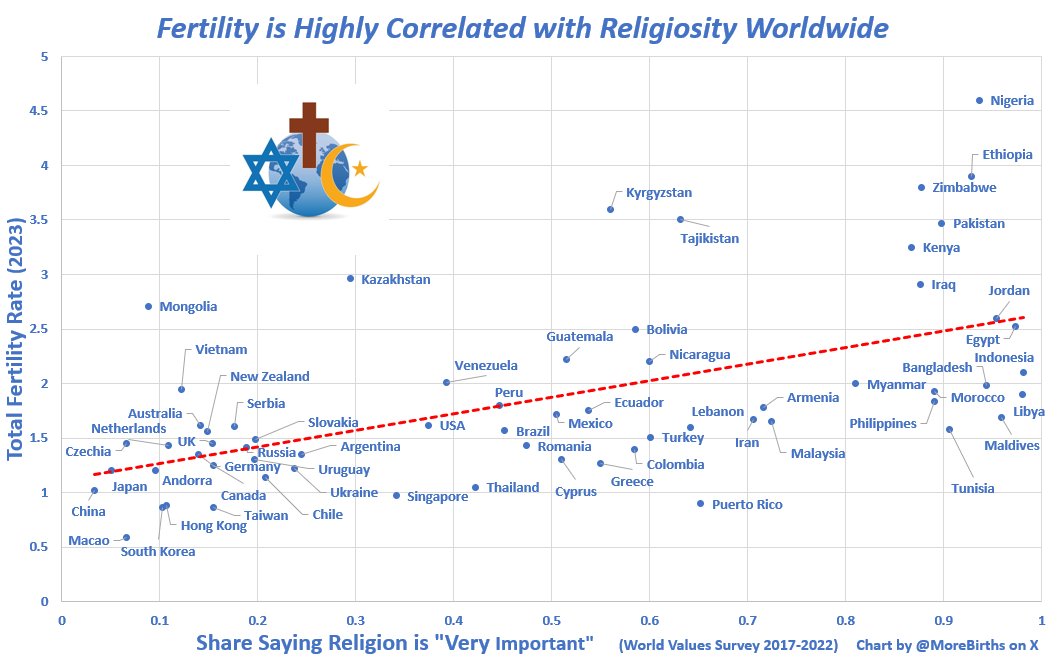
But the relationship between religiosity and fertility is incredibly strong. The least religious countries are all far below replacement in fertility while the most religious countries are demographically thriving. The fertility gap for religiosity is stronger than for almost anything else. See the chart below. (If a country you are looking for is missing, that is because not all countries participated in the survey.)
The reasons for this fertility advantage are many. Here are some of the big ones:
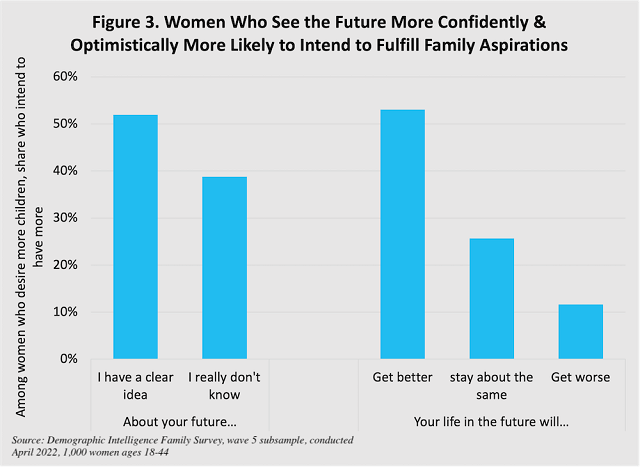
· Religion gives people a positive vision for the future, a source of hope when life seems like a vale of tears. The effect is powerful. Religious people are happier in almost every country studied and happiness is linked to having more children.
· Religious faith confers a belief in the value of children that is often missing in modern liberal society. Indeed, modern liberal societies can be positively antinatal, to the point that the natalism of modern faith groups is positively countercultural.
· Faith communities offer physical human connection in a world where so much is virtual.
· Faith communities provide thick networks of supportive other families in an atomized world.
· Shared religious belief and practice helps bridge the cultural and political divide between men and women that has grown into a chasm.
Of these factors, the thing about happiness and hope seems really big.
A question for the skeptics
Although faith is often derided as the opiate of the masses, isn’t its value undeniable if the optimism and hope it confers can be bootstrapped into tangible success?
Of the Mayflower’s 102 passengers, only a minority of 50 survived the first winter. Often several pilgrims were dying every single day. What madness could cause them to continue the project in the face of such suffering? Yet, faithful people that they were, they redoubled their commitment. Can any of us imagine?
Those 50 survivors have by some estimates 35 million descendants in the United States today. That colony and the ones that came after developed into the world’s most successful country by all the measures we like to use.
If something works, isn’t that it’s true measure?
Who is actually having kids?
When mainstream culture turns hard against all the norms that lead to having children, the cultures still having lots of children will be the ones that intentionally push away from modern society.
Groups like the Amish and Haredi Jews maintain their high birthrates by rejecting many of the things we hold most dear, from technology to long educations and many freedoms we treasure. The Amish and Haredi by and large are not contributing to scientific advance or technological progress. That isn’t because they are discriminated against. Rather they choose to disengage from a world that acts as an acid bath to their cultures and dissolves norms around family. We hate to say it, but there is a logic to that, and they may be more successful in the long run by behaving this way.
But the Amish and Haredi are positively progressive compared to some other high fertility subcultures.
In Afghanistan, women are not only barred from education and work, but nearly all aspects of life, with far less freedom than women ever had in Western countries. Most modern parents of daughters grieve at seeing this.
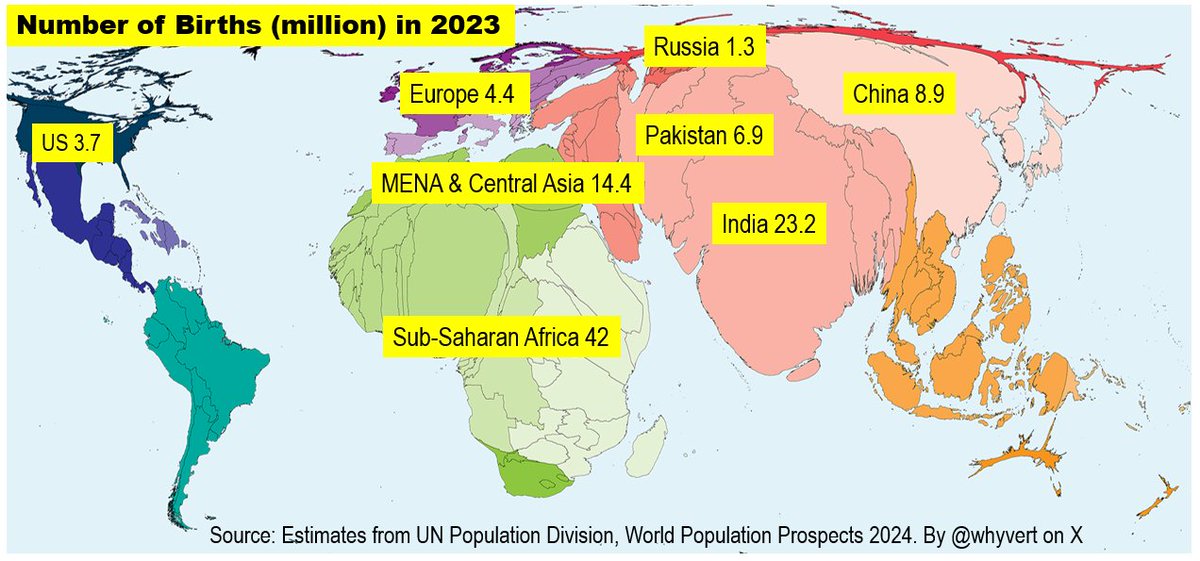
But what does this have to do with the rest of us? Everything. There are as many births in Afghanistan as in Germany and the UK combined. Pakistan has almost as many births every year as all of Europe and the United States put together.
When we reject our own faith and family traditions, we aren’t really winning. We are ceding civilization to those who reject all we hold dear.
What is the plan here? One cannot reject so many cultural elements that support having kids and not replace them with anything.
Modern countries have a lot to be proud of. We don’t do forced marriage. We embrace education for everyone and treat women and men as equals. We have been at the forefront of progress, both in terms of technology and human freedom.
Can we have these values and still have healthy birthrates? So far things are trending toward demographic collapse. But we surely must try. Without having enough children to at least replace ourselves, there is no triumph of progress. The defeat of tradition without new systems that work is no victory at all.
Science and technology are wonderful. We owe a huge debt of gratitude to those who have worked so hard to get us to where we are. But sadly, it is the science and technology types who are having the fewest children globally.
If we can’t find our way toward much higher birthrates, this glimmer of civilization we have will be extinguished, and replaced with something much more primitive. Is there a way forward? Of course, and @MoreBirths discusses a range of ways to raise birthrates, from earlier marriage to low density housing to forms of faith that give us what we need without taking us backward.
But above all, we need to have an intense pronatalism, borne of a realization that if we don’t have children, nothing else will matter in the end. We aren't facing economic depression but something much worse. We don't have the language for what is coming, really.
Please share.

English

@citrea_xyz @galaxy @Delphi_Digital I hope you've found this thread helpful.
Follow me @Axel_bitblaze69 to:
• Learn more valuable crypto related stuff
• Stay up to date with the latest crypto alpha & airdrops
Like/Retweet the first tweet below if you find it useful:
Axel Bitblaze 🪓@Axel_bitblaze69
Many have given up on airdrop farming, but that’s exactly why I think we’re heading into the next big phase The space is clearing out, and the next round of airdrops will be super lucrative for those who click now A thread on the Airdrops im farming with my strategy: 🧵👇 1/38
English
Many have given up on airdrop farming, but that’s exactly why I think we’re heading into the next big phase
The space is clearing out, and the next round of airdrops will be super lucrative for those who click now
A thread on the Airdrops im farming with my strategy: 🧵👇
1/38
English
The Fortune article attacking @ElonMusk for pronatalism is the one the most confused or dishonest pieces of journalism you will see, a complete inversion of reality.
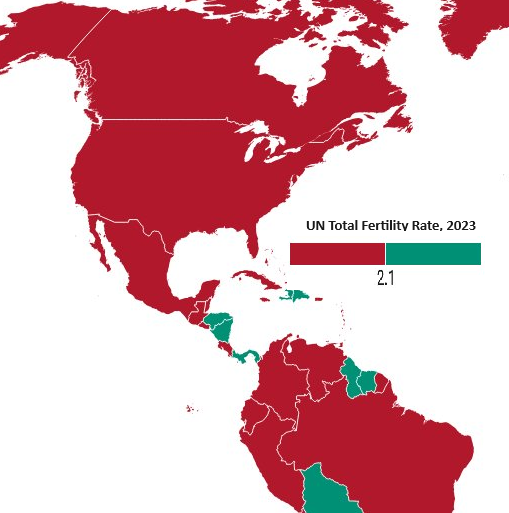
The actual Ponzi scheme happens when we stack up huge debt and don't have enough children to carry that debt. 1/

Elon Musk@elonmusk
Something deeply misanthropic about these people
English
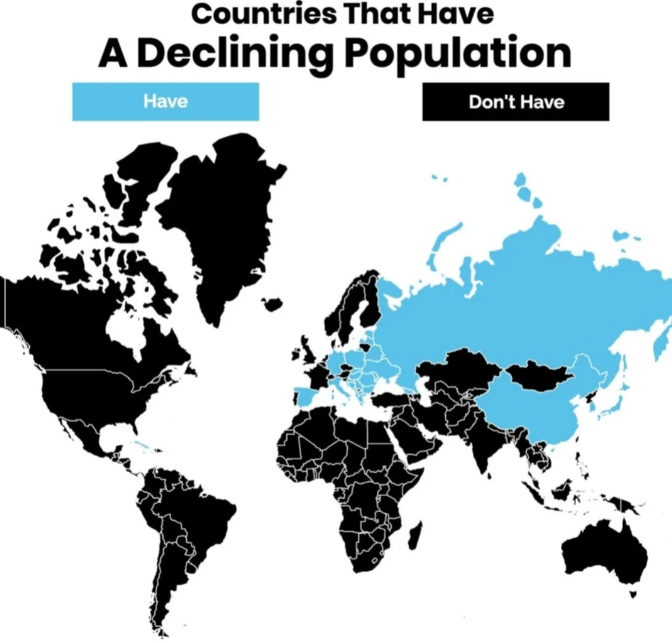
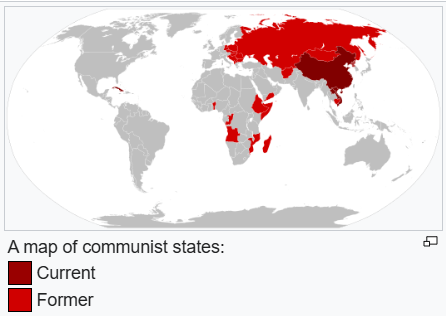
@MoreBirths Just a little nitpicking: contrary to earlier posts, it is not TFR, but change in total population, that is shown. In this regard the Western/capitalist fare better because of immigration (which also illustrates that they were more desirable destinations than communist countries)
English
Religious Freedom is Supportive of Higher Fertility
It is difficult to overstate the impact of religiosity (both belief and religious attendance) on birthrates.
The World Values Survey asks respondents “How important is religion to you?” (A common survey question, also used by Pew.)
With more than 60 countries surveyed, one can plot fertility as a function of the share of the population that rates religion as 'very important.' It turns out that the most religious countries in 2023 had a fertility rate that was on average twice as high as the least religious countries!
This holds true on an individual level as well. One reason fertility rates have fallen so far is that people are much less religious than in the past in many countries. This means that countries have a lot to gain by fostering a climate of religious freedom.
Religiosity is not incompatible with progress
Some think religion is a relic of the past, incompatible with high scientific and technological progress. But that ignores history. The UK was much more religious than relatively secular France throughout the 1800s. But it was the UK and not France that brought the world the Industrial Revolution.
Likewise, during the 20th century, the United States was much more religious than most other developed countries in Europe and Asia -- having experienced three Great Awakenings up to 1930. Yet it was the United States that led the way in scientific and technological advancement, much more than any other country.
Religious freedom and pluralism lead to greater population health
With many countries facing demographic decline, it is important to create space for a range of faith groups to flourish because it is these groups within each country that usually have the most pro-natal culture. One reason the United States has a healthier demographic outlook today than either Europe or East Asia has been America's religious tolerance and pluralism. That meant that while certain faith denominations were falling, others were rising to fill the gap.
Meanwhile, many of the countries with the grimmest demographic outlook are former Communist countries where religious practice was intentionally stamped out.
This is a map of countries already facing outright demographic decline.
And below is a map of current and former Communist countries. Although there are some differences, the similarities are remarkable. Notice Eastern Europe and also Cuba in the Western Hemisphere.
The leaders in Communist countries imagined that by repressing religion they were fostering progress. That turns out not to have been true. Economically these countries were basket cases. But in the aftermath of Communism, they have become demographic disaster zones as well. With pronatal religious beliefs and cultures having been pushed out under Communism, many of these countries have seen birthrates drop to very low levels in recent decades. That effect has combined with economic flight, and now countries that rejected freedom are shrinking fast.
(Shares and follows appreciated. Soon you can subscribe to support pronatal education projects of @MoreBirths. The content will always be free to the public in line with the mission.)

English
Why is it harder for young people to afford children, even as society gets richer?
Amid this global crisis of low and falling birthrates, many are asking why young people are not having kids. On Reddit, the popular online discussion forum used most by 18–29-year-olds, this question came up and one answer was given more than any other. A majority of commenters said money, and too little of it, is the reason.
But if you know the economic trends, you know the story isn’t just about money. GDP per capita has been trending up over time. Inflation-adjusted GDP in the United States is more than $60,000 per year, more than three times what it was at the height of the Baby Boom.
This contradiction is not just an American one. South Korea’s GDP is up more than 20x in the same span. Surely if people got by with so much less before, they must be feeling rich now, right? Statista did a survey of South Koreans aged 20-39 and reported, “About 89.5 percent of South Korean singles who don't want to have children stated that they do not want children because of economic concerns about child support.”
Whoa! So South Korea got 2000% richer, and when you ask young Koreans why they don’t have children, and they say money is the problem, just like in America?
Inflating expectations
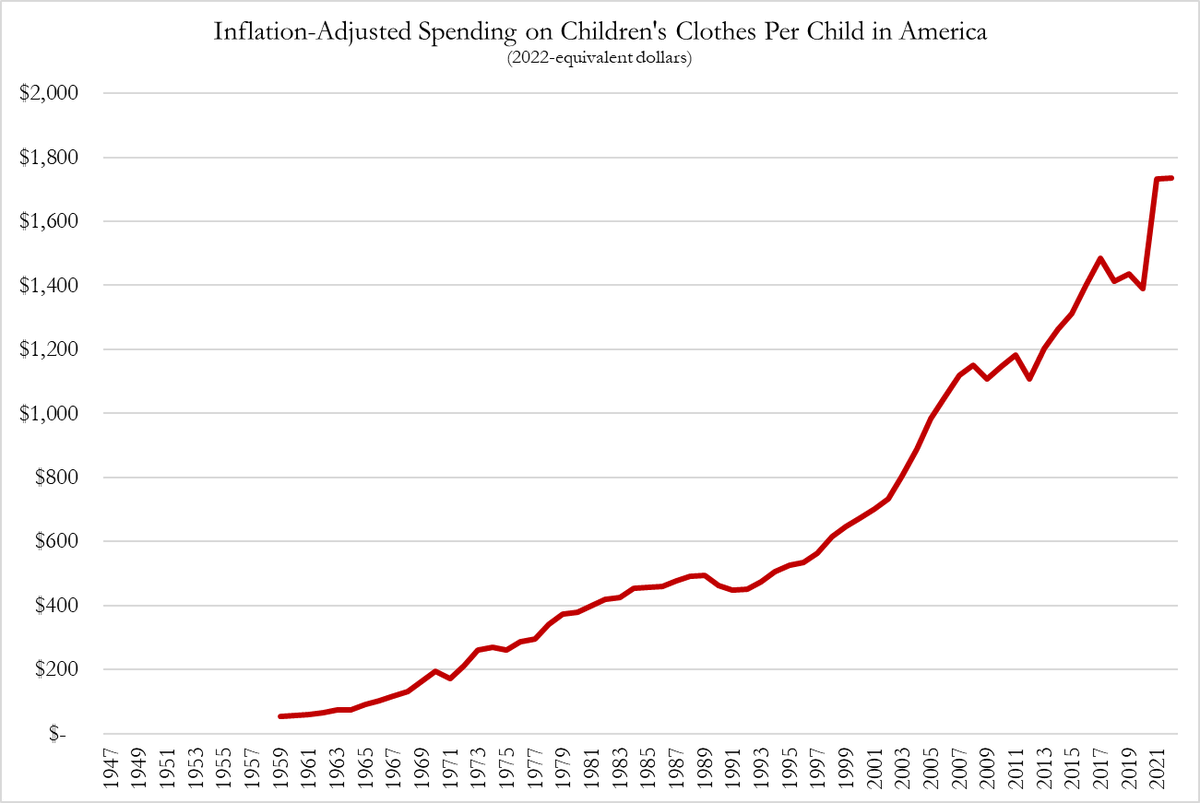
Demographer @LymanStoneKY analyzed spending on children’s clothing in a series of posts last year. What he found was remarkable. Real spending on children’s clothes in America has doubled just since 2000, and is up around 20 times since the baby boom. This chart is for kids under 5!
Meanwhile the share of parents’ income spent on young kids’ clothes went from 0.5% to 3.5% during that time.
Is a story of children’s clothes becoming suddenly more expensive? No. Kids’ clothes are cheaper than ever. Stone explains, “parents are just buying a much larger total volume of clothes.”
Across the board, baseline expectations have soared.
· During the 1950s baby boom, the average household had just one car, and now the average is two and you feel poor if you have just one.
· About half of Americans now take international trips. In 1989, just 3% of Americans even had a passport!
· Dining out once consumed just 10% of the average household’s food budget. Now the figure is 55%!
I feel bad writing this because it feels judgmental. But I too suffer from the inflated expectations. We had been thinking about traveling to Europe this year with our family of 8, since we have some relatives there. A lot of expenses have come up, and it probably won’t happen right now. I feel like I am not keeping up – many people in my circle travelled to Europe this year, and I feel like we’re missing out.
But how did something so special become the standard to follow? If 35 years ago, 97% of Americans didn’t even have a passport, then we know it was extremely rare for Americans to ever get a European vacation. Suddenly you aren’t doing well if you don’t make it to Europe?
Every generation is poor when they are young
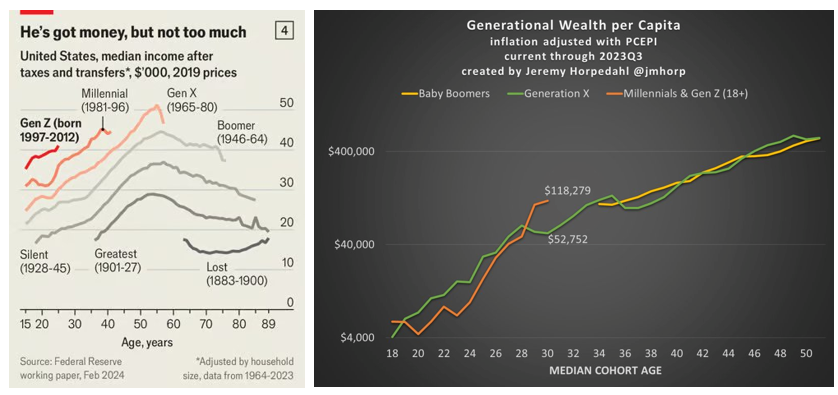
It is true that Millennials and Gen Z are poorer than Gen X and the Boomers. But the real measure is, how were they doing when they were the same age?
Overall, Millennials and Gen Z-ers don't seem to be doing worse than the generations before them, wealth-wise.
Are young people struggling? Yes, many are.
But encouragement is in order. You could feel poor and still be doing incredibly well for your age. It’s just the norm that wealth starts low, for almost everyone.
It is a weird fact of modern life that our reproductive prime, in our twenties, is the time that most of us are weakest financially. On average, wealth doesn’t really get going until at least age 35 or 40, but by then you are already going downhill, fertility-wise.
It feels scary and risky, but to become a parent you probably have to make the leap when you are young, poor and beautiful. If you try to wait until you are older and have your finances in great condition, it may well be too late.
How did people ever afford to have kids back in the day? How do they do it in poor countries now?
Simpler living is part of the answer.
People who came before us almost never traveled for vacation. They ate simple foods, almost always at home. Clothes and consumer goods were used until they were finished and had to be replaced. Birthdays were a time for kids to get their worn-out clothes replaced, not to get a mountain of toys.
We feel bad when our cars have a lot of miles on them or have a dent or tear on the seat cushion. But most people on Earth don’t have any car at all! In India just 8% of households own one. If you own a car at all, you are doing well from a global perspective.
I had an interesting realization when I visited a place called Chesapeake Beach, a town on the Bay an hour’s drive from DC. It was a huge vacation spot in the past, kind of like Ocean City, MD today. Most Washingtonians never even saw the actual ocean, they just caught a train to somewhere with water and called it the beach!
The point? It helps to reset expectations downward. We often feel poor based on modern standards that are impossibly high.
Family networks are another part of the answer.
How did people in the past afford childcare, and how do people in poor countries afford childcare today? Formal childcare was hardly used in earlier history and is hardly used in poor countries today.
Instead, the norm throughout history has been for family networks to cover childcare. When parents were unavailable, childcare would be covered by grandparents, aunts and uncles, and especially by older siblings.
That model isn’t just for poor countries. Israel is a rich country with high birthrates, and it is often said that Israel runs on grandparents.
Housing is a real problem, and childcare is harder to come by than in the past
All that said, there are two areas where things have gotten a lot tougher for young people.
Houses are very hard for most young people to afford, due to soaring interest rates and a shortage of homes amid high immigration. Without a suitable home, it is hard to have any family, let alone a larger one. And with most households having two people working outside the home now, often distant from their old networks, childcare is exceptionally hard to get or afford.
In both areas, family support can go a long way. With housing, it is a great idea for parents to help their grown children with a downpayment, or more. The case for intergenerational help for young people to buy a house has never been stronger. Many Baby Boomers in America and other developed countries have benefitted from extraordinary asset growth in recent decades, while their children struggle to buy those assets.
With enough time, most Millennials and Gen-Zers will be able to buy a home on their own. But if that happens when they are 45 or 50, it will probably be too late for them to have a family.
Meanwhile one of the effects of living longer is that most inheritances come way too late to help people have a family they would not otherwise have had. A Wharton study found “the bulk of inheritances are received between the ages of 46 and 75.”
It seems much more constructive for parents with means to 'give with a warm hand' when their kids are 25 or 30, than to have them wait for an inheritance. By that time grandchildren, if there are any, will be already grown!
With childcare too, the need for inter-generational help is especially acute now. Some 72% of mothers with children under 18 are in the workforce, along with 92% of fathers. The model of one parent staying at home with the kids can be great (and is highly recommended for those who can swing it through a combination of hard work and frugality), but that just isn’t in the cards for the majority.
If you have grown children and are retired or near retirement and wondering what to do next, the best answer may be this: help your children raise their children!
Some of the greatest heroes are grandparents who already served their time but enlist a second time for another tour of duty.
How cool is it when a young couple struggling to afford a home or find childcare can turn to their parents for help and with the implicit (or explicit) promise of (more) grandchildren in return? There is hardly a partnership under the sun where the mutual benefit is greater. On one side, a way through where things may have seemed impossible, and on the other, a renewed sense of joy and purpose.
This societal project is a team effort, and those that are making it need to run up the score!
Because of how hard things are for many young people, we face a new reality of very high childlessness. A larger share than ever is unable to find the right partner or find stable ground financially and isn't positioned to have children. Others line up the successes, only to face infertility when everything else was going right. Some just don’t feel they can handle the task, and they may well be right.
That means that those of us for whom the stars line up in love and finances, ought to have more kids if we can. We who are making it shouldn’t blame those who aren’t, but try to put more points on the board, for the whole team (which is way behind on the scoreboard so to speak.)
My Jewish friends have a saying: “Have one more for those that were lost.” Whew!
I feel the same way when I reflect on my many friends growing up who didn’t see it all come together, familywise. So many amazing people hit obstacles in finances or love or health that were too great to overcome, and so they remain childless. When we were kids, we thought we’d all have families in the future. Those of us who do owe it to the rest make our success and good fortune count extra. We were in it together then, and we still are.
Shares are greatly appreciated!


English

It's easy to not understand the male worldview if you don't want to understand it.
Aggressively misinterpreting everything your counterpart says might make you feel good, as if you have "won" the "argument", but it doesn't convince anyone of anything.
It just makes all the people who already agreed with you punch the air and say "hell yeah", and all the people who already disagreed with you shake their heads at your obtuse take.
Price metaphors might bother you, but if you get stuck on them, you're not going to see past the metaphor to what the metaphor is trying to explain.
I'll tap the sign, again.
Women are the gatekeepers of sex. Men are the gatekeepers of relationships.
[Closed Caption for the Hard of Thinking: if you are outraged by this, and objecting that women like sex also, or that men should enjoy relationships, please report to the nearest office of the Federal Witless Protection Program for remedial classes in reading comprehension.]
Because women are the gatekeepers of sex, not relationships, men measure women's attraction to them by their sexual readiness, not their desire for commitment.
They believe that women have sex the soonest, the easiest, and the kinkiest with the men they desire the most.
As it so happens, men are absolutely correct about this in most cases. The sole exception is women who actually want to have pointless hookup sex with whatever rando is available because they are in a mood.
Spoiler: men do not want to have relationships with women who do this.
However, what's important about this idea is not how correct it is (95%), but the fact that men believe it (100%).
Therefore, if you want to compliment your husband, do NOT tell him he is "not the hookup guy".
That is not a compliment.
Being a "hookup girl" may not be an achievement, but being a "hookup guy" certainly is.
[Closed Caption for the Hard of Thinking: if you are currently outraged that I am "endorsing" hookup culture, please see the previous remarks regarding the Federal Witless Protection Program.]
Being a hookup guy requires wit, charm, confidence, an understanding of women, and good looks don't hurt, either. Being a hookup girl requires only willingness.
Because women are the gatekeepers of sex. Not relationships.
Pretending that you have paid your husband the ultimate compliment by being in a relationship with him is an attempt to flip this script.
This can be a cope, an attempt to pretend that it doesn't matter that you banged sixty-four dudes whose names you never knew, because your husband was the one you married.
Or, it can be a flex, the female equivalent of the cocky guy who says he's paying women a compliment by choosing them, out of all the others, to have sex with.
Either way, no one is fooled.
Sure, there are some women so desirable that men are fighting over who gets to marry them, in the same way that there are men so desirable that women fight over who gets to have sex with them.
But your husband, or your wife, already knows whether that's you, or not. There's no point trying to fool someone who knows you that well.
No, the real compliment you pay to your husband isn't that you married him. It's that thing you do with your tongue, that you never did for anyone else.
Because you are the gatekeeper of sex, not relationships.
[Closed Caption for the Hard of Thinking: if you are now outraged that I am suggesting men "exchange" relationships for sex, or women "exchange" sex for relationships.... you guessed it. Federal Witless Protection.]
A relationship is not something you give men. It is something they give you.
In precisely the same way that men do not give you sex. You give it to them.
Because of who is the gatekeeper of what.
Gatekeeping is an important life function — it assures that things of value are reserved for people of value.
Both sex and relationships have value. So they need gatekeepers.
This means that even though women enjoy sex, and want sex, they have the responsibility to pump the brakes on sex, and vet their partners for worthiness.... or they will suffer for it.
Likewise, even though men can enjoy relationships, and certainly sometimes want them, they have the responsibility to pump the brakes on relationships, and vet their partners for worthiness.... or, well you guessed it.
Sex is not a "price" for women, nor are relationships a "price" for men, but they both have the responsibility to withhold these things until certain criteria have been satisfied.
When dealing with the opposite sex, it's very easy to get on a high horse, and try to bludgeon them with disingenuous idealism that ignores sexual realpolitik.
But ultimately, we are talking about communication between relationship partners here. That's how this conversation got started.
You cannot improve or even maintain a relationship by "winning" an argument with a partner, because a relationship is not a competition.
If you (or some woman under discussion) said something that you thought was a compliment, and your husband was insulted by it, you cannot argue him into not being insulted.
If you tell him he "should not" have felt insulted, you are telling him your worldview is more "correct" than his. This is not relationship-improving.
The way forward is to first understand why he thinks what as he does, then explain what you actually meant in his language, not yours.
If you cannot do either of these, then learn how, fast, or your relationship will continue to have these not-so-fun little moments.
Diane Yap@RealDianeYap
Men are upset about “paying full price for what others got for free.” What’s this “price” you’re paying? Spending time with her? Taking her on a date? If those are “costs” you feel that burden you instead of bonuses that you’re so happy you get and the other guys don’t, then go find someone you actually like. Not just someone you value only for sex.
English