

Night King
38.2K posts

Night King
@sig_57
if you’re explaining, you. are. losing.
middle of the ocean Katılım Haziran 2012
117 Takip Edilen473 Takipçiler

@sig_57 @Kevin_Rutois If you think this is underwhelming you should see the location it’s awful
English


İstanbul’daki bir estetik merkezi, hastasının dikkat çekici değişimini paylaştı.
İşlemler:
• Rinoplasti
• Orta Yüz Germe
• Temporal Kaş Kaldırma
• Üst ve Alt Göz Kapağı Ameliyatı
• V-Line Çene Hattı ve Bişektomi
• Dudak Kök Hücre Enjeksiyonu
• Endolift Lazer Tedavisi

Türkçe

I like Elon. I’ve made good money with $TSLA in the past. But I personally think the reason he wants to give retail 1/3 of the SpaceX shares is because there’s not enough institutional demand at a $2 trillion valuation. I could be wrong of course.
English
@TechCharts Based on your chart $NVDA just completed an inverse h&s and about to take off
English

Here is how Edwards & Magee analyzed a H&S continuation back in 1930s. Similarities?

Aksel Kibar, CMT@TechCharts
#TECHCHARTSMEMBERS Strong close here. The link for the stock is in the post below.
English

$MU has to trade at 4x earnings because of oversupply fears, but photonics stocks can trade at 10x sales because cyclicality would somehow only affect DRAM and NAND

English
@TommyThornton Would love a counter trend rally to $400+/- to lay a short on it
English

Trump was elected by a truly historic coalition because of inflation and illegal immigration…
He sold out his entire domestic agenda for a war in Iran with Israel.
English
@christopherrufo @lostmyliberal Not insane. It’s on purpose. Built in voter base
English

@lostmyliberal It's insane, a system designed to facilitate fraud on a mass scale
English
California spends $30 billion a year to pay for more than 500,000 people to stay home with family members and cook, clean, do laundry, and watch television. The program mostly operates on the honor system—and loses $6 to $12 billion to fraud each year.

English
@avidseries @DanLinnaeus He prob cracks by mid April. Which would put it at roughly 1.5 months
English

Iran aims to win by surviving and imposing unacceptable costs through disruption of Hormuz flows and threatening Gulf infrastructure. By denying US-Israeli objectives to 1) eliminate Iran’s ability to project extraterritorial power and 2) collapse the regime, it thereby seeks to transform the conflict into an attritional regional war whose duration and cumulative costs forces defeat.
The center of gravity is the Gulf’s exposure. Zimmt assesses Iran retains the ability “to retaliate in ways that would severely damage critical infrastructure across the region.” However, the US is unlikely to launch littoral operations to seize islands and take control of the Strait if it cannot ensure critical sites in the rear are effectively defended.
Zimmt also notes, “Iran does not ignore this possibility, but believes that its own escalation could at the very least disrupt American plans.” He also points out that “it is uncertain whether the high economic cost to Iran would translate into immediate Iranian concessions, as Tehran may be able to absorb the economic consequences for weeks or even months.”
The upshot is this: the two sides remain structurally incompatible. A guarantee from Israel that it will not initiate self-defensive operations in the future is challenging to craft while Tehran seeks to retain its missile program and continue to fund proxies that threaten Israeli security. On the US and GCC side any outcomes that leaves Iranian coercion over the Gulf and Hormuz flows intact is prohibitively costly. Therefore escalation is much more likely than diplomatic offramps at this juncture.
Defmin Katz today announced that Israeli strikes on Iranian targets and infrastructure will intensify and expand in the coming days. The US and GCC partners are likely surging point defenses to critical sites and continue to push for an international maritime taskforce to participate in bolstering regional defenses. At the same time a10s and apaches have begun conducting armed recon sweeps of littoral sectors. Special operations forces are likely already quietly operating in the area and littoral combat force elements have been deployed.
What seems much likelier than diplomatic resolution is a shift in the pace of preclearance and staging to capture the Strait through control of the Island chains. The Iranian regime, if it is going to collapse or capitulate dramatically, is likeliest do so after it has 1) lost functional leverage over the Strait, 2) is unable to meaningfully threaten Gulf countries, and 3) lost the ability to export its own fuel to China. The combination of these factors leave it vulnerable to internal disenfranchisement and fragmentation.
My own analysis has been consistent that a 3-6 months window is the most optimistic timeline for successfully achieving these objectives. Right now, the reluctance of European and partner nations to surge requisite defensive support to the region is dragging the timeframe and working in Tehran’s favor.
Raz Zimmt@RZimmt
Some insights on Iran’s situational assessment nearly a month into the campaign: A. Iran is interested in a ceasefire. However, from its perspective, there is a worse scenario than a ceasefire, namely, a temporary ceasefire. Following the 12-day war in June, senior Iranian officials and commentators warned that it would only be a temporary ceasefire and that the U.S. and/or Israel would resume attacking Iran in the near future. Tehran is not prepared for endless cycles of war and therefore insists on ending the current campaign with guarantees that no further attacks will occur. B. Surrender has never been part of the Islamic Republic’s lexicon and is not on the table even a month after the outbreak of the war. Regardless of the Iranian leadership’s current assessment of its situation, it is not willing to concede to American demands. This is also tied to the identity of Iran’s current leadership, which is largely composed of veterans of the Islamic Revolutionary Guard Corps, whose formative experience is the Iran–Iraq War. Iran’s leaders belong to hardline circles that not only viewed the 8-year war as a national trauma shaping their strategic outlook, but also adopted the revisionist narrative of a “stab in the back,” according to which Khomeini was forced to “drink the poison chalice” after being betrayed and misled by politicians led by Akbar Hashemi Rafsanjani and Mir-Hossein Mousavi, who compelled him to accept a ceasefire with Iraq. Will the new leadership in Tehran nevertheless be willing to make certain compromises that Iran rejected prior to the war? Possibly. Will it eventually conclude that it cannot bear the costs of the war and become willing to make even more far-reaching concessions? Perhaps. But for now, this is clearly not on the agenda. C. To this should be added Tehran’s current assessment, which is based on several assumptions: 1) They believe that, after the initial blow they suffered in the early days of the war, they have managed to adapt to the situation. 2) They assess that there is currently no significant threat to regime stability. The growing number of reports citing intelligence assessments and leadership circles in Washington and Jerusalem that the war will not lead to the collapse of the Iranian regime, alongside the adjustments made by security forces to attacks on IRGC bases, Basij headquarters, and internal security forces, reinforce this assessment in Tehran. 3) Tehran has adopted a “mindset of achievement” (and perhaps even a sense of victory), based on the belief that not only will the Islamic Republic survive the war, but that it can leverage its asymmetric capabilities—foremost among them the (partial) closure of the Strait of Hormuz and attacks on critical infrastructure in Gulf states—as a strategic leverage. This could enable Iran not only to return to the pre-war status quo but also to establish a new regional architecture based on recognition of its sovereignty over the strait, and possibly even the withdrawal of U.S. forces from the region, taking into account Iran’s regional standing and its capacity to inflict damage on the global economy. 4) In Tehran’s assessment, the two main escalatory options available to the U.S. are strikes on Iran’s energy and electricity infrastructure, and a ground operation to seize control of the strait or one of the islands (Khark or Abu Musa). Iran does not ignore this possibility, but believes that its own escalation could at the very least disrupt American plans. In the event of strikes on Iranian infrastructure, Iran has the capacity to retaliate in ways that would severely damage critical infrastructure across the region. In the case of a ground operation (even if successful), it is doubtful that it would allow for the immediate reopening of the strait. Seizing Khark Island would expose U.S. forces to Iranian fire, and it is uncertain whether the high economic cost to Iran would translate into immediate Iranian concessions, as Tehran may be able to absorb the economic consequences for weeks or even months while continuing to impose high costs on U.S. forces, regional states, and the global economy. Even a successful operation in the strait itself would not necessarily prevent Iran from continuing to threaten tanker traffic, for example, by drones, and this alone provides a level of deterrence that could prevent the resumption of activity in the strait even in the event of a successful U.S. military operation. In sum, Iran is open to diplomacy, negotiations, and possibly even significant compromises—but without relinquishing minimum demands, including guarantees against the resumption of hostilities, sanctions relief (which could be framed as reparations), and the preservation of certain nuclear capabilities, especially missile capabilities. If an agreement with the U.S. cannot be reached based on Iran’s position, Tehran is prepared to continue a prolonged war of attrition, based on its assessment that its resilience and stamina are greater than those of the U.S. and its regional allies. In any case, from Tehran’s perspective, the cost of total capitulation remains far higher than the risks of continuing the war.
English
@mikealfred Easy short at these levels. I entered $16s couple days ago
English

@JaredSleeper Yep and Micron is dropping because of a Google blog post.... about a paper they actually released a year ago.
Or, everything is falling because of Iran and oil, but people like narratives.
English

Wait, cybersecurity stocks are falling because of reports that Anthropic's new model is going to be so excellent on the attack side that Anthropic is briefing enterprises + giving them time to prepare?
That's a cybersecurity tailwind, no?
English
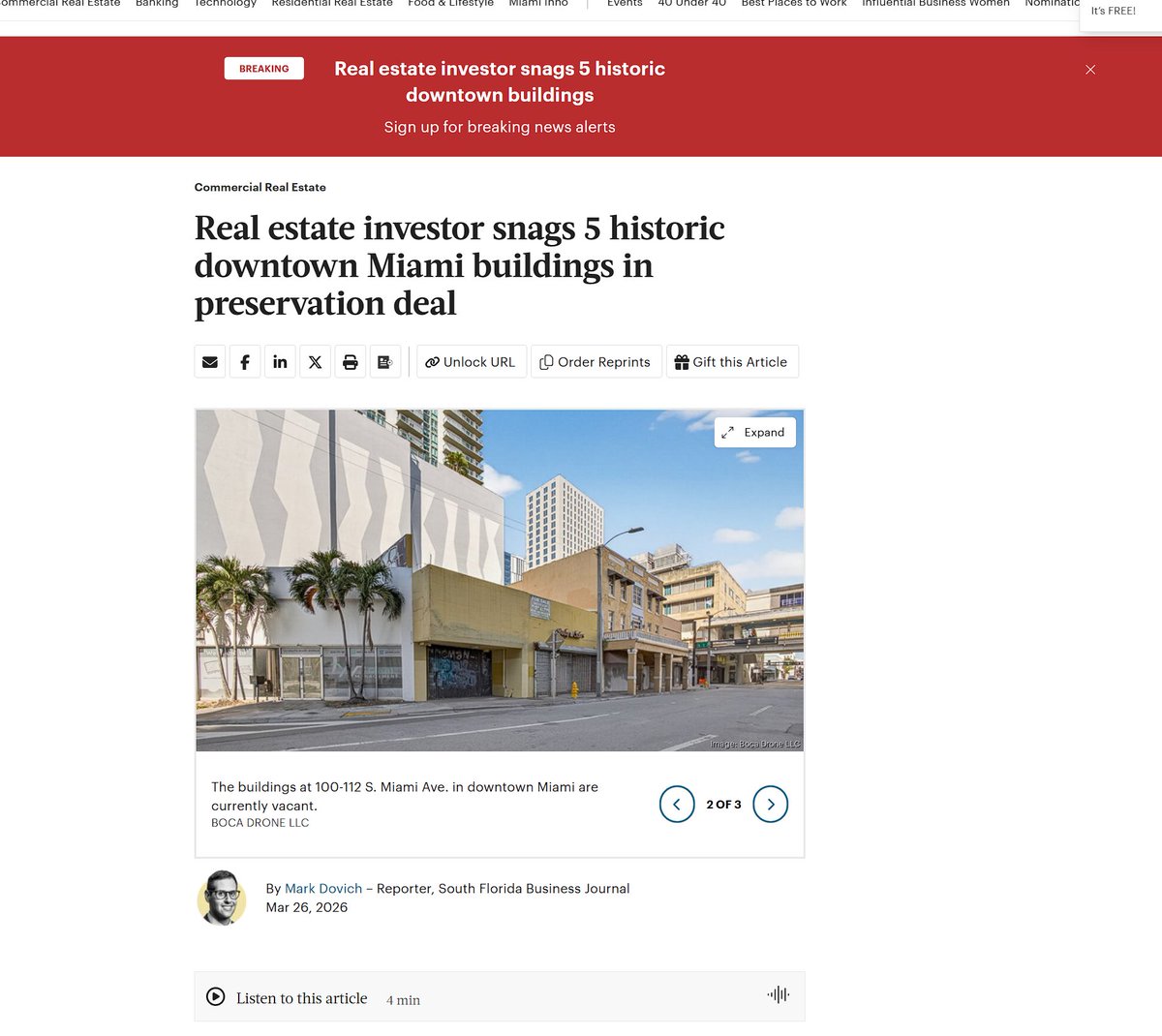
When a building in Downtown Miami sells and you know who isn't the buyer: 🫨🫨🫨🫨

Fisher Island, FL 🇺🇸 English

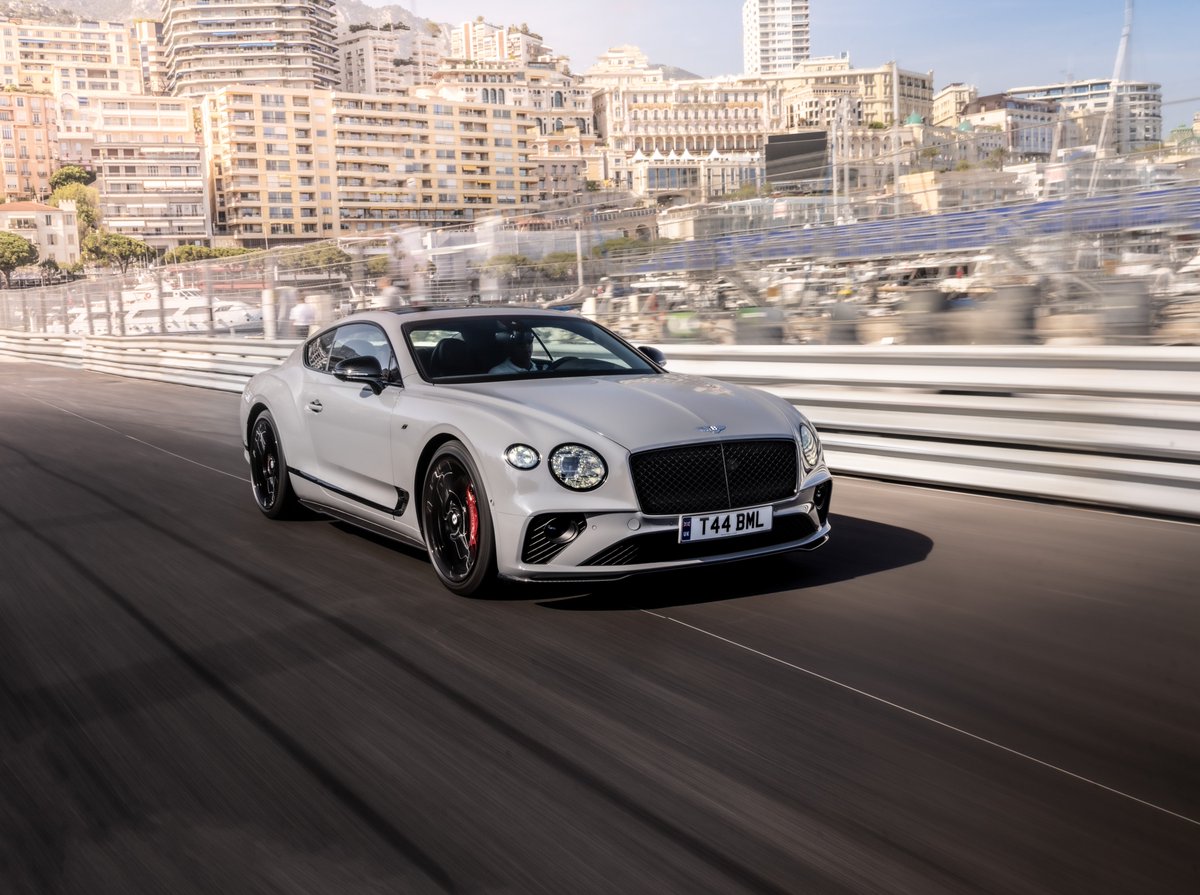
BENTLEY KYIV RANKS 3RD IN THE WORLD
Bentley Kyiv has achieved 3rd place out of 61 Bentley dealerships worldwide in the prestigious “Best of the Best” nomination, according to the Business Performance Matrix.
The average price of a Bentley starts at $400,000.
English
@PastorMarvy Because they don’t have to. They will do it on their own terms when ready.
English

Why China chose not to take over Taiwan in this window still eludes me.
BRICS News@BRICSinfo
JUST IN: 🇨🇳🇮🇷 Chinese Foreign Minister Wang Yi pushes Iran to negotiate terms with US for ending the war.
English

$NVDA | Nvidia Says Director Mark Stevens Reports Purchase of 221,682 Common Shares at Price Range Between $172.6 - $175 per Share on March 20 - Filing
English