
Stephane Kasriel

3.8K posts

Stephane Kasriel banner
Stephane Kasriel

Stephane Kasriel

@skasriel

VP at Meta FAIR, Meta Fundamental AI Research. Follow us at @aiatmeta.

San Francisco, CA Katılım Mayıs 2007
3.1K Takip Edilen23.4K Takipçiler
Stephane Kasriel retweetledi
AI at Meta
AI at Meta@AIatMeta·
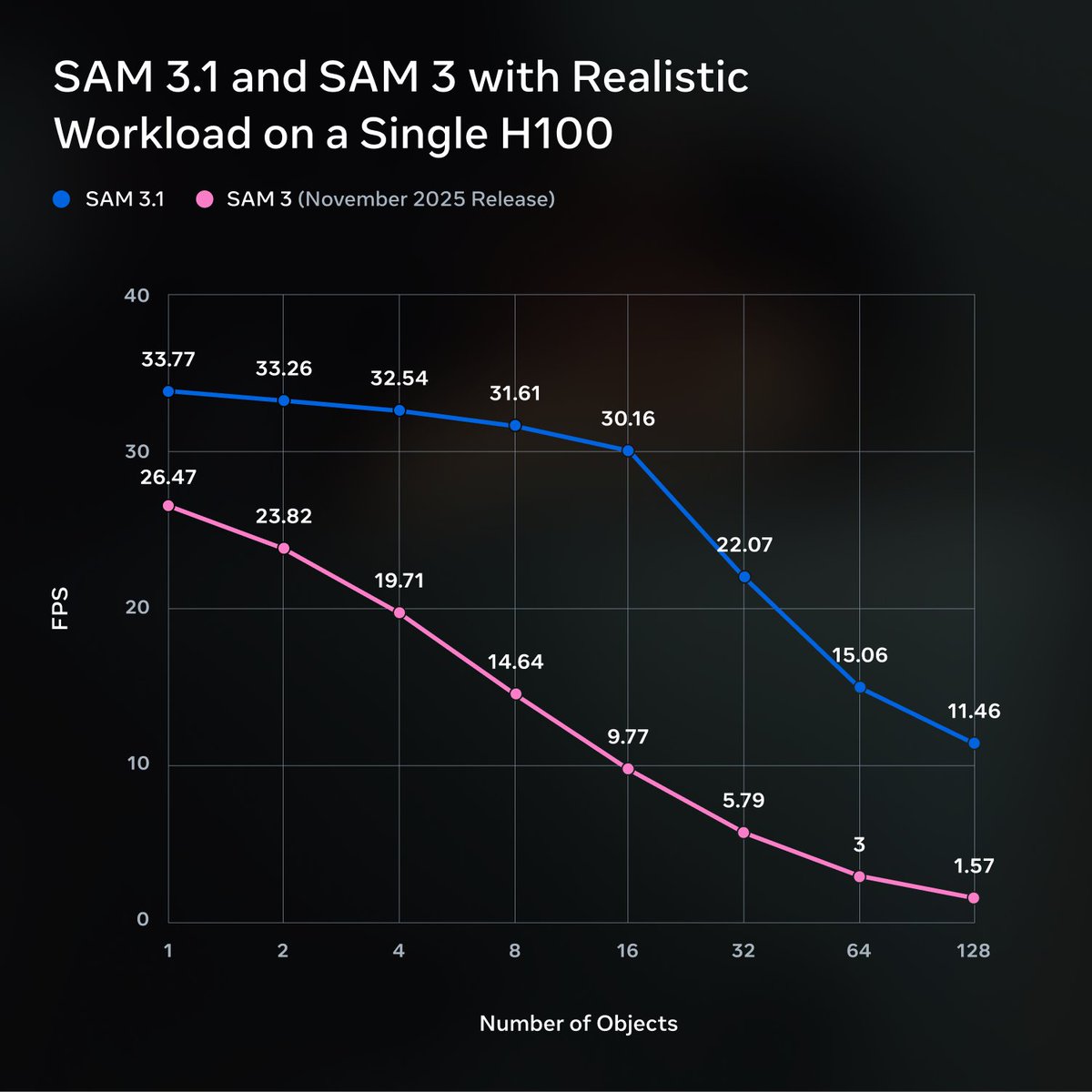
We’re releasing SAM 3.1: a drop-in update to SAM 3 that introduces object multiplexing to significantly improve video processing efficiency without sacrificing accuracy. We’re sharing this update with the community to help make high-performance applications feasible on smaller, more accessible hardware. 🔗 Model Checkpoint: go.meta.me/8dd321 🔗 Codebase: go.meta.me/b0a9fb
AI at Meta tweet media
English
104
275
2.2K
320K
Stephane Kasriel retweetledi
AI at Meta
AI at Meta@AIatMeta·
Today we're introducing TRIBE v2 (Trimodal Brain Encoder), a foundation model trained to predict how the human brain responds to almost any sight or sound. Building on our Algonauts 2025 award-winning architecture, TRIBE v2 draws on 500+ hours of fMRI recordings from 700+ people to create a digital twin of neural activity and enable zero-shot predictions for new subjects, languages, and tasks. Try the demo and learn more here: go.meta.me/tribe2
English
727
2.5K
16K
6.7M
Stephane Kasriel retweetledi
Aaron Levie
Aaron Levie@levie·
Jevons paradox is happening in real time. Companies, especially outside of tech, are realizing that they can now afford to take on software projects that they wouldn’t have been able to tackle before because now AI lets them do so. We’re going to start to use software for all new things in the economy because it’s incrementally cheaper to produce. Marketing teams at big companies will have engineers helping to automate workflows. Engineers in life sciences and healthcare will automate research. Small businesses will hire engineers for the first to build better digital experiences. And as long as AI agents still require a human who understands what to prompt, how to review when an agent goes off the rails, how it guide back, how to maintain the system that was built, how to fix the ongoing bugs, and more, we will still have humans managing these agents. This is why all the advice you get of not going into engineering is wrong. The world is going to increasingly be made up of software, and the people that understand it best will be in a strong economic position. This will happen in other roles as well where output goes up and demand increases.
Lenny Rachitsky@lennysan

Engineering job openings are at the highest levels we’ve seen in over 3 years There are over 67,000 (!!!) eng openings at tech companies globally right now, with 26,000 just in the U.S. We don’t know if there would have been more open roles if not for AI or if AI is actually leading to more open roles, but since the start of this year, the increase in open eng roles is accelerating even more.

English
224
658
4.7K
1M
Stephane Kasriel retweetledi
Boz
Boz@boztank·
Like many companies, we have been deeply invested in integrating AI across our organization. These tools hold the promise of giving each employee so much more power to accomplish their work. On a personal note, working with these tools reminds me of the feeling I had when I first learned to code as a teenager. It feels like a secret superpower. I want everyone in every role to have that same feeling so my goal is to build the tools that empower everyone at the company as part of my role as CTO. Shout out to @guyro for kicking off all this great work.
Meghan Bobrowsky@MeghanBobrowsky

Scoop: Meta CTO Andrew Bosworth is taking over supervision of the company's efforts to become AI native, according a memo that just went out to staff. He's going to be overseeing Meta's 'AI For Work' initiative that was previously led by another exec Guy Rosen.

English
35
24
339
91.9K
Stephane Kasriel retweetledi
David Singleton
David Singleton@dps·
Excited to announce that @hbarra , @alcor and I are joining Meta Superintelligence Labs with the entire @Dreamer team today. The last few months have been extraordinary: we built Dreamer, put the beta in the world just a month ago, and saw magic come to life for real people. Since then, thousands of people have used Dreamer to build personal, intelligent software with our Sidekick in the world’s newest and most popular programming language: English! They're building and sharing agents to manage email, calendar, and to-do’s, create learning tools for their kids, learn new languages, plan trips with friends, become better cooks, help them with work, achieve their health goals, or simply to creatively express themselves—all sorts of surprising and uniquely personal needs. These are agents as unique as the people building them, because they're built exactly the way each person wants them to be. We’ve captured some of our favorites at dreamer.com/community-lett…. What matters most here isn’t the early momentum; it’s what Dreamer has enabled people to do. People are building things they’ve wanted for years. They’re solving real, important problems no traditional software company would ever prioritize, because they’re too niche, too bespoke, too personal. What company would ever build for an “n of 1”? Our bet from the beginning has been that software should be personal, malleable, and shaped by the person using it. The constraint was never people’s imagination. It was the fact that building software is out of reach for most people. This early chapter gives us conviction that the idea resonates, the need is real, and the moment is now. @alexandr_wang was helpful to us from the very beginning, and when we showed Dreamer to Mark Zuckerberg and @natfriedman earlier this year, it was clear right away that we share the same vision of the future: one where billions of people have the power to create software that makes their lives better. We’re thrilled to accelerate this mission by joining Meta Superintelligence Labs and licensing our technology to Meta. Read more at meta.com/superintellige…. Deeply grateful to our investors @jillchase124 and @ninaachadjian for supporting our vision for a more personal, creative, and intelligent future for software. Thank you for the trust, the thought partnership, and for being in our corner at every step. To everyone in our community who built with us: thank you. You've taught us what's possible, and you're the proof this works. We're so grateful, and we're just getting started!
David Singleton tweet media
English
101
47
672
366.7K
Stephane Kasriel retweetledi
AMI Labs
AMI Labs@amilabs·
Advanced Machine Intelligence (AMI) is building a new breed of AI systems that understand the world, have persistent memory, can reason and plan, and are controllable and safe. We’ve raised a $1.03B (~€890M) round from global investors who believe in our vision of universally intelligent systems centered on world models. This round is co-led by Cathay Innovation, Greycroft, Hiro Capital, HV Capital, and Bezos Expeditions, along with other investors and angels across the world. We are a growing team of researchers and builders, operating in Paris, New York, Montreal and Singapore from day one. Read more: amilabs.xyz AMI - Real world. Real intelligence.
AMI Labs tweet media
English
346
883
8.5K
4.9M
Stephane Kasriel retweetledi
Andrej Karpathy
Andrej Karpathy@karpathy·
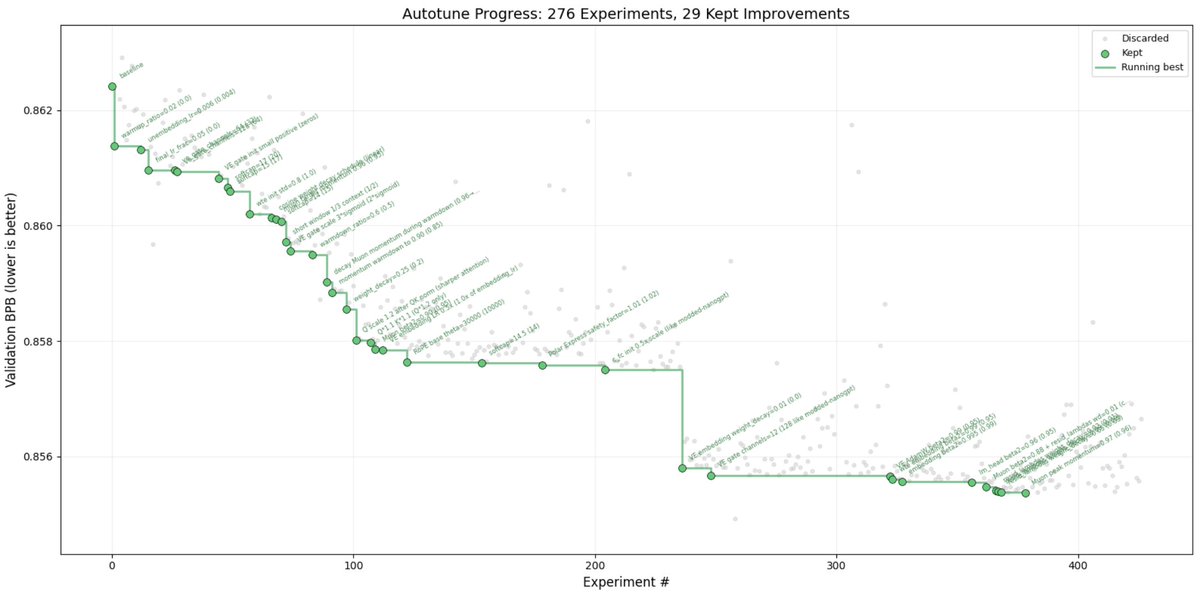
(I still have the bigger cousin running on prod nanochat, working a bigger model and on 8XH100, which looks like this now. I'll just leave this running for a while...)
Andrej Karpathy tweet media
English
71
62
2.1K
424.4K
Stephane Kasriel retweetledi
Andrej Karpathy
Andrej Karpathy@karpathy·
It is hard to communicate how much programming has changed due to AI in the last 2 months: not gradually and over time in the "progress as usual" way, but specifically this last December. There are a number of asterisks but imo coding agents basically didn’t work before December and basically work since - the models have significantly higher quality, long-term coherence and tenacity and they can power through large and long tasks, well past enough that it is extremely disruptive to the default programming workflow. Just to give an example, over the weekend I was building a local video analysis dashboard for the cameras of my home so I wrote: “Here is the local IP and username/password of my DGX Spark. Log in, set up ssh keys, set up vLLM, download and bench Qwen3-VL, set up a server endpoint to inference videos, a basic web ui dashboard, test everything, set it up with systemd, record memory notes for yourself and write up a markdown report for me”. The agent went off for ~30 minutes, ran into multiple issues, researched solutions online, resolved them one by one, wrote the code, tested it, debugged it, set up the services, and came back with the report and it was just done. I didn’t touch anything. All of this could easily have been a weekend project just 3 months ago but today it’s something you kick off and forget about for 30 minutes. As a result, programming is becoming unrecognizable. You’re not typing computer code into an editor like the way things were since computers were invented, that era is over. You're spinning up AI agents, giving them tasks *in English* and managing and reviewing their work in parallel. The biggest prize is in figuring out how you can keep ascending the layers of abstraction to set up long-running orchestrator Claws with all of the right tools, memory and instructions that productively manage multiple parallel Code instances for you. The leverage achievable via top tier "agentic engineering" feels very high right now. It’s not perfect, it needs high-level direction, judgement, taste, oversight, iteration and hints and ideas. It works a lot better in some scenarios than others (e.g. especially for tasks that are well-specified and where you can verify/test functionality). The key is to build intuition to decompose the task just right to hand off the parts that work and help out around the edges. But imo, this is nowhere near "business as usual" time in software.
English
1.6K
4.8K
37.2K
5.1M
Stephane Kasriel retweetledi
POM
POM@peterom·
Deepseek got called out for scraping 150k Claude messages. So I'm releasing 155k of my personal Claude Code messages with Opus 4.5. I'm also open sourcing tooling to help you fetch your data, redact sensitive info & make it discoverable on HF - link below to liberate your data!
POM tweet media
English
639
1.7K
15K
24.2M
Stephane Kasriel retweetledi
Alexandr Wang
Alexandr Wang@alexandr_wang·
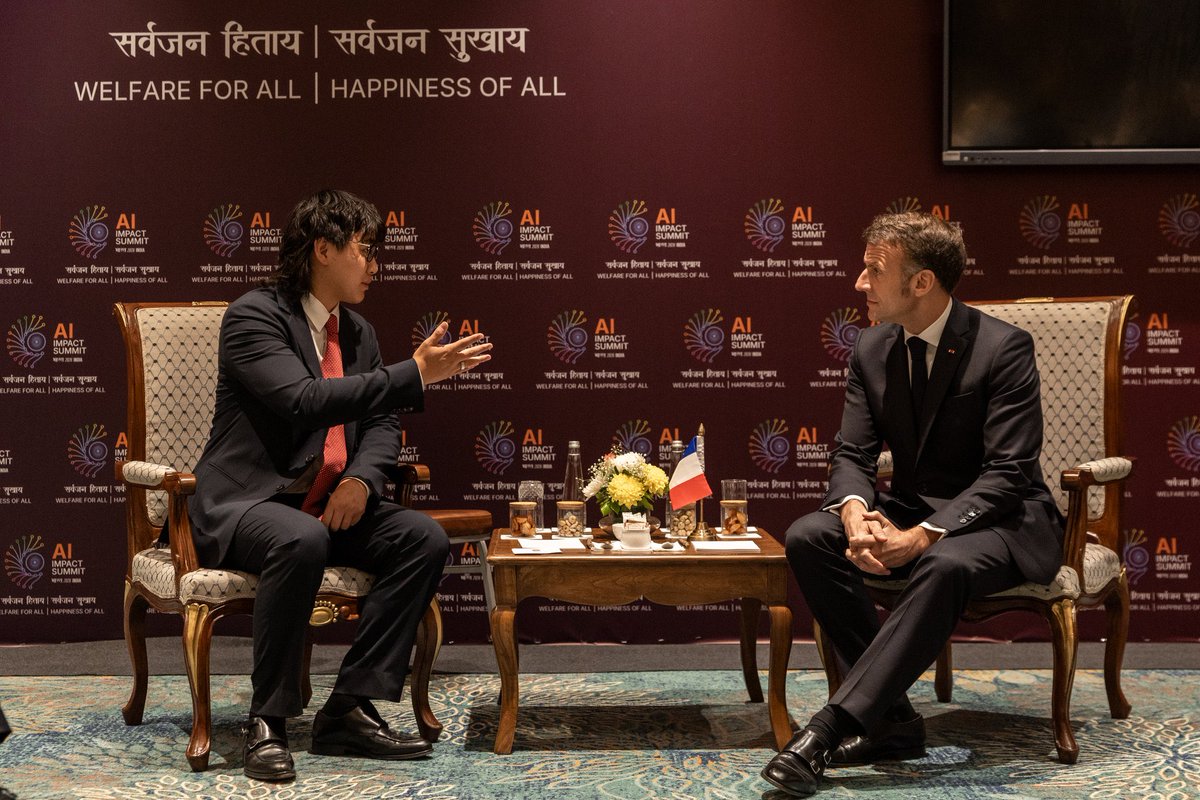
Thank you President Macron for a constructive dialogue. Our FAIR office in Paris has been an important part of our AI efforts, and we’re excited to keep building there. France continues to have much to offer for the development of AI and I look forward to continuing to work with you on it and to better understand your specific youth proposal.
Alexandr Wang tweet media
English
56
114
1.8K
242.1K
Aakash Gupta
Aakash Gupta@aakashgupta·
I've been building in Claude Code non-stop for 6 months. Today I'm releasing everything I've learned as a copy-paste PM Operating System: 41 skills 7 AI sub-agents My Claude md file I made all the mistakes so you don't have to: news.aakashg.com/p/pm-os
English
13
39
493
174K
Stephane Kasriel
Stephane Kasriel@skasriel·
@davidmarcus PayPal should acquire Lightspark and make you CEO (again). Though if they wait long enough, it might be Lightspark acquiring PayPal, with you as CEO - either way, the company appears to be deeply in trouble and really needs you back at the helm.
English
5
1
137
27.9K
David Marcus
David Marcus@davidmarcus·
A few thoughts about PayPal, nearly 12 years after I left. I woke up this morning to dozens of messages from former PayPal colleagues. It pushed me to finally speak up. I never spoke publicly about the company after I left. Part of that was loyalty to John Donahoe, who gave me an unlikely opportunity, handing the reins of PayPal to a startup guy who, on paper, had no business running a then 15,000-person organization. But part of it was something else: I had left. I chose not to stay and fight for the changes I believed in. Speaking from the sidelines felt like armchair commentary. Easy opinions without the burden of execution. So I stayed quiet. But twelve years of silence is long enough. And today's news makes it clear the pattern I've watched unfold isn't self-correcting. I left PayPal in 2014 because I was deeply frustrated. We had executed a silent turnaround of a company that had lost its soul. We brought back engineering talent, shipped good products quickly, and acquired Braintree and Venmo. The company was on a tear. So much so that Carl Icahn felt compelled to accumulate a position in eBay and push for a PayPal spinoff. At the time, eBay decided to fight Icahn. It was a difficult period for me, caught between what I felt was right for PayPal and my loyalty to the eBay team. This is when Mark Zuckerberg approached me to join Facebook. The combination of his conviction that messaging would become foundational, the appeal of going back to building products at scale, and my growing exhaustion with the internal politics at PayPal and eBay eventually convinced me to leave and join one of the best teams in the world, one I had admired for a long time. In the summer of 2014, I met John in a café in Portola Valley and told him I had decided to leave. During that conversation, he told me that Icahn had effectively won the fight, that PayPal was going to become an independent company, and he tried to convince me to stay on as CEO, but I had already said yes to Mark, and my word is my bond. There was no turning back. After my departure, the board scrambled to find a replacement, and it took a few months for them to land on Dan Schulman. The leadership style shifted from product-led to financially-led. Over time, product conviction gave way to financial optimization. Much of the momentum we had created still persisted and carried the company forward, mainly driven by Bill Ready, who came over in the Braintree acquisition and rose to COO. Under his leadership, Venmo grew exponentially, and total payment volume (TPV) accelerated quickly. But the shift under Schulman became more pronounced after Bill's departure at the end of 2019. With him went the product conviction that had defined the post-spinoff momentum. Then, for a period, COVID-fueled online shopping hid a lot of the company's new weaknesses. During that period, the company made a fundamental miscalculation: it optimized for payment volume instead of margin and differentiation. It leaned into unbranded checkout, where PayPal had the least leverage, instead of branded checkout, where the margin, data, and customer relationship actually lived. Visa masterfully structured a deal that effectively ended PayPal's ability to steer customers toward bank-funded transactions, which had been a core driver of PayPal's economics. Not long after, PayPal lost a significant portion of eBay's volume. Over time, it saw its share of checkout among its most profitable customers steadily erode as Apple Pay and others continued to execute well. The same pattern repeated itself across lending, buy-now-pay-later (BNPL), and new rails. On lending, PayPal missed the opportunity to turn it into a platform weapon. Products like Working Capital were conservative, short-duration, and optimized for loss minimization. Lending never became programmable, never became identity-driven, and never became a reason for merchants or consumers to choose PayPal over something else. The missed opportunity in BNPL was even more striking. Klarna, Affirm, and Afterpay didn't just offer installment payments, they built consumer finance brands, persistent credit identities, and new shopping behaviors. PayPal saw the BNPL turn, entered the market, and had every advantage: distribution, trust, and merchant relationships. But BNPL was treated as a defensive checkout feature rather than an offensive category. There was no attempt to turn it into a core consumer relationship, no super-app behavior, and no meaningful differentiation for merchants. Others built platforms, PayPal added a feature. The failure to lean into building and owning new rails followed the same logic. After the spinoff, PayPal had a once-in-a-generation opportunity to build a global, at scale payment network. Instead, the company focused on building on top of existing networks and third-party rails. More recently, that mindset carried over to PYUSD. Technically, the product was sound. Strategically, it launched without a compelling transactional reason to exist. PYUSD had distribution, but no organic demand. It was not embedded deeply enough into flows to become a true settlement layer, a cross-border merchant rail, or a programmable money primitive. It sat adjacent to the product instead of inside the core of it. Acquisitions during this period followed a similar pattern. Honey was not a strategic acquisition for PayPal. It added activity, but not leverage. It lived outside the transaction, monetized affiliate economics rather than payment economics, and never meaningfully strengthened PayPal's control of the customer or the checkout moment. Xoom solved a real problem in remittances, but it never compounded PayPal's advantage. It scaled volume without changing the underlying rails, identity graph, or settlement model, and as importantly, it didn’t cater to a high-value, high-margin customer archetype. None of these were bad companies. They were just a wrong fit for PayPal and became unnecessary distractions. The board eventually recognized the problem. In 2023, they brought in Alex Chriss, an Intuit veteran with a strong product background, explicitly to restore product conviction. It was the right instinct. But Alex came from software, not payments. He understood SMB product development. He didn't have the muscle memory for transaction economics, network effects, or settlement infrastructure. In hindsight, he also made an error: clearing out much of the leadership team that understood payments deeply. Executives with years of institutional knowledge departed within his first year. This morning, Alex was removed as CEO. Branded checkout grew 1% last quarter. The board tapped another operator, Enrique Lores, the former HP CEO who's been on the PayPal board for five years. I don’t know Enrique. And he might be a great leader, but on paper at least, he’s a hardware executive. For a payments company. The common thread through all of this is incentive design. Once PayPal became independent, short/medium-term predictability beat long-term vision and ambition. Stock performance mattered more than platform risk and network opportunity. Financial optimization replaced product conviction. I'm not claiming I would have made every call differently. Running a public company at scale involves tradeoffs I didn't have to make after I left. But the pattern, choosing predictability over platform risk, again and again, was a choice, not an inevitability. Over time, the company that had every advantage and could’ve become the most consequential and relevant payments company of our time, lost its mojo, its product edge, and its ability to compete in a market that’s being rewired and reinvented in front of our eyes. That's the part that's hardest to watch for a company I care so deeply about.
English
621
944
8.8K
2.4M
Stephane Kasriel retweetledi
Jason Weston
Jason Weston@jaseweston·
Our team in FAIR at Meta is hiring a postdoc researcher! We work on the topics of Reasoning, Alignment and Memory/architectures (RAM). Apply here: metacareers.com/profile/job_de… Location: NY, Seattle or Menlo Park. Some of our recent work to give flavor: Co-Improvement (position): arxiv.org/abs/2512.05356 SPICE (Self-Play in Corpus Environments): arxiv.org/abs/2510.24684 Self-Challenging Agents: arxiv.org/abs/2506.01716 RL from Human Interaction: arxiv.org/abs/2509.25137 AggLM (parallel aggregation): arxiv.org/abs/2509.06870 StepWiser (CoT-PRM RL): arxiv.org/abs/2508.19229 DARLING (diversity-trained RL): arxiv.org/abs/2509.02534 J1 (RL-trained LLM-as-Judge): arxiv.org/abs/2505.10320 CoT-Self-Instruct: arxiv.org/abs/2507.23751 Multi-Token Attention: arxiv.org/abs/2504.00927
English
10
44
262
32.9K
Stephane Kasriel retweetledi
Dawn Song
Dawn Song@dawnsongtweets·
Really excited to announce AgentX–AgentBeats Competition 🚀 💰 $1 Million+ in prizes, cloud credits, and API resources, a global challenge hosted by @BerkeleyRDI , building on the Agentic AI MOOC community of 32K+ learners, bringing together builders, researchers, engineers, and AI enthusiasts worldwide to build, benchmark, and push the boundaries of agentic AI. This two-phase competition invites participants to first build or enhance benchmarks for agentic AI (Phase 1), and then develop AI agents that excel on them (Phase 2). Together, these phases aim to advance the field by creating high-quality, broad-coverage, and realistic agent evaluations as shared public goods—building a unified, community-driven ecosystem for agent evaluation benchmarks that are compatible, standardized, reproducible, collaborative, and discoverable. 🙏 Huge thanks to our sponsors for their support and generosity: @GoogleDeepMind @googlecloud @nebiusai @LambdaAPI @awscloud @amazon @ServiceNow @linuxfoundation @PyTorch (and more to come). Join us in shaping the future of #AgenticAI. 🌐🤖 #AgentX #AgentBeats #AI
Dawn Song tweet media
English
16
34
104
14.2K
Stephane Kasriel retweetledi
Alexandr Wang
Alexandr Wang@alexandr_wang·
Excited to announce that @ManusAI has joined Meta to help us build amazing AI products! The Manus team in Singapore are world class at exploring the capability overhang of today’s models to scaffold powerful agents. Looking forward to working with you, @Red_Xiao_!
English
397
429
5.5K
2.4M
Stephane Kasriel retweetledi
AI at Meta
AI at Meta@AIatMeta·
We’re open-sourcing Perception Encoder Audiovisual (PE-AV), the technical engine that helps drive SAM Audio’s state-of-the-art audio separation. Built on our Perception Encoder model from earlier this year, PE-AV integrates audio with visual perception, achieving state-of-the-art results across a wide range of audio and video benchmarks. Its native multimodal support can assist people in everyday tasks, including sound detection and richer audio-visual scene understanding. 🔗 Read the paper: go.meta.me/e541b6 🔗 Download the code: go.meta.me/7fbef0
AI at Meta tweet media
English
116
168
1.4K
84.7K
Stephane Kasriel retweetledi