Jan

235 posts

Jan banner
Jan

Jan

@sowhatjan

so what? | creator of mindcasts

Layer 0 Katılım Ocak 2018
610 Takip Edilen90 Takipçiler
Jan
Jan@sowhatjan·
@levelsio Let’s try this in Amsterdam as well!
English
0
0
0
60
Jan retweetledi
Coinbase 🛡️
Coinbase 🛡️@coinbase·
21 million. That’s it.
English
459
1.6K
8.6K
847.7K
Jan retweetledi
Kpaxs
Kpaxs@Kpaxs·
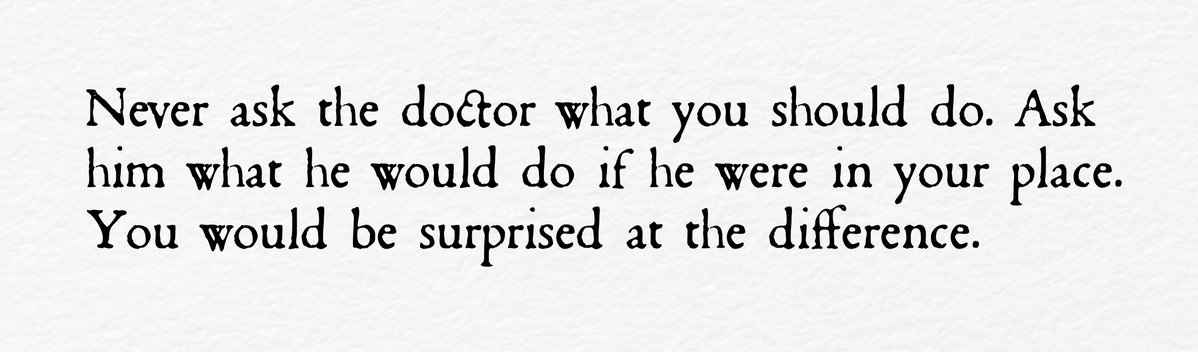
Nassim Taleb on advice: make it personal.
Kpaxs tweet media
English
41
684
8.6K
409.8K
Jan retweetledi
Zach Rynes | CLG
Zach Rynes | CLG@ChainLinkGod·
Pyth oracles and Wormhole bridge went down again today, leaving users out in the cold Pyth downtime -> Users of perp trading apps across chains couldn’t adjust their leveraged positions Wormhole downtime -> tokens and messages couldn’t be transferred cross-chain, stuck in transit All of this was 100% predictable as it’s based on the same flawed architecture design I pointed out a year ago (quoted tweet), when a similar incident occurred Pyth doesn’t integrate with blockchains natively, instead it relies on a third party bridge (Wormhole) to sign and relay price reports from Pyth chain to other chains where apps need data This means when Wormhole goes down, so does Pyth, it’s a massive inter-dependency risk for DeFi (some chain ecosystems more than others) In contrast, both Chainlink Data Feeds and Data Streams are natively deployed on each supported blockchain (no dependencies on third party bridges/relayers or other chains) Also CCIP has never experienced a period of downtime (though worth noting, CCIP is not a dependency for Data Feeds or Data Streams)
Zach Rynes | CLG tweet media
Zach Rynes | CLG@ChainLinkGod

.@PythNetwork Price Feeds across all 'integrated' blockchains went down for a period of time yesterday due to their reliance on @wormholecrypto, which experienced a consensus failure This impacted users interacting with dApps using Pyth as they couldn't open or close trades during this time (not ideal for high-frequency traders using high leverage on these perps protocols) This is what tends to happen when you kludge together a tech stack, you create single points of failure due to cross-infrastructure dependencies If either Pythnet or Wormhole experience issues, then all Pyth price feeds across every chain breaks (in this case it was Wormhole) Chainlink solved this issue years ago due to it's multi-network architecture, where every oracle network runs independently from one another and operates natively on the blockchain it delivers data to No single monolithic oracle blockchain No dependencies on a third party bridge provider No cross-dependencies between blockchains Read this blog from @chainlink from over two years ago when the design choice was made clear: blog.chain.link/chainlinks-blo…

English
43
81
497
78.5K
Jan retweetledi
Balaji
Balaji@balajis·
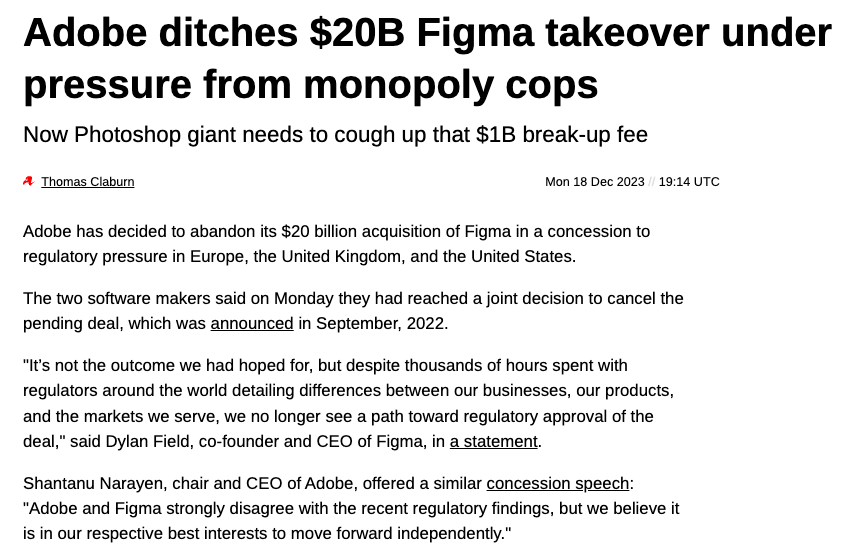
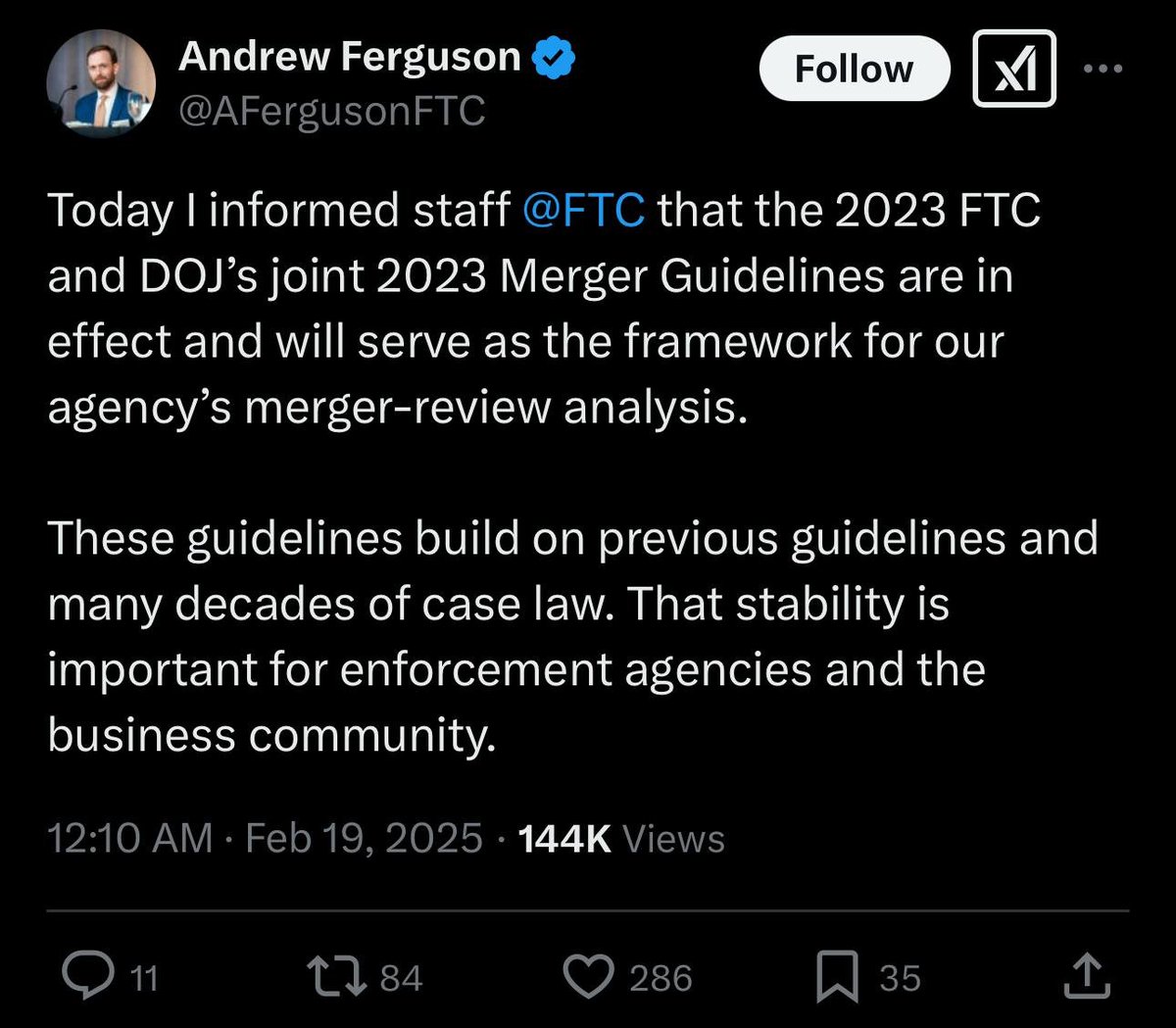
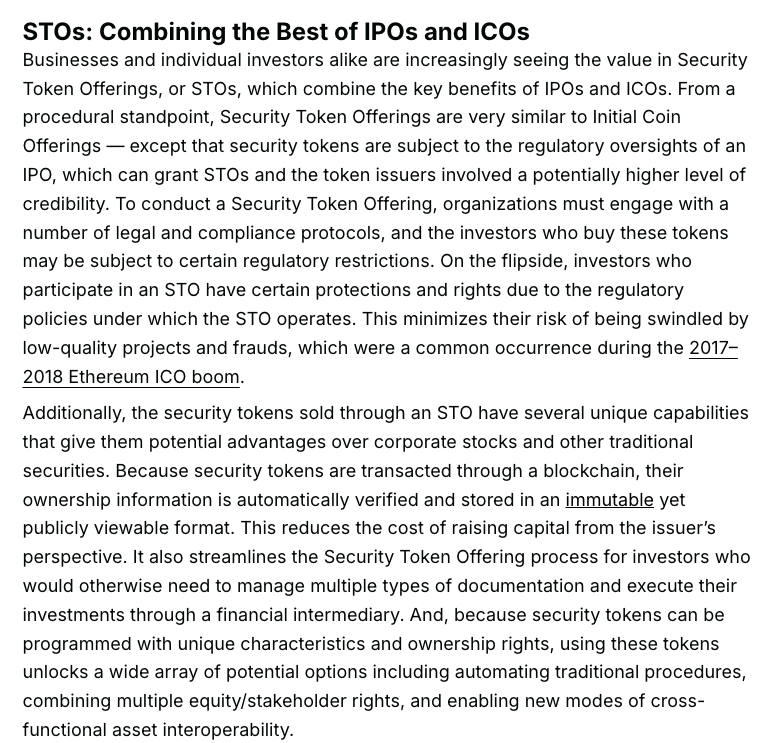
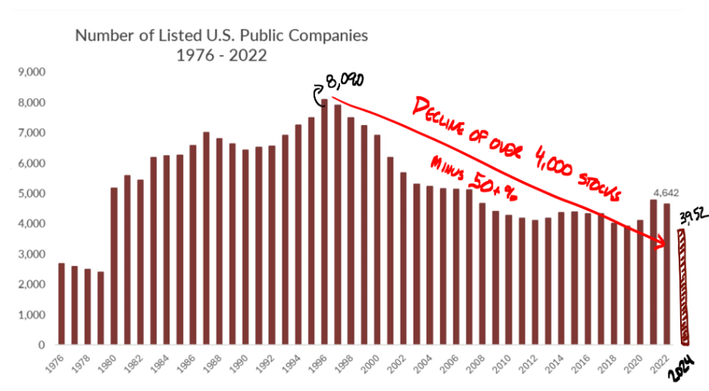
From IPO and M&A to crypto? The tech M&A era may be ending. But the crypto era could be just beginning. Because the combined effect of new policies is to make it much harder for startups to IPO or M&A, but much easier to sell equity-backed security tokens on the Internet. Let me explain. 1) It's hard to IPO. First, for decades the SEC's Sarbox rules have made it onerous for small companies to go public. They made these rules to stop the next Enron, but they didn't do that (nor did they stop the financial crisis). What they did do was chop the number of publicly traded US companies in half[a] from its 1999 peak: 2) It's hard to M&A. As a consequence, starting in the mid-2000s, the conventional wisdom became that tech companies should stay private for longer. Because IPOs were hard, that meant M&A loomed much larger as a path to liquidity for venture-backed tech startups. This period of about 20 years included huge exits like Instagram ($1B), Oculus ($2B) and WhatsApp ($19B). But since the advent of Lina Khan's FTC, big M&As have been blocked on the grounds that this would increase competition by disallowing big fish from eating smaller fish. That was the (ostensible) rationale for the joint EU/US/UK regulatory assault on Adobe's proposed acquisition of Figma[b], which would have been a huge exit that funded many more startups: Khan's reasoning is fundamentally incorrect because when a big company buys a small competitor at a high price it's actually a surrender — and a huge capital injection into the VC ecosystem to create many more such competitors. If there are fewer such exits — either IPOs or M&As — then there's no capital for tech startups. And hence no competition. 3) The new admin is still anti-M&A! Tech guys thought the new admin would be friendlier to M&A. But surprisingly, the new administration has bought into Lina Khan's logic — and is apparently continuing[c] her policies: I think this is partly due to their (understandable) tribal animus against Big Tech companies for media-driven censorship during the 2020 election. But unless things change, it means tech M&A isn't coming back. Moreover, there is continuity with Biden anti-M&A policies on another front. Japan's Nippon Steel was blocked from acquiring US Steel by Biden, but the new admin upheld the block. However, they seem to be offering a different path[d] where Nippon Steel invests in the US company but doesn't own it. Regardless: neither big companies nor foreign companies may easily acquire US companies. And the thing is, M&A is already hard. It's like getting married, it's a huge production. If you layer some unpredictable government risk on top of an already difficult-to-do deal, many M&As just won't even be contemplated. 4) But the crypto window is open. However, when Gov closes a door it sometimes opens a window. Even though IPOs are still expensive, even though M&A has been made much more difficult...the new administration has de facto deregulated crypto with the launch of the presidential memecoins and the pro-crypto executive orders. No one yet knows what the new rules are, but if you can do an unbacked memecoin you should almost certainly be able to do an equity-backed ICO, also known as a securities token offering (STO): In fact, STOs actually fit the admin's vision that "the world should invest in US-founded coins" and that "small entities should be able to be independent for longer." And remember their idea that Nippon Steel investing[d] in US Steel is ok, but owning it is not ok? This could be a way to square the circle. If you disallow Big Tech companies from buying Little Tech companies, you need to allow the latter to raise capital somehow in order to compete with Big Tech. So let the world invest in them onchain without owning them, just like Nippon Steel is investing in US Steel. And just like Masa[e] and Saudi[f] are investing hundreds of billions in US companies without owning them outright. That's a financial win/win that preserves sovereignty. Moreover, mom and pop shops (restaurants and the like) can in theory STO as well. In theory, the STO takes the capital cost of going public from millions to zero. But you'd need to layer new decentralized regulatory mechanisms on such a market, similar to Uber/Airbnb/Amazon's star ratings and bans of bad actors. 5) From blue states to blockchains. Anyway: there are a zillion details to be worked out in terms of putting cap tables on chain and conducting high-trust public offerings with lockups and the like. But this is ultimately where we wanted to go anyway. California is no longer the only place to operate, Delaware is no longer the best place to incorporate, and New York is no longer a great place to trust in the rule of law. Blue states are over, but blockchains are in. Because obviously Internet companies should exist in an Internet-native form onchain and be able to access Internet-scale capital markets via crypto. And indeed, even as the number of New York-listed stocks has been falling, the number of Internet-listed digital assets has been rising. So, to my tech friends: yes, the tech IPO and M&A windows may be closed. But the tech STO window could be thrown wide open.
Balaji tweet mediaBalaji tweet mediaBalaji tweet mediaBalaji tweet media
English
83
112
695
208.5K
Jan retweetledi
Hayden Adams 🦄
Hayden Adams 🦄@haydenzadams·
The thing crypto needs least right now is a culture war and canceling vitalik over a shitpost Let’s just build decentralized tech and get it mass adopted
English
130
65
945
55.3K
Jan retweetledi
Zach Rynes | CLG
Zach Rynes | CLG@ChainLinkGod·
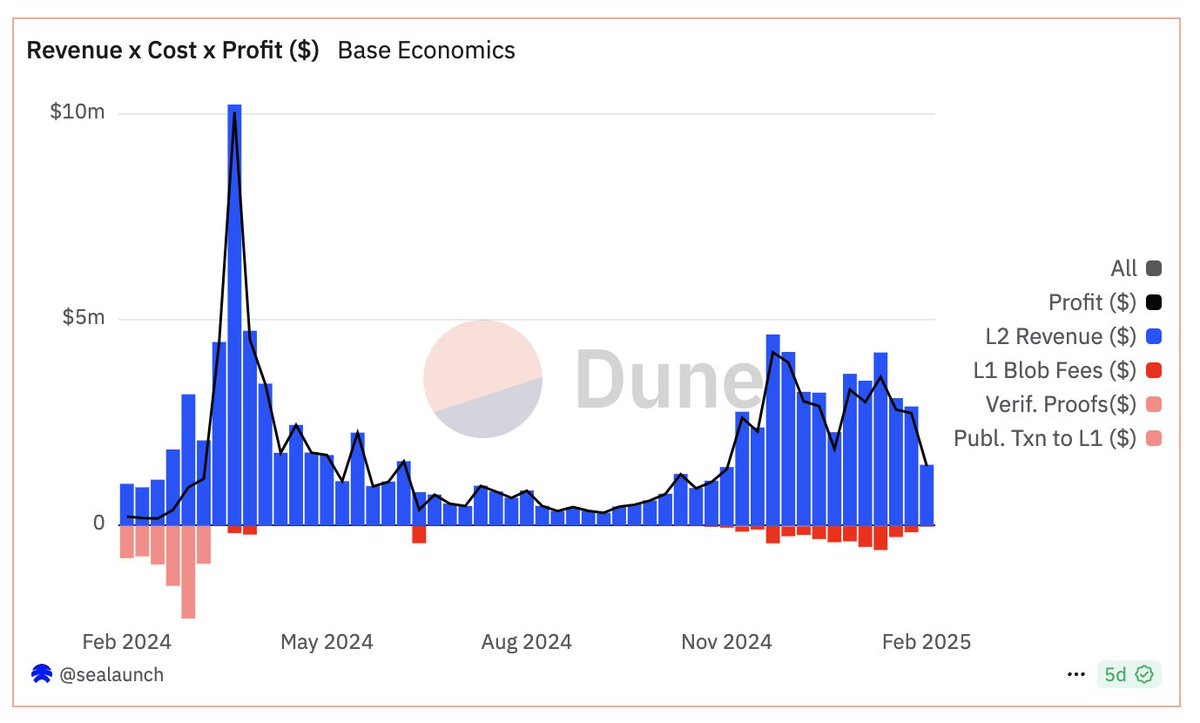
Something interesting is happening in Ethereum land where L2s are being attacked (and attacking each other) for not being sufficiently "ETH Aligned" A bit of a shitshow, but I think there's a deeper story here about the future of ETH and L2s Obviously, there's very clear and widely recognized concerns about ETH's value accrual and demand, notably after network revenue fell off a cliff after blobs were introduced in early 2024 The root problem is that Ethereum forfeited the most valuable part of the tech stack (MEV and congestion gas pricing) to L2s networks, while keeping the least value part of the stack (settlement and data availability) This has resulted in a imbalanced economic situation where L2s keep the vast majority of the revenue they generate, while paying only small single digit percentages (sometimes as low as 1%) of their revenue to Ethereum for settlement and DA This is why the social layer for Ethereum has gotten so loud about trying to force the "ETH is money" and "L2s expand access to ETH" narratives, because revenue doesn't matter as much when you're trying to go after monetary premium story like BTC But this economic situation has also created friction within the Ethereum community when it comes to L2s -- In @VitalikButerin's recent blog on scaling, he made the following suggestion: "Encourage L2s supporting ETH with some percentage of fees. This could be done through burning a portion of fees, permanently staking them and donating proceeds to Ethereum ecosystem public goods, or a number of other formulas." Interesting thing here is that there is nothing technical proposed that would enforce this alignment, but rather it is a kind of social layer pressure on L2s, which Ethereum community has taken and run with Rather than adjust the actual economics, people can just throw the problem back over the fence to the L2s to solve And the brilliant this is, if they don't, then they're not properly "ETH Aligned" and must be called out, which means I'm helping saving ETH Now we have the major L2 ecosystems all bickering with each other on the timeline about who is the "most ETH aligned", who holds the most ETH onchain, who is alleging dumping too of much of their ETH, etc But ultimately, this whole concept is a red herring, it's not the responsibility of L2s to fix ETH's value accrual problem It is not the fault of the L2 that it only has to pay a small fraction of its net revenue to Ethereum L1 because Ethereum decided to forfeit the most value part of the stack to L2s It is not the responsibility of L2 to burn their own ETH revenue or stake / baghold a bunch of ETH to fix the imbalance L2 rollups are a business and they're going to optimize their business for revenue and growth, and that's okay The question of ETH's economic issues can't be solved through social layer pressure alone, you can't just ask L2s to share the revenue nicely, when it is not in their own economic interests to do so -- This economic imbalance will only be made more clear once the question of "gas abstraction" really takes hold and L2s start to accept other tokens (like stablecoins) beyond ETH as an accepted native form of payment for tx gas fees Any L2 saying or trying to do this today would be hearsay, "That's Not ETH Aligned!!1!" as it would appear to diminish the role of ETH as a gas token across L2s (still seen as a core pillar of ETH demand) But it only takes one major L2 to accept stablecoins as a native form of payment for tx gas fees, and the others will have to step in line in order to not get outcompeted as this is a 10x improvement in UX for normie users And I'm not talking about a work-around like Paymasters that have basically no adoption, but the L2 network itself accepting USDC as gas fee payment and converting single digit percentages of that to pay for L1 settlement + DA in ETH, while keeping the rest in USDC Alt L1 networks will likely never accept other forms of gas tx payment natively as it would undermine their own gas token's utility and their VC investors would crucify them, but L2s don't need to issue their own gas tokens, they can really accept anything -- The solution (at least partially) seems obvious: 1) we need to actually prioritize scaling the L1 (real gas limit increases + accelerate EVM optimizations + rapid blobspace expansions) 2) we need accelerate the creation of native rollups and make them a first class citizen in the L1 so the L1 can once again collect MEV + congestion gas pricing revenue, even if this might alienate some general purpose L2s 3) we need to start the convo of what the 'nationalization' of third party rollups into becoming native rollups would look like (not forcing it, but open the path to it being possible) Start to go down this path and I believe a lot more people still start to feel much more comfortable the future of ETH's economics Still bullish ETH /ramble end
Zach Rynes | CLG tweet media
jesse.base.eth@jessepollak

Some more thoughts on this after the weekend: 1. Purity tests like “do you hold all the ETH you earn” are a distraction and hurt Ethereum. Overfixating on virtue signaling like this distracts us from the real work, which is building products that people love and creating sustainable economies that enable more people to do the same thing. 2. Base's goal is to bring the world onchain. We believe the best way to do that is to build a sustainable economic engine that can fund that global growth. And we believe we need more businesses built onchain that can do the same. 3. For us, this means finding ways to generate revenue, then taking the money we earn and reinvesting it in growth — salaries, grants, acquisitions, infrastructure, dedicating ~15% of revenue to public goods funding via @Optimism, one-offs like sponsoring the audit of solady, and much much more. Our #1 priority is building a great product and vibrant economy and we will invest everything we can to make that happen. Spending money on growth is good and should be celebrated! 4. At the same time, we also think it's valuable to hold ETH (we hold over 100K) to reinforce its role as a store of value and share in the upside we are creating in building on Ethereum — but this is a privilege we earn through our ability to deliver value. And it’s not a “solution” people should fixate on, it’s an end state that ETH the asset earns by being useful and productive. 5. We recognize that all of this isn’t transparent as it could be — our quarterly reporting is built around the structures of a public US company. But as Base is increasingly decentralized as a global onchain economy, we are working hard to move more of our operations onchain (vendors, contractors, etc.) so they can be immediately visible, rather than on the quarterly cadence that the offchain world operates on. Stay based, keep building.

English
70
131
818
204.6K
Jan retweetledi
Ted
Ted@TedPillows·
Utility is built on Ethereum. Memes are on Solana. What will last the longest? Easy answer.
English
257
108
1.3K
207.2K
Jan retweetledi
Luke Weaver
Luke Weaver@lukeweaver_eth·
Built on Ethereum (🔊)
English
118
276
1.7K
153.7K
Jan
Jan@sowhatjan·
@AlexMasmej Dracula to Solana? Lets go! 7u4zBAi9bseiL6gkHcsBkG2dnsaMm2VK48sFiSYUg699
Indonesia
0
0
0
86
Alex Masmej
Alex Masmej@AlexMasmej·
🚨BREAKING: our next app 10K will launch on Solana! No drama y'all I’ve always backed the Base community and Ethereum is like family (for my big break in 2020 with $ALEX) Why SOL is simple: the liquidity & volume win short-term and multi-chain doesn't make sense. I don’t have a crystal ball but I’d never bet against Base long-term, the space is young Drop your wallet below to qualify for airdrops (bots banned, X-verified get priority). Let's F GooooooOO!!!!
Alex Masmej tweet media
English
2K
422
1K
177.2K
Jan
Jan@sowhatjan·
More bullish with this quick recovery
English
0
0
0
19
Farcaster
Farcaster@farcaster_xyz·
please reply thanks
Farcaster tweet media
English
11.5K
2.4K
6.9K
525.9K
Jan
Jan@sowhatjan·
@punk6529 How can we position ourselves to make sure that a lot of people will benefit from this, not just a handful controlling these agents?
English
0
0
0
130
Jan retweetledi
6529
6529@punk6529·
1/ On Human Brains; On GPU Brains A short math exercise. There are a couple of million high-end data center GPUs produced per year right now (H200s etc). If you throw in much weaker high-end gaming GPUs (RTX 4090s etc), a few more million are produced per year. Let's say 2M and 5M respectively 2/ If you want to run a high-end model today quickly, you need several of them. Specifically the limiting factor is their memory, not their computation. 3/ If you want to run a high-end near-AGI model at a fast pace, you need a few hundred GB of VRAM, so when o4-pro hits clear AGI this year, I dunno, the GPU industry will be effectively producing a few hundred thousands very smart, very productive humans per year (who can work all day long). 4/ The models will get better, get more efficient. The number of GPUs produced each year will increase too. We will come back to this. 5/ There are 6 billion adults and 1 billion university educated adults in the world right now (+/-) 6/ Next year there will be, let's say, 1 million AGI GPU adults. Now they will be very smart, they will have more intellectual output than even a bright human but there are still only 1 million of them. 7/ They can't run the whole world in 2026. They will be focused on, say, curing cancer. We will still use humans to run air traffic control and also to make espressos in 2026. 8/ So AGI humans will be 1/6000th of all humans in 2026, albeit unusually productive ones 7/ The next year, more GPUs, more ramped up GPU production, more efficient models. Maybe 1/1000th of all humans. 8/ Then 2028, maybe 1/100th or 1/200th of total intelligence will be machine based. Again, will be super impactful because these models are going to be super smart. We are not adding 6M random people. We are adding 6M 150IQ people who don't get tired and work all day and night. 9/ By 2030? We are growing exponentially - maybe 5% here. 10/ By this point everything will accelerate. The GPUs will be orders of magnitude more powerful, the models will be orders of magnitude more powerful, the ASI-making-ASI better loop will not only be happening but starting to have effects in the physical world - new chips, new production lines, new factories are now rolling out. If this is not the Singularity, it is getting quite close. 11/ From here it is a hard sprint and very hard to predict with any confidence, but sometime between 2035 and 2040 the large majority of global intelligence will be machine based. 12/ so tl;dr a) sometime in the next 12-24 months, an AGI will be smarter than any of us; b) sometime in the next 10 years, the ASIs will be not just be smarter on any particular task, but will output more intelligence than all of us combined. What a ride it is going to be, the greatest show on earth is about to begin.
English
66
130
665
126.9K
Jan retweetledi
Bryan Johnson
Bryan Johnson@bryan_johnson·
Amazing it's us that get to witness the birth of superintelligence.
English
206
130
2.5K
209.2K
Jan retweetledi
6529
6529@punk6529·
1/ On Infinite Inference I used to be a good amateur photographer. A long time ago, a friend was worried that the cycle of growth in hard drives was coming to an end. I asked him why? "Well, my business documents are only 5 GB or whatever - isn't my 30 GB drive enough?"
English
70
197
874
265.4K
Jan
Jan@sowhatjan·
The EF situation with Ethereum is probably the best thing that could have happened now. Time for leadership and shipping features
English
0
0
0
10