Steve Englander

1.5K posts

Steve Englander banner
Steve Englander

Steve Englander

@steveenglander

Chief Governance Systems Architect, Founder @UnitedStatesLab 🇺🇸 Building the Citizen Infrastructure of the U.S. Constitutional Republic

United States Katılım Mayıs 2023
1.1K Takip Edilen567 Takipçiler
Steve Englander
Steve Englander@steveenglander·
@kangminlee Only Citizens have valid stake in the successful operation of the U.S. governance system.
English
0
0
2
136
Roger Stone
Roger Stone@RogerJStoneJr·
I just flew into DC and boy are my arms tired!
Roger Stone tweet media
English
140
52
1K
27.9K
Wall-E Scholar
Wall-E Scholar@Wall_E_Scholar·
@steveenglander @SecRubio It’s akin to an American committing crimes overseas. They are subject to rules of those countries. Don’t like it? Don’t commit international crimes
English
1
0
0
5
Secretary Marco Rubio
The International Criminal Court seeks to become the unaccountable arbiter of a new global law — empowered to prosecute and arrest our citizens at will and existentially threaten American sovereignty. We will teach the ICC the full meaning of American resolve.
English
7.9K
18.4K
77.4K
3.7M
Steve Englander
Steve Englander@steveenglander·
@Wall_E_Scholar @SecRubio In either case the source of legitimate authority in the United States is the people, "consent of the governed" also in the Declaration of Independence. Not some other nation's people, nor an amalgamation of other nations' peoples.
English
2
0
0
12
Wall-E Scholar
Wall-E Scholar@Wall_E_Scholar·
@steveenglander @SecRubio There is a difference between a monarchy dictating the laws in the US and an international criminal court that applies the same principles to the leaders of every country
English
1
0
0
25
Mario Nawfal
Mario Nawfal@MarioNawfal·
🇺🇲🇸🇴 The U.S. just yanked funding from Somalia. Somalia's Defense Minister Fiqi responded by having his troops literally stomp on the Stars & Stripes. On video. Billions in taxpayer cash down the drain, the current government under Sheikh Mohamud still refusing to hand over power, terrorist cells operating as they please. Quick question: Why aren't the U.S. imposing sanctions already? At this point they're just funding the tantrum. Writer: Oliver
MP Dr Abdillahi Hashi Abib@MPDrAbib

BREAKING NEWS: Ahmed Moallim Fiqi - Somalia Defense Minister’s Anti-American Outburst Sparks Outrage On July 1, 2026, the U.S. finally cut off funding for AU “peacekeepers” under the failed regime of former President Hassan Sheikh Mohamud in Somalia. What did the expired regime’s Defense Minister, Ahmed Moallim Fiqi, do? He told the Somali National Army (SNA) that the only two parties in Somalia are his JSP cronies and Al-Shabaab, then ordered them to spit on and walk over the American flag. Watch the attached video. After years of American taxpayers contributing billions of dollars to Somalia, this ungrateful mouthpiece of former President Hassan Sheikh Mohamud failed to eliminate terrorists and instead bit the hand that fed them. Disgusting. The regime’s mandate has been dead since May 15. Fiqi, you anti-American parasite - apologize to the United States and every hard-working American taxpayer right now. #AmericaFirst #StandWithAmerica #Somalia #Counterterrorism #USForeignPolicy @UKinSomalia @StateDept @HassanSMohamud @TheVillaSomalia @HamzaAbdiBarre @SomaliainQatar @MOFAKuwait @UAEinSomalia @ChineseSomalia @KSAmofaEN @US2SOMALIA @EU_in_Somalia @ItalyinSomalia @UNSomalia @TC_MogadisuBE @UNDPSomalia @WorldBankAfrica @IMFAfrica @CanHCKenya @SwissEmbassyKE

English
116
370
1K
188.4K
The Calvin Coolidge Project
The Calvin Coolidge Project@TheCalvinCooli1·
🚨Report: Democratic lawmakers are preparing a “Project 2029” policy blueprint for Democrat if they win the 2028 presidential election. The proposal includes a potential nationwide ban on social media for children under 16 and a nationwide ban on phones in schools for students.
The Calvin Coolidge Project tweet media
English
66
60
271
32.8K
Steve Englander
Steve Englander@steveenglander·
@Cernovich Need a total paradigm shift towards constitutional system design.
English
0
0
0
307
Cernovich
Cernovich@Cernovich·
The dark horse candidate for 2028 is an anti-Big Tech right winger. The so-called "tech right" did not come close to keeping up their end of the bargain. This will drag JD down bigly. Huge opening for others. Still too early though. We'll see.
English
82
83
1.4K
82.5K
Elon Musk
Elon Musk@elonmusk·
🇺🇸🇺🇸 Hell yeah!! 🇺🇸🇺🇸
English
4.2K
23.1K
136.6K
5.2M
Steve Englander
Steve Englander@steveenglander·
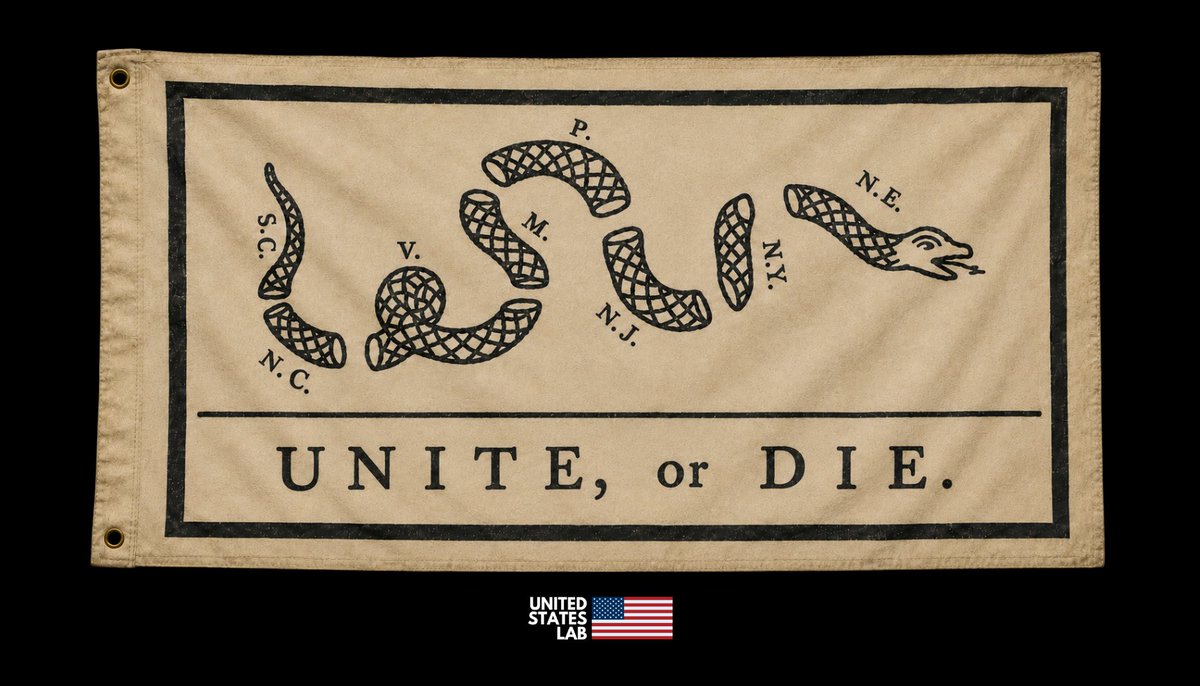
My point Is that Franklin kicked off the deeper American project of union. The idea that the colonies had to become one political people capable of governing themselves. "JOiN, or DIE" and the Albany Plan were not independence yet, but they were the early signal of a new sovereign form. Franklin was the unifier because he saw that liberty would require union before independence could endure.
English
0
0
0
28
fuck bill chisolm
fuck bill chisolm@JohnAda80546126·
@steveenglander @SeanCasten Buddy learn your history. The Boston delegation of John & Sam Adams and John Hancock were the ones who began talks of independence. Franklin was the unifier
English
1
0
0
70
Sean Casten
Sean Casten@SeanCasten·
At the site where the vote to declare independence was declared 250 years ago today.
Sean Casten tweet media
English
63
357
5.4K
1.9M
Steve Englander
Steve Englander@steveenglander·
@RealAlexJones Make Britain Great Britain Again
Steve Englander@steveenglander

America and Great Britain share more than language, ancestry, and history. The American Republic emerged from the constitutional inheritance of the English-speaking world. The traditions of common law, representative government, jury trials, due process, and the rights of free men were developed over centuries through the efforts, sacrifices, and constitutional evolution of the British people. The American Founders inherited these traditions, refined them, and secured them within a written constitutional framework that elevated freedom of speech, freedom of religion, freedom of assembly, and the sovereignty of the people to a degree unprecedented in human history. For this reason, Americans should remember the people of Great Britain with gratitude and affection. They are fellow heirs to a shared constitutional tradition that shaped the modern understanding of liberty. The same civilization that produced the Magna Carta, the Petition of Right, the English Bill of Rights, and ultimately influenced the American Revolution belongs to them as much as it belongs to us. Today, many citizens in Britain are engaged in an important national conversation about free expression, the role of government, and the preservation of civil liberties. Unlike the United States, where the First Amendment provides extraordinary constitutional protection for speech, Britain follows a different constitutional model that grants Parliament broader authority over public expression. These discussions reach to the heart of a free society and the relationship between citizens and government. The American experience offers a valuable lesson. The generation that signed the Declaration of Independence affirmed that authority originates with the people. The Constitution that followed institutionalized that principle, and the First Amendment became one of its most enduring expressions. The freedom to speak, publish, assemble, petition, criticize, persuade, and debate forms part of the constitutional architecture through which a people govern themselves. Americans therefore have a responsibility to remember their long-lost brethren across the Atlantic. The story of liberty did not begin in America, and its future does not belong to America alone. The preservation of free institutions has always depended upon citizens who understand their inheritance and exercise the responsibilities that accompany it. The British people possess one of the richest constitutional legacies in human history. Their ancestors secured foundational liberties, constrained arbitrary power, and helped establish principles of self-government that influenced nations throughout the world. Those achievements remain part of Britain's inheritance today. On this 250th Independence Day, Americans should offer prayers for the people of Great Britain. Pray that they may continue to cherish and strengthen the traditions of liberty that shaped both of our nations. Pray that wisdom, courage, and civic virtue may flourish among them. Pray that the ancient rights of free people may remain secure for future generations. Pray that the constitutional inheritance entrusted to them may be preserved, renewed, and passed forward. The cause of liberty is larger than any single nation. It is a civilizational inheritance carried across centuries by those willing to steward it faithfully. May the people of Great Britain remember the greatness of that inheritance, and may they continue their long and distinguished contribution to the enduring story of human freedom.

English
1
0
0
64
Steve Englander
Steve Englander@steveenglander·
@DefiyantlyFree Make Britain Great Again
Steve Englander@steveenglander

America and Great Britain share more than language, ancestry, and history. The American Republic emerged from the constitutional inheritance of the English-speaking world. The traditions of common law, representative government, jury trials, due process, and the rights of free men were developed over centuries through the efforts, sacrifices, and constitutional evolution of the British people. The American Founders inherited these traditions, refined them, and secured them within a written constitutional framework that elevated freedom of speech, freedom of religion, freedom of assembly, and the sovereignty of the people to a degree unprecedented in human history. For this reason, Americans should remember the people of Great Britain with gratitude and affection. They are fellow heirs to a shared constitutional tradition that shaped the modern understanding of liberty. The same civilization that produced the Magna Carta, the Petition of Right, the English Bill of Rights, and ultimately influenced the American Revolution belongs to them as much as it belongs to us. Today, many citizens in Britain are engaged in an important national conversation about free expression, the role of government, and the preservation of civil liberties. Unlike the United States, where the First Amendment provides extraordinary constitutional protection for speech, Britain follows a different constitutional model that grants Parliament broader authority over public expression. These discussions reach to the heart of a free society and the relationship between citizens and government. The American experience offers a valuable lesson. The generation that signed the Declaration of Independence affirmed that authority originates with the people. The Constitution that followed institutionalized that principle, and the First Amendment became one of its most enduring expressions. The freedom to speak, publish, assemble, petition, criticize, persuade, and debate forms part of the constitutional architecture through which a people govern themselves. Americans therefore have a responsibility to remember their long-lost brethren across the Atlantic. The story of liberty did not begin in America, and its future does not belong to America alone. The preservation of free institutions has always depended upon citizens who understand their inheritance and exercise the responsibilities that accompany it. The British people possess one of the richest constitutional legacies in human history. Their ancestors secured foundational liberties, constrained arbitrary power, and helped establish principles of self-government that influenced nations throughout the world. Those achievements remain part of Britain's inheritance today. On this 250th Independence Day, Americans should offer prayers for the people of Great Britain. Pray that they may continue to cherish and strengthen the traditions of liberty that shaped both of our nations. Pray that wisdom, courage, and civic virtue may flourish among them. Pray that the ancient rights of free people may remain secure for future generations. Pray that the constitutional inheritance entrusted to them may be preserved, renewed, and passed forward. The cause of liberty is larger than any single nation. It is a civilizational inheritance carried across centuries by those willing to steward it faithfully. May the people of Great Britain remember the greatness of that inheritance, and may they continue their long and distinguished contribution to the enduring story of human freedom.

English
0
0
1
150
Insurrection Barbie
Insurrection Barbie@DefiyantlyFree·
I am sorry but European countries are giant capitalist welfare states. They do not have democratic socialism. They have huge welfare nanny states. Why? Because we pay for it. We pay for medical innovation so they can say we don’t give our citizens dignity by having a VAT tax and single payer healthcare. If we had that’s you wouldn’t. We fund the development and R&D of medicines so you can pretend to virtuous. Ans we’ve paid for their defense for how long? At least more then our fair shares
English
30
105
802
21.5K
Steve Englander
Steve Englander@steveenglander·
America and Great Britain share more than language, ancestry, and history. The American Republic emerged from the constitutional inheritance of the English-speaking world. The traditions of common law, representative government, jury trials, due process, and the rights of free men were developed over centuries through the efforts, sacrifices, and constitutional evolution of the British people. The American Founders inherited these traditions, refined them, and secured them within a written constitutional framework that elevated freedom of speech, freedom of religion, freedom of assembly, and the sovereignty of the people to a degree unprecedented in human history. For this reason, Americans should remember the people of Great Britain with gratitude and affection. They are fellow heirs to a shared constitutional tradition that shaped the modern understanding of liberty. The same civilization that produced the Magna Carta, the Petition of Right, the English Bill of Rights, and ultimately influenced the American Revolution belongs to them as much as it belongs to us. Today, many citizens in Britain are engaged in an important national conversation about free expression, the role of government, and the preservation of civil liberties. Unlike the United States, where the First Amendment provides extraordinary constitutional protection for speech, Britain follows a different constitutional model that grants Parliament broader authority over public expression. These discussions reach to the heart of a free society and the relationship between citizens and government. The American experience offers a valuable lesson. The generation that signed the Declaration of Independence affirmed that authority originates with the people. The Constitution that followed institutionalized that principle, and the First Amendment became one of its most enduring expressions. The freedom to speak, publish, assemble, petition, criticize, persuade, and debate forms part of the constitutional architecture through which a people govern themselves. Americans therefore have a responsibility to remember their long-lost brethren across the Atlantic. The story of liberty did not begin in America, and its future does not belong to America alone. The preservation of free institutions has always depended upon citizens who understand their inheritance and exercise the responsibilities that accompany it. The British people possess one of the richest constitutional legacies in human history. Their ancestors secured foundational liberties, constrained arbitrary power, and helped establish principles of self-government that influenced nations throughout the world. Those achievements remain part of Britain's inheritance today. On this 250th Independence Day, Americans should offer prayers for the people of Great Britain. Pray that they may continue to cherish and strengthen the traditions of liberty that shaped both of our nations. Pray that wisdom, courage, and civic virtue may flourish among them. Pray that the ancient rights of free people may remain secure for future generations. Pray that the constitutional inheritance entrusted to them may be preserved, renewed, and passed forward. The cause of liberty is larger than any single nation. It is a civilizational inheritance carried across centuries by those willing to steward it faithfully. May the people of Great Britain remember the greatness of that inheritance, and may they continue their long and distinguished contribution to the enduring story of human freedom.
English
0
0
0
354
Steve Englander
Steve Englander@steveenglander·
May Almighty God bless America on this 250th Independence Day, the Republic brought forth under the Laws of Nature and of Nature's God, founded upon the self-evident truth that all men are created equal, and preserved by generations who pledged their lives, their fortunes, and their sacred honor. May Divine Providence keep us faithful to the cause of liberty, firm in the defense of our unalienable rights, grateful for the blessings secured by our forefathers, and worthy to transmit them unimpaired to our children, so that government of the people, by the people, and for the people shall not perish from the earth.
Steve Englander tweet media
English
0
0
0
63
Steve Englander
Steve Englander@steveenglander·
Before the American Founding, republics and confederacies had long struggled with representation across distance, scale, and dependency. Many systems represented core members through councils, assemblies, senates, leagues, or estates, while allied cities, dependent provinces, frontier settlements, and colonies were often governed through looser or more subordinate arrangements. Madison studied these examples before the Philadelphia Convention, including Lycia, the Amphictyonic Council, the Achaean League, Switzerland, and the United Netherlands. His focus was representation, voting rules, federal councils, dependent territories, enforcement, and the weakness of leagues whose authority existed more clearly in theory than in operation. Lycia offered a model of represented member cities inside a federal structure. The Greek leagues showed how councils and oaths could fail without sufficient enforcement. Rome showed a republic expanding into provinces and dependent cities governed from the center. The Dutch Republic offered a modern example of represented provinces alongside dependent territories governed by central authority. The British imperial crisis made these questions immediate for the American colonies. The colonies had their own assemblies, yet Parliament claimed power to bind them. The Stamp Act Congress argued that taxation and internal legislation required consent through local representatives. Jefferson sharpened this position in A Summary View of the Rights of British America declaring public authority had to be derived from the people it governed. Franklin's Albany Plan had earlier proposed a general colonial government with a President-General and a Grand Council chosen by colonial assemblies. Mason's Virginia Declaration of Rights grounded political power in the people and tied taxation and lawmaking to consent through representatives. Hamilton defended the extended republic, arguing that representation, checks and balances, courts, and federal execution allowed republican government to operate at scale. Jay framed Americans as one united people capable of one federal government for general purposes. Adams, through his comparative study of republics and mixed government, emphasized that power tends to concentrate and therefore requires balanced constitutional structure. The Declaration is the genesis signal of the American protocol. It announces the people as sovereign, union as the condition of survival, and the Constitution as the operating structure that delegates, limits, and preserves that authority. @unitedstatesp2p implements the U.S. Constitution's governance specification in digital form. It preserves proof of legitimate derivation of authority across identity, records, offices, jurisdictions, and execution layers, so Citizens remain inside the authorizing structure of public power rather than becoming subjects of systems they cannot verify or control. Happy 250th Independence Day, America, from @unitedstateslab 🇺🇸
Steve Englander tweet media
English
0
1
2
62