

Robert Sweeney
827 posts

Robert Sweeney
@sweeneyr82
Interested in economics, politics, etc. Views mine. Likes are mostly bookmarks.
Dublin City, Ireland Katılım Ekim 2016
209 Takip Edilen303 Takipçiler


If these ideas are wrong, we're wrong.
I sometimes find myself talking past people.
The topic at hand might be rent controls or housing funding models. But the discussion will fail because my interlocutor and I disagree on some foundational idea, four steps prior. We can’t fruitfully discuss funding models for housing because we don’t even agree on whether its desirable to build housing for profit.
Progress Ireland’s newsletters often skip a lot of context. It’s assumed the reader understands what we want (cheaper, nicer, better located housing for ordinary people; world class Irish science and commerce). And it’s assumed the reader understands the pillars of our worldview.
But the pillars matter, and we shouldn’t always skip them over. If they’re not right, the whole edifice tumbles. When it comes to housing, there are seven of them. We think policies that take these ideas into account have the greatest chance of success.
Housing
1. Building more houses drives down house prices. How much? By somewhere between 1 and 2.5 per cent per 1 per cent increase in the housing stock, per most studies. This applies to any type of new housing construction — market rate housing as well as subsidised housing.
2. Building market rate housing makes all housing cheaper. Studies by Evan Mast in the US and Cristina Bratu in Finland find new market rate housing begins a chain reaction that lowers housing costs for the entire system, including low-income tenants.
3. Housing supply is constrained by the planning system. This is obviously true to some extent, because the purpose of planning law is to control building. But we believe the effect size is big. We think, for example, that exempting seomraí from planning would result in lots more seomraí than a world where they must first get planning permission. A US metric called the Wharton Residential Land Use Regulatory Index (WRLURI) hints at the impact of planning law on housing supply. It’s an independent measure of how restrictive planning rules are in individual US cities. The following scatterplot shows the relationship between house prices and the strictness of planning rules. Places with less restrictive planning rules build more housing and as a result, house prices are lower.
4. Ambiguity around planning rules reduces housing supply over and above the restrictiveness of the rules. Ireland’s planning regime is discretionary and ambiguous, which adds extra risk to construction and reduces supply. Ireland’s system is modelled on the UK. By contrast, planning law in the rest of the developed world tends to be more specific (housing must be X distance from path, y ratio of walls to doors, z distance from neighbour…).
5. Planning law is downstream of local politics, and any enduring solution needs to take locals into account. As the experience of New Zealand under PM Ardern showed, it’s possible to railroad people into looser planning rules. But the rules won’t endure if the public hates them. Ardern was thrown out and her reforms didn’t last. Lasting solutions take the views of locals into account because they effectively have a veto – whether we like it or not.
6. High construction costs are a big drag on Irish housing supply. Irish construction costs for apartments are about a third higher than those in European peer cities on a like for like basis. This is a separate problem from Irish planning law, and has similar effects on housing supply and prices.
7. Development can’t be directed around the country by government policy. This is the conceit at the heart of Ireland’s regional development policy. The policy intentionally limits growth in Dublin, as a means of encouraging growth in the West and South. We believe these efforts make Dublin poorer and more expensive with almost no compensatory benefit elsewhere.
Housing policy reforms we are inspired by: Washington DC, Sydney, Minneapolis and Austin’s city-wide upzoning (aka increasing the number of homes permitted per plot) which reduced housing costs relative to peer cities; a flurry of pro housing bills introduced in California in 2022; Houston’s use of “opt-out” mechanisms to win broad support for city wide upzoning; the UK’s street plans scheme (through parliament but not yet finalised) which lets local areas decide on their own housing rules; the recent proliferation of accessory dwelling units across the USA; Israeli reforms that gave homeowners an incentive to favour more housing; Japan’s implementation of “laddered zoning” which allows housing to built on almost any type of zoned land; and New Zealand’s plans to incentivise local authorities to support more housing.
Infrastructure
The three legs of the stool of efficient infrastructure delivery are: lots of skilled contractors; a competent client; and clear, fair and speedy planning regulation.
Our first policy is focused on the need for better state clients. We believe the state, as the owner of infrastructure projects, has an obligation to understand projects, manage partners and bear risks. We believe this role matters more in more complex projects. We believe a state that lacks this technical capacity won’t be able to deliver complex infrastructure quickly or cost efficiently.
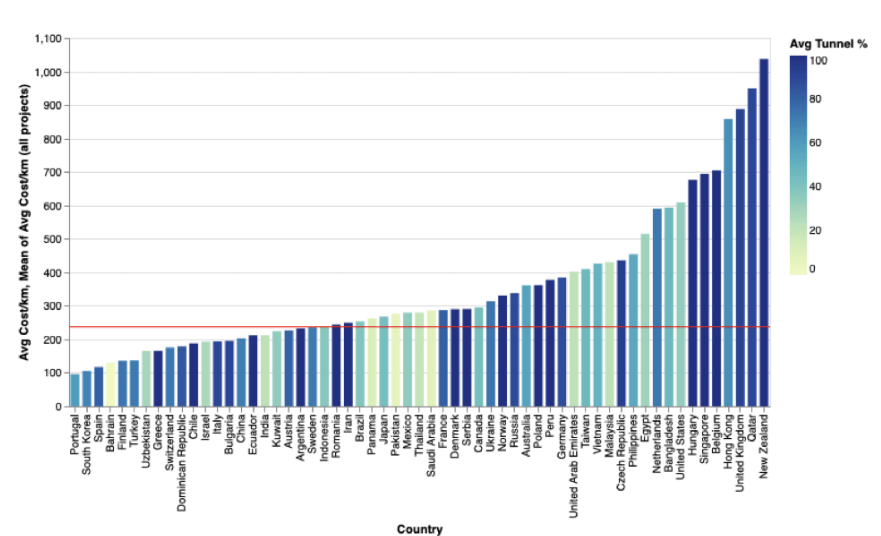
European governments’ projects are more often managed by in-house experts. In English speaking countries, the projects are usually managed by generalist civil servants. In the top seven or so European countries, complex infrastructure projects like metros cost 20-30 per cent those of English-speaking countries. Experts in metro construction costs attribute the difference, first and foremost, to a lack of client-side expertise in English-speaking countries.
The next step of our infrastructure research will be focused on how to attract the best international partners to Irish projects. We believe a deep market for contractors will result in cheaper, faster projects. We believe the best way to attract partners is to de-risk infrastructure projects as much as possible. This can be done by for example, providing a clear and certain pipeline of projects; minimising planning risk; paying bid costs for major projects; breaking large contracts down into smaller ones.
The following step will be focused on new funding models for infrastructure. We believe infrastructure construction should work hand-in-glove with property development. In the countries that are most proficient at building transport infrastructure — for example, Japan, Hong Kong, Australia and Denmark — profits from property development pay for infrastructure, in a virtuous cycle.
Infrastructure policies we’re inspired by: the Metropolitano Milanese (MM), a state-owned company that built Milan’s world class metro system cheaply and now exports its skills around the world; the Sinema, an entity brought together to deliver Madrid’s metro and then dissolved; Australia’s Infrastructure Commission which developed a clear pipeline of work and made Australian financiers and P3s world leaders in infrastructure; Tokyo’s and Hong Kong’s development rights auctions which funded metro expansion; Crossrail’s itemised contracts to minimise and expedite change orders; Milan’s long term infrastructure planning agency which works hand in glove with the MM; Copenhagen’s cheap-and-cheerful metro design; Turin’s cut-and-cover metro construction method; the MTB in Hong Kong for whom operating a rail network is a loss leader for their retail and property development business.
Innovation
The goal of our innovation policy is for Irish companies to be as innovative and productive as the leading European countries. Say Denmark. This takes in everything from basic research at Irish universities to the details of taxation of equity options.
We believe scientific research could be much more productive. New approaches to research promise to improve matters. The core idea is to “turn the scientific method on itself”. Just as researchers experiment in the lab, metascience involves studying science itself with trials and measurements. A US National Science Foundation pilot offering top scientists greater stability and flexibility has increased productivity. In New Zealand and Switzerland, lotteries have mitigated funding bias. Meanwhile, the UK is developing metrics for research novelty. This will ensure funding is allocated to genuinely groundbreaking work.
We believe Ireland’s failure to cultivate world-class domestic technology and pharmaceutical firms is a blunder. There should be a conveyor belt of talent leaving multinationals, starting businesses, selling businesses, and funding the next generation of entrepreneurs. Bored mid-career engineers and scientists at multinationals are an untapped strategic asset. We need to make it worth their while to leave their stable careers and try big things.Innovation policies we’re inspired by: the Arc Institute, built from the ground up on metascience principles, the use of ARPAs to fund specific mission-based research; the US tax treatment of equity options; US bankruptcy laws; EU Inc (the proposal not the version that has emerged from the Commission) the use of open science principles; an EU common market for digital services, Denmark’s flexicurity laws.


English
@eoinmauricedaly Where can I find the original Eurostat report?
English

A third of electricity on data centres who will purchase it as a huge discount… our rulers making us a virtual slop farm
Lynn Boylan 🍷📖🐾@LNBDublin
Power grid faces the extra pressure of data centres and 300,000 new homes – until 2029 EirGrid, has also predicted that data centres will be using 32pc of all the electricity consumed in the country by 2030. independent.ie/business/irish…
English
@pietergaricano European workers have long been better protected but protection has declined w/t time (e.g. Hartz). Has there been a structural change so its more important now? Or is it tech specific? Not as if the UK is a tech hub either.
English

Why don't European companies innovate? It is common to blame expensive energy, high taxes, anti-growth politicians, interest groups, and green regulations.
But California has the same problems, and has created the world's most innovative companies.
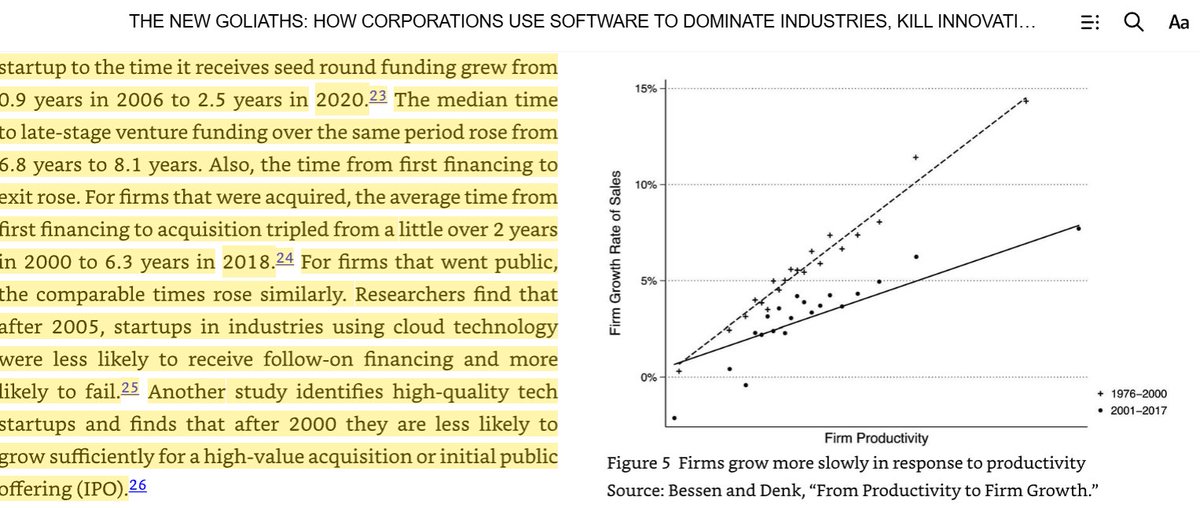
Europe's problem is labor law. Compared with America, it's far harder to let workers go when a business doesn't work out.
worksinprogress.co/issue/why-euro…
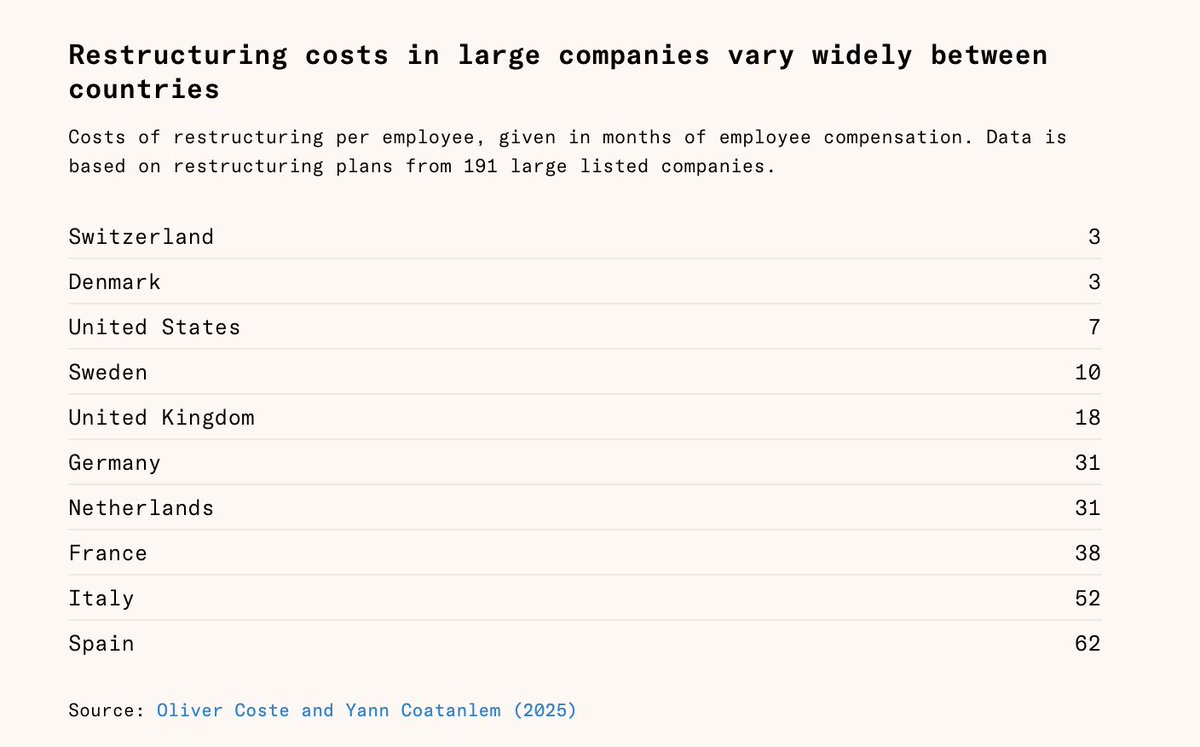
- It costs a large company roughly four times more to fire a worker in Germany or France than the US.
- German law requires employers to consider age, years of service, family obligations, and disability status when deciding who to lay off. Employees who would be least impacted by losing their job are prioritized for dismissal.
- German employees who take on a caregiving role are fully protected from dismissal for two years from the date they begin caregiving.
- Factory closures in Germany regularly lead to payments of over €200,000 per employee.
- French companies must be prepared to show a court that their financial results are struggling enough to make layoffs necessary.
- To avoid the difficulties of formal dismissals, many European companies entice workers to depart voluntarily, with payouts of up to four years' salary.
Taken together, a German worker is ten times less likely to be fired in a given year than an American worker. This high cost of firing makes failures more expensive. It pushes big European companies away from taking risks and leads them to concentrate on safe, unchanging areas.
Europe has the ingredients needed to succeed. Its citizens are educated and inventive; it has excellent infrastructure and the rule of law; and its culture is not that different from the one it had fifty years ago, when its companies were world-beating. If Europe wants to a Tesla or a Google, it only needs to make it cheaper for companies to fail. My new piece for @WorksInProgMag.
English
@SCP_Hughes Re timing, in Ireland at least planning, planning regulations weren't implemented during housing bubble years but post-bubble it was. Also, population growth doesn't explain why metros are more expensive to build in common law countries.
English

John is a great researcher, perhaps the greatest in English journalism, but I am a little doubtful in this case:
1. Common law wasn't invented in the 1980s, so if it is the cause, it is surprising that the divergence only appeared then;
2. *Lots* of other things are different about anglophone and continental countries! Why are we assuming that common and civil law is the driver here? For example, almost every anglophone population has grown much faster than almost every continental one since 1960, which at least partly explains the dwellings per capita data;
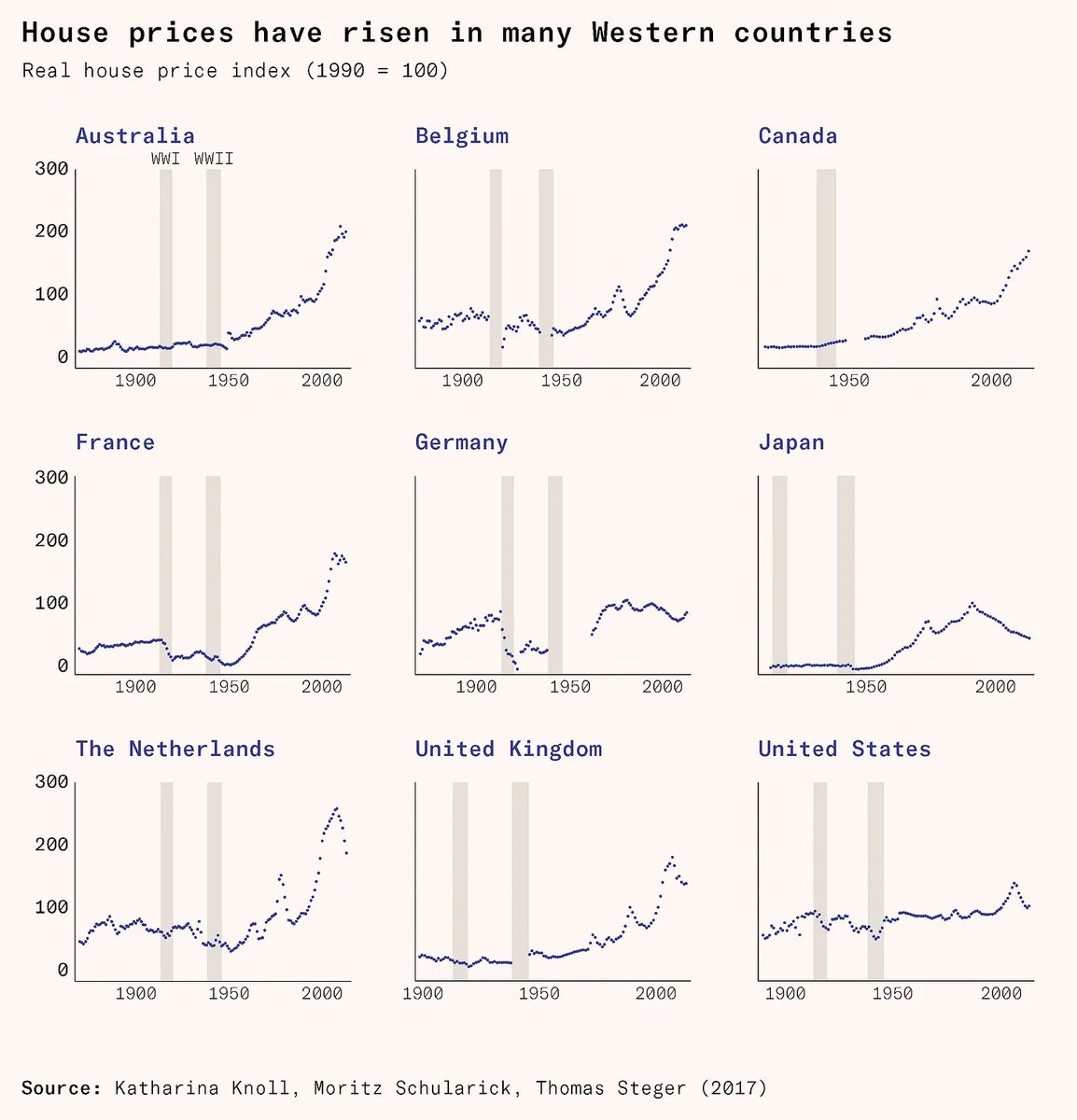
3. Longer timespan datasets of house price growth give a very different impression;
4. The vast majority of planning applications, at least in England, never see the inside of a courtroom, so it is not clear to me how court structure could have such a massive effect.
There is much more to be said on a complex topic – just a few sceptical notes for this evening.

John Burn-Murdoch@jburnmurdoch
Underrated factor in why English-speaking countries have especially bad housing crises is their common law systems (adversarial and litigious) vs judge-led civil law systems elsewhere. Makes Anglo planning/permitting systems especially vulnerable to NIMBYs and other objections.
English
@renewablesmiffy What are you basing that on - European offshore wind cheaper than nuclear? LCOE?
English

With 10GW in construction and a pipeline of 300GW Offshore is anything other than a dead end. Quoting two share price falls to justify this narrative is amateurish.
European Offshore wind is currently cheaper than new Gas and Nuclear generation.
Sam Bowman@s8mb
Offshore wind power is a dead end for Europe. - It isn’t even competitive in the North Sea, with depths of just 15-30 meters and wind speeds of 10m/second. - Some predictions had the levelized cost per MWh of offshore wind down to $40 by 2030, decreasing much like solar has. In fact it costs over $110 per megawatt-hour, and the price is *rising*. - Costs won’t fall like solar’s have. The turbine is only 24 percent of the lifetime cost, and much of that goes to raw materials. The rest goes on support infrastructure (transmission cables, etc) and maintenance. These costs don’t factor in the cost to the grid of new connections or of having backup supply for when wind output drops. - The industry is in free fall. Ørsted, the world’s largest developer of offshore wind, has dropped by 88% over the last five years. Vestas, which makes turbines, has dropped by 36%. - Even if costs DID fall, the way we pay for wind projects locks in today’s prices for up to 20 years. - Despite all this, the British and Dutch govts are buying *more* offshore wind power. The new Dutch govt plans to add 40 gigawatts of wind power to the 63 GW it has.
English
Robert Sweeney retweetledi

BBC journalists have been banned from describing the kidnapped Venezuelan leader as having been kidnapped.
The BBC News Editor has sent this to BBC journalists.

English
English

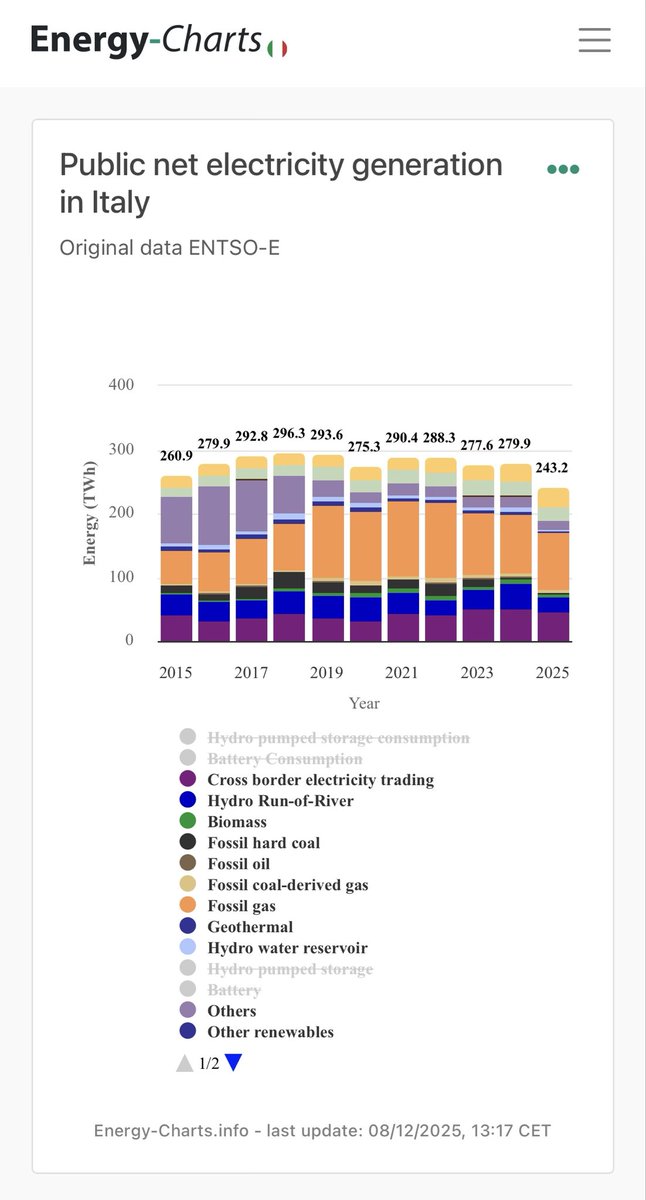
@SiemDeCleyn @JomauxJulien Gas prices, lack of capacity, limited import corridors. See amount of imports.
English

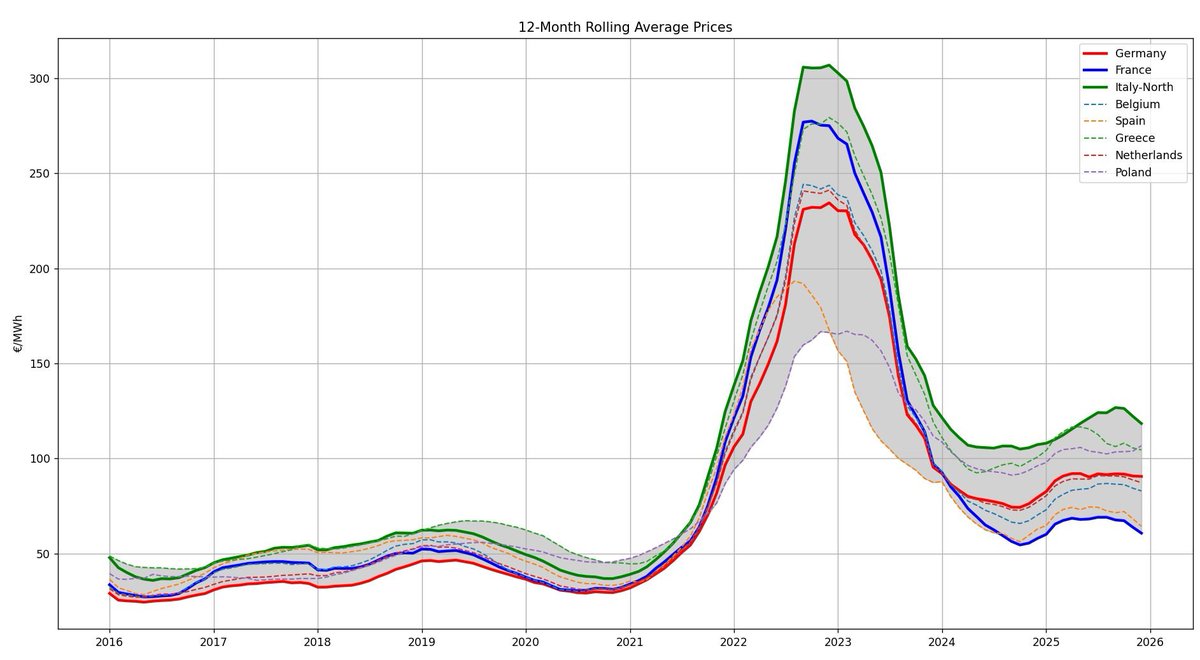
12-month rolling averages of elec. spot prices since 2016 (not adjusted for inflation).
- Prices were cheaper before crisis, but also the diff. between countries.
- Germany used to be cheaper, not anymore
- France (and Spain) are lower, not far from before the crisis.
English
@youngsiward @danobrien20 What's the data source for this - is it publicly available?
English

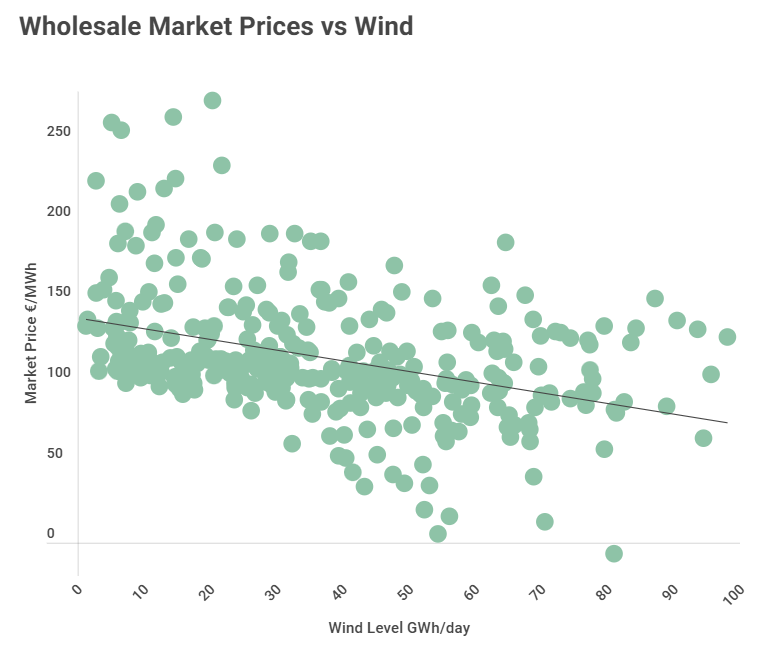

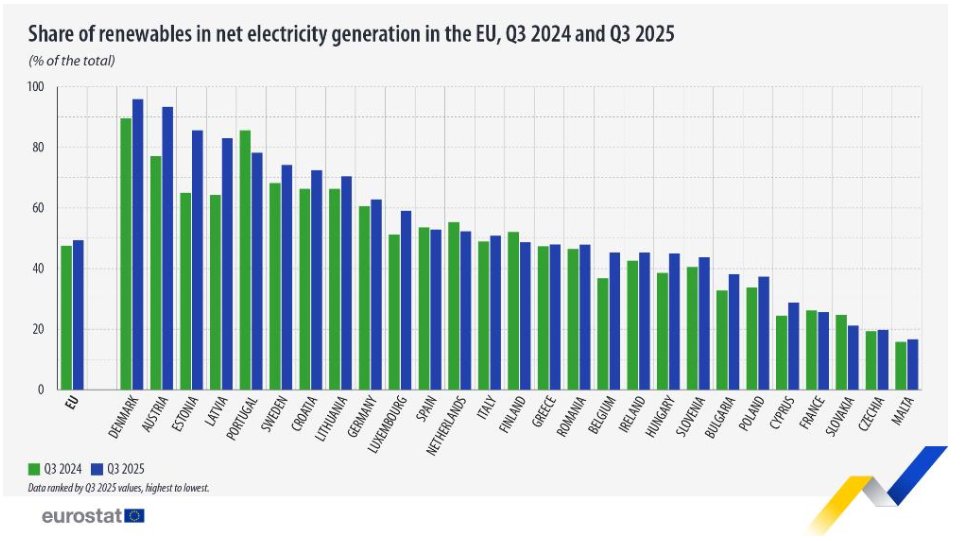
Any studies out there on the correlation between electricity prices and the renewable share?
English
@ciarannugent @blackrock0778 So he's dividing by total population instead of adult population? And because a greater share of Irish population are children, that lowers the Irish numbers?
English

@blackrock0778 This one in particular.....the numbers should be divided over adult population. Me and him had an interaction yo that effect before, so he knows.
And when you boil down into how these figures sit in relation to the population, it's a whole lot of nothing
There's worse examples.
English
One last time, the account below manipulates figures and presents figures he knows are not robust to suit a racist agenda...... on purpose.
English
I've noticed a tendency among the US left which (rightly IMO) views much urban planning as a resource transfer from from renters to middle and upper middle class asset owners. This is largely absent from left debate here and, it seems, in the UK.
English
"land-use regulations that unduly empower existing homeowners to veto construction at the expense of would-be first-time buyers is a predistributive policy that shouldn’t be ceded to the developer-friendly YIMBY crowd."
jacobin.com/2025/10/left-i…
English
Awful, class-baiting headline. The 'spiralling' of welfare spending 'from €19.9 billion in 2015 to €27 billion' means spending fell from 11.8% to 8.4% of national income.
irishtimes.com/ireland/social…
English
@ciarannugent @nwl88444048 We don't do them regularly to ascertain trends. The last general crime survey was 2019, I understand.
English

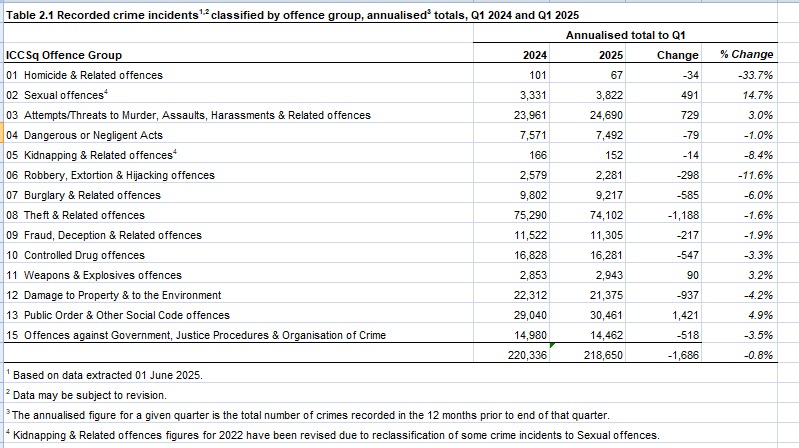
Garda Paul Reynolds at RTE claims there's a significant decrease in reported crime in 2025, this was in May and based on a Garda briefing on recorded crime in Q1,2025
Yet the figs subsequently published show a 0.8% decrease in crimes recorded. Is that a "significant decrease"?

nwl@nwl88444048
Garda Reynolds reporting for duty! After a 3% increase in recorded crime in 2024 (ex fraud where there was a huge jump), RTE is claiming today there's been a "significant decrease" in crime in 2025. Let's see if the CSO publish these figs without an "under reservation" warning.
English
@ciarannugent @nwl88444048 Reported crime stats (as opposed to crime surveys) are more or less informative of actual crime over an extended period (depending on crime type), but year-on-year changes tell us very little, absent a survey.
English
@nwl88444048 That's 0.8% reduction in recorded incidents at the same time as strong population growth (and specifically that other type of population growth you're always trying to tie crime to)
English
@pseudoerasmus Indeed investment hasn't fallen. While the heterodox critique of neoclassical development is largerly true imo, its critique of financialisation largely isn't, particularly for developed countries.

English
@haugejostein Investment % GDP would have fallen were that true.
Most of the assumed financial accumulation of NFCs turns out to be other things, such as growth of intangibles.

English

Financialization killed the US industrial base.
The math is simple: when corporations give away 90-95% of profits to shareholders for 30 years, there's nothing left to build or invest with.
Stock buybacks won't buy you industrial competitiveness.
English
Good piece on NYC housing challenges. Land use reform in addition to public housing/rent reg. as a fundamental left goal.
English