syamant

68.1K posts

syamant

syamant

@Syamant

books and music

India Katılım Şubat 2008
2.2K Takip Edilen3.3K Takipçiler
syamant
syamant@Syamant·
@MusingGee this particular service is focused on returns, safe extraction and recycling
English
0
0
0
11
Gee
Gee@MusingGee·
@Syamant This is a decade old and repaired many a times. I doubt if they will take it.
English
1
0
0
28
Gee
Gee@MusingGee·
Also, this happened to my old iPhone. What is the best way to ediscard old electronics without a risk of old data compromising?
Gee tweet media
English
12
1
9
1.2K
syamant
syamant@Syamant·
@MusingGee You could try a third party charger from Amazon.check if the data exists, SSDs if not used for extended time tend to lose data
English
0
0
0
32
Gee
Gee@MusingGee·
My 1st MacBook. Bought around 2012. Costed me half a month salary. Anyway to upgrade it and still use it? Hardware is in good condition, just needs a new charger. #AppleIsForever ?
Gee tweet mediaGee tweet media
English
23
5
54
3.4K
syamant retweetledi
Joy Bhattacharjya
Joy Bhattacharjya@joybhattacharj·
Folks, she is an Olympic medallist. To ask her what she thinks of Vaibhav Sooryavanshi is unfair on her achievements and her sports. Cricket anyway is the ruling passion of the country, your sports editors do not need another celebrity quote to spin a headline on Sooryavanshi. Optionally, the next time ask Vaibhav Sooryavanshi about Manu Bhaker and see the looks you get.
Press Trust of India@PTI_News

VIDEO | India's double Olympic medallist shooter Manu Bhaker says, “With the right mentorship, Vaibhav (Sooryavanshi) can be the next big star of Indian cricket.” (Full video available on PTI Videos - ptivideos.com)

English
104
654
5.6K
247.8K
syamant retweetledi
Laureus
Laureus@LaureusSport·
History. A maiden ICC Women’s Cricket World Cup title at #CWC25 for Laureus World Team of the Year Nominee, India Women's Cricket Team 🇮🇳 #Laureus26 | @BCCI | @BCCIWomen
Laureus tweet media
English
21
248
2.4K
132.2K
syamant retweetledi
Corey S. Powell
Corey S. Powell@coreyspowell·
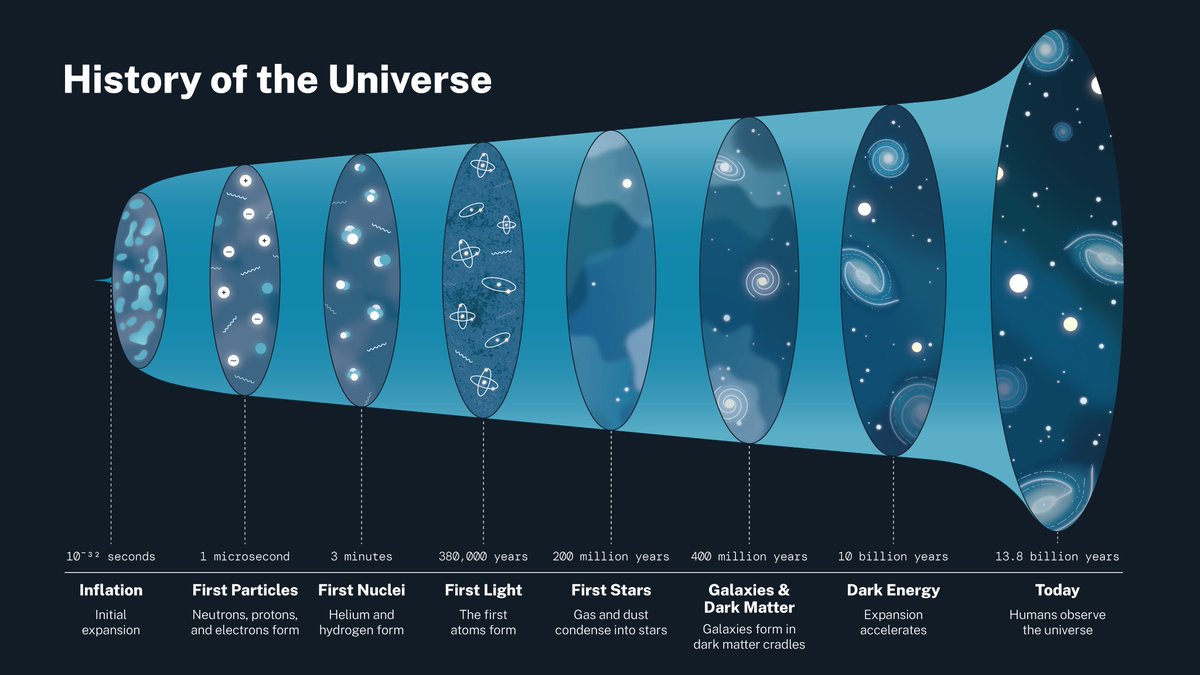
A new study confirms the "Hubble tension": measurements of the local expansion of the universe do not line up with measurements of how the universe was expanding after the Big Bang. It's no simple experimental error. 11 different techniques agree. noirlab.edu/public/news/no…
Corey S. Powell tweet media
English
33
53
254
28.9K
syamant retweetledi
Kiran Manral
Kiran Manral@KiranManral·
An astronaut named a bit of the moon after his deceased wife and it made me wonder about the permanent impermanence of love and Pink Floyd. Read it here. open.substack.com/pub/thestoryco…
English
0
1
2
258
syamant retweetledi
Rajeev Gambhir
Rajeev Gambhir@RGambhir·
Thrilling news! @DrShaileshNaya1 , Director @NIAS_India, has been selected as the recipient of the 2026 Brock Gold Medal, the highest global honour in photogrammetry and remote sensing. 🏅 The prestigious @isprs award is presented just once every 4 years for landmark contributions that transform photogrammetry & remote sensing.
Rajeev Gambhir tweet media
English
3
8
16
1.6K
syamant retweetledi
NetworkChuck
NetworkChuck@NetworkChuck·
Gemma 4 running on my iPhone works without internet, is blazing fast and can translate Japanese from a pill bottle.  Local AI models running on a phone feels like magic.
English
237
819
8.4K
552.4K
syamant retweetledi
Barsha
Barsha@BarshaPanda·
This is the irony of AI in the hands of the traditional operator.  They used to waste their own time writing agendas, meeting notes, and documents nobody reads. Now they use AI to churn out 10x of that, and faster! They think they are being productive and relevant (aka “we know AI”).  Meanwhile, everyone around them is drowning in a flood of AI-generated documentation that nobody asked for, nobody needs, and nobody will read. Work now needs to happen *despite* those documents and the micro-management they put into play.  The lag isn’t gone, it’s multiplied.  Worse, it has been redistributed to everyone else. AI was built to eliminate busywork, not industrialize it. If your first instinct with AI was to generate MORE DOCUMENTS instead of eliminating the need for them, then you need to hear this:  “You did not adopt a new tool or tech. You automated your dysfunction.”  And if you are the receiving side of this use of AI, put your foot done.  Tell people (directly, nicely, subtly, fiercely, whatever works) that having to drown in a sea of AI documents is not productivity.  This needs to be a movement. An important one. Get behind it.
English
2
3
17
619
syamant retweetledi
Govindraj Ethiraj
Govindraj Ethiraj@govindethiraj·
You can track real time energy prices here, apart from Rupee and overall war impact and latest news as well..do let us know if we should add more
The Core@the_core_in

#IranWar‌ | Tensions in the Strait of Hormuz are escalating. Nearly 60% of India’s crude oil transits through this route. What does this mean for the economy? 🔗 energy.thecore.in Explore The Core’s India Energy Crisis Dashboard—tracking the real-time impact of the West Asia conflict on India’s oil, fuel, fertiliser prices, and the broader economy.

English
4
9
16
5.9K
syamant retweetledi
Navanita Varapande
Navanita Varapande@Navanitavp·
My latest bit is here, an observation from real life experiences. Empathy or apathy is a conditioning I feel…and to live with someone who is taught to be detached is…. read at leisure and leave your precious take on the same.❣️ #empathy timesofindia.indiatimes.com/blogs/orange-p…
English
6
13
43
1.5K
syamant retweetledi
Sama Hoole
Sama Hoole@SamaHoole·
India ran the most important cardiovascular study of the 20th century by accident, and then immediately forgot about it. In 1967, Dr. S.L. Malhotra published a study in the British Heart Journal examining heart disease rates among 1.5 million Indian railway employees. The population was extraordinarily useful for research purposes: same employer, same healthcare access, comparable income and working conditions, spread across the entire country. The only meaningful variable was geography. Which meant diet. North Indian railway workers: Punjab, Rajasthan, UP, ate a diet built around ghee and dairy fat. They consumed up to 19 times more fat than their southern counterparts. The fat was primarily saturated: clarified butter, milk fat, the short-chain saturated fatty acids that Ancel Keys had recently been telling the Western world were arterial death. South Indian railway workers ate a diet based on rice, sambar, and seed oils: groundnut oil and sesame oil, primarily. They ate considerably less fat overall. By the standards of dietary advice being formulated in the 1960s, they should have been the healthy ones. Heart disease mortality in South India: 135 per 100,000. Heart disease mortality in North India: 20 per 100,000. Seven times higher in the population eating seed oils. Among railway sweepers specifically, the lowest-paid, most physically active workers, the gap was even wider. Heart disease was fifteen times more common in the South Indian sweeper population than in the North Indian sweeper population. Malhotra controlled for everything he could reach: smoking, where Northerners actually smoked more. Activity levels, where the relationship was inconsistent. Socioeconomic status, where executives died more often than sweepers regardless of region. He found no variable that explained the gap except the type of fat in the diet. He published the data. In a peer-reviewed journal. In 1967. The study was cited periodically, acknowledged as methodologically interesting, and then set aside. The decade in which Malhotra published was the decade in which Ancel Keys's fat hypothesis was being converted into policy. The American Heart Association was issuing guidance recommending polyunsaturated vegetable oils as replacements for saturated animal fats. The food industry was producing seed oils at industrial scale. The infrastructure of seed oil promotion was being built, expensively and with great institutional momentum. A study showing that populations eating animal fat had a fraction of the heart disease of populations eating seed oils was not, in that context, a study that anyone particularly wanted to follow up. Nobody followed up. Almost sixty years later, the finding stands unrefuted in the literature. It is not in the dietary guidelines.
Sama Hoole tweet media
English
233
3.2K
9.9K
653K