Laura Roeder@lkr
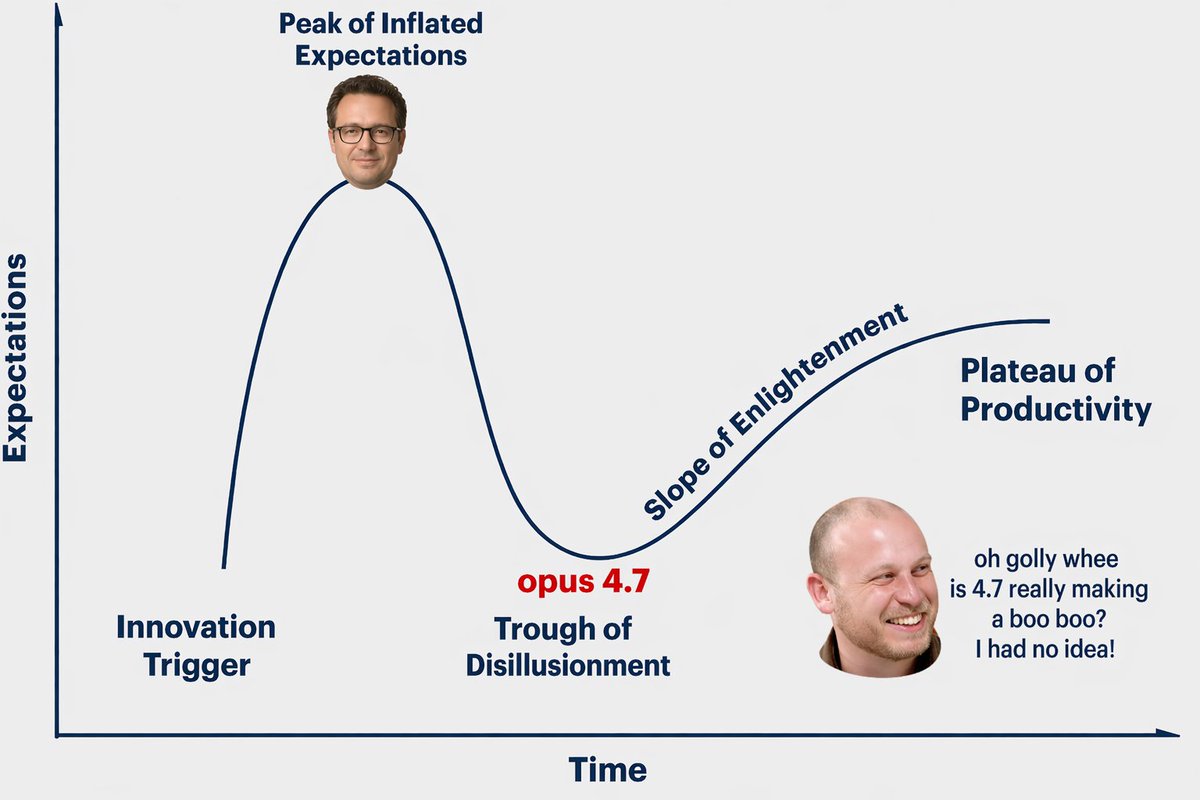
OK I ran the *exact same* copywriting prompt/skill in opus 4.6, opus 4.7, and codex to see the results!
I'm going to let people vote on which they find the most "scroll worthy" here before revealing which is which (sorry, these are a bit long, will do a headline text next!)
These are native-sounding long form social media posts, and the goal is to keep people reading and get them intrigued to use the free tool
Here we go!
➡️➡️➡️VERSION A:
"I rewrote my bio so many times it stopped looking like English.
Like truly. I had one version that sounded way too formal, one that sounded like I was trying to be “fun,” one that made me sound like every other coach on the internet, and one that was so vague even I couldn’t tell what I actually helped people with.
And the annoying part was that I KNEW what I did.
I just couldn’t say it in one clean little bio without suddenly turning into a corporate robot.
Then I took this free quiz, mostly because I was procrastinating rewriting the bio for the 47th time, and oh my god. It finally gave me the wording I’d been circling around for weeks.
Not perfect fancy wording.
Clear wording.
The version that made me go, “Wait. That’s it. That’s what I’ve been trying to say.”
If you’re staring at your bio right now trying to sound credible, interesting, specific, and not like ChatGPT wrote it, please just take the quiz.
Sometimes the thing you need isn’t another hour of tweaking.
It’s one tiny outside prompt that helps you see what was obvious the whole time."
➡️➡️➡️VERSION B:
"I rewrote my coaching bio 41 times. I counted. Forty-one versions sitting in a Google Doc that got so long I started color-coding which ones I hated versus which ones I really hated because apparently that was a useful distinction at 1am on a Tuesday.
And every single version had this same problem where I'd start writing and it would sound like a LinkedIn summary from 2014 or like I was applying to grad school or like I was trying to be deep and meaningful but it just came out sounding like every other coach's website where they talk about their "transformational journey" and being "passionate about helping others step into their power" and I wanted to throw my laptop across the room because I KNEW that wasn't me but I genuinely could not figure out how to say what I actually do in a way that didn't make me cringe.
So I just... didn't have a bio. For months. My website said "coming soon" in the about section which is basically a neon sign that says "I don't know what I'm doing" and every time a potential client asked me to send them my website I'd feel this wave of hot shame because I knew they were going to see that empty space and think I wasn't legit.
The wild part is I'm actually good at what I do. I have clients who text me months later saying I changed their life. But somehow I couldn't write two paragraphs about myself without spiraling.
Then a friend sent me this free quiz thing and I almost didn't take it because I was so tired of trying and I thought oh great another template that's going to tell me to "lead with my why" but it wasn't that at all. It just asked me like 5 really specific questions about who I help and what they're dealing with and what changes for them and when I read back my answers I was like... wait. That's my bio. That's literally just what I do. I'd been trying to sound impressive when I just needed to be clear.
I finished my entire about page in 20 minutes. After MONTHS of staring at a blinking cursor.
And I'm not saying this to be like "wow what a great quiz" I'm saying this because if you're sitting there right now with a half-written bio that makes you want to crawl out of your skin please know that the problem was never that you don't know what you do. The problem is that every piece of advice you've gotten has told you to be clever or inspiring or "magnetic" when all your future clients actually want to know is can you help them and how.
You already have the answers. You just need someone to ask you the right questions."
➡️➡️➡️VERSION C:
"I need to tell you something slightly embarrassing.
I have rewritten my coaching bio probably 40 times. Not exaggerating. I have a Google Doc called "bio FINAL" and another one called "bio FINAL v2" and another one called "bio ACTUAL FINAL" and they all contain completely different versions of me and none of them sound right.
One version I tried to sound like a LinkedIn executive and it came out cold and robotic and made me sound like I was applying for a job I didn't want. One version I leaned into the woo and called myself a "soul-aligned transformation guide" and I literally cringed reading it back the next morning. One version I just listed my certifications like a resume because at least that felt factual and safe and not like I was trying to sell myself.
And the worst part is I would sit down to write it and then I would get up to make tea and then I would check my email and then I would reorganize the folders on my desktop and then I would tell myself I'd do it tomorrow because today I just needed to "think about it more."
I did this for MONTHS.
Because here is the thing no one tells you about writing your own bio, you're trying to describe yourself to strangers using words, which is already insane, but you're also trying to do it in a way that makes them want to pay you money, which means every word is loaded, and you keep bouncing between "I need to sound accomplished" and "I need to sound warm" and "I need to sound niche" and they all feel like costumes you're trying on for strangers.
Anyway. A friend sent me this free quiz thing Paperbell made and honestly I clicked it because I was procrastinating on writing my bio AGAIN. It asked me like 5 questions. Who do you actually help. What do they come to you for. What happens after they work with you. Plain questions, nothing clever.
And it spit back a bio that sounded like me. Not the LinkedIn version of me and not the woo version and not the resume version. The actual one. The way I would describe what I do if a friend asked me at a dinner party and I wasn't performing.
I read it and I just sat there for a minute because it said the thing I had been trying to say for a year in like two sentences.
If you have been rewriting your bio for the tenth time and you keep thinking you just need to "sit down and focus," I promise that's not the problem. You don't need more focus. You need someone to ask you the right questions so you can hear yourself answer them. That's literally all this is. And it's free.
I wish I could go back and hand this to the version of me with 40 drafts in a Google Doc and tell her to please please just take the quiz and stop torturing herself. She was always the right person for this work. She just couldn't see herself clearly enough to say it."