

vera🔺
1.7K posts

vera🔺
@veritaim
investments @blizzardfund @avalabs🔺 | growing @avax | made in seoul 🇰🇷| @brownuniversity alumna 🐻 (views are my own)
Brooklyn, New York Katılım Nisan 2022
2.2K Takip Edilen1.5K Takipçiler
vera🔺 retweetledi

We are announcing a strategic investment in and partnership with @AvaLabs, the company dedicated to advancing the adoption and scalability of the Avalanche ecosystem. The aim of the partnership is to support the @avax ecosystem’s growth and adoption.
By aligning Avalanche’s scalable architecture with institutional access and distribution channels, the partnership aims to strengthen Avalanche’s position as a leading platform for real-world blockchain adoption.
Details: buff.ly/tzFq3De

English
I loved working with Woz. a charismatic founder with a great product, @TurbineFi
Congrats to winning Codebase S4!
Avalanche🔺@avax
Codebase Season 4 is officially wrapped. Winner: Ojo, building @TurbineFi Ojo takes home $250,000 investment from the Codebase fund + ongoing support from Ava Labs to scale Turbine on Avalanche. Watch:
English
vera🔺 retweetledi

Excited to share I’ve joined the @AvalancheFDN as the Lead Economist.
I’m a financial economist focused on asset pricing and digital assets, and I’ll be working on research-backed insights to support ecosystem growth.
My role centers on improving our tokenomics, validator incentives, and liquidity design - building analytical frameworks that help Avalanche evolve through evidence-based governance.
In 2026, my priority is to help position Avalanche as the industry leader in sustainable protocol economics and data-driven decision-making.
I look forward to talking with you all here and contributing to the ecosystem 🔺

English
vera🔺 retweetledi

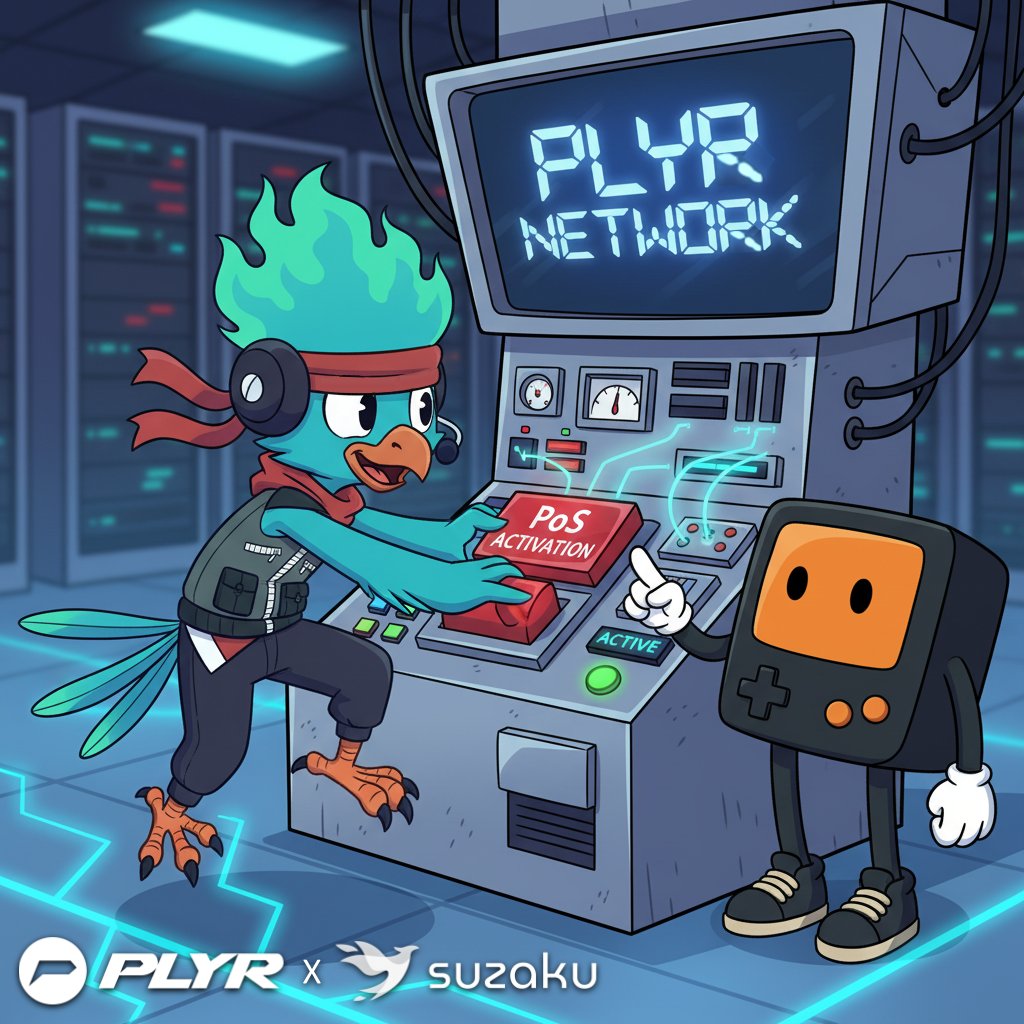
🟢 PoS Activation complete on PLYR L1
@OnPlyr has successfully integrated with the Suzaku protocol, marking the beginning of its progressive decentralization journey.
The first 2 Proof-of-Stake validators have started securing the network today!
Learn how it works 👇
English
CRAZY founder story. starts off crazy and then keeps going crazy. this founder interview series is really showing me that being a founder isn't just founding one company - that drive is in their DNA, and their success in the current company is always predated by earlier hustling.
Read Emil of @tixbase's story below!
Avalanche🔺@avax
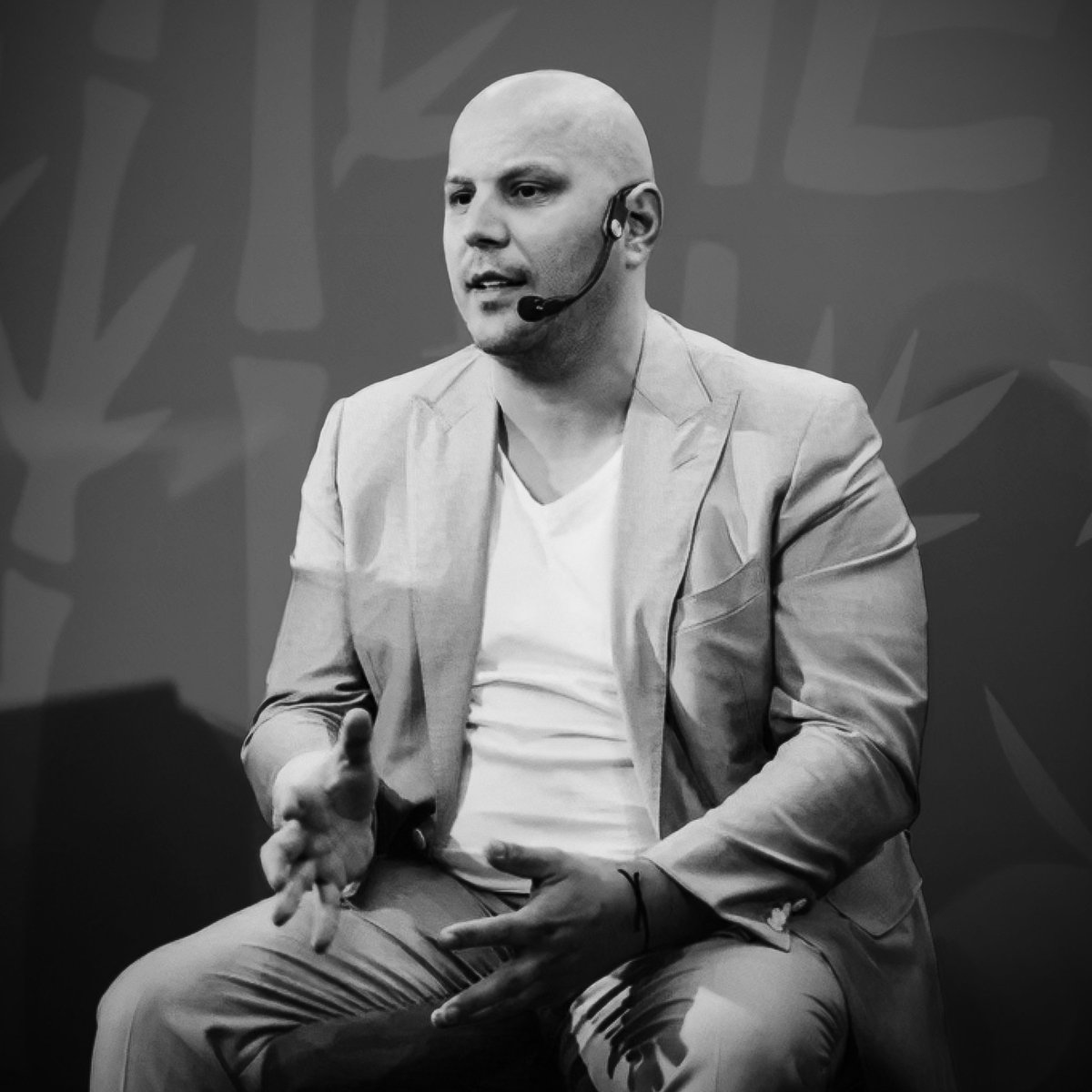
>be Emil Ljesnjanin >born in the Balkans >father works for the Red Cross, becomes a prisoner of war >family gets political asylum in the US >learn early that nothing is guaranteed and you don’t waste opportunities >lock in on Football (Soccer) >play high school and Division 1 club >train nonstop, fight for every starting spot >mindset: discipline, process, consistency >clear path toward a professional career >age 17 >trial with what’s now the New York Red Bulls >get offered a professional contract >knee explodes in the last training session >ACL, MCL, meniscus gone in one tackle >overnight, the dream disappears >forced to rebuild identity from scratch >realize you can’t control what happens >only how you respond >discover computers >fall in love with hacking >learn software piracy, graduate to hacking websites >get good enough to get in trouble >parents get scared, push you to step away >continue away: code is powerful, systems are fragile >2006–2019 >jump into real estate in Brooklyn >start as assistant property manager >use your late father’s car and a two-person crew >build A to Z Group from nothing to a 100-person team >hit ~$12M in annual volume >work with a Tel Aviv fund on big conversion projects >learn how to hire, lead, and actually run a business >Champions League, 2017 >fly out to the final >spend ~$10,000 on tickets via StubHub and Viagogo >show up at the stadium, scanners blink red >tickets are fake >stand outside one of the biggest matches in the world with no way in >realize the ticketing industry is fundamentally broken >know there must be a better way >start reading about Ethereum, smart contracts, NFTs >see NFTs as verifiable certificates tied to assets >connect the dots: fake tickets, smart contracts, NFTs >imagine every ticket living on-chain from the moment it’s created >traceable user to user, no room for fraud >call a friend: “I think I figured out a way to fix ticketing.” >decide to pivot your entire career at 37 >found TixBase >grind mode, years 1–5 >self-fund from real estate earnings >hire a Serbian dev shop, get overcharged and dragged >overspend on infra before product–market fit >watch deals collapse days before launch >stack 10–15 serious failures in 4–5 years >keep asking: do I still want this? >answer stays yes >key unlock >realize Web3 UX is way too complex for normal fans >no one wants wallets, gas, or new rails just to see a show >study Amazon’s one-click flow >decide ticketing has to feel like that, not like DeFi >build TixBase the right way >mint every ticket on-chain from day one >record the entire lifecycle, from first buyer to final scan >let users pay with credit cards, not coins >keep blockchain in the background as infrastructure >skip the vaporware “digital twins” >make every transaction actually live on-chain >stack relationships >sign with Pasos after a long courtship >push Universal Music toward the finish line after years of work >bring in a New York PE fund-of-funds with a massive LP network >look at acquiring smaller ticketing companies as the fastest way into markets >plan to migrate everything onto TixBase rails >define the mission >position TixBase as the “iPhone of ticketing” >simple on the surface, extremely powerful underneath >land as a compliance and fraud-prevention tool >expand into the $90B resale problem >build a system where artists, leagues, and fans all win >focus on a company and team that outlast you From refugee kid with a shattered soccer dream to real estate builder to founder rebuilding ticketing on trustworthy blockchain rails, Emil’s journey is inspiring. And it’s all lead to this: @TixBase modernizing ticketing, onchain, backed by @BlizzardFund. This is the story of Emil, a founder on Avalanche.
English

>be Emil Ljesnjanin
>born in the Balkans
>father works for the Red Cross, becomes a prisoner of war
>family gets political asylum in the US
>learn early that nothing is guaranteed and you don’t waste opportunities
>lock in on Football (Soccer)
>play high school and Division 1 club
>train nonstop, fight for every starting spot
>mindset: discipline, process, consistency
>clear path toward a professional career
>age 17
>trial with what’s now the New York Red Bulls
>get offered a professional contract
>knee explodes in the last training session
>ACL, MCL, meniscus gone in one tackle
>overnight, the dream disappears
>forced to rebuild identity from scratch
>realize you can’t control what happens
>only how you respond
>discover computers
>fall in love with hacking
>learn software piracy, graduate to hacking websites
>get good enough to get in trouble
>parents get scared, push you to step away
>continue away: code is powerful, systems are fragile
>2006–2019
>jump into real estate in Brooklyn
>start as assistant property manager
>use your late father’s car and a two-person crew
>build A to Z Group from nothing to a 100-person team
>hit ~$12M in annual volume
>work with a Tel Aviv fund on big conversion projects
>learn how to hire, lead, and actually run a business
>Champions League, 2017
>fly out to the final
>spend ~$10,000 on tickets via StubHub and Viagogo
>show up at the stadium, scanners blink red
>tickets are fake
>stand outside one of the biggest matches in the world with no way in
>realize the ticketing industry is fundamentally broken
>know there must be a better way
>start reading about Ethereum, smart contracts, NFTs
>see NFTs as verifiable certificates tied to assets
>connect the dots: fake tickets, smart contracts, NFTs
>imagine every ticket living on-chain from the moment it’s created
>traceable user to user, no room for fraud
>call a friend: “I think I figured out a way to fix ticketing.”
>decide to pivot your entire career at 37
>found TixBase
>grind mode, years 1–5
>self-fund from real estate earnings
>hire a Serbian dev shop, get overcharged and dragged
>overspend on infra before product–market fit
>watch deals collapse days before launch
>stack 10–15 serious failures in 4–5 years
>keep asking: do I still want this?
>answer stays yes
>key unlock
>realize Web3 UX is way too complex for normal fans
>no one wants wallets, gas, or new rails just to see a show
>study Amazon’s one-click flow
>decide ticketing has to feel like that, not like DeFi
>build TixBase the right way
>mint every ticket on-chain from day one
>record the entire lifecycle, from first buyer to final scan
>let users pay with credit cards, not coins
>keep blockchain in the background as infrastructure
>skip the vaporware “digital twins”
>make every transaction actually live on-chain
>stack relationships
>sign with Pasos after a long courtship
>push Universal Music toward the finish line after years of work
>bring in a New York PE fund-of-funds with a massive LP network
>look at acquiring smaller ticketing companies as the fastest way into markets
>plan to migrate everything onto TixBase rails
>define the mission
>position TixBase as the “iPhone of ticketing”
>simple on the surface, extremely powerful underneath
>land as a compliance and fraud-prevention tool
>expand into the $90B resale problem
>build a system where artists, leagues, and fans all win
>focus on a company and team that outlast you
From refugee kid with a shattered soccer dream to real estate builder to founder rebuilding ticketing on trustworthy blockchain rails, Emil’s journey is inspiring.
And it’s all lead to this: @TixBase modernizing ticketing, onchain, backed by @BlizzardFund.
This is the story of Emil, a founder on Avalanche.
English
Global trade is going onchain.
@blockticity and ASTM have introduced a new global trade standard to quickly verify tracking and authenticity of global supply chain, ASTM D8558.
Powered by Avalanche🧵:
English
any good that crosses the border needs to meet standards and is (hopefully) authentic. @blockticity verifies and guarantees this - powered by @avax
Avalanche🔺@avax
Global trade is going onchain. @blockticity and ASTM have introduced a new global trade standard to quickly verify tracking and authenticity of global supply chain, ASTM D8558. Powered by Avalanche🧵:
English
vera🔺 retweetledi

English
vera🔺 retweetledi

GM!
A big step forward from @ASTMIntl today. The revision to D8558 gives regulators and industry a clearer path to verify supply chain claims with real evidence at shipment scale.
Blockticity is proud to contribute to this standard and help shape how trusted digital documents move through global trade. More to share soon.

ASTM International@ASTMIntl
ASTM's digital information in the supply chain committee (F49) has revised its guide for #SupplyChain traceability, authentication, verification, validation, and oversight using emerging technologies including blockchain (D8558). go.astm.org/3KnwOTO
English
Hey founders!
We hosted Haseeb of Dragonfly for a Codebase workshop this cohort. See below for a breakdown on his tips for fundraising.
Avalanche🔺@avax
Founders, we want to see you win. And to succeed as a founder, you need to be good at money. Making it, managing it, and most importantly, asking for it. You need to be able to fundraise. You need to sell your vision to people who are looking to say no. While a yes could change the course of your business forever. Your pitch needs to be so good that people feel stupid not investing. In this post we will share highlights from @hosseeb’s crypto fundraising survival guide for founders. > Get in front of the right investors Don’t spray-and-pray every fund; focus on investors who already live in your lane (crypto, infra, RWA, etc.). Investors in your niche people will not only be more willing to invest, but also already have the connections you need to win. This can make or break your business. > The pitch starts long before the investor meeting even happens How you come in contact with potential investors can make or break your chances. Warm intros beat everything. Try and get intros from portfolio companies or co-investors. random cold emails go straight to the spam folder. If you truly have to go cold, do it via Twitter or a targeted DM and make it personal: how their writing or investing actually influenced you, not just “I saw you invested in X.” > Practice your pitch until you’re sick of it Get in front of friends, advisors, and even ChatGPT in “brutal VC” mode. Explicitly ask for criticism, not encouragement. Do this until you feel every potential scenario and criticism has been resolved. > Emphasize design and purpose Your deck should look polished. Basic design here, will immediately prove to the investors you have an eye for product. And, above all, the deck should answer, in simple language: who you are, what you’re building, how it works, and why it can become big (GTM + differentiation). > Less is more Your pitch deck should feel uncomfortably short. Think closer to a Y-Combinator seed pitch rather than a 30–40 slide brain dump. Tell a clear story and give a sense of TAM without turning it into market-size theater (especially in crypto, no one really knows). > Nail your competitor analysis Show an honest view of what existing players do well, where you’ll start worse, and the specific, narrow ways you’ll be better. Plus a read on the “graveyard” of past startups and why your approach avoids their fate. > People are investing in you, not your idea Once you’re in the room, the real product demo begins: you. The pitch is no longer about the deck, it’s about how you connect. Explain the product simply first, then offer to go deep if the investor wants to nerd out on the technicals. Treat it like a two-way interview: ask what they think about your market, your GTM, your wedge. > Your deck isn’t the pitch Don’t read your slides; the deck is a visual aid, not a teleprompter. Send it ahead so the call can be a conversation instead of a live slideshow. Avoid jargon as performance. Good founders teach instead of trying to confuse their way into sounding smart. When they’re skeptical, don’t get defensive; acknowledge their view, then lay out your theory of why this time is different. > Relax and be confident Speak a bit slower than feels natural, and remember to sound like you actually like your own startup. > Pulling a Round Together Signal demand and scarcity (busy calendar, tight allocation). But, and this is important, DON’T ever lie, especially about term sheets or commits. Be timely and explicit about timelines; don’t ghost, it makes you look disorganized. Remember that a verbal “yes” is often treated like a done deal, so if something is tentative, call it a soft yes or “pending decision by X date.” > Be choosy on who you accept money from too many tiny, low-value checks turn into a noisy cap table; optimize for a strong lead and a few real partners. In summary: focus on the prep, the deck, the conversation, and the close. Easier said than done, but these pointers from Haseeb should help. Good luck out there. And when you’re ready for more, you can find it at the Codebase Entrepreneur Academy: build.avax.network/codebase-entre…
English
vera🔺 retweetledi

I’m confident that top-tier VCs like Dragonfly, Hivemind, and SkyBridge have a far deeper view of Avalanche’s potential than retail investors like us. Their massive commitments to AVAX tokens and the broader Avalanche infrastructure aren’t blind bets—they’re the result of exhaustive due diligence on Ava Labs’ existing partnerships, tech roadmap, and real-world traction.
These firms don’t get rekt on hype. The scale of their research and their Wall Street influence means they’ve seen non-public data—enterprise pilots, subnet deployments, RWA pipelines, and institutional pipelines—that signal Avalanche as the go-to chain for tokenizing global assets and connecting capital at scale.
Their involvement isn’t just capital; it’s a catalyst. They’ll drive liquidity, listings, and adoption into the ecosystem. All we need to do is hold tight—the payoff is coming as their vision materializes.

English
vera🔺 retweetledi

Bluff Pre-Launch Access is NOW LIVE → bluff.com
Our free-to-play experience to earn Blink Points.
Use your daily $1000 balance to play games, win points, and climb the ranks.
This is your chance to get ahead before the main platform release.
Here’s how it all works 👇
English
privileged to have been a part of Codebase S4 welcome week. we are nurturing our strongest cohort yet!
@Trustware_io @ojo_network @penomoprotocol
Avalanche🔺@avax
Builders who want to change the world choose Avalanche. The newest Codebase cohort is underway, uniting three incredible dev teams eager to learn, launch, and grow the Avalanche ecosystem. Meet the teams. 👇
English
vera🔺 retweetledi
vera🔺 retweetledi

Copa América de Béisbol ticketing runs on @Tixbase’s @avax L1—scalper-free, verified, and onchain.
Blizzard Fund backs builders using Avalanche tech to make experiences better for fans and communities worldwide.
This is 🔺doption.
Avalanche🔺@avax
Copa América de Béisbol is one of the biggest baseball events in the Americas. This year, ticketing will run entirely on @tixbase’s Avalanche L1. This is 🔺doption:
English

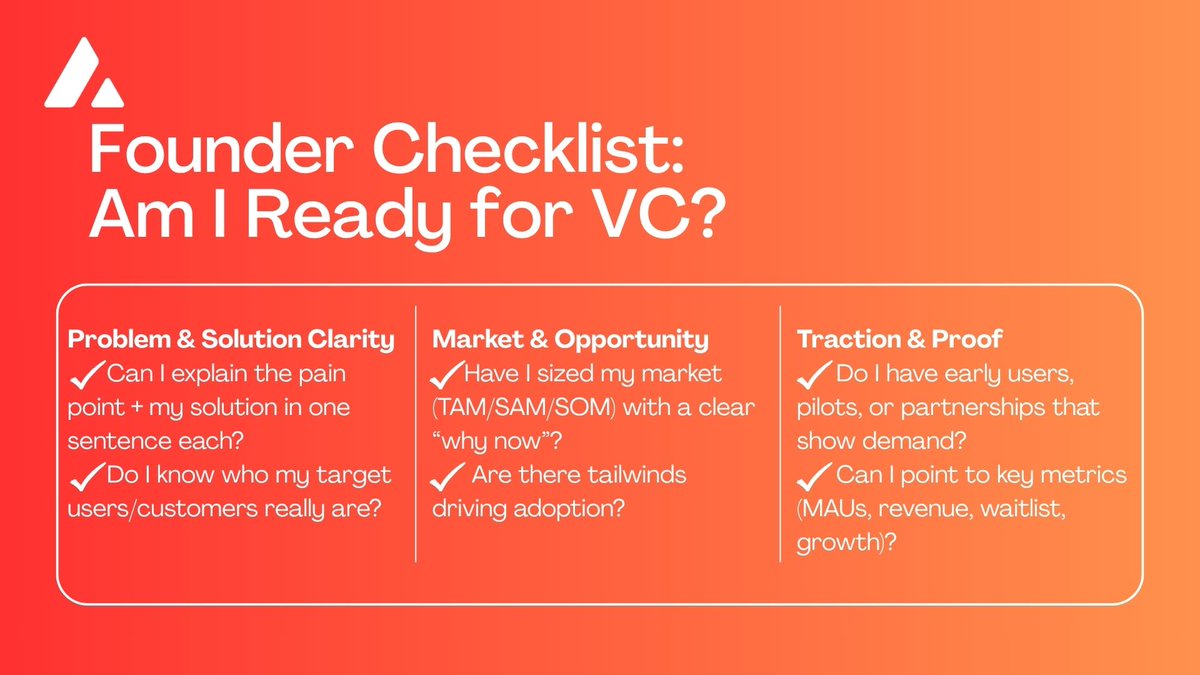
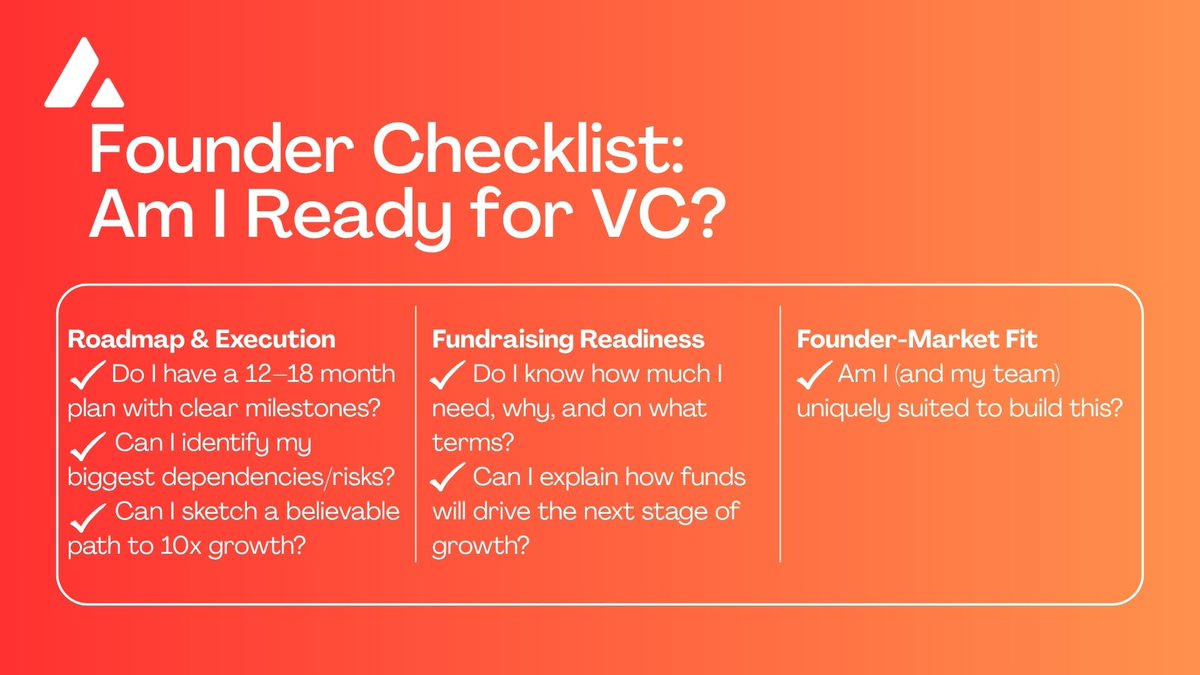
Founders—thinking about raising VC? 💸
Before you pitch, make sure you’re actually ready.
We put together a quick checklist to see if you’re fundraise-ready. Check it out below 👇
English
vera🔺 retweetledi

Been approached by many DATs to get involved.
AVAT is the first one that I'm actively participating in.
For a long time I've thought that Avalanche nailed many technical decisions and also hired one of the strongest teams in crypto.
Then I heard the Avalanche Treasury Co landed the legend @gbartsmith as CEO and added folks like @hosseeb + @StaniKulechov + @el33th4xor + @HadickM + @JohnNahas84
No brainer to get involved.
Day one, exciting times ahead 🔺
Luigi D'Onorio DeMeo@luigidemeo
Excited to welcome @avat_co to the Avalanche ecosystem with the announcement of their $671m transaction, led by @dragonfly_xyz. As per the PR, AVAT, and Avalanche focused DAT has a stated capital raising strategy to own more than $1b worth of AVAX. Leading the charge as CEO is @gbartsmith, who left his role as the head of crypto quant trading for Susquehanna. Bart brings with him a fantastic team including Laine Littman (fmr Hidden Lane) and @0xBudd. Joining the AVAT advisory board are @hosseeb, @JasonYanowitz, @el33th4xor and @StaniKulechov. In addition, the public company board includes @HadickM and @JohnNahas84.
English