Matthew

1.7K posts

Matthew banner
Matthew

Matthew

@wagerfield

London, England Katılım Eylül 2010
114 Takip Edilen4K Takipçiler
Matthew
Matthew@wagerfield·
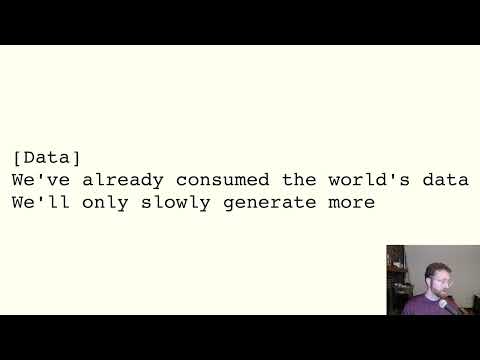
Great video from @philthistweet on his thoughts 💭 and predictions 🔮 on AI: 1. Subsidies (very few will pay the true cost) 2. Diminishing returns (model size, exhausted data harvesting, local optimums on thinking) 3. Predictions (bubble go pop 🫧💢) youtube.com/watch?v=CfpxWu…
YouTube video
YouTube
English
0
0
1
97
Matthew
Matthew@wagerfield·
@TukiFromKL There is a chasm between an idea and seeing it thru to fruition. I would love to see the "idea file" for Notion or Salesforce. "Make a CRM. Make no mistakes💡". The level of fidelity required to capture the breadth and depth of these "ideas" would be insurmountable.
English
1
0
0
423
Tuki
Tuki@TukiFromKL·
🚨 do you understand what andrej karpathy just quietly published.. karpathy.. founding team at openai, former head of AI at tesla.. just said something that breaks the entire software industry in one paragraph.. in the LLM agent era.. there's less need to share specific code or apps.. instead you share the IDEA.. and the other person's agent customises and builds it for their specific needs.. let me show you why this is the most important thing posted online today.. the entire software industry is built on one assumption: building software is hard.. that's why you pay $49/month for notion.. $99/month for salesforce.. $299/month for whatever SaaS is sitting in your company's tab right now.. the scarcity of building = the value of the product.. it's been that way since 1995.. karpathy invented "vibe coding" in 2025.. the idea that you stop writing code and start describing what you want.. tools like cursor, claude code, and openclaw turned that into reality.. you talk to your computer.. it builds.. it ships.. it runs your workflows while you sleep.. and now he's saying even THAT is the old way.. now you don't share the app.. you share the IDEA FILE.. a document describing what you want to build and why.. and every person's AI agent reads it.. builds their own custom version.. tuned to their exact needs.. for free.. in minutes.. the scarcity of building just hit zero. every SaaS company built for "normal users" is now competing against a blank text file and an agent with 4 hours to spare.. the winners of the next decade won't be the best builders.. they'll be the best thinkers.. the people who know what to build, why it matters, and how it should feel.. that's how paradigm shifts actually arrive.
Andrej Karpathy@karpathy

LLM Knowledge Bases Something I'm finding very useful recently: using LLMs to build personal knowledge bases for various topics of research interest. In this way, a large fraction of my recent token throughput is going less into manipulating code, and more into manipulating knowledge (stored as markdown and images). The latest LLMs are quite good at it. So: Data ingest: I index source documents (articles, papers, repos, datasets, images, etc.) into a raw/ directory, then I use an LLM to incrementally "compile" a wiki, which is just a collection of .md files in a directory structure. The wiki includes summaries of all the data in raw/, backlinks, and then it categorizes data into concepts, writes articles for them, and links them all. To convert web articles into .md files I like to use the Obsidian Web Clipper extension, and then I also use a hotkey to download all the related images to local so that my LLM can easily reference them. IDE: I use Obsidian as the IDE "frontend" where I can view the raw data, the the compiled wiki, and the derived visualizations. Important to note that the LLM writes and maintains all of the data of the wiki, I rarely touch it directly. I've played with a few Obsidian plugins to render and view data in other ways (e.g. Marp for slides). Q&A: Where things get interesting is that once your wiki is big enough (e.g. mine on some recent research is ~100 articles and ~400K words), you can ask your LLM agent all kinds of complex questions against the wiki, and it will go off, research the answers, etc. I thought I had to reach for fancy RAG, but the LLM has been pretty good about auto-maintaining index files and brief summaries of all the documents and it reads all the important related data fairly easily at this ~small scale. Output: Instead of getting answers in text/terminal, I like to have it render markdown files for me, or slide shows (Marp format), or matplotlib images, all of which I then view again in Obsidian. You can imagine many other visual output formats depending on the query. Often, I end up "filing" the outputs back into the wiki to enhance it for further queries. So my own explorations and queries always "add up" in the knowledge base. Linting: I've run some LLM "health checks" over the wiki to e.g. find inconsistent data, impute missing data (with web searchers), find interesting connections for new article candidates, etc., to incrementally clean up the wiki and enhance its overall data integrity. The LLMs are quite good at suggesting further questions to ask and look into. Extra tools: I find myself developing additional tools to process the data, e.g. I vibe coded a small and naive search engine over the wiki, which I both use directly (in a web ui), but more often I want to hand it off to an LLM via CLI as a tool for larger queries. Further explorations: As the repo grows, the natural desire is to also think about synthetic data generation + finetuning to have your LLM "know" the data in its weights instead of just context windows. TLDR: raw data from a given number of sources is collected, then compiled by an LLM into a .md wiki, then operated on by various CLIs by the LLM to do Q&A and to incrementally enhance the wiki, and all of it viewable in Obsidian. You rarely ever write or edit the wiki manually, it's the domain of the LLM. I think there is room here for an incredible new product instead of a hacky collection of scripts.

English
93
206
1.9K
531.3K
Matthew
Matthew@wagerfield·
"Thoughts on slowing the f**k down" by @badlogicgames is spot on! 🎯👏 There is such a disparity between what is being marketed by AI grifters and the reality of using this technology. Currently there is no substitution for taste and experience. mariozechner.at/posts/2026-03-…
English
0
0
3
36
Justin Windle
Justin Windle@soulwire·
Just over a year ago I started experimenting with pulling raw pen data off my reMarkable tablet. It stores every stroke as binary vector data with per-point pressure, speed, direction. Built a small pipeline to parse and clean it into JSON and a web renderer to animate doodles
English
23
41
848
35.7K
Matthew
Matthew@wagerfield·
@soulwire Looks butterly crumpets mate! 
English
0
0
0
14
Justin Windle
Justin Windle@soulwire·
A few simple things combined: Canvas2D drawings → jump flood SDF → velocity map for GPGPU particles. the SDF generation is near realtime so it doubles as a typing effect, which is quite fun
English
2
1
14
2.7K
Matthew retweetledi
Justin Windle
Justin Windle@soulwire·
A bit of code archaeology today. Unearthed an 11.5-year-old codebase @wagerfield and I built for a WebSocket space multiplayer back in 2015. Cleaned the dust off the thrusters and she’s almost flying again.
English
0
1
13
2.2K
Matthew retweetledi
Dane Knecht 🦭
Dane Knecht 🦭@dok2001·
It’s Next.js Liberation Day. The #1 request we kept hearing: help us run Next fast and secure, without the lock-in and the costs. So we did it. We kept the amazing DX of @nextjs, without the bespoke tooling, built on @vite. We’re working with other providers to make deployment a first-class experience everywhere. Next.js belongs to everyone. blog.cloudflare.com/vinext/
English
249
403
3.8K
1.7M
Matthew retweetledi
Andrej Karpathy
Andrej Karpathy@karpathy·
A few random notes from claude coding quite a bit last few weeks. Coding workflow. Given the latest lift in LLM coding capability, like many others I rapidly went from about 80% manual+autocomplete coding and 20% agents in November to 80% agent coding and 20% edits+touchups in December. i.e. I really am mostly programming in English now, a bit sheepishly telling the LLM what code to write... in words. It hurts the ego a bit but the power to operate over software in large "code actions" is just too net useful, especially once you adapt to it, configure it, learn to use it, and wrap your head around what it can and cannot do. This is easily the biggest change to my basic coding workflow in ~2 decades of programming and it happened over the course of a few weeks. I'd expect something similar to be happening to well into double digit percent of engineers out there, while the awareness of it in the general population feels well into low single digit percent. IDEs/agent swarms/fallability. Both the "no need for IDE anymore" hype and the "agent swarm" hype is imo too much for right now. The models definitely still make mistakes and if you have any code you actually care about I would watch them like a hawk, in a nice large IDE on the side. The mistakes have changed a lot - they are not simple syntax errors anymore, they are subtle conceptual errors that a slightly sloppy, hasty junior dev might do. The most common category is that the models make wrong assumptions on your behalf and just run along with them without checking. They also don't manage their confusion, they don't seek clarifications, they don't surface inconsistencies, they don't present tradeoffs, they don't push back when they should, and they are still a little too sycophantic. Things get better in plan mode, but there is some need for a lightweight inline plan mode. They also really like to overcomplicate code and APIs, they bloat abstractions, they don't clean up dead code after themselves, etc. They will implement an inefficient, bloated, brittle construction over 1000 lines of code and it's up to you to be like "umm couldn't you just do this instead?" and they will be like "of course!" and immediately cut it down to 100 lines. They still sometimes change/remove comments and code they don't like or don't sufficiently understand as side effects, even if it is orthogonal to the task at hand. All of this happens despite a few simple attempts to fix it via instructions in CLAUDE . md. Despite all these issues, it is still a net huge improvement and it's very difficult to imagine going back to manual coding. TLDR everyone has their developing flow, my current is a small few CC sessions on the left in ghostty windows/tabs and an IDE on the right for viewing the code + manual edits. Tenacity. It's so interesting to watch an agent relentlessly work at something. They never get tired, they never get demoralized, they just keep going and trying things where a person would have given up long ago to fight another day. It's a "feel the AGI" moment to watch it struggle with something for a long time just to come out victorious 30 minutes later. You realize that stamina is a core bottleneck to work and that with LLMs in hand it has been dramatically increased. Speedups. It's not clear how to measure the "speedup" of LLM assistance. Certainly I feel net way faster at what I was going to do, but the main effect is that I do a lot more than I was going to do because 1) I can code up all kinds of things that just wouldn't have been worth coding before and 2) I can approach code that I couldn't work on before because of knowledge/skill issue. So certainly it's speedup, but it's possibly a lot more an expansion. Leverage. LLMs are exceptionally good at looping until they meet specific goals and this is where most of the "feel the AGI" magic is to be found. Don't tell it what to do, give it success criteria and watch it go. Get it to write tests first and then pass them. Put it in the loop with a browser MCP. Write the naive algorithm that is very likely correct first, then ask it to optimize it while preserving correctness. Change your approach from imperative to declarative to get the agents looping longer and gain leverage. Fun. I didn't anticipate that with agents programming feels *more* fun because a lot of the fill in the blanks drudgery is removed and what remains is the creative part. I also feel less blocked/stuck (which is not fun) and I experience a lot more courage because there's almost always a way to work hand in hand with it to make some positive progress. I have seen the opposite sentiment from other people too; LLM coding will split up engineers based on those who primarily liked coding and those who primarily liked building. Atrophy. I've already noticed that I am slowly starting to atrophy my ability to write code manually. Generation (writing code) and discrimination (reading code) are different capabilities in the brain. Largely due to all the little mostly syntactic details involved in programming, you can review code just fine even if you struggle to write it. Slopacolypse. I am bracing for 2026 as the year of the slopacolypse across all of github, substack, arxiv, X/instagram, and generally all digital media. We're also going to see a lot more AI hype productivity theater (is that even possible?), on the side of actual, real improvements. Questions. A few of the questions on my mind: - What happens to the "10X engineer" - the ratio of productivity between the mean and the max engineer? It's quite possible that this grows *a lot*. - Armed with LLMs, do generalists increasingly outperform specialists? LLMs are a lot better at fill in the blanks (the micro) than grand strategy (the macro). - What does LLM coding feel like in the future? Is it like playing StarCraft? Playing Factorio? Playing music? - How much of society is bottlenecked by digital knowledge work? TLDR Where does this leave us? LLM agent capabilities (Claude & Codex especially) have crossed some kind of threshold of coherence around December 2025 and caused a phase shift in software engineering and closely related. The intelligence part suddenly feels quite a bit ahead of all the rest of it - integrations (tools, knowledge), the necessity for new organizational workflows, processes, diffusion more generally. 2026 is going to be a high energy year as the industry metabolizes the new capability.
English
1.6K
5.4K
39.4K
7.7M
Matthew retweetledi
God of Prompt
God of Prompt@godofprompt·
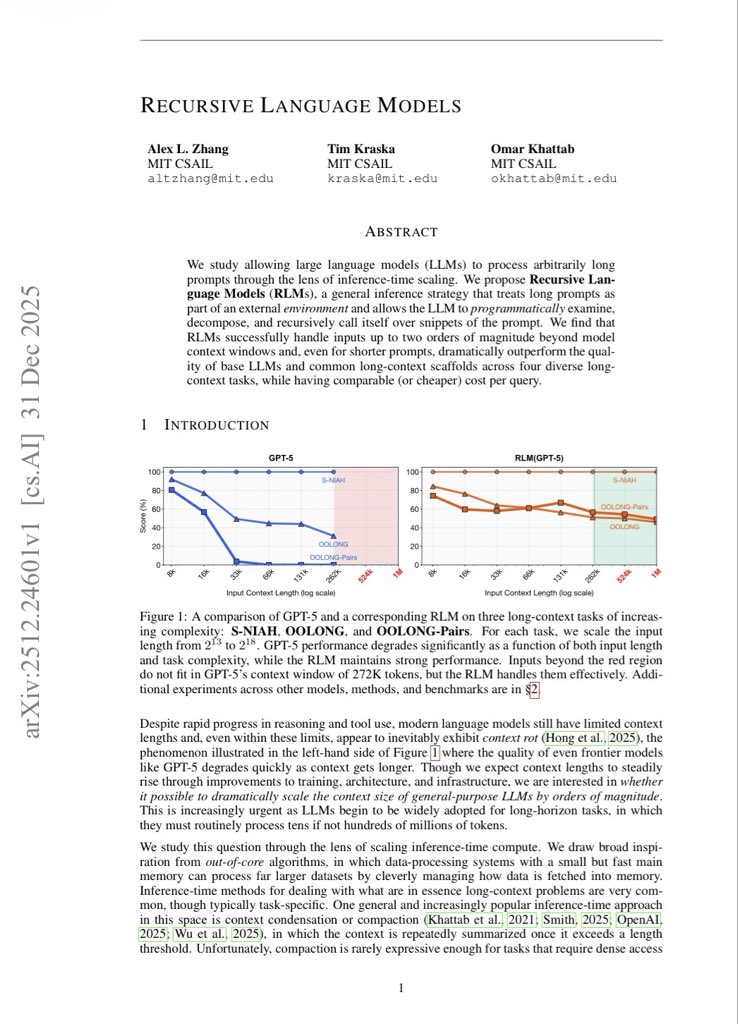
R.I.P. basic prompting. MIT just dropped a technique that makes ChatGPT reason like a team of experts instead of one overconfident intern. It’s called “Recursive Meta-Cognition” and it outperforms standard prompts by 110%. Here’s the prompt (and why this changes everything) 👇
God of Prompt tweet media
English
384
2.5K
20.9K
2.7M
Matthew
Matthew@wagerfield·
@kitlangton @EffectTS_ This is absolutely incredible @kitlangton! 👏 I have been reading the Effect docs and watching YT vid after YT vid on Effect for weeks now. Just today stumbled upon your Thunk video and everything just clicked! I was also ROFLing throughout 🤣 Since then I've been stalking you.
English
1
0
2
190
Matthew retweetledi
Kit Langton
Kit Langton@kitlangton·
I had some fun with @EffectTS_ today. I made some visual effects, if you will, written in Effect + React.
English
59
123
2.2K
246.2K
Matthew
Matthew@wagerfield·
@bcherny @_catwu @claude_code FWIW I used Claude Code's planning mode to achieve this E2E. After iterating on the plan (using Claude Code's planning mode) ...all I did was review the code, do a few minor edits and open the PR on schemastore's repo using the PR desc that CC provided 📝 github.com/SchemaStore/sc…
English
0
0
1
61
Matthew
Matthew@wagerfield·
@bcherny @_catwu THANK YOU for @claude_code – hands down the best Eng. tool I have used — and I have tried them all! Couple of QOL feature requests: 1. Host a JSON schema (you can use mine github.com/wagerfield/dot…) 2. Support comments in the settings.json(c) file
English
0
0
0
54
Matthew
Matthew@wagerfield·
@bcherny @_catwu THANK YOU for @claude_code – hands down the best Eng. tool I have used — and I have tried them all! Couple of QOL feature requests: 1. Host a JSON schema (you can use mine github.com/wagerfield/dot…) 2. Support comments in the settings.json(c) file
English
0
0
0
46
Matthew
Matthew@wagerfield·
@claudioguglieri @opalelectronics Just took the plunge and ordered myself the Opal C1...excited to take it for a spin when it arrives! ☺️ Hope you're doing well old friend! 🫶
English
0
0
0
71
Matthew
Matthew@wagerfield·
@dennyshess Man these are soooooo nice! I want them all! $40 might be coming your way very soon :D
English
1
0
1
0
Dennys Hess
Dennys Hess@dennyshess·
I did it. It's still November and I launched my wallpapers finally (well at least part of them): dhess.gumroad.com
Dennys Hess tweet media
English
3
1
36
0
Matthew retweetledi
Jai Sandhu
Jai Sandhu@jai_type·
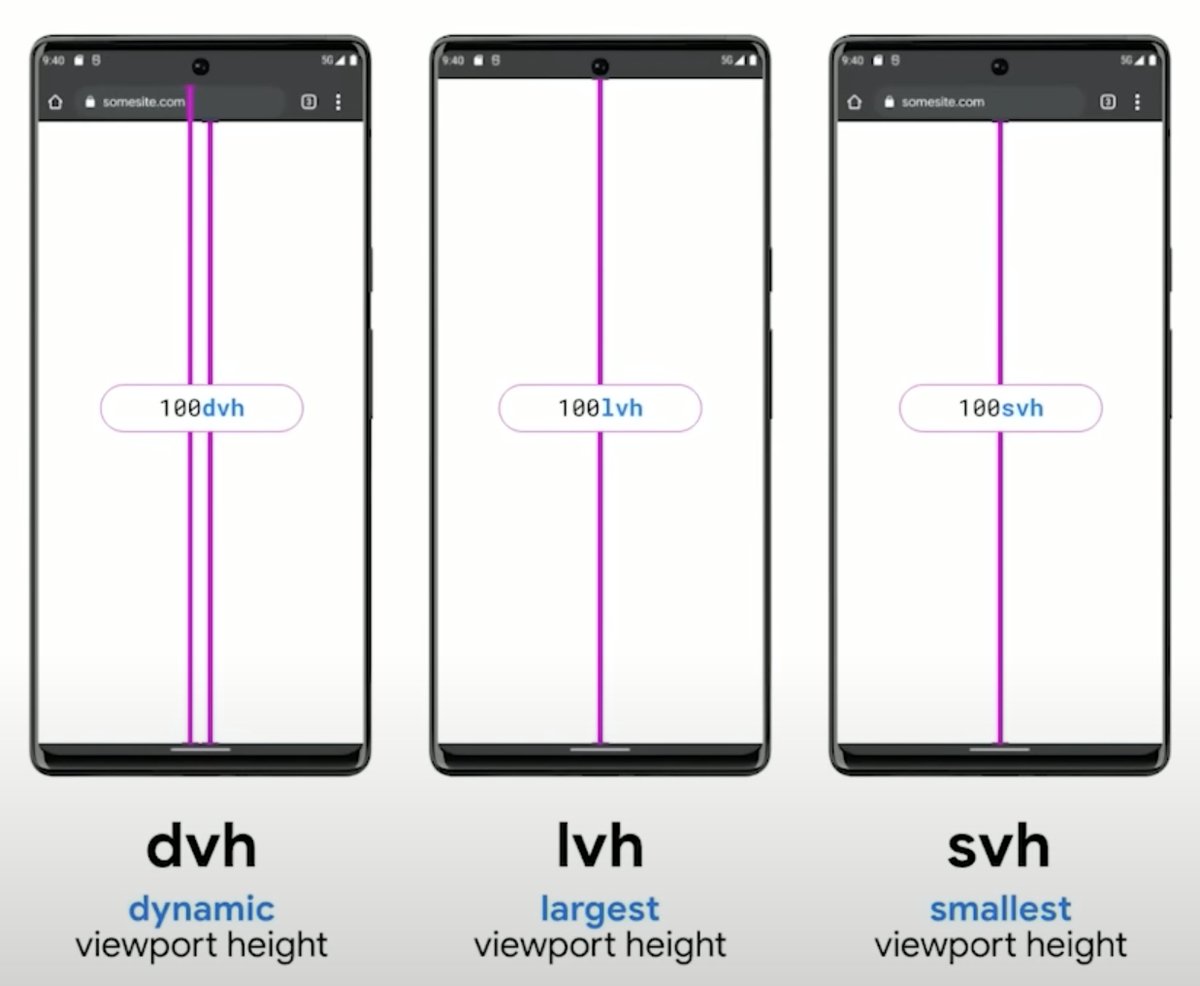
You could do 100 viewport height but also there's now dvh, lvh and svh
Jai Sandhu tweet media
English
1
4
40
0