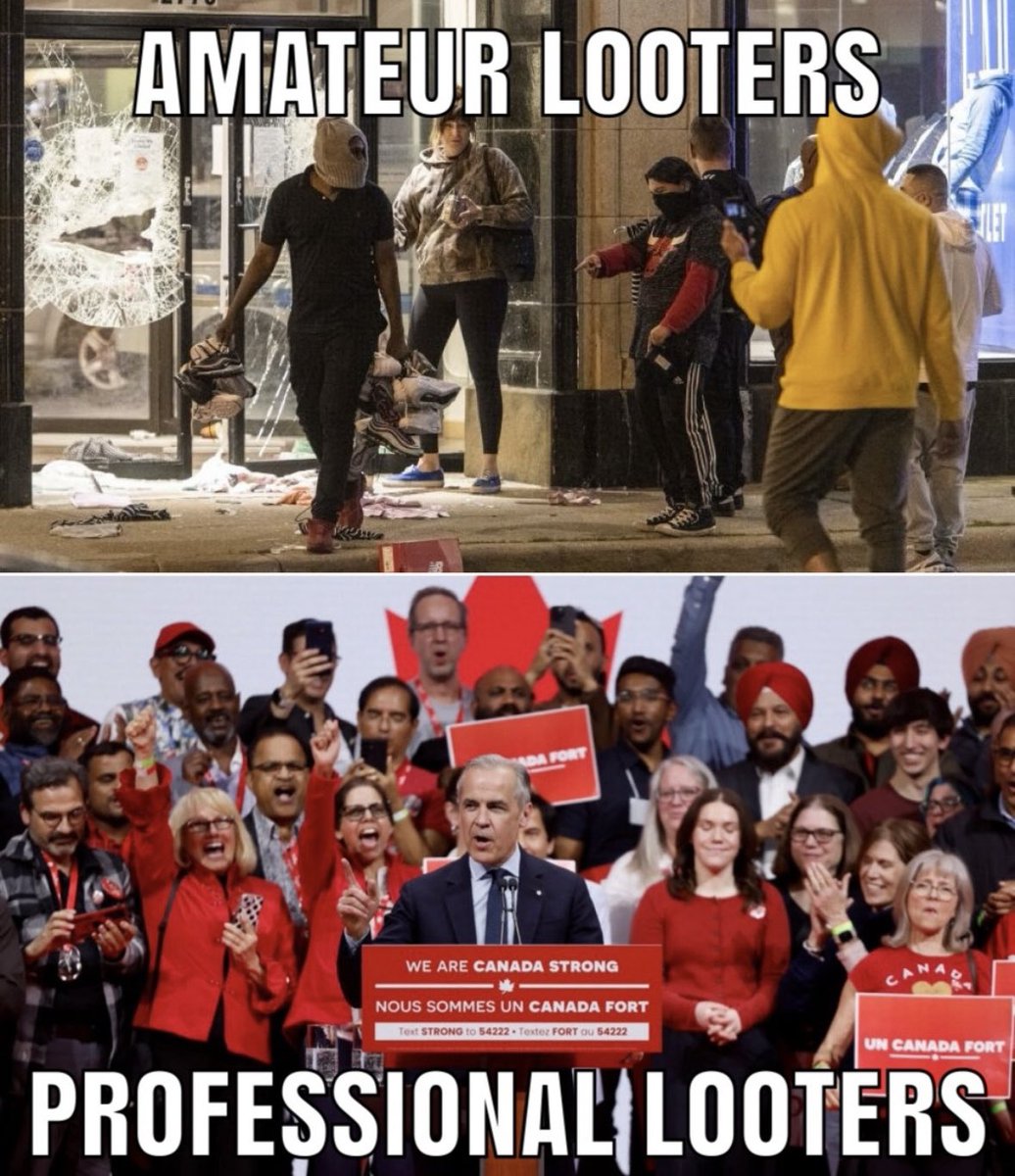
@TheManagersBox @MarcNixon24 Nothing to argue. To me you are an enemy
English
Pete Montsion
1.9K posts


The 1971 Canadian $10 bill will always remain the GOAT 🐐





Please be prepared for CLASS ACTION LAWSUIT coming un early next year as we mobilize 500,000 Canadians who were held hostage by AC/CUPE and kids summer vacations DESTROYED 😡 — Consumer Protection failure — Regulatory Enforcement failure — Accountability failure Warning: Please settle all claims prior Oct FY25. @MarkJCarney @PattyHajdu @melaniejoly @SimaAcan


For the record. No More Free Ride for Canada The pause of the Permanent Joint Board on Defence is not just a bureaucratic squabble; it is Washington’s opening move in a larger strategic game is to force Canada out of its free‑rider equilibrium. For 86 years, the board has been the institutional expression of Canada’s privileged status under the American security umbrella, a quiet assurance that Ottawa would always have a seat at the table when North America’s defence was planned. Putting it on ice is how the United States turns that privilege into leverage. The strategic game is simple. The United States wants Canada to undergo a structural adjustment that Canadian politics has spent decades avoiding: higher, sustained defence spending; faster delivery of real capabilities; and a serious industrial base anchored in energy and critical minerals. By pausing the PJBD rather than gutting NORAD or daily operational cooperation, Washington creates a reversible but highly visible penalty. The message is: the shield stays, for now, but the status, influence, and symbolism that Canadian elites prize are conditional on Ottawa finally behaving like a hard power rather than a moralizing stakeholder. Mark Carney has, belatedly, read this room. He knows a world of Iranian missile swarms, Russian attrition wars, and Chinese naval expansion will not indulge a G7 country that treats 2 percent of GDP on defence as heroic while treating its vast resource endowment as something to be constrained rather than exploited. The problem is that most of Canada’s political class, and the majority of its public, have not caught up. They still act as if the post WWII rules based era lives coupled with geography, good intentions, and ESG‑branded virtue restraint on resource development are a strategy that is sustainable. In that context, the PJBD pause is best understood as a forcing mechanism. It is designed to make clear that Canada must choose: either adapt, by rapidly ramping up defence spending, rapidly developing and processing its natural resources as strategic assets, and embedding itself more deeply in U.S. planning and production, or accept a future as a protected but marginal player, lecturing from the sidelines while others set the terms. The strategic game is to end Canada’s era of cost‑free virtue and make hard power, not slogans, the price of continued privilege. No one should be surprised.