changethis

263 posts

changethis

changethis

@xcanceluser

Physician based in the US. Mostly lurk and occasionally shitpost about econ/🌐politics

Katılım Ekim 2021
97 Takip Edilen5 Takipçiler
changethis retweetledi
Sam
Sam@Discoplomacy·
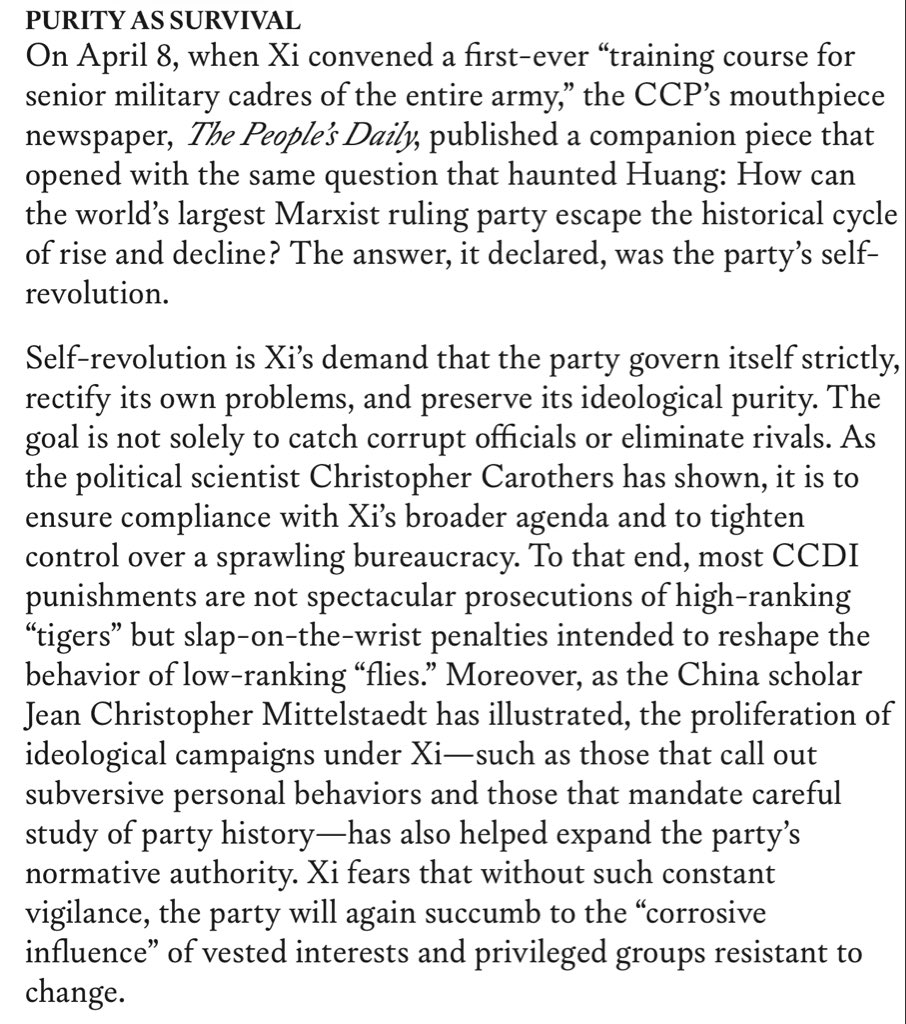
“A 2009 U.S. embassy cable based on a conversation with a “former close friend” described Xi as personally disgusted by the self-dealing and money worship he had witnessed among his CCP colleagues.” V good essay from @neilthomas123 and @shuizaiping2.
Sam tweet media
Neil Thomas 牛犇@neilthomas123

Why is Xi Jinping purging so many people? The standard explanation is simple: power. He is crushing rivals to stay in office. That's not wrong but it's incomplete. Xi is trying to help the CCP rule forever. Delighted to debut in @ForeignAffairs (w/@shuizaiping2) 1/ Short 🧵

English
0
5
11
1.7K
changethis
changethis@xcanceluser·
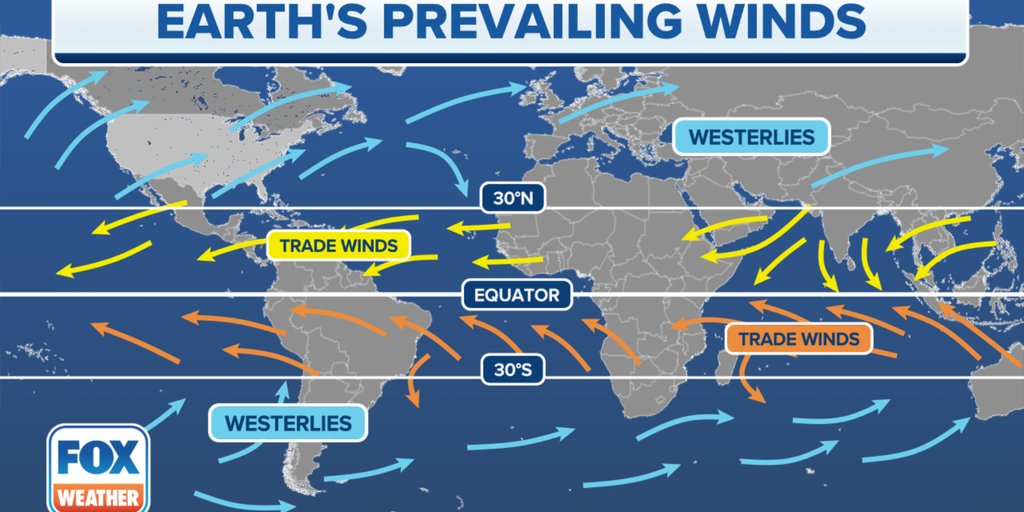
I'm referring to the constant prevailing winds (westerlies) at Australia's latitude, which blows predominantly in eastward direction. Australia experiences these winds from the southern Indian ocean, and due to the lack of tall mountain ranges, blow across the continent. And as cold air carries less moisture, Australia consequently receives less rainfall from these winds. en.wikipedia.org/wiki/Prevailin…
changethis tweet media
English
0
0
0
6
Industry Super Fund Franking Credits
@xcanceluser @morris_que14 "the frigid (and consequently dry) air that blows from the south Indian ocean" Why do you think the wind only blows from one direction? It doesn't. The commonest wind on the east coast blows from the east, the warm ocean side. Your climatological knowledge of Australia lacks.
English
1
0
0
11
Morrisan15
Morrisan15@morris_que14·
I dunno. The fact the English initially settled Australia as a penal colony probably meant they didn’t see much value to the land at least at the start. Australia only started to become wealthy during the mid century gold rush.
Foxford Comics@FoxfordComics

Always hilarious to me that China and India didn't even know this massive continent in their backyard. And then some English dude from the other side of the world just came along and yoinked it.

English
17
6
121
6K
changethis
changethis@xcanceluser·
A story in 2 parts:
changethis tweet media
English
0
0
0
22
Arya Yadeghaar (Backup)
Arya Yadeghaar (Backup)@AryJeayBackup·
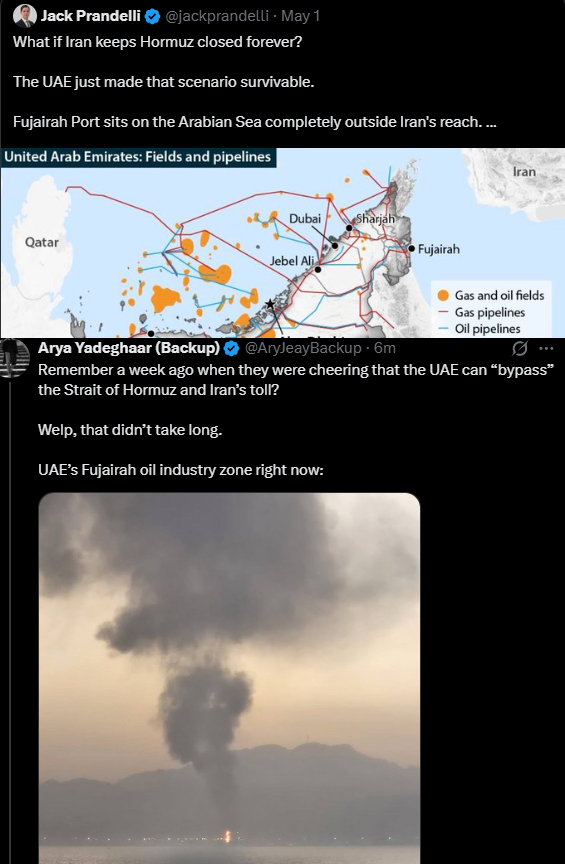
Remember a week ago when they were cheering that the UAE can “bypass” the Strait of Hormuz and Iran’s toll? Welp, that didn’t take long. UAE’s Fujairah oil industry zone right now:
Arya Yadeghaar (Backup) tweet media
English
42
540
2.3K
39.6K
changethis
changethis@xcanceluser·
@Scholars_Stage It's because Chinese are spiritually the Americans of Asia and therefore have the same cultural pathos
English
0
0
1
178
changethis
changethis@xcanceluser·
@morris_que14 Looks better than Taipei/Taichung imo. I don't know why, but Taiwanese apartment blocks often have this wet dilapidated exterior look.
English
0
0
0
33
Blue Bear
Blue Bear@Bluebearmonkey·
@henrysgao Is it in the US’s “long-term best interest” to alienate its most important supplier? Deficit economies with a deficient industrial base do not have leverage.
English
1
1
63
1.4K
changethis
changethis@xcanceluser·
@wojtek_jk72mtk If black clover is a black hole then Claymore is the Virgo superfuckingcluster
English
0
0
1
21
changethis
changethis@xcanceluser·
@bronzeageclerk No one's really kanging here in this particular instance tho. Colombus's ships just happened to be really tiny even compared to European galleons. And this model is in some museum/mall in the UAE.
English
1
0
1
43
changethis
changethis@xcanceluser·
@HQuarterma43504 @C137ick @DivaJain2 The issue here is not tribe or caste but infrastructure and access to reliable electricity. You can't build a manufacturing sector without these critical components. India is far ahead in those two aspects.
English
0
0
0
20
Diva Jain
Diva Jain@DivaJain2·
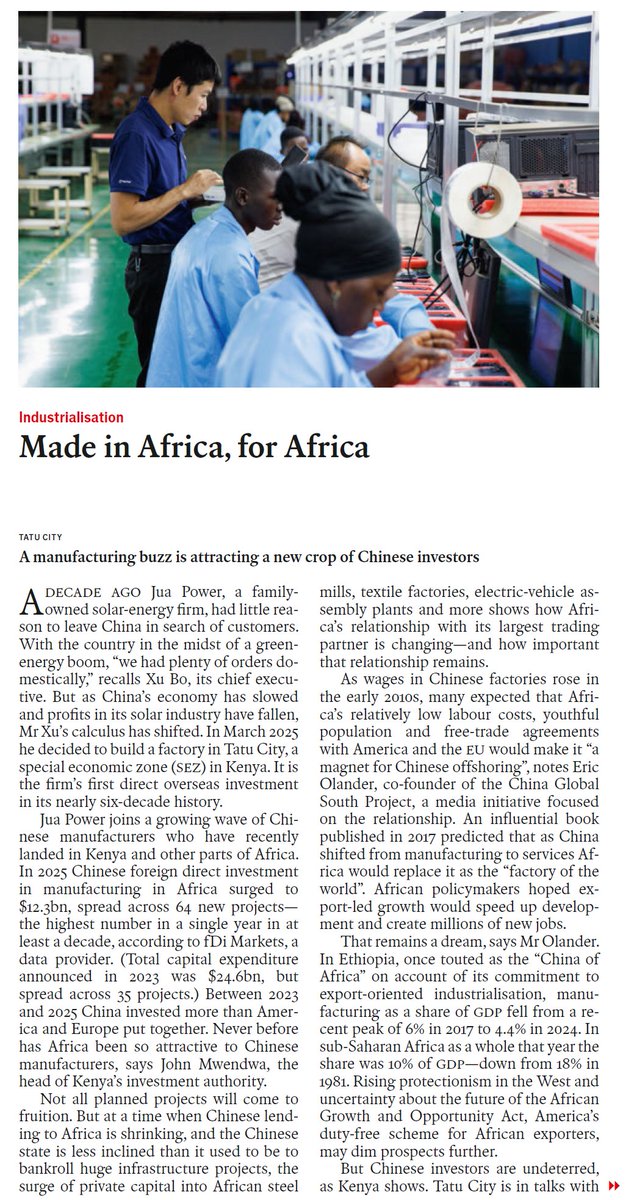
If India does not get its act together, Africa will eat up whatever labour intensive manufacturing Vietnam has left on the table and we will keep looking with our mouths open as we have been doing for the last 30 years.
Diva Jain tweet mediaDiva Jain tweet media
English
40
233
1K
36.8K
changethis
changethis@xcanceluser·
This entire exchange is just inane because it relies on both Noah's (and the general public's) assumption that the ships in Columbus's fleet were standard size galleons when Columbus, who was quite cash strapped, used the much smaller carrack and caravels in his fleet. Columbus's ships would have appeared even puny compared to the ships of line used by European naval powers of his day.
Noah Smith 🐇🇺🇸🇺🇦🇹🇼@Noahpinion

Amused by the desperate, earnest intensity of this cope. Of course Zheng He was real. His ships were normal size, not 450 feet or whatever. But some people just NEED that giant ship fantasy to be real.

English
0
0
0
108
changethis
changethis@xcanceluser·
Except that Columbus did not use galleons, but instead the much smaller carrack and caravels in his fleet. The carrack/caravels measured 50-60 ft, whereas a Ming treasure ship measured 166 ft, so the model does look to be accurate. Columbus's ships would have looked puny next to a Spanish galleon or Venetian galleass.
English
2
0
0
109
JSONmaxxing
JSONmaxxing@JSONmaxxing·
@xcanceluser @Noahpinion the model portrayed in the photo that Noah was responding to is clearly meant to be ~450 ft (more than 4x as long as a galleon), which is also the figure that is still taught in every Chinese textbook, and which is a completely fictional number "no one" x.com/JSONmaxxing/st…
JSONmaxxing@JSONmaxxing

1. the original, authentic version of 瀛涯勝覽 does not mention the dimensions of the ship. The copy which added the "450 ft" (44 zhang) description was the 澹生堂刻本, which was produced in the 1580s-1620s. Whether it is earlier than the novel is debatable, but in either case, it is clear that the "450 ft" characterization is a late-16th century invention, created nearly 200 years after the original voyage. There is no intermediate work that supports this description. 2. The 5000 liao record is consistent with the Western 200 ft (61 m) estimate, not the 450 ft (137 m) claim which is the fantasy that is often taught in Chinese textbooks This is very simple math. "liao" is a unit of volume describing the cargo volume. The cargo volume is proportional to the displacement of the ship. Thus, just like the displacement, a ship's liao is proportional to the *cube* of the length of a ship Let x be the liao capacity of the ship Let y be the length in meters x = k(y^3) where k is a constant We know that a Song-era Quanzhou trading ship excavated was measured at 34.6 meters and recorded at 1000 liao Hence we can arrive at an estimate of k: 1000 = k(34.6^3) k ≈ 0.024 If a treasure ship is 450 ft (137 m), x ≈ 0.024(137^3) ≈ 61712 liao If a treasure ship is 200 ft (61 m) x ≈ 0.024(61^3) ≈ 5448 liao Hence, the "5000 liao" description actually implies a ship slightly smaller than the Western historical consensus, a "200 ft" ship. Meanwhile, the "450 ft" ship would imply a cargo volume that is more than 12 times larger than the recorded "5000 liao".

English
1
0
4
184
changethis
changethis@xcanceluser·
The model does look accurate, because again, Columbus did not use galleons but smaller carrack and caravels, the largest of which (Santa Maria) was ~60 ft, so a Ming treasure ship (166 ft) would have looked absolutely massive compared to any ship in Columbus's fleet, but not necessarily large compared to a ship of the line galleon in the contemporary Spanish or Venetian navy.
English
2
0
0
357
changethis retweetledi
Petruchio
Petruchio@petruch10·
A lot of the responses to this image have used it to argue that China had the technology to explore the world, chose not to, and thereby missed the great age of European expansion through cultural sclerosis or bureaucratic timidity. The argument has the comparative outcome right, but the structural picture it implies is wrong, and the actual story is more interesting than Twitter's little morality play would suggest. Zheng He was a Muslim eunuch admiral of the Yongle Emperor of the Ming dynasty, who between 1405 and 1433 (the original poster say "14th century", which is wrong) led seven enormous diplomatic-tributary expeditions across the Indian Ocean to Southeast Asia, India, Arabia, and the East African coast. The voyages involved fleets of over 250 ships and 27,000 personnel, with the largest treasure ships running probably 200 to 250 feet long, several times larger than anything contemporary Europe was building. The purpose wasn't commercial. The voyages were prestige projects designed to enroll foreign rulers in the Ming tribute system, with the Chinese state distributing more wealth in gifts than it received back. They projected the Yongle Emperor's status as the cosmic center of a world order that extended to the African coast, and they were one element in his broader program of grand imperial assertion that included the construction of Beijing as the new capital and the campaigns against the Mongols. After Zheng He's death on his seventh voyage, the program was discontinued. The largest treasure ships were broken up, the shipyards were closed, and the technical knowledge of building vessels at that scale was lost within a generation. The standard explanation for this is that Confucian officials, suspicious of foreign contact and hostile to the eunuchs running the program, persuaded the emperor to abandon it. The actual reasoning, though, was less ideological. The voyages cost enormous sums and did not produce an economic return commensurate with their cost. The empire's strategic threat lay overland on the Mongolian steppe, where naval power was useless, and the post-Yongle state was already running deficits the agricultural tax base could not sustain. The bureaucracy that argued against the voyages was making a budgetary case rather than a cultural one. The Tumu Crisis of 1449, in which the emperor was personally captured by Mongols at a battle the Ming should have won, vindicated the people who had argued that the empire's military attention needed to be on the steppe. The deeper question is why the Ming did not subsequently develop a global navy and colonize the world the way the European states would. The answer is structural rather than cultural. The European maritime expansion was driven by Ottoman closure of land routes to Asia, by the search for precious metals to fund European debt, by Christian missionary imperatives, and above all by competitive pressure among rival European states forced to match each other's overseas capabilities. None of these conditions obtained in the Chinese case. China already had access to the goods Europeans were crossing the oceans for. It had no debt crisis overseas gold could solve. It had no missionary religion. And it had no rival of comparable resources whose maritime expansion would have forced China to respond. For the Ming to have undertaken European-style colonization would have been the strategic equivalent of Rome at its height pivoting to Atlantic exploration. The technology was available but the incentives were not. The framing that China was sclerotic for not colonizing the world treats European maritime imperialism as the default trajectory any healthy civilization would have taken. The reverse framing is at least as defensible: European colonization was the response of small, capital-poor, militarily-pressured peripheral states under specific competitive and ideological conditions, with consequences the responding states themselves often could not predict or control. China's continental imperial form, sustained for two thousand years across multiple dynasties, is the historical norm. European maritime imperialism is the historical anomaly. The Ming made a defensible decision to remain the historical norm.
DaVinci@BiancoDavinci

14th century Chinese explorer Zheng He's ship compared to Columbus's.

English
103
375
2.5K
284.7K
changethis
changethis@xcanceluser·
@Noahpinion @cartoon_magoo You have to realize that the ships Columbus used were tiny compared to your contemporary ocean-going ships (~50-60 ft). Whereas Ming treasure ships was 166 ft and would have looked massive next to them, but just slightly larger compared to a Spanish galleon or Venetian galleass.
English
0
0
0
59
changethis
changethis@xcanceluser·
@mmpiatkowski @JesusFerna7026 Again this is due to EU structural funds which pumped over 300 billion into Poland and Polish access to the EU common market. This can't really be replicated outside of Europe
English
0
0
0
75
Jesús Fernández-Villaverde
Jesús Fernández-Villaverde@JesusFerna7026·
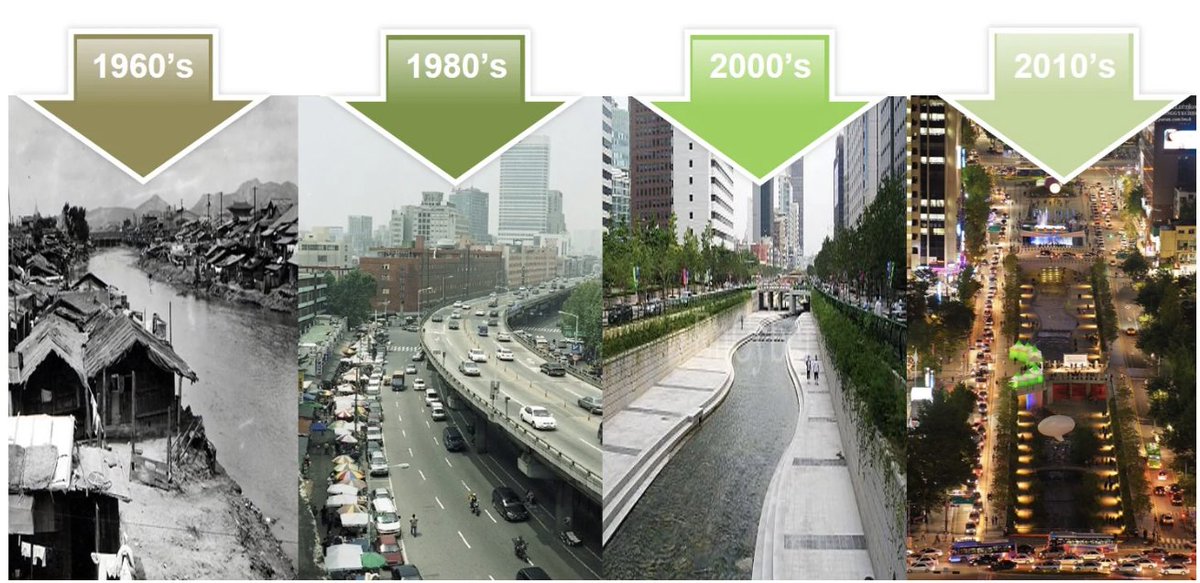
A fundamental lesson from my posts these last two weeks on modernization, industrial policy, and development is that development economics should be about understanding why South Korea got rich but Bolivia did not. The current field has largely given up on that question. Sharply identified RCTs on small micro programs are a fine way to publish in the AER and get tenure at a fancy university, but a profession that knows everything about microfinance impact evaluations and almost nothing about industrialization has misallocated its own intellectual capital on a pretty heroic scale. Four images of Seoul:
Jesús Fernández-Villaverde tweet media
English
69
295
1.6K
508.2K