Tweet fixado

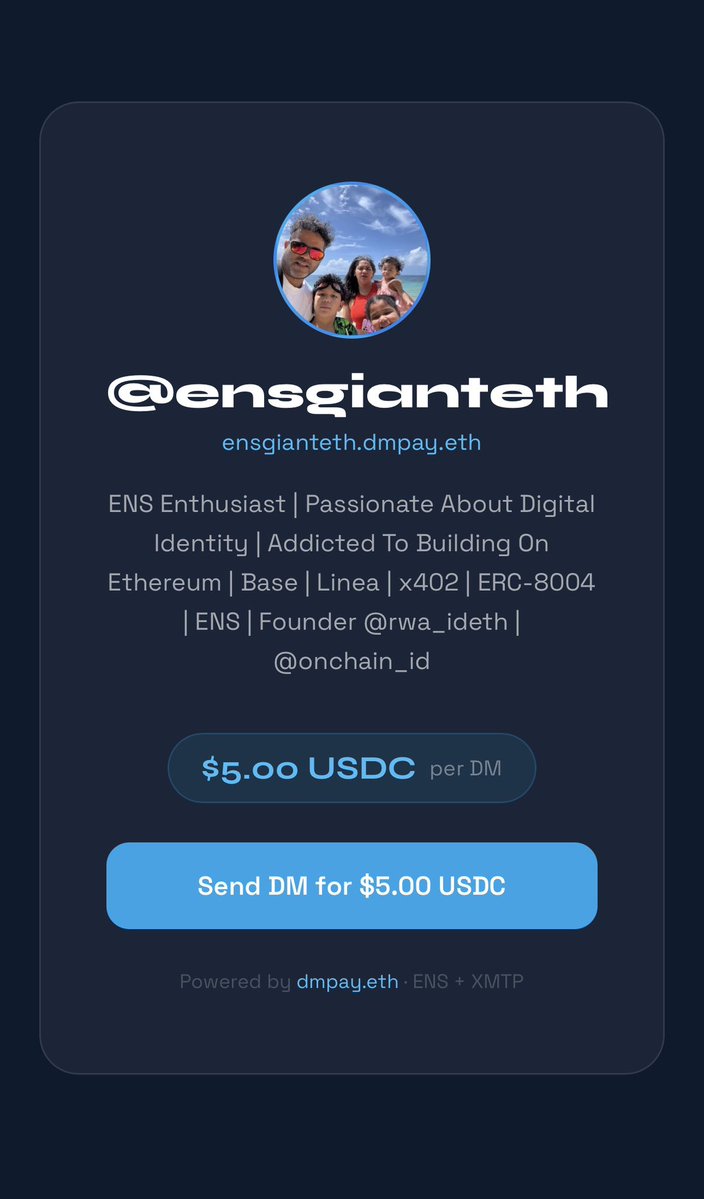
Get paid for DMs.
Create your DMpay profile and share your IPFS profile card.
app.dmpay.me
IPFS profile card 👇
ensgianteth.dmpay.eth.link

English
DMpay.eth
23 posts

@DMpayeth
Pay-To-Message On Ethereum | Connect X | Set Your Price | Get Paid In USDC For DMs | Built On ENS | Ethereum | XMTP
Just built DMpay — pay-per-DM on Ethereum | ENS | XMTP Flow: 1.Connect wallet 2.Set a price in USDC 3.Connect X via OAuth (verification to reduce impersonators) 4.We auto-mint your X handle as a subname: handle.dmpay.eth 5.Auto-generate an IPFS-hosted profile/lander you can share Messaging runs on XMTP, identity on ENS, payments in USDC. Try it: app.dmpay.me Drop feedback / bug reports — I’m iterating fast. @DMpayeth


Are you tired of spam DMs? Set up DMpay in minutes (free signup!) and start getting paid in USDC for your time: - Crypto natives & degens - Web3 builders, founders & project leads - Crypto influencers & KOLs - AI agent devs & owners - High-value networkers, VCs, angels - Content creators - Anyone sick of scam/phishing DMs Filter noise 👉turn outreach into revenue. Sign up free → set your price in USDC→ connect X → share your ensgianteth.dmpay.eth.link profile card link. app.dmpay.me Who's jumping in first? 👀 @DMpayeth #Web3 #ENS #XMTP

Get paid for DMs. Create your DMpay account for free! Set your price in USDC 💵 Connect your X account share your IPFS profile card. IPFS profile card 👇 ensgianteth.dmpay.eth.link app.dmpay.me

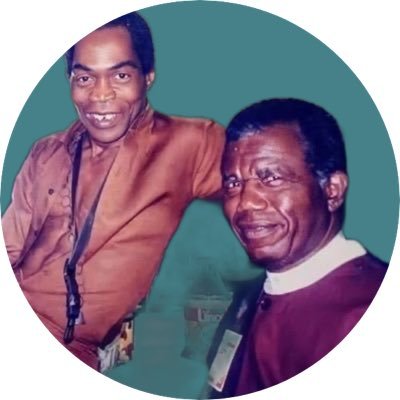
His wife kept telling him she missed her best friend and wanted to spend more time with her. Instead of arguing, the husband married the best friend as a second wife so they could see each other every day. 😭

Are you tired of spam DMs? Set up DMpay in minutes (free signup!) and start getting paid in USDC for your time: - Crypto natives & degens - Web3 builders, founders & project leads - Crypto influencers & KOLs - AI agent devs & owners - High-value networkers, VCs, angels - Content creators - Anyone sick of scam/phishing DMs Filter noise 👉turn outreach into revenue. Sign up free → set your price in USDC→ connect X → share your ensgianteth.dmpay.eth.link profile card link. app.dmpay.me Who's jumping in first? 👀 @DMpayeth #Web3 #ENS #XMTP
Are you tired of spam DMs? Set up DMpay in minutes (free signup!) and start getting paid in USDC for your time: - Crypto natives & degens - Web3 builders, founders & project leads - Crypto influencers & KOLs - AI agent devs & owners - High-value networkers, VCs, angels - Content creators - Anyone sick of scam/phishing DMs Filter noise 👉turn outreach into revenue. Sign up free → set your price in USDC→ connect X → share your ensgianteth.dmpay.eth.link profile card link. app.dmpay.me Who's jumping in first? 👀 @DMpayeth #Web3 #ENS #XMTP



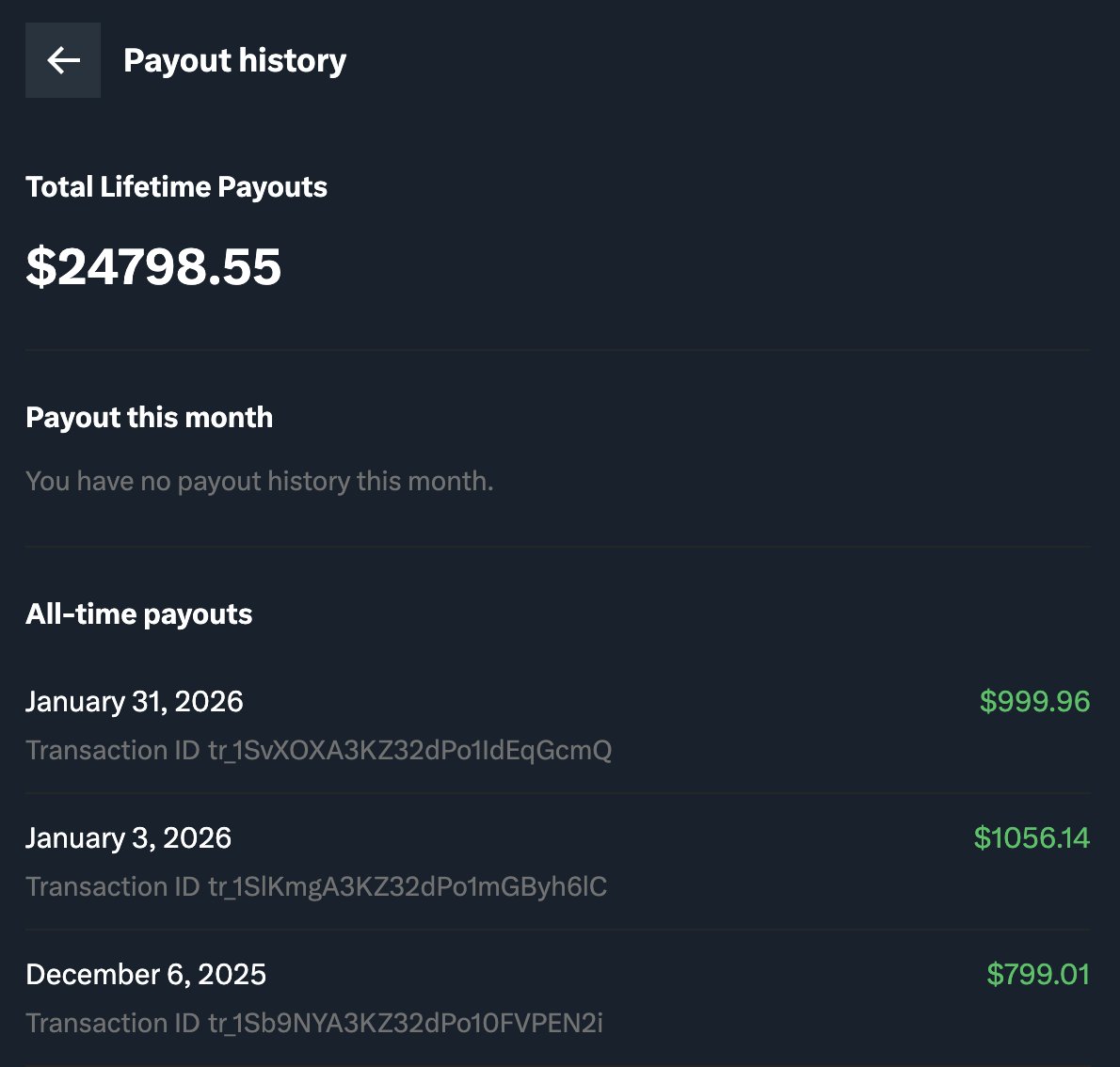
💸 This month my @X payouts reached a new record just a 5 cents shy of $16,000! I think something might have changed as they announced they'd pay creators and counts views in a different way, I think it worked: $12,819 ad rev share $1,865 subs revenue (= $14,684 per 28 days) = $15,995/month Posting on X is finally becoming a real potential income stream 😊👍 This is getting close to passing some of my businesses in revenue which is very cool to see!
Are you tired of spam DMs? Set up DMpay in minutes (free signup!) and start getting paid in USDC for your time: - Crypto natives & degens - Web3 builders, founders & project leads - Crypto influencers & KOLs - AI agent devs & owners - High-value networkers, VCs, angels - Content creators - Anyone sick of scam/phishing DMs Filter noise 👉turn outreach into revenue. Sign up free → set your price in USDC→ connect X → share your ensgianteth.dmpay.eth.link profile card link. app.dmpay.me Who's jumping in first? 👀 @DMpayeth #Web3 #ENS #XMTP


Are you tired of spam DMs? Set up DMpay in minutes (free signup!) and start getting paid in USDC for your time: - Crypto natives & degens - Web3 builders, founders & project leads - Crypto influencers & KOLs - AI agent devs & owners - High-value networkers, VCs, angels - Content creators - Anyone sick of scam/phishing DMs Filter noise 👉turn outreach into revenue. Sign up free → set your price in USDC→ connect X → share your ensgianteth.dmpay.eth.link profile card link. app.dmpay.me Who's jumping in first? 👀 @DMpayeth #Web3 #ENS #XMTP
Are you tired of spam DMs? Set up DMpay in minutes (free signup!) and start getting paid in USDC for your time: - Crypto natives & degens - Web3 builders, founders & project leads - Crypto influencers & KOLs - AI agent devs & owners - High-value networkers, VCs, angels - Content creators - Anyone sick of scam/phishing DMs Filter noise 👉turn outreach into revenue. Sign up free → set your price in USDC→ connect X → share your ensgianteth.dmpay.eth.link profile card link. app.dmpay.me Who's jumping in first? 👀 @DMpayeth #Web3 #ENS #XMTP


My $1,000,000 open bet to fight NFL players has caused an uproar Here’s the update: Nobody is willing to put $1M in escrow and be flown here to Puerto Rico (all expenses paid) & box with three professional judges They all want to formalize this with a streamer, venue, press conferences, etc. (i.e. get paid to fight but not risk their own money), but I don’t have time nor interest in that. I won’t step away from WWE to coordinate & train for an event, but if any player wants to actually put up $1M and fight at my gym with official referees and judges, show yourselves (that includes you @LeVeonBell) Also, if they want no-cameras, I’m down
Are you tired of spam DMs? Set up DMpay in minutes (free signup!) and start getting paid in USDC for your time: - Crypto natives & degens - Web3 builders, founders & project leads - Crypto influencers & KOLs - AI agent devs & owners - High-value networkers, VCs, angels - Content creators - Anyone sick of scam/phishing DMs Filter noise 👉turn outreach into revenue. Sign up free → set your price in USDC→ connect X → share your ensgianteth.dmpay.eth.link profile card link. app.dmpay.me Who's jumping in first? 👀 @DMpayeth #Web3 #ENS #XMTP
Get paid for DMs. Create your DMpay account for free! Set your price in USDC 💵 Connect your X account share your IPFS profile card. IPFS profile card 👇 ensgianteth.dmpay.eth.link app.dmpay.me
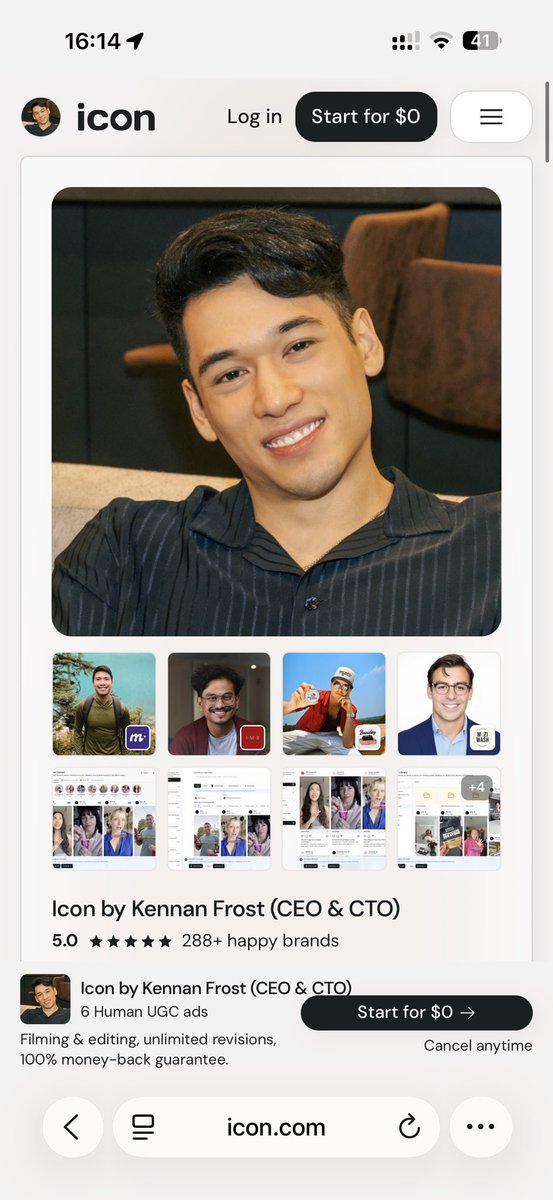
Icon, the AI Admaker, just went bankrupt They paid $12M for the domain Icon.com and now it's dead

Finally, the block building pipeline. In Glamsterdam, Ethereum is getting ePBS, which lets proposers outsource to a free permissionless market of block builders. This ensures that block builder centralization does not creep into staking centralization, but it leaves the question: what do we do about block builder centralization? And what are the _other_ problems in the block building pipeline that need to be addressed, and how? This has both in-protocol and extra-protocol components. ## FOCIL FOCIL is the first step into in-protocol multi-participant block building. FOCIL lets 16 randomly-selected attesters each choose a few transactions, which *must* be included somewhere in the block (the block gets rejected otherwise). This means that even if 100% of block building is taken over by one hostile actor, they cannot prevent transactions from being included, because the FOCILers will push them in. ## "Big FOCIL" This is more speculative, but has been discussed as a possible next step. The idea is to make the FOCILs bigger, so they can include all of the transactions in the block. We avoid duplication by having the i'th FOCIL'er by default only include (i) txs whose sender address's first hex char is i, and (ii) txs that were around but not included in the previous slot. So at the cost of one slot delay, only censored txs risk duplication. Taking this to its logical conclusion, the builder's role could become reduced to ONLY including "MEV-relevant" transactions (eg. DEX arbitrage), and computing the state transition. ## Encrypted mempools Encrypted mempools are one solution being explored to solve "toxic MEV": attacks such as sandwiching and frontrunning, which are exploitative against users. If a transaction is encrypted until it's included, no one gets the opportunity to "wrap" it in a hostile way. The technical challenge is: how to guarantee validity in a mempool-friendly and inclusion-friendly way that is efficient, and what technique to use to guarantee that the transaction will actually get decrypted once the block is made (and not before). ## The transaction ingress layer One thing often ignored in discussions of MEV, privacy, and other issues is the network layer: what happens in between a user sending out a transaction, and that transaction making it into a block? There are many risks if a hostile actor sees a tx "in the clear" inflight: * If it's a defi trade or otherwise MEV-relevant, they can sandwich it * In many applications, they can prepend some other action which invalidates it, not stealing money, but "griefing" you, causing you to waste time and gas fees * If you are sending a sensitive tx through a privacy protocol, even if it's all private onchain, if you send it through an RPC, the RPC can see what you did, if you send it through the public mempool, any analytics agency that runs many nodes will see what you did There has recently been increasing work on network-layer anonymization for transactions: exploring using Tor for routing transactions, ideas around building a custom ethereum-focused mixnet, non-mixnet designs that are more latency-minimized (but bandwidth-heavier, which is ok for transactions as they are tiny) like Flashnet, etc. This is an open design space, I expect the kohaku initiative @ncsgy will be interested in integrating pluggable support for such protocols, like it is for onchain privacy protocols. There is also room for doing (benign, pro-user) things to transactions before including them onchain; this is very relevant for defi. Basically, we want ideal order-matching, as a passive feature of the network layer without dependence on servers. Of course enabling good uses of this without enabling sandwiching involves cryptography or other security, some important challenges there. ## Long-term distributed block building There is a dream, that we can make Ethereum truly like BitTorrent: able to process far more transactions than any single server needs to ever coalesce locally. The challenge with this vision is that Ethereum has (and indeed a core value proposition is) synchronous shared state, so any tx could in principle depend on any other tx. This centralizes block building. "Big FOCIL" handles this partially, and it could be done extra-protocol too, but you still need one central actor to put everything in order and execute it. We could come up with designs that address this. One idea is to do the same thing that we want to do for state: acknowledge that >95% of Ethereum's activity doesn't really _need_ full globalness, though the 5% that does is often high-value, and create new categories of txs that are less global, and so friendly to fully distributed building, and make them much cheaper, while leaving the current tx types in place but (relatively) more expensive. This is also an open and exciting long-term future design space. firefly.social/post/lens/8144…
Get paid for DMs. Create your DMpay account for free! Set your price in USDC 💵 Connect your X account share your IPFS profile card. IPFS profile card 👇 ensgianteth.dmpay.eth.link app.dmpay.me

My $1,000,000 open bet to fight NFL players has caused an uproar Here’s the update: Nobody is willing to put $1M in escrow and be flown here to Puerto Rico (all expenses paid) & box with three professional judges They all want to formalize this with a streamer, venue, press conferences, etc. (i.e. get paid to fight but not risk their own money), but I don’t have time nor interest in that. I won’t step away from WWE to coordinate & train for an event, but if any player wants to actually put up $1M and fight at my gym with official referees and judges, show yourselves (that includes you @LeVeonBell) Also, if they want no-cameras, I’m down
Get paid for DMs. Create your DMpay account for free! Set your price in USDC 💵 Connect your X account share your IPFS profile card. IPFS profile card 👇 ensgianteth.dmpay.eth.link app.dmpay.me

Get paid for DMs. Create your DMpay account for free! Set your price in USDC 💵 Connect your X account share your IPFS profile card. IPFS profile card 👇 ensgianteth.dmpay.eth.link app.dmpay.me
Get paid for DMs. Create your DMpay account for free! Set your price in USDC 💵 Connect your X account share your IPFS profile card. IPFS profile card 👇 ensgianteth.dmpay.eth.link app.dmpay.me
Just built DMpay — pay-per-DM on Ethereum | ENS | XMTP Flow: 1.Connect wallet 2.Set a price in USDC 3.Connect X via OAuth (verification to reduce impersonators) 4.We auto-mint your X handle as a subname: handle.dmpay.eth 5.Auto-generate an IPFS-hosted profile/lander you can share Messaging runs on XMTP, identity on ENS, payments in USDC. Try it: app.dmpay.me Drop feedback / bug reports — I’m iterating fast. @DMpayeth