Jason Infeld, MD

1.2K posts

Jason Infeld, MD

Jason Infeld, MD

@infeldMD

Cardiologist/Stern Cardiovascular Foundation/Director of Echocardiography/Director of Lipid Clinic

Memphis, TN Entrou em Nisan 2011
378 Seguindo183 Seguidores
Simon Hill MSc, BSc
Simon Hill MSc, BSc@theproof·
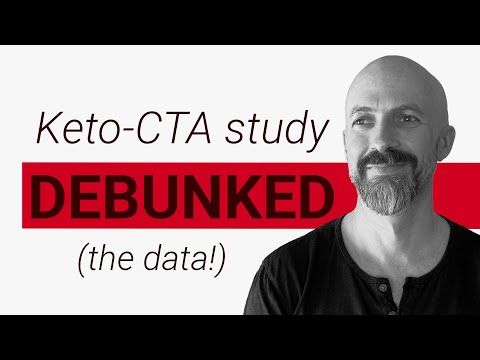
Keto-CTA Study MANIPULATED Charts!? Statistical Violations!? youtu.be/AE8VGcyhfnM?si… via @YouTube Regardless of the Cleerly debate looks like this group has some answering to do with regards to their data analysis. And perhaps some learnings for next time they publish.
YouTube video
YouTube
English
21
15
89
35.6K
Jason Infeld, MD
Jason Infeld, MD@infeldMD·
@stathi_ @ZKForTre How is an automated analysis biased? Particularly one that has no human input and has been validated against invasive IVUS. Odd take.
English
0
0
0
22
Stathi
Stathi@stathi_·
@ZKForTre All this is just to distract from the fact that the Cleerly data is clearly wrong (pun intended), self-inconsistent and perhaps even biased.
English
1
0
0
79
🐊ZK For Tre🐊
🐊ZK For Tre🐊@ZKForTre·
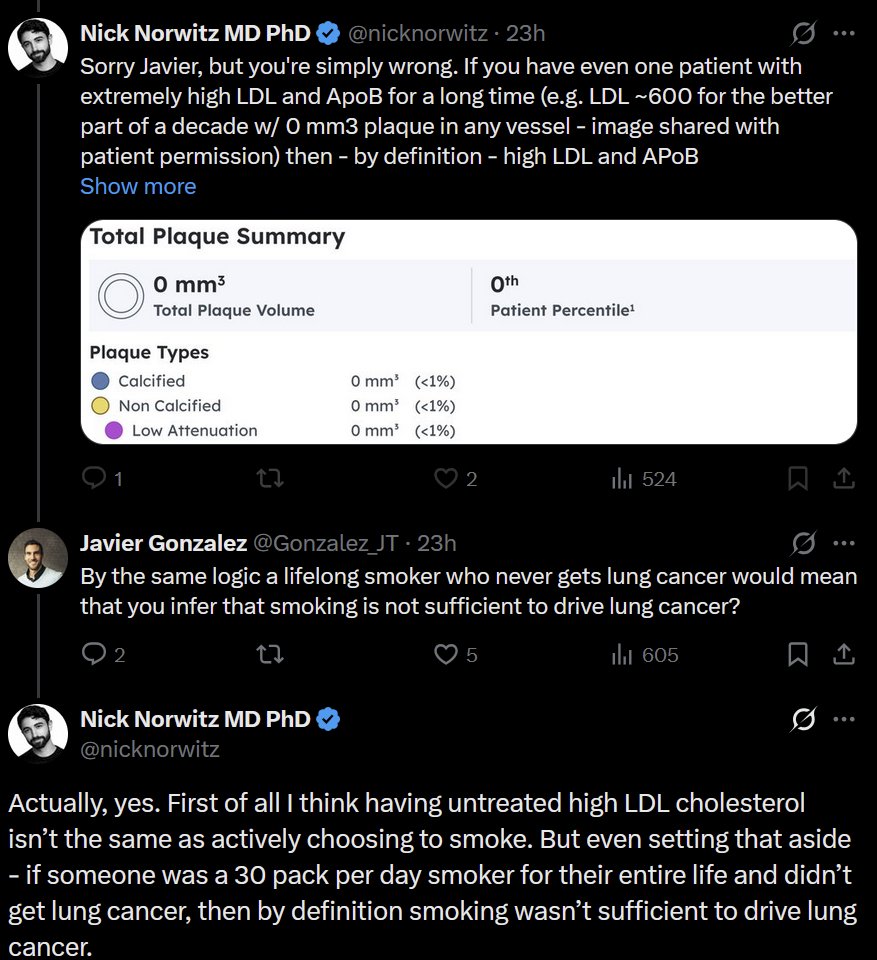
The thread below went on for way to long (I should not have played along for as long as I did), but it is a foundational example of the types of arguments that get used in this space to muddy the waters in relatively straightforward discussions. So I'm going to unpack the whole thing. This will be very long-- I had to get my computer out to type this one out. It's important to understand how individual statements that are technically correct on their own blow up if you try to extrapolate or draw from them in any broader context. This is in response to Nick's post linked below. For clarity, I will refer to Nick's thread as "Nick's" and my thread as "my." This individual responded to an admittedly snarky response of mine with the argument that, in the case of the 30 pack per day (let's give Nick the benefit of the doubt and assume he meant 30 pack-years...), the smoking burden was not causal of disease or death for that individual. This is sometimes called a risk factor not being a "sufficient cause" for the endpoint in question-- a term the individual who replied to my post will use many times. Let's establish some foundational principles first: 1. demonstrating causality for specific endpoints requires making a lot of assumptions/arbitrary cutoffs. If the endpoint is COPD and the individual have bullous alveoli but minimal or no respiratory function changes or recurrent infections, that's typically not going to be called COPD/emphysema clinically. A similar scenario in which someone smokes from 20-60 but gets colon cancer where its unclear if lung lesions are mets or primary tumors will usually not be diagnosed with lung cancer regardless. The point here is that using diagnostic cutoffs for risk factor assessments is questionable, especially given the origin of the discussion is centered around plaque volume-- a continuous variable. But i digress... 2. Let's establish definitions. This whole thread litigated aspects of the term "causality." In broad strokes, this involves a formal discipline in which experiments or analyses are conducted to demonstrate that some thing (a medical risk factor, an environmental exposure, a drug treatment, etc.) demonstrably causes corresponding outcomes-- not that it is mediated by a separate variable... not that it is correlated with an outcome-- but that it is the thing that is driving the end result per se. This can be surprisingly difficult to demonstrate and can take whole semesters for smart people to learn to assess in detail, but we can expedite this by highlighting foundational principles that the area of research has agreed upon. Two criteria are often used to assess whether something is causal for a particular outcome: Is it necessary? -- is the variable required for the outcome to occur Is it sufficient? -- does the presence of the variable results in the outcome (especially if increased exposures lead to increased occurrence of the outcome). Okay, back to the thread I'm a part of-- The individual who does most of the counter-arguing here claims to take issue with the sufficient side of things and suggests it's because Nick is correct in his use of the term "sufficient" as it relates to the smoking example, as it did not result in morbidity or mortality. This is where the disagreement occurs. His entire line of argument relies on Nick using the term "sufficient" to mean "sufficient cause," meaning that in that individual at that time point for that endpoint readout, the smoking burden was not sufficient for that individual to result in the endpoint/outcome of interest. If we would have stopped right there, that would have been fine-- it would have been a silly and pointless exercise, but it's technically correct. As you might have guessed, we didn't stop there. I'm going to bypass his passing references to other getting confused about the terms "necessary" and "sufficient" here because the comments are not well framed and could be interpreted multiple ways. What proceeds from here is very odd-- the individual responding notes several times that the position is taking is clinically and practically useless, but argues it for several hours anyway. The argument is that Nick's sole argument (not just in the one comment, as he explicitly references Nick's larger thread) is that smoking was not a sufficient cause of lung cancer in that individual, but all you would have to do is to scroll up and down only slightly to realize Nick is making a broader argument than the one individual. In fact, he is using the example of the one individual to literally respond to the question "by the same logic a lifelong smoker who never gets lung cancer would mean that you infer that smoking is not sufficient to drive lung cancer." Clearly, this is a step up from talking about "sufficient cause" in an isolated case. Being most charitable to Nick (an the person in "my" thread), the argument here is that smoking is not a "sufficient cause" to drive lung cancer in all individuals in all cases. Let's try to take this argument seriously for a moment. This implies that the threshold for causality must by 100% instantaneous outcome realization for all exposures to a variable for something to be considered causal-- that is the only logical endpoint one can draw. The responder to "my" thread tries repeatedly to couch this in an argument about "sufficient cause" such that the fact that some people do not realize an endpoint to a risk factor like smoking as evidence that smoking is not a "sufficient cause" for lung cancer at some frequency. This gets into a relatively well-developed field of epidemiology. In defining causality, if you take the most pedantic definitions, possible, virtually nothing is causal. I try to make this point through multiple examples in the thread-- if someone is shot in the head and lives, does it follow that gunshots are not sufficient to drive mortality. 2 of 100000 people avoiding liver injury/necrosis after ingesting 100 grams of acetaminophen was another example. The responder held firm that in those specific cases, those exposures were not "sufficient cause" for those individuals and the endpoint in question. It is here I must pause to remind everyone that, on multiple occasions, the responder in my thread complained about the lack of utility of assessing risk metrics in a certain way for clinical outcomes... while continuing down this line of argument. Again, if the argument would have continued to be only that there are examples where well-established risk factors don't rise to the level of sufficient cause, then fine. Again, that's a pedantic argument, but it's technically correct. Here's what really makes this line invalid, though. The responder to "my" thread makes many allusions to what Nick is trying to say and suggests what the keto crowd is trying to identify-- with the most direct statement being they are trying to identify a population for which ldl is not acting to confer additional risk. Multiple problems with this: 1. we're already beyond individual cases now 2. at best you can argue it's a nested population and that the objective is to show that both absolute and variance in ApoB/LDL is not "sufficient cause" for ASCVD. This conflicts with earlier framing, is hypothetical at this stage, and relies on a ton of lack of specifications, but fine... you could technically argue this isn't, by definition, in direct conflict with previous arguments 3. It's betrayed by Nick's commentary in his thread. This raises what is the most important takeaway from all of this, though. The crux of the argument is that we can argue that something that is well established as a causal risk factor (smoking) for an outcome (lung cancer) is not a "sufficient cause" and then turn around and say that this is not a particularly useful way of talking about risk factors. This is the line of argument made here. Further, the broader argument that gets danced around the whole time is that lack of sufficient cause (not dying from a gunshot wound to the head) is an argument against the causality of a risk factor (to the person responding to my threads credit, I did get him to acknowledge that ApoB and smoking were both causal risk factors for lung cancer and ASCVD very late in the thread). Beyond this things largely devolve. The responses become centered around things like "do you think [Nick] is defending smoking?" among other (hopefully) rhetorical items. There is one more item, though, that is worth highlighting: The entire argument is that the disagreement surrounds the term "sufficient" (where a risk factor is sufficient to drive an outcome) versus "sufficient cause," and that both Nick and the replies are only rooted in discussions about "sufficient cause" for particular individuals/cases. However, Nick betrays this in his first tweet pictured here-- I expanded it so people can see. He does do the extrapolation-- the thing you cannot do once you box yourself into the restrictive conditions put forth in the entire thread. The last line of Nick's first tweet here (and an extension of the arguments made in the response thread linked) mixes 2 separate arguments, neither of which is productive: 1. Nick's, which is a bait and switch. I'm sure you all see this, but this is the most important item in this whole thread-- he argues first that if anyone does not suffer a pathological endpoint with high LDL exposure, thenLDL is a clinically in-actionable variable. You can see it in plain text below. I cannot say for certain if he means this at the population level or the individual level, so the most generous interpretation is that if you had a crystal ball, it wouldn't have been beneficial for this case example (insofar as that's knowable). 2. He then goes on to argue that 30 pack years (Again, giving him the benefit of the doubt here) is not a "sufficient cause" for the lung disease example in this individual. He absolutely does not imply that smoking is not a non-actionable risk variable (at least to any clinically relevant degree blah blah blah). This is either a total non-sequitur or directly contradictory conclusions depending on which interpretation you like better, and it is the entire foundation on which the argument in "my" thread centers one. We then go back and forth about to what extent he has identified and demonstrated me sticking my foot in my mouth-- you can look through the thread at your leisure, you can be the judge. At long last, I'll wrap up: The argument the guy responding in "my" thread will almost certainly make is that he was defending the term "sufficient risk." This falls apart based on the incongruent nature of Nick's initial comments that we were referring to (which he tries to buffer several times) and based on his commentary on the more general term "causality" and his attempts at various times to make broader arguments after boxing in the parameters to such hyper-specific prerequisites. You can read as much of the thread as you want to see if you agree with him or me as to whether I am an unreasonable idiot in my characterization of his arguments (which he is very convinced of). Encapsulating larger points of emphasis, though-- this gets into how discussions here often go. People take entrenched positions they feel obligated to defend (i've certainly done this-- some may think I'm doing it here... you be the judge). In this case, it resulted in hours long pedantic/semantic arguments over whether or not ldl and smoking are causal risk factors (we agreed at the end they were/are), defending the position that Nick is using an appropriate narrow causality term in "sufficient cause" but then immediately suggesting it's not a useful way to talk about clinical risk factors... but defending it anyway, and fixating on semantic arguments about "sufficient cause" which are granted at various points while A) giving Nick a very generous interpretation of intent at every turn while B) litigating the language around determining if gunshot wounds to the head are causal risk factors for death. The lesson I'm taking away from this is to just ask for agreement about you bottom line points (is ApoB a causal risk factor for ASCVD, smoking/lung cancer, etc.). If those are denied (they weren't by the end of "my" thread), then argue or leave at your own discretion. If they are agreed upon and the disagreement is based in pedantry or sophistry, probably don't waste the time unless that is your thing. The other thing to take away, in broadest strokes, is that you can technically make a level of technically correct arguments in which nothing is causal. It's a waste of everyone's time and should really only be undertaken as an academic pursuit. Focus on component variables in normal biological context, specify terms and contexts and needed, and try to move arguments forward with substance and a productive goal in mind whenever possible. To the guy responding in "my" thread-- even if you were only aiming to militantly defend the term "sufficient cause," ive explained why I still think that falls short (and people can judge if I'm right or wrong in that), but I do respect a willingness to defend definitions to some extent-- so props for that at least. End scene.
🐊ZK For Tre🐊 tweet media🐊ZK For Tre🐊 tweet media
@

@ZKForTre He's using the word correctly, is all.

English
4
2
20
3.3K
Dave Feldman
Dave Feldman@realDaveFeldman·
An important clarification, @anthony_chaffee -- To our knowledge, Cleerly did not unblind any scans, rather, Cleerly received scans that were not fully blinded. They contained metadata of the chronological order for the scans – which is normally blinded in longitudinal imaging studies (understandably). Jen Isenhart interviewed Dr. Budoff for the documentary on this study and he shared this was an error on the part of his lab, not on Cleerly. That said, aside from how this happened, it's why we've been interested in their performing a fully blinded analysis given 1️⃣ this is, and always has been, the original expectation of all longitudinal analyses, and 2️⃣ the anomaly of their dataset having not a single regressor, despite all other datasets in longitudinal imaging (both in and outside our study) containing regressors (even in placebo groups).
@

Just amazing how corrupt the academic system is, even in so-called independent testing facilities such as Cleerly, who fraudulently unblinded the lean mass hyperresponders study data and then altered it, making it appear as if there was an increase in cardiovascular plaque when


English
10
5
131
11.7K
rune
rune@runeindark·
@cremieuxrecueil No, most MDs are good at statistics, but this guy makes money by lying about them.
English
6
0
0
1.1K
Crémieux
Crémieux@cremieuxrecueil·
MDs are often bad at statistics and horrible at causal reasoning. Here's an example, where an MD is citing a causally uninformative review to argue something that causally informative research shows is untrue. No care is given to the fact that this amounts to lying to patients.
@

It is healthy to consume saturated fat in the diet. It is healthy to consume saturated fat in the diet. It is healthy to consume saturated fat in the diet. It is healthy to consume saturated fat in the diet. pubmed.ncbi.nlm.nih.gov/36059207/

English
67
32
598
74K
Jason Infeld, MD
Jason Infeld, MD@infeldMD·
@alexleaf As a practicing cardiologist, Tro’s take is very odd. > 75% of heart attack patients in 2025 do not have diabetes. In the 1960s, when cv mortality peaked, the prevalence of diabetes in people with heart attacks was very low.
English
0
0
3
49
Alex Leaf
Alex Leaf@Alexleaf·
There’s a common narrative that high LDL or ApoB is merely a “marker” of poor metabolic health rather than a true cause of heart disease. It’s a seductive idea, but not quite accurate. Let's start with what Tro got right: insulin resistance, chronic inflammation, and metabolic dysfunction absolutely accelerate atherosclerosis. They make LDL particles smaller, denser, and easier to oxidize. They impair the endothelium, increase vascular permeability, and create a pro-inflammatory environment that traps lipoproteins and drives plaque formation. But LDL isn’t an innocent bystander here. The *proximal cause* of atherosclerosis is the retention of ApoB-containing particles (like LDL, VLDL remnants, and Lp(a)) in the arterial wall. It is only once those particles get stuck in the subendothelial space that they trigger an inflammatory response, macrophages engulf them, and the process of plaque formation begins. The more ApoB particles circulating in your blood, the higher the odds that some will get retained. Metabolic dysfunction magnifies the problem by changing the vascular environment to make the arterial wall “stickier" and increasing oxidative stress. But even in metabolically healthy individuals, high ApoB increases the chance of particle retention and plaque buildup (and no, the keto-CTA study was not well-equipped to evaluate the truth value of this statement). This is why the best evidence from multiple lines of research consistently shows that lowering ApoB reduces cardiovascular risk, and the degree of risk reduction matches the degree of ApoB lowering. Of course, it’s not perfect because heart disease is multifactorial, and I definitely think that issues like poor metabolic health are much more important to address than LDL in isolation (but also, we can address both simaltaneously; they aren't mutually exclusive). Anyway, this is all a long-winded way of saying thay rather than arguing whether LDL or insulin resistance is “the cause,” it’s more accurate to see them as interacting components of the same system. Both matter, and both deserve attention.
@

It can be true that LDL levels and LDL-lowering are associated with heart disease outcomes, much like fever and temperature-lowering are associated with outcomes in sepsis. Lowering fever may help a patient feel better or even marginally improve survival, but it doesn’t mean the

English
35
11
135
28.7K
Jason Infeld, MD
Jason Infeld, MD@infeldMD·
@MatthewJDalby I find it interesting that people can’t distinguish between Hamas intentionally using hospitals as military bases as a way of creating faux outrage versus indiscriminate targeting of civilian populations with no military objective
English
1
0
0
34
Jason Infeld, MD
Jason Infeld, MD@infeldMD·
@alexleaf @MurseDarius It’s a rising number of acute liver failure cases. 40% of drug induced liver failure cases are due to supplements. Since these supplements have no scientific evidence behind them, variability in dosing, and rising toxicity it’s seems like a reasonable precaution to avoid.
English
0
0
0
37
Alex Leaf
Alex Leaf@Alexleaf·
@infeldMD @MurseDarius Can you tell me the risk of liver failure (i.e., quantify the risk you want to avoid) from taking a clinical dose of any of those supplements?
English
1
0
0
50
Alex Leaf
Alex Leaf@Alexleaf·
I don't know the likelihood that these supplements would cause liver damage, but it's almost certainly less than acetaminophen, antibiotics, or statins, which of course aren't mentioned. This type of absolutist, unscientific fear-mongering without any concern for context or dose just gives conventional doctors a bad rap.
@

Do not consume dietary supplements with the following ingredient(s) even if prescribed by a legit doctor (these are well known liver toxic agents with additional risks, some fatal): - green tea extracts - curcumin - black cohosh - ashwagandha - giloy (tinospora cordifolia) -

English
12
1
40
5K
Alex Leaf
Alex Leaf@Alexleaf·
@infeldMD @MurseDarius For several of them like green tea extract, ashwagandha, and curcumin, yes, absolutely there is evidence demonstrating efficacy for certain health outcomes.
English
1
0
0
50
Darius Sharpe
Darius Sharpe@MurseDarius·
@alexleaf It seems so silly for him to say that. We have the ability to cheaply measure liver function. So why not start the supplements and measure LFTs in a month or so?
English
2
0
2
235
Jason Infeld, MD
Jason Infeld, MD@infeldMD·
@alexleaf The liver doc addressed those meds below in his thread. The incidence of liver failure with statins is vanishingly small. Nearly unheard of. Temporary increase in liver enzymes. Maybe. Tylenol never causes liver failure outside of accidental or intentional overdoses
English
1
0
1
121
Jason Infeld, MD
Jason Infeld, MD@infeldMD·
@ZKForTre Are these tweets for attention, etc or does he really believe these things? It’s so hard to to tell
English
1
0
0
55
🐊ZK For Tre🐊
🐊ZK For Tre🐊@ZKForTre·
The half life of mRNA vaccine cargo is measured in hours. This is essentially the same as if you were injected with an immunogenic antigen. Presumably he was taught basic immunology is med school. Maybe not 🤷‍♂️
English
1
0
7
671
Jesper Lundbom
Jesper Lundbom@JesperLundbom·
@theproof @realDaveFeldman @Lipoprotein Monocytes have LDL receptors. If you are FH, you probably have LDLR deficiency, including in monocytes. Why is a defective LDLR not an intrinsic deficiency of the monocyte?
English
3
0
3
224
Simon Hill MSc, BSc
Simon Hill MSc, BSc@theproof·
Are monocytes in people with FH different to those with normal LDL-C? @realDaveFeldman this was something you suggested in our episode with @Lipoprotein. Are you still of this view? #0" target="_blank" rel="nofollow noopener">perplexity.ai/search/0844d98…
English
5
18
20
3.2K
Sam Tsimikas, MD
Sam Tsimikas, MD@Lpa_Doc·
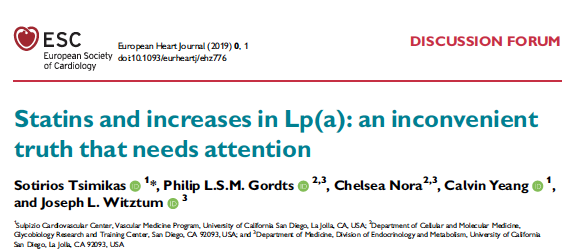
Now that people are checking Lp(a), it is becoming more obvious and accepted. When we published our paper on this, we had a lot of negative reactions because it was not clear if this was clinically relevant or would make people stop taking statins. Bottom line is statins treat LDL-C risk, and their effect on Lp(a) is, on average, a 20% increase, but with interindividual variability. We need to now see of this increase is detrimental or not. If LDL-C is elevated, taking a statin is beneficial overall. One way to mitigate this issue is a combo of PCSK9i and ezetimibe.
Sam Tsimikas, MD tweet media
@

@Lpa_Doc Had a huge LPa increase when I doubled my Crestor to 40mg. Added repatha and lowered my Crestor to 20mg - my LPA dropped 300 points. Now trying 5mg Crestor (with repatha). Could statins affects on LPA be different for everyone? My Dr. has never seen statin affect LPA this much.

English
7
51
207
41.1K
Jason Infeld, MD
Jason Infeld, MD@infeldMD·
@nyrbhimself This has to be the most naive tweet of all time Imagine knowing less about human history and not knowing that 50% of children didn’t make it past puberty until a century ago
English
0
0
0
28
Jason Infeld, MD
Jason Infeld, MD@infeldMD·
@MatthewJDalby That is an absolutely bizarre take. This is a deal with the devil. You think Israel wants to release convicted terrorists? These are the demands of Hamas, not Israel
English
1
0
1
50
Matthew Dalby
Matthew Dalby@MatthewJDalby·
"Hamas released five Israeli hostages early Saturday among six to be freed in exchange for more than 600 Palestinian prisoners and detainees in Israeli jails." I was wondering when Israelis became seen as so much more valuable than Palestinians.
Matthew Dalby tweet media
English
2
0
4
388
Jason Infeld, MD
Jason Infeld, MD@infeldMD·
@alexleaf @ZKForTre If it doesn’t make you feel better at some point or make you live longer, what is it doing? You have a citation for saunas? Overexposure to which toxicant?
English
0
0
0
59
Alex Leaf
Alex Leaf@Alexleaf·
@infeldMD @ZKForTre So, a detox is medically necessary if it improves the quality or quantity of life? Am I understanding that correctly? One example of that would be sauna use for toxicant overexposure and substance use withdrawals. Another is choline and NAC for those who have fatty liver.
English
1
0
1
149
Alex Leaf
Alex Leaf@Alexleaf·
@infeldMD @ZKForTre Can you please answer my clarifying question before moving on to a new question? We haven't resolved your initial inquiry yet.
English
1
0
0
77
Alex Leaf
Alex Leaf@Alexleaf·
@infeldMD @ZKForTre Can you define medical necessity? I'm not convinced that optimizing the body's innate detoxification ability through supplements or lifestyle interventions would at all require a medical necessity.
English
1
0
0
55