Y Trên Piws

25.5K posts

Y Trên Piws banner
Y Trên Piws

Y Trên Piws

@tripleseis

Talented Thinker. Sometimes in Camden. Sometimes in Tooting. Always in London.

Llegroeso, Llundain - Lloegr Entrou em Şubat 2009
1.7K Seguindo491 Seguidores
Tom Forth
Tom Forth@thomasforth·
The urbanist dream vs. the urban reality.
Tom Forth tweet mediaTom Forth tweet media
English
7
4
119
10.9K
Y Trên Piws
Y Trên Piws@tripleseis·
@BobFromAccounts @SaveBGstreets Time to spruce up the street with some better street furniture, planting and pavement barrier removal. 🚲🌳🌳🌳🚶🏼‍♂️
English
0
0
2
483
Bob From Accounts 🚲
Bob From Accounts 🚲@BobFromAccounts·
Arnold Circus LTN, a peaceful oasis in the East End surrounded by social housing. Once, it was plagued by speeding cars & antisocial behaviour. Thanks to a campaign by @SaveBGstreets it has been saved. Once you remove the through traffic, no one wants it to return to its past
English
31
40
413
24.6K
Aaron Bastani
Aaron Bastani@AaronBastani·
American X accounts now represent working European men, with hobnail boots and calloused hands (these are tradesmen, see footwear), as dossers. Why? Presumably working men aren’t supposed to enjoy a glass of wine for lunch? Eat your tacos in a car, like a good Yankee drone!
Cigarette Nostalgia@CigsMake

Francesco (52), Tommaso (47), and Leonardo (38) sit outside a small café, cigarettes and espresso in hand. It’s a Tuesday at 3pm. None of them work. Each receives about €24,000 a year from the government. They seem content.

English
40
105
2.3K
118.4K
Stranger Things Memes
Stranger Things Memes@SThingsMeme·
Vecna lives. Stranger Things 5 Episode 9 teaser is out
English
1.4K
5K
79.1K
8.3M
Y Trên Piws
Y Trên Piws@tripleseis·
@the_transit_guy Bristol and Leeds in the UK. Both are one of the largest cities in Europe without any form of high frequency metro or tram system and rely heavily on local buses for public transport.
English
0
0
7
306
Hayden
Hayden@the_transit_guy·
Which city objectively has the worst transit system in your country relative to its size and/or cultural significance?
English
174
4
291
64.6K
Y Trên Piws
Y Trên Piws@tripleseis·
@ShabazzStuart @metro_sn Even parts of southern Westchester are as dense as the Bronx. These areas certainly deserve better mass transit too.
English
0
0
0
116
Shabazz Stuart
Shabazz Stuart@ShabazzStuart·
@metro_sn Sure, I'm saying that this is not how it should work here. Jersey City is not a suburb like Long-Island or Westchester and the city would benefit from deeper regional connectivity. Multiple mayors and transit commissioners have considered this-- it's not a legal issue.
English
5
0
66
1.1K
Shabazz Stuart
Shabazz Stuart@ShabazzStuart·
When you look at this map, it's hard to justify the subway not going into Jersey City, Hoboken etc. Hudson County is closer to midtown than most of NYC, and yet trips there require 1-2 *separate* fares and often riding a commuter bus. A prerequisite for regional housing plan.
Shabazz Stuart@ShabazzStuart

Major part of my transit wishlist: I'd love to see NYC embrace a regional map of 🚇 and 🚊 services. NYC is part of a regional economy and community-- it would be a major win if commuters could visualize PATH, HBLR and Newark City subway alongside the NYC subway system.

English
44
54
757
39.5K
Y Trên Piws retweetou
Will Norman
Will Norman@willnorman·
Great to see the fantastic @wfcouncil proposals for Chingford Road: 🚲fully segregated cycle tracks 🚌bus priority to improve journey times 🚶‍♀️continuous footways making side roads safer 🚦🦓new & upgraded ped crossings ☘️🌿🌹public spaces & planting talk.walthamforest.gov.uk/chingford-road…
Will Norman tweet mediaWill Norman tweet media
English
19
18
128
30.8K
Y Trên Piws
Y Trên Piws@tripleseis·
@OpenChiswickW4 These people just hate cycling. They just don't have the guts to say it.
English
0
0
3
27
OpenChiswick
OpenChiswick@OpenChiswickW4·
The ex-chair of RoadPeace objects to cycle lanes on bus routes on the spurious grounds that they cause problems for bus users. And he objects to cycle lanes that are not on bus routes on the spurious grounds that they divert cars to bus routes and cause problems for bus users.
OpenChiswick tweet media
English
9
3
34
1.3K
Y Trên Piws
Y Trên Piws@tripleseis·
@djjmilner They still think the only people who cycle, are fit 20-something men with carbon fiber road bikes.
English
0
0
7
332
Jon Stone
Jon Stone@joncstone·
Waltham Forest are consulting on plans for protected cycle lanes on Chingford Road, which would fill a gap in their already impressive network. looks like a very high quality design talk.walthamforest.gov.uk/chingford-road…
Jon Stone tweet mediaJon Stone tweet mediaJon Stone tweet media
English
2
3
13
1.8K
Y Trên Piws
Y Trên Piws@tripleseis·
@joncstone Desperately needed. Happy @wfcouncil are finally filling in this gap. Just leaves the northern bit of Hoe Street to do. Hopefully they can also improve things along Wadham Road (used to access the Peter May Sports Centre - which definitely needs more cycle stands too).
English
0
0
0
32
Jon Stone
Jon Stone@joncstone·
Camden are consulting on a very cool junction rebuild adding protected cycle lanes at York Way/Agar Grove. It fills a gap in existing cycle lanes and includes a link to nearby LTN at Camden Square consultations.wearecamden.org/supporting-com…
Jon Stone tweet media
English
9
10
94
11K
Carla Francome
Carla Francome@carlafrancome·
I ended up on Warren Street recently - it’s a small street that leads off from Warren Street tube - and it was a total revelation. The bollards meant loads of space for parklets and eateries, and there’s so many nice cafes. … 1/4
Carla Francome tweet mediaCarla Francome tweet media
English
11
1
93
4.6K
Chris Broad
Chris Broad@AbroadInJapan·
The Galaxy is on Ryotaro's Belt.
Chris Broad tweet media
English
26
78
3.5K
67.4K
Chris Broad
Chris Broad@AbroadInJapan·
🍿ALL NEW WACKY WEEKEND drops tomorrow! 🍿 It’s been a hot minute since an Abroad in Japan video. I’ve been locked away writing a new book for months now, but it’s finally done! So back to videos🎉 Connor & Natsuki are hilarious in this outing👌 You guys are in for a treat!
English
52
133
3.6K
80.8K
Y Trên Piws
Y Trên Piws@tripleseis·
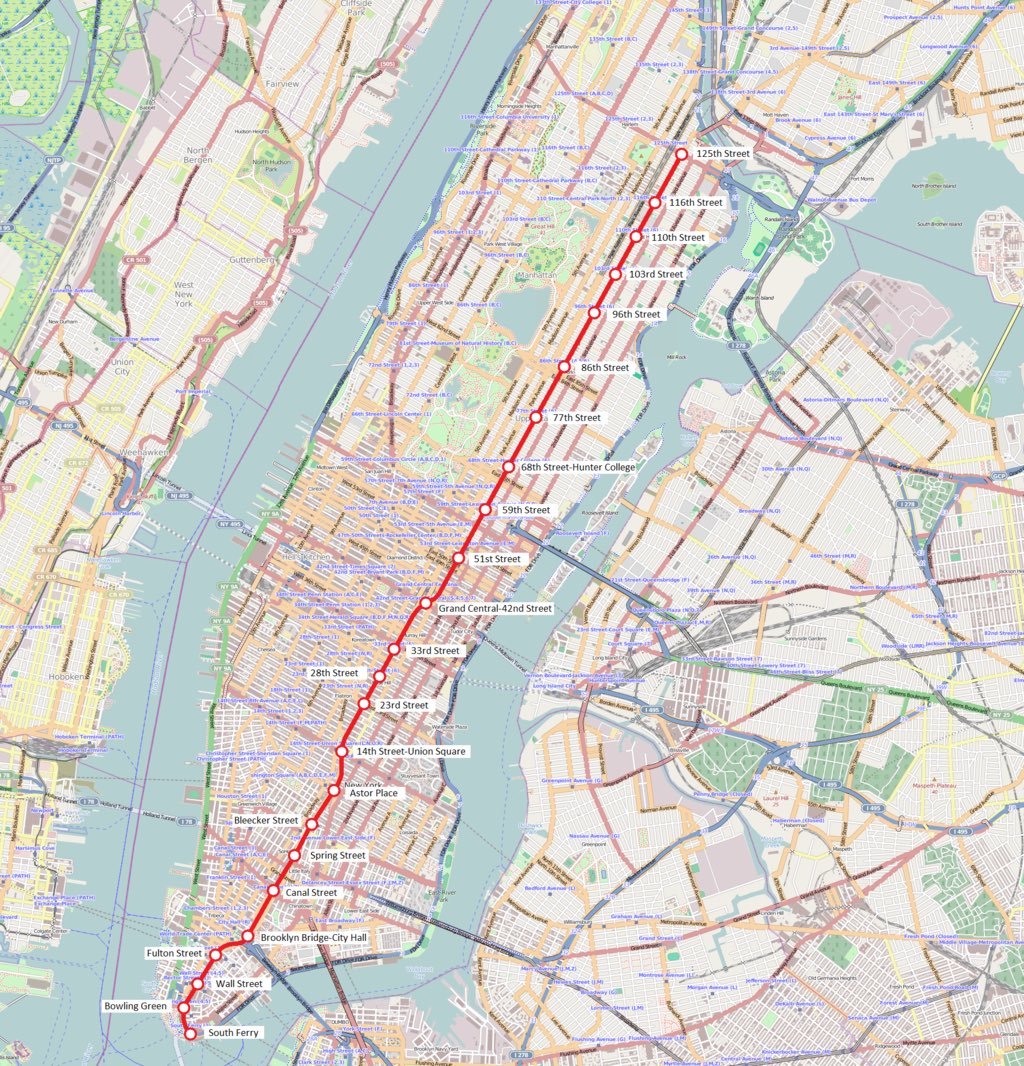
@LinkofSunshine Best argument for New York's very own RER city tunnel from Harlem 125 Street to Atlantic Avenue in Brooklyn.
Walthamstow, London 🇬🇧 English
0
0
0
120
Basil🧡
Basil🧡@LinkofSunshine·
The Lex Avenue Line has equivalent higher daily ridership to 2/3rds of the entire population of Paris The best subway line in the world baby
Basil🧡 tweet media
English
56
31
1.4K
231.6K
Y Trên Piws
Y Trên Piws@tripleseis·
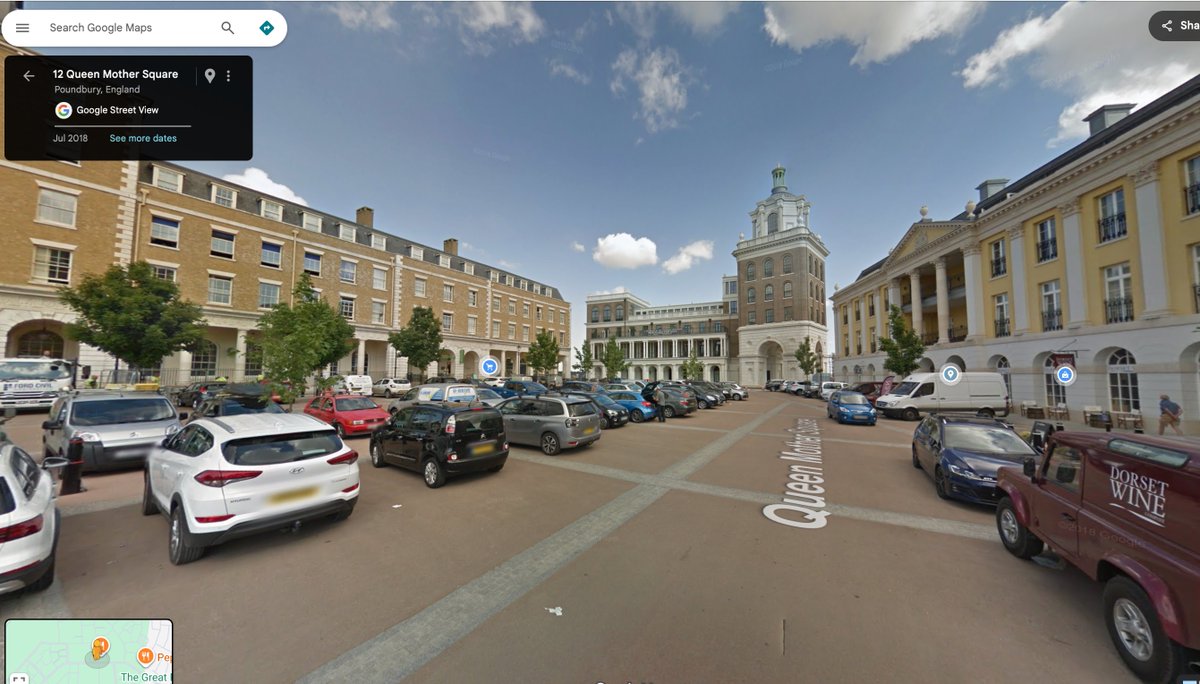
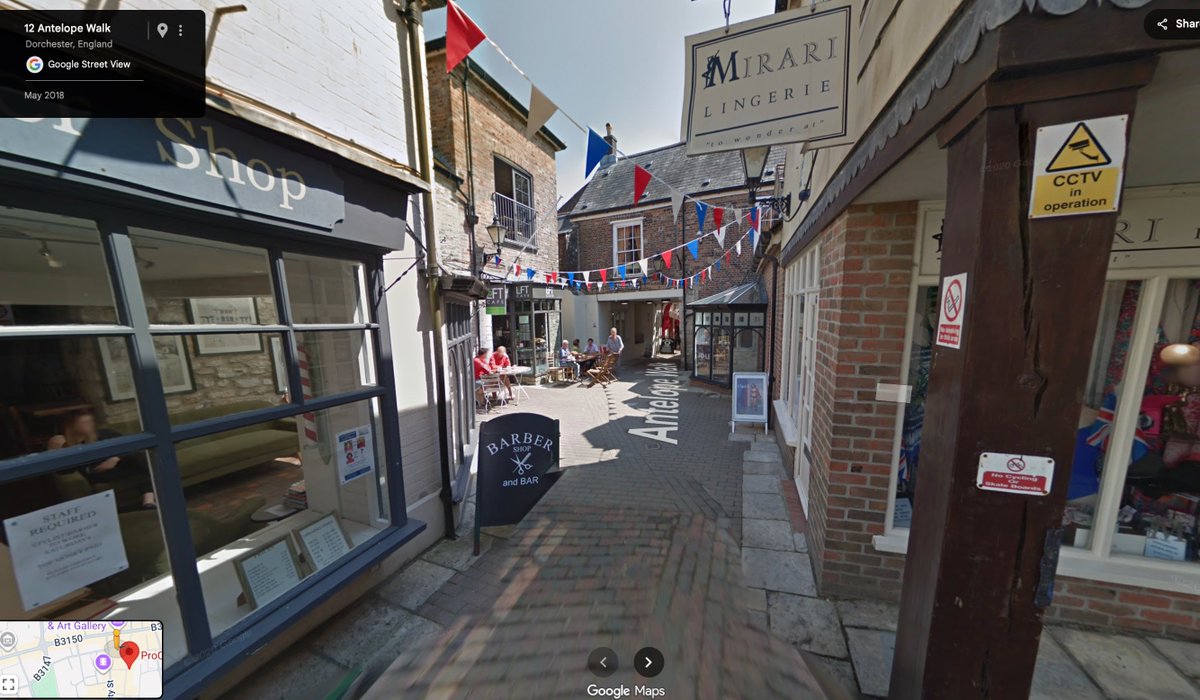
@joncstone Designer outlet pastiche. This feels like somewhere I would buy a luxury handbag followed by a large caramel latte at Costa.
Walthamstow, London 🇬🇧 English
0
0
1
500
Jon Stone
Jon Stone@joncstone·
Poundbury's two main squares: 'Queen Monther Square' and 'Buttermarket', versus two streets in normal Dorchester five minutes away
Jon Stone tweet mediaJon Stone tweet mediaJon Stone tweet mediaJon Stone tweet media
English
35
31
610
80.2K
Y Trên Piws retweetou
derek guy
derek guy@dieworkwear·
ON RESPECTABILITY IN DRESS Every once in a while, people here will get mad at me. And it often involves the same issue: respectability in dress. Or its related cousin: dress codes. Judging someone's deeper, more important qualities based on attire often feels so natural; people get upset when I refuse to engage in the same judgment. To them, it feels as though I'm denying something so obvious, I'm dishonest. I've written about dress respectability no fewer than half a dozen times in my 15 years of writing about menswear, but never so thoroughly and comprehensively on Twitter. This post will be long, but I hope it is engaging. And I hope you stay with me because I find this sentiment to be so noxious — so antithetical to any notion of "good," whether religious or secular — that I hope I can convince a few people to resist such temptations. What is respectability in dress? It's the idea that you can show respect through clothes, such as wearing a suit to a wedding. Or the idea that people in certain clothes are more deserving of respect, such as a man in a suit versus another man in a hoodie. I will address each in turn. I believe dress is a form of social language. And thus, you can signal certain things through clothes. For instance, if I were to attend a wedding, I would wear a suit as an outward expression of a sentiment in my heart (e.g., "I'm happy for my hosts and wish to honor them on this day"). The suit is simply a representation of my sentiment, which already exists, even if I was in jeans. However, if I arrived at a wedding and saw someone not wearing a suit, I would not judge the person's more important qualities based on their attire. Perhaps they didn't have time to buy a suit. Perhaps clothes shopping gives them great anxiety. Perhaps they can't afford a suit that fits. If I wanted to know whether that person is of good character, I would judge this off their more direct actions, such as how they treat the people around them. Are they genial to guests? Are they considerate of service staff? Do they make the hosts laugh and glow? There are two distinct acts here. The first is how *you* decide to dress. Since you hold a particular sentiment in your heart, you may wish to dress a certain way to express that sentiment. The second is how you judge *others* based on dress. If a coat-and-tie is supposedly connected to "gentlemanly" behavior, however tortured that term may be, then judging someone's deeper, more important qualities is ungentlemanly by definition. In 1852, Cardinal John Henry Newman penned an essay, initially delivered as a university lecture, titled "Definition of a Gentleman." A gentleman, he says, is someone gentle and kind, considerate of others, humble in social relations, and respectful of boundaries. He compares a gentleman to "an easy chair or a good fire, which do their part in dispelling cold and fatigue." He writes: "The true gentleman in like manner carefully avoids whatever may cause a jar or a jolt in the minds of those with whom he is cast — all clashing of opinion, or collision of feeling, all restraint, or suspicion, or gloom, or resentment; his great concern being to make every one at his ease and at home. He has his eyes on all his company; he is tender towards the bashful, gentle towards the distant, and merciful towards the absurd; he can recollect to whom he is speaking; he guards against unseasonable allusions, or topics which may irritate; he is seldom prominent in conversation, and never wearisome. He makes light of favors while he does them, and seems to be receiving when he is conferring." There is notably nothing in his essay about clothes. It's impossible to judge a person's deeper, more important qualities based on clothes because people are often just following social conventions. To go back to the wedding example, many people wear a suit not because they hold a particular sentiment in their heart, but simply because a suit is protocol. A friend who works as a wedding photographer revels in telling me stories about suited guests getting into fistfights—certainly not a way to honor your hosts. The irony of dress codes is that the stronger the enforcement, the less you can tell about someone's character based on dress. Let's now turn to the idea that people in certain clothes are more deserving of respect. The sharpest, most pointed counterargument for this is Pierre Bourdieu, who in his 1979 book Distinction, pointed out that our notions of "Good Taste" are often nothing more than the habits and preferences of the ruling class. Edward Carpenter, a gay British reformer in the late 19th century, understood this a century earlier. He hated suits. In an essay about the "simple life," he compared suits to coffins, as they have "stiff layers upon layers of buckram," which he believed prevented people from getting enough sunlight and air. But more importantly, he hated suits because he recognized that Victorian dress codes weren't about dress codes at all — they were about status signaling and social hierarchy. In May 1889, Carpenter wrote a letter to The Sheffield Independent about how 100,000 of the city's residents were struggling to find sunlight and air, enduring miserable lives, and dying of illnesses because of the thick, black cloud of smog arising out of factories like smoke from Judgement Day. Meanwhile, as Melton-clad plutocrats nattered on about proper dress codes, they concealed their cruelty and vulgarity under refined manners. They weren't concerned with virtue, but rather with showing their supposed higher moral status. And then those socially under them aped those manners to seem higher class. (A dynamic that German sociologist Georg Simmel recognized in his 1902 essay "On Fashion.) Our judgements of dress are often more about the person underneath the clothes, rather than the clothes themselves. We see this with the pre-war British Guardsmen, who dropped their Edwardian-inspired fashions as soon as they were adopted by the "ruffians" known as Teddy Boys (and some Teddy Gals). Or how the slacker hoodie became a symbol of meritocracy in the New Economy when (white) coders wore it in the early 2000s, but it symbolizes criminality when worn by black teens. Clothes indeed signal certain things. If you're wearing a Lakers jersey, I will assume you're a fan of the Lakers; if not, at least sports. But deeper, more important qualities — such as intelligence, honesty, kindness, and so on — should be read more directly from the person's more meaningful actions. If you want to know if someone's intelligent, pay attention to what's in their head, not what's on top of it. I'm fundamentally opposed to any notion of respectability in dress, as I find it antithetical to a fundamental moral principle: you should treat everyone with respect unless they behave in a manner that suggests otherwise. And so, if John Fetterman lumbers through the halls of Congress in hoodies and shorts, you should object to him based on his politics, not his dress. If a student shows up at Oxford Union in sweats, you should consider his ideas, not his pants. I am perfectly fine with saying certain outfits are ugly. I'm deeply uncomfortable when people make moral judgments based on clothes. A person is not more or less deserving of respect based on dress; they can only do so based on more meaningful behavior. My guess is that you know this in your heart. As you travel through the world, look around you. Are your poorly dressed cousins and uncles bad people? Do shabbily dressed teachers or nurses on the train not actually serve society in positive ways? Do suited politicians not occasionally commit crimes? The idea that appearance doesn't always match character can be found more melodically in Fela Kuti's 1973 album "Gentleman." If you are already interacting with someone on a meaningful basis, you've hopefully already gotten enough information about them to form a judgement and thus can ignore dress. If you haven't interacted with them in meaningful ways, you can simply withhold judgement. I will end with an excerpt from Stuart Hall, a Jamaican-born British cultural theorist. In an essay about pluralism, he made a distinction between "common culture" and "common society," encouraging us to embrace differences. "It should not be necessary to look, walk, feel, think, speak exactly like a paid-up member of the buttoned-up, stiff-upper-lipped, fully corseted and free-born Englishman, culturally to be accorded either the informal courtesy and respect of civil social intercourse or the rights of entitlement and citizenship. Since cultural diversity is, increasingly, the fate of the modern world, and ethnic absolutism a regressive feature of late-modernity, the greatest danger now arises from forms of national and cultural identity — new or old — which attempt to secure their identity by adopting closed versions of culture or community and by the refusal to engage with the difficult problems that arise from trying to live with difference. The capacity to live with difference is, in my view, the coming question of the twenty-first century." There are many forms of dress in society, each connected to a person's background, identity, and lifestyle. While these things can tell us something about the person, they don't tell us their more important qualities. Wearing "refined" clothes doesn't make you "refined" or "respectable" any more than rugged clothes can fashion you into a rugged man. Clothes can be a lot of things, but once people attach notions of virtue and respect to them, we enter very dangerous territory.
derek guy tweet mediaderek guy tweet mediaderek guy tweet mediaderek guy tweet media
English
71
186
2.1K
409.2K