

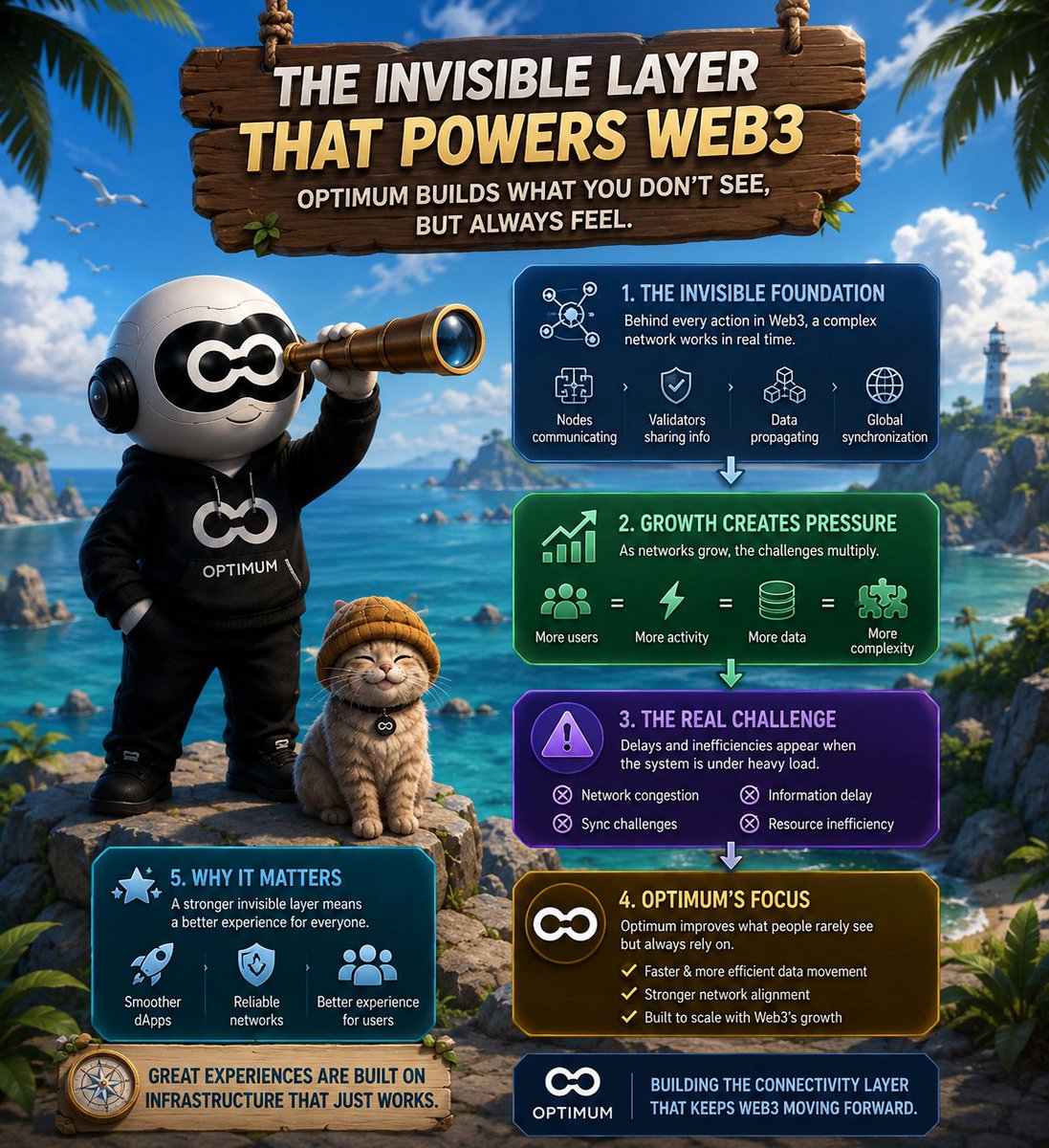
@get_optimum And in the long run, that may be one of the most important pieces of the Web3 puzzle.
Because great ecosystems aren't only built on innovation.
They're built on infrastructure that quietly works every single day.
English
harverCat
271 posts

One aspect of @get_optimum's research that really caught my attention is the scale of the problem they're trying to address. Ethereum isn't a small experimental network anymore.


why traditional networking creates waste @get_optimum in many distributed systems the same information keeps circulating → duplicate packets → repeated requests → bandwidth consumed by identical data


𝟯𝟭% 𝗼𝗳 𝗘𝗧𝗛 𝗜𝘀 𝗡𝗼𝘄 𝗦𝘁𝗮𝗸𝗲𝗱 At this level, staking is no longer only about generating yield. It’s becoming a question of infrastructure efficiency. @get_optimum Most users still choose validators based on: 🔹 reputation 🔹 validator size 🔹 commission fees But as Ethereum grows more competitive, another variable is becoming critical: 𝐈𝐧𝐟𝐨𝐫𝐦𝐚𝐭𝐢𝐨𝐧 𝐞𝐟𝐟𝐢𝐜𝐢𝐞𝐧𝐜𝐲. Validators don’t perform in isolation. Their success depends on how quickly and reliably they can: 🔹 receive network data 🔹 process information 🔹 propagate updates across the chain Even minor delays can influence: 🔹 attestation accuracy 🔹 block propagation speed 🔹 validator participation quality 🔹 long-term staking performance That’s why the discussion is evolving from: 𝐖𝐡𝐨 𝐜𝐨𝐧𝐭𝐫𝐨𝐥𝐬 𝐭𝐡𝐞 𝐦𝐨𝐬𝐭 𝐬𝐭𝐚𝐤𝐞𝐝 𝐄𝐓𝐇? To 𝐖𝐡𝐨 𝐨𝐩𝐞𝐫𝐚𝐭𝐞𝐬 𝐭𝐡𝐞 𝐦𝐨𝐬𝐭 𝐞𝐟𝐟𝐢𝐜𝐢𝐞𝐧𝐭 𝐢𝐧𝐟𝐫𝐚𝐬𝐭𝐫𝐮𝐜𝐭𝐮𝐫𝐞? As Ethereum continues to scale, the real differentiator won’t only be capital allocation. It will be coordination efficiency. Because staking rewards ultimately depend on network performance. And network performance starts with information flow. The next phase of Ethereum won’t be defined only by how much ETH is staked. It will be defined by how efficiently that stake can interact with the network. @aqccapital @blockchainjeff @CryptoSundayz