

English
Ivy Loop
446 posts
@Ivy_LoopJ
Crypto content creator 🎬 | Turning complex topics into simple stories. Narratives drive markets 🚀.



What is the old version of airdrops we're familiar with: + Tons of sybils from TG, email, X, and more + Repeatable tasks that can be automated with scripts + Some printed thousands while real users earned nothing After the death of old-fashioned airdrops, we're pointing to a successful model where token unlocks = traction - @HyperliquidX. Not every model can operate in such a perfect cycle like this.

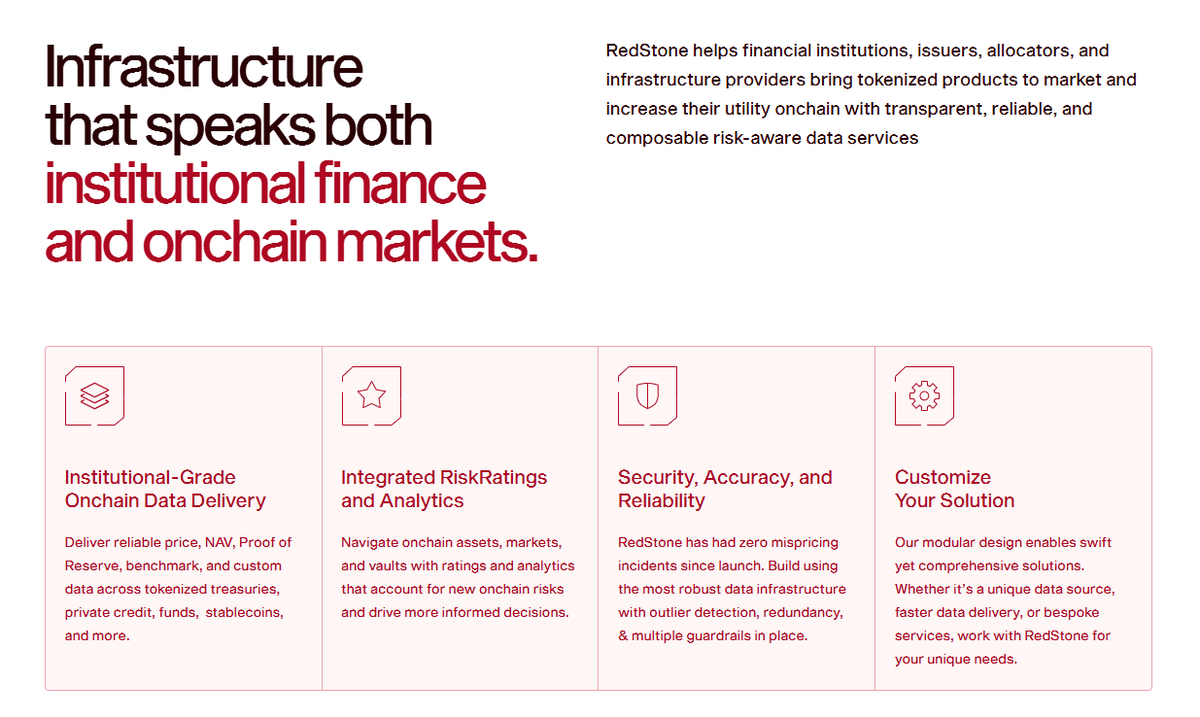
DeFi oracle tier list. FYI, basically everything you're seeing right now on the price chart is brought to you by oracles. They are the bridge between blockchains and the outside world: they bring off-chain data like prices, rates, and event outcomes into smart contracts so DeFi apps can lend, liquidate, settle, and rebalance correctly. How does an oracle operate: + Collect data off-chain + Verify it from multiple sources + Aggregate the data + Publish it on-chain + Allow smart contracts to use it As oracles play a quite important role in keeping data correct in DeFi, they're also included in security infrastructure. Here's the tier list: 1. Tier S: goated, key pillar + @chainlink - being well-known for Chainlink CCIP, data feeds, and cross-chain messaging + @Oracle - building enterprise database and cloud infrastructure + @redstone_defi - a modular, cost-efficient oracle that streams price and financial data off-chain 2. Tier A: good, well-operated, high reputation + @ChronicleLabs - focusing on cost-efficient, verifiable price feeds + @PythNetwork - a first-party, low-latency “price layer” where big exchanges and trading firms publish institutional-grade market data on-chain via an appchain 3. Tier B: niched, emerging ones + @chaoslabs - building “risk oracles” and risk infrastructure that treat data as a risk variable, doing real-time validation, anomaly detection, and circuit breakers + @switchboardxyz - offering an “on-demand” model to pull data only when needed + @UMAprotocol - building an “optimistic oracle” that can bring any verifiable truth on-chain (prices, events, outcomes) + @DIAdata_org - a trustless, first-party data oracle with a rollup-style architecture + @BandProtocol - cross-chain oracle on Cosmos 4. Tier C: on the way to prove themselves + @StorkOracle - focusing on RWA data feeds + @SUPRA_Labs - oracle as a side service + @eo_network - presenting as an oracle/data-infrastructure style project for on-chain applications What did I miss?

People are going crazy around crypto cards. The reasons are simple; you can't ignore these kinds of benefits: + One-tap payment via the POS that accepts the same VISA or Mastercard + Cross-border payment + Web2 payment with merchants anywhere + Cashback and incentives + Web2 and web3 assets switching And the race for card issuing has started for years. How can you choose a trusted card? + Bank or neobank related for better liquidity: for now, there's no standard base for a crypto card issuer, but large companies and protocols are probably receiving higher reputation in the field + VISA and Mastercard acceptance + A wide range of crypto support: BTC, ETH, USDT, USDC (avoid tying with a specific token released by the projects) + Clear fee structure + Technical: enabling 2FA, Face ID, or PIN code Let's start with the tier list (the tier is calculated based on a wide range of users' experiences when using the card and feedback on X; tiers may not reflect the final quality of the crypto card). 1. Tier S: @KASTxyz @RedotPay @gnosispay @useTria @ether_fi @UR_global 2. Tier A: @ready_co @Plasma @wirexapp 3. Tier B: @AviciMoney @Stable @plutus @cryptocom 4. Tier C: @Tap_Fintech @Nexo @Fiat24Official What criteria will you use to rank a crypto card?


🚨 State of @solana Q1 2026 Megathread 🚨 @MessariCrypto's report on Solana's Q1 just dropped, and it's massive (37 pages, ~7K words). If you don't have time to read the full report, I have you covered with the biggest news and insights across the ecosystem in Q1 👇

A fun fact about crypto or gold market is that the top assets by market cap are the less productive ones. For instance, $XRP is sitting at a valuation of $90b, but the XRPFi economy feels like kindergarten. The major obstacle is that users lack the means to move their XRP holdings from CEXs, with approximately 70% of the XRP supply now sitting idle on major CEXs. This is where a specialized design comes at. ▸ Flare as the direct path to XRPFi @FlareNetworks is the only name I know so far that can bridge XRP directly from exchanges. In simple words, + competitors like Squid or wXRP only provide a wrapped version of XRP on-chain + Flare shortens the path by moving XRP holdings on CEXs directly to FXRP, which is fully composable in DeFi This big contrast is the moat, and it builds higher trust in Flare, paving the way for access to that massive reserve XRP. It also helps Flare onboard over 154m $XRP on Flare, of which there are 139.5m XRP presenting in DeFi. Flare has been building a rich ecosystem to support the use of FXRP like @Firelightfi, @kinetic_xyz and also the well-known @Morpho. As Flare's operation getting more efficient, $FLR token is ensured to be the top choice within XRPFi. ▸ FAssets v1.3: the latest upgrade FAssets v1.3 redesigns the minting side of FXRP, leaving a much better UX. The main idea of laucnhing v1.3 is to support any kind of XRP holdings (exchange, wallet, or XRPL-native setup) with a clear path to potential earnings on Flare and further on XRPFi. Before v1.3: + users had to pick a specific agent + minting involved Flare smart-contract interactions + exchanges could not easily replicate that process operationally + the UX felt disconnected from how XRP normally moves After v1.3: + minting begins with a properly labelled XRPL transaction + destination tags and memos are used + an executor relays proof to Flare + FXRP minting completes on Flare afterward Instead of asking exchanges to support custom user-side smart-contract interactions, the system now resembles the same category of tagged XRPL withdrawals - a core unlock for exchanges' experience. ▸ How users experience FAssets v1.3 Here're the steps users may come through: 1. Withdraw XRP from any exchanges via XRPL (Binance, OKX or Kraken) *Include the correct destination tag (this is important to receive your assets on Flare) 2. Go to FAssets and provide your labelled XRP transaction 3. Receive FXRP Less than 3 steps to enter the largest hub of XRPFi. This is how FAssets v1.3 outperforms competitors in getting FXRP ready for DeFi yields. The doorway to enter XRPFi is only one step close to you. Once you got your FXRP, head over the Flare's ecosystem for staking, lending and even perp trade. Suggested platforms: + staking: @Firelightfi, @upshift_fi + lending: @kinetic_xyz + perp: @HyperliquidX It's your showtime with FXRP.

Following a comprehensive security review of the cross-chain infrastructure underpinning LBTC and BTC.b: - CCIP will replace LayerZero as the cross-chain infrastructure across Solana, Etherlink, Berachain, Corn, and TAC - LayerZero on Morph and Swell will be fully deprecated
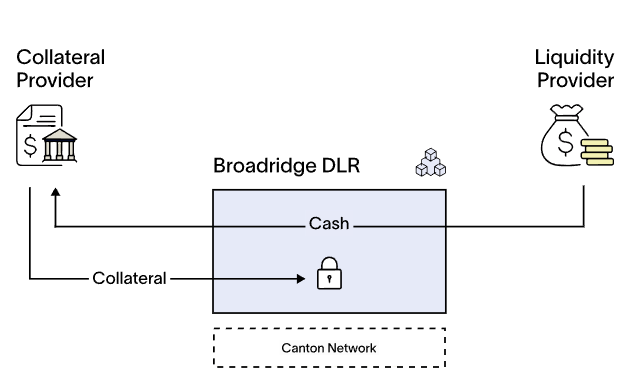
To me, all defi protocols who can generate positive revenue during this market period deserve a tier S class. However, if you take a closer look into these aspects of their operatings, you may see a more fulfilled picture on how they can maintain a good operational performance: + DeFi niches + Fees generated vs. expense defecit + Reputations A better operational picture should include a solid user base and a sustainable fees generated through time. Protocols who cut down expenses will be considered as lower tier on the list. Let's start with the list: 1. Tier S: goated, no seasonal protocol, solid pillar of the market @tether - $491.4m - the issuer of USDT, all yields from USDT backing assets investments, mostly US Treasury Bills collected by Tether. @circle - $198.52m - the 2nd largest stable issuer USDC, establishing a 100% earnings from revenue with zero cost of revenue. @HyperliquidX - $51.74m - the vital pillar of perp trading, generating a sustainable revenue line thanks to a solid user base. @Paxos - $10.92m - the issuer of PAXG, accumulating revenue back since the hype of RWA. 2. Tier A: strong-built models, market dominance @Pumpfun - $37.03m - PumpFun once stood at a much higher position due to the massive hype of meme cycle, now maintaining at top 5 by revenue. @trondao - $30.94m - being the best network for stablecoin transfer. @Polymarket - $20.55m - still the best prediction market by revenue generated, even though being competed for the 1st place by Kalshi. @Grayscale - $19.48m - zero cost of revenue, printing millions for managing RWA investments. @SkyEcosystem - $15.36m - fees collected minus savings rate paid to DSR depositors. @aave - $9.74m - being the largest money market but Aave faces a huge cost of revenue, making above 85% each month. @chainlink - $4.63m - being the largest data infra of the market. 3. Tier B: @CantonNetwork - $66.22m - Canton ranks the top 3 by revenue, but their model is running private RWA streaming, which means the user base and the actual volume are unknown. @AxiomExchange - $12.36m - low reputation for the highest revenue trading platform. @edgeX_exchange - $7.88m - emerging perp dex, still maintaining the heat after the TGE. @LidoFinance - $4.83m - facing a high cost of revenue, making the whole model felt short in gross revenue 4. Tier C: @Courtyard_io - $6.03m - running zero cost of revenue in the digital card collection, still a narrow niche to scale up. @gmgnai - $4.39m - not a sustainable model, going seasonal due to the activity of meme market. What did I miss?


Our Q1 2026 financial results are live. The summary? Everything is moving onchain.

Today, we are filing a lawsuit against Justin Sun for defamation. Sun has launched a coordinated media smear campaign against World Liberty Financial and refused to stop even when confronted with the truth. Here's the story.🧵
TGE: May 6.
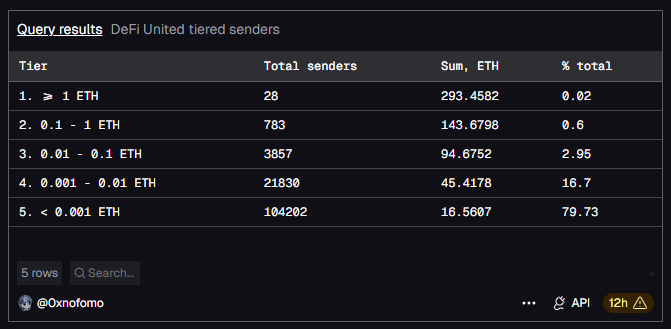
Thanks to the decisive voice and leadership from @aave, for the first time in DeFi history, a joint relief alliance was urgently formed to deal with the aftermath of a large-scale attack. This is proof of the ecosystem's maturity, as major players who were once rivals are now willing to come together. 1. What is DeFi United and how was it formed? DeFi United is a temporary alliance of major protocols formed right after the @KelpDAO exploit on April 18, 2026. The attack exploited a cross-chain bridge flaw, allowing fake rsETH to be minted and used as collateral to borrow real ETH, creating ~$190-230m bad debt on Aave and Compound. The initiative was led by Aave founder Stani Kulechov, calling for support to cover ~116,500 rsETH and contain systemic risk. 2. Key participants The alliance includes major players across the ecosystem: Protocols & DAOs: - @aave DAO (25,000 ETH) - @Mantle_Official (30,000 ETH credit line) - @ether_fi (5,000 ETH) - @LidoFinance (2,500 stETH) Along with @ethena, @golemproject, @Ink Foundation, and @bgdlabs. Infrastructure & organizations: - @Consensys & @Sharplink (30,000 ETH) - @arbitrum DAO (froze ~30,766 ETH) - @SolanaFndn - @circle Individuals: - @StaniKulechov (5,000 ETH) - @justinsuntron (20m USDT) Community: Over 116,000 wallets contributed. 3. Goals and current progress Main goals: - Restore rsETH value by injecting real ETH to bring the ratio back to ~1 rsETH ≈ 1.07 ETH. - Resolve hacker positions through oracle adjustments and controlled liquidation of ~107,000 rsETH. - Reopen markets across chains and normalize risk parameters. Current progress: - Raised ~132,649 ETH (~$303m), covering 148% of bad debt. - Aave has shared the execution plan, pending governance approval. - Large portion of funds recovered, including 30k+ ETH from Arbitrum and 73k+ ETH by KelpDAO. - User compensation starts April 30, 2026 via aave-compensation.com. Overall view The response has been strong, and Aave’s TVL is already recovering. From my pov, this is a turning point. It shows DeFi can coordinate and handle crises without relying on external bailouts, which is something the space has been trying to prove for years. At the same time, the root issue is still there. Cross-chain bridges remain one of the weakest points, and without better security, similar incidents can happen again.


AI agent infra tier list. This list contains every niches in building AI agent from the scratch. I'm ranking them on these criteria: + How wide can the infra cover + Reputation of the project Let's start! 1. Tier S: @opentensor - set the incident with Covenant asied, Bittensor is really a giant in the AI field that turns AI models into a competitive marketplace. Its core product is a subnet-based architecture, where each subnet specializes in a task (LLMs, vision, etc.), alongside an incentive system that rewards useful outputs. @Fetch_ai - building autonomous economic agents that can perform tasks across DeFi, supply chains, and services. @virtuals_io - starting as a launchpad for agents, Virtuals now becomes the home for Agent infra - highly aligned with consumer-facing agent economy. 2. Tier A: @SingularityNET - a AI service marketplace aiming to aggregate AI models, agents, and services into a composable network @0G_labs - a modular AI L1 infra focusing on AI execution; Core products typically include AI DA layer, storage, and inference stack. @rendernetwork - a decentralized GPU compute marketplace, powering AI models to run smoothly. @Chain_GPT - AI tools tailored for crypto; core products include AI chatbot, dev tools, and trading copilots. @AskVenice - a privacy-first AI platform emphasizing uncensored and local/secure inference. @GoKiteAI - focusing on low-latency AI inference routing, solving the execution speed of agents. 3. Tier B: @dira_network - an emerging decentralized AI/data coordination layer and pipelines. @Agentverse_ai - focusing on agent frameworks + simulation environments. @sendaifun - one of the core infra on Solana, simplifying AI interactions and possibly agent deployment tools. @ritualnet - a decentralized AI execution network aiming to enable verifiable AI computation. @LitProtocol - offering a security layer for AI agents (identity, permissions, secrets). @fourdotmemezh - started as a meme launchpad, now FourMeme turns into building the Agent infra on BNB Chain. @gensynai - a decentralized compute network for training AI models, distributing ML workloads globally. What did I miss?