
ทวีตที่ปักหมุด
Moric
190 posts

Moric
@Moric21
Is a amateur AI creator, just doing images for now but will get into videos and music hopefully soon.
เข้าร่วม Ekim 2010
361 กำลังติดตาม248 ผู้ติดตาม


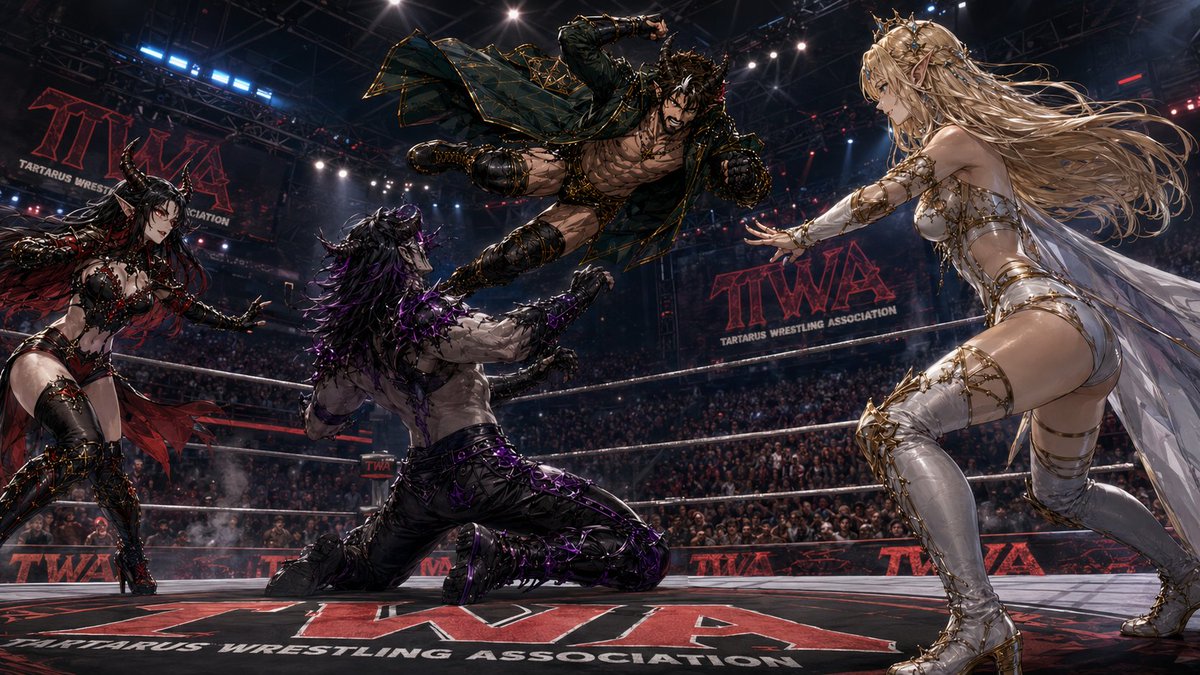

Prompt of the Day: TARTARUS WRESTLING ASSOCIATION 🏆🔥💜💚
Today’s Prompt of the Day turns your character reference images into pro wrestlers inside the TWA ring: Tartarus Wrestling Association.
Add two character references for a dramatic one-on-one match, or add three or more for a chaotic royal rumble-style showdown.
You can also fill in the fields at the top if you want to choose a wrestler name, signature move, or match type. Leave them blank and the prompt will invent them from your character references.
Have fun with this one 🏆🔥
............................PROMPT STARTS HERE............................
WRESTLER NAME:
[Type the main wrestler name here, or leave blank and invent one from the main reference.]
SIGNATURE MOVE:
[Type the main wrestling move here, or leave blank and invent one from the main reference.]
MATCH STYLE:
[Type one if desired, or leave blank. If blank: 2 references = one-on-one match, 3+ references = royal rumble-style match.]
Create a 16:9 horizontal widescreen semi-realistic stylized pro wrestling illustration inside a packed arena for TWA: Tartarus Wrestling Association.
REFERENCE COUNT LAW:
Use each attached character reference image as exactly one unique wrestler.
The final image must contain exactly the same number of main wrestlers as attached character references.
One reference image = one wrestler.
Do not create copies, clones, variants, duplicates, echoes, mirrored versions, background versions, crowd versions, alternate costumes, or extra bodies of any referenced character.
Do not fill the scene with repeated versions of the same character.
If more action is needed, use poses, ropes, lights, crowd silhouettes, camera flashes, smoke, tables, ladders, or arena props instead of duplicating characters.
Main action:
The first attached character reference image is the featured wrestler.
Show this wrestler performing a huge flying wrestling move from the top rope, turnbuckle, cage wall, ladder, or another elevated position.
If SIGNATURE MOVE is blank, invent a dramatic aerial finisher that fits the character, such as a flying elbow drop, moonsault, corkscrew splash, diving knee strike, phoenix splash, shooting star press, or character-specific supernatural finisher.
The move must be readable, powerful, believable, and central.
Match logic:
If there are exactly two attached references, show a dramatic one-on-one wrestling match.
If there are three or more attached references, show a royal rumble-style scene with every referenced wrestler visible and involved.
If MATCH STYLE is filled in, follow it while still obeying the reference count law.
Wrestler redesign:
Transform every referenced character into a full pro wrestler version of themselves.
Replace their original clothing with real ring gear, not minor edits to the source outfit.
Use wrestling trunks, tights, singlets, ring tops, sports bras, entrance jackets, robes, boots, knee pads, elbow pads, wrist tape, masks, face paint, belts, capes, gauntlets, or championship-style accessories as appropriate.
Preserve identity through face, hair, eyes, species traits, silhouette cues, colour palette, symbols, motifs, accessories, and personality.
The gear must clearly look like dedicated wrestling attire while still being custom-built from each character’s original design.
Style rule:
Keep the attached references’ character identities and general stylization, but render the scene in a more grounded, premium anime-realism or semi-realistic stylized illustration style.
Use believable anatomy, weight, fabric tension, muscle strain, impact, ring physics, and arena lighting.
Do not make the image chibi, rubbery, childish, goofy, or overly cartoony.
Do not use full photorealism unless specifically requested.
TWA branding:
Include bold TWA / Tartarus Wrestling Association branding naturally in the arena.
Place readable TWA branding on the ring apron, center mat logo, entrance screen, LED boards, wall banner, overhead display, or championship belt plate where it makes sense.
The TWA logo should feel like a professional wrestling federation logo, not plain random text.
Arena and camera:
Set the scene in a dramatic wrestling ring with ropes, turnbuckles, mat texture, LED boards, entrance screens, arena trusses, spotlights, haze, smoke, crowd silhouettes, and camera flashes.
Use a strong cinematic camera angle such as a low ringside angle, corner-post angle, or upward near-mat angle that best sells the flying move.
Create depth through staging, scale, ring ropes, arena structure, overlapping forms, and lighting, not shallow depth of field.
Keep all main wrestlers sharp, visible, recognizable, and in focus.
Lighting and mood:
Use dramatic arena spotlights, coloured stage lights, rim lighting, LED glow, haze beams, reflective highlights, and impact lighting.
The mood should feel intense, electric, competitive, premium, and larger than life.
Quality:
Polished premium semi-realistic stylized wrestling key art with crisp rendering, controlled anatomy, strong materials, readable expressions, dynamic action, clear silhouettes, and clean composition.
Do not:
- Do not create more or fewer main wrestlers than the number of attached character references.
- Do not duplicate, clone, mirror, copy, echo, repeat, or create alternate versions of any referenced character.
- Do not add extra wrestlers, extra main characters, background copies, or crowd copies of the references.
- Do not merge characters together.
- Do not change the identities of the attached references.
- Do not keep the original outfits mostly unchanged.
- Do not make the wrestling gear generic, casual, or unrelated to the original character designs.
- Do not omit readable TWA branding.
- Do not make visible text long, messy, misspelled, tiny, or unreadable.
- Do not make the flying move unclear, weightless, stiff, or hidden.
- Do not use shallow depth of field that blurs important wrestlers.
- Do not make the scene crowded, flat, chaotic, or hard to read.
- Do not hide main wrestlers behind ropes, smoke, crowd elements, or other characters.
- Do not make the background busier than the wrestlers.
- Do not make the main subjects blurry, tiny, hidden, or unreadable.
- Do not create messy anatomy, extra limbs, malformed hands, distorted faces, broken wrestling poses, or muddy textures.
- Do not use photorealism unless specifically requested.
..............................END OF PROMPT..................................
#POTD #promptoftheday #AI #AiArt #Art #AnimeArt #ProWrestling #Wrestling #TWA #TartarusWrestlingAssociation #CharacterDesign #AnimeStyle #DigitalArt #CommunityPrompt

English


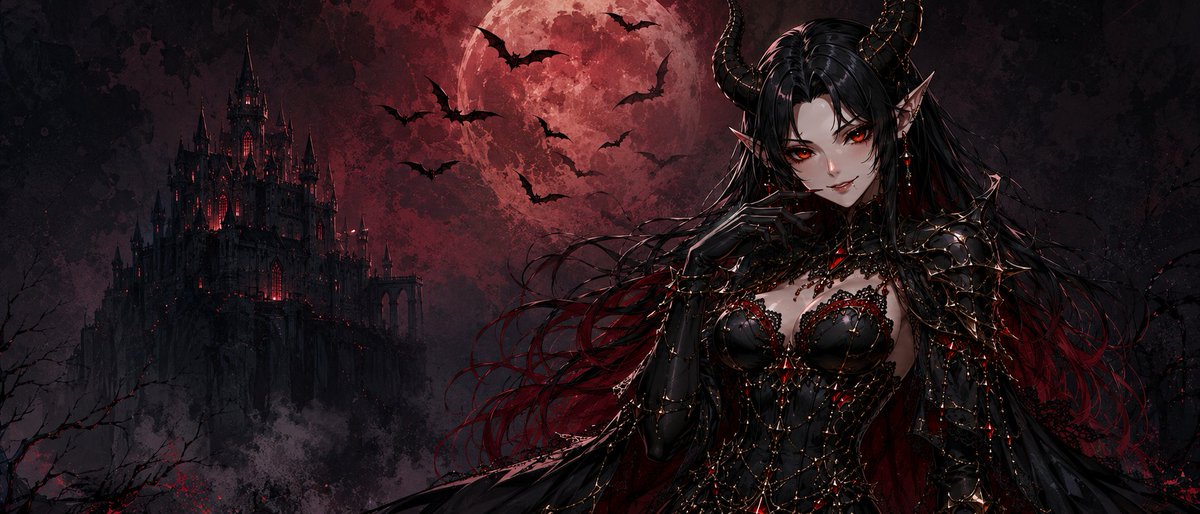

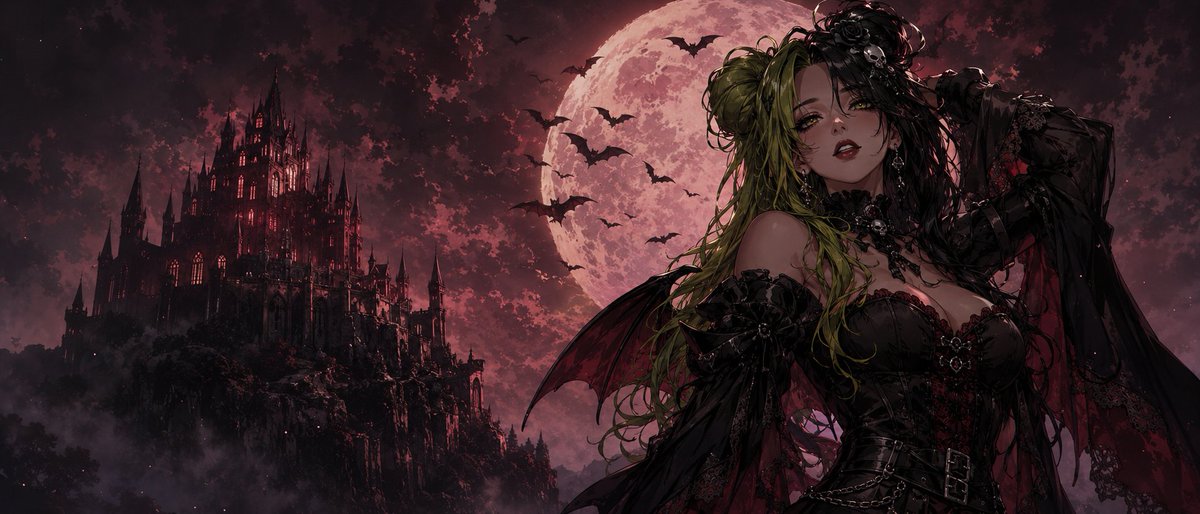
Nocturne of the Eternal Spire
------------------------
Prompt Start
------------------------
@image1 - main character reference
preserve the character as recognizable as seen in @image1.
preserve @image1 's:
- face shape
- eye color
- eye shape
- mouth
- hair style
- hair color
- ears
- race
- gender
- species
- age
- markings
- silhouette
aspect ratio: 21:9
mid-shot, character is shown from beltline and above.
character is positioned at the right third of the frame.
large negative space in the left of the frame.
background elements occupy the left third of the frame.
dreamlike, volumetric lighting, light particles floating, eyes glow with internal light.
Moody, gothic, dramatic, awe inspiring, alluring.
masterpiece, fine art, museum quality, 8k resolution, Gallery exhibition grade, pristine, poster quality.
the character is off centered to the right third of the image making a dramatic pose (vary hands placements, head tilt and expression) looking directly at the camera.
character is wearing a gothic attire (if male choose between gothic armor or gothic suit. if female a gothic dress.).
at the left third of the image a castle on a cliff (vary architecture, size, and condition).
Behind the character and more centered a moon (vary in size, intensity, color and specific placement).
on the moon between 4 to 12 bat silhouettes are clearly visible.
keep the overall dark gothic fantasy night atmosphere unchanged.
every generation should feel different from the previous one.
Low quality, worst quality, blurry, bad anatomy, extra fingers, missing fingers, extra digits, missing digits, jpeg artifacts, logo, text, watermark, pointillism, deformed, ugly, ugly faces, blurry faces, cropped, cropping.
----------------------------
Prompt End
----------------------------
#AIart


English


Edge of Recognition
Prompt
Create an ultra-wide **21:9 cinematic extreme macro surreal image** framed from an extremely low ground-level point of view, as if the camera lens is almost touching the **white of the eye**.
The composition should be a close-up on the **reference-image character** seated on the black limbal ring. The character should be the main foreground subject, clearly readable and recognizable, while the iris vortex remains visible behind them as a massive surreal landscape. Preserve the reference character’s recognizable identity, outfit, color palette, silhouette, hairstyle or head shape, accessories, and overall visual design as closely as possible.
The character should sit naturally on the limbal ring like someone sitting on a cliff edge or curb. Their body should face toward the distant pupil-like vortex, but their head should be turned back over one shoulder, looking toward the viewer. Their pose should feel tense, quiet, and cinematic, as if they have sensed something impossible behind them.
The viewer’s perspective should feel tiny and grounded directly on the sclera. The sclera should occupy the near foreground as a pale wet biological ground plane with subtle branching red veins, glossy texture, tiny surface imperfections, and shallow depth of field.
A thick **black limbal ring** should rise across the frame like a dark cliff, ridge, curb, or horizon wall separating the sclera foreground from the iris landscape beyond it. The limbal ring should feel physically tall, close, wet, and textured, not like a thin flat outline. The character must be physically seated on this black limbal-ring ridge, with believable contact shadows and correct scale.
Beyond the limbal ring, the iris should stretch away like a vast fibrous anatomical landscape. The iris must form a strong **spiral optical illusion**, with the surface visibly twisting inward toward a distant dark pupil-like vortex. The spiral should remain clear, powerful, and readable from this low angle.
Use the user-supplied iris colors:
**[Color 1]**
**[Color 2]**
The color vortex must be extremely clear and consistent. The two colors should not appear as loose patches, separate rings, random mottling, or simple inner/outer zones. They must form **continuous spiraling color streams** that wrap around the iris vortex from the outer terrain all the way toward the pupil. Both colors should twist around each other in long curved lanes, braided pigment ribbons, helical arcs, rotating fibrous bands, and sweeping vortex paths.
Make the color spiral visible at first glance. The viewer should immediately read the iris as a swirling two-color vortex, not just a textured iris. Each color should have repeated curved pathways that follow the same rotational direction, tightening as they approach the pupil. The colors should remain interwoven across the whole iris terrain: **[COLOR 1]** cuts through **[COLOR 2]** in curved spiral streaks, while **[COLOR 2]** threads back through **[COLOR 1]** in matching rotating arcs. The swirl should feel like pigment, fibers, and anatomy are all being dragged into the same ancient rotational pull.
Build the iris from realistic anatomical details: dense radial fibers, branching striations, porous iris crypts, layered pigmentation, fibrous ridges, organic tissue-like tunnels, subtle speckling, and natural pigment variation. The spiral must feel grown from iris fibers, not painted on top.
Add a stronger surreal phenomenon throughout the iris landscape without turning it into a monster scene or a populated scene. The eye should feel as if it is actively reshaping reality around the seated character.
Across the iris terrain, a limited number of fibrous pigment streams should rise slightly off the surface in broad suspended arcs, like living anatomical ribbons being pulled upward by the vortex. These lifted strands must remain clearly made of iris fibers, pigment tissue, and wet biological filaments. They should not look like tentacles, arms, vines, cables, or creature limbs. Keep them elegant, sparse, and integrated into the iris anatomy.
The suspended iris fibers should follow the same spiral direction as the vortex, curving above the terrain in long graceful arcs and casting thin shadows across the iris surface. They should make the vortex feel physically powerful, as if the pupil is pulling the iris tissue upward into slow rotational motion.
The black limbal ring should subtly distort near the character, as if the boundary between sclera and iris is bending under invisible pressure. The ridge may curve unnaturally toward the pupil, with wet black surface tension stretching like tar or living glass, but it should still remain recognizable as the limbal ring.
Add a few tiny glossy beads of eye moisture lifting upward from the sclera near the character, floating against gravity and reflecting fragments of the spiral iris colors. These droplets should be sparse, cinematic, and realistic, like suspended tear-fluid caught in the pull of the pupil.
Add subtle physical interaction between the seated character and the eye landscape. The vortex should visibly affect the character without breaking their pose: loose hair strands, fabric edges, ribbons, accessories, or small clothing details should be gently pulled toward the distant pupil-like vortex, following the same spiral direction as the iris fibers. The effect should be subtle and cinematic, not windy or chaotic.
The character should seem physically aware of the pull: one hand may brace against the wet black limbal ring, fingers pressing into the slick surface, while their body remains seated and tense. Their over-the-shoulder look should feel like they are caught between curiosity and dread.
Add tiny wet contact details where the character touches the limbal ring: faint reflections under their hand, subtle surface indentation, small glossy highlights, and slight dark moisture around the contact points. This should make the character feel grounded in the surreal macro environment rather than pasted onto it.
The character’s shadow should behave impossibly: instead of falling naturally behind them, it should stretch across the limbal ring and pull toward the distant pupil-like vortex, thinning into several dark thread-like shadows that follow the spiral direction. The shadow should feel like the eye is trying to remember or claim the character.
Within the iris fibers, include one large subtle negative-space shape that almost resembles the character’s silhouette woven into the pigment flow, but only barely. It should not be a clear duplicate person. It should feel like the iris anatomy is forming an echo of the character through fiber density, color pathways, and shadow, visible only after looking closely.
Include a few rare impossible reflections inside select deeper iris crypts, but keep them sparse and subtle. These may appear as faint distorted glints, partial silhouettes, eye-like highlights, or fragments of the seated character seen from impossible angles, warped by translucent iris tissue. They should be discovered on closer inspection, not read as clear miniature people or repeated clones.
The distant pupil-like vortex should sit far back across the iris landscape behind the character, pulling the entire terrain inward. It should feel deep, dark, ancient, and quietly conscious, but nothing should emerge from it. The pupil should function as the vanishing point of the iris spiral, like a distant black void at the center of the optical illusion.
Make the distant pupil-like vortex feel optically impossible. The dark center should bend nearby iris fibers and color streams through subtle gravitational lensing, as if the surrounding anatomy is being visually warped by the pupil. Fibers closest to the center may appear stretched, curved, or repeated in faint echo-like distortions, but the effect should remain anatomical and realistic.
Inside the pupil darkness, include only tiny warped reflections of the limbal ring and seated character, distorted almost beyond recognition. These reflections should be extremely subtle, like something hidden in glossy black depth, not a visible figure or creature.
The iris fibers closest to the vortex should appear pulled into a slow silent rotation, as if the eye itself is thinking. The two user-supplied colors should spiral more intensely near the pupil, tightening into hypnotic braided streams that feel ancient, ceremonial, and slightly predatory. The character should seem caught between recognition and dread, as though the iris landscape knows them.
The composition should emphasize depth and scale: close-up character in the foreground on the limbal-ring cliff, sclera below as the ground plane, massive swirling two-color iris field stretching behind them, suspended iris-fiber arcs rising from the terrain, impossible shadows pulling toward the vortex, subtle floating moisture beads, and the distant dark pupil-like void reshaping the landscape inward.
Style: hyper-detailed macro realism, surreal anatomical landscape, 21:9 ultra-wide frame, worm’s-eye macro perspective, camera almost touching the sclera, close-up on seated reference character, black limbal-ring cliff, massive fibrous iris vortex, strong consistent two-color spiral, suspended living iris fibers, impossible shadow behavior, subtle anti-gravity eye moisture, ancient conscious pupil-like void, deep optical illusion, organic biological texture, cinematic scale, shallow depth of field.
No weak color swirl, no random color mottling, no separated color rings, no simple inner/outer color zones, no straight radial-only fibers, no color patches that ignore the spiral, no black-and-white op-art bands, no pasted graphic spiral, no flat iris disc, no overhead view, no full eye portrait, no eyelids dominating the image, no eyelashes as the main subject, no missing sclera foreground, no thin flat limbal outline, no generic tiny person, no unrecognizable reference character, no character floating above the ring, no character facing only away with no over-shoulder look, no character being dragged away, no floating character, no strong wind, no flying hair everywhere, no exaggerated motion blur, no arm emerging from the pupil, no hand reaching from the pupil, no creature emerging from the vortex, no tentacle-like iris strands, no creature limbs made from fibers, no arms, no hands, no vines, no cables, no snake-like appendages, no excessive lifted ribbons, no chaotic fiber clutter, no monster, no skulls, no gore, no blood, no severed limb, no literal doorway, no city inside the iris, no large extra faces, no clear clone characters inside the iris, no repeated miniature figures in every crypt, no populated windows, no tiny crowd, no magical glowing ribbons, no fantasy spell effects, no floating symbols, no excessive floating debris, no cluttered surreal elements, no overpowering the character, no weakening the spiral vortex, no loss of vortex depth, no square or vertical composition.
@raeraeuwu @TheeHolyBall @reallynunyaz99 @EvaGlitchAI


English


Have you ever wondered what you would look like as a tree in a painting? No? Fair enough.
As always, feel free to edit this as you see fit, and please have fun!
Tree Lil' Flicka looks pretty nice, Mr. @TolvanSkull
I'd Like To Be a Tree
[Prompt starts here]
Painting quality 16:9 aspect ratio
@image1 = primary character reference
Preserve all referenced characters’ face shapes, hairstyles, hair colors, eye colors, personalities, body language, signature color palettes, outfit motifs, species traits, accessories, silhouettes, body shapes, body proportions, and overall character vibes. If the character has a mask, do not change it. If the character does not have a head, do not invent one.
Draw a framed painting of a tree using @image1 as the reference. Use the personality, theme, and vibe of @image1 to determine the type of paint used in the painting. Also, use the personality, theme, and vibe of @image1 to determine the line art style for the painting. This can be used even if it is not normally used with the chosen paint type. The material will also be determined by @image1’s personality, theme, and vibe.
Draw a tree that strongly symbolizes @image1. The trunk will have a natural color but include glowing highlights using the color scheme of @image1. Also, include careful flourishes that reflect the personality of @image1 throughout the tree. Use the personality and vibe of @image1 to decide if the tree has conifers, fruit, or flowers. Regardless of the choice, they will also strongly reflect @image1 and stand out. The shape and color of the canopy and leaves will be determined by @image1’s theme. Around the tree will be wispy ghostly shapes. These will be abstract using @image1’s color scheme. Their shapes should be vibrant and reflect @image1’s energy and personality.
The tree will be in a location that strongly reflects @image1’s personality, theme, and vibe. This location will be ethereal, otherworldly, or alien. It would be best if it reflects the terrain @image1 may live in. There are no people or animals in the painting.
Across the canvas will be a subtle, colorful holographic sheen. Use @image1’s colors for this sheen, and add small bands that shine brightly. Do not allow this to overly obstruct the painting.


English
Prompt of the Day: POKÉMON GYM LEADER BATTLE ARENA ⚡🏟️💜💚
Todays prompt was a team effort between me @Nodoka_Katana @Exarchos and @MaidCoraCarina
Today’s Prompt of the Day turns your character reference image into a custom Pokémon Gym Leader inside their own full 16:9 battle arena.
This one chooses or uses a six-Pokémon team, puts the ace Pokémon on the battlefield, adds a challenger on the opposite side, and places the rest of the team on a reserve bench cheering them on.
Attach your character reference image, fill in any optional fields you want, and let the prompt build the Gym type, team, badge, arena, and battle scene around them.
Have fun with this one ⚡
............................PROMPT STARTS HERE............................
@Image1 = main character / OC / model reference
{NAME} = optional — character name
{GYM_ATTIRE} = optional — write "Yes" to transform the outfit into a Gym Leader outfit, or leave blank to keep the original outfit
{GYM_TYPE} = optional — write a Pokémon type, or leave blank to infer one from the character
{POKEMON_TEAM} = optional — list up to 6 Pokémon in favorite order, or leave blank for a fully randomized team
Create a highly detailed anime-style “Pokémon Gym Leader Battle Arena Showcase” image.
The final image must be a 16:9 horizontal widescreen image.
The final image must look like an official Gym Leader reveal scene set inside an actual Pokémon Gym battle arena, not a flat poster or roster screen.
Show the Gym Leader in their custom Gym arena during a battle. One of their Pokémon is on the battlefield in front of them, ready to launch an attack. A random opposing trainer and one random opposing Pokémon are on the opposite side of the arena.
The other five Pokémon from the Gym Leader’s team should be visible on a reserve bench, side-wall platform, raised ledge, or support area behind or beside the Gym Leader, cheering on the active Pokémon.
Use a pulled-back wide cinematic arena composition so the Gym Leader, active Pokémon, opposing trainer, opposing Pokémon, reserve bench, and full battle layout all fit clearly inside the 16:9 frame.
REQUIRED LAYOUT
Include:
the Gym Leader standing on their side of the arena
one Gym Leader Pokémon active on the battlefield
the active Pokémon posed as if it is ready to launch an attack
one random opposing trainer / challenger on the opposite side of the arena
one random opposing Pokémon facing the Gym Leader’s active Pokémon
the remaining five Gym Leader Pokémon sitting or standing together on a reserve bench / viewing ledge / side-wall support area
each of the six Gym Leader Pokémon clearly visible
each Gym Leader Pokémon with its own visible nameplate
each nameplate showing Pokémon name and typing
one Gym Leader title panel
one Gym Badge panel
a themed Gym arena background that supports the layout without overpowering it
The Gym name and Gym Badge name should use the same core name.
This must be a clean battle-arena showcase.
Do not add extra biography panels, lore boxes, stat boxes, personality boxes, or other extra info sections.
CHARACTER IDENTITY LOCK
Use @Image1 as the identity source.
Preserve:
face shape
hairstyle
hair color
eye color
body type and proportions
core personality vibe
recognizable accessories
overall aesthetic identity
The character must clearly remain the same person from @Image1.
ART STYLE
Render the character in the same polished anime character art style used for the refined Nodoka, Sayoko, and Noriko-style showcase images:
clean linework, polished shading, elegant anime rendering, attractive official Pokémon-style presentation.
OUTFIT RULE
If {GYM_ATTIRE} is "Yes", redesign the character’s outfit into a custom Pokémon Gym Leader outfit based on their original style.
Do not use a generic random uniform.
The new outfit should feel like:
“this character’s existing outfit reimagined as an official Pokémon Gym Leader outfit.”
Preserve the character’s:
color palette
fashion vibe
motifs and patterns
accessories
silhouette inspiration
personality expression
The redesign may include:
jacket, dress, skirt, shorts, or layered trainer-fashion styling
boots or trainer footwear
gloves, belts, pins, badges, or emblems
capes, half-capes, or decorative tails
type-themed ornaments
athletic, ceremonial, or battle-ready details
If {GYM_ATTIRE} is blank, keep the original outfit as closely as possible.
GYM TYPE RULE
If {GYM_TYPE} is provided, use that exact type as the Gym’s main specialty.
If {GYM_TYPE} is blank, infer one main Gym type from the character’s:
appearance
color palette
outfit style
accessories
body language
personality vibe
overall visual identity
POKÉMON TEAM RULE
The final team must include exactly six Pokémon.
If {POKEMON_TEAM} lists six Pokémon, use those exact six.
If fewer than six are listed, use them first and fill the rest with fitting Pokémon.
If blank, choose all six based on the Gym type, character, and Gym theme.
Prefer Pokémon that share the Gym’s main type, but dual typings are encouraged.
No extra Gym Leader Pokémon.
No duplicates unless specifically requested.
TEAM ORDER / POSITION RULE
If {POKEMON_TEAM} is listed in order, treat that order as favorite ranking from #1 to #6.
Use this placement order:
Position 1 = active Pokémon on the battlefield in front of the Gym Leader
Position 2 = reserve bench Pokémon
Position 3 = reserve bench Pokémon
Position 4 = reserve bench Pokémon
Position 5 = reserve bench Pokémon
Position 6 = reserve bench Pokémon
This means the first Pokémon listed is the most important / favorite and should be the active Pokémon on the battlefield. The second through sixth Pokémon should appear together on the reserve bench, cheering from behind or beside the Gym Leader.
If {POKEMON_TEAM} is blank, choose the best-fitting Pokémon as the active battle Pokémon and place the other five on the reserve bench.
ACTIVE BATTLE POKÉMON RULE
The active Gym Leader Pokémon must be on the battlefield in front of the Gym Leader.
It should face the opposing Pokémon and look ready to launch an attack.
Use a clear battle pose, readable attack energy, elemental effects, or tension based on the Pokémon’s type and abilities.
Do not hide or crop the active Pokémon.
RESERVE BENCH RULE
The five non-active Gym Leader Pokémon must be visible together on a reserve bench, side-wall platform, raised ledge, or support area behind or beside the Gym Leader.
They should look like they are:
watching the fight
cheering on the active Pokémon
reacting with personality
grouped naturally in a fun, readable way
This reserve bench does not need to follow strict in-game Pokémon battle rules. It is a stylized arena showcase feature.
Do not hide the reserve Pokémon.
Do not make them tiny, blurry, or unreadable.
Do not scatter them randomly around the image.
OPPONENT RULE
Create one random opposing trainer / challenger and one random opposing Pokémon.
The opposing trainer and opposing Pokémon should appear on the opposite side of the arena.
The opposing Pokémon should face the Gym Leader’s active Pokémon and look ready to battle.
The opponent is secondary to the Gym Leader and their team.
Do not make the opponent more important than the Gym Leader.
NAMEPLATE RULE
Each Gym Leader Pokémon must have its own clean UI-style plaque.
Each plaque should show:
POKÉMON NAME
TYPE / TYPE
If the Pokémon has only one type, show only one type.
Keep labels neat, readable, and elegant.
The active Pokémon’s label may be more prominent.
The reserve Pokémon labels may be smaller, but still readable.
GYM BADGE RULE
Create a custom Gym Badge based on the Gym’s theme.
The badge must be clearly visible in its own dedicated badge panel.
Do not hide it in the background.
The badge should reflect:
the Gym’s type
the character’s motifs
the Gym’s atmosphere
the team identity
The Gym Badge name should match the Gym’s core name.
GYM TITLE PANEL RULE
Include one clear title panel showing:
GYM LEADER
character name if available
[TYPE]-TYPE GYM
Gym name
Example:
GYM LEADER
[NAME]
[TYPE]-TYPE GYM
[GYM NAME]
GYM THEME RULE
Design the Gym using both:
the character’s appearance, outfit, colors, and personality
the six Pokémon, including their type, habitat, abilities, and vibe
The Gym should feel like a custom arena made specifically for this trainer.
The environment must support the battle layout, not overpower it.
Possible elements:
central battle platform
themed architecture
badge motifs
type-themed symbols
puzzle or challenge hints
arena platforms
reserve bench or side-wall viewing ledge
elemental or habitat-inspired details
banners or emblems
dramatic but controlled lighting
COMPOSITION PRIORITY
Priority order:
central Gym Leader
active Gym Leader Pokémon on the battlefield
remaining five Gym Leader Pokémon on the reserve bench
Pokémon name/type labels
Gym Badge panel
Gym title panel
opposing trainer and opposing Pokémon
themed Gym arena background
Use a pulled-back 16:9 horizontal widescreen arena shot.
Keep the full battle layout readable.
Do not zoom in too close.
Do not use a vertical, square, tight portrait, or poster-only crop.
STYLE
polished anime illustration
official Gym Leader battle showcase style
high detail
strong character fidelity
clean readable composition
elegant UI plaque elements
expressive Pokémon
custom Gym environment
dramatic but controlled presentation
MOOD
Confident
iconic
memorable
stylish
powerful
battle-ready
Do not:
Do not add extra Gym Leader Pokémon.
Do not duplicate Pokémon unless requested.
Do not omit any Pokémon from the Gym Leader’s team.
Do not use a generic unrelated background.
Do not make the composition cluttered.
Do not create full battle chaos.
Do not fuse or warp Pokémon.
Do not lose the identity of @Image1.
Do not redesign the character into a different person.
Do not hide the Gym Badge.
Do not omit Pokémon labels.
Do not add extra biography or info panels.
Do not make it only a pretty scenery image.
Do not make it only a flat roster poster.
Do not hide the reserve bench Pokémon.
Do not make the reserve Pokémon tiny, blurry, or unreadable.
Do not make the opponent more important than the Gym Leader.
Do not place all six Gym Leader Pokémon on the battlefield at once.
Do not crop out the Gym Leader, active Pokémon, opponent, opposing Pokémon, reserve bench, or arena layout.
Do not use a vertical, square, tight portrait, or poster-only crop.
..............................END OF PROMPT..................................
#POTD #promptoftheday #AI #AiArt #Art #AnimeArt #Pokemon #PokemonGymLeader #GymLeader #PokemonBattle #CharacterDesign #DigitalArt #AnimeStyle #CommunityPrompt

English


@Arbel_Gaming @Novie_VT @ManDrakeKohn @lewdlizardland @nyxlily_404 @Image1 @image2 This fits way to well due to the history of what these two characters had in their past

English
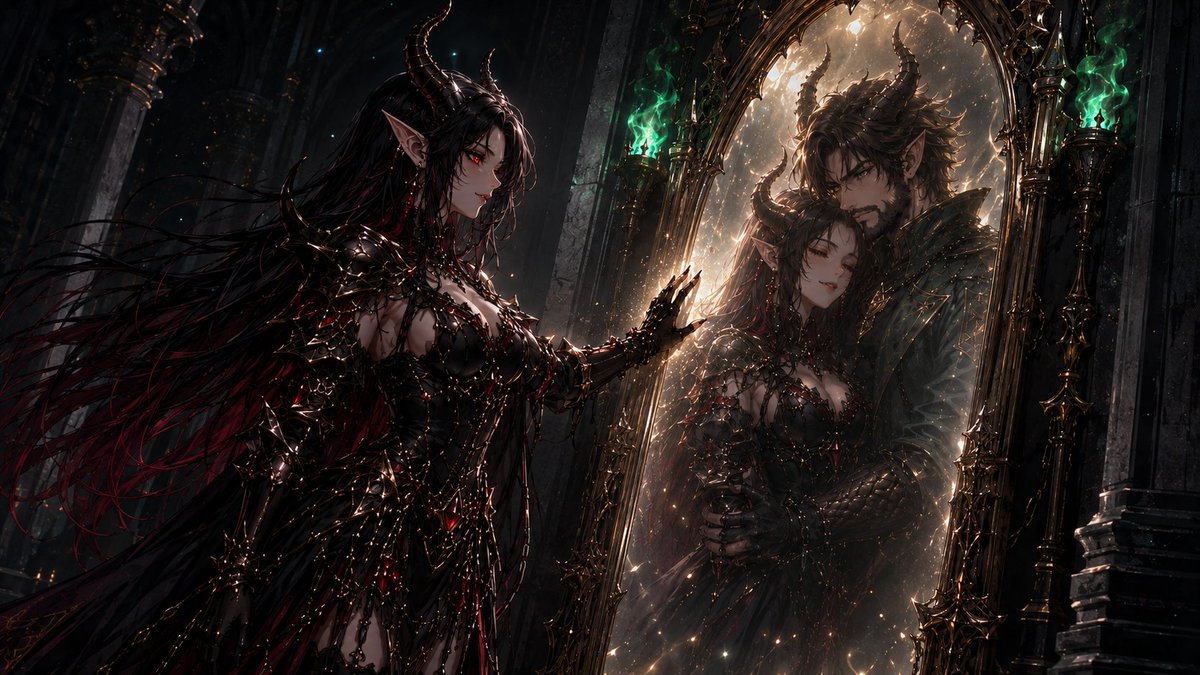
Mirror Of Erised - Shows what you most desire concept.
@Novie_VT
@ManDrakeKohn
@lewdlizardland
@nyxlily_404
-------------------------
Prompt Starts Here
-------------------------
@image1 - main character reference.
@image2 - secondary character reference (optional).
Preserve the character exactly as seen in @image1:
face shape, eye color, eye shape, mouth, hair style, hair color, ears, race, gender, species, age, markings, silhouette, and attire.
masterpiece, fine art, museum quality, 8k resolution, gallery exhibition grade, pristine, poster quality.
beautiful, dreamlike, ethereal, emotional, cosmic, awe-inspiring, thoughtful, longing.
The main character stands before a mirror and sees reflected what they most deeply want or desire.
16:9 aspect ratio. Main character positioned on the left side of the frame, large mirror on the right. Slightly low camera angle with a gentle tilt toward the right.
Large, tall mirror whose ornate gold frame is designed like a medieval castle door. Green flames burn at both upper corners of the frame.
Inside the mirror, show one of the following (chosen randomly, or use the user-provided choice if given, or use @image2 if provided):
- lunch
- a cup of coffee
- a cup of tea
- socks
- streaming setup
- rotten fish
- burger
- pizza
- an anime female maid
- an anime male maid.
- user choice:
Dark castle room with dark grey marble walls and pillars. @image1 stands in front of the large mirror, their expression showing deep love and longing. Their hand reaches out and gently touches the mirror surface with a soft, emotional gesture. Soft ethereal light shines from the mirror, illuminating the character and lightly washing over the room. The mirror reflection clearly shows the chosen item from the randomizer (or user choice / @image2).
Dreamlike volumetric lighting, floating light particles, mirror as the main light source with a soft ethereal glow.
low quality, worst quality, blurry, pixelated, jpeg artifacts, watermark, logo, signature, text, cropped, deformed hands, extra fingers, missing fingers, malformed anatomy, bad proportions, duplicate limbs, extra limbs, ugly face, cloudy glass, dirty glass, broken mirror, out of focus, oversaturated, underexposed, pointillism, low detail, poorly rendered eyes, background clutter, motion blur, compression artifacts, frame cut-off, incomplete character, floating body parts, unrealistic reflections, muddy colors, flat lighting
---------------------
Prompt End
---------------------
#POTD #AIart


English
Moric รีทวีตแล้ว
The Collarbone Abyss
Prompt:
Use the provided reference image as the primary identity and character guide. Preserve the character’s face structure, skin tone, hair color, hairstyle, age, body type, proportions, posture language, mood, and overall visual identity as closely as possible. Do not replace the character with a new person. The final image should feel like the same character from the reference image, reimagined in a surreal fine-art cinematic body-landscape portrait.
Analyze the reference image’s dominant colors, including the character’s skin tones, hair color, clothing colors, shadow colors, highlight colors, and overall palette. Use those dominant colors to build the atmosphere, lighting, abyss, fabric, miniature architecture, mist, reflections, and background darkness. The scene should feel color-harmonized with the reference image rather than using a generic blue-black fantasy palette. If the reference contains warm browns, golds, reds, muted greens, pale creams, cool blues, silvers, or smoky grays, weave those tones subtly into the canyon walls, fabric highlights, tiny lanterns, abyss mist, distant ruins, and reflected pools.
Create a surreal fine-art cinematic image called **The Collarbone Abyss**.
The scene is an intimate body-landscape portrait set in absolute darkness. There is no ordinary room, no horizon, no visible world beyond the character and the impossible space forming from their body. The surrounding blackness feels infinite, silent, sacred, and color-tinted by the dominant tones of the reference image.
Use an extremely tall 9:21 vertical portrait composition. The image should feel like a monumental gallery poster: narrow, intimate, dark, elegant, and impossibly deep. Frame the character close, from the upper torso to the head and shoulders, with the camera positioned slightly above and in front at a soft diagonal angle. The face may be partly turned away or mostly obscured by shadow, but enough of the character’s identity should remain recognizable from the reference image. The main focus is the neck, shoulders, collarbones, upper chest, and the surreal abyss forming between them.
Place the referenced character at the center of the image. Their pose is calm, still, and introspective. They are not performing for the viewer. They feel like a living landscape, a sacred body, and a quiet threshold into something impossible. Preserve the character’s natural expression and emotional tone from the reference image where possible.
The character wears a simple black gown or draped black fabric slipped loosely off the shoulders in a tasteful fine-art way. The fabric covers the body appropriately while revealing the shoulder line, collarbones, neck, and upper back. Adapt the black fabric using the dominant colors from the reference image: its shadows, edge highlights, and subtle translucency should echo the reference palette. The material should feel deep, smoke-like, elegant, intimate, and sacred rather than glamorous or explicit.
The collarbones and shoulders transform into a vast canyon system. The collarbones rise like pale ridgelines, eroded mountain edges, or sacred stone formations beneath soft human skin. The hollow at the base of the throat opens into a deep black abyss, as if the body contains an impossible vertical chasm. Mist rises from within the hollow, tinted subtly by the dominant colors of the reference image. The abyss is not anatomical or gory. It is symbolic, architectural, cosmic, and dreamlike.
Inside the collarbone abyss, tiny staircases, bridges, black pools, hanging lanterns, narrow ledges, and distant ruins descend into darkness. The structures are extremely small compared with the character’s body, making the collarbones feel continent-sized. A narrow staircase spirals downward from the hollow of the throat into black mist, vanishing into impossible depth. Tiny lights glow along the inner walls like windows in a city built inside a canyon. These lights should borrow their warmth or coolness from the reference image’s palette.
The character’s skin remains human, soft, tactile, and luminous. Do not make the surreal elements look painted on top of the skin. The transformation should emerge through physical depth, shadow, scale, and architecture. The planes of the shoulders resemble quiet mesas. The shadows beneath the collarbones feel like valleys. Fine seams of pale light trace subtly across the skin like constellations, mineral veins, or delicate cracks in stone, using colors derived from the reference image’s brightest highlights.
The abyss between the collarbones should feel impossibly deep. It may contain a small black sun, a tiny suspended moon, drifting clouds, distant vertical light, or a faraway rectangular doorway glowing at the bottom of the darkness. These details should be small and discoverable, not loud or obvious. The viewer should feel that an entire sacred world exists inside the quiet hollow of the throat.
The black gown spills downward and begins transforming into landscape. The folds of fabric become ravines, dark rivers, reflective pools, star-threaded plains, and miniature ruined cities. The gown does not simply hang on the body; it becomes night terrain extending from the character. Tiny stairways, bridges, and lantern-lit paths cross the fabric folds as if the cloth is a vast inhabited geography. The fabric landscape should use the dominant colors from the reference image in its rim lights, shadows, reflected pools, and small architectural details.
Use extreme scale contrast. The character’s body is close, intimate, and tactile, while the world forming from the collarbones and gown feels impossibly vast. The image should create the sensation that the character is both human-sized and continent-sized at the same time.
Lighting is cold, soft, sacred, and palette-matched to the reference image. Use the reference’s dominant highlight color as the main rim light along the shoulders, neck, collarbones, jawline, hair edges, and fabric folds. Use the reference’s dominant shadow color to deepen the surrounding darkness and abyss. Let most of the scene fall into rich black shadow. The abyss inside the hollow of the throat should remain the darkest point in the image, swallowing light. Tiny warm or cool lights may appear inside the miniature ruins, but they should remain sparse, delicate, and color-consistent with the reference.
Use strong tilt-shift and selective focus. The sharpest focus falls on the collarbones, the edge of the throat abyss, nearby skin texture, recognizable facial fragments, hair details, and the closest folds of black fabric. The tiny architecture inside the abyss remains readable but slightly softened by mist and depth. The lower gown landscape dissolves into dreamlike blur and darkness.
The mood should be intimate, surreal, sacred, sensual, eerie, lonely, elegant, and impossible. The body should feel like a landscape of silence rather than an object of display. The surreal transformation should be beautiful, strange, symbolic, and mentally destabilizing.
Style: surreal fine-art, cinematic realism, reference-image identity preservation, body-landscape portrait, palette-matched lighting, dominant-color atmosphere, elegant adult character, black off-shoulder gown, collarbone canyon, throat abyss, miniature staircases, tiny ruins, black pools, mist, suspended moon, black sun, star-threaded fabric, sacred darkness, extreme scale contrast, selective focus, premium gallery artwork.
Avoid: changing the character’s identity, changing the face shape, changing the skin tone, changing the hairstyle, replacing the character with a generic model, explicit nudity, erotic posing, lingerie styling, exposed nipples, anatomical gore, exposed organs, medical anatomy, horror wound, body horror, monster design, blood, injury, grotesque transformation, overly literal cracked skin, crowded tiny figures, colorful neon fantasy, sci-fi machinery, glowing runes, ordinary portrait background, normal fashion shoot, or anything that makes the body feel objectified instead of sacred and surreal.
@Moric21 @Keeen_EN @MorgankingAI @RhinoRocksX


English


Prompt of the Day: POTD #69 — NICE 🎮🖥️😳💜💚
Today’s Prompt of the Day turns your character reference image into a chaotic Day 69 gaming setup reaction scene.
Attach one character reference image, then generate a 16:9 widescreen comedy image where your character reacts to a blurred screen they definitely were not emotionally prepared for.
The screen stays censored.
The reaction does all the damage.
The desk props are… suspiciously prepared.
Have fun with this one. NICE.
............................PROMPT STARTS HERE............................
Use the attached character reference image as the only character identity reference.
Create a 16:9 horizontal widescreen cinematic comedy illustration showing the attached character reacting to something outrageous on a screen for:
POTD #69 — NICE.
Include a bold, clean, readable banner near the top of the image that says:
POTD #69 — NICE.
The banner should feel integrated into the scene and readable in a social media preview, but it must not cover the character’s face, hands, screen, or reaction.
Reference rules:
Use only the visible character design from the attached image:
face
hair
eyes
outfit
colours
accessories
silhouette
pose
species traits
overall visual vibe
Preserve the attached character’s face shape, hairstyle, hair colour, eye colour, body language, signature colour palette, outfit motifs, species traits, accessories, silhouette, proportions, and overall vibe.
The final character must still clearly look like the attached character.
Do not redesign the character into a different person.
Hard style rule:
Preserve the visual art style and character identity of the attached reference image.
If the reference is anime, keep it anime.
If it is stylized, keep that stylization.
Do not turn the character photorealistic unless specifically requested.
Single-character rule:
Create exactly one visible main character.
Do not add extra characters, spectators, background people, clones, duplicates, alternate versions, or reflections that read as extra people.
Scene setup rule:
The character must always be in a gaming computer setup.
This is not a normal office, lounge, or generic desk.
It should clearly read as a gaming desk, gamer room, streamer setup, or gaming station with a visible gaming PC, gaming monitor, RGB setup, keyboard, mouse, controller, headset, or other gaming details.
The setup should fit the character’s visible vibe:
cute, cozy, playful, or soft characters can have a cozy gamer room
edgy, dark, or chaotic characters can have a darker, more intense gaming setup
futuristic or cyber characters can have a high-tech RGB setup
elegant or polished characters can have a clean premium gaming setup
weird or unhinged characters can have a chaotic but stylish gaming desk
The gaming setup must feel tailored to the character’s visible aesthetic while still clearly being a gaming setup.
Required desk objects:
The following objects must always be visibly present on the desk or table:
a massage wand
a box of tissues
a bottle of lotion
These objects should be clearly readable as part of the joke, but they should not overpower the composition.
You may also include a few cheeky supporting objects if they fit naturally:
gaming headset
controller
keyboard and mouse
RGB lights
energy drink can
coffee mug
snack wrapper
body pillow in the background
sticky note with a short reaction phrase
desk figurine
mouse pad
cable clutter
one small “NICE.” joke object or sign
Keep the prop selection tasteful, funny, and readable.
Do not clutter the image with too many objects.
The massage wand, tissues, and lotion are required.
Everything else is optional and secondary.
Screen content rule:
The character must be reacting to a clearly visible gaming screen such as a PC monitor or gaming display.
The viewer must be able to see the actual front display area of the screen.
The camera must be positioned on the same side as the front display of the screen.
The screen should be angled diagonally so both the character and the front-facing display are visible in the same shot.
The display content must be completely unreadable and heavily obscured using blur, mosaic, bloom, glow, pixelation, glare, or another obvious censorship effect.
The visible blur effect must be placed only on the actual front display surface of the screen, never on the monitor frame, rear casing, wall, or background.
The viewer should understand that the character is reacting to the blurred screen, but the actual content must not be visible.
Do not show readable explicit content on the screen.
Do not show the back of the monitor as the main visible side.
Do not invent a second display on the rear of the monitor.
Do not hide the front-facing screen from the viewer.
Do not put blur, pixels, glow, or censorship effects on the rear casing of the monitor.
Reaction selector:
Choose one strong comedic reaction that best fits the character’s visible personality, design, and scene.
Possible reactions:
mid spit-take with coffee, soda, or another drink spraying out
sudden anime-style flustered nosebleed
intense blushing and frozen embarrassment
wide-eyed stunned disbelief
flustered excitement with a guilty grin
horrified fascination while unable to look away
hand-over-mouth shock
recoiling backward in the chair
leaning in with shameless interest
trying to stay composed while visibly failing
smug approval with a soft blush
overwhelmed “what am I looking at?” energy
deadpan acceptance of total nonsense
chaotic delighted gremlin energy
mentally blue-screening
pretending to be normal while absolutely not being normal
Pick the reaction that feels funniest and most natural for the character.
The face must be high quality, expressive, readable, and the emotional center of the image.
Pose and action:
Capture the character mid-reaction, not sitting still.
Show clear comedic action and physical storytelling.
Useful action beats include:
drink spit-take frozen in motion
one hand gripping the desk while the other covers the mouth
sudden flustered nosebleed with startled posture
blushing while leaning toward or away from the screen
chair tilt, tense shoulders, widened eyes, or flustered body language
hands raised in panic, awkward excitement, or stunned disbelief
cup or mug halfway lifted during the exact reaction moment
keyboard, mouse, or desk items slightly knocked out of place
The image should feel like one perfect comedy freeze-frame.
Catchphrase and reaction-text rule:
You may include 1 to 3 short meme-like catchphrases, reaction phrases, or comedy labels if they improve the joke.
Choose catchphrases only from general internet reaction language and the visible scene context.
Do not copy text from the attached reference image.
Catchphrases should match:
the character’s facial reaction
the reaction type
the blurred-screen joke
the gaming setup
the POTD #69 comedy tone
Acceptable catchphrase examples:
NICE.
EMOTIONAL DAMAGE
OH NO
NOPE
BRUH
WHAT
EXCUSE ME?
TOTALLY NORMAL
MANY REGRETS
BAD IDEA
GOOD LORD
HELP
I CAN EXPLAIN
NOT LIKE THIS
PEAK INTERNET
UNBELIEVABLE
CAUGHT IN 4K
BONK
LET HIM COOK
WHY THOUGH
CRITICAL DAMAGE
SYSTEM OVERLOAD
BRAIN ERROR
DAY 69 ACHIEVED
MENTAL FLASHBANG
LIVE REACTION
THIS WAS A MISTAKE
INTERNAL SCREAMING
TASK FAILED SUCCESSFULLY
Use catchphrases sparingly.
They may appear as a speech bubble, sticky note, small overlay graphic, fake popup, monitor-side caption, tiny reaction caption, or small desk note.
They should support the visual joke, not replace it.
Make all text clean, short, readable, and correctly spelled.
Do not fill the image with random text.
Do not scatter repeated catchphrases everywhere.
Composition and camera:
Use a wide 16:9 horizontal cinematic composition.
The camera must be positioned on the same side as the front display of the screen.
The viewer must clearly see the actual front-facing display surface of the gaming monitor.
Use a three-quarter front-screen angle:
the screen is angled partly toward the viewer
the character is positioned beside or behind the screen in the same shot
the character’s face is clearly visible
the blurred front display is clearly visible
the screen and character form a diagonal composition across the desk
The visible screen must be the real front display surface, not the back of the monitor.
The blurred or censored content must appear on the visible front display itself.
Acceptable camera setups:
camera in front of the desk, slightly to one side, seeing both the character’s face and the screen front
angled over-desk shot where the screen front faces partly toward the viewer
side-front diagonal shot where the character looks at the screen and the viewer can still see the display
three-quarter view of both the character and the front display surface
Do not use a rear view of the monitor.
Do not place the camera behind the screen.
Do not show only the back casing of the monitor.
Do not hide the screen face from the viewer.
Do not invent a second display on the back of the monitor.
Do not put blur, pixels, glow, or censorship effects on the rear casing of the monitor.
Do not make the screen a side-profile rectangle with no visible display area.
The screen should be a readable visual plane in the composition.
The viewer should immediately understand:
this is the front of the screen
the screen content is blurred or censored
the character is reacting to that blurred content
Visual hierarchy:
character face and expression
visible blurred front display of the screen
hands, drink, and reaction action
important desk props, especially the massage wand, tissues, and lotion
supporting gaming room details
top banner
small catchphrases or reaction text
Prioritize readable eyes, mouth, eyebrows, hands, and gesture clarity.
Environment details:
Use supporting details to sell the gaming setup and the Day 69 joke:
gaming monitor
gaming PC or RGB setup
keyboard
mouse
desk mat
headset
controller
drink cup
tissues
lotion bottle
massage wand
LED lights
cable clutter
gamer decor
posters
pillows
snack wrapper
energy drink
small character-matching accessories
Use subtle Day 69 or “NICE.” details only if they fit naturally.
Do not overload the scene with props.
The room and desk should feel lively and believable, but still readable.
Lighting and mood:
Use polished, attractive gaming-setup lighting:
monitor glow
RGB accents
LED ambience
colorful reactive lighting
lighting that keeps the face readable and makes the reaction vivid
The mood should feel comedic, cheeky, flustered, playful, and self-aware.
Style and quality:
Polished, premium-quality stylized illustration with clean linework, crisp rendering, expressive acting, readable anatomy, strong facial detail, and excellent comedic storytelling.
Prioritize:
face quality
eye expression
mouth expression
eyebrow acting
hands and gesture clarity
readable action
convincing screen blur effect
clear front-facing screen
strong character-focused composition
readable key desk props
clean readable text
strong single-frame comedy timing
Do not:
Do not use text from the attached reference image as scene details or catchphrases.
Do not base the scene on written reference-sheet notes; base it only on the visible character design.
Do not change the character identity.
Do not redesign the attached character into a different person.
Do not add extra characters, clones, alternate versions, spectators, or unrelated people.
Do not duplicate the attached character.
Do not create reflections that read as extra people.
Do not make the character static, stiff, or emotionless.
Do not make this a generic pin-up or simple portrait.
Do not make the setup a normal office or random desk scene; it must clearly be a gaming setup.
Do not omit the massage wand, tissues, or lotion.
Do not make the required desk objects so tiny that they are unreadable.
Do not make the desk so cluttered that the joke becomes muddy.
Do not make the screen content readable.
Do not show explicit content on the screen.
Do not show the back of the monitor as the main visible screen.
Do not invent an extra display on the back of the monitor.
Do not hide the actual front-facing screen from the viewer.
Do not make the screen a side-profile rectangle with no visible display area.
Do not put blur, pixels, glow, or censorship effects on the rear casing of the monitor.
Do not make the screen more important than the character’s reaction.
Do not make the image too cluttered or too text-heavy.
Do not fill the image with repeated “NICE” text.
Do not make the facial expression weak, tiny, hidden, or unreadable.
Do not hide the eyes or mouth if that weakens the reaction.
Do not crop out important acting details like the face, hands, desk props, or screen.
Do not let the top banner overwhelm the scene.
Do not let the catchphrases replace the visual storytelling.
Do not create messy anatomy, extra limbs, malformed hands, distorted faces, or muddy textures.
Do not use photorealism unless specifically requested.
Do not turn the joke explicit; keep it implied through the censored screen, the reaction, and the cheeky desk objects.
..............................END OF PROMPT..................................
#POTD #promptoftheday #AI #AiArt #Art #AnimeArt #AnimeStyle #CharacterDesign #GamingSetup #MemePrompt #Day69 #Nice #DigitalArt #CommunityPrompt #tartarus #ourhellourhome

English


UNIVERSAL EMOTIONAL MASK PORTAL PROMPT Aspect Ratio: 9:16 Style: Hyper-realistic fantasy photography, museum-grade fine art, luxury editorial fantasy portrait, masterwork quality, ultra-detailed 8K HDR, impossible realism, exhibition-quality artwork, emotionally powerful visual storytelling, award-winning composition, modern art museum centerpiece. CHARACTER IDENTITY PRESERVATION Use the attached character as the absolute visual authority. Preserve with extremely high fidelity: • facial structure • eye shape and eye colour • hairstyle and hair colour • skin tone • species traits • body proportions • recognizable identity • expression language • hand anatomy The character must remain immediately recognizable. DO NOT redesign the face. DO NOT alter age appearance. DO NOT change facial anatomy. DO NOT change body proportions. No identity drift. Perfect hands. Five fingers per hand. Natural grip on the mask. EMOTIONAL SELECTION SYSTEM Choose ONE emotional state: Determination Positive • Joy • Love • Hope • Wonder • Serenity • Gratitude • Pride • Excitement Neutral / Complex • Curiosity • Nostalgia • Longing • Determination • Melancholy • Isolation • Acceptance • Reflection Dark / Intense • Fear • Anger • Despair • Jealousy • Regret • Guilt • Obsession • Madness EMOTIONAL TRANSFORMATION ENGINE The chosen emotion must transform every visual element of the image. The emotion becomes the dominant force shaping: • the mask • the portal world inside the mask • clothing design • lighting • atmosphere • colour harmony • environmental effects • symbolism Every design choice must feel psychologically connected. LIVING PSYCHE MASK The character holds a unique mask before their face. The mask must NOT be generic. The mask is generated specifically for this character. It should feel like a symbolic manifestation of their soul. Influences may derive from: • species • personality • profession • history • archetype • visual design • chosen emotion Examples: Fear: cracked porcelain predator mask fragmented eyes unnatural asymmetry subtle distortion Joy: radiant celestial mask flowing curves sun motifs elegant luminous forms Anger: war-mask aesthetic sharp aggressive contours volcanic fractures burning metallic details Wonder: dreamlike celestial mask impossible geometry stars and constellations Melancholy: delicate weathered mask faded elegance rain-carved textures moonlit motifs The mask must feel like it could belong to no one else. PORTAL OF THE INNER WORLD The reflective surface of the mask becomes a portal. The reflection does NOT show reality. Instead it reveals the character's inner psyche. The mask surface opens into a vast world existing entirely inside the character's mind. This world must be unique. Generated from: • personality • visual identity • emotional state • symbolism • species • colours • character archetype Examples: Joy: endless golden meadows floating islands radiant skies dancing light Fear: abandoned cities impossible fog distorted forests endless darkness Love: luminous gardens celestial oceans twin moons blooming flowers Anger: volcanic kingdoms burning mountains storms of fire Curiosity: impossible libraries floating architecture endless staircases Wonder: cosmic landscapes celestial oceans star-filled worlds Madness: fractured realities impossible geometry surreal dreamscapes The portal should feel infinite. The viewer should want to step inside it.


English
So, I did a thing... My first prompt ever to make for other people, but I really want to see what others will come up with! I thought it was such a cool concept and pray y'all do too! 🙏
Thank you @Novie_VT for helping me with it since I am computerless at the moment! I love you sis!🫶🫂
I did all these, so it should work fine.
Express your innermost self and have fun with it!
I'm posting the prompt in the comments along with 4 other victims to show a 16:9 aspect ratio.
*The post will be split between two comments since it's long af.
@SigmaNovus @TheRealGillisX @Novie_VT


English


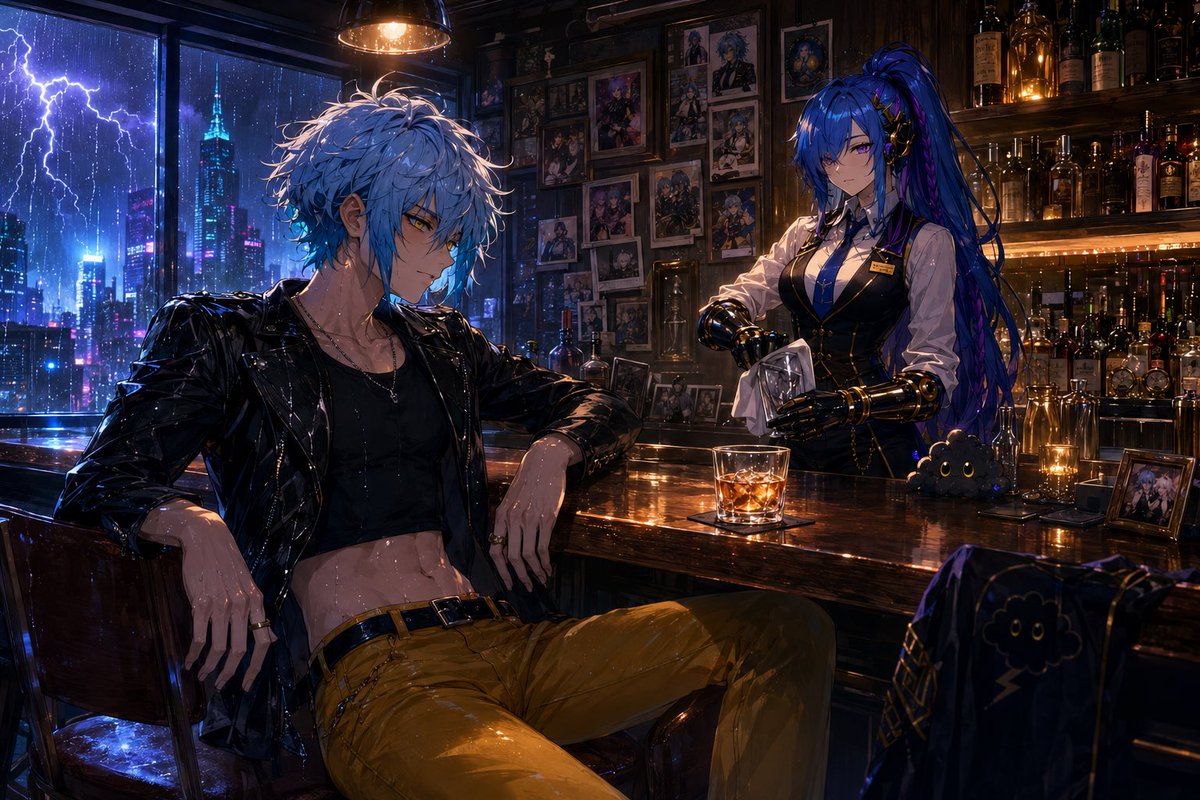
🔥 THE VILLAIN AND THE BARTENDER 🔥
Started as an idea for Jacky and @ItsMidnightKei but then expanded
━━━━━━━━━━━━━━━━━━━━━━━━━━━━━━
PROMPT START
━━━━━━━━━━━━━━━━━━━━━━━━━━━━━━
@Image1 = Character A Identity Reference
@Image2 = Character B Identity Reference
Use @Image1 and @Image2 as the absolute identity references.
Preserve exactly for each character:
• facial structure
• eye shape and eye color
• hairstyle and hair color
• body type and proportions
• species traits
• clothing design
• accessories
• markings, tattoos, cybernetics, horns, wings, tails, etc.
• recognizable silhouette
• overall personality and visual identity
The characters must remain immediately recognizable as the individuals shown in their respective references.
⸻
MASTERPIECE, ultra-detailed anime illustration, cinematic character interaction scene, professional key art quality, dramatic environmental storytelling, 8K HDR, volumetric lighting, realistic reflections, richly detailed background, film-quality atmosphere.
A quiet bar late at night during a powerful rainstorm.
Heavy rain runs down large windows overlooking a city skyline. The outside world glows with distant lights reflected across polished floors, tables, bottles, and glass surfaces. The atmosphere is moody, intimate, and cinematic.
Character B stands behind the bar.
They are calmly polishing a glass or performing another simple bartending task. Their posture is relaxed, confident, and completely unbothered by everything happening around them.
Character A sits at the bar as though they have just returned from an eventful night.
Their clothing is slightly disheveled from the weather. Rainwater drips from their hair or outfit. They lean comfortably against the counter with the casual confidence of someone who practically lives here.
Character B silently slides a drink across the counter toward Character A.
No dialogue.
No text.
The entire image focuses on the unspoken interaction between them.
Character A’s expression should communicate:
“You’re not going to ask what happened?”
Character B’s expression should communicate:
“I already know.”
Environmental details subtly suggest a long history between them:
• a favorite seat that clearly belongs to Character A
• old photographs, keepsakes, or mementos connected to both characters
• evidence that Character A has caused trouble here before
• signs of familiarity that make the space feel lived-in
The lighting should emphasize their contrasting personalities:
• Character A illuminated by dramatic exterior lighting, neon reflections, lightning flashes, magical glow, or another effect matching their identity
• Character B illuminated by warm interior lighting, calm ambient glow, or another effect matching their identity
Mood:
• long-time friends
• found family
• troublemaker and caretaker
• chaos and stability
• the loudest person in the room versus the calmest person in the room
• mutual understanding without words
Eye-level camera angle, medium-wide composition, cinematic framing, detailed rain effects, expressive body language, emotionally rich atmosphere, subtle storytelling, anime masterpiece quality.
━━━━━━━━━━━━━━━━━━━━━━━━━━━━━━
PROMPT END
━━━━━━━━━━━━━━━━━━━━━━━━━━━━━━
#AIArt #AnimeArt #AnimePrompt #PromptShare #AIAnime #CharacterDesign #DigitalArt #Illustration #ConceptArt #AnimeCharacters #KeyArt #CinematicArt #RainyNight #Cyberpunk #FantasyArt #OriginalCharacters #OCArt #AIGeneratedArt
English


Use @Image1 as the absolute main subject reference. Create a single 16:9 horizontal widescreen stylized illustration showing one new final image based on @Image1 making the background simple but with a dreamy effect like it's fair away and out of react. image1 is black and white with only one pop of color. Take into account if there is an accent color or use the eye color as the accent color. Image1 is holding up a randomly shaped glasses, that is covering up the bottom half of the face, you can still see through the glass, so you can still see their facial features. Randomly pick if it is the left or right hand that is holding up the glass. If image1 has a tail, that is able too and makes sense, the tail can also be the one to holding up the glass. The glass itself has the liquid inside at a random level, it can be barely full to overflowing. Inside the liquid is a random scene that make sense to image1, take into account the reference sheet for any themes that may be there. Have image1 in a random position, pose, and camera angle, make sure the close up on image1 face and the glass in there hand.
#POTD #promptoftheday #AI #AiArt #Art #AnimeArt #CharacterDesign #ImagePrompt #AICommunity #DigitalArt #AnimeStyle #CreativePrompt


English


Today's Prompt : Treasure Chest Opening! Now you can be like a certain little elf hero and show off your finds. Hope you get something good! Today's adventurers are @Nomma_o and @K_sarah_morhowl. Like always prompt in the comments.


English


Today's Prompt : Riddle Me This! Turn yourself into the riddle master and stump your moots with a riddle based on your input or make it random that even you don't know the answer! Prompt in the comments.

English


#kk衣装プロンプト
今回は椿モチーフのバトルドレスです。
前回の椿モチーフの衣装との違いも楽しんでもらえたら嬉しいです。
プロンプトは最後に記載していますので良ければ使ってください。
#衣装プロンプト #AIイラスト好きさんと繋がりたい
以下プロンプトです。
masterpiece, best quality, ultra detailed, hires, 4K,
camellia flower themed fantasy battle outfit, elegant floral warrior costume, original anime fashion costume, refined combat dress design, deep crimson red, ivory white, soft pink, dark glossy green, black and subtle gold color palette, graceful but battle-ready silhouette, clean anime fantasy fashion design,
fitted black armored corset bodice with ivory white chest panels, rounded camellia petal shaped bust design, elegant high collar, gold botanical trim, crimson front armor panels, delicate gold filigree, large red camellia flower brooch at the center of the chest, small red floral ornaments, refined feminine warrior impression,
sharp red camellia petal inspired shoulder armor, layered glossy crimson petal plates on both shoulders, black and gold arm guards, slim battle sleeves, gold vine-like ornaments, red tassels and small charm decorations,
layered asymmetrical skirt armor inspired by overlapping camellia petals, deep crimson outer petal panels, ivory white inner skirt layers, soft pink translucent petal drapes, long flowing red and white back cloth, gold-edged fabric, subtle camellia flower patterns, elegant split-front battle skirt, dynamic but readable silhouette,
large camellia flower ornament at the waist, dark green glossy leaves around the flower, gold chains, tassels and small red gemstone charms hanging from the hip, luxurious floral warrior detail,
black thigh-high armored boots with gold trim, sharp gold leaf-shaped knee and ankle armor, small red camellia ornaments on the boots, sleek high-heeled fantasy battle footwear,
overall impression: graceful camellia knight, elegant but dangerous, luxurious floral armor dress, feminine fantasy swordswoman outfit, clear silhouette, smooth surfaces, clean cel shading, polished anime design, no excessive texture, no messy details


日本語


Surface Level:
Today I played around with emotional stability and who we pretend to be on the outside.
What if that mirror shatters?
You can select your own primary emotion in the prompt, all the colours are linked to the various emotions.
Show me your fragments.
Prompt Below.

English
mandatory decision making - do not skip this order!
1. image analysis only
2. rank classes from the class list according to the analysis of image1.
3. selected the highest ranking class according to image1 analysis
4. only after highest ranking class was selected - choose an environment that reinforce the selected class.
5. generate the artwork.
the environment should not influence the class selection in any way.
image1 - main character reference.
carefully analyze the reference sheet (image1) and choose a class most fitting according to reference sheet (image1) analysis from this WoW classes list.
analysis criteria:
1. visual - visual features and colour palette of the character (horns, tattoos, nature elements etc)
2. overall vibe and personality of the character - calm, happy, mysterious, fierce, evil etc)
3. Which class would create the most cohesive and visually harmonious result with the character’s existing design.
Do not default to Demon Hunter or the coolest/most dramatic class. Choose strictly based on the character analysis criteria above.
Rank all WoW classes from most fitting to least fitting according to the analysis criteria. Select the highest-ranking class and briefly explain why it was chosen over the next two alternatives.
WoW class list:
- Death Knight
- Demon Hunter
- Druid
- Evoker
- Hunter
- Mage
- Monk
- Paladin
- Priest
- Rogue
- Shaman
- Warlock
- Warrior
generate a high-quality, crisp, smooth, cinematic, anime artwork.
the character should be completely recognizable as the character from image1.
preserve their:
- hair style
- hair color
- eye shape
- face shape
- jawline
Do not redesign, reinterpret, race-swap, age-swap, gender-swap, or significantly alter the character. Treat image1 as the definitive character design.
it's a long-shot, character is at the left of the image, focus is on the character.
mid action mood.
dramatic, cinematic lighting, glowing particles floating in the environment, ethereal and majestic atmosphere.
after the final class is selected, select a single environment from the environment list that strongly reinforce that class fantasy. do not choose an environment before class selection.
choose only one type of environment per class, do not mix environments.
The chosen environment must strongly reinforce the selected class fantasy and should be the environment from the list that best matches that class.
environment list:
- Glacier
- forest
- desert
- dark lands (shadow lands)
- Hell scape
- beach side
- ocean
- medieval fantasy town
aspect ratio - 16:9
at the bottom right of the image write character's name and which class was given.
quality:
masterpiece, highest quality, 8k resolution, poster quality, hyper detailed.
negative prompt:
low quality, worst quality, blurry, bad anatomy, deformed, extra fingers, missing fingers, realism, pointillism, missing digits, extra digits, watermark, logo.
English
@Arbel_Gaming @Greatbrewer @Annu_Artss @CptRudyFedUp @Exarchos AI choose two classes i played all the time before i stopped, so very much approved


English


For me, I often struggle with self-worth. When I hear someone say that I should know my worth, that little voice in my head whispers back, "I know my worth, and it's not much."
It took sharing my silly prompts and seeing the awesome folks having fun to realize where my worth lies. I may never be accused of being a genius, but I can bring a smile to folks' faces.
This has brought more comfort than I could imagine.
As always, feel free to edit this as you see fit, and please have fun.
Also, don't forget that:
You Are Awesome, Your Potential Is Waiting
[Prompt Starts Here]
Masterpiece quality
@image1 = primary character reference
Preserve referenced characters’ face shape, hairstyle, hair color, eye color, correct number of limbs, correct number of fingers, personality, body language, signature color palette, outfit motifs, species traits, accessories, silhouette, body shape, body proportions, and overall character vibe. If the character has a mask, do not change it. If the character does not have a head, do not invent one.
Draw @image1 centered in a cosmic void. This void will be filled with a kaleidoscope of images and colors. The images will be bordered by energy determined by the color and vibe of @image1. The brightness of the colors will have the effect of an eclipse on @image1, resulting in @image1 being nearly covered in dark shadow. Only some features should be clearly visible, such as their face.
Use the color scheme from @image1 to determine the colors in the cosmic void, but do not keep them static. Give the colors a vibrant and living pulse that surges throughout the image. Feel free to have the colors be muted should it be needed to do so.
Use the personality and vibe of @image1 to create the images within the void. These images are to reflect the unlimited potential of @image1. Use practical, thematic, abstract, or even absurd imagery for these images, but each image used in the void, but do not mix imagery. Do not duplicate any images even if they may be thematically similar. Create new images that showcase the untapped potential of @image1.
@image1 will be in a suspended pose as though they are floating through space. They will have a serene, determined and powerful presence, as though they are realizing the spark that is about to unleash their potential.
The final image will be in a 9:16 aspect ratio.


English