Sebastien Hausmann, PhD
152 posts

Sebastien Hausmann, PhD
@SebHausmann
Neuroscience PhD @mwmathislab @EPFL_en | M.S. in Tye Lab @salkinstitute | @EPFL_en Neuroengineering alumnus


How does sensorimotor (S1/M1) cortex support adaptive motor control? Come find out in our latest preprint, which spans the development of a full adult forelimb model + physics simulations, neural-modeling for control, complex 🐭behavior 🕹️, large-scale imaging, and of course @DeepLabCut and @CEBRA! We hypothesized that S1 supports motor learning by computing prediction errors. To tackle this, we needed to understand what is being represented, and no studies have reported what forelimb S1 represents during learning in mice🧠🐭. Moreover, this requires modeling the body🦾: kinematics, torques, force, muscle activations, & proprioception (muscle spindles & GTOs). After our 7 year journey, we have an answer: S1 & M1 represent muscle-level features. During learning, computational motifs map to functional types (like muscle-encoding), and neural dynamics in S1 change & encode sensorimotor prediction errors! biorxiv.org/content/10.110… 🧵👇


🔮Ever wished you could just say what behavioral analysis you wanted? ... "Plot the animal's trajectory" "Count the head hips in the open arm" 👀🪄we present AmadeusGPT🎻 to do this ... 🗞@shaokaiyeah @jessy_lauer @zhoumu53 @trackingplumes and me arxiv.org/abs/2307.04858 🧵⬇️


A new technology developed at EPFL makes it possible for a single deep learning model to detect animal motion across many species and environments. This “foundational model” can be used for animal conservation, biomedicine, and neuroscience research. actu.epfl.ch/news/unifying-…


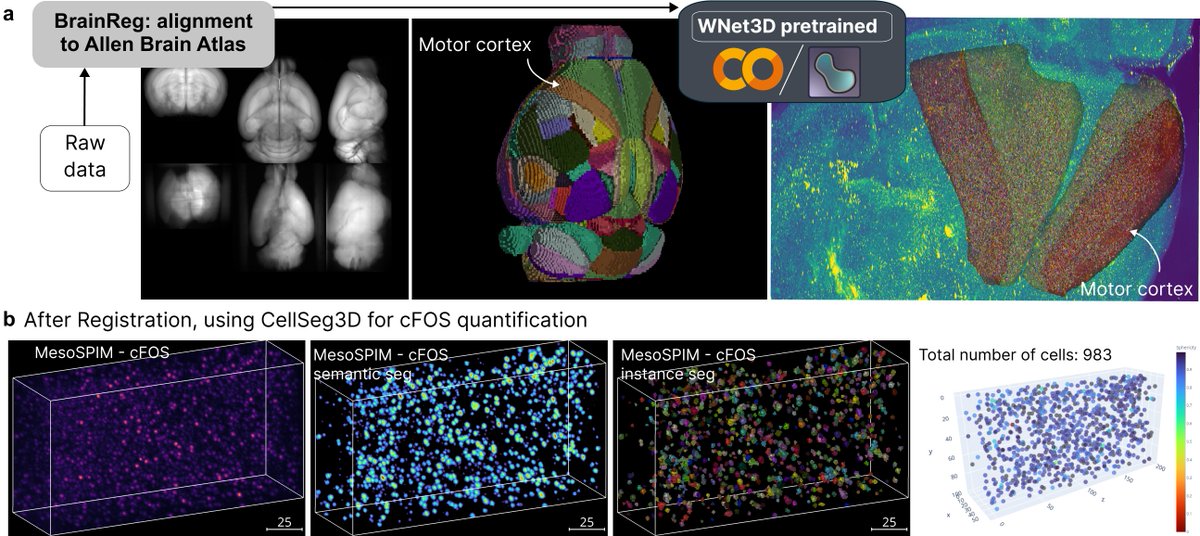
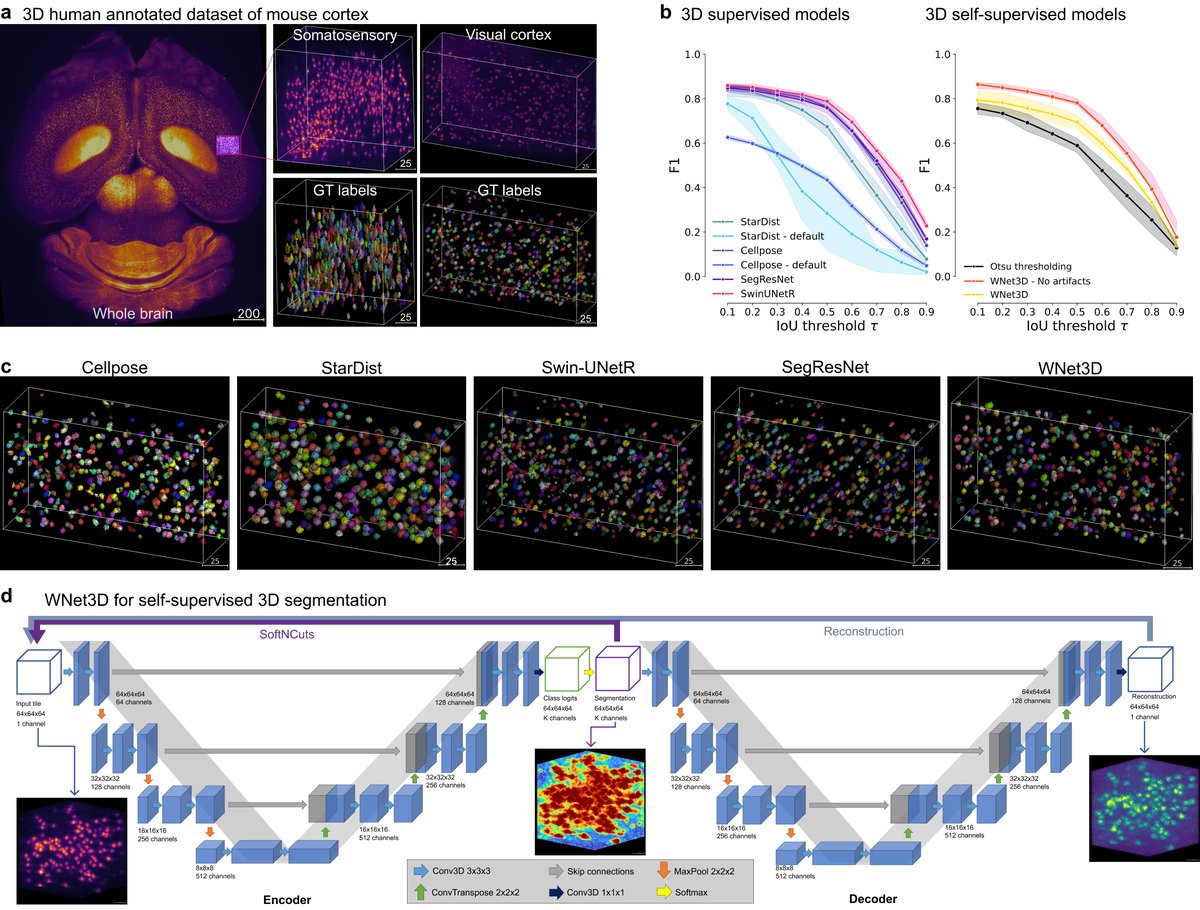
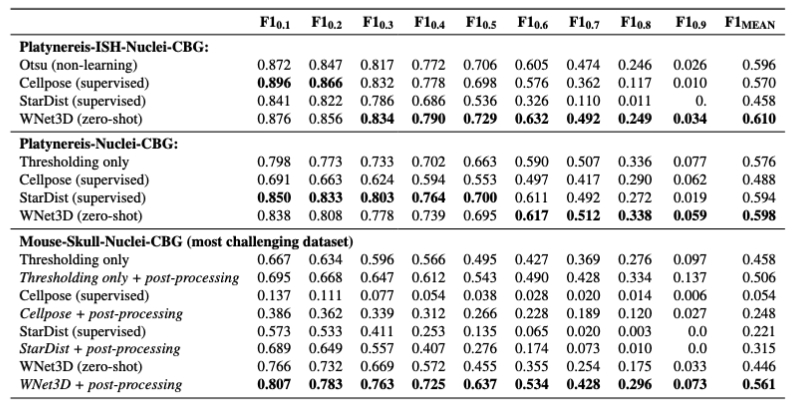
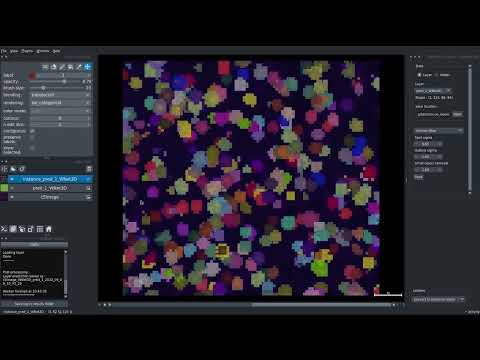
Have you tried #CellSeg3D yet for automating your 3D lightsheet microscopy analysis? We just hit >75K pip installations! 🥳 We have some 🔥 coming soon ... but in the meantime, github.com/AdaptiveMotorC… lead by @AChRD4 @Neuro_X_EPFL