

Minwon
11.1K posts

Minwon
@binhbethc
Visual Storyteller & Community Strategist 🌐 Bridging the gap between tech and users through content. 🛠️ Content Marketing | Video Production | Graphic Design
24.838579, 55.404271 เข้าร่วม Mart 2021
2.6K กำลังติดตาม2K ผู้ติดตาม

On the sentiment about AI being a delusion and reactions pertaining to it.
English
Thank you for sharing your perspective on AI.
@IridiumEagle @ambient_xyz
TravisGood@IridiumEagle
On the sentiment about AI being a delusion and reactions pertaining to it.
English

Happy Monday Rialo Family 💙
A brand new week is here a fresh opportunity to reset refocus and push forward together.
In Web3 every day counts. Every conversation every idea every contribution shapes the future we are building. And what makes this journey special is not just the technology it is this community.
Let's start this week with
Positive energy
Strong consistency
Meaningful collaboration
Whether you are here to learn build support or lead your presence matters. Small efforts done daily create massive impact over time.
This week challenge yourself to
• Stay active and engaged
• Share valuable insights
• Support fellow community members
• Keep learning and growing
@RialoHQ is not just a project it's a movement toward a smarter more secure and coordinated future in Web3.
Let's make this week productive impactful and full of wins 🔥
We grow stronger, together.
GIF
English

Private credit doesn’t lack demand. What it lacks is an infrastructure that can actually support it onchain.
Most attempts so far have tried to extend DeFi lending into credit, assuming that better data or improved UX would be enough. But that misses the core issue. Credit operates on a fundamentally different layer - one built on data, privacy, and continuous evaluation over time - none of which current blockchain infrastructure handles well.
Rialo approaches this from first principles. Instead of adapting credit to fit existing systems, it asks a simpler question: what needs to exist for credit to function properly onchain?
It starts with data. In credit, data isn’t optional - it’s the foundation of every decision. Rialo makes data a native part of smart contract execution, allowing contracts to directly access and use real-world signals as inputs. This turns credit scoring and risk assessment into something that can actually run onchain, rather than being simulated offchain.
But data alone isn’t enough without privacy. Financial data is inherently sensitive, and exposing it publicly breaks the model. Rialo resolves this by processing data in encrypted environments and only publishing the outcomes needed for decision-making. This allows real financial data to be used without compromising user privacy.
Then comes execution. A loan isn’t a single transaction - it’s a lifecycle. Rialo extends smart contracts so they can monitor conditions, wait, and trigger actions over time. As a result, the full credit process - from approval to repayment - can run natively onchain, without relying on bots or external systems.
When these three layers - data, privacy, and execution - come together, private credit onchain stops being a concept and becomes a viable system. Not a constrained version of DeFi, but something much closer to how real-world finance actually works.
And that’s ultimately what Rialo is building - not just an application, but the foundation for real financial systems to exist onchain.
👉 Follow 𝐗 @RialoHQ
👉 Join 𝐃𝐢𝐬𝐜𝐨𝐫𝐝 discord.gg/RialoProtocol
👉Check 𝐖𝐞𝐛𝐬𝐢𝐭𝐞 rialo.io

English

Rialo is a Layer 1 blockchain,
but it’s not just focused on speed or low fees.
Its core strengths are:
Smart contracts can directly access real-world data (APIs)
→ reducing reliance on oracles
Supports handling sensitive data (privacy)
→ suitable for use cases like finance and identity
No need for complex bridges between chains
→ lowers risk and simplifies the user experience
Web2-like user experience
→ simple login, no need to understand crypto wallets
Native on-chain automation
→ smart contracts can execute automatically based on conditions
Rialo is building a blockchain
that connects to the real world and is easier to use.
@RialoHQ

English

DeFi has a yield illusion and it’s breaking.
$300B+ in stable coins is sitting inside a system that can’t structurally support returns.
Let’s break it down and why Rialo changes everything
The core problem: circular yield
Most DeFi yield comes from:
• Traders borrowing to leverage
• Basis trades
• Protocol incentives
No external cash flow
Just capital recycling itself
The system is eating its own tail.
The data tells the truth
• 93% of USDC/USDT earns <5% APY
• 58% earns <3%
• Only 2% earns >10%
Even that includes token incentives.
Strip those out = real yield is even lower.
It’s getting worse
• DeFi yields ≈ T-Bills (~3–4%)
• Rates falling → yields compressing
• Stablecoins = “homeless capital”
Liquidity exists but no productive destination this is the gap Rialo is solving
@RialoHQ is building the missing infrastructure layer (the pipes) that DeFi never had.
What Rialo actually does?
• Connects onchain capital → real world private credit
• Structures deals via smart contracts
• Routes stable coin liquidity into real loans
• Enables faster, cheaper capital formation
Why private credit?
Because it generates REAL yield:
• Businesses repaying loans
• Consumers paying installments
• Assets backing the credit
Cash flow comes from the real economy, not crypto speculation
The opportunity is massive
• $3.5 TRILLION private credit market
• Short duration (1–3 years)
• Predictable, amortizing cash flows
Onchain rails = 10x efficiency unlock
Yield comparison
• DeFi → 3–5% (shrinking)
• T-Bills → 4–5%
• Private Credit → 8–15%
Spread-based
More stable
Actually sustainable
What this means?
DeFi doesn’t need more protocols
It needs real economic activity.
Rialo turns crypto liquidity into real world loans that generate real yield.
That’s how DeFi evolves from speculation → utility.

Rialo@RialoHQ
The current system of DeFi is reaching its limit. When 93% of stablecoins earn under 5%, it’s a sign that our system is simply recycling the same speculative capital. To scale to trillions, we have to move beyond the echo chamber. We are investing in the shift from crypto-native leverage to onchain private credit. By connecting stablecoins to real-world economic activity we are replacing volatile "yield farming" with sustainable, spread-based returns. DeFi is finally growing up and Rialo will be the bridge to bring in new building blocks.
English

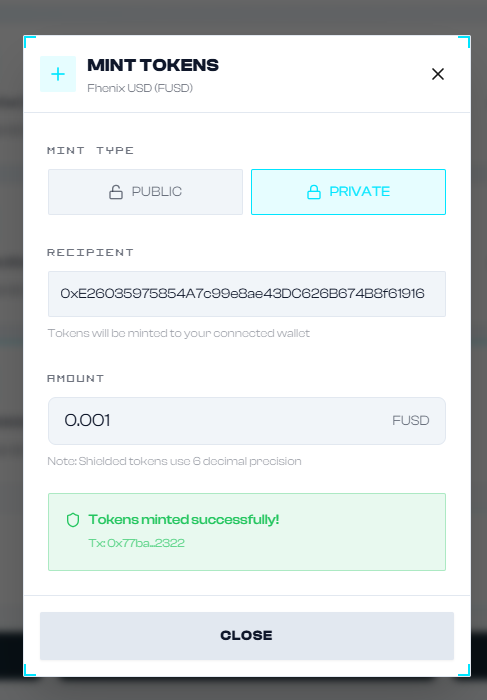
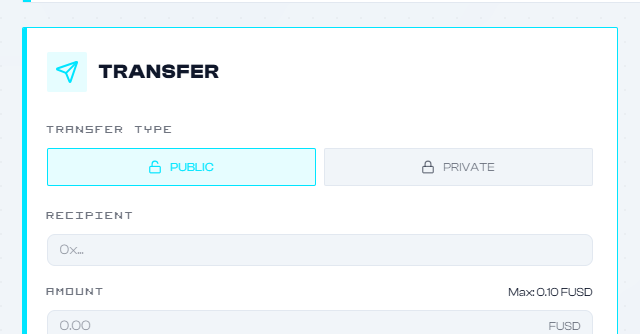
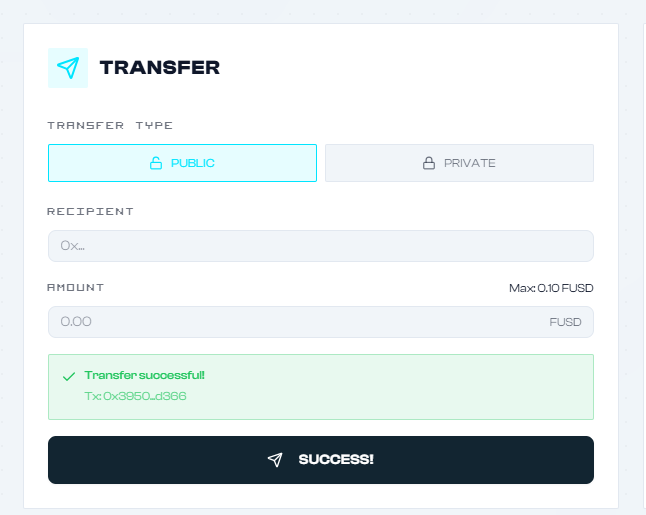
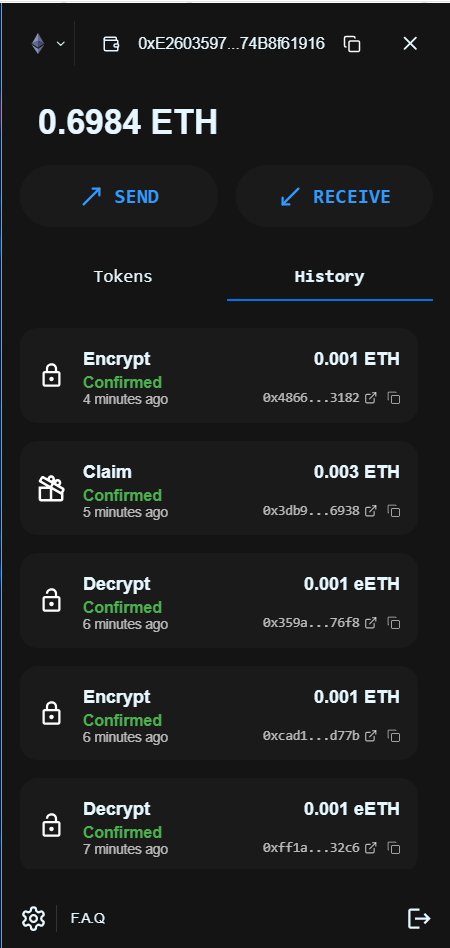
Another day stress-testing @RedactMoney and ShieldedMode on @fhenix.
Everything checked out smoothly:
- Encrypt, decrypt, claim all successful
- Contract deployed
- Tokens minted, shielded, and privately transferred without issues
Links:
test.()redact(.)money
shieldedmode.()fhenix.()io
discord.()gg/XcsgwWXk
English

Rialo: What It Is and Why It’s Called a Real-World Blockchain
Blockchain has existed for over a decade, yet most applications remain disconnected from real-world systems. The issue is not performance, but design: public blockchains are transparent by default, exposing transaction data and making them incompatible with sensitive information, private APIs, and real-world workflows. As a result, they operate in isolation rather than integrating with the systems people actually use.
Rialo is built to solve this exact limitation by redefining what a blockchain should be. It positions itself as a “Real-World Blockchain,” meaning a system designed not just for onchain activity, but for interacting directly with real-world data, infrastructure, and applications. Instead of treating privacy as an add-on, Rialo makes it a native property of the protocol.
At the core of Rialo is confidential computation, which allows data to be encrypted at the source and processed within a private execution environment. Transaction inputs are never exposed, yet execution remains verifiable through cryptographic proofs. This enables applications to use sensitive data, such as financial information or API credentials, without leaking it onchain.
Rialo also introduces a model where privacy and compliance coexist. Users can transact with encrypted data and hidden amounts, while authorized parties can access information through view keys when required. This removes the traditional trade-off between anonymity and regulatory requirements, allowing both to exist within the same system.
By removing the constraints of transparency, Rialo expands the scope of what blockchains can support. Applications can interact with external systems, retrieve real-world data, and execute logic involving private inputs without exposing them. This makes it possible to build systems that behave more like modern software, while still benefiting from onchain verification.
Calling Rialo a “Real-World Blockchain” reflects this shift. It is not just a faster or cheaper chain, but a system designed to operate beyond the boundaries of traditional blockchain environments. By making privacy native and enabling secure interaction with external infrastructure, Rialo transforms blockchain from an isolated system into one that can function as part of the real world.
@RialoHQ

English



BYOB! 🚰
That's right, Bring Your Own Bottle!
This year we've gone cup-free at the conference.
No glasses, no disposable cups at the venue (except during special events).
But don't worry, fresh drinking water fountains are available throughout the building.
Just bring your favorite reusable bottle and we'll see you there
GIF
English
Bitcoin gave us programmable money.
For the first time value could move without intermediaries powered purely by code and consensus.
Then Ethereum changed the game with programmable contracts.
Logic moved on chain. Agreements became trustless. Entire ecosystems of DeFi NFTs and DAOs were born.
But despite all this innovation one critical piece is still missing 👇
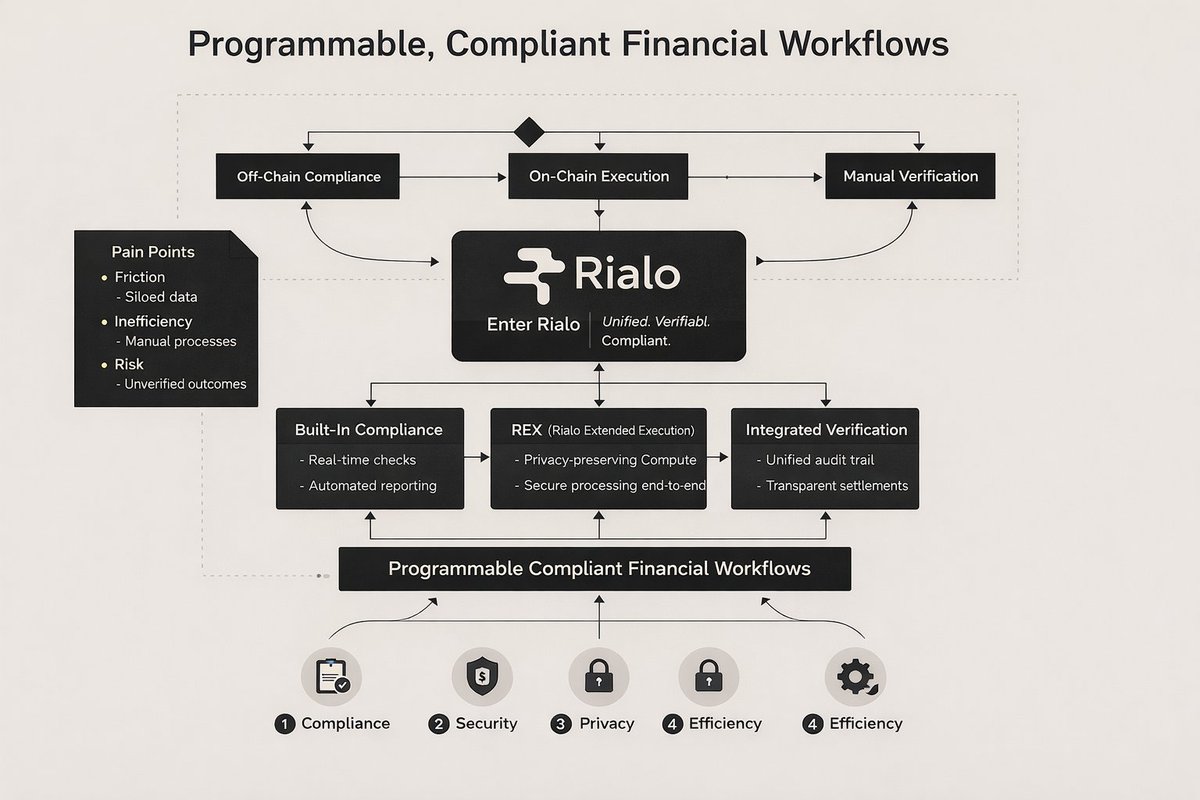
Real world financial workflows are not truly programmable yet.
Why?
Because today's systems are still fragmented
▫️Compliance happens off chain
▫️Execution happens on chain
▫️Verification is often manual or siloed
▫️Privacy and coordination remain unsolved
This creates friction inefficiency and risk especially for institutions that need secure compliant and auditable systems.
Enter @RialoHQ The Next Era
Rialo is not just building infrastructure.
It’s defining the next evolution of blockchain
👉 Programmable compliant financial workflows
At the core of Rialo is a powerful idea
Execution should be unified, verifiable, and compliant by design.
What Makes Rialo Different?
1. Built in Compliance
Instead of treating compliance as an afterthought Rialo integrates it directly into execution flows.
This means workflows can meet regulatory requirements without sacrificing decentralization.
2. REX (Rialo Extended Execution)
REX acts as the orchestration layer for confidential and complex computations.
It manages the full lifecycle of a request
▫️ Program governance
▫️Secure execution
▫️Verification
▫️Final settlement
All in one unified system.
3. Privacy + Verification Together
Rialo combines advanced technologies like MPC FHE and TEEs not in isolation, but orchestrated properly.
Because privacy without coordination is useless and coordination without verification is risky.
4. Designed for Real World Finance
This isn't just for DeFi natives.
Rialo is built for institutions enterprises and global
financial systems that require
▫️Compliance
▫️Security
▫️Transparency
▫️Speed
Why This Matters
The future of finance is not just about faster transactions.
It is about trust at scale.
We are moving toward a world where
Financial workflows are automated end-to-end
Compliance is embedded not enforced externally
Data remains private but verifiable
Systems are interoperable and unified
This is the missing layer that connects crypto innovation with real world adoption.
The Bigger Picture
Rialo represents the integration phase
where blockchain finally meets real world finance in a meaningful way.
No more patchwork solutions.
No more fragile middleware.
No more disconnected systems.
Just one unified execution layer for the future of finance.
This is not just an upgrade.
This is a new era.
And Rialo is building it. 🔥
English

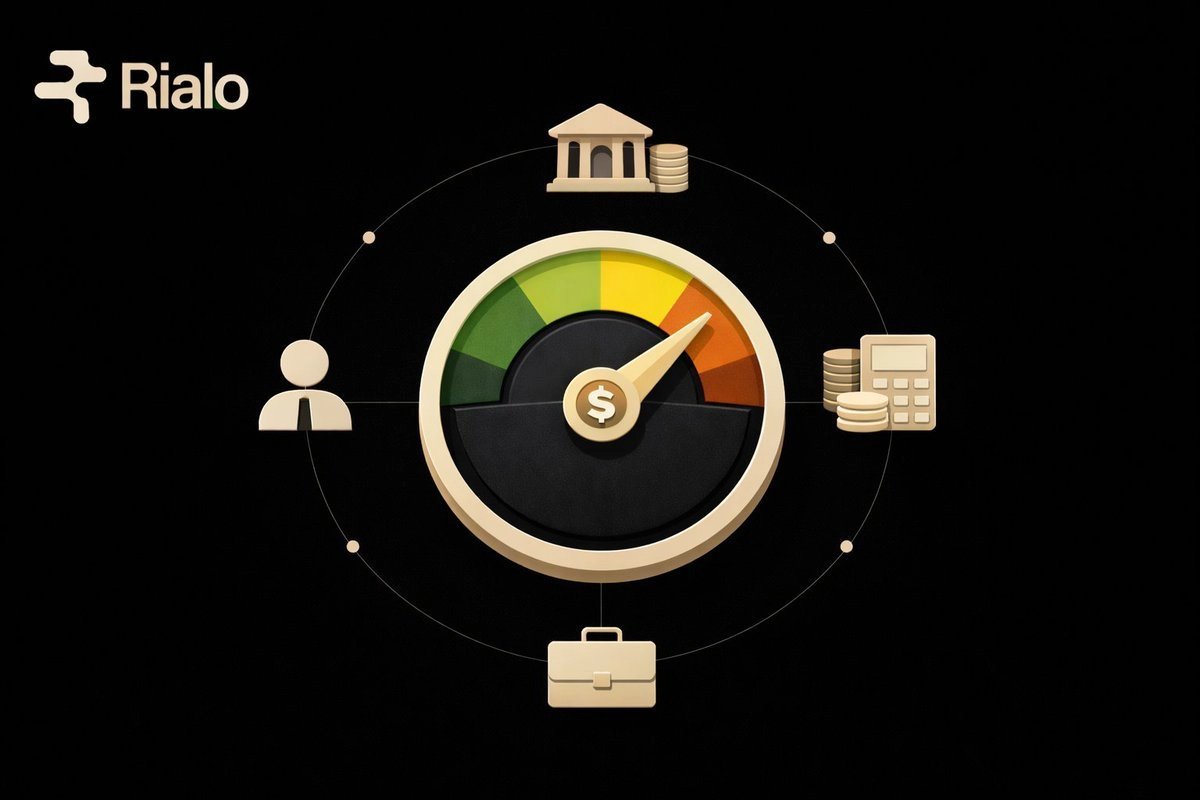
Rialo is working on bringing private credit onchain in a more reliable way.
Private credit is a huge market, but the system still relies heavily on intermediaries
This can lead to delayed data when markets face pressure
🧵
Rialo@RialoHQ
How do we bring private credit onchain? Smart contracts can perfectly enforce the rules of a credit agreement without a human in the loop, but they still rely on external inputs to determine the truth about the credit instrument before deciding how and when the rules should be enforced. Our blog post explores the verification gap and why the industry needs a Determination Layer to solve the "truth problem." Blog link below:
English

Lúc tối ngồi cf với đám bạn thân, chính xác mình là gái ngành kế toán nhưng chơi thân với đám toàn dân IT . Này là còn thiếu , nhóm tận 8 đứa con trai mỗi mình con gái, may thay thằng bạn thân có con vk cũng dân IT luôn
Tuy mình là con gái nhưng bạn thân là toàn con trai, mình thích chơi với con trai hơn, kiểu được ga lăng, được yêu chiều, được cổ vũ, không có kiểu nói xấu hay soi mói.
Chơi thân đến nỗi mình có thể làm gia sư tâm lý tán gái cho mấy cha!
Ông nào tán gái kiểu gì đều chia sẻ, cười không nhặt được mồm
@XOOBNetwork $XOOB

Rita (❖,❖)@RitaXFinance
của người ta thấy bài đăng cũng bình thường có con mịa gì đâu! ông này chủ động FL mình trước chứng tỏ cũng đi cheo FL thí mịa ! Vậy sao k bị tắt kiếm tiền còn tk mình tt bình thường, cmt bt thì chưa chi tắt mịa Musk nó ưu tiên cho mẽo hơn nhiều, nói thì nhảy dật dật lên, có điều cá lớn , của nhà nó ưng làm gì nó làm thôi Mình vẫn bị tắt và vẫn không có nhu cầu kháng, được mấy đồng lẻ mà ngày nào cũng đi xin @XOOBNetwork $XOOB
Tiếng Việt

Gauss introduces a new way to upgrade distributed systems without downtime by separating consensus from execution.
Instead of one log, it uses:
Inner log : contains everything (transactions + coordination messages)
Outer log : only transactions that should be executed
@RialoHQ

English

Let’s explore how Rialo approaches this problem below.
Wishing everyone a relaxing and enjoyable Sunday morning.
👇👇👇
Most tokens today still behave like passive objects. They move when you transfer them, or when a predefined update is triggered nothing more. That model works for stability, but in practice, it also limits how tokens can participate in real application flows.
I started noticing this gap when thinking about how little tokens actually respond to context. In most systems, user activity, app state, or external conditions don’t directly shape token behavior. Everything has to be explicitly pushed. Nothing really reacts.
That’s where Rialo feels different to me. Instead of treating tokens as static units, it frames them as responsive components. Their logic can react to signals what users do, how an application evolves, or when certain conditions are met. And once those conditions are in place, execution doesn’t need to be manually triggered; it happens automatically. Tokens, in this sense, stop being passive records and start acting more like participants inside the system.
But this shift made me think about something deeper.
If what we call “truth” or “value” is no longer just a final state, but the result of an ongoing process, then where is that process actually happening?
In most architectures I’ve seen, it’s scattered. Data is collected off-chain. Evaluation happens somewhere else. Verification is another step entirely. By the time anything reaches the blockchain, it’s already a finished result. Clean, compressed, and detached from how it was produced.
The system sees the outcome, but not the path.
That creates a subtle but important issue. Trust no longer lives entirely inside the system. It leans on external processes that aren’t always visible or verifiable. And once you start thinking of process as the core, not the output, that separation becomes hard to ignore.
So to me, the real question isn’t just about better results. It’s about bringing the entire process into the system itself, making it something the network can observe, reason about, and adapt to in real time.
This is also why Gauss caught my attention.
Reconfiguration in distributed systems has always been messy. Changing validator sets, adjusting quorum rules, or upgrading consensus mechanisms usually comes with risk, and sometimes downtime. I’ve seen how tightly coupled these layers tend to be.
Gauss approaches it differently. It separates concerns in a way that feels almost obvious in hindsight: reconfiguration is decoupled from consensus, and execution is separated from ordering.
Instead of forcing everything through a single pipeline, it introduces two logs. One internal log handles consensus, including transactions, coordination, and ordering. The other is a cleaned, deterministic version used purely for execution. So the execution layer doesn’t need to deal with the complexity of consensus; it just processes a stable, well-defined stream.
What I find compelling here is the effect of that separation. Changes at the consensus layer don’t ripple through and disrupt execution. You can update validators, tweak configurations, even swap consensus approaches without breaking the flow of the system.
Reconfiguration stops feeling like a risky event and starts looking more like a continuous process.
And when I connect this back to the earlier idea, it aligns quite naturally. If tokens are becoming reactive, and if truth itself is something that emerges through process, then the infrastructure underneath also needs to support continuous change without fragmentation or interruption.
That, at least from how I see it, is the direction Rialo is trying to move toward.
#Rialo

S H Ξ N ²⁶@duocpro1
Good morning and happy weekend. @RialoHQ Today, we will explore the topic “Rialo Makes Real World Assets Real.” Wishing everyone a calm and refreshing weekend filled with positive energy. 👇👇👇 RWAs are often discussed as one of the most important applications of blockchain, yet in my observation, much of what currently exists still does not truly “connect with the real world.” They resemble digitized replicas of the traditional financial system rather than a substantive reconfiguration of it. The first issue lies in the reliance on off-chain verification mechanisms. Most tokenized assets today cannot independently prove their state on-chain without third-party intermediaries. Events such as dividend distributions, stock splits, or credit restructurings still require manual processes for updates, introducing latency and valuation risk. At a systemic level, this effectively reproduces a form of “intermediated trust,” which blockchain was originally expected to minimize. Beyond that, the responsiveness of current RWAs remains significantly misaligned with market dynamics. Shifts such as credit downgrades, macroeconomic shocks, or natural disasters often take hours or even days to be reflected on-chain. As a result, these assets lose the real-time characteristic that is typically considered essential for efficient markets. Another limitation concerns the lack of dynamic and multi-source data integration. Most tokenized assets do not incorporate continuous data streams such as inflation metrics, real-time repricing signals, or evolving business conditions. Consequently, they operate in a relatively “closed” state, insufficiently responsive to rapidly changing realities. More importantly, the degree of automation remains limited. Core mechanisms such as settlement, repricing, or portfolio rebalancing still depend on human intervention or external systems. This materially constrains the foundational promise of programmable financial infrastructure. If these constraints are not addressed, I would argue that the RWA market even if it scales to tens of trillions of dollars risks remaining a digitized extension of legacy finance rather than a genuinely new asset paradigm. From this perspective, I am developing Rialo as an alternative approach: a blockchain architecture designed for RWAs to genuinely “live” within real-time data environments. Rather than merely representing assets, it enables direct integration with verified off-chain data and allows assets to react to real-world conditions without continuous human intervention. On Rialo, RWAs are no longer static tokens. They can consume data directly from sources such as banks, government agencies, payment systems, or markets, and automatically trigger corresponding on-chain actions when state changes occur. I conceptualize this architecture around four core pillars: real-world data connectivity, event-driven automation, privacy-preserving compliance with identity assurance, and a high-performance execution layer capable of supporting global-scale real-time markets. Building on this foundation, the range of applications becomes structurally broader: bonds that adjust automatically to inflation, credit instruments that update based on cash flow data, insurance that activates through real-world events, real estate that distributes yields based on operational data, and commodity or carbon markets that continuously rebalance using IoT or market-driven inputs. The underlying commonality across these systems, in my view, is the embedding of real-time data directly into the logic of financial assets, rather than treating it as an external reference layer. Ultimately, RWAs only become truly “real” when they are no longer frozen static representations, but adaptive financial entities capable of continuous response and interaction with the real world. Rialo is positioned as an attempt to operationalize precisely this shift. #Rialo
English

Song: Trust Rialo
Lyric:
Running through the noise
Everything’s too fast
Signals getting lost
Nothing ever lasts
Pause it for a second
Let the system breathe
Rialo in the flow
Now it moves with me
We don’t rush
We align (we align)
Every step.......
By design In the dark
We still know
Trust the code — trust Rialo (oh)
@RialoHQ
English

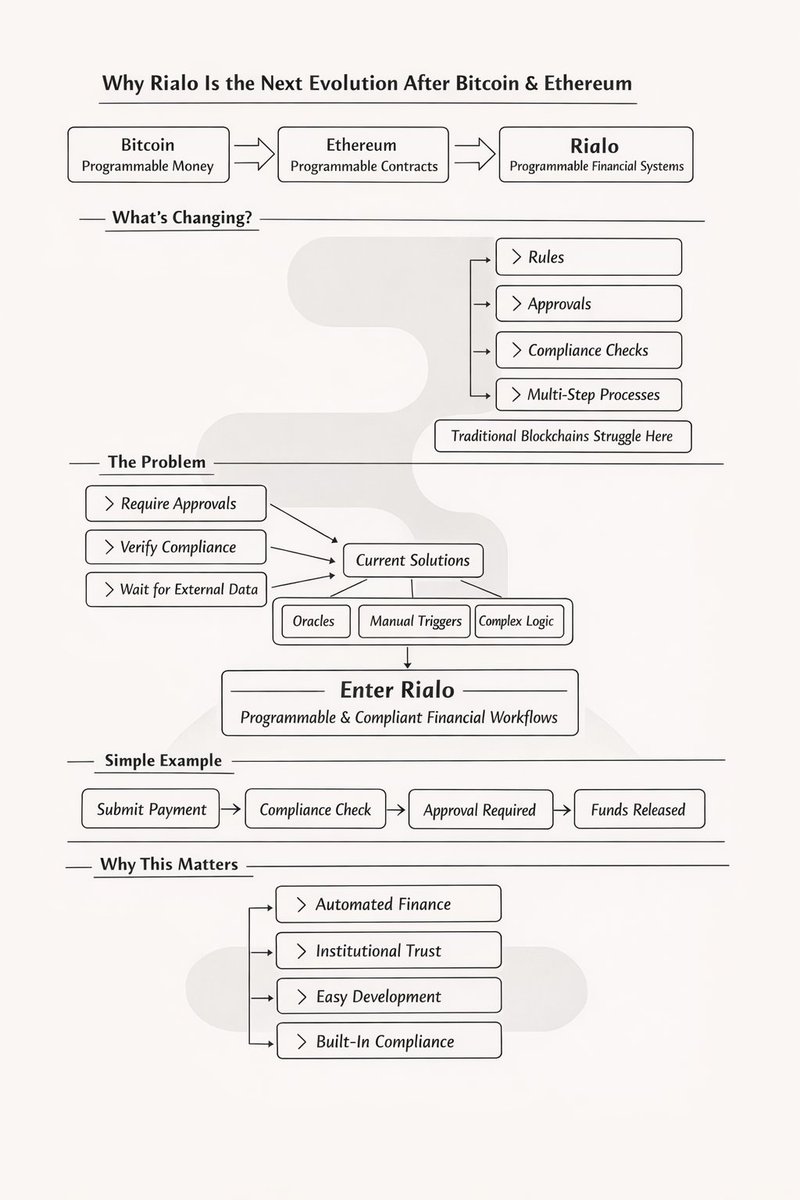
Why Rialo Is the Next Evolution After Bitcoin and Ethereum
Bitcoin introduced a powerful idea → money that can be programmed.
Ethereum expanded that idea → contracts that run automatically.
Now we are entering the next phase → programmable compliant financial workflows.
This is where things start becoming real for everyday finance.
What’s Changing?
Today’s blockchain systems are great at executing transactions.
But real world finance isn’t just about sending money.
It involves:
• Rules
• Approvals
• Compliance checks
• Multi-step processes
And most blockchains struggle here.
The Problem
Let’s say a company wants to: → Release funds only after approval
→ Verify compliance before execution → Wait for external data
Right now developers hack this together using:
• Oracles
• Manual triggers
• Complex smart contract logic
It works... but it’s messy.
Enter Rialo
Rialo is built for something bigger.
Not just transactions.
Not just contracts.
But full financial workflows that are programmable and compliant.
Simple Example
Imagine this flow:
1. User submits payment
2. System checks compliance ruler
3. Approval is required
4. Funds are released automatically
On most chains → this is complicated On Rialo → this is native
Why This Matters
This unlocks real use cases:
• Businesses can automate finance safely
• Institutions can trust blockchain systems
• Developers can build without complexity
• Compliance becomes part of the system
In Simple Words
Bitcoin = programmable money
Ethereum = programmable contracts
Rialo = programmable financial systems that actually follow rules
This is not just an upgrade.
It’s a shift toward making blockchain usable in the real world.
@RialoHQ @itachee_x @JanCamenisch @RollinsR79
Hu Hu@HuHuWeb3
Rialo Transforming Blockchain with Async Workflows Blockchain is powerful... but still limited. Every transaction must finish within a single block. No pause. No waiting for external data. This creates a major issue Complex workflows become messy and inefficient. Developers are forced to depend on: • Oracles • Relays • Keeper networks Just to handle simple multi-step logic. The Problem is Clear Building apps that rely on external data is difficult. For example if you need a credit score: • Call off-chain services • Wait manually • Trigger another transaction This makes everything slow and complicated. Rialo Changes Everything Rialo introduces async/await directly on-chain. Now transactions can: • Pause execution • Wait for results • Resume automatically Just like modern programming systems. How It Works A Rialo Workflow allows: • Pausing execution • Requesting external data • Auto-resuming when data arrives No hacks. No extra layers . Clean flow. Example Undercollateralized loans are now possible: • Request borrower credit score • Contract pauses • Score returns securely • Contract resumes automatically Simple and seamless. Why This Matters • Reduces complexity • Enables real-world finance • Less reliance on off- chain tools • Better developer experience The Future is Async Blockchain shouldn’t be forced to act like it’s stuck in the past. Rialo is bringing modern execution logic on-chain making decentralized apps smarter, cleaner and more powerful. Stop building around limitations. Start building with freedom. @RialoHQ @itachee_x @JanCamenisch
English
Don't miss $SOL at $60-$70
fabiano.sol@FabianoSolana
If you're not bullish enough... Wall street is being rebuilt on Solana
English
Cannes calling 🇫🇷
The @fhenix team is heading to EthCC[9]
📅 March 28 – April 2
If you’re around, let’s connect.
Not just to talk crypto — but to talk about where privacy actually fits in Web3.
Because sooner or later,
everything on-chain won’t need to be public.
See you at EthCC 👀
Let’s talk confidential everything.
🐢🔐
@RedactMoney

English