Michael Sanderson

7.5K posts

Michael Sanderson banner
Michael Sanderson

Michael Sanderson

@ecoproducer

‘Simplicity is the Ultimate Sophistication’ Life is really simple, why do we have to make it so complicated? #MMT #JobGuarantee #NuclearEnergy

Australia เข้าร่วม Ocak 2012
167 กำลังติดตาม599 ผู้ติดตาม
ทวีตที่ปักหมุด
Michael Sanderson
Michael Sanderson@ecoproducer·
See my unique, critical videos on Australia’s money system, superannuation, bank power, energy, public policy, and the odd bit of satire. No culture war distractions, just facts and accountability. Subscribe here @just-imagine" target="_blank" rel="nofollow noopener">youtube.com/@just-imagine
English
0
1
4
352
Michael Sanderson
Michael Sanderson@ecoproducer·
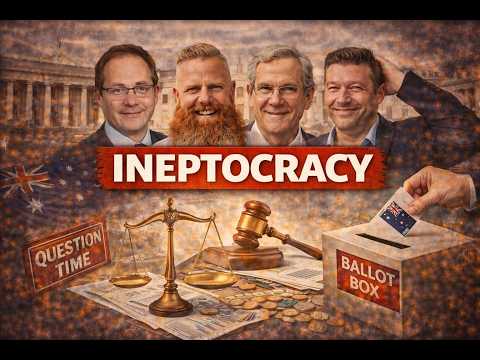
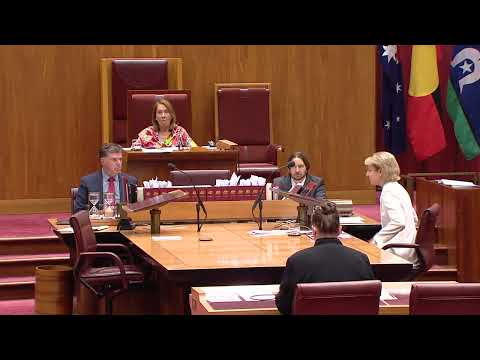
youtu.be/I7_elI4usuQ INEPTOCRACY “Ineptocracy (in-ep-toc’-ra-cy) - a system of government where the least capable to lead, are elected by the least capable of producing, and where the members of society least likely to sustain themselves or succeed, are rewarded with goods and services paid for by the confiscated wealth of a diminishing number of producers. ********************************************************* Michael Sanderson walked into this process asking a serious public question and was met with a system that specialises in not answering serious public questions. Michael did not ask Joseph Longo for a favour. He did not ask ASIC to rescue a private dispute. Michael put a structural proposition on the table. Access to justice in financial services is broken at the point where a bank or other financial services provider initiates legal action and the weaker party is immediately out resourced. Michael put forward the Financial Services Law Force as a targeted remedy to restore equality of arms, strengthen processes including AFCA, and reduce the load on regulators by dealing with the imbalance where it actually bites. Michael wrote to Joseph Longo after he invited direct contact at a Parliamentary Joint Committee hearing. Michael asked a plain question. Would Joseph Longo and ASIC support the concept in principle and, if not, what self-funding structural alternative did they support instead. That should have been the moment for leadership. Instead, Joseph Longo opened the door. Peter Soros replied on Joseph Longo’s behalf, acknowledged access to justice is an ongoing issue, then pushed the proposal away as complex, legislative and more appropriate for advocacy with Parliament. Michael pushed back and pointed out that ASIC was not being asked to create a statute. ASIC was being asked whether it supported the concept in principle and whether it would engage on the substance. ASIC could engage. It simply would not. Peter Soros then said regulatory architecture is for government and Parliament, Treasury provides policy advice, and ASIC is not in a position to comment further. Michael answered that too. Parliament creates statutory bodies, yes. But ASIC can engage systemic reform questions and does engage architecture and dispute resolution questions when it suits. What ASIC presented as inability was unwillingness. But ASIC is only one part of the circular machine. Michael also raised access to justice, AFCA and public banking with Dan Repacholi his local member. Dan Repacholi carried those representations to Daniel Mulino, the Minister for Financial Services. Mulino replied with the same culture of evasion in political form. Mulino opened not with reform or reasons, but with mental health phone numbers. He was told about structural causes of anguish and answered with the language of downstream coping. The cause was left standing and the consequence was handed a pamphlet. Mulino then fell back on the usual formulas. AFCA is independent. ASIC has oversight. Legal aid exists. Branch closures reflect changing demand and technology. Daniel Mulino treated structural failures as though they were already solved in theory and therefore not worthy of serious ministerial engagement in practice. Michael pushed back through Repacholi and said the response was inadequate. Dan Repacholi later advised that he had made further representation to the Minister and Mulino was unable to provide any further assistance. Mulino did not rebut the Financial Services Law Force. He did not explain why equality of arms is not required. He did not propose an alternative structural remedy. He simply declared that no further assistance would be provided. And hanging over all of it is the question they never seem willing to face plainly. Who do the regulator and Parliament actually work for. Who does Joseph Longo think ASIC serves when he retreats into delegation. Who does Peter Soros think ASIC serves when he acknowledges the problem, refuses to engage the remedy and shuts the file. Who does Daniel Mulino think Parliament serves when he answers structural injustice with formulas and withdrawal. Measured through the filter of good public purpose, this correspondence fails badly. It does not strengthen fairness, resilience, accountability, capability or public confidence. Measured through the floor and ceiling filter, the failure is just as clear. The floor is real access to justice, equality of arms, access to banking services, and a real avenue to challenge flawed dispute outcomes without being ruined by court costs. The ceiling is concentrated legal firepower, procedural leverage, delay architecture and institutional impunity. That is the story. Michael asks for a floor. The system offers a referral. Michael asks for a ceiling. The system offers a disclaimer. Michael asks for good public purpose. The system offers role descriptions. Michael asks for a real answer. Joseph Longo avoids. Peter Soros deflects. Daniel Mulino closes. Dan Repacholi is left to decide whether he will merely transmit that failure or finally confront it.
YouTube video
YouTube
English
0
1
2
76
Michael Sanderson
Michael Sanderson@ecoproducer·
@PhillipCoorey He attacks “self serving” migrants while the real self serving culture is the revolving door political class. Parliament to lobbying, boardrooms, consulting and media. For them, public office is not service. It is a career escalator to the next payday. What about the water?
English
0
0
1
35
Michael Sanderson
Michael Sanderson@ecoproducer·
Decades of parliamentary inquiries, a Royal Commission, a recent @asicmedia inquiry & the media 🙈🙉🙊 #auspol #AccessToJustice @adele_ferguson @MichaelWestBiz @4corners @AngusGrigg @anneconnollyabc @johnnyshap @abcnews @FinancialReview @crikey_news @SatPaper
Michael Sanderson@ecoproducer

youtu.be/I7_elI4usuQ INEPTOCRACY “Ineptocracy (in-ep-toc’-ra-cy) - a system of government where the least capable to lead, are elected by the least capable of producing, and where the members of society least likely to sustain themselves or succeed, are rewarded with goods and services paid for by the confiscated wealth of a diminishing number of producers. ********************************************************* Michael Sanderson walked into this process asking a serious public question and was met with a system that specialises in not answering serious public questions. Michael did not ask Joseph Longo for a favour. He did not ask ASIC to rescue a private dispute. Michael put a structural proposition on the table. Access to justice in financial services is broken at the point where a bank or other financial services provider initiates legal action and the weaker party is immediately out resourced. Michael put forward the Financial Services Law Force as a targeted remedy to restore equality of arms, strengthen processes including AFCA, and reduce the load on regulators by dealing with the imbalance where it actually bites. Michael wrote to Joseph Longo after he invited direct contact at a Parliamentary Joint Committee hearing. Michael asked a plain question. Would Joseph Longo and ASIC support the concept in principle and, if not, what self-funding structural alternative did they support instead. That should have been the moment for leadership. Instead, Joseph Longo opened the door. Peter Soros replied on Joseph Longo’s behalf, acknowledged access to justice is an ongoing issue, then pushed the proposal away as complex, legislative and more appropriate for advocacy with Parliament. Michael pushed back and pointed out that ASIC was not being asked to create a statute. ASIC was being asked whether it supported the concept in principle and whether it would engage on the substance. ASIC could engage. It simply would not. Peter Soros then said regulatory architecture is for government and Parliament, Treasury provides policy advice, and ASIC is not in a position to comment further. Michael answered that too. Parliament creates statutory bodies, yes. But ASIC can engage systemic reform questions and does engage architecture and dispute resolution questions when it suits. What ASIC presented as inability was unwillingness. But ASIC is only one part of the circular machine. Michael also raised access to justice, AFCA and public banking with Dan Repacholi his local member. Dan Repacholi carried those representations to Daniel Mulino, the Minister for Financial Services. Mulino replied with the same culture of evasion in political form. Mulino opened not with reform or reasons, but with mental health phone numbers. He was told about structural causes of anguish and answered with the language of downstream coping. The cause was left standing and the consequence was handed a pamphlet. Mulino then fell back on the usual formulas. AFCA is independent. ASIC has oversight. Legal aid exists. Branch closures reflect changing demand and technology. Daniel Mulino treated structural failures as though they were already solved in theory and therefore not worthy of serious ministerial engagement in practice. Michael pushed back through Repacholi and said the response was inadequate. Dan Repacholi later advised that he had made further representation to the Minister and Mulino was unable to provide any further assistance. Mulino did not rebut the Financial Services Law Force. He did not explain why equality of arms is not required. He did not propose an alternative structural remedy. He simply declared that no further assistance would be provided. And hanging over all of it is the question they never seem willing to face plainly. Who do the regulator and Parliament actually work for. Who does Joseph Longo think ASIC serves when he retreats into delegation. Who does Peter Soros think ASIC serves when he acknowledges the problem, refuses to engage the remedy and shuts the file. Who does Daniel Mulino think Parliament serves when he answers structural injustice with formulas and withdrawal. Measured through the filter of good public purpose, this correspondence fails badly. It does not strengthen fairness, resilience, accountability, capability or public confidence. Measured through the floor and ceiling filter, the failure is just as clear. The floor is real access to justice, equality of arms, access to banking services, and a real avenue to challenge flawed dispute outcomes without being ruined by court costs. The ceiling is concentrated legal firepower, procedural leverage, delay architecture and institutional impunity. That is the story. Michael asks for a floor. The system offers a referral. Michael asks for a ceiling. The system offers a disclaimer. Michael asks for good public purpose. The system offers role descriptions. Michael asks for a real answer. Joseph Longo avoids. Peter Soros deflects. Daniel Mulino closes. Dan Repacholi is left to decide whether he will merely transmit that failure or finally confront it.


English
0
0
1
35
Michael Sanderson
Michael Sanderson@ecoproducer·
youtu.be/WMqsICos81s THIS BUDGET ASK, IS AUSTRALIA A USER? The answer changes everything. ********************************* The most important question in government economics is rarely asked first. Before all the arguments about budgets, debt, taxes, and affordability, one question should come first. Is the government a currency user or an issuer? In Australia, the Federal Government is the issuer of the Australian dollar. That is not theory. It is how the monetary system works. The Commonwealth does not need to get Australian dollars from taxpayers or bond markets before it can spend. It is the source of the currency. It can always make payments in its own currency and can never run out of Australian dollars in the way a household, business, or state government can. That means the first great divide in economics is between currency issuers and currency users. Households, businesses, and state governments are currency users. They must first get the currency before they can spend it. The Federal Government is different. It is not a bigger household. Its real limits are labour, skills, materials, productive capacity, and inflation risk. If that first question is not asked, or is answered wrongly, almost every major policy debate begins on false ground. Hospitals are said to be unaffordable while private extraction is tolerated. Education, health care, cash infrastructure, and industrial capability are pushed into an artificial contest for scarce dollars even where the nation has the people, materials, and need. So the real question is never simply where will the money come from. For a currency issuer, that is often the least important question. The real questions are whether we have the people, skills, materials, and productive capacity. Can the project be done well? Will it serve good public purpose? Will it expand capacity, or intensify inflation? This exposes how much political language rests on false analogy. When people say the government must live within its means, they usually mean the public has been trained to imagine the Commonwealth as a household. But a household cannot issue the Australian dollar, settle payments in the national currency, or use fiscal policy to mobilise labour and build national capability. None of this means government can spend without consequence. The danger is not that the Commonwealth will bounce a cheque. The danger is poor use of real resources, waste, inflation where supply is tight, and failure to build what the country needs. Once that is understood, many standard arguments look strange. Public debt is routinely discussed as though it were the burden of a household. But for a currency issuer, much of what is called public debt is better understood as pseudo debt, a policy choice tied to monetary operations and savings instruments. The spending comes first. Bond issuance follows as part of reserve management, interest rate maintenance, and portfolio structure. Bonds can be dispensed with altogether if the government chose and along with them the so-called debt. The same applies to taxation. Taxes matter, but not because the Commonwealth must collect dollars before it can spend dollars. Taxes help create demand for the currency, withdraw purchasing power, reduce inflationary pressure, and restrain excess at the top. But the idea that the Federal Government must tax first in order to fund itself is the wrong starting point. Once that wrong starting point is accepted, the public is pushed into needless scarcity politics. Human need is reduced to a budget problem. Students are loaded with debt, the unemployed are treated as surplus people, and vital infrastructure is narrowed by artificial funding stories. The result is a poorer, weaker, less resilient nation built around myths instead of real capacity. That is why this first question is not merely technical. It is moral and political. If the government is a currency issuer, its responsibility is not to balance numbers for their own sake. Its responsibility is to organise the monetary and fiscal capacity of the nation in service of good public purpose. It must build a floor that all can stand on and regulate a ceiling that restrains excess. The question is not whether Australia can afford to build what the nation needs. The question is whether the political system is willing to use the nation’s real capacity in the public interest. If the labour, skills, and materials are available, it is affordable. That is the test of a currency issuer. So, the most important question is also the simplest. Is the government a currency issuer? If the answer is yes, and in Australia it is, then every major debate must be rebuilt from that point. Only then can we stop asking whether the Commonwealth can afford to act and start asking whether it is willing to do so.
YouTube video
YouTube
English
0
1
1
71
Financial Review
Financial Review@FinancialReview·
The conflict will contribute to a windfall $60 billion in government revenue over the next five years, covering the cost of the fuel excise tax cut. ebx.sh/A5KCcu
English
2
3
6
2.6K
Robert Barwick
Robert Barwick@RobbieBarwick·
The most common response of the people I have briefed about this is "the uniparty has f*** us again". Most of the Coalition didn't even stay in the chamber to vote 🤬
The Regional@TheRegional_au

BREAKING: The Coalition has just betrayed regional Australia by joining Labor to vote down the cash mandate disallowance motion. Plaudits to @Greens & @DavidPocock for taking the time to understand the issues properly. @LiberalAus @The_Nationals @mattjcan @AngusTaylorMP #auspol

English
4
18
54
937
The Regional
The Regional@TheRegional_au·
@SenatorCash giggles after selling out Australians on the cash mandate disallowance motion. Is she aware the mandate is useless across the majority of regional Australia because of exemptions for size and exceptional circumstances? #auspol youtu.be/73joof3MLZc
YouTube video
YouTube
English
1
2
3
219
Nuclear for Australia
Nuclear for Australia@nuclearforaus·
WILL SHACKLED: Nuclear for Australia Will Shackel has been arrested for starting construction of a nuclear plant in Australia. "The energy crisis made me impatient, I had to do it" Will told officers. The police said in a statement: "Will could have chosen any other G20 member to build his nuclear plant. Australia's nuclear ban is no joke." ✍️ Sign to lift Australia's nuclear ban to free Will: nuclearforaustralia.com/petition
Nuclear for Australia tweet media
English
14
18
143
5.8K
Michael Sanderson
Michael Sanderson@ecoproducer·
youtu.be/Tj13hMF2Wlk THE LIE MAKING YOU POOR Too many people who should know better still repeat the language of sound finance, balanced budgets, and scarce public money. Some do it because they believe it. Some do it because they think challenging this false frame is politically risky. ******************************* We are constantly told that the great barrier to serious public action is money. We hear it about decarbonisation, public investment, infrastructure, industrial renewal, and social repair. We are told that governments must first find the cash, appease markets, attract investors, or sell assets before they can act at the necessary scale. It sounds prudent and responsible. But the argument is often backwards. A society does not build with money. It builds with labour, skills, materials, energy, machinery, transport, land, technology, and organisational capacity. The real question is not whether there is enough money. The real question is whether there are enough real resources to do what needs to be done, and whether those resources can be organised and directed to public purpose. That is the central insight in the famous Keynes line, anything we can actually do, we can afford. The point is not that there are no limits. The point is that the limits are real, not financial in the simplistic way public debate usually suggests. If the workers exist, if the steel exists, if the concrete exists, if the engineering can be done, if the energy can be supplied, and if the productive capacity can be mobilised, then the issue is how to organise the task. The obsession with money often hides the practical question. This matters profoundly for the climate transition. We are told that the cost is so vast that governments must rely on private capital, privatisation, or financial engineering to make progress. But that confuses a monetary story with a real economy story. The true challenge is not finding money. The true challenge is freeing and directing the labour, materials, technology, and productive capacity required to transform the energy system, rebuild infrastructure, and shift the economy away from carbon intensive production. That transformation will be large, disruptive, and historically significant. Some existing industries and assets will have to be wound back, replaced, or repurposed. New systems will have to be built. New technologies will need to be developed and deployed. Supply chains will need to be expanded. Public institutions will need the capacity to plan, coordinate, and execute. These are serious constraints, but they are constraints of resources, timing, and institutional capability, not a shortage of pounds, dollars, or digits in a spreadsheet. Once this is understood, the policy questions change. Instead of asking where the money will come from, we should ask whether enough productive resources can be freed for the task. We should ask what activities need to be reduced so that labour and materials can be redirected. We should ask what new investment is needed to expand productive capacity. We should ask how quickly this can be done without pushing demand beyond the economy’s ability to respond. We should ask how to sequence the transition so that inflationary pressure is managed while the real work is completed. Tax also looks different from this perspective. In normal political language, tax is presented as the source of government money. But in macroeconomic terms its crucial role is to reduce private purchasing power and create room in the economy for public use of resources. Tax can help free real resource space. It can also discourage harmful activities and shape economic behaviour. What it does not do is magically provide a sovereign government with money it could not otherwise create. This is why the household analogy is so damaging. A household must earn before it spends. A currency issuing national government does not operate like that. The financial problem facing an individual is not the same as the resource allocation problem facing a nation. Confusing the two leads to bad policy, unnecessary austerity, and avoidable dependence on private profit seeking interests. The deeper issue is political as much as economic. Too many people who should know better still repeat the language of sound finance, balanced budgets, and scarce public money. Some do it because they believe it. Some do it because they think challenging the frame is politically risky. But repeating a false frame strengthens it. If we keep talking as though every major public goal depends first on pleasing markets or finding investors, then we trap ourselves inside the logic that prevents serious action. The real task is much clearer. Identify the resources. Build the capacity. Reduce the waste. Shift labour and materials where they are needed. Tax and regulate where necessary to create room. Plan the transition properly. And stop pretending that the nation is poor when the real issue is how its wealth, labour, knowledge, and productive power are organised. Anything we can actually do, we can afford. The challenge is not money. The challenge is public purpose, political will, and the intelligent use of real resources.
YouTube video
YouTube
English
0
0
1
34
Michael Sanderson
Michael Sanderson@ecoproducer·
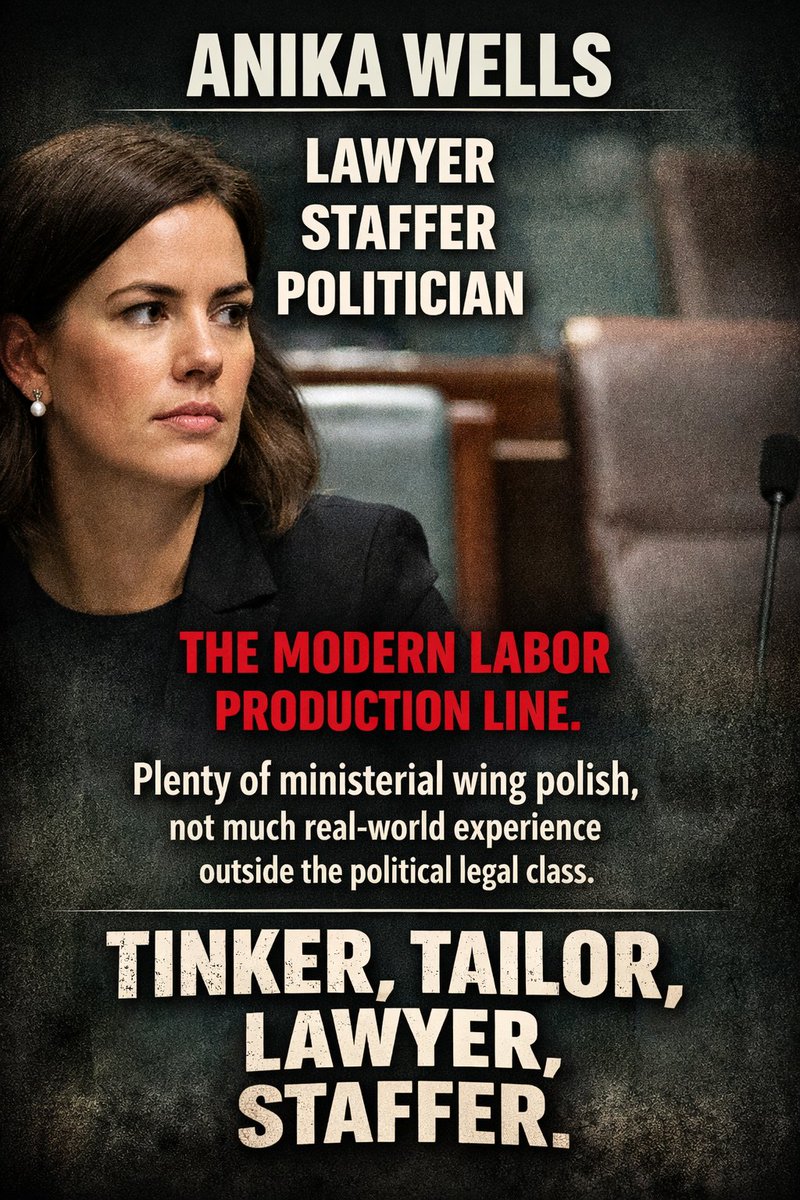
TINKER, TAILOR, LAWYER, STAFFER @AnikaWells , Lawyer, staffer, politician. The modern Labor production line. Plenty of ministerial wing polish, not much real-world experience outside the political legal class NOT FIT FOR PURPOSE
Michael Sanderson tweet media
English
0
0
1
16
Madero
Madero@fuwap15·
Nothing more to add, Mike Palecek says it all! A common sense idea, which is absolutely suited to an expansive Australia @auspost . Unless big banks are running the country @AnikaWells ? Video: Canadian Union of Postal Workers makes the case for Canada Post banking. #auspol
English
3
2
5
83
Michael Sanderson
Michael Sanderson@ecoproducer·
youtu.be/Bq3JaxUYSrs Cutting fuel excise during a supply scare is not relief, it can be accelerant. If the problem is panic buying, strained distribution, and fast repricing, cheaper fuel can empty tanks faster while opportunistic pricing still bites. The crisis is not just the tax. *************************************** When fuel prices jump, the obvious political answer is to cut fuel excise. It is simple, visible, and easy to explain. The Federal Government can clearly do it if it chooses. As issuer of the Australian dollar, it is not financially constrained in the way a household, business, or state government is constrained. So, the question is not whether Canberra can afford an excise cut. It can. The question is whether it is the right tool for the problem in front of us. That matters because the current fuel shock is not just a tax problem. It appears to be a combined supply, distribution, demand, and market conduct problem. International conflict pushed up benchmark fuel prices. That created a real upstream cost shock. But there is also evidence that retail prices moved unusually quickly. Normally, fuel sitting in underground tanks was bought earlier at a lower wholesale cost, so there is usually a lag before higher international prices show up at the bowser. If prices rise almost immediately, the question is whether retailers are responding to the actual cost of the fuel on site or repricing on expected replacement cost. That is why a broad excise cut is not the best first response. First, it does not solve a physical supply problem. If local shortages are being driven by panic buying or strained distribution, an excise cut does not put more litres into regional tanks. Second, it can stimulate more demand at exactly the wrong time. If people fear shortages, making fuel cheaper can intensify the rush to fill up and deepen local outages. Third, pass through is never perfectly guaranteed. Australian experience shows that excise cuts can be passed through substantially, but not always immediately or evenly. Some of the benefit can be delayed by stock turnover, offset by rising wholesale prices, or absorbed in margins. The first response should instead be regulation and supply management. Government and regulators should focus on stabilising physical supply, deterring opportunistic conduct, and restoring confidence that fuel will remain available. Runs on fuel are often driven not only by shortage itself but by fear of shortage. Once people think supply may fail, they change their behaviour, and that behaviour can create the very failure they fear. So, the first task is to calm the system and keep fuel moving. That means reserve release where appropriate, active coordination of deliveries, close monitoring of regional hotspots, and strong public communication. Rationing has a legitimate place, but only as a reserve measure and only if there is a genuine physical shortage or an uncontrolled run on supply that softer measures cannot contain. The argument for rationing is not that it makes fuel cheaper. It does not. The argument is that it can stop panic demand from crowding out essential services and critical functions. In other words, rationing is a continuity tool. If unrestricted demand means ambulances, fire services, police, public transport, food freight, agriculture, or other critical sectors may be left short, then temporary rationing becomes reasonable. But the trigger should be clear and tied to verified physical shortage, not merely high prices. The rules should be public, time limited, and geographically targeted where possible. Fiscal relief still has a role, but it should be targeted first and broad second. If some households, regions, or productive sectors are under acute stress, direct temporary support is more precise than a universal excise cut. Targeted support can help vulnerable households, regional communities, and critical supply chains without encouraging unnecessary extra demand across the whole economy. A broad excise cut should therefore be treated as a later option, more defensible if physical supply stabilises, panic buying subsides, distribution normalises, and the main remaining problem is that international fuel prices are high. So, the right answer is not excise reduction alone, regulation alone, or rationing alone. It is a sequence. First, stabilise supply and restrain opportunistic conduct through regulation, reserve release, coordination, and transparency. Second, provide targeted fiscal support where it is genuinely needed. Third, use rationing only if a real physical shortage deepens and softer measures fail. Fourth, consider a temporary broad excise cut only if the crisis shifts from a supply and conduct problem to a pure affordability problem. Not every fuel crisis is the same. Sometimes the binding constraint is price. Sometimes it is physical availability. Sometimes it is market conduct. Sometimes it is all three. Good policy starts by diagnosing the actual constraint and matching the instrument to it. That protects the floor first, avoids making a run on fuel worse, and recognises that the goal is not merely cheaper fuel in the abstract but continuity, fairness, and resilience.
YouTube video
YouTube
English
0
0
2
65
Michael Sanderson
Michael Sanderson@ecoproducer·
youtu.be/Vm9EBprjhTw WE ARE SUBSIDISING PRIVATE HEALTH INSUANCE 7.9 BILLION PA The Health Legislation Amendment (Improving Choice and Transparency for Private Health Consumers) Bill 2026 is now before the Senate Community Affairs Legislation Committee. It is being sold as a transparency reform. It would publish more information about medical fees and likely out of pocket costs, and tighten approval of private health insurance premiums. Those changes are worth supporting. But if you step back, the bill tells a bigger story. A health system only needs this kind of repair when people cannot easily tell what they will be charged, when voluntary transparency has failed, and when private insurers can exploit gaps in the rules. This bill is not just a fix. It is a symptom. Australia has drifted into a model where private insurance and private charging play too large a role in care. The result is opacity, duplication, subsidy, and confusion. Patients are left to navigate premiums, exclusions, gaps, and uncertain coverage, while the public is told this is just the normal price of a mixed system. It is not. It is evidence of a system that has lost sight of its purpose. The first question should be simple. What is the health system for. If the answer is good public purpose, then the Federal Government has a duty to build a floor that all can stand on and to regulate a ceiling that protects from disproportional excess. In health, the floor means universal, timely, comprehensive access to necessary care regardless of income, geography, or insurance status. The ceiling means restraining rent seeking, exclusion, opacity, and the extraction of profit from illness. By that test, the present model is deficient. It does not build a floor that all can stand on because access is too often filtered through price, coverage, and location. It does not regulate a ceiling effectively because the system invites premium gaming, fee opacity, and public subsidy for private intermediation. The public system remains the backstop, but too often it is treated as the safety net rather than the core platform. The deeper problem is intellectual. Australian politics still talks as if the Commonwealth were a household that must gather scarce dollars before it can provide public services. That is false. Ian Macfarlane put it plainly. The spending came first. Philip Lowe said the Reserve Bank can create money and is the one entity in the country that can create money just out of nothing. Bernie Fraser called the household analogy nonsense. Once that is understood, the privatisation story starts to collapse. The real limits are labour, skills, hospitals, equipment, supervision, supply chains, and institutional capacity. That means the real question is not whether Australia can afford a stronger health system. The real question is whether it is willing to organise its real resources to build one. If something is doable in real terms, it is affordable for a currency issuing government. This matters most in rural and regional Australia. Private provision has not adequately or equitably serviced these communities. Access is poorer, travel is longer, and specialist availability is thinner outside the major cities. Where need is dispersed, distances are greater, and profit is less certain, the private model does not reliably deliver. That is why direct public investment is essential. More hospitals, more beds, more theatre and diagnostic capacity, more outreach, more workforce formation, more accommodation and supervision in the places where care is actually needed. The same logic applies to research and long-term system capability. A fit for purpose health system is not just a buyer of treatments developed elsewhere. It must train people, fund discovery, secure supply chains, improve data systems, and connect research to service delivery and prevention. Private health insurance is not built for that. It finances episodes of care and extras. It is not designed to carry the intellectual and research base of a nation’s health system. The warning is obvious. The United States spends more than any other comparable country and still leaves millions uninsured, with weaker outcomes and deeper inequality. That is what happens when private finance and private charging become central to system design. Costs rise, complexity grows, and universality weakens. That is the path Australia is walking down if it keeps treating the private sector as a pillar rather than a marginal adjunct. So yes, this bill should pass. But it should be read for what it really is. It is not proof that the private model can be repaired into coherence. It is evidence that the private model keeps generating problems that then require public repair. A civilised society does not treat illness as a revenue stream or access to care as a privilege rationed by premiums and gaps. The destination cannot be a better managed private detour. It must be a rebuilt public system, broad at the base, firm at the ceiling, and strong enough for all to stand on.
YouTube video
YouTube
English
0
0
0
33
Madero
Madero@fuwap15·
@RobbieBarwick @aclennell @SkyNewsAust Under @MRowlandMP , CEO @auspost Paul Graham became the second highest paid public servant, $2.68 MILLION p.a. & plans to close 200 POST OFFICES! The " @auspost consultation" was a distraction from her being caught taking gambling dollars, as a donation! A serial offender?
English
2
8
17
3.8K