𝐋𝐚𝐤𝐬𝐡 𝐑𝐚𝐠𝐡𝐚𝐯𝐚𝐧

4.1K posts

𝐋𝐚𝐤𝐬𝐡 𝐑𝐚𝐠𝐡𝐚𝐯𝐚𝐧 banner
𝐋𝐚𝐤𝐬𝐡 𝐑𝐚𝐠𝐡𝐚𝐯𝐚𝐧

𝐋𝐚𝐤𝐬𝐡 𝐑𝐚𝐠𝐡𝐚𝐯𝐚𝐧

@laraghavan

Founder of Cyb3rSyn Labs | Helping accelerate the transition away from mainstream management practices!

เข้าร่วม Ocak 2016
358 กำลังติดตาม530 ผู้ติดตาม
ทวีตที่ปักหมุด
𝐋𝐚𝐤𝐬𝐡 𝐑𝐚𝐠𝐡𝐚𝐯𝐚𝐧
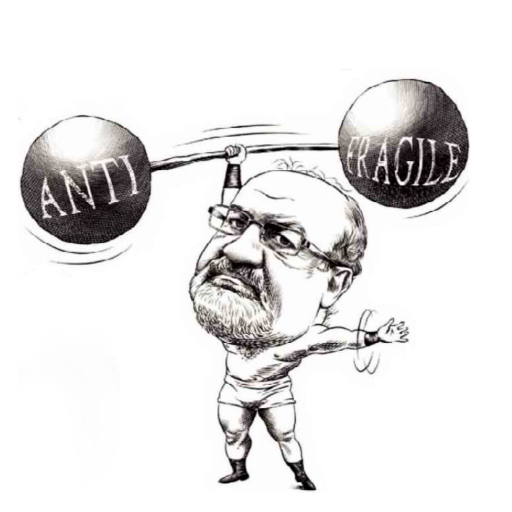
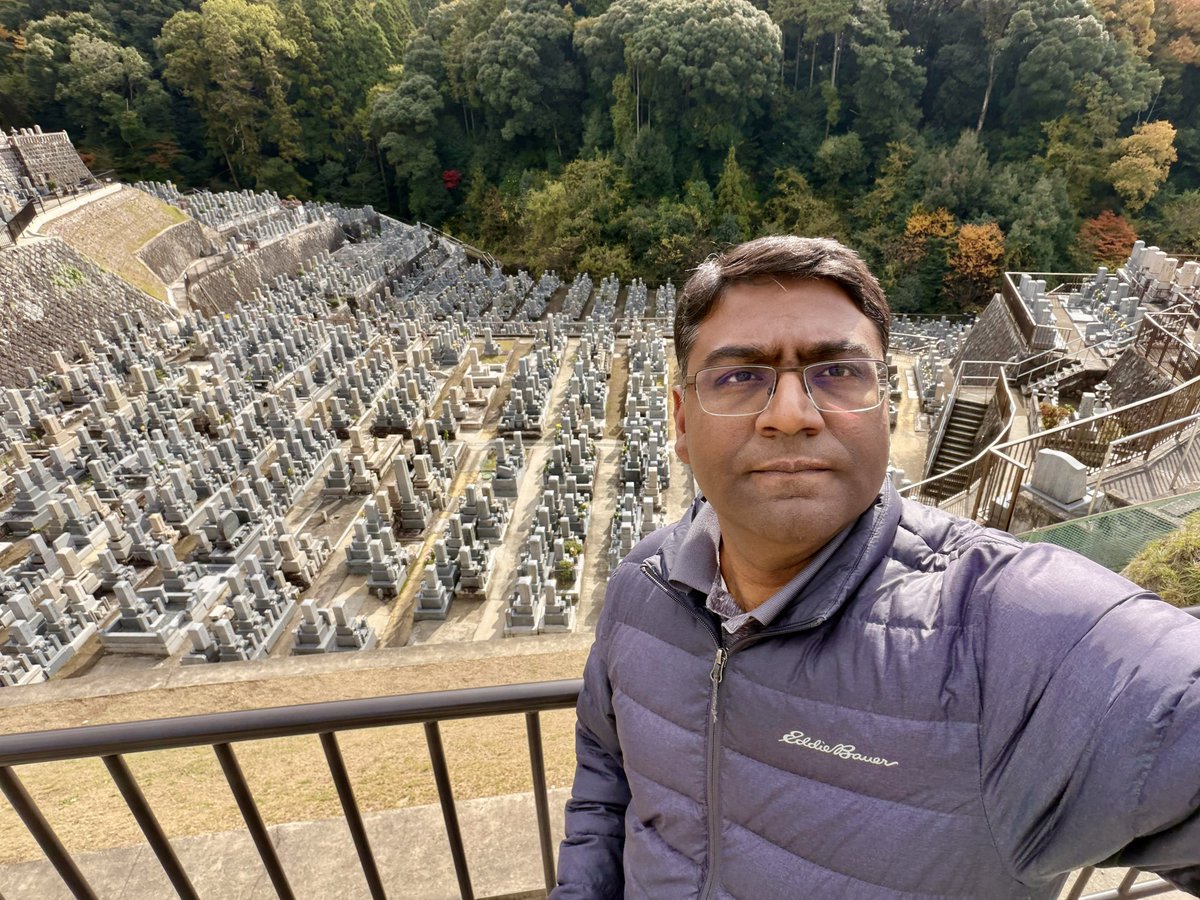
𝐀𝐠𝐞 𝐢𝐬 𝐛𝐞𝐭𝐭𝐞𝐫 𝐮𝐧𝐝𝐞𝐫𝐬𝐭𝐨𝐨𝐝 𝐢𝐧 𝐫𝐞𝐯𝐞𝐫𝐬𝐞! It was @nntaleb that drove home to me that aging should not be seen using the distance from birth, rather through the estimated distance from death. I like to visit and walk the cemeteries whenever I’m in a new city to remind myself of the eventuality and give me the courage to speak truth to power. I recently went back to Japan after 20 years. Here is me walking the cemetery in Kyoto. Well, why am I talking about this now? I wrote a book! A book that I wrote knowing that I’m going to be dead one day and that I must come clean about the mistakes I made as a Tech. leader. Failed executives don’t write books about their failures. They just go on to make millions and fail elsewhere. They may appear to be a success if you just look at quantifiable metrics like their net worth or the share price of their company. But they are miserable failures if you look closely at what they did to the lives of their employees - bureaucracy, burn out, forced relocations, layoffs, etc. So I decided to write a book that catalogs and details many of my mistakes. On thinking deeper, they are not just my mistakes, but the mistakes of mainstream management in general - I simply took them for granted without questioning their validity and effectiveness. As much as I have become skeptical of anything prescriptive (what to do) that ignores the unique context in front of us, I think it is important to talk about what NOT to do. So, I made sure this book is full of negative advice (what NOT to do) - traps and pitfalls you must avoid. Why negative advice? I go back to Nassim Taleb, who explains the why elegantly: “I have used all my life a wonderfully simple heuristic: charlatans are recognizable in that they will give you positive advice, and only positive advice, exploiting our gullibility and sucker-proneness for recipes that hit you in a flash as just obvious, then evaporate later as you forget them. Just look at the “how to” books with, in their title, “Ten Steps for - - ” (fill in: enrichment, weight loss, making friends, innovation, getting elected, building muscles, finding a husband, running an orphanage, etc.). Yet in practice it is the negative that’s used by the pros, those selected by evolution: chess grandmasters usually win by not losing; people become rich by not going bust (particularly when others do); religions are mostly about interdicts; the learning of life is about what to avoid.” Grab a copy here: cyb3rsyn.com/products/mmm-b… #leadership #systemsthinking #complexity #cybernetics #philosophy
𝐋𝐚𝐤𝐬𝐡 𝐑𝐚𝐠𝐡𝐚𝐯𝐚𝐧 tweet media
English
4
10
88
17.5K
𝐋𝐚𝐤𝐬𝐡 𝐑𝐚𝐠𝐡𝐚𝐯𝐚𝐧 รีทวีตแล้ว
Nassim Nicholas Taleb's Wisdom
"When you walk the walk, whether successful or not, you feel more indifferent and robust to people's opinion, freer, more real." - Nassim Nicholas Taleb in The Black Swan
English
1
44
337
9.8K
Mahmoud Rasmi
Mahmoud Rasmi@Decafquest·
come to madrid, will show you around, and you'll leave with a philosophy book, @laraghavan
Mahmoud Rasmi tweet media
English
1
0
17
567
𝐋𝐚𝐤𝐬𝐡 𝐑𝐚𝐠𝐡𝐚𝐯𝐚𝐧 รีทวีตแล้ว
Elon Musk
Elon Musk@elonmusk·
Most CEOs have no idea what’s really going on
David Senra@davidsenra

IBM built a cloud of suits to make sure the CEO never talked to anyone actually doing the work. @elonmusk does the opposite. "Elon's method is extreme focus on substance. Extreme focus on getting to the truth. In any organization with multiple layers, there's compounding lies. Each layer wants to look good. Each layer puts a little spin on things. If one layer lies to the next layer above it, maybe that's okay. When that happens two or three times, the lies compound. If that happens six times, the lies really compound. If that happens 12 times, the CEO has no idea what's happening. That was IBM. By the time I got there as an intern, I calculated there were 12 layers of management between me and the CEO. They even had a term for it: the great cloud. A cloud of men in gray business suits who followed the CEO around and prevented him from ever talking to anybody who was actually doing the work. When he would come to visit, it was like a visit from the king. A completely impervious bubble. That's the polar opposite of the Elon approach." — @pmarca

English
3.5K
15K
112.8K
17M
𝐋𝐚𝐤𝐬𝐡 𝐑𝐚𝐠𝐡𝐚𝐯𝐚𝐧 รีทวีตแล้ว
Architecture & Art
Architecture & Art@archpng·
Perfect symmetry in brick. At the Forest Research Institute in Dehradun, repeating arches and vaulted brickwork turn a simple corridor into something almost hypnotic. Completed in 1929, the institute remains one of India’s most iconic heritage buildings.
Architecture & Art tweet media
English
23
290
1.6K
22.7K
𝐋𝐚𝐤𝐬𝐡 𝐑𝐚𝐠𝐡𝐚𝐯𝐚𝐧
One common misconception among Silicon Valley practitioners is that once they grasp the intricacies of software product development, they automatically comprehend the business aspects as well. They don’t!
English
0
0
2
41
𝐋𝐚𝐤𝐬𝐡 𝐑𝐚𝐠𝐡𝐚𝐯𝐚𝐧 รีทวีตแล้ว
David Senra
David Senra@FoundersPodcast·
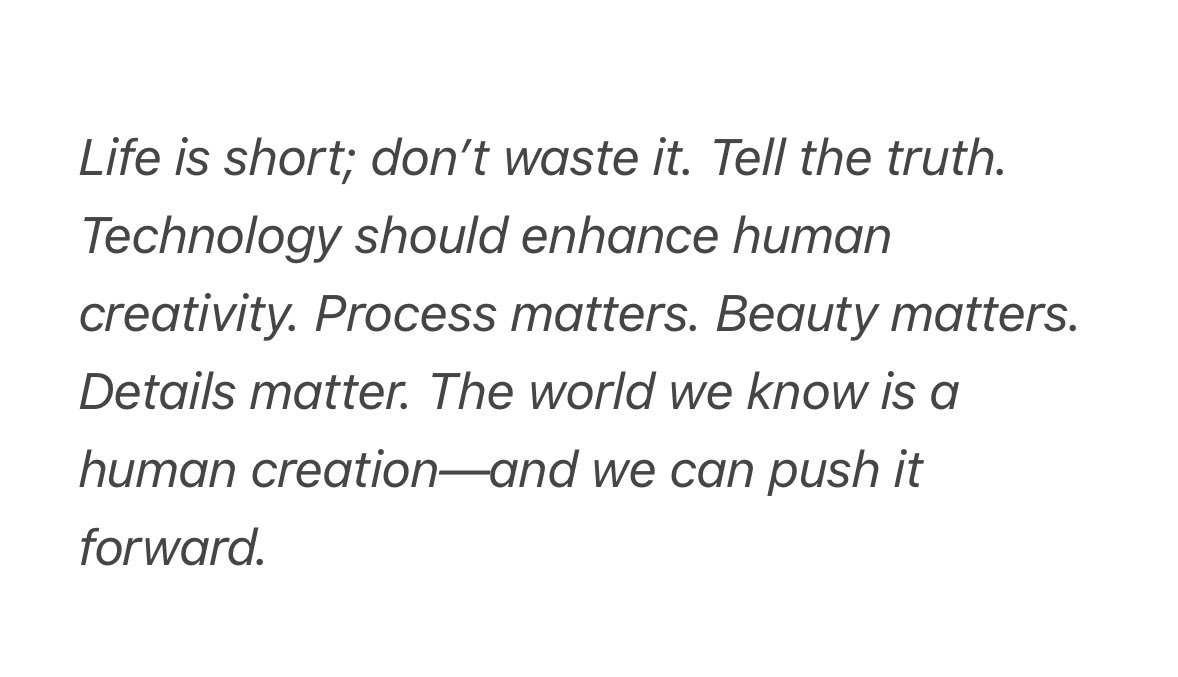
A remarkably consistent set of values that Steve Jobs held dear:
David Senra tweet media
English
8
87
732
16.4K
𝐋𝐚𝐤𝐬𝐡 𝐑𝐚𝐠𝐡𝐚𝐯𝐚𝐧 รีทวีตแล้ว
Rory Sutherland
Rory Sutherland@rorysutherland·
Simple business tip. It doesn't really count as an increase in efficiency if you are making your customer pay the price.
English
17
24
269
20.3K
𝐋𝐚𝐤𝐬𝐡 𝐑𝐚𝐠𝐡𝐚𝐯𝐚𝐧 รีทวีตแล้ว
David Senra
David Senra@davidsenra·
Marc Andreessen (@pmarca) describes the org chart from hell:
David Senra@davidsenra

My conversation with Marc Andreessen (@pmarca), co-founder of @a16z and Netscape. 0:00 Caffeine Heart Scare 0:56 Zero Introspection Mindset 3:24 Psychedelics and Founders 4:54 Motivation Beyond Happiness 7:18 Tech as Progress Engine 10:27 Founders Versus Managers 20:01 HP Intel Founder Legacy 21:32 Why Start the Firm 24:14 Venture Barbell Theory 28:57 JP Morgan Boutique Banking 30:02 Religion Split Wall Street 30:41 Barbell of Banking 31:42 Allen & Company Model 33:16 Planning the VC Firm 33:45 CAA Playbook Lessons 36:49 First Principles vs. Status Quo 39:03 Scaling Venture Capital 40:37 Private Equity and Mad Men 42:52 Valley Shifts to Full Stack 45:59 Meeting Jim Clark 48:53 Founder vs. Manager at SGI 54:20 Recruiting Dinner Story 56:58 Starting the Next Company 57:57 Nintendo Online Gamble 58:33 Building Mosaic Browser 59:45 NSFnet Commercial Ban 1:01:28 Eternal September Shift 1:03:11 Spam and Web Controversy 1:04:49 Mosaic Tech Support Flood 1:07:49 Netscape Business Model 1:09:05 Early Internet Skepticism 1:11:15 Moral Panic Pattern 1:13:08 Bicycle Face Story 1:14:48 Music Panic Examples 1:18:12 Lessons from Jim Clark 1:19:36 Clark Versus Barksdale 1:21:22 Tesla Versus Edison 1:23:00 Edison Digression Setup 1:23:13 AI Forecasting Myths 1:23:43 Edison Phonograph Lesson 1:25:11 Netscape Two Jims 1:29:11 Bottling Innovation 1:31:44 Elon Management Code 1:32:24 IBM Big Gray Cloud 1:37:12 Engineer First Truth 1:38:28 Bottlenecks and Speed 1:42:46 Milli Elon Metric 1:47:20 Starlink Side Project 1:49:10 Closing Includes paid partnerships.

English
0
2
75
11.6K
𝐋𝐚𝐤𝐬𝐡 𝐑𝐚𝐠𝐡𝐚𝐯𝐚𝐧
@krishnabtwtr @Satyaki_R Hear, Hear! Not just that - the core insights are Lindy* and so it is the whole package. The act of reading old Tamil books is such a delightful activity - it enriches both the heart and the brain. I’m lucky to have it as my mother tongue. *One example:
𝐋𝐚𝐤𝐬𝐡 𝐑𝐚𝐠𝐡𝐚𝐯𝐚𝐧@laraghavan

It is a common practice to take on debt in the form of a mortgage to buy a home. But, I never did and continue to be a renter till date. One of the reasons goes back to an old Tamil verse from the Indian epic Ramayana that describes the emotional state of Ravana, the demon king of Lanka, when Lord Rama, is about to invade his country: “கடன் கொண்டான் நெஞ்சம் போலும் கலங்கினான் இலங்கை வேந்தன்” – சீர்காழி அருணாசலக் கவிராயர் The phrase loosely translates to "Like a heart burdened with debt, the King of Lanka was troubled" in English. I used to wonder from my childhood days as to why the author chose the word ‘debt’ instead of so many other possibilities to describe Ravana’s situation 🤔 The mainstream explanation of this phrase is that before you get into debt you have to prepare yourself for the burden of having to pay it back (principal + interest) in the future. But, that’s not the only price you pay. The real price you pay is not being able to take risks and make decisions according to your values. I know people who couldn’t get a new job in a different city/country or unable to quit a job they hate because they got into debt and the fear of having to repay their loans made sure that they were stuck in their mortgaged homes for a long time. @morganhousel explains this elegantly in his post about debt: “As debt increases, you narrow the range of outcomes you can endure in life.” When the number of options in front of you decreases during the time of danger (which is what debt does to us - consciously and/or unconsciously), you’ll know how Ravana felt. The old Tamil saying is profound! When in danger, you must always have more options in front of you, not less. @trishankkarthik @nntaleb

English
0
0
1
26
Tony Bonanza
Tony Bonanza@krishnabtwtr·
@Satyaki_R Tamil poetry and wordplay is incredible. It's as if the language was invented for poetry.
English
1
0
5
33
𝐋𝐚𝐤𝐬𝐡 𝐑𝐚𝐠𝐡𝐚𝐯𝐚𝐧 รีทวีตแล้ว
Tom Goodwin
Tom Goodwin@tomfgoodwin·
We don't talk enough about how uncertainty completely screws the business environment. Even if things aren't changing, the narrative change, affords people an excuse to never make a decision, change plans, fire people, cancel projects, etc etc etc
English
0
1
9
820
Orange Book 🍊📖
Orange Book 🍊📖@orangebook·
You suddenly get luckier once you strike the right amount of "unemployment." Being constantly busy chasing opportunities ironically makes you miss the most important ones. Success boils down to being early and right, and that only happens with the courage to look like a fool:
English
39
38
558
50.9K
𝐋𝐚𝐤𝐬𝐡 𝐑𝐚𝐠𝐡𝐚𝐯𝐚𝐧 รีทวีตแล้ว
Jason Fried
Jason Fried@jasonfried·
"What won't you build?" has always been the most important question. Knowing what you'll say no to is always more useful than knowing what you'll say yes to. This is true with most everything. Who won't you hire? Which company or client won't you work with? Which ideas won't you go along with? What business isn't worth chasing? What optimization isn't worth the squeeze? Which table isn't worth sitting it? Which work isn't worth doing? Always know the no.
English
17
10
125
11.2K
𝐋𝐚𝐤𝐬𝐡 𝐑𝐚𝐠𝐡𝐚𝐯𝐚𝐧
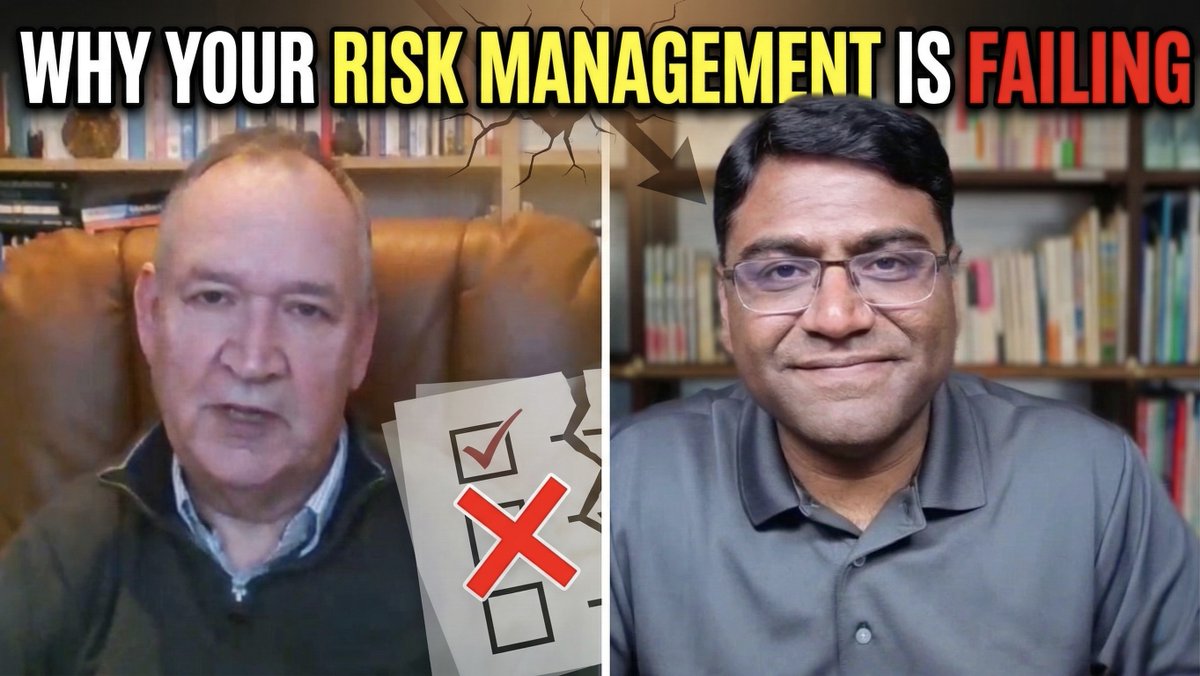
Critical Systems Thinking - Part 2 This episode features Dr Mike C Jackson, discussing the resurgence of systems thinking and the upcoming conference dedicated to merging theory with practice. He highlights the limitations of the traditional scientific method when addressing human complexity, advocating instead for a pluralistic approach that includes diverse traditions like cybernetics and complexity theory. We then discuss his latest book in which he introduced his "EPIC" framework - Explore, Produce, Intervene, Check - as a practical guide for professionals to navigate organizational challenges and power dynamics. We also discuss how one can apply CST to risk management. Checkout the podcast video and the companion blogpost (with key insights and my reflections): cyb3rsyn.com/p/critical-sys…
𝐋𝐚𝐤𝐬𝐡 𝐑𝐚𝐠𝐡𝐚𝐯𝐚𝐧 tweet media
English
0
0
1
43