Max Dauber

127 posts

Max Dauber banner
Max Dauber

Max Dauber

@max_dauber

solving hard problems @colossuscyber @joinfai, fmr @DeptOfWar @primer_ai @utexasece, 🇺🇸

San Francisco, CA เข้าร่วม Ocak 2021
3.8K กำลังติดตาม496 ผู้ติดตาม
Max Dauber
Max Dauber@max_dauber·
let’s go Travis!
English
0
0
4
100
Max Dauber รีทวีตแล้ว
GRITCULT
GRITCULT@GRITCULT·
Sigmund Freud writing to Carl Jung
GRITCULT tweet media
English
8
538
4.3K
82.3K
Ben Cera
Ben Cera@Bencera·
The next $1 trillion startup will sell AI employees. Not tools. Not copilots. Employees
English
150
84
1.2K
86.3K
Max Dauber รีทวีตแล้ว
Cyan Banister
Cyan Banister@cyantist·
Authentic people are always slightly threatening to those living in bad faith. They make the machine visible.
English
17
52
392
16.3K
Max Dauber
Max Dauber@max_dauber·
awesome analysis, shows the value of truly domain-aware red teaming on analytical assumptions
Christopher Porter@DrPorter

Ran my @perplexity_ai multi-LLM analysis using Intelligence Community's own Structured Analytic Techniques against the public CIA archive of Presidential Daily Briefs from the Kennedy, Johnson, Nixon, and Ford Administrations. The request was simple: use these techniques to spot, using only open source information available at the time, analytic blind spots going to the President. I then ask the LLMs to fast forward and use historical data of how those events actually turned out to be. Would the Structured Analytic Techniques turn out to be useful? 1/?

English
0
0
1
98
Max Dauber รีทวีตแล้ว
Bala Selvam
Bala Selvam@BalaSelvam·
I think we need more former founders in public sector much like we need more founders at VC firms. You can only understand what it is like and solve problems to create completion and innovation when you’ve been in the shoes of a founder fighting like hell to survive
English
1
2
11
804
Max Dauber รีทวีตแล้ว
Noah Schochet
Noah Schochet@noah_schochet·
Anyone who knows me understands that I am dedicating my life to building a brighter future for humanity. Right now, our societal progress is bottlenecked by the speed of construction. We need highways, railroads, bridges, and ports. We need schools and hospitals. We need affordable housing and walkable cities. We need clean power and domestic manufacturing. But building this is excruciatingly slow and it's prohibitively expensive. My team and I are working tirelessly to make it faster, cheaper, and safer to build the foundation of a flourishing society. This isn’t hype or vaporware. This is real. We have fleets of robots and construction teams operating across Texas. If you want to get your boots dirty and work hard to create large-scale change, come join us.
TerraFirma@TerraFirma_Inc

The experts said "years away." The skeptics said "decades." We said "watch this!" Autonomous construction isn't on the way. It's already here and it's moving faster than anyone predicted. This is what it looks like when an industry hits its turning point. Stay tuned, we've got a lot in store for 2026... (sound on 🔊)

English
6
3
87
4.8K
Max Dauber
Max Dauber@max_dauber·
As a former participant and judge this is one of the best events of the year for NatSec startups - highly recommend! kudos @marguer_ite for putting it together
Cerebral Valley@cerebral_valley

Proud to announce our 3rd Annual National Security Hackathon, May 2-3 in San Francisco, officially in collaboration with @USARMYPIT / @USArmy 🇺🇸 Join us to work on pressing problems in command & control, sensors, edge compute, cybersecurity, drones, and more, with direct mentorship from military & industry stakeholders 🤝 Thank you to our amazing partners at @ShieldCapVC, @PalantirTech, @DCVC, and IQT, with support from @OpenAI, @armada_ai, @scale_AI, @TENEXai, @Deloitte Special guests announced soon 👀 Apply below 👇

English
1
1
5
540
Max Dauber
Max Dauber@max_dauber·
@83dollaroring Probably because the plan will be to make hundreds of thousands of them…
English
3
0
4
666
Max Dauber รีทวีตแล้ว
mickey friedman
mickey friedman@mickeyxfriedman·
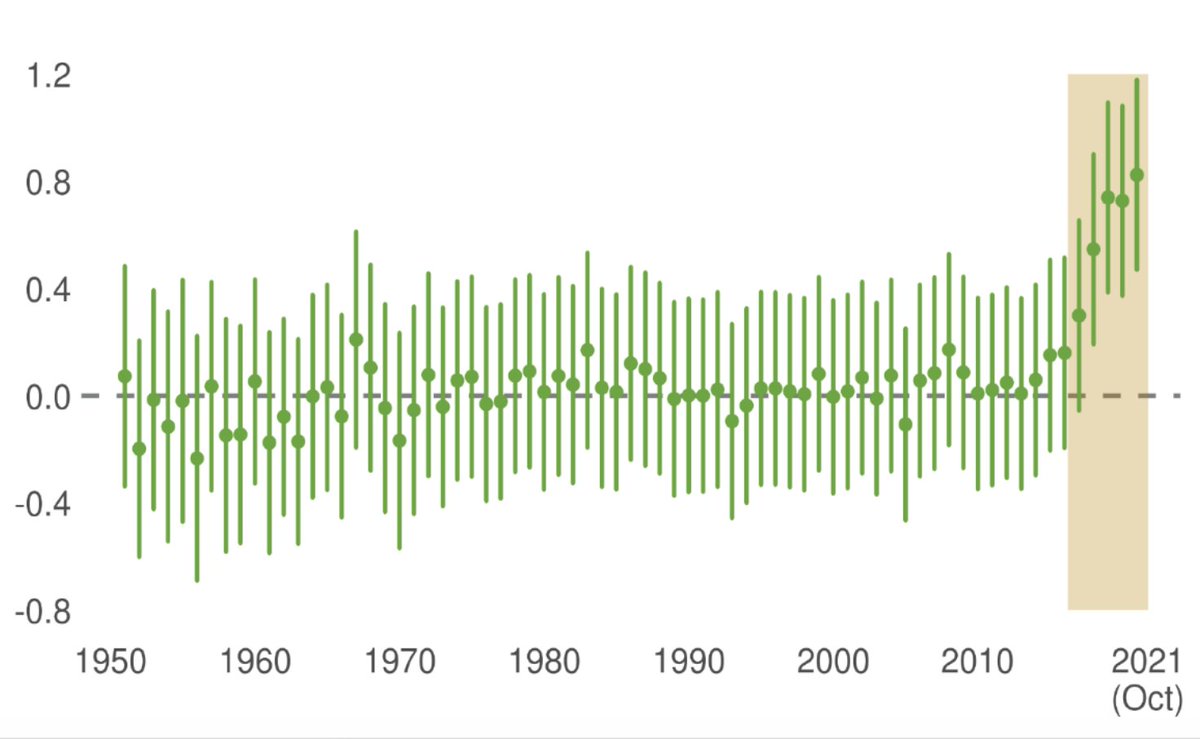
the current fear is is that AI homogenizes culture and turns humans into passive consumers one counterpoint: in Go, human play showed very little improvement from 1950 to 2016 until alphago beat lee sedol - then human decision quality jumped. players started developing moves that were distinct both from previous human moves and from the novel moves introduced by machine intelligence this seems more likely to me - fun times ahead
mickey friedman tweet media
English
97
405
3K
545.8K
Max Dauber รีทวีตแล้ว
Séb Krier
Séb Krier@sebkrier·
📜 Since there’s renewed interest in how AI could help with governance, here are 14 specific government processes where AI agents could make a measurable difference today: Impenetrable forms and applications: citizens face complex, jargon-filled forms that cause them to miss benefits or fail to comply with regulations. AI can replace forms with plain-language conversations that extract data from documents, calculate eligibility, and only ask relevant questions. In the US, citizens spend an estimated 6.5 billion hours per year on federal tax compliance. The IRS sends you no pre-filled return despite already having your W-2s and 1099s. An AI agent could pull all income data the government already holds, pre-populate a return, flag deductions you're likely eligible for based on your profile, and file - reducing the process from hours to a single review-and-confirm step. Regulatory bloat: guidance layered on regulations layered on statutes creates thousands of pages of rules that no person or caseworker can realistically navigate. Rules become too complex and get applied selectively by frontline workers. Agents can be used to map entire regulatory regimes, flag redundancies and conflicts, and let policymakers simulate how proposed rules would actually perform before enacting them. Stanford's RegLab built STARA, an AI system that surveyed San Francisco's municipal code and identified hundreds of outdated reporting mandates, which resulted in a 351-page ordinance to eliminate or consolidate more than a third of the city's 528 mandated reports. Obsolete code and IT systems: the US Social Security Administration runs on 60-million-line COBOL codebases from the 1980s; the IRS processes returns on systems from the 1960s; the World Bank's own internal review found its siloed divisions (IFC, IDA, IBRD) couldn't communicate across systems and its bureaucracy resisted modernisation. In each case, no one internally understands the code, so agencies can't fix a bug without months of waiting and enormous contractor fees. Agentic coding tools let internal teams point an AI at a legacy codebase and start making changes themselves. Fraud and improper payments: after Hurricanes Katrina and Rita, FEMA distributed $6bn in relief with $600m to $1.4bn in improper/fraudulent payments according to GAO. During COVID, the US lost an estimated $100-200bn to fraudulent unemployment insurance claims alone, many filed by bots. As bad actors adopt AI to generate synthetic identities, forge documents, and file claims at scale, that gap will widen fast. Agencies need their own AI agents doing real-time cross-referencing of claims against income data, identity records, and behavioural patterns. Siloed, department-centric service delivery: around 600,000 people leave US prisons each year. Each must separately navigate the Bureau of Prisons (release paperwork), SSA (Social Security card), state DMV (ID), Medicaid (healthcare), SNAP (food), HUD (housing), American Job Centers (employment), and a parole office; each with its own application, eligibility rules, and case system. These dependencies are sequential: without ID you can't get benefits, without benefits you can't stabilise housing, without housing you can't hold a job. An AI agent could intake one person's situation at release, determine eligibility across every level of government, and file applications in the right dependency order. Identity verification as a bottleneck to service access: 800m people worldwide can't legally prove their identity according to the World Bank, mostly in Sub-Saharan Africa and South Asia. Without ID you can't open a bank account, receive a cash transfer, or access most government services. India's Aadhaar is a nice positive example: 1.4bn biometric IDs, 523m new bank accounts, and a claimed $11bn saved by eliminating ghost beneficiaries; but this took a decade of state capacity to build and still fails often enough to lock out legitimate users. AI agents could compress this by cross-referencing whatever documents a person does have (a utility bill, a phone number history, a community attestation etc) against available records and flagging confidence levels for human review. Benefits eligibility screening: the US has over 80 federal means-tested programmes, each with its own application and documentation requirements. A single mother qualifying for SNAP, Medicaid, CHIP, WIC, EITC, Section 8, and childcare assistance faces what is effectively seven separate bureaucracies. An AI agent could intake one life-situation description, determine eligibility across every programme simultaneously, pre-fill and submit applications in parallel, and flag benefits cliffs (where a small income increase would trigger a sharp loss in support) before they hit. Building permit approvals: getting a construction permit in many US cities takes 3–12 months of back-and-forth between applicants and planning departments, often over PDF submissions reviewed manually against zoning codes. An AI agent could parse submitted plans against the local zoning and building code, flag non-compliant elements immediately, and return a preliminary approval or specific revision list within hours instead of months. A related case study: DeepMind recently helped the UK government translate mountains of old paper maps, PDFs, and scanned documents into usable data for modern planning systems with the Gemini-powered ‘Extract’ tool. Public records requests (FOIA): federal agencies have backlogs of hundreds of thousands of FOIA requests, with median response times stretching to months or years. Staff manually search filing systems and redact sensitive information page by page. An AI agent could search document repositories for responsive records, auto-redact exempt information (personal data, classified material, deliberative process content), and draft a release package for human sign-off. However this only works where records are digitised and searchable, and much of the government still runs on fragmented legacy systems where documents aren't centrally indexed… Court scheduling and case management: state courts lose enormous time to scheduling conflicts, continuances, and manual case tracking. In many jurisdictions, hearing dates are still set by phone or in-person. An AI agent could manage the full docket — auto-scheduling based on judge availability, attorney conflicts, and case priority, sending reminders, and rescheduling continuances without human clerk intervention. Over time you could also start exploring automating some low-value claims through novel arbitration pipelines, freeing up court capacity for more consequential cases. Business registration and licensing: starting a business in most jurisdictions requires navigating 5–15 separate registrations: state incorporation, EIN from the IRS, state tax registration, local business licence, zoning compliance, health permits, liquor licences, professional licences, etc. An AI agent could take "I want to open a restaurant serving alcohol at [address] in Brooklyn," query every relevant federal, state, and city database, produce the complete permit checklist in dependency order, pre-fill each application with the business details, and flag the long-lead items (e.g. liquor licence) that need to start immediately. Social worker caseload documentation: child protective services and adult social care workers spend the majority of their time on paperwork rather than with clients: writing visit notes, filing reports, updating case management systems. For every case, caseworkers complete roughly 400 forms totalling ~2,500 pages (multiplied across the 24–31 cases they typically carry simultaneously). An AI agent could listen to (or read transcripts of) a home visit, auto-generate the structured case note, update the system of record, and flag any safeguarding triggers, giving caseworkers their time back for actual care. Medicare/Medicaid claims adjudication: CMS processes over 1bn claims per year, with complex rules about covered services, bundling, medical necessity, and provider eligibility. Improper payments run to tens of billions annually, and 77% of these were due to insufficient documentation, not fraud. In parallel, Medicare Advantage denies 17% of initial claims, yet 57% of those denials are overturned on appeal. Agents could adjudicate straightforward claims automatically against the coverage rules, flag anomalous billing patterns in real time, and route only genuinely complex cases to human reviewers. Public comment synthesis for rulemaking: when a federal agency proposes a new rule, it often receives thousands to millions of public comments (the FCC received 22 million on net neutrality). Staff must read, categorise, and respond to each substantive comment. This may well get worse as people use agents to submit plausible-looking comments multiple times. Agents can help the government filter through these, cluster comments by theme, identify unique substantive arguments, flag form-letter campaigns, and draft the agency's response-to-comments document (a task that currently takes teams of lawyers months).
Séb Krier tweet mediaSéb Krier tweet mediaSéb Krier tweet mediaSéb Krier tweet media
English
14
53
362
31.2K
Max Dauber รีทวีตแล้ว
Andrej Karpathy
Andrej Karpathy@karpathy·
Something I've been thinking about - I am bullish on people (empowered by AI) increasing the visibility, legibility and accountability of their governments. Historically, it is the governments that act to make society legible (e.g. "Seeing like a state" is the common reference), but with AI, society can dramatically improve its ability to do this in reverse. Government accountability has not been constrained by access (the various branches of government publish an enormous amount of data), it has been constrained by intelligence - the ability to process a lot of raw data, combine it with domain expertise and derive insights. As an example, the 4000-page omnibus bill is "transparent" in principle and in a legal sense, but certainly not in a practical sense for most people. There's a lot more like it: laws, spending bills, federal budgets, freedom of information act responses, lobbying disclosures... Only a few highly trained professionals (investigative journalists) could historically process this information. This bottleneck might dissolve - not only are the professionals further empowered, but a lot more people can participate. Some examples to be precise: Detailed accounting of spending and budgets, diff tracking of legislation, individual voting trends w.r.t. stated positions or speeches, lobbying and influence (e.g. graph of lobbyist -> firm -> client -> legislator -> committee -> vote -> regulation), procurement and contracting, regulatory capture warning lights, judicial and legal patterns, campaign finance... Local governments might be even more interesting because the governed population is smaller so there is less national coverage: city council meetings, decisions around zoning, policing, schools, utilities... Certainly, the same tools can easily cut the other way and it's worth being very mindful of that, but I lean optimistic overall that added participation, transparency and accountability will improve democratic, free societies. (the quoted tweet is half-ish related, but inspired me to post some recent thoughts)
Harry Rushworth@Hrushworth

The British Government is a complicated beast. Dozens of departments, hundreds of public bodies, more corporations than one can count... Such is its complexity that there isn't an org chart for it. Well, there wasn't... Introducing ⚙️Machinery of Government⚙️

English
407
727
5.9K
935.4K
Max Dauber รีทวีตแล้ว
Tim Hwang
Tim Hwang@timhwang·
.@SecWar has called for defense procurement to go on "wartime footing", but most templates for what this would look like date back to the "Freedom's Forge" era. What would it look like today? I'm out with a paper today with @JoinFAI, laying out five reforms worthy of the call.
Tim Hwang tweet media
English
3
12
61
13.6K
Molly O’Shea
Molly O’Shea@MollySOShea·
Defense startup advice, brutally simple: 1) “Just don’t build another drone company.. The govt’s just not gonna buy that many" If you’re serious: 2) “Learn procurement, or hire people who already have.. They're all coming from Palantir, Anduril, Primer—maybe Scale—but a very small number of people." Real talk with Ross @fubini of XYZ VC
Molly O’Shea@MollySOShea

Ross @fubini says “There are only ~40 people in the entire US that are able to sell products to the government, period.” "The most rarefied skill is the ability to do that effectively.. you're: - @ssankar, Palantir - Matt Steckman, @anduriltech - Zach Shore, @hermeuscorp - Scott Sanders, @ForterraDrive You very quickly get to the end of the list."

English
17
22
231
52.2K