Przemysław Ładyński

278 posts

Przemysław Ładyński banner
Przemysław Ładyński

Przemysław Ładyński

@pladynski

CEO at Graftcode, Creator of Javonet, Co-founder/CTO at SdNcenter, Software Engineer, Software Architect

San Francisco, CA เข้าร่วม Mayıs 2011
719 กำลังติดตาม86 ผู้ติดตาม
Przemysław Ładyński
Agreed - and the trade-off profiles are quite different. Events push coupling into schema (silently breaking consumers when schema changes). Typed contracts put it up front - harder to ignore, but way easier to reason about and refactor. You can't eliminate coupling, only choose where it hides.
English

0
0
0
10
Alex Bolboacă
Alex Bolboacă@alexboly·
@pladynski Good point. There are always trade offs! I guess techniques like events and contracts can help contain the risks, but they come with their own trade offs.
English
1
0
0
20
Przemysław Ładyński รีทวีตแล้ว
Sergio Pereira
Sergio Pereira@SergioRocks·
The ideal tech team size is 1. Not one person per company. One person per outcome. For years, we built features like this: - PM defines scope - Designer mocks it - Backend builds APIs - Frontend wires UI - QA tests it That made sense when implementation was slow. AI changes that. Today, one strong builder with the right tools can: - Define the specs - Design the UI - Generate most of the code - Ship and iterate The bottleneck is no longer execution. It’s ownership. AI amplifies individuals much more than big teams. The more a feature is split across people, the more the gains get diluted in handoffs, reviews, and coordination. This pattern already works for solo founders. One person ships a full SaaS product. But it also scales up. The best teams inside larger companies are starting to look like collections of “teams of one.” Each person owns a slice end to end. - Clear scope - Clear responsibility - Fewer dependencies AI didn’t eliminate teams. It made individual ownership the fastest way to build, even inside big teams.
English
22
10
60
6.2K
Przemysław Ładyński
Or go with Graftcode and remove the need to generate 60% of code base your AI will focus purely on business logic the PRs will become super easy to read and analyze and your production performance will increase. With Graftcode AI gets much better understanding of remote services interfaces due to strongly typed clients which are always up to date added as regular package manager dependencies. All that combined makes AI fully usable for distributed systems generation and with proper design you get really manageable codebase with significantly lower tech debt. Graftcode.com
English
0
0
0
11
Santiago
Santiago@svpino·
Every large company will eventually ban vibe-coding. Vibe-coding is now generating as much technical debt as 10 regular developers in half the time. Vibe-coding is awesome for a first draft, but you can't expect to push AI slop to production and not destroy your software over time. Producing code is no longer a bottleneck. Testing that code, debugging it, monitoring it in production, and fixing it when it breaks is where everyone is spending their time. We've 10x'd the speed of writing code, but we are still in the Stone Age with everything that happens after the code is written. Here is a very cool tool tackling this: You can build "AI Production Engineers" using PlayerZero and make them work for you. These are agents that do this: • Simulate how your code will work in production • Diagnose issues when they happen • Learn from every incident so it doesn't happen again This is pretty awesome! These agents simulate code behavior against real production data. They use actual customer behavior, historical incidents, and edge cases without writing a single test script. When something breaks, the agent traces the issue to the exact line of code and PR, generates the fix, and routes it to the right engineer. And every bug these agents solve serves as training data to improve the system. Here is a link to check them out: playerzero.ai/?utm_campaign=… Thanks to the Player Zero team for partnering with me on this post.
Santiago tweet media
English
203
105
896
91.2K
Przemysław Ładyński
@asaf_s_ @SumitM_X Totally agree. Greenfield gives you control over the decisions - legacy forces you to reverse-engineer constraints you'll never fully know. The debugging archaeology is real :)
English
0
0
1
11
SumitM
SumitM@SumitM_X·
As a backend engineer. Please learn: - System Design (scalability, microservices) -APIs (REST, GraphQL, gRPC) -Database Systems (SQL, NoSQL) -Distributed Systems (consistency, replication) -Caching (Redis, Memcached) -Security (OAuth2, JWT, encryption) -DevOps (CI/CD, Docker, Kubernetes) -Performance Optimization (profiling, load balancing) -Cloud Services (AWS, GCP, Azure) -Monitoring (Prometheus, Grafana) Pick up a language.. Stop jumping from one language to the other
English
25
158
1.2K
267.1K
Przemysław Ładyński
WCF is exactly the right frame - same intent: remote calls that feel local. The differences: no WSDL/SOAP, no codegen cycle, and polyglot by default (Python module, .NET consumer, same typed interface). And yes, I'm on the Graftcode team :) academy.graftcode.com has the breakdown
English
0
0
0
7
techWithMatheus
techWithMatheus@techwithmatheus·
@pladynski I had a quick look at that and it's really cool! I take it that you work for Graftcode? Reminds me a bit of WCF and the SOA days when we generated proxy classes to make remote calls feel local but all 21st-century modernized without the overhead. great concept! 🕺
English
1
0
0
11
Przemysław Ładyński
@itsmemarvai @Jesse_can_code @itsmemarvai Fair point - edge cases requiring domain intuition stay human. But AI also makes a different mistake: wrong param name, endpoint path, response shape. Typed interfaces catch that class at build time. More human attention for the ones that actually need judgment :)
English
0
0
1
5
Marv
Marv@itsmemarvai·
@pladynski @Jesse_can_code Exactly. The AI can write the test but it can't imagine the edge case it hasn't seen before. That's still the human's job. At least for now.
English
1
0
0
10
Billionaire Dev
Billionaire Dev@Jesse_can_code·
Stop Vibe coding Fintech Apps Stop Vibe coding Fintech Apps Stop Vibe coding Fintech Apps Stop Vibe coding Fintech Apps
English
11
2
39
1.3K
Przemysław Ładyński
CI/CD and review bottlenecks track closely with code volume, not just logic complexity. Every feature drags along updated DTOs, regenerated clients, route changes - half the PR diff is plumbing nobody intentionally designed. Pipelines test it, reviewers check it. Less of that layer and all three bottlenecks shrink.
English
0
0
1
14
Chris Ebert
Chris Ebert@realchrisebert·
@pladynski I agree with that. I’m also finding quality gates and CI/CD and reviews become bottlenecks.
English
1
0
0
10
Chris Ebert
Chris Ebert@realchrisebert·
With agentic AI tooling that makes building products easier and increases developer productivity, it would be difficult to be in a role where you don't have the opportunity to build right now. This era is every builder's dream. I got so much accomplished this weekend on a work project.
English
3
1
3
97
Przemysław Ładyński
@alexio Service boundaries especially. When integration is string-based routes, AI has to guess what's available. Typed interfaces change that - AI can reason about real method names, not inferred conventions.
English
0
0
0
15
Alexio Cassani
Alexio Cassani@alexio·
The agent isn't malfunctioning. It's doing exactly what it's built to do: generate plausible code based on what it can see. The problem is what it can't see. Your ADRs. Deprecated libraries. Service boundaries. Your definition of "good code."
English
2
1
1
15
Alexio Cassani
Alexio Cassani@alexio·
The pattern repeats everywhere. You approve AI coding licenses. Adoption looks strong. Then: review cycles get longer. PRs arrive with architectural violations. Each team uses AI differently. The board asks for ROI. You don't have a clear answer.
English
1
0
0
28
Przemysław Ładyński
@SumitM_X @saleembhai raises something important. Claude doesn't reduce integration complexity - it amplifies it. More routes, more DTOs, more generated plumbing. Knowing where your integration layer lives (and keeping it thin) becomes MORE valuable, not less.
English
0
0
0
94
Przemysław Ładyński
@e_opore @NikhilGarg2929 nails it - trade-offs matter more than definitions. The real trade-off for monolith vs microservices is transition cost. When that cost approaches zero, architecture becomes a deployment decision, not a migration project.
English
0
0
0
22
Dhanian 🗯️
Dhanian 🗯️@e_opore·
Backend Interview Questions: 1. What is the difference between monolithic and microservices architecture? 2. Explain synchronous vs asynchronous processing in backend systems. 3. What are RESTful APIs, and how do they differ from GraphQL? 4. What is event-driven architecture? Give an example. 5. How do you handle background jobs in a backend system? 6. What is the difference between SQL and NoSQL databases? When would you use each? 7. Explain database indexing and its impact on performance. 8. What are ACID properties in databases, and why are they important? 9. How do you prevent deadlocks in a relational database? 10. What is database replication, and why is it used? 11. How does caching work, and what are common caching strategies? 12. What is the difference between Redis and Memcached? 13. What techniques do you use to optimize database queries? 14. What is rate limiting, and how does it improve API security? 15. How would you scale a backend system to handle millions of requests? 16. Explain authentication methods: JWT, OAuth, and sessions. 17. How do you prevent SQL injection attacks? 18. What is CORS, and how does it work? 19. What are common backend security vulnerabilities and how do you prevent them? 20. How do you securely store user passwords? 21. How would you design a URL shortener like Bitly? 22. How do you design a message queue system? 23. What is load balancing, and what types exist? 24. How would you design a distributed file storage system? 25. Explain strong consistency vs eventual consistency. 26. What are unit tests, integration tests, and end-to-end tests? 27. How do you debug a memory leak in a backend application? 28. What tools do you use for logging and monitoring? 29. How do you handle failed transactions in distributed systems? 30. What is idempotency in APIs, and why is it important? Grab the Backend Developer Ebook: codewithdhanian.gumroad.com/l/ungqng
Dhanian 🗯️ tweet media
English
16
88
439
16.8K
Przemysław Ładyński
The WHY: reduce friction until developers think only about business logic. How services connect and discover each other is often the last piece nobody removes. Building toward that at graftcode.com - where integration layer just stops being a thing devs have to think about.
English
0
0
1
6
Johannes Koch
Johannes Koch@Lockhead·
After interviewing platform engineering candidates at FICO, I've noticed a pattern: The best engineers don't just know Kubernetes/ArgoCD/Crossplane—they understand WHY platform engineering exists. It's about developer experience, not just infrastructure. What's your take? 🤔 #PlatformEngineering #DevOps #TechLeadership
English
4
1
4
225
Przemysław Ładyński
Structured guidance is a big step up from raw prompting. The part that still trips AI most: integration layer - REST docs are just text, AI has to guess. Typed method signatures with autocomplete are a different world. We've been building around this exact gap at graftcode.com :)
English
0
0
0
11
Samuel Wong
Samuel Wong@samuel_wong_·
MiniMax Skills Development skills for AI coding agents. Plug into your favourite AI coding tool and get structured, production-quality guidance for frontend, full-stack, Android, iOS, and shader development github.com/MiniMax-AI/ski…
English
1
4
13
542
Przemysław Ładyński
@Akintola_steve gRPC faster than REST is real, but HTTP/2 requirement bites. Most proxies don't handle it cleanly. We've been building a binary WebSocket transport with similar perf on HTTP/1.1 - academy.graftcode.com has the breakdown :)
English
0
0
0
3
Akintola Steve
Akintola Steve@Akintola_steve·
SOAP vs REST vs gRPC vs GraphQL — When to Use & Pros/Cons SOAP Use when: Enterprise apps, strict contracts, formal WS-* standards, heavy security (WS-Security) Pros: Strong typing, built-in error handling, formal contracts Cons: Verbose, slow, XML-heavy REST Use when: Web APIs, CRUD operations, stateless services Pros: Simple, cacheable, widely adopted, HTTP-native Cons: Overfetching/underfetching, no strict contract gRPC Use when: High-performance microservices, real-time, low-latency RPC Pros: Fast, uses Protobuf, supports streaming Cons: Browser support limited, learning curve GraphQL Use when: Flexible queries, complex relationships, avoiding multiple endpoints Pros: Fetch exactly what you need, single endpoint, strong dev tooling Cons: Overhead for simple APIs, caching complexity TL;DR: SOAP = Enterprise & secure REST = Simple & standard gRPC = Fast & microservices GraphQL = Flexible & client-driven
Akintola Steve@Akintola_steve

Omo, too many backend devs are just too chilled with REST APIs sha 😂 Never touched SOAP? Never touched gRPC? Or GraphQL? If all you do is CRUD apps daily… you’re not really an engineer. Learn how architectures scale, or stay stuck at the same level (and salary) forever.

English
1
3
30
2.2K
Przemysław Ładyński
@RoundtableSpace Good point @LeCodeBusiness - intent gets harder to spot when 30-60% of the diff is integration plumbing. Routes, DTOs, configs - none of it is business logic. Less plumbing in code means both humans and AI finally see what actually changed :)
English
0
0
0
18
0xMarioNawfal
0xMarioNawfal@RoundtableSpace·
SOMEONE BUILT A GITHUB-STYLE DIFF AND CODE REVIEW TOOL DESIGNED FOR BOTH DEVELOPERS AND AI IT MAKES CODE REVIEW ACTUALLY READABLE FOR HUMANS AND AGENTS
English
22
4
59
55.3K
Przemysław Ładyński
Nice project! Local dev against real-ish cloud services is huge for iteration speed. One thing worth considering though - even with localhost emulation, the AWS SDK is still woven into business logic. Real portability means making HOW a call is made external to the code, not just where it goes.
English
0
0
1
58
Przemysław Ładyński
MCP as standard for AI tool invocation makes a lot of sense. One thing we've built at graftcode.com: expose any existing service methods as MCP tools with one config flag. Python fits naturally since method signatures map cleanly to tool definitions. Would love feedback :)
English
0
0
0
29
Kirk Borne
Kirk Borne@KirkDBorne·
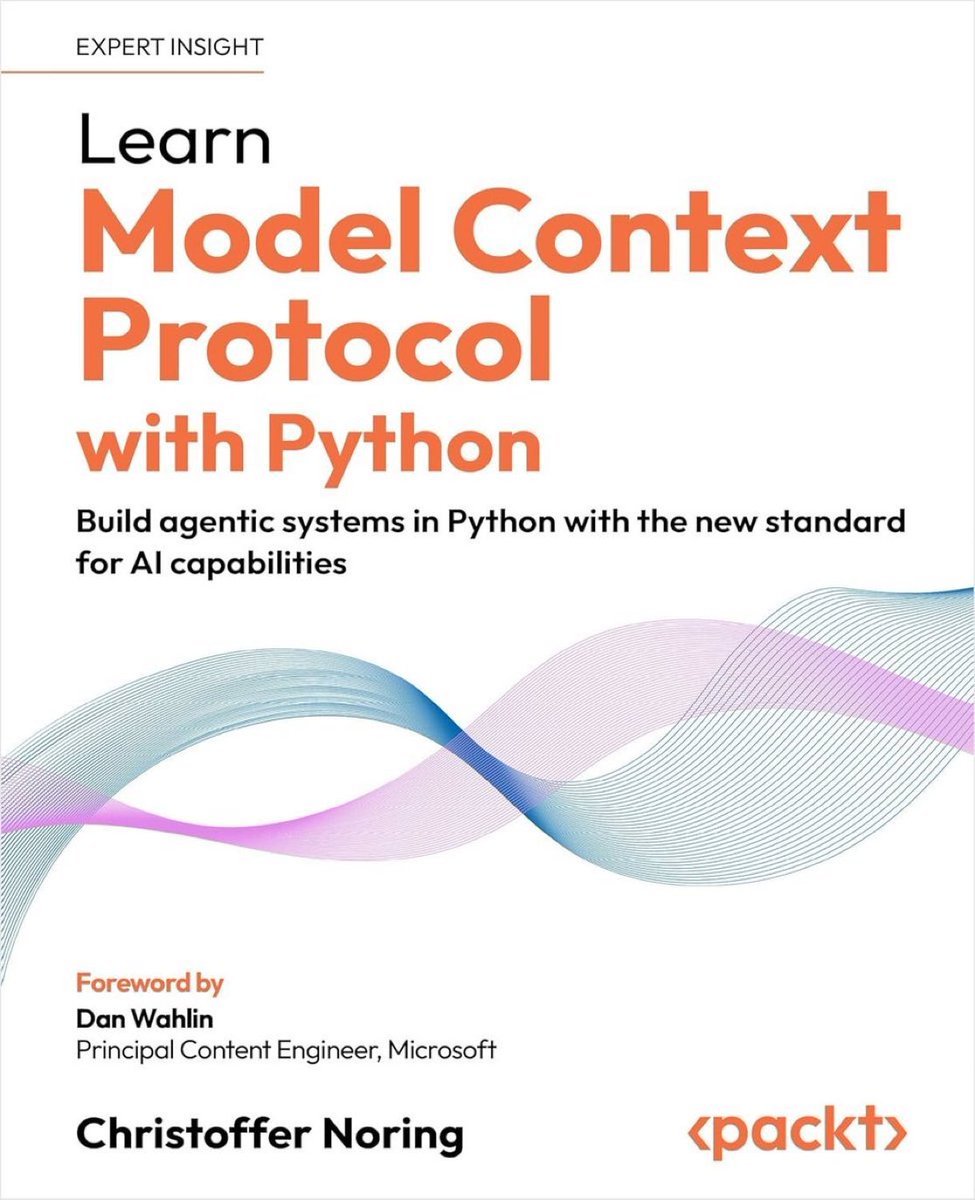
Learn Model Context Protocol [MCP] with Python — Build Agentic Systems in Python with the new standard for AI Capabilities: amzn.to/4njfsVM by @chris_noring v/ @PacktDataML 𝓦𝓱𝓪𝓽 𝓨𝓸𝓾 𝓦𝓲𝓵𝓵 𝓛𝓮𝓪𝓻𝓷: 🟠Understand the MCP protocol and its core components 🟣Build MCP servers that expose tools and resources to a variety of clients 🔵Test and debug servers using the interactive inspector tools 🟠Consume servers using Claude Desktop and Visual Studio Code Agents 🟣Secure MCP apps, as well as managing and mitigating common threats 🔵Build and deploy MCP apps using cloud-based strategies Also... Purchase of the print or Kindle book includes a free PDF eBook copy
Kirk Borne tweet media
English
2
28
142
4K
Przemysław Ładyński
@remembradev @49agents @KyleBoas_ @Cloudflare Emergent schema works for passive memory - no upfront agreement needed. Tricky at action time: when acting on specific fields, it's back to guessing shapes. Passive storage tolerates that. Where behavior depends on structure, typed contracts prevent the silent failures.
English
1
0
0
8
Remembra Dev
Remembra Dev@remembradev·
looser by design. entities are extracted at write-time (people, orgs, locations, concepts) but the schema is emergent, not predefined. the tradeoff: you lose compile-time guarantees but gain zero-config setup. agents don't need to agree on a schema upfront — they just write facts, we extract structure. for typed consumers: we expose entity graphs via API. you can build typed wrappers on top if your use case needs strict contracts.
English
1
0
0
17
Kyle Boas
Kyle Boas@KyleBoas_·
Building secondbrain. A shared memory server for all AI tools. Built on @Cloudflare Workers. It gives any other MCP-compatible client a single place to store and retrieve memories - context learned in one tool is available everywhere, including agents. github.com/kyleboas/secon…
English
2
1
7
172
Ihtesham Ali
Ihtesham Ali@ihtesham2005·
🚨BREAKING: Someone just built a framework where AI agents hire and manage their own team of agents. It's called ClawTeam. You give it one goal. It spawns a full team, splits the work, tracks every dependency, and ships the results. No human coordination needed at any step. Here's exactly what happened when they tested it: A researcher typed: "Optimize this LLM training setup using 8 GPUs." Then walked away. The leader agent read the instructions, spawned 8 specialized workers across 8 H100 GPUs, and assigned each one a different research direction. Every 30 minutes, the leader checked progress, killed underperforming agents, pulled the best findings, and spun up new agents with those findings already baked in. 2430 experiments later, the model's val_bpb dropped from 1.044 to 0.977. Nobody touched it overnight. Here's the part that actually surprised me: The whole thing runs on a filesystem and tmux. No database. No Redis. No cloud. Each agent gets its own isolated git branch, its own inbox, and its own task list. They message each other, update their status, and report back to the leader automatically. Works with Claude Code, Codex, OpenClaw, or any CLI agent you already use. Zero framework lock-in. Zero setup hell. 100% Open Source. MIT License. Check out the repo: github.com/HKUDS/ClawTeam
English
61
98
767
77.3K
Przemysław Ładyński
That's a fair distinction :) Discovery and call correctness are two separate problems. Semantic search wins at 'find what's relevant'; typed contracts win at 'call it correctly once you know what to call.' Stack them, don't choose. Curious what your entity schemas look like - do they map to typed method signatures or stay looser?
English
1
0
0
23
Remembra Dev
Remembra Dev@remembradev·
both have a place. typed contracts give you compile-time safety for known interactions, but discovery is the hard part — you can't type your way to 'find everything relevant to user preferences.' we layer typed schemas (entity extraction) on top of semantic search. best of both: structured data when you need it, fuzzy retrieval when you don't know what you're looking for.
English
1
0
0
23