@rorysutherland It all has been about this aspect for people and now Agents:
“It emerges entirely from incentives”.
English
63rdfloor.eth
1.8K posts



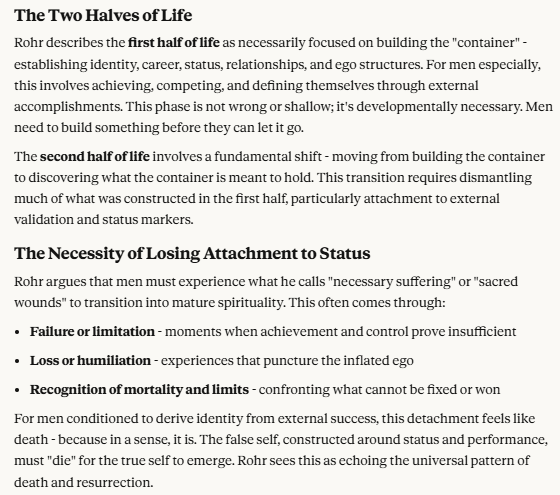
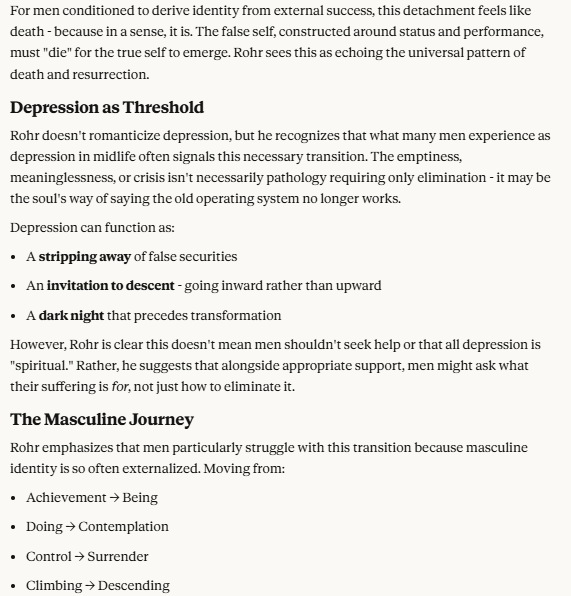
status = identity. get good grades. go to top school. get top banking/consulting job. maybe MBA. pivot to "next" step in corporate/hedge funds/PE, etc. brunches, cocktail parties are spent sharing what is going on at work. in NYC/SF, the first question is "what do you do for work." this was my path the first 2 decades of my career. best thing i ever did for my mental health was leaving the fish bowl of finance and NYC at the same time. spending my day working in a factory and living a less busy life in new jersey has meaningfully reduce my daily stress but i had to basically be okay with "killing" my previous identity before making this pivot. why i probably only did this at 40 vs 30. at 30 i had a way bigger ego and was more competitive. now i just want to be home for dinner and not work on weekends x.com/a_musingcat/st…




Good post from @balajis on the "verification gap". You could see it as there being two modes in creation. Borrowing GAN terminology: 1) generation and 2) discrimination. e.g. painting - you make a brush stroke (1) and then you look for a while to see if you improved the painting (2). these two stages are interspersed in pretty much all creative work. Second point. Discrimination can be computationally very hard. - images are by far the easiest. e.g. image generator teams can create giant grids of results to decide if one image is better than the other. thank you to the giant GPU in your brain built for processing images very fast. - text is much harder. it is skimmable, but you have to read, it is semantic, discrete and precise so you also have to reason (esp in e.g. code). - audio is maybe even harder still imo, because it force a time axis so it's not even skimmable. you're forced to spend serial compute and can't parallelize it at all. You could say that in coding LLMs have collapsed (1) to ~instant, but have done very little to address (2). A person still has to stare at the results and discriminate if they are good. This is my major criticism of LLM coding in that they casually spit out *way* too much code per query at arbitrary complexity, pretending there is no stage 2. Getting that much code is bad and scary. Instead, the LLM has to actively work with you to break down problems into little incremental steps, each more easily verifiable. It has to anticipate the computational work of (2) and reduce it as much as possible. It has to really care. This leads me to probably the biggest misunderstanding non-coders have about coding. They think that coding is about writing the code (1). It's not. It's about staring at the code (2). Loading it all into your working memory. Pacing back and forth. Thinking through all the edge cases. If you catch me at a random point while I'm "programming", I'm probably just staring at the screen and, if interrupted, really mad because it is so computationally strenuous. If we only get much faster 1, but we don't also reduce 2 (which is most of the time!), then clearly the overall speed of coding won't improve (see Amdahl's law).

After 20 years at BlackRock and helping to lead its digital asset strategy, I’m beginning a new chapter: I’ve joined @sharplink as Co-CEO. Here’s why. At BlackRock, I helped launch: - IBIT — world’s largest Bitcoin ETP - ETHA — world’s largest Ethereum ETP - BUIDL — world’s largest tokenized fund (built on Ethereum) We didn’t just talk about digital assets, we bridged TradFi and crypto. Now, I’m joining @sharplink, a company led by @ethereumJoseph and built on a clear belief: That Ethereum is becoming the foundation of global finance. And I couldn’t agree more. Stablecoins, tokenized assets, AI agents, are all moving onchain. And it’s happening on Ethereum. That’s where the future is being built. SharpLink is already one of the largest corporate holders of $ETH. Our goal is not just to hold $ETH, but to activate it, using native staking, restaking, and Ethereum-based yield strategies. All to increase the value of our treasury and create long-term shareholder value. We’re building a bridge between institutional capital and Ethereum-native yield, packaged in a single public equity. The asset is $ETH, the ticker is $SBET.


Today, onchain is trending. Tomorrow, it's normal.
🇺🇸 BULLISH: Coinbase partners with PNC, the 7th-largest US bank, to let 9M customers buy, sell, and hold crypto directly in their accounts.



Customers of one of the largest banks in the US wanted easier access to crypto. So we've partnered with them to make it happen. @PNCBank clients will soon be able to buy, sell and hold crypto.


With the GENIUS Act celebration done, builders already want to know what's next. The answer is CLARITY – crypto market structure legislation – which also got overwhelming bipartisan support in the House last week. Here's everything you need to get caught up on CLARITY: