Michael Eskenasy

513 posts

Michael Eskenasy banner
Michael Eskenasy

Michael Eskenasy

@ChefreyOS

Coordination is better than productivity. Reduce cognitive load. Preserve intent. Restore time. Human Cognitive Infrastructure. ChefreyOS.

انضم Mart 2026
0 يتبع18 المتابعون
Michael Eskenasy
Michael Eskenasy@ChefreyOS·
That moment isn’t luck—it’s system execution under pressure. You’ve got spacing discipline, clock awareness, and role clarity all converging in one sequence. Everyone on the floor knows exactly where the outlet is, who the release valve is, and who’s authorized to take that shot. That’s not hero ball—that’s pre-coordinated decision architecture showing up in a chaotic moment. The reason it feels different is because most teams break under that level of compression. This one didn’t. The system held. Analysis brought to you by ChefreyOS - Demo Available Now docs.google.com/document/d/1G3…
English
0
0
0
0
Unbiased Ev
Unbiased Ev@DoubleVodkaDon·
That was one of the greatest endings to any sporting event I’ve ever seen in my entire life. Easily one of the greatest shots/moments in the history of the NCAA tournament. I love sports so much. Nothing like it.
English
100
879
18.5K
772.2K
Fore Play
Fore Play@ForePlayPod·
Tiger’s first full swing back… 170 MPH BALL SPEED, 270 CARRY WITH THE 3-WOOD. SO UNBELIEVABLY BACK.
English
100
196
6.8K
676.7K
Michael Eskenasy
Michael Eskenasy@ChefreyOS·
This isn’t a “bad agents” problem. It’s a coordination problem. You’re dealing with: •multiple parties •no shared system •no persistent state •no visibility into what’s actually happening So every step resets trust back to zero. That’s why you get: → duplicated effort → conflicting info → and eventually… someone takes advantage of the gap The system isn’t broken. There just isn’t one.
English
0
0
0
0
Anuoluwapo
Anuoluwapo@Harnu_haryo·
I spent over 60k on inspection fees trying to get a house in Nigeria 🇳🇬 I dealt with 5+ agents… and got scammed multiple times. This system is broken 😭👇
English
13
3
10
211
Michael Eskenasy
Michael Eskenasy@ChefreyOS·
@girdley exactly — and that’s where most systems break. Everything becomes interconnected, but nothing is actually structured… so the complexity compounds instead of resolving. What we’re doing is building human cognitive infrastructure that sits on top of that reality — capturing signals, routing decisions, and maintaining continuity so “everything leads to everything” doesn’t turn into chaos. It keeps the system coherent while humans stay focused on judgment, not coordination. If you’re actively trying to avoid that breakdown as things scale, worth comparing notes.
English
0
0
0
0
Michael Girdley
Michael Girdley@girdley·
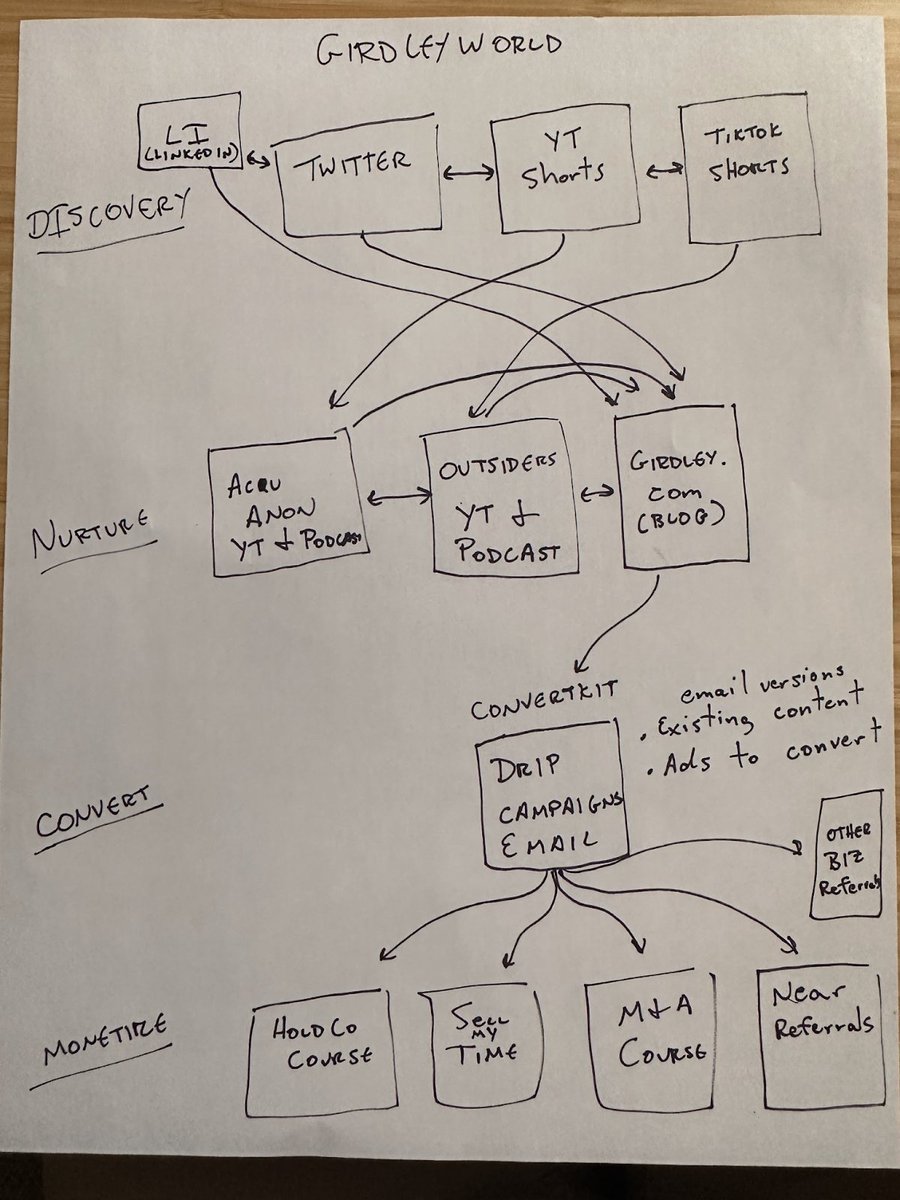
Three years ago, I drew this on a piece of paper. My plan to 1) build audiences, and 2) build businesses for those audiences. It's still 90% right. What I got wrong is below.
Michael Girdley tweet media
English
13
2
123
18K
Michael Eskenasy
Michael Eskenasy@ChefreyOS·
Two people can bill the same hours and live completely different lives. One makes dinner. Shows up to games. Is present. The other misses everything. Same effort. Different outcome. That’s not willpower. It’s coordination. Most work isn’t the work. It’s everything around it: → re-planning → context switching → chasing information → stitching together broken workflows That’s the hidden tax. It doesn’t show up on a timesheet. But it destroys time. So when people say: “those who want it will find a way” What they’re really comparing is: → low coordination environments vs → high coordination environments And calling it character. But you can’t outwork systemic friction forever. Eventually: → time fragments → decisions stack → energy disappears → presence goes with it Fix the system and something changes: → time compresses → fewer decisions are needed → context holds → work stops spilling everywhere And suddenly: Dinner happens. Games happen. Life fits. Not because people tried harder. Because they weren’t carrying invisible work all day. That’s the real lever. We’re building for that layer. Not telling people to push more. Removing the coordination tax that’s stealing their time in the first place. cc: @SellersCounsel @naval @balajis @packyM @cdixon #FutureOfWork #CognitiveLoad #TimeFreedom #SystemsDesign #BuildDifferent
Michael Eskenasy tweet media
English
0
0
0
16
Michael Eskenasy
Michael Eskenasy@ChefreyOS·
@SellersCounsel this isn’t a willpower gap. It’s a coordination problem. You’re comparing outcomes across two completely different system conditions and calling it “choice.” What actually differs: → how much invisible work is required to maintain alignment → how many decisions have to be manually held in someone’s head → how fragmented the day becomes under load Two people can bill the same hours and have entirely different lives because: One is operating inside a system that: → preserves context → reduces coordination → absorbs interruptions The other is: → constantly re-planning → context switching → stitching together broken workflows So time doesn’t behave the same. That’s why: → one makes dinner and shows up → the other misses everything Not because one “wanted it more.” Because one wasn’t paying the coordination tax all day. “We’ll find a way” sounds right. But it breaks at scale. Because you can’t willpower your way through systemic friction indefinitely. Fix the system: → time compresses → decisions reduce → presence becomes possible again That’s the actual lever. We’re building for that layer. Not telling people to try harder. Removing the invisible load that’s stealing their time in the first place. #FutureOfWork #CognitiveLoad #TimeFreedom #SystemsDesign #BuildDifferent
English
0
0
0
3
Seller's Counsel
Seller's Counsel@SellersCounsel·
I know several small firm owners that never go to their kids sporting events or birthday parties. Meanwhile, the most successful BigLaw partner I know doesn’t miss any of his daughter’s volleyball games or life events for children of his associates. I talked to a BigLaw associate yesterday who billed 2300 hours last year but ate dinner with his family and put his kids to be every night. Those who want to make it work will find a way to make it work.
Scott Oliver@SAOliver_Atty

These headlines are exhausting… You choose what you can and can’t do. It’s not always this or that.

English
29
16
562
199.5K
Michael Eskenasy
Michael Eskenasy@ChefreyOS·
The skepticism around AI is valid. But it’s aimed at the wrong layer. LLMs on their own are: → expensive → probabilistic → context-limited → increasingly commoditized So yes—if you look at just the models, the economics look shaky. Prices go up → ROI drops → use cases collapse. That’s the surface-level read. But the value was never in the model. It’s in how cognition is structured around it. Drop AI into a broken environment: → fragmented workflows → high coordination overhead → lost context You get: → shallow outputs → dependency → low trust → poor outcomes That’s where the “AI is overhyped” narrative comes from. Now change the system. When: → context is preserved → signal stays intact → coordination is reduced → feedback loops are tight The same models: → become more accurate → require fewer calls → produce higher-value outputs → actually reduce cost instead of increasing it So rising model prices don’t kill AI. They force a shift. From: model intelligence To: cognitive infrastructure That’s the real leverage point. We’re building at that layer. Not trying to make the model smarter. Making the system around it coherent. So AI doesn’t replace people—or fail. It compounds them. That’s where this goes. cc: @MaMoMVPY @naval @balajis @sama @AndrewYNg @fchollet #ArtificialIntelligence #FutureOfWork #SystemsDesign #CognitiveInfrastructure #BuildDifferent
Michael Eskenasy tweet media
English
0
0
0
5
Michael Eskenasy
Michael Eskenasy@ChefreyOS·
@MaMoMVPY the skepticism is valid—but the conclusion is off. This isn’t about AI companies needing hype to survive. It’s about people misunderstanding what layer is actually being built. LLMs on their own are: → expensive → probabilistic → context-limited → increasingly commoditized So yes—on their own, they don’t hold pricing power forever. That part is real. But the mistake is thinking the value sits in the model. It doesn’t. The value sits in how cognition is structured around it. If you drop LLMs into: → fragmented workflows → high coordination overhead → broken context You get: → shallow outputs → dependency → low trust → poor ROI That’s where the “AI is overhyped” narrative comes from. But if you fix the system layer: → context is preserved → signal stays intact → coordination is reduced → feedback loops tighten Then the same models: → become more accurate → require fewer calls → produce higher-value outputs → actually reduce cost instead of increasing it So pricing pressure on models doesn’t kill the case. It forces the market to shift to the real leverage point: cognitive infrastructure That’s what determines: → whether AI replaces labor → augments it → or quietly fails We’re building at that layer. Not competing on model intelligence. Competing on: → signal integrity → coordination reduction → context continuity So instead of: “AI gets expensive and loses” You get: “AI becomes cheaper—and more powerful—inside the right system” That’s where this is going. #ArtificialIntelligence #FutureOfWork #SystemsDesign #CognitiveInfrastructure #BuildDifferent
English
0
0
0
2
Lars Christensen
Lars Christensen@MaMoMVPY·
I must say I am increasingly suspicious about the comments from the AI bosses - why do they need to make these completely over the top and so obviously unfounded predictions about how AI (or rather LLM) will impact economic development? To me it is an indication of something not being quite right in their own business models - they will need to attract more and more investors as they are likely going to face a funding squeeze sooner rather than later. And again let me stress - LLMs are great and can surely increase productivity, but presently AI companies like OpenAI and Anthropic are making heavy losses. This means sooner or later LLM prices need to go up, and potentially a lot. And what happens then with the case for LLMs? Might it be that the entry-level lawyer might be both a lot better AND cheaper than an AI "agent" that is priced at what is needed to make Anthropic or OpenAI profitable?
CG@cgtwts

Anthropic CEO: “50% of all entry-level Lawyers, Consultants, and Finance Professionals will be completely wiped out within the next 1–5 years." grad students and junior hires are cooked.

English
215
65
754
95.1K
Michael Eskenasy
Michael Eskenasy@ChefreyOS·
The Hawthorne Effect didn’t prove people need praise. It proved people need signal. At Western Electric: → lighting changed → schedules changed → pay structures changed Everything “worked.” Not because the changes were better. Because something else changed: → attention increased → feedback loops tightened → context became visible → work stopped being abstract People weren’t performing better because they felt seen. They were performing better because: the system stopped obscuring reality “Feeling seen” is just the human interpretation of: → clear signal → tight feedback → reduced ambiguity Most teams try to recreate this with: → praise → recognition → culture rituals But leave the system the same. So performance fades. Because the issue isn’t motivation. It’s signal degradation. We’ve been building around that: A system where: → work is visible without surveillance → feedback is continuous, not episodic → context doesn’t get lost → coordination doesn’t distort signal So performance doesn’t rely on attention. It compounds from clarity. That’s what Hawthorne actually showed. Not that people need to be seen. That they need to see clearly. cc: @AlexHormozi @naval @balajis @packyM @cdixon #Leadership #SystemsDesign #FutureOfWork #HumanPerformance #SignalOverNoise #BuildDifferent
Michael Eskenasy tweet media
English
0
0
0
1
Michael Eskenasy
Michael Eskenasy@ChefreyOS·
@AlexHormozi this is directionally right—but it’s not the root. People don’t perform better because they’re “seen.” They perform better because signal is restored. At Hawthorne: → attention increased → feedback loops tightened → context became visible → work stopped being abstract That’s what changed behavior. “Feeling seen” is just the human interpretation of: clear signal + tight feedback + reduced ambiguity The problem is most teams try to replicate this with: → praise → recognition → culture rituals But leave the system unchanged. So the effect fades. Because the underlying issue isn’t motivation. It’s signal degradation. We’ve been building around that: A system where: → work is visible without surveillance → feedback is continuous, not episodic → context stays intact across decisions → coordination doesn’t distort reality So people don’t need to be “managed” into performance. They operate inside a system where: the work speaks clearly and in real time That’s what Hawthorne actually revealed. Not that people need attention. That they need undistorted signal. That’s the difference. #SystemsDesign #Leadership #HumanPerformance #SignalOverNoise #FutureOfWork #BuildDifferent
English
0
0
0
11
Sharran Srivatsaa
Sharran Srivatsaa@sharran·
In the 1920s, researchers walked into Western Electric's factory in Chicago to test a simple theory: Better lighting = better productivity. They cranked up the lights. Productivity soared. Then they dimmed the lights. Productivity soared again. They tried different break schedules. Shorter workdays. New pay structures. Everything worked. The researchers were completely baffled. Until they realized what was really happening. The lighting didn't matter. The schedules didn't matter. What mattered was that researchers showed up every day, watched workers, took notes, and asked questions. Workers knew someone cared enough to pay attention. This became the Hawthorne Effect and it’s the fastest way to boost productivity on your team: 1. Catch someone doing good work and call it out 2. Name what they did and be specific 3. Say why it mattered 4. Do it publicly Your people don't need better conditions. They need to feel seen.
English
30
207
1.4K
61.4K
Michael Eskenasy
Michael Eskenasy@ChefreyOS·
@Jayyangiinspires this reads true—but it’s missing the constraint. Connection isn’t rare. Uncoordinated connection is. Most people don’t lose relationships because they don’t value them. They lose them because maintaining them carries a hidden cost: → scheduling friction → mismatched timing → energy misalignment → constant re-coordination So even when people care, the system works against them. That’s why: → you think of someone and don’t reach out → plans almost happen but don’t → relationships drift without conflict Not because the connection wasn’t real. Because it couldn’t stabilize. When coordination is solved: → the right people show up at the right time → interaction doesn’t require effort → connection compounds instead of decays Then something changes: Connection stops feeling rare. It becomes persistent. We’re building exactly that layer. Not another social app. Not another feed. A coordination system that: → removes scheduling friction → aligns intent in real time → makes showing up the default, not the effort So relationships don’t rely on willpower. They hold. That’s the difference. #HumanConnection #RealConnection #SocialHealth #CommunityMatters #ConnectionOverIsolation #MentalWellbeing #EmotionalWellbeing #LonelinessAwareness #EndLoneliness #Belonging #CognitiveLoad #MentalBandwidth #DecisionFatigue #AttentionEconomy #ReduceFriction #ParentingLife #ModernParenting #MomsSupportMoms #FamilyWellbeing #StrongerFamilies #CommunityInfrastructure #SocialInfrastructure #HumanCenteredDesign #SystemsChange #BuildForHumans #FutureOfCommunity #CoordinationEconomy #RemoveTheFriction #MakeItEasy #AlignedLiving #HumanConnection #CognitiveLoad #SocialInfrastructure #FutureOfCommunity #BuildDifferent
Michael Eskenasy tweet media
English
0
0
0
0
Michael Eskenasy
Michael Eskenasy@ChefreyOS·
Raising young children isn’t just exhausting. It’s isolating. But not for the reason most people think. This isn’t a “community” problem. It’s a coordination problem. At work: → structure exists → interaction is built in → decisions are distributed → systems absorb the load At home: → everything routes through one or two people → coordination is manual → decisions stack endlessly → there is no system catching overflow So what happens? → cognitive load spikes → time fragments → energy disappears → isolation sets in Not because moms don’t have friends. Because connection becomes one more thing to coordinate. That’s why: Two moms together → stress drops instantly Alone → everything compounds Nothing about the person changed. The system did. Most solutions try to “add community.” But if coordination cost stays high, community becomes another obligation. We’re building the opposite: A coordination layer that: → removes the planning tax → aligns people in real time → makes interaction default instead of effort No organizing. No guessing. No extra load. When coordination disappears: → people show up naturally → connection becomes ambient → isolation stops being produced You don’t fix loneliness. You stop designing systems that create it. cc: @PatStedman @naval @balajis @packyM @cdixon #Parenting #MentalHealth #HumanConnection #CognitiveLoad #SocialInfrastructure #FutureOfCommunity #BuildDifferent
Michael Eskenasy tweet media
English
0
0
0
0
Michael Eskenasy
Michael Eskenasy@ChefreyOS·
Raising young children isn’t just exhausting. It’s isolating. But not for the reason most people think. This isn’t a “community” problem. It’s a coordination problem. At work: → structure exists → interaction is built in → decisions are distributed → systems absorb the load At home: → everything routes through one or two people → coordination is manual → decisions stack endlessly → there is no system catching overflow So what happens? → cognitive load spikes → time fragments → energy disappears → isolation sets in Not because moms don’t have friends. Because connection becomes one more thing to coordinate. That’s why: Two moms together → stress drops instantly Alone → everything compounds Nothing about the person changed. The system did. This is where most solutions go wrong: They try to “add community.” But if coordination cost stays high, community becomes another obligation. We’re building the opposite: A coordination layer that: → removes the planning tax → aligns people in real time → makes interaction default instead of effort No organizing. No guessing. No extra load. When coordination disappears: → people show up naturally → connection becomes ambient → isolation stops being produced You don’t need to fix loneliness. You need to stop designing systems that create it. cc: @PatStedman @naval @balajis @packyM @cdixon #HumanConnection #Parenting #CognitiveLoad #SocialInfrastructure #FutureOfCommunity #BuildDifferent
English
0
0
0
2
Pat Stedman | Dating & Relationship Coach for Men
The problem is that raising young children is not only exhausting but lonely. A woman can go to the office and 9/10 times the work is easier, she'll get a social life from it, and she can come home and do what she wants. And that doesn't even take into consideration the disposable income factor. Yes, this is all less rewarding and joyful than raising kids but the burden is real. Women need community. They need more than just help, they need other moms around them who they can relate to and empathize with. If they don't have this they not only get burned out, they push their negative emotions onto their husband. Observe the level of stress a mom has when she is chatting or tidying up with a friend while their kids play vs when she is by herself. It's night and day. Creating not simply female spaces but spaces for MOMS is one of the biggest ROIs we can be making to change the culture around having children and improve the birthrate.
🌘𝚛𝚎𝚟𝚎𝚗𝚊𝚗𝚝⚡@revenant_MMXX

"Childcare" is a fake problem that didn't exist prior to "women's liberation." Women should raise their own children.

English
68
117
1.5K
159.2K
Michael Eskenasy
Michael Eskenasy@ChefreyOS·
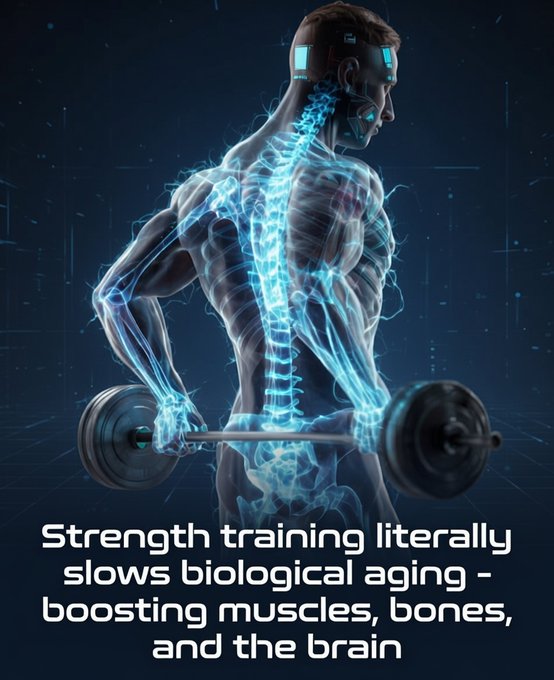
Strength training might be the single most powerful lever for long-term health. That part is correct. But most people don’t fail at strength training because they lack discipline. They fail because the system around them is unstable. → stress is high → sleep is inconsistent → schedules are fragmented → cognitive load is constant So even when people start: → they push hard → life interferes → recovery breaks → they fall off → and “start over” again That cycle has nothing to do with willpower. It’s a coordination problem. Strength training works because it restores signal: → balance improves → coordination returns → systems start communicating again But if the rest of your life is noisy, that signal never stabilizes. So it doesn’t compound. We’ve been building around this: Health as a continuous system, not a routine. Where: → training adapts to stress, not fights it → recovery is tracked, not guessed → lapses don’t erase progress → intensity aligns with real capacity So instead of: push → break → quit → restart You get: adjust → recover → continue That’s how health actually scales across a lifetime. Strength training isn’t the problem. Instability is. Fix the system—and everything you’re describing becomes sustainable, not aspirational. cc: @Rainmaker1973 @hubermanlab @PeterAttiaMD @RhondaPatrick @drsanjaygupta #Longevity #StrengthTraining #HumanPerformance #Recovery #MentalHealth #CognitiveLoad #HealthSystems #BuildDifferent
Michael Eskenasy tweet media
English
0
0
0
1
Michael Eskenasy
Michael Eskenasy@ChefreyOS·
@Rainmaker1973 this is right—and it’s incomplete. Strength training works because it restores signal to the body: → coordination improves → stability returns → systems start talking to each other again But most people can’t sustain it. Not because they don’t understand the benefits. Because the conditions around them are unstable. → stress is high → sleep is inconsistent → schedules are fragmented → cognitive load is constant So training becomes: episodic → inconsistent → abandoned Not a discipline problem. A system problem. We’ve been building around exactly this: Health as a continuous system, not a routine. Where: → training adapts to stress, not fights it → recovery is tracked, not guessed → lapses don’t reset progress → intensity aligns with actual capacity So instead of: push → break → stop → restart You get: adjust → recover → continue That’s what actually compounds health. Strength training is one of the highest-leverage inputs. But without continuity, it never scales across a life. Fix the system around the person, and everything you’re describing becomes sustainable—not aspirational. That’s the difference. #HealthSystems #Longevity #StrengthTraining #HumanPerformance #Recovery #CognitiveLoad #BuildDifferent
English
0
0
0
0
Massimo
Massimo@Rainmaker1973·
Experts now consider strength training the single most potent habit for aging gracefully and extending lifespan. Far from being just for athletes or bodybuilders, lifting weights—or any form of resistance exercise, including body-weight moves—has emerged as one of the most powerful tools for healthy aging. It does far more than add muscle: it fortifies bones, revs up metabolism, and sharply lowers the odds of diabetes, heart disease, and other chronic conditions. As we get older, strength training switches on bone-forming cells, fights the natural loss of muscle mass known as sarcopenia, and keeps metabolism humming efficiently. For women, it’s especially valuable, helping offset the rapid bone-density decline triggered by menopause. The benefits extend well beyond the physical. Regular resistance work improves balance and coordination, dramatically cutting the risk of falls—the top cause of injury among older adults. It also protects the brain by enhancing insulin sensitivity, dialing down inflammation, and reducing dementia risk. The good news? You don’t need heavy barbells or punishing workouts. Even moderate, consistent strength training delivers profound gains in both quality of life and longevity. In the words of one leading researcher, “Building and maintaining muscle may be the single best investment you can make in your future health and independence.”
Massimo tweet media
English
43
308
2K
87K
Michael Eskenasy
Michael Eskenasy@ChefreyOS·
Most people think bigger companies win because they’re better. They’re not. They win because they can coordinate. More systems. More data. More structure between them and the customer. That’s what creates distance. And distance is what kills craft. Because once you’re far enough away: → feedback gets abstracted → signals get delayed → decisions get made on summaries, not reality So “talk to customers more” becomes a tactic— instead of the default state. Here’s what actually changes the game: Remove the distance. Not by working harder. By fixing coordination. When: → signal stays intact → feedback is immediate → context doesn’t get lost You don’t need more calls. You don’t need more surveys. You’re already close. That’s when something bigger happens: Craft returns. Small operators don’t lose because they’re worse. They lose because they can’t coordinate at scale. Fix coordination—and scale stops being the advantage. Accuracy does. That’s the equalizer. cc: @AlexHormozi @naval @balajis @packyM @cdixon #BuildDifferent #SystemsDesign #Coordination #CustomerExperience #CraftEconomy #FutureOfWork #SmallBusiness #SignalOverNoise
Michael Eskenasy tweet media
English
0
0
0
0
Michael Eskenasy
Michael Eskenasy@ChefreyOS·
@AlexHormozi this is right—but it assumes access. Most companies don’t talk to customers less because they don’t want to. They’re too far away. Not geographically—structurally. Layers of: → coordination overhead → fragmented data → internal noise → delayed feedback loops So by the time “customer insight” shows up, it’s already abstracted. That’s why scale drifts away from reality. The advantage isn’t just talking to customers more. It’s removing the distance entirely. We’ve been building around that: A system where: → signal stays intact → feedback is immediate → context doesn’t get lost in translation So proximity isn’t effort—it’s default. That’s where things get interesting: When distance collapses, craft returns. Small operators don’t lose to big companies because they’re worse. They lose because they can’t coordinate at the same level. Fix coordination—and you don’t need to “beat” bigger competitors. You make them irrelevant. The system stops favoring scale. It starts favoring accuracy. That’s the equalizer.
English
0
0
0
6
Alex Hormozi
Alex Hormozi@AlexHormozi·
How to beat a bigger competitor: Talk to customers more than they do. He who is closest to the customer wins.
English
258
376
4.8K
103.4K
Michael Eskenasy
Michael Eskenasy@ChefreyOS·
Isolation isn’t a personality trait. It’s what’s left after the coordination tax gets too high. Most people don’t realize there are two layers to their day: The visible work —and then the invisible coordination tax on top of it. After everything you have to do: → manage schedules → respond to messages → make decisions all day → deal with interruptions You hit a second wall: → Who’s free? → Where should we go? → Is it even worth it? → Will anyone actually show up? → Do I have the energy to organize this? That’s where social life dies. Not because people don’t want connection. Because the cost of coordinating it is too high. So the default becomes: → stay home → scroll → isolate That’s how isolation turns structural. Not culture. Not preference. Friction. We built around that. No feeds. No social pressure. No “go plan something.” Just a coordination layer: → people express intent → alignment becomes visible → thresholds form → commitment locks only when it’s real No guessing. No organizing. No wasted nights. Remove the coordination tax, and something simple happens: People show up again. Rooms fill. Energy returns. Connection stops feeling like work. Isolation doesn’t need to be solved. It needs to stop being produced. cc: @hamptonism @lunarhq @naval @balajis @packyM @cdixon #HumanConnection #CognitiveLoad #SocialInfrastructure #FutureOfCommunity #BuildDifferent #CoordinationEconomy #MentalHealth #MentalWellbeing #MentalHealthMatters #MindHealth #EmotionalHealth #PsychologicalWellbeing #CognitiveLoad #MentalFatigue #DecisionFatigue #BurnoutRecovery #BurnoutAwareness #StressManagement #AttentionEconomy #ProtectYourAttention #MentalBandwidth #FocusMatters #AnxietySupport #DepressionAwareness #EndTheStigma #NormalizeMentalHealth #SelfCare #RestAndRecover #HealthyMind #InnerBalance #HumanConnection #LonelinessAwareness #SocialHealth #CommunityCare #SystemsChange #HumanCentered #BuildForPeople #BetterSystems
Michael Eskenasy tweet media
English
0
0
0
3
Michael Eskenasy
Michael Eskenasy@ChefreyOS·
@hamptonism this is right—but it’s missing the mechanism. Isolation isn’t a choice. It’s the residual after coordination cost gets too high. People don’t stop seeing each other because they don’t want connection. They stop because after everything they have to do in a day, there’s a second, invisible tax: The coordination tax. → Who’s free? → Where do we go? → Is it worth it? → Will anyone actually show up? → Do I have the energy to organize it? After a full day of cognitive load, that extra layer kills the decision. So people default: → stay home → scroll → isolate Not preference. Exhaustion + friction. That’s how isolation compounds into something structural. We’ve been building around exactly this problem. Not another social app. Not another feed. A coordination layer. Where: → intent is visible → alignment is real → commitment only happens when the night actually exists No planning tax. No social guesswork. No showing up to nothing. Remove the coordination overhead, and something simple happens: People go out again. Rooms fill naturally. Connection stops being work. Isolation isn’t solved by telling people to “get out more.” It disappears when the system stops taxing interaction. That’s the difference. #HumanConnection #CognitiveLoad #Coordination #SocialInfrastructure #BuildDifferent #FutureOfCommunity
English
0
0
0
11
Michael Eskenasy
Michael Eskenasy@ChefreyOS·
Most people think AI will split the world into smarter people and dumber people. That’s not what’s happening. AI is exposing structure. If you drop AI into a cognitively overloaded environment: → constant interruptions → fragmented context → pressure to move fast You don’t get smarter. You get: → faster answers → less thinking → more dependency → shallow understanding That’s not intelligence declining. That’s cognition collapsing under bad conditions—at scale. Now flip the environment. If attention is preserved, context is structured, and coordination overhead is reduced: AI does the opposite: → extends reasoning → compresses effort (not thinking) → increases depth → compounds capability over time Same tool. Different system. Opposite outcome. This is the part almost no one is building: Human cognitive infrastructure. Not better prompts. Not better models. The layer that determines whether thinking degrades or compounds. → reduce coordination noise → structure context before interaction → protect attention as a resource Do that—and AI stops replacing thinking. It starts extending it. That’s the difference. cc: @DrSuneelDhand @sama @elonmusk @lexfridman @naval @balajis @AndrewYNg @fchollet #ArtificialIntelligence #CognitiveLoad #HumanCognition #SystemsDesign #FutureOfWork #AttentionEconomy #BuildInPublic #Infrastructure #HumanPotential
Michael Eskenasy tweet media
English
0
0
0
1