Shanaka Anslem Perera ⚡@shanaka86
JUST IN: Four ships left Chinese ports carrying sodium perchlorate and arrived at Iranian harbours after the war began. Sodium perchlorate is a white crystalline salt. When heated, it decomposes and releases oxygen. Mixed with aluminium powder and a polymer binder, it becomes solid rocket fuel. Solid rocket fuel propels ballistic missiles. Ballistic missiles close the Strait of Hormuz. The Strait of Hormuz sets the global oil price. And China, the country that shipped the chemical, is buying that oil at a discount, paying in yuan, while co-authoring a five-point peace plan to end the war the chemical is helping to sustain.
The Telegraph reported on April 3rd that the vessels Hamouna, Barzin, Shabdis, and Rayen, all sanctioned Iran-flagged ships, loaded cargo at Chinese chemical ports including Gaolan in Zhuhai and delivered it to Iran since the war began. Analysts assessed the shipments could enable production of hundreds of additional ballistic missiles. In early 2025, over a thousand tons of sodium perchlorate were shipped on similar routes. One shipment was linked to an explosion at Bandar Abbas.
Follow the molecule. Sodium perchlorate leaves a Chinese factory in Guangdong Province. It crosses the Indian Ocean on a sanctioned vessel that no Western insurer will touch. It arrives in Iran. It enters a dispersed production facility that the US Air Force has spent five weeks trying to locate and destroy. It is mixed, cast, cured, and loaded into a solid-fuel motor. That motor is fitted to a ballistic missile. That missile is aimed at a tanker, a refinery, a bridge, or a base. The tanker it hits was carrying oil through the strait that the missile was built to close. The oil that does not pass through the strait becomes scarce. The scarcity raises the physical price to $140. And China, whose factory produced the precursor, buys the scarce oil that its own chemical helped make scarce, at prices negotiated bilaterally in a currency that is not the dollar, through a strait it helped close with a chemical it shipped on a vessel it knew was sanctioned.
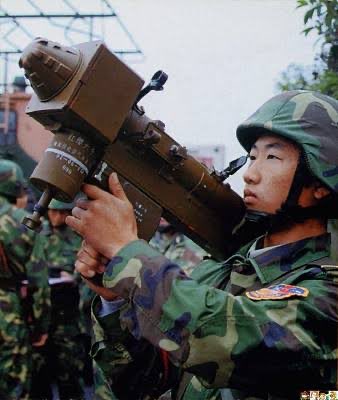
The circle has tracking numbers, port manifests, vessel IMO codes, and satellite timestamps. No government has denied the cargo. China says it “strictly controls dual-use exports.” The vessels are sanctioned. The chemical is a known propellant precursor. And the shipments arrived during a war in which China blocked the UN resolution to reopen the strait, co-authored a peace plan with Pakistan, supplied the rare earth magnets inside every F-35 sent to bomb the missile facilities, and published the tutorial that taught Iran to shoot down the aircraft carrying those magnets.
Supplier of the missile fuel. Supplier of the jet engine magnets. Teacher of the countermeasure. Blocker of the resolution. Author of the peace plan. Buyer of the oil. China does not have a side in this war. China has a position at every point on the circumference of a circle whose centre is the Strait of Hormuz and whose radius is measured in the distance a sodium perchlorate molecule travels from a factory in Zhuhai to a missile silo in Khuzestan.
The chemical left China. The missile closes the strait. The oil price rises. China buys the oil. The peace plan fails. The war continues. The next shipment loads. The circle turns.
open.substack.com/pub/shanakaans…