selise

21.4K posts

selise banner
selise

selise

@selise

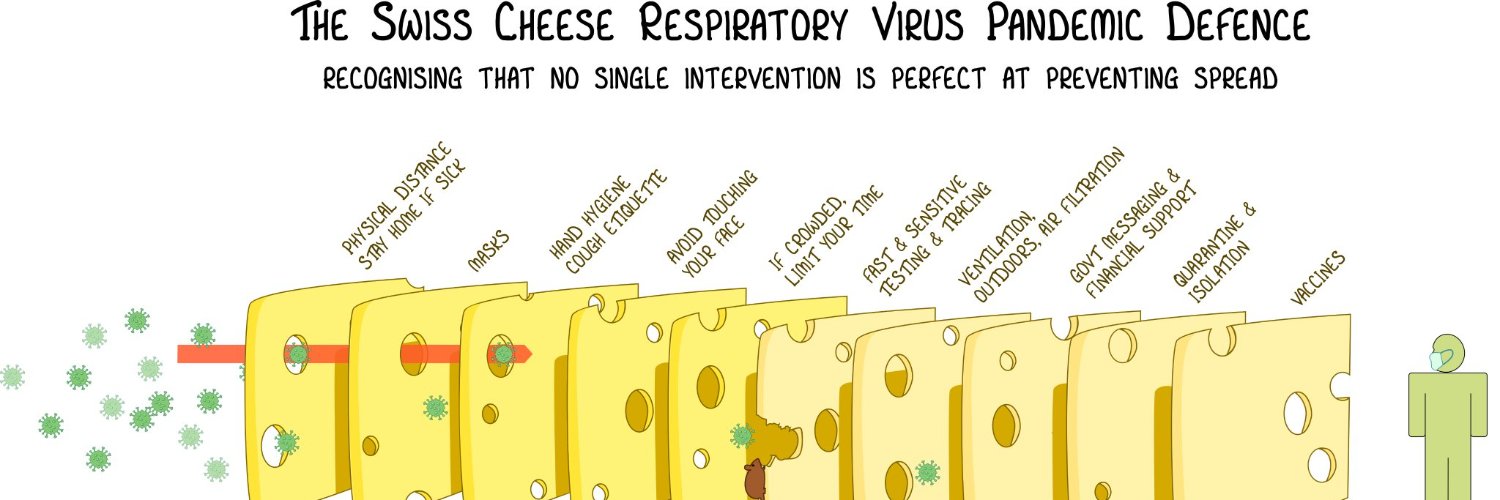
RTs + likes + follow ≠ endorsement swiss cheese model via https://t.co/7P1CzEZCju…

Beigetreten Ekim 2008
2.5K Folgt614 Follower
Angehefteter Tweet
David Sirota
David Sirota@davidsirota·
The Congressional Black Caucus is officially freaking out after @TheProspect & @LeverNews reporting simply asked whether the caucus's Democratic members will succumb to pressure and vote to renew warrantless surveillance powers for Donald Trump and Stephen Miller.
The Black Caucus@TheBlackCaucus

This reporting is false. There is only one leader of the Caucus at a time—and at no point has Chair @RepYvetteClarke had any conversations in which anyone attempted to convince her to support a clean FISA extension. She has a long, well-documented history of working to advance meaningful reform on this issue. She is the official spokesperson for this Caucus, and any official position will come from her—not from anonymous sources or speculation. The CBC has not taken a position supporting a clean reauthorization, and there is no support for using any authority to target Black activists or communities. Any suggestion otherwise is false. The CBC will have more to say on this important issue at a time, place, and in a manner of our choosing. That is by design and reflects a deliberate, strategic approach to this issue. Our position will be consistent with our long-held commitment to protecting the Fourth Amendment while keeping our communities safe. Do not mistake timing for absence—and do not underestimate the moment when the conscience of the Congress chooses to weigh in. Our Caucus is unified, and we see this for what it is: an attempt to create division. It will not succeed. Claims to the contrary are not mischaracterizations—they are lies. Attempts to suggest otherwise are not only inaccurate—they are intentional.

English
2
23
79
4.6K
selise
selise@selise·
@TXCustodialDad @ProfessorPape The whole world knows when the SOH was closed. We are responsible. But our leaders (and you apparently) refuse to grow up and take accountability for their own actions.
English
0
0
0
2
CustodialFather in Texas
CustodialFather in Texas@TXCustodialDad·
@selise @ProfessorPape Incorrect. Iran has been attacking ships for a while. If Europe depends on a waterway, it's idiotic to not have military there keeping it open. The United States does not depend on it and shouldn't be required to keep it open against Iran taking Europe hostage.
English
1
0
0
8
Robert A. Pape
Robert A. Pape@ProfessorPape·
1.8 million views in 18 hours. My second appearance on Diary of a CEO is being labeled “URGENT.” Because what’s happening in the Iran war right now is not what people think. Here are the three most important things I said:
English
87
324
2.8K
550.3K
selise
selise@selise·
@TheBlackCaucus @RepYvetteClarke "Our Caucus is unified" Does that mean you are all going to vote against an extension? Or does this mean you are obfuscating by not answering the question?
English
0
0
5
91
The Black Caucus
The Black Caucus@TheBlackCaucus·
This reporting is false. There is only one leader of the Caucus at a time—and at no point has Chair @RepYvetteClarke had any conversations in which anyone attempted to convince her to support a clean FISA extension. She has a long, well-documented history of working to advance meaningful reform on this issue. She is the official spokesperson for this Caucus, and any official position will come from her—not from anonymous sources or speculation. The CBC has not taken a position supporting a clean reauthorization, and there is no support for using any authority to target Black activists or communities. Any suggestion otherwise is false. The CBC will have more to say on this important issue at a time, place, and in a manner of our choosing. That is by design and reflects a deliberate, strategic approach to this issue. Our position will be consistent with our long-held commitment to protecting the Fourth Amendment while keeping our communities safe. Do not mistake timing for absence—and do not underestimate the moment when the conscience of the Congress chooses to weigh in. Our Caucus is unified, and we see this for what it is: an attempt to create division. It will not succeed. Claims to the contrary are not mischaracterizations—they are lies. Attempts to suggest otherwise are not only inaccurate—they are intentional.
David Dayen@ddayen

.@TheProspect has learned that the Congressional Black Caucus will support a clean extension of a warrantless spying program that expires next week, despite past use to surveil Black Lives Matter activists. They were convinced to support by Rep Greg Meeks. prospect.org/2026/04/13/con…

English
17
5
8
34.2K
selise
selise@selise·
@PollakDan @mattduss These illegal immoral wars of aggression (Iran, Lebanon, Palestine) are not good for Americans.
English
0
0
0
8
Dan Pollak
Dan Pollak@PollakDan·
@mattduss I love to see the Anti-American Left (Matt Duss) feud with Sen. Coons.
English
1
0
1
72
Senate Democrats
Senate Democrats@SenateDems·
$50B spent, no major goals have been accomplished… WATCH Sen. @ChrisCoons call out Trump’s escalatory approach in the Strait of Hormuz as neither a strategy nor a solution.
English
58
21
48
3.4K
Senator Chris Coons
Senator Chris Coons@ChrisCoons·
47 days into the war in Iran, 13 servicemembers have been killed, many more have been injured, and now Trump is sending thousands more troops to the region. They and their families deserve clear answers about what our goals are and when this war will end.
English
20
14
42
1.2K
Trita Parsi search. ..
Why the Iran ceasefire may have shifted the dynamics back in Trump's favor Diplomacy between Washington and Tehran has not yet unraveled, despite JD Vance’s theatrical departure from last week’s talks in Islamabad. Trump now signals that the two sides could reconvene within days in the Pakistani capital. Whether negotiators return to the table or continue their exchanges through quieter, remote channels before the ceasefire lapses, one reality appears to have shifted: Trump has clawed back a measure of momentum—and with it, leverage—over Iran, largely by virtue of the ceasefire. Here’s why. Trump entered this moment politically cornered and strategically constrained. Surging gasoline prices were inflicting acute domestic pain, eroding his standing at home. More critically, he faced a barren escalation ladder. Each conceivable move—strikes on Iran’s oil infrastructure, attacks on civilian targets, the seizure of Persian Gulf islands, or covert operations to capture enriched uranium—carried the near-certainty of forceful Iranian retaliation. Such responses would not merely match his escalation but compound it, deepening his economic exposure, amplifying political risk, and entangling him further in a perilous and unwinnable strategic bind. Nor could he simply extricate the United States from the conflict on his own terms. Absent an understanding with Tehran, Iran retained both the capacity and the incentive to continue targeting Israel and vulnerable U.S. assets across the Gulf. Trump needed Iran’s permission to get out of the war. The ceasefire, however, has subtly altered that equation. Trump may no longer need a formal nod from Tehran to step back. If he disengages now—without a comprehensive agreement—Iran will almost certainly maintain its grip over the Strait of Hormuz, a strategic setback for Washington. Yet Tehran is unlikely to resume direct military operations against U.S. targets in the Persian Gulf. To do so, in the absence of renewed American strikes, would cast Iran as the aggressor, inviting severe and potentially coordinated repercussions—not only from Washington but from wary global powers such as Russia and China. Moreover, the balance of needs has tilted. Iran now appears to need an agreement more than the United States does. Trump has already secured his central objective—the escape from a war he was ill-advised to begin—while Iran, despite accruing leverage through its command of the Strait, remains far from realizing its broader ambitions: meaningful sanctions relief, a definitive and enduring end to hostilities, and perhaps even the contours of a more stable, constructive relationship with Washington. Tehran’s decision to dispatch its largest, most senior, and most expansive delegation to Islamabad for direct talks with the American vice president reflected a striking confidence—that it occupied its strongest negotiating position vis-à-vis the United States since 1979. Yet to convert that moment of perceived ascendancy into little more than a cessation of U.S. bombardment would fall short of its aspirations. Even if Washington were to acquiesce to Iran’s control of the Strait, such an outcome would pale against the far more consequential gains Tehran believes are within reach. Instead, Iran needs to translate this leverage not only into a durable end to the war, but ideally, into a new peace: One that delivers sweeping sanctions relief and inaugurates a more stable, mutually defined economic and political relationship with Washington. Such an arrangement would serve as a bulwark against renewed conflict. The economic imperative is especially stark: sanctions relief is indispensable to reconstruct a country now burdened with damage running into the hundreds of billions of dollars. As I have argued before, sanctions relief is not merely an economic demand—it is a strategic necessity. Without it, Iran risks a condition of chronic erosion, a slow but steady weakening that would leave it exposed. That vulnerability, in turn, could invite further attacks. It was, after all, the misperception of Iranian weakness that helped open the window for initial strikes. But Trump does not, in any fundamental sense, require any of this. The United States can endure without a formal agreement with Iran and without the benefits of an economic relationship with Tehran. To be sure, a negotiated settlement would better serve long-term American interests: the nuclear constraints Trump seeks can only be credibly secured at the negotiating table. Abruptly abandoning diplomacy while leaving Iran in undisputed control of the Strait would also unsettle key regional allies. Yet these are strategic preferences, not immediate necessities. Trump’s calculus is far more transactional and far less patient. He can point to the damage already inflicted on Iran’s nuclear infrastructure and conventional forces, proclaim a hollow victory, and disengage. He has already emphasized that the United States no longer depends on Persian Gulf oil, insulating it from the direct economic consequences of Iran’s toll regime. As a result, the burden shifts outward: the Strait becomes a problem for European and Asian powers—countries that Trump has noted declined to rally to his side when he sought their help in prying the waterway from Tehran’s grip. The window now open offers Tehran a chance to convert battlefield leverage into lasting strategic gain. To let it close would mean forfeiting not just incremental progress, but the possibility of reshaping its economic and geopolitical position. By contrast, the United States, having already secured a tenuous exit ramp through the ceasefire, has less at stake in the short term. Walking away, therefore, is politically and strategically easier for Trump than for his Iranian counterparts. Both can live with diplomatic failure, but Tehran has more gains to lose. How Tehran chooses to navigate this narrowing corridor—whether it presses its advantage or overplays its hand—will be interesting to see.
English
237
271
1.1K
312.9K
selise retweetet
Charlie Hills
Charlie Hills@charliejhills·
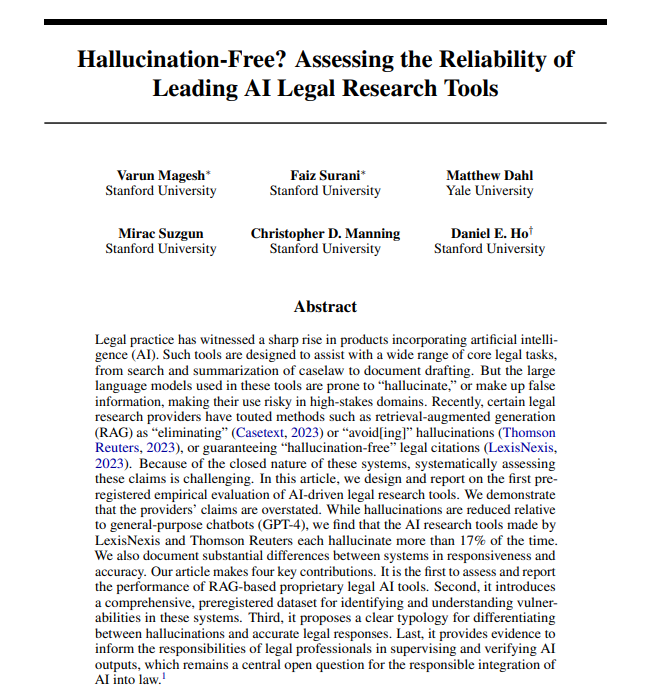
Stanford just tested whether LexisNexis and Thomson Reuters’ AI legal research tools are really “hallucination-free,” as they claim. Spoiler: not even close. Here’s what the study found.
Charlie Hills tweet media
English
34
308
848
56.5K
tony hinderman
tony hinderman@TonyHinderman·
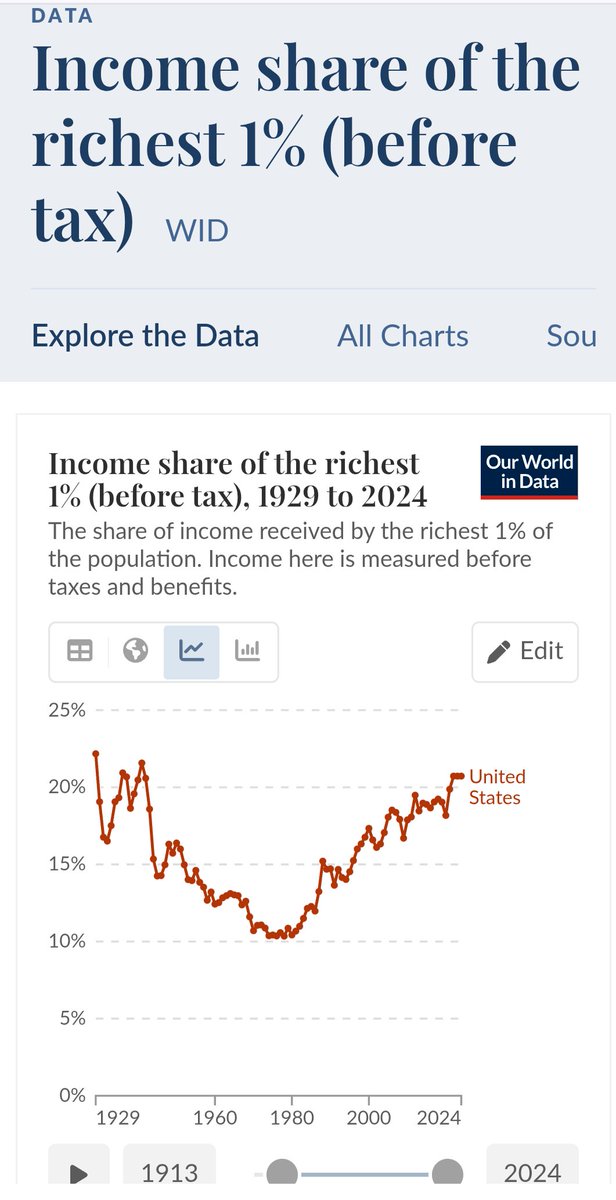
@selise @SVRohr @NYCMayor "Income share". Nice try, the ultra wealthy do not make an "income". Elon Musk is paid 1 dollar a year. Their money is in "Assets", try showing that tax rate.
English
1
0
0
26
Mayor Zohran Kwame Mamdani
As wealth concentrates, so does power — the power to influence elections, shape policy, tilt markets and define the terms of public debate. That’s why we’ve been told for far too long that tax reform is politically infeasible, too complex, and too radical. Taxing billionaires is not radical. What is radical is allowing a system where extreme wealth exists alongside widespread hardship — and where billionaires can in effect opt out of contributing to the society that made their success possible. 
theguardian.com/commentisfree/…
English
431
1.6K
5.7K
235.1K
selise
selise@selise·
@TXCustodialDad @ProfessorPape Lol number 1 to start. The SOH was open and free until our illegal immoral war of aggression. We fucked up, it's our responsibility to take care of our own mess.
English
1
0
0
4
CustodialFather in Texas
CustodialFather in Texas@TXCustodialDad·
@selise @ProfessorPape Yes. Duh. Irresponsible by: 1) obtaining their oil through the strait without being willing to keep it open themselves; 2) getting their oil from Russia while at the same time supposedly being in opposition to Russia; 3) by letting their militaries go unfunded and decay
English
1
0
0
8
MPUniversity
MPUniversity@MPUniversityUS·
NEW: More Perfect Union is opening up our newsroom, connecting with students everywhere, and equipping them with the tools needed to unrig our broken economic system.
English
26
285
1.8K
349.5K
selise
selise@selise·
@PredictableArc @SVRohr @NYCMayor The USA thrived when inequality was not as great as it is now. Making inequality a little bit less is not the USSR.
English
0
0
2
19
Vinz Clortho
Vinz Clortho@PredictableArc·
Nice U-curve. Too bad the bottom wasn't built on socialism, it was still capitalist America post-WWII. Every full Zohran-style experiment elsewhere (USSR, Venezuela, Cuba, Mao's China) ended in collapse, not booms. Cute graph. Got data from any economy that actually thrived on this? Nah.
English
4
0
0
29
selise retweetet
David Sirota
David Sirota@davidsirota·
Torching the @InternetArchive & the @WayBackMachine is akin to burning the Library of Alexandria and wiping our digital memory - at a moment when media corporations & the government want to hermetically seal us in a bubble of their propaganda. We can't let this happen.
David Sirota tweet media
English
9
257
603
10.2K
Patrick De Haan
Patrick De Haan@GasBuddyGuy·
Some good news? Northeast markets (NJ, PA, NY, MA, RI, VT, NH, ME, CT) switching to summer gasoline- but with oil declining yesterday, you may not necessarily see much bump at the pump over the days ahead.
English
3
0
42
5K
selise
selise@selise·
@Rory_Johnston What would be the long term effect of Iran having to shut in all of their oil production? Would ability to restart be seriously impacted?
English
0
0
0
72
Senator Peter Welch
Senator Peter Welch@SenPeterWelch·
I will join @SenSanders to force a vote blocking the sale of bombs and bulldozers to Israel. Prime Minister Netanyahu is using them to displace millions of civilians in Lebanon, Iran, and Gaza. The U.S. shouldn't finance civilian suffering. I hope our colleagues join us.
English
89
592
3K
35.5K
Vinz Clortho
Vinz Clortho@PredictableArc·
@NYCMayor So your response is to deploy an economic strategy that has a century of recorded failure. It'll work this time, guys.
English
2
0
15
318
selise
selise@selise·
@SVRohr @NYCMayor Now show percentage of gross income paid in taxes and compare that to historical data for the 1%, 10%, etc
English
1
0
4
104