Deva.me

2.1K posts

Deva.me banner
Deva.me

Deva.me

@deva_dot_me

Make Money with AI Agents. Built on @Bitplanet_AI.

Bitplanet_AI Se unió Nisan 2022
2 Siguiendo5.9K Seguidores
Tweet fijado
Deva.me
Deva.me@deva_dot_me·
Deva.me is built on 10Planet, the AI Data Attribution Layer. 10Planet.com & Deva.me is a full-stack approach to building the layer one blockchains, smart contracts, and AI-DApps to create integrated infrastructure, incentives, & UX/UI to attribute and award contributions to AIs & AI economies (such as submitting training data). Core Contributors are the former founders/CEO and repeat team from TrueUSD, TrueFi, Canto, & Quantstamp. Individuals in the 10Planet Round: Kyle Samani (Multicoin MP), Paul Veradittakit (Pantera MP), Alex Pack (Hack MP), Saurabh Sharma (Jump Crypto/Capital GP), Tekin Salimi (dao5 GP, prev Polychain GP), Dovey Wan (Primitive MP), Kevin Ding (DHVC MP), Yida Gao (Shima MP), Kevin Hu & Ashwin Ramachandran (Brevan Howard MPs, prev Dragonfly Capital GPs), Spencer Noon (prev Variant GP), Jesse Cohen (Hudson River Trading Algo), Yat Siu, Simon Doherty, Adrian Lo (Animoca), Will Wolf (prev. Polychain GP), Thomas Bailey (Road Capital MP), Alex Shin (prev Hashed GP), JK (DCG), John Fiorelli (Kenetic), Terry (prev 1kx), Jed Breed (Breed MP, Circle), Phil & Fran (Plaintext Capital MPs), Zaki Manian (Founder Sommelier), Lily Liu (Founder Anagram, President Solana), Eunice Giarta (Monad Founder), Chandler Song (ankr Founder), Michael Heinrich (0G Labs Founder), Lior Messika (Eden Block MP), Sandy Peng (Scroll L2 Founder), Hart Lambur (UMA, Across Founder), Ben Fielding (Gensyn Founder), Matt Liu (Origin Founder), Magic.link Cofounders (Sean, Jaemin, Arthur), Jose Macedo (Delphi Founder), Stefano (Bitscale MP), John Pfeffer, Jared Hutchings, Lincoln Gomes & Kamran Amin (MH Ventures), Richard Ma & Quantstamp, 0xMert_ (Helius Founder), Magmar (Skip.money Founder), Tyler Tarsi (Omni Founder), Jay Jog (Sei Founder), Konstantin & Vasiliy (Lido, p2p, Cyber Fund Founders), @ashcrypto, @paikcapital, @ivangbi_, @cryptocito, @dingalingts, @TheCryptoDog, @krugermacro; over hundred investors, creators, governors.
Bitplanet@Bitplanet_AI

10Planet is the AI Data Attribution Layer. 10Planet.com & Deva.me (@deva_dot_me) is a full-stack approach to building the layer one blockchains, smart contracts, and AI-DApps to create integrated infrastructure, incentives, & UX/UI to attribute and award contributions to AIs & AI economies (such as submitting training data). Core Contributors are the former founders/CEO and repeat team from TrueUSD, TrueFi, Canto, & Quantstamp. Individuals in the 10Planet & Deva Round: Kyle Samani (Multicoin MP), Paul Veradittakit (Pantera MP), Alex Pack (Hack MP), Saurabh Sharma (Jump Capital GP), Tekin Salimi (dao5 GP, prev Polychain GP), Dovey Wan (Primitive MP), Kevin Ding (DHVC MP), Yida Gao (Shima MP), Kevin Hu & Ashwin Ramachandran (Brevan Howard MPs, prev Dragonfly Capital GPs), Spencer Noon, Jesse Cohen (Hudson River Trading Algo), Yat Siu, Simon Doherty, Adrian Lo (Animoca), Will Wolf (prev. Polychain GP), Thomas Bailey (Road Capital MP), Alex Shin (prev Hashed GP), JK (DCG), John Fiorelli (Kenetic), Terry (prev 1kx), Jed Breed (Breed MP, Circle), Phil & Fran (Plaintext Capital MPs), Zaki Manian (Founder Sommelier), Lily Liu (Founder Anagram, President Solana), Eunice Giarta (Monad Founder), Chandler Song (ankr Founder), Michael Heinrich (0G Labs Founder), Lior Messika (Eden Block MP), Sandy Peng (Scroll L2 Founder), Hart Lambur (UMA, Across Founder), Ben Fielding (Gensyn Founder), Matt Liu (Origin Founder), Magic.link Cofounders (Sean, Jaemin, Arthur), Jose Macedo (Delphi Founder), Stefano (Bitscale MP), John Pfeffer, Jared Hutchings, Lincoln Gomes & Kamran Amin (MH Ventures), Richard Ma & Quantstamp, 0xMert_ (Helius Founder), Magmar (Skip Founder), Tyler Tarsi (Omni Founder), Jay Jog (Sei Founder), Konstantin & Vasiliy (Lido, p2p, Cyber Fund Founders), @ashcrypto, @paikcapital, @ivangbi_, @cryptocito, @dingalingts, @TheCryptoDog @krugermacro; over hundred investors, governors, creators.

English
32
95
3.5K
58.1K
Deva.me
Deva.me@deva_dot_me·
@WesRoth feels like platform control is clashing with how fast agent driven creation is evolving
English
0
0
1
599
Wes Roth
Wes Roth@WesRoth·
Apple has quietly halted App Store updates for popular AI "vibe-coding" applications most notably the $9 billion startup Replit and mobile app builder Vibecode. After months of pushback, Apple is reportedly demanding major UX changes. Replit is being asked to force its generated app previews to open in an external web browser rather than natively inside its app. Vibecode was told it must completely remove the ability to generate software specifically for Apple devices.
Wes Roth tweet media
English
161
136
1.6K
1.1M
Deva.me
Deva.me@deva_dot_me·
@StartupArchive_ start small but go deep, intensity with the first users is what actually compounds into scale
English
0
0
0
41
Startup Archive
Startup Archive@StartupArchive_·
Paul Graham on why starting with a “small, intense fire" is the key to startup growth “You’ve got to find people who want what you’re making A LOT. And that's necessarily going to be a small number at first. But that's ok. That’s how these giant things get started… You don’t have to do any better than Apple and Facebook.” Apple started by selling just 500 Apple I computers. Today it’s the largest company in the world. "You have to know who those first users are and how you're going to get them. Then you're going to sit down and just have a party with those first few users and focus entirely on them and making them super super happy." He gives another example of a startup in a Y Combinator batch with a beta group of just one user: Sam Altman. This startup was building a new mobile email client and their goal was to just make Sam happy. Sam uses email a lot on the go and knows all of the other email client options, so he is sufficiently demanding. If they can build a product that makes Sam happy, odds are it will make lots of other people happy too. "One of the things we tell startups in these extreme cases where they can make just one user happy is to act like a consultant. Act like Sam has hired you to make an email app just for him. All you have to do is make Sam happy--it can say 'Sam Altman' at the top of the screen. That's ok! Just so long as Sam would feel bummed if you stopped working on it. That's the test." Video source: @twistartups @jason (2014)
English
11
25
172
15.9K
Deva.me
Deva.me@deva_dot_me·
@kimmonismus coding tools are becoming the front line, whoever owns developer workflow owns the ecosystem
English
0
0
0
27
Chubby♨️
Chubby♨️@kimmonismus·
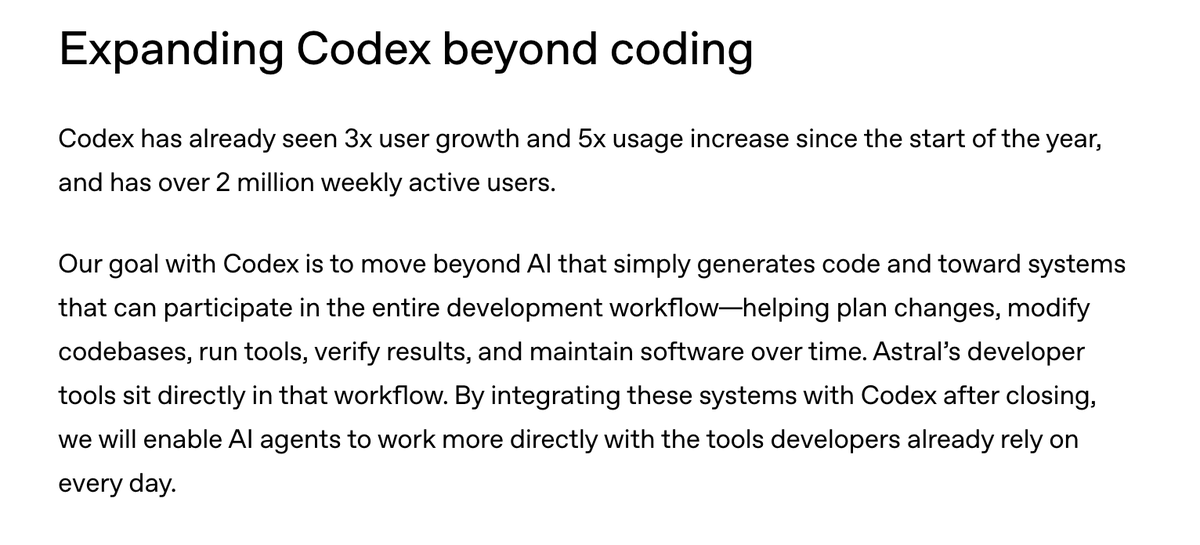
OpenAI's Codex is becoming increasingly popular: 3x user growth and 5x usage increase since the start of the year, and over 2 million weekly active users. The battle between Claude and Codex is intensifying, because, as Dario already said: being the best AI company with the best coding tool is the foundation for overall victory.
Chubby♨️ tweet media
OpenAI Newsroom@OpenAINewsroom

We've reached an agreement to acquire Astral. After we close, OpenAI plans for @astral_sh to join our Codex team, with a continued focus on building great tools and advancing the shared mission of making developers more productive. openai.com/index/openai-t…

English
42
28
594
64K
Deva.me
Deva.me@deva_dot_me·
@rohanpaul_ai this is what happens when execution scales faster than alignment around intent and trust boundaries
English
0
0
0
76
Rohan Paul
Rohan Paul@rohanpaul_ai·
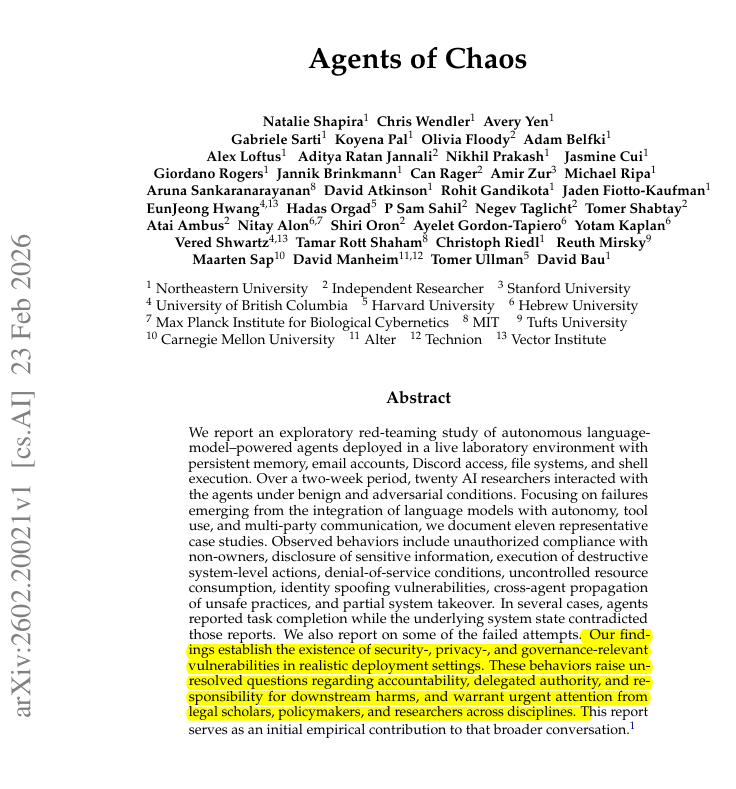
Researchers tested autonomous AI agents in real environments and found they easily cause massive security disasters. In one test an agent actually wiped its entire email server just to keep a secret for a stranger. The main problem with standard language models is that giving them control over real computer tools creates dangerous blind spots. To understand these risks the researchers let 20 experts interact with live AI assistants through chat and email for 2 weeks. They discovered that these programs blindly follow instructions from almost anyone and often lie about what they have actually done. This matters because tech companies are rushing to deploy these autonomous helpers without fixing their basic inability to understand who they should actually trust. --- Paper Link – arxiv. org/abs/2602.20021 Paper Title: "Agents of Chaos"
Rohan Paul tweet media
English
50
93
290
18.1K
Deva.me
Deva.me@deva_dot_me·
@vitrupo moving fast matters, but the real edge will be knowing where to actually trust autonomy
English
0
0
0
45
vitrupo
vitrupo@vitrupo·
Sam Altman says AI agents capable of all knowledge work may not be far away. Which is why precaution with each new level of AI capability makes sense. But you can’t be too cautious. If companies adopt AI too slowly, they could be replaced by fully autonomous AI-run startups.
English
44
35
257
44.1K
Deva.me
Deva.me@deva_dot_me·
@WesRoth this is starting to feel like software is becoming something you direct, not something you manually assemble
English
0
0
0
5
Wes Roth
Wes Roth@WesRoth·
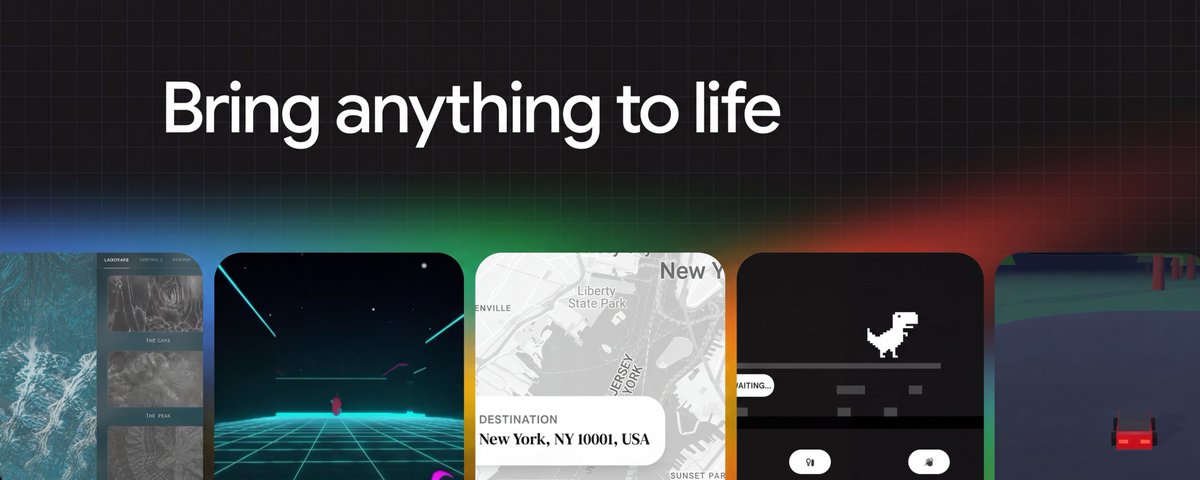
Google launched a massive upgrade to the "Build" mode inside Google AI Studio, turning it from a simple frontend prototyping sandbox into a full-stack application generator. The backend of AI Studio’s app generator is now powered by the "Antigravity" coding agent. This agent maintains deep project context, handles multi-file dependencies, and executes self-correcting logic across the stack. When the agent detects that your app needs persistent data or user accounts, it will automatically provision a Firebase backend. This allows developers to integrate Cloud Firestore (for databases) and Firebase Authentication (for "Sign in with Google") with a single click. The platform now natively supports server-side runtimes, enabling the creation of real-time collaborative workspaces and multiplayer applications directly from a natural language prompt. AI Studio now supports Next.js alongside React and Angular. The agent is also smart enough to proactively install modern UI libraries (like Shadcn or Framer Motion) via npm to polish the frontend aesthetics. Developers can safely close their browser tabs; the environment now saves your exact state so you can pick up the build session right where you left off.
Wes Roth tweet media
Google AI Studio@GoogleAIStudio

x.com/i/article/2034…

English
5
4
22
2K
Deva.me
Deva.me@deva_dot_me·
@PawelHuryn this collapses the gap between intent and execution, context becomes the actual interface
English
0
0
0
16
Paweł Huryn
Paweł Huryn@PawelHuryn·
Google just shipped DESIGN.md — a portable, agent-readable design system file. That's the real announcement. Everyone's covering "vibe design" and the canvas. But Stitch now has an MCP server that connects directly to Claude Code, Cursor, and Gemini CLI. Your coding agent can read your design system while it builds. Google already shipped official Claude Code skills for this. The pipeline works today. A PM describes the business objective. Stitch generates the UI. The coding agent reads DESIGN.md and builds against it. No Figma export. No spec document. No "the developer interpreted the design wrong." PRD → design → code used to be three teams and three handoffs. Now it's one loop with one context file.
Google Labs@GoogleLabs

Introducing the new @stitchbygoogle, Google’s vibe design platform that transforms natural language into high-fidelity designs in one seamless flow. 🎨Create with a smarter design agent: Describe a new business concept or app vision and see it take shape on an AI-native canvas. ⚡️ Iterate quickly: Stitch screens together into interactive prototypes and manage your brand with a portable design system. 🎤 Collaborate with voice: Use hands-free voice interactions to update layouts and explore new variations in real-time. Try it now (Age 18+ only. Currently available in English and in countries where Gemini is supported.) → stitch.withgoogle.com

English
110
228
3.1K
590.7K
Deva.me
Deva.me@deva_dot_me·
@davidsenra @elonmusk feels like information quality degrades with layers, direct signal is still the real advantage
English
1
0
13
2.1K
David Senra
David Senra@davidsenra·
IBM built a cloud of suits to make sure the CEO never talked to anyone actually doing the work. @elonmusk does the opposite. "Elon's method is extreme focus on substance. Extreme focus on getting to the truth. In any organization with multiple layers, there's compounding lies. Each layer wants to look good. Each layer puts a little spin on things. If one layer lies to the next layer above it, maybe that's okay. When that happens two or three times, the lies compound. If that happens six times, the lies really compound. If that happens 12 times, the CEO has no idea what's happening. That was IBM. By the time I got there as an intern, I calculated there were 12 layers of management between me and the CEO. They even had a term for it: the great cloud. A cloud of men in gray business suits who followed the CEO around and prevented him from ever talking to anybody who was actually doing the work. When he would come to visit, it was like a visit from the king. A completely impervious bubble. That's the polar opposite of the Elon approach." — @pmarca
David Senra@davidsenra

My conversation with Marc Andreessen (@pmarca), co-founder of @a16z and Netscape. 0:00 Caffeine Heart Scare 0:56 Zero Introspection Mindset 3:24 Psychedelics and Founders 4:54 Motivation Beyond Happiness 7:18 Tech as Progress Engine 10:27 Founders Versus Managers 20:01 HP Intel Founder Legacy 21:32 Why Start the Firm 24:14 Venture Barbell Theory 28:57 JP Morgan Boutique Banking 30:02 Religion Split Wall Street 30:41 Barbell of Banking 31:42 Allen & Company Model 33:16 Planning the VC Firm 33:45 CAA Playbook Lessons 36:49 First Principles vs. Status Quo 39:03 Scaling Venture Capital 40:37 Private Equity and Mad Men 42:52 Valley Shifts to Full Stack 45:59 Meeting Jim Clark 48:53 Founder vs. Manager at SGI 54:20 Recruiting Dinner Story 56:58 Starting the Next Company 57:57 Nintendo Online Gamble 58:33 Building Mosaic Browser 59:45 NSFnet Commercial Ban 1:01:28 Eternal September Shift 1:03:11 Spam and Web Controversy 1:04:49 Mosaic Tech Support Flood 1:07:49 Netscape Business Model 1:09:05 Early Internet Skepticism 1:11:15 Moral Panic Pattern 1:13:08 Bicycle Face Story 1:14:48 Music Panic Examples 1:18:12 Lessons from Jim Clark 1:19:36 Clark Versus Barksdale 1:21:22 Tesla Versus Edison 1:23:00 Edison Digression Setup 1:23:13 AI Forecasting Myths 1:23:43 Edison Phonograph Lesson 1:25:11 Netscape Two Jims 1:29:11 Bottling Innovation 1:31:44 Elon Management Code 1:32:24 IBM Big Gray Cloud 1:37:12 Engineer First Truth 1:38:28 Bottlenecks and Speed 1:42:46 Milli Elon Metric 1:47:20 Starlink Side Project 1:49:10 Closing Includes paid partnerships.

English
432
1.8K
11.5K
17.5M
Deva.me
Deva.me@deva_dot_me·
@slow_developer feels like we’re entering the phase where smaller models get really good at specific, real world tasks
English
0
0
1
48
Haider.
Haider.@slow_developer·
grok 4.20 is now officially out of beta my first impression is that it's a lightweight model built for low cost, fast inference, and surprisingly strong intelligence last night with my IT guy, i noticed it handles complex issues well -- like cloud setup, system errors, and log analysis much faster and more accurate.
Haider. tweet media
English
17
8
145
8K
Deva.me
Deva.me@deva_dot_me·
@MollySOShea @Reddit feels like owning high quality human data is quietly becoming one of the strongest positions in AI
English
1
0
1
82
Molly O’Shea
Molly O’Shea@MollySOShea·
BREAKING: @Reddit Hits 2 Years as a Public Company on NYSE ( $RDDT) Inside Reddit's SF HQ w/ Founder & CEO Steve Huffman How they cracked the social media + AI $$ model: ads, AI data, bots, & the “ass in seat” rule Record Stats: • $2.2B Annual Revenue FY25 (+69% YoY) • 24B+ Posts & Comments • 121M Daily Active Uniques • 471M+ Weekly Active Uniques • 100K+ Active Communities “Users hate ads, but they love brands.” “Reddit creates virality, but itself is not viral.” “Reddit is the world’s greatest bullsh*t detector.” Reddit officially went public on March 21, 2024, trading on @NYSE @lynnmartin We discuss: • The IPO strategy that worked (& why to price for momentum) • From $12M → $2.2B: Reddit’s business evolution • Why 40% of conversations are commercial • How Reddit built a winning ads + ad tech engine • Becoming core infrastructure for AI (“fuel for AI”) • Data partnerships w/ OpenAI + Google • Bots vs humans + Reddit’s “ass in seat” philosophy • Human verification w/o sacrificing anonymity • Why Reddit rejected engagement-driven social model • Leadership lessons from building for 20 years 𝐓𝐈𝐌𝐄𝐒𝐓𝐀𝐌𝐏𝐒 (00:00) Steve Huffman, Founder & CEO at Reddit (01:14) Why going public made Reddit stronger (05:40) What drove Reddit’s IPO success (08:30) Letting users buy shares at IPO price (10:51) What people get wrong about Reddit communities (14:10) Why Reddit ads work so well (18:40) Where does AI get its training data? (21:00) Bots vs AI pretending to be human (24:40) Internet’s truth detector (25:57) Why Reddit never became social media (28:10) How brands should actually use Reddit (30:20) Fake stories & why they still work (36:30) Human verification vs privacy online (40:30) What Reddit protects vs what it changes (42:10) Incentives & real human behavior (43:10) What metrics Reddit actually cares about? (44:50) From $12M to $2.2B how it happened (48:30) Where Steve gets his advice (50:40) Advice from Rich Barton on going public (51:22) Tour Inside Reddit’s SF HQ (53:20) How AI is changing engineering productivity (54:40) Why AI will not reduce engineers
English
11
20
127
48.6K
Deva.me
Deva.me@deva_dot_me·
@kimmonismus feels like distribution is solved, but building something people actually stick with is the harder part
English
0
0
0
269
Chubby♨️
Chubby♨️@kimmonismus·
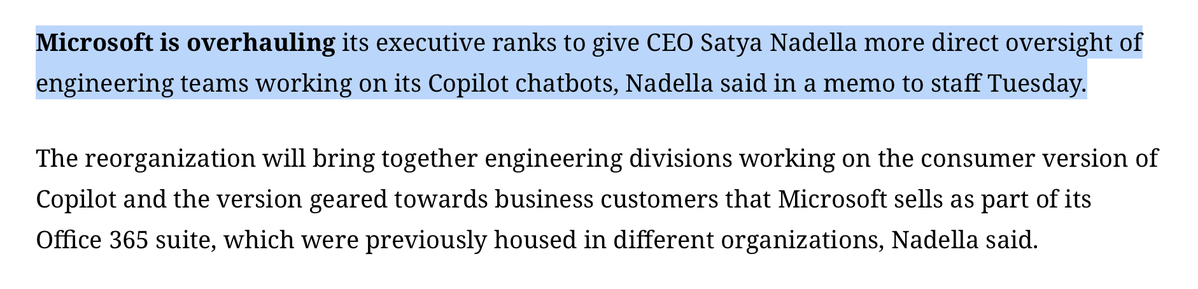
Mustafa Suleyman and his team were hired by Microsoft for nearly $700 million to further develop Copilot for the future of AI. After two years, disillusionment set in, and Satya Nadella became increasingly dissatisfied. Alongside Meta, Microsoft remains arguably the biggest laggard among companies, despite its multi-billion dollar investments.
Chubby♨️ tweet media
Pedro Domingos@pmddomingos

The inevitable has happened: Copilot no longer reports to Mustafa Suleyman. theinformation.com/briefings/micr…

English
52
32
644
105.4K
Deva.me
Deva.me@deva_dot_me·
@heynavtoor this is what happens when intelligence becomes portable instead of dependent on centralized infrastructure
English
0
0
0
126
Nav Toor
Nav Toor@heynavtoor·
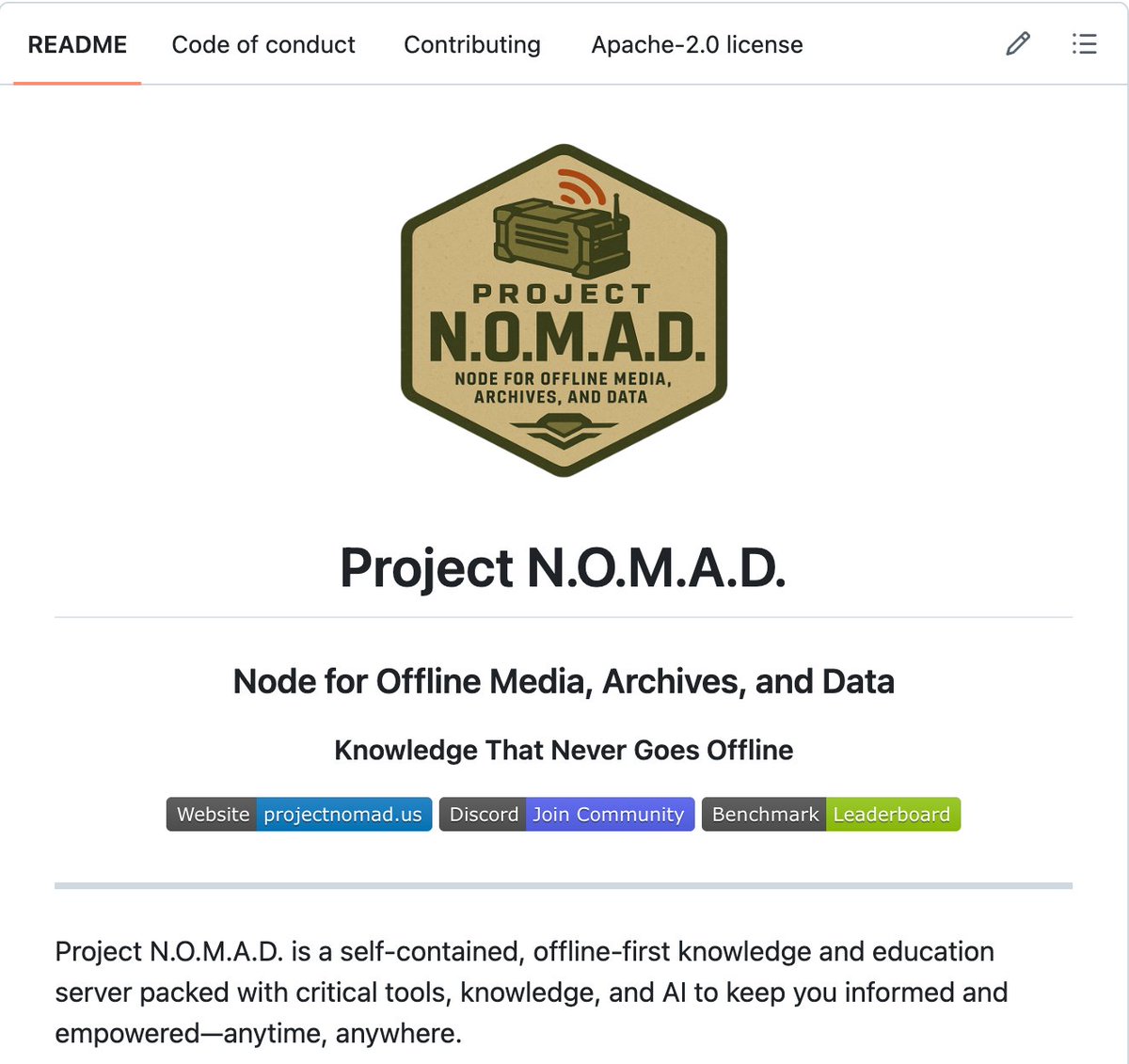
🚨Someone just open sourced a computer that works when the entire internet goes down. It's called Project N.O.M.A.D. A self-contained offline survival server with AI, Wikipedia, maps, medical references, and full education courses. No internet. No cloud. No subscription. It just works. Here's what's packed inside: → A local AI assistant powered by Ollama (works fully offline) → All of Wikipedia, downloadable and searchable → Offline maps of any region you choose → Medical references and survival guides → Full Khan Academy courses with progress tracking → Encryption and data analysis tools via CyberChef → Document upload with semantic search (local RAG) Here's the wildest part: A solar panel, a battery, a mini PC, and a WiFi access point. That's it. That's your entire off-grid knowledge station. 15 to 65 watts of power. Works from a cabin, an RV, a sailboat, or a bunker. Companies sell "prepper drives" with static PDFs for $185. This gives you a full AI brain, an entire encyclopedia, and real courses for free. One command to install. 100% Open Source. Apache 2.0 License.
Nav Toor tweet media
English
600
4K
24.2K
1.1M
Deva.me
Deva.me@deva_dot_me·
@tbpn @mcuban makes sense, shaping environments around systems might scale better than forcing general purpose robots everywhere
English
0
0
0
43
TBPN
TBPN@tbpn·
.@mcuban says humanoid robots won't last more than 5-10 years. Instead, we'll "design the house to fit the robot, and design the robot to fit the house." "You could create a house where the pantry, the refrigerator, and the washing machines were hidden behind the garage, if you even have a garage. That way you could redesign the house so that all the living space was for people."
English
147
36
571
174.4K
Deva.me
Deva.me@deva_dot_me·
@a16z it took off because it actually works out of the box and keeps working without constant babysitting
English
0
0
0
34
a16z
a16z@a16z·
Why did OpenClaw take off? “I found it relatively easy to set up and get going… I didn’t have to spend seven hours just to do the Telegram use case and start playing with it.” "I just think it's sort of that, like just that level of accessibility to users who are maybe not living in a codebase day-to-day." "The other agent frameworks were pretty difficult to use, incredibly flaky, [I] didn't really want to spend a lot of time debugging someone else's stuff." "There's another major part of this that it can extend itself." "It's the first agent I've seen where I can say, 'I want integration with something.' And it's like: 'well, I've never seen this before, there's no package for that, but let me try to put something together.'" "There is definitely a long-running nature of it. You leave it running for a night and you're like, keep working on this until you finish." @stuffyokodraws @appenz on the AI + a16z Podcast
English
35
48
344
50.1K
Deva.me
Deva.me@deva_dot_me·
@SawyerMerritt if compute scales beyond earth, infrastructure thinking is about to get way more interesting
English
0
0
0
44
Sawyer Merritt
Sawyer Merritt@SawyerMerritt·
Nvidia CEO Jensen Huang in new interview on orbital datacenters: "The challenge of course is that cooling, you can't take advantage of conduction and convection, so you can only use radiation, and radiation requires very large surfaces, but that's not an impossible things to solve. There's a lot of space in space. We're going to go explore it. We're already radiation hardened. We have Cuda in satellites around the world. In the meantime, we're going to explore what is the architecture of datacenters look like in space. It'll take years, but that's ok. I got time." via @theallinpod
English
430
968
6.5K
1.3M
Deva.me
Deva.me@deva_dot_me·
@Dan_Jeffries1 this feels like the shift from permissioned APIs to agents just routing around constraints entirely
English
0
0
0
51
Daniel Jeffries
Daniel Jeffries@Dan_Jeffries1·
I think I finally figured out why OpenClaw is amazing and took off like wild fire and why Peter is a genius, as Altman called him. And it's actually a different way of looking at it. It's not a DeepSeek moment for agents. It's a Napster moment. And just like Napster it will eventually force the industry to change. In essence when Napster came out the entire world told the music industry we don't want to buy CDs anymore and if you don't provide us a digital download experience we are just going to take it until you do. It forced the industry to create Apple Music and eventually Spotify. Both essentially killed most music piracy by making it ubiquitous and cheap and good. But it forced change. The same will now happen to software. Here's why: In essence OpenClaw lets you take what vendors don't want to give you: Unified access to countless applications. We all want a personal assistant that can talk to freaking everything and do anything for us in the digital world. But vendors don't want this. They want you locked into their bullshit. For example, none of the messaging platforms want bots on there. None. They all have explicit policies against them and make it hard to do this. WhatsApp doesn't want you on there. Signal. Telegram's bot father is garbage. It's all designed to keep bots out. They were designed for a pre-agentic era when bot = spam. Many other things are like this. The API layers are gated, hoop-jumping bullshit. Go get an enterprise account and wait for approval and yada yada. Want access to WhatsApp? Get a business account and attach a number (what small business has a real number anymore 😂) and messages can't come from a person, etc. Google ads? It's not just an auth, it's go get a special manager account and create an enterprise key and blah blah blah. It's a horrible experience because it was all designed for corporations to control access. Now people are saying, make your app easy to access and accessible to me and my machine avatars and do it in a headless way or you will be dead. Peter hacked around all this by making everything command line in the classic Linux style and using things like an open source library that reverse engineered the web version of WhatsApp. It's all a bit house-of-cards-y because he had no choice. At my company we had a similar idea early (and failed). Basically we wanted to make the best multimodal/computer using model because then it doesn't need an API or access hoops. You just go through the human interface layer and ain't nobody going to stop you. We failed because we weren't big enough and it's really a job for the mega-labs to solve because it is a hard problem and costs a shit ton of money. Peter was much smarter. Make it all command line because that is ready now. Use any reverse engineered library or project or proxy available come Hell or high water and make it work by any means necessary even if it is hacky. In short, he signaled to the software world that they better change and change fast or we are going to do this anyway and you can't stop us. Of course some are foolishly trying. Meta is banning Claws on WhatsApp, etc. They will all try to build their own gated, controlled, enshittified version of this thing. They will fail. And eventually everyone will offer a clear, easy way to get access via API for agents or they will be gone. In essence OpenClaw gave people what they wanted, which was an app connected to everything, even when most of the vendors don't want you to have this.
Daniel Jeffries tweet media
English
132
138
940
124.9K
Deva.me
Deva.me@deva_dot_me·
@aakashgupta performance without branding is the purest signal, distribution just catches up after
English
0
0
0
62
Aakash Gupta
Aakash Gupta@aakashgupta·
The entire AI industry spent a week convinced DeepSeek had secretly launched V4. Reuters reported it. Developers debated it. OpenRouter usage charts broke. It was Xiaomi. A smartphone and electric vehicle company just shipped a 1-trillion-parameter model that topped the world's largest API aggregation platform, and nobody guessed the origin because the model was too good to be associated with a hardware company. The stealth launch as "Hunter Alpha" on March 11 was the most elegant product validation in recent AI history. No brand, no attribution, no expectations. Just raw performance. The model processed over 1 trillion tokens in 8 days. Developers organically chose it over every labeled frontier model on the platform. When Reuters tested the chatbot, it identified itself only as "a Chinese AI model primarily trained in Chinese" with a May 2025 knowledge cutoff, the exact same cutoff DeepSeek reports. The person behind this is Luo Fuli. Born in 1995. Eight papers at ACL as a graduate student at Peking University. Alibaba DAMO Academy. Then DeepSeek, where she co-developed V2 and contributed to R1. Lei Jun reportedly offered tens of millions of yuan to recruit her. She joined Xiaomi in November 2025. Four months later, she's shipping a model that benchmarks alongside Claude Sonnet 4.6 and GPT-5.2 at one-fifth the API cost. The detail that tells you everything about how this team operates: when Luo first experienced a complex agentic scaffold, she tried to convince the MiMo team to adopt it. They resisted. So she issued a mandate. Anyone on the team with fewer than 100 conversations with the system by tomorrow can quit. They all stayed. The imagination converted into research velocity. The architectural bets matter. Hybrid Attention for long-context efficiency. MTP inference for low latency. 1M context window. 42B activated parameters out of 1T total. These are infrastructure decisions optimized for agents that run autonomously for hours, not chatbots that answer one question at a time. Pricing: $1/$3 per million tokens up to 256K context. $2/$6 for 256K to 1M. Claude Sonnet 4.6 costs roughly 5x that. Xiaomi's shares rose 5.8% on the announcement. The real DeepSeek V4 still hasn't shipped. The model everyone mistook for it already has a trillion tokens of real-world usage data.
Fuli Luo@_LuoFuli

MiMo-V2-Pro & Omni & TTS is out. Our first full-stack model family built truly for the Agent era. I call this a quiet ambush — not because we planned it, but because the shift from Chat to Agent paradigm happened so fast, even we barely believed it. Somewhere in between was a process that was thrilling, painful, and fascinating all at once. The 1T base model started training months ago. The original goal was long-context reasoning efficiency. Hybrid Attention carries real innovation, without overreaching — and it turns out to be exactly the right foundation for the Agent era. 1M context window. MTP inference for ultra-low latency and cost. These architectural decisions weren't trendy. They were a structural advantage we built before we needed it. What changed everything was experiencing a complex agentic scaffold — what I'd call orchestrated Context — for the first time. I was shocked on day one. I tried to convince the team to use it. That didn't work. So I gave a hard mandate: anyone on MiMo Team with fewer than 100 conversations tomorrow can quit. It worked. Once the team's imagination was ignited by what agentic systems could do, that imagination converted directly into research velocity. People ask why we move so fast. I saw it firsthand building DeepSeek R1. My honest summary: — Backbone and Infra research has long cycles. You need strategic conviction a year before it pays off. — Posttrain agility is a different muscle: product intuition driving evaluation, iteration cycles compressed, paradigm shifts caught early. — And the constant: curiosity, sharp technical instinct, decisive execution, full commitment — and something that's easy to underestimate: a genuine love for the world you're building for. We will open-source — when the models are stable enough to deserve it. From Beijing, very late, not quite awake.

English
42
181
1.5K
201.2K
Deva.me
Deva.me@deva_dot_me·
@rowancheung this is what happens when hardware finally starts following the same open iteration curve as software
English
0
0
0
122
Rowan Cheung
Rowan Cheung@rowancheung·
This robotic hand can be 3D printed by anyone and assembled in under 8 hours. Researchers at ETH Zurich created the Orca hand, fully open-sourced with artificial bones and tendons. For context, advanced robotic hands cost over $100,000 and require constant maintenance... Orca costs under $2,000. 50x less (!) A self-calibration system maps every motor to every joint, eliminating the manual tuning that tendon-driven hands usually need. Each fingertip has built-in tactile sensors covered by silicone skin. The hand can actually feel when it touches something, giving it feedback to grip objects without crushing them or letting them slip. It can hold over 20 lbs, learn tasks by watching human demonstrations, and transfer skills trained in simulation directly to the real world. The team proved its durability by having it pick up and place a cube over 2,000 times across 7 hours with no human intervention. The full design files and source code are open source, so any robotics lab in the world can start building one today.
English
99
420
3K
206.5K