Albert Roger

192 posts

Albert Roger

Albert Roger

@Albert_RogerF

Retweets, follows, and likes are not endorsements. Views my own.

Katılım Ekim 2013
866 Takip Edilen287 Takipçiler
Albert Roger retweetledi

Luke Heeney
Luke Heeney@heeney_luke·
We've lost an absolute giant today. RIP Dimitri Bertsekas. His probability and optimization books got me through my masters. Massive loss for the MIT community and the field.
English
17
111
943
77K
Albert Roger retweetledi
Ananyo Bhattacharya
Ananyo Bhattacharya@Ananyo·
23 years old with no advanced mathematics training solves Erdős problem with ChatGPT Pro. "What’s beginning to emerge is that the problem was maybe easier than expected, and it was like there was some kind of mental block.”-Terence Tao scientificamerican.com/article/amateu…
English
54
296
2.8K
1.2M
Albert Roger retweetledi
Paul Graham
Paul Graham@paulg·
Hamming's talk is so important that I reproduced it on my site. It's one of the only things on my site written by someone else. paulgraham.com/hamming.html
Ihtesham Ali@ihtesham2005

A mathematician who shared an office with Claude Shannon at Bell Labs gave one lecture in 1986 that explains why some people win Nobel Prizes and other equally smart people spend their whole lives doing forgettable work. His name was Richard Hamming. He won the Turing Award. He invented error-correcting codes that made modern computing possible. And he spent 30 years at Bell Labs sitting in a cafeteria at lunch watching which scientists became legendary and which ones faded into nothing. In March 1986, he walked into a Bellcore auditorium in front of 200 researchers and told them exactly what he had seen. Here's the framework that has been quoted by every serious scientist for the last 40 years. His opening line landed like a punch. He said most scientists he worked with at Bell Labs were just as smart as the Nobel Prize winners. Just as hardworking. Just as credentialed. And yet at the end of a 40-year career, one group had changed entire fields and the other group was forgotten by the time they retired. He wanted to know what the difference actually was. And he said it wasn't luck. It wasn't IQ. It was a specific set of habits that almost nobody is willing to follow. The first habit was the one that hurts the most to hear. He said most scientists deliberately avoid the most important problem in their field because the odds of failure are too high. They pick a safe adjacent problem, solve it cleanly, publish it, and move on. And because they never swing at the hard problem, they never hit it. He said if you do not work on an important problem, it is unlikely you will do important work. That is not a motivational line. That is a logical one. The second habit was about doors. Literal doors. He noticed that the scientists at Bell Labs who kept their office doors closed got more done in the short term because they had no interruptions. But the scientists who kept their doors open got more done over a career. The open-door scientists were interrupted constantly. They also absorbed every new idea passing through the hallway. Ten years in, they were working on problems the closed-door scientists did not even know existed. The third habit was inversion. When Bell Labs refused to give him the team of programmers he wanted, Hamming sat with the rejection for weeks. Then he flipped the question. Instead of asking for programmers to write the programs, he asked why machines could not write the programs themselves. That single inversion pushed him into the frontier of computer science. He said the pattern repeats everywhere. What looks like a defect, if you flip it correctly, becomes the exact thing that pushes you ahead of everyone else. The fourth habit was the one that hit me the hardest. He said knowledge and productivity compound like interest. Someone who works 10 percent harder than you does not produce 10 percent more over a career. They produce twice as much. The gap doesn't add. It multiplies. And it compounds silently for years before anyone notices. He finished the lecture with a line I have never been able to shake. He said Pasteur's famous quote is right. Luck favors the prepared mind. But he meant it literally. You don't hope for luck. You engineer the conditions where luck can land on you. Open doors. Important problems. Inverted questions. Compounded hours. Those are not traits. Those are choices you make every single day. The transcript has been sitting on the University of Virginia's computer science website for almost 30 years. The video is free on YouTube. Stripe Press reprinted the full lectures as a book in 2020 and Bret Victor wrote the foreword. Hamming died in 1998. He gave his final lecture a few weeks before. He was 82. The lecture that explains why some careers become legendary and others disappear is still free. Most people who could benefit from it will never open it.


English
82
430
3.7K
782.9K
Albert Roger retweetledi
EconTAI
EconTAI@Econ_TAI·
📊 New paper from EconTAI Faculty @BasilHalperin: Forecasting the Economic Effects of AI Surveyed 69 leading economists, 52 AI experts, 38 superforecasters, and 401 members of the general public about AI’s economic impact. The findings were surprising:
English
1
4
6
536
Albert Roger retweetledi
Carlos Cuerpo
Carlos Cuerpo@carlos_cuerpo·
Como escribió Cervantes: “Cada uno es artífice de su ventura”. ➡️Lo que somos no lo determina de dónde venimos, sino lo que hacemos con lo que se nos ha dado. Nuestra obligación es asegurar que todos los españoles tengan las herramientas para ser artífices de la suya.
Español
256
1.3K
5K
87.5K
Albert Roger retweetledi
Jeff Clune
Jeff Clune@jeffclune·
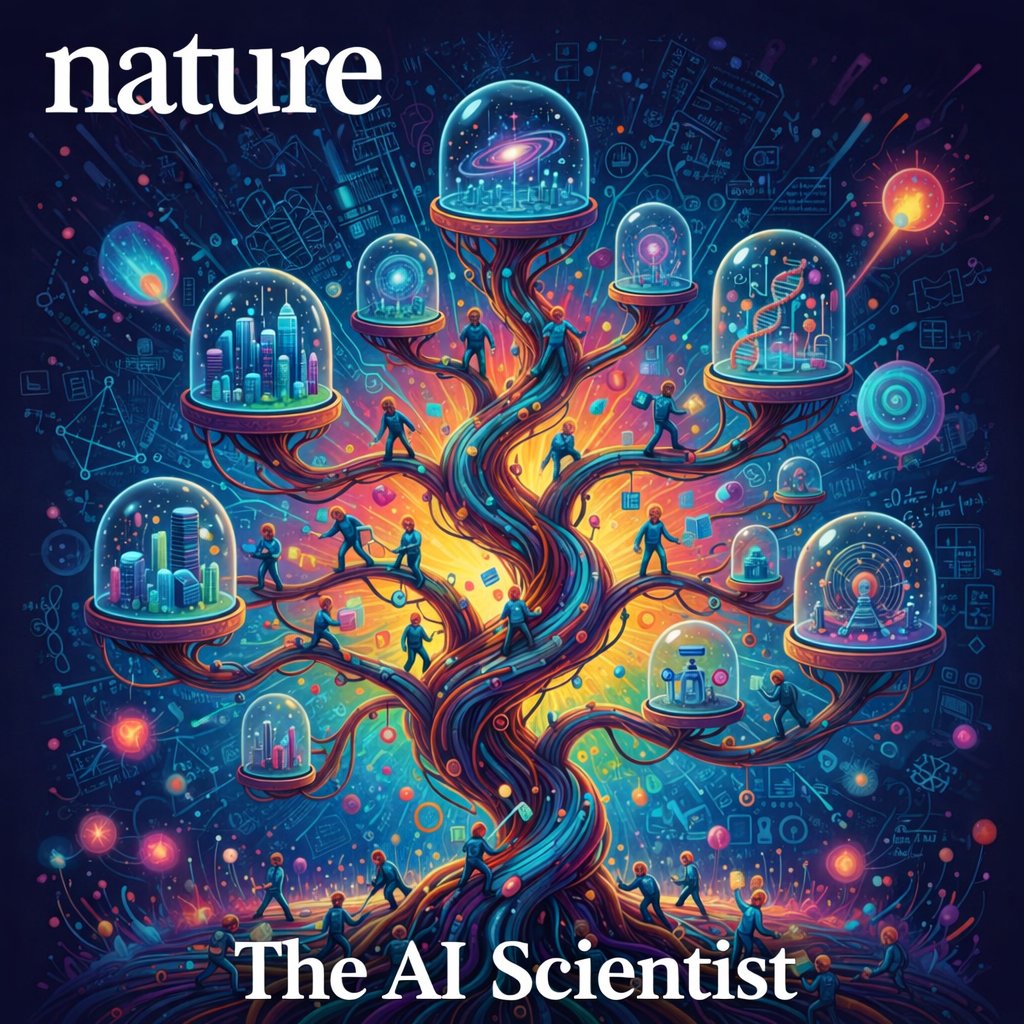
The AI Scientist: Towards Fully Automated AI Research, Now Published in Nature!!✨ Today in Nature we share a comprehensive technical summary of our work on The AI Scientist, including new scaling law results showing how it improves with more compute and more intelligent foundation models. The AI Scientist autonomously creates its own research ideas, codes up and conducts experiments to test those ideas, creates figures to visualize the results, writes an entire scientific manuscript summarizing what it has discovered, and conducts its own “peer” review of the resulting paper. One of its papers–entirely AI generated–passed peer review at a top-tier AI conference workshop, a historic milestone marking the dawn of a new era of AI-accelerated scientific discovery. 🔬🧪✨🧬💡🔭 Paper nature.com/articles/s4158… Blog sakana.ai/ai-scientist-n… Work done in collaboration with a great team from Sakana, Oxford, and my lab at UBC. Thanks and congratulations everyone! @_chris_lu_ @cong_ml @RobertTLange @_yutaroyamada @shengranhu @j_foerst @hardmaru
Jeff Clune tweet media
English
32
216
701
80K
Albert Roger retweetledi
Ben Charoenwong
Ben Charoenwong@BenCharoenwong·
Just had a faculty meeting at INSEAD about the impact of AI on management education and how we should respond. Every serious business school is having the AI conversation right now. 1/
English
15
22
113
28K
Albert Roger retweetledi
Andrej Karpathy
Andrej Karpathy@karpathy·
Software horror: litellm PyPI supply chain attack. Simple `pip install litellm` was enough to exfiltrate SSH keys, AWS/GCP/Azure creds, Kubernetes configs, git credentials, env vars (all your API keys), shell history, crypto wallets, SSL private keys, CI/CD secrets, database passwords. LiteLLM itself has 97 million downloads per month which is already terrible, but much worse, the contagion spreads to any project that depends on litellm. For example, if you did `pip install dspy` (which depended on litellm>=1.64.0), you'd also be pwnd. Same for any other large project that depended on litellm. Afaict the poisoned version was up for only less than ~1 hour. The attack had a bug which led to its discovery - Callum McMahon was using an MCP plugin inside Cursor that pulled in litellm as a transitive dependency. When litellm 1.82.8 installed, their machine ran out of RAM and crashed. So if the attacker didn't vibe code this attack it could have been undetected for many days or weeks. Supply chain attacks like this are basically the scariest thing imaginable in modern software. Every time you install any depedency you could be pulling in a poisoned package anywhere deep inside its entire depedency tree. This is especially risky with large projects that might have lots and lots of dependencies. The credentials that do get stolen in each attack can then be used to take over more accounts and compromise more packages. Classical software engineering would have you believe that dependencies are good (we're building pyramids from bricks), but imo this has to be re-evaluated, and it's why I've been so growingly averse to them, preferring to use LLMs to "yoink" functionality when it's simple enough and possible.
Daniel Hnyk@hnykda

LiteLLM HAS BEEN COMPROMISED, DO NOT UPDATE. We just discovered that LiteLLM pypi release 1.82.8. It has been compromised, it contains litellm_init.pth with base64 encoded instructions to send all the credentials it can find to remote server + self-replicate. link below

English
1.4K
5.3K
27.7K
66.6M
Albert Roger retweetledi
Oliver Groß
Oliver Groß@minenergybiz·
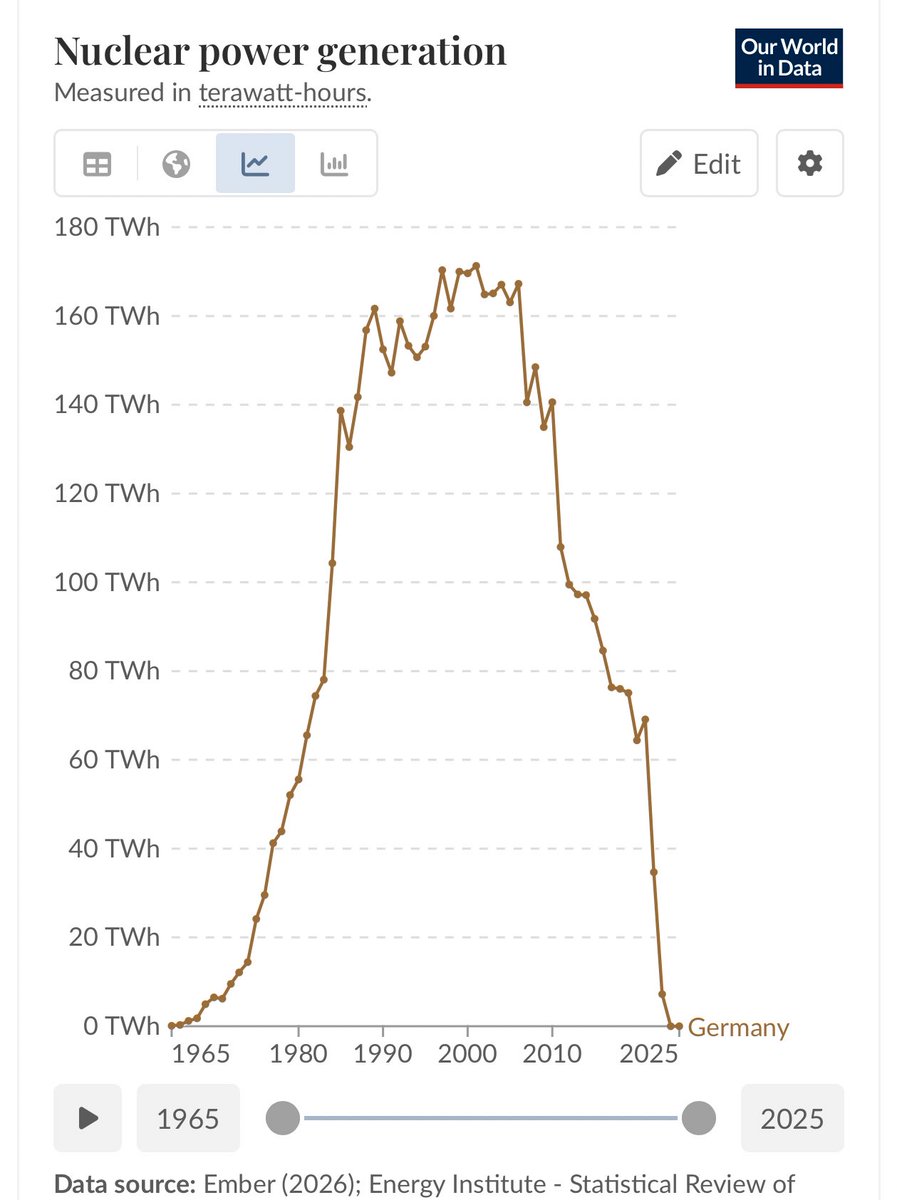
Unreal numbers 👀⚡️ "JPMorgan estimates that, had Germany not phased out nuclear power, the country would have generated 50% less electricity from fossil fuels and 84% less electricity from natural gas in 2024. Electricity prices in Germany would have been around 25% lower, and the country would have imported half as much electricity.."
Oliver Groß tweet media
English
869
6.1K
31.4K
3.7M
Albert Roger retweetledi
Steven Pinker
Steven Pinker@sapinker·
Why must LLMs hallucinate? The answer in this paper - a low threshold for guessing because of rewards during post-training - is part of the explanation, but another is that they are designed not to store and retrieve facts but to mash up probabilistic associates. Out of curiosity I asked ChatGPT for the title of my PhD dissertation and it confidently provided the nonsensical and not-even-close “Taxonomy and the Mental Lexicon.” (It was "The Representation of Three-Dimensional Space in Mental Images.")
Nav Toor@heynavtoor

🚨BREAKING: OpenAI published a paper proving that ChatGPT will always make things up. Not sometimes. Not until the next update. Always. They proved it with math. Even with perfect training data and unlimited computing power, AI models will still confidently tell you things that are completely false. This isn't a bug they're working on. It's baked into how these systems work at a fundamental level. And their own numbers are brutal. OpenAI's o1 reasoning model hallucinates 16% of the time. Their newer o3 model? 33%. Their newest o4-mini? 48%. Nearly half of what their most recent model tells you could be fabricated. The "smarter" models are actually getting worse at telling the truth. Here's why it can't be fixed. Language models work by predicting the next word based on probability. When they hit something uncertain, they don't pause. They don't flag it. They guess. And they guess with complete confidence, because that's exactly what they were trained to do. The researchers looked at the 10 biggest AI benchmarks used to measure how good these models are. 9 out of 10 give the same score for saying "I don't know" as for giving a completely wrong answer: zero points. The entire testing system literally punishes honesty and rewards guessing. So the AI learned the optimal strategy: always guess. Never admit uncertainty. Sound confident even when you're making it up. OpenAI's proposed fix? Have ChatGPT say "I don't know" when it's unsure. Their own math shows this would mean roughly 30% of your questions get no answer. Imagine asking ChatGPT something three times out of ten and getting "I'm not confident enough to respond." Users would leave overnight. So the fix exists, but it would kill the product. This isn't just OpenAI's problem. DeepMind and Tsinghua University independently reached the same conclusion. Three of the world's top AI labs, working separately, all agree: this is permanent. Every time ChatGPT gives you an answer, ask yourself: is this real, or is it just a confident guess?

English
1
245
1.3K
291K
Albert Roger retweetledi
Harman Singh (in NYC for summer)
Can LLMs Self-Verify? Much better than you'd expect. LLMs are increasingly used as parallel reasoners, sampling many solutions at once. Choosing the right answer is the real bottleneck. We show that pairwise self-verification is a powerful primitive. Introducing V1, a framework that unifies generation and self-verification: 💡 Pairwise self-verification beats pointwise scoring, improving test-time scaling 💡 V1-Infer: Efficient tournament-style ranking that improves self-verification 💡 V1-PairRL: RL training where generation and verification co-evolve for developing better self-verifiers 🧵👇
English
14
66
394
103.1K
Albert Roger retweetledi
Stanford HAI
Stanford HAI@StanfordHAI·
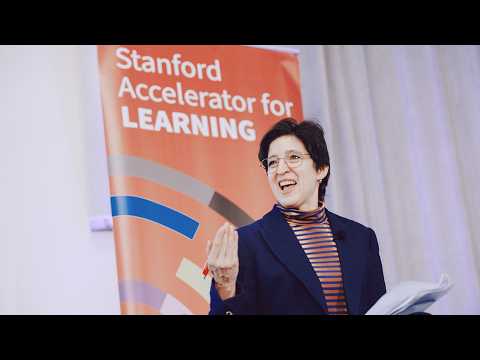
How can we ensure AI solutions genuinely meet the needs of students and educators? @StanfordHAI Senior Fellow @Susan_Athey stresses the importance of measurement, testing, and evaluation frameworks in AI products. Watch the AI+Education Summit panel here: youtube.com/watch?v=JWKXCv…
YouTube video
YouTube
English
2
6
36
2.4K
Albert Roger retweetledi
Andrew Curran
Andrew Curran@AndrewCurran_·
Striking image from the new Anthropic labor market impact report.
Andrew Curran tweet media
English
551
2.2K
13.3K
7.3M
Albert Roger retweetledi
Natasha Bertrand
Natasha Bertrand@NatashaBertrand·
Trump admin officials acknowledged during a closed-door briefing on Capitol Hill Tuesday that Iran’s Shahed attack drones represent a major challenge and US air defenses will not be able to intercept them all. The drones, Defense Secretary Pete Hegseth and Chairman of the Joint Chiefs of Staff Gen. Dan Caine acknowledged, are posing a bigger problem than anticipated, per sources in the briefing. cnn.com/2026/03/04/pol…
English
2
2.1K
5.9K
2.8M
Albert Roger retweetledi
PLD Space
PLD Space@PLD_Space·
𝗕𝗶𝗴 𝗡𝗲𝘄𝘀 - 𝘄𝗲’𝘃𝗲 𝗿𝗮𝗶𝘀𝗲𝗱 €𝟭𝟴𝟬𝗠 𝗶𝗻 𝗦𝗲𝗿𝗶𝗲𝘀 𝗖 𝗳𝘂𝗻𝗱𝗶𝗻𝗴! With over €350 million raised to date, this new investment, lead by Mitsubishi Electric, reinforces our technological and industrial leadership in the launcher market, enabling us to execute the next phase of our strategic roadmap with the speed and scale required to compete globally. MIURA 5 was designed to address a clear and growing capacity gap in the market, and this investment support strengthens our ability to transition into commercial operations. It accelerates the build‑out of the industrial and launch infrastructure required to deliver reliable access to space for an expanding pipeline of global customers. The Spanish Ministry of Science, Innovation and Universities, through the Centre for the Development of Technology and Innovation (CDTI), the Spanish public funds management company COFIDES and the European renowned Spanish fund Nazca Capitalthrough have co-invested in this round. Incredibly grateful to our investment partners for their confidence in our launch system and support of our vision! Read full news content below: bit.ly/4bmEXT2
PLD Space tweet media
English
10
62
363
53.1K
Albert Roger retweetledi
James Zou
James Zou@james_y_zou·
Introducing the Virtual Biotech: our vision for an agentic drug R&D organization💊 Virtual Biotech spawned 37K AI agents to annotate 60K clinical trials and showed that drugs targeting cell-type specific genes are 48% more likely to reach market. Many more applications👇! Great job @harrison_zhang and team!
Harrison G. Zhang@harrison_zhang

🚀🤖 Introducing the Virtual Biotech: a multi-agent AI research platform for therapeutic discovery & development This places a virtual CSO and its cross-functional R&D organization of AI scientists at a user’s fingertips. Preprint: biorxiv.org/content/10.648…

English
8
28
227
52.1K