J. Amenedo

3.1K posts

J. Amenedo banner
J. Amenedo

J. Amenedo

@Amenedo

Worldwide Katılım Eylül 2009
1.1K Takip Edilen272 Takipçiler
J. Amenedo retweetledi
Deedy
Deedy@deedydas·
The vibes in SF feel pretty frenetic right now. The divide in outcomes is the worst I've ever seen. Over the last 5yrs, a group of ~10k people - employees at Anthropic, OpenAI, xAI, Nvidia, Meta TBD, founders - have hit retirement wealth of well above $20M (back of the envelope AI estimation). Everyone outside that group feels like they can work their well-paying (but <$500k) job for their whole life and never get there. Worse yet, layoffs are in full swing. Many software engineers feel like their life's skill is no longer useful. The day to day role of most jobs has changed overnight with AI. As a result, 1. The corporate ladder looks like the wrong building to climb. Everyone's trying to align with a new set of career "paths": should I be a founder? Is it too late to join Anthropic / OpenAI? should I get into AI? what company stock will 10x next? People are demanding higher salaries and switching jobs more and more. 2. There’s a deep malaise about work (and its future). Why even work at all for “peanuts”? Will my job even exist in a few years? Many feel helpless. You hear the “permanent underclass” conversation a lot, esp from young people. It's hard to focus on doing good work when you think "man, if I joined Anthropic 2yrs ago, I could retire" 3. The mid to late middle managers feel paralyzed. Many have families and don't feel like they have the energy or network to just "start a company". They don't particularly have any AI skills. They see the writing on the wall: middle management is being hollowed out in many companies. 4. The rich aren’t particularly happy either. No one is shedding tears for them (and rightfully so). But those who have "made it" experience a profound lack of purpose too. Some have gone from <$150k to >$50M in a few years with no ramp. It flips your life plans upside down. For some, comparison is the thief of joy. For some, they escape to NYC to "live life". For others still, they start companies "just cuz", often to win status points. They never imagined that by age 30, they'd be set. I once asked a post-economic founder friend why they didn't just sell the co and they said "and do what? right now, everyone wants to talk to me. if i sell, I will only have money." I understand that many reading this scoff at the champagne problems of the valley. Society is warped in this tech bubble. What is often well-off anywhere else in the world is bang average here. Unlike many other places, tenure, intelligence and hard work can be loosely correlated with outcomes in the Bay. Living through a societally transformative gold rush in that environment can be paralyzing. "Am I in the right place? Should I move? Is there time still left? Am I gonna make it?" It psychologically torments many who have moved here in search of "success". Ironically, a frequent side effect of this torment is to spin up the very products making everyone rich in hopes that you too can vibecode your path to economic enlightenment.
English
1.2K
1.3K
16.4K
13.2M
J. Amenedo retweetledi
jesus monleon
jesus monleon@jemonleon·
Entramos al detalle con @tibjazz @dbaratech de porqué Vinted gana la batalla y vale 8 billions, porqué Granola la ha petado, y las razones de porqué chatgpt compraría Pinterest. Ojo al super hotel de Puerto Escondido 🇲🇽 ! youtu.be/uoucndih9XI?is…
YouTube video
YouTube
Español
1
1
19
3.3K
J. Amenedo retweetledi
chals
chals@chalsarboleya·
Pocos entrenamientos hay mejores de ventas que pitchear a inversores. Si se aprende bien. Pitcheando a inversores si tardas +5 minutos en contar tu película inicial estás out. Idealmente <2 mins para generar interés y luego dejarles preguntarte y hablar de lo que les interese y quieran profundizar. Estás hablando con gente a mil cosas que un +95% de probabilidad es que te digan que no (ratio mucho peor que en cualquier proceso de venta normal): - capacidad de síntesis - entender qué quiere el otro - generar interés - resiliencia frente al no - explicar muy bien la propuesta de valor y diferenciación - explicar conceptos nuevos/complicados de forma fácil - manejar objeciones - etc Eso si, no lo suyo es saber vender y luego hablar con inversores. No intentes aprender a vender pitcheando a inversores!
Español
1
1
8
1K
J. Amenedo retweetledi
Anti Burocracia
Anti Burocracia@anti_burocracia·
Hoy Rafa Jódar ha jugado contra Jannik Sinner, el número 1 del mundo, en cuartos del Madrid Open. Ha perdido 6-2, 7-6. Tiene 19 años. Y lo que ha pasado en ese segundo set merece ser contado. Jódar tuvo 7 bolas de break. Siete oportunidades de romper el servicio del mejor tenista del mundo. Sinner sacó un winner en cada una. No falló Jódar. Respondió Sinner. Diferencia importante. El tie-break se lo llevó Sinner 7-0. Así acaba un partido contra el número 1 cuando tienes 19 años, llevas 3 meses de profesional y estás jugando en la Caja Mágica con Raúl González mirándote desde la grada. Pero lo que me tiene pegado a esta historia no es el resultado. Es una imagen. La imagen de su padre. Solo. En el banquillo. Sin nadie más. Una fila entera de asientos vacíos a los lados. Mientras otros tenistas viajan con séquitos de entrenadores, preparadores físicos, psicólogos, nutricionistas, mánagers y analistas de datos, Rafa Jódar senior se sienta ahí solo. Él lo entrena. Él lo gestiona. Él planifica las sesiones. Él decide cada paso de la carrera. Y cuando llega a casa, corrige exámenes. Porque es profesor de Educación Física en un instituto de Leganés. Rafa Jódar hijo creció en Arroyo Culebro, un barrio humilde de Leganés. Entre parques y bloques de pisos. Ni academia de élite ni patrocinadores desde niño. Se formó en el Club de Tenis Chamartín y se fue a jugar a la universidad de Virginia. En enero estaba en el puesto 166 del ranking ATP. Hoy es el número 34 del mundo. En tres meses. A 7 puntos de ser cabeza de serie en Roland Garros. Lo que ha hecho en esos tres meses no es normal. Ganó el ATP 250 de Marrakech — el sexto español en ganar un torneo ATP con menos de 20 años, junto a Nadal, Alcaraz, Moyá, Ferrero y Robredo. Semifinales en el ATP 500 de Barcelona. En Madrid eliminó a De Miñaur, número 8 del mundo, y a Joao Fonseca. Si ves vídeos suyos en Australia en enero y lo ves hoy, parece que han pasado 18 meses. No tres. Y todo esto con su padre solo en el banquillo. "Es mi entrenador desde niño, mi mánager. Somos uno. Yo siempre miro al box y solo está él. Y así es muy fácil." El padre es quien le baja los humos. Quien le recuerda cada día que sigue siendo el mismo chaval de Leganés. "Que no me crea nadie que no soy." Cuando Sinner terminó el partido, escribió en la cámara: "What a player." En rueda de prensa dijo: "España siempre ha tenido jugadores increíbles. Ahora tienen uno más." El número 1 del mundo diciendo eso de un chaval de 19 años de Arroyo Culebro al que entrena su padre, un profesor de instituto. Asusta pensar dónde puede llegar cuando se rodee de más profesionales. Pero algo me dice que su padre seguirá ahí. Solo. En esa fila vacía. Siendo lo único que Rafa necesita mirar cuando el partido se complica. Hay historias que merecen ser contadas. Esta es una de ellas. Cuento más así en mi newsletter diaria gratuita 👉 antiburocracia.es/nl-x
Anti Burocracia tweet media
Español
180
1.6K
9.3K
783.7K
J. Amenedo retweetledi
Kevin | Large Fam Dad
Kevin | Large Fam Dad@LargeFamDad·
My boss's boss is like 42, never married, no kids. Earns $275-300K per year. Goes on a minimum of two international vacations a year w/ his girlfriend. 10+ days, all out. Eats the best food, stays in top notch accomodations. Excursions, tours, nicest beaches, etc. Great guy, I'm happy for him. But what I've realized is that without kids, you end up chasing a lifestyle that has to continually be topped in order for you to be satisfied and find happiness. What he and others like him don't understand is that when you have children, seeing THEM experience life's most basic things and watching their eyes light up at all the "firsts", brings greater pleasure and joy than any vacation or travel experience ever could. Seeing THEM try blueberries for the first time is greater than dining at the best 5 star restaurant in Europe. Seeing THEM learn how to walk is greater than walking the Great Wall of China or strolling along the most picturesque beach. Watching THEM giggle uncontrollably at "peek-a-boo" tops any A-list comedian act. Seeing THEIR excitement when building a fort out of cardboard boxes and making a door big enough for daddy is superior to staying at 5-star resorts. Flying kites with THEM far outweighs excursions like parasailing or helicopter rides. Seeing THEM perform a recital on stage for the first time is more rewarding than watching a Broadway show or top notch symphony orchestra. ----------------- When you have children, all of a sudden you realize that life's greatest joys are not in the pursuit of things or pleasure or travel, but rather in the LOVE and bond you share with your very own image bearers. Seeing the beauty and magnificence and wonder of life all over again for the first time through THEIR eyes and expressions gives you something the world simply cannot offer, nor even come close.
Kevin | Large Fam Dad tweet media
English
1.5K
2.6K
26.5K
4M
J. Amenedo retweetledi
Teledeporte
Teledeporte@teledeporte·
🚀¡Qué auténtica barbaridad! 🇰🇪El keniano Sebastian Sawe se ha convertido en primer atleta en bajar de las 2 horas en el maratón estableciendo un récord del mundo estratosférico en Londres (1 hora 59 minutos y 30 segundos)
Español
88
1.1K
3.9K
1M
J. Amenedo retweetledi
jesus monleon
jesus monleon@jemonleon·
Hoy entrevistamos a un crack Albert Grimaldo ex @seedrocket, montó negocio millonario de copas de vino online y hace 2 años montó un restaurante, sin saber cocinar, factura 7mm€ y buen ebitda, y todo esto sin móvil. youtu.be/bnCsl5bo0O0?si…
YouTube video
YouTube
Español
3
13
42
6K
jesus monleon
jesus monleon@jemonleon·
Vuelo a CDMX siempre con @emirates y cada vuelo voy a facturación con la ilusión de q tengan una oferta para business, y siempre me dan el mismo precio (aprox 700€ adicionales por trayecto) y se me quitan las ganas. Me compro mi salidita de emergencia, y a dormir. Business es como la droga cara 😎, salida de emergencias es el fentalino de los pobres.
Español
10
1
48
22.7K
J. Amenedo retweetledi
Itnig
Itnig@itnig·
🚨MENSAJE IMPORTANTE🚨 Después de 8 años, 1.500 capítulos y una comunidad que nos ha acompañado, en Itnig abrimos una nueva etapa: DEJAMOS DE PUBLICAR LOS LUNES y, a partir de ahora sacaremos un contenido a la semana.
Español
5
2
99
11.7K
J. Amenedo retweetledi
jesus monleon
jesus monleon@jemonleon·
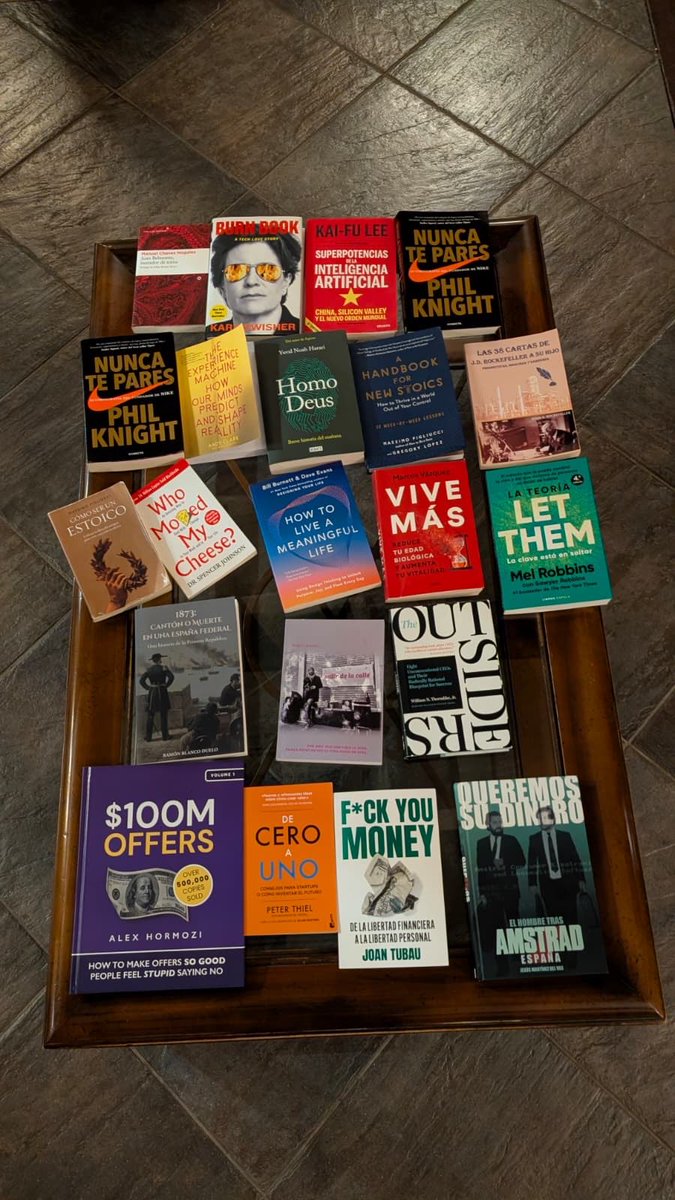
En @seedrocket cada año varios emprendedores q estamos escalando compañías vamos de retiro. Chutes de energía! Hay mucho crack! Algunos libros q nos compartimos.
jesus monleon tweet media
Español
4
3
33
1.9K
J. Amenedo
J. Amenedo@Amenedo·
8 years of entrepreneurship, looking back, everyday as day 0
J. Amenedo tweet media
English
0
0
1
14
J. Amenedo retweetledi
Jesús Martínez
Jesús Martínez@jesusmargon·
No soy yo de echarme muchas flores. Seguramente peco de lo contrario. Hacia dentro (sobre todo) y hacia fuera. Pero orgulloso de lo que he podido publicar y contar en @Ecotechers Pro en estos 3 primeros meses del año. Mucho que mejorar (seguro). Pero ORGULLOSO.
Español
1
1
30
1.4K
J. Amenedo retweetledi
Aakash Gupta
Aakash Gupta@aakashgupta·
There's a physicist at Stanford named Safi Bahcall who modeled this exact principle and the math is wild. He calls it "phase transitions in human networks." When you're stationary, your probability of a lucky event is limited to your existing surface area: the people you already know, the places you already go, the ideas you've already been exposed to. Your opportunity window is fixed. When you move, your collision rate with new nodes in a network increases nonlinearly. Double your movement (new conversations, new cities, new projects) and your probability of a serendipitous encounter doesn't double. It roughly quadruples. Because each new node connects you to their entire network, not just to them. Richard Wiseman ran a 10-year study at the University of Hertfordshire tracking self-described "lucky" and "unlucky" people. The single biggest differentiator wasn't IQ, education, or family money. Lucky people scored significantly higher on one trait: openness to experience. They talked to strangers more, varied their routines more, and said yes to invitations at nearly twice the rate. The "unlucky" group followed the same routes, ate at the same restaurants, and talked to the same 5 people. Their networks were closed loops. No new inputs, no new collisions. Luck isn't random. Luck is surface area. And surface area is a function of movement. The lobster emoji is doing more work than most people realize. Lobsters grow by shedding their shell when it gets too tight. The growth requires a period of total vulnerability. No protection, no armor, soft body exposed to the ocean. That's the cost of movement nobody posts about. You have to be uncomfortable first. The new shell only hardens after you've already moved.
@D9vidson

a moving man will meet his luck 🥀

English
505
14K
67.4K
4.5M
J. Amenedo retweetledi
Will Ahmed
Will Ahmed@willahmed·
You have no experience. You’ve never started a company. You’ve never had a full time job. Nike is going to kill you. You’re a kid. You don’t have technical skills. You shouldn’t build hardware. Apple is going to kill you. You can’t build hardware. You can’t measure heart rate non-invasively. Athletes don’t care about recovery. Under Armour is going to kill you. It won’t be accurate. You don’t listen. You’re an ineffective leader. You can’t recruit great talent. You’re going to have to pay every athlete. You can’t measure sleep non-invasively. It’s too expensive to research. Athletes are a small market. The product costs too much to make. The product costs too much to sell. Your valuation is too high. Consumers aren’t going to want it. Hardware is too hard. You should measure steps. Fitbit is going to kill you. You can’t build a marketing engine. You can’t raise enough money. You need a real CEO. Google is going to kill you. You can’t be a subscription. You can’t build a brand. You can’t do consumer in Boston. Your valuation is too high. You shouldn’t make accessories. You shouldn’t make apparel. Lululemon is going to kill you. You can’t predict Covid. Stay in your niche. You are going to run out of money. You can’t build a health platform. Amazon is going to kill you. You can’t measure blood pressure. You can’t get medical approvals. The market is too small. You don’t understand AI. The market is too competitive. It won’t work internationally. The supply chain is too complicated. You can’t build an AI. You can’t raise enough money. It’s too competitive. Healthcare isn’t going to want it. … Just keep going ✌️
Will Ahmed tweet media
English
1.1K
2.9K
23.3K
2.5M
Yann
Yann@yanndine·
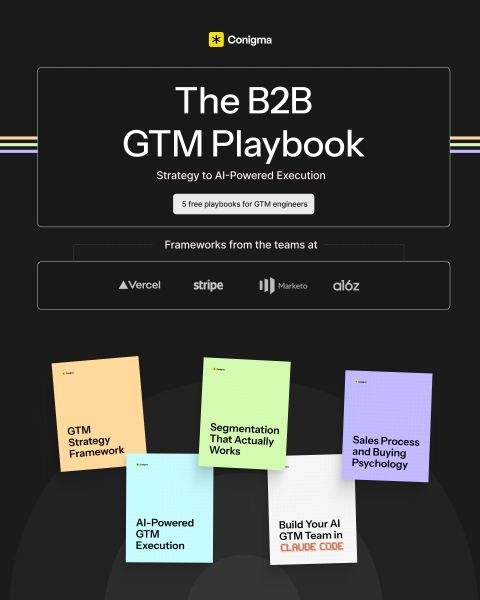
A two-person GTM team at a Series B SaaS company closed $2.4M in pipeline in one quarter. No SDRs. No demand gen agency. No paid ads. Signal-based outreach. Intent scoring. AI-sequenced follow-up. Automated reporting. Two GTM engineers running the whole motion - for one quarter. I pulled it apart. Compared it to every system we've built across the GTM teams we've worked with. Then asked myself one question: If I had to reverse engineer this from scratch - what would it actually look like? Turns out the architecture isn't that complicated. I mapped the whole thing into a step-by-step playbook you can upload directly to any LLM. It walks you through building your own version from GTM strategy to fully AI-powered execution. Comment "GTM" and I'll send it over.
Yann tweet media
English
937
34
490
55.7K
J. Amenedo retweetledi
andrew engler
andrew engler@aerockrose·
In 2017, Harvard professor Michael Porter gave a 72-minute masterclass on why most companies fail at strategy. His frameworks: - "There is no best company" - The IKEA test he hated every minute of - Why happy customers mean you're in trouble 12 lessons on strategy:
English
25
510
2.2K
434.9K