Collin Ewald

3.4K posts

Collin Ewald banner
Collin Ewald

Collin Ewald

@CollinEwald

Research on diseases of aging and regenerative medicine @Novartis. Views are mine. #matreotype. VP of https://t.co/0rMO0JF7ME,P of https://t.co/U137KZ9UtI

Switzerland Katılım Haziran 2012
3.3K Takip Edilen4.5K Takipçiler
Collin Ewald retweetledi
Peter Fedichev
Peter Fedichev@fedichev·
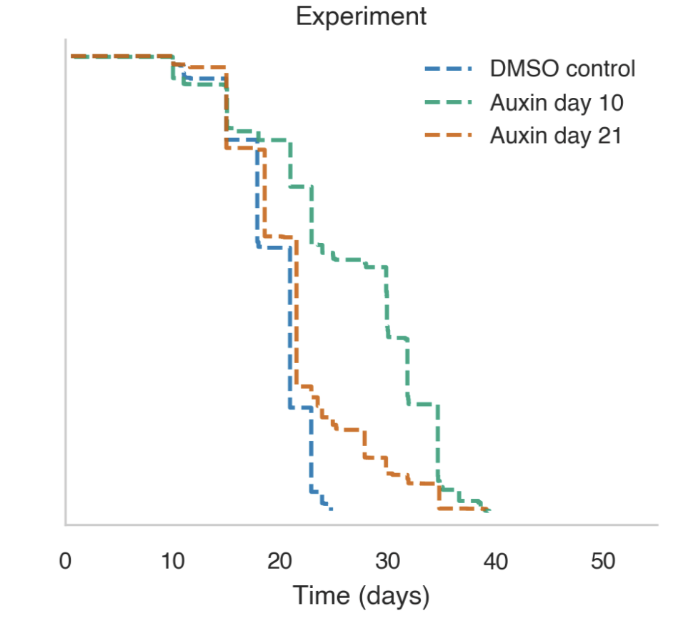
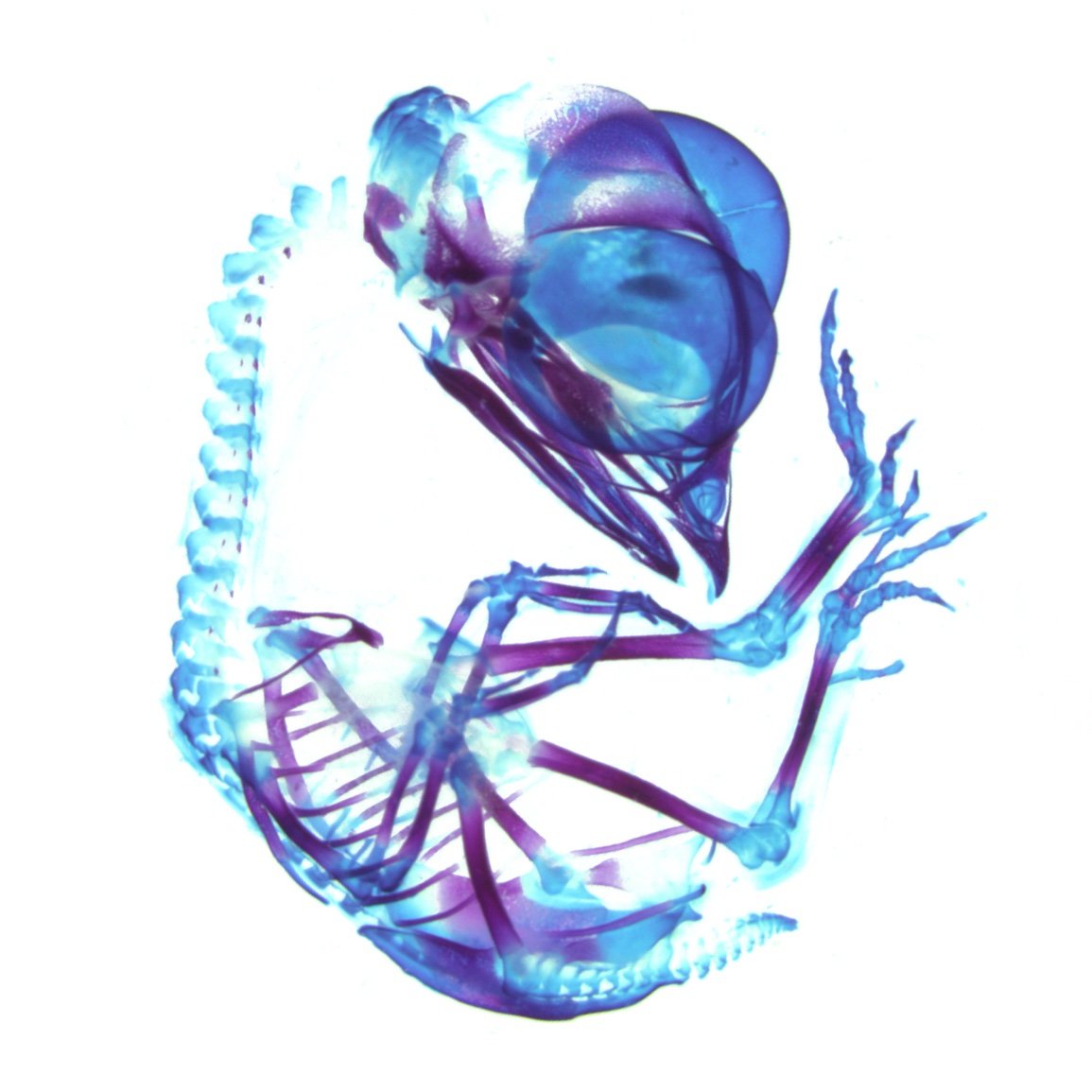
Worms have a gene that, when switched off, doubles lifespan. Even in animals already close to death. That shouldn't be possible. If aging is just damage piling up, by the time you're old, you've missed your window. But old worms, visibly falling apart, respond just as powerfully as young ones. All that damage is still there. They live longer anyway. The explanation — from the Fedichev-Gruber dynamical framework — is that what kills you isn't accumulated damage. It's your proximity to a failure threshold on an unstable trajectory. The organism's physiological state drifts along an unstable mode — slowly at first, then exponentially, then in runaway collapse. Death is a first-passage event: the moment the trajectory crosses the edge. 75% of the worms had already died by day 21. They weren't older in chronological time — they were further along the instability trajectory. The survivors, by chance, were still early in the exponential regime. Biologically younger, despite identical ages. Reduce the instability rate for those lucky few, and they respond as powerfully as young animals — because dynamically, they still are. No damage reversal. No clock reset. Just a change in the slope of the landscape for animals who happened to still be far enough from the edge. The precision of the prediction is striking. Irreversible structural damage — pharyngeal degeneration, gonadal atrophy, uterine tumors — persists after treatment, exactly as the model predicts. But proteostasis recovers and stress resilience returns — because these are coupled to the dynamical mode the intervention modulates. Worms age in the unstable regime from birth. Humans don't — damage slowly erodes our stability over decades. The interventions that work here will be transient in us. Our targets are different: the rate of damage accumulation and the biological noise separating average lifespan from maximum lifespan. Aging and death are not one thing. Death is the result of a transition between two dynamical regimes. Nematodes are great examples of aging in an unstable regime, and experiments confirm the theory works exactly as predicted. Please find a moment to like, follow, and repost. The full piece is linked below. Discussion welcome.
Peter Fedichev tweet media
English
15
20
135
11K
Collin Ewald retweetledi
Dr. Rhonda Patrick
Dr. Rhonda Patrick@foundmyfitness·
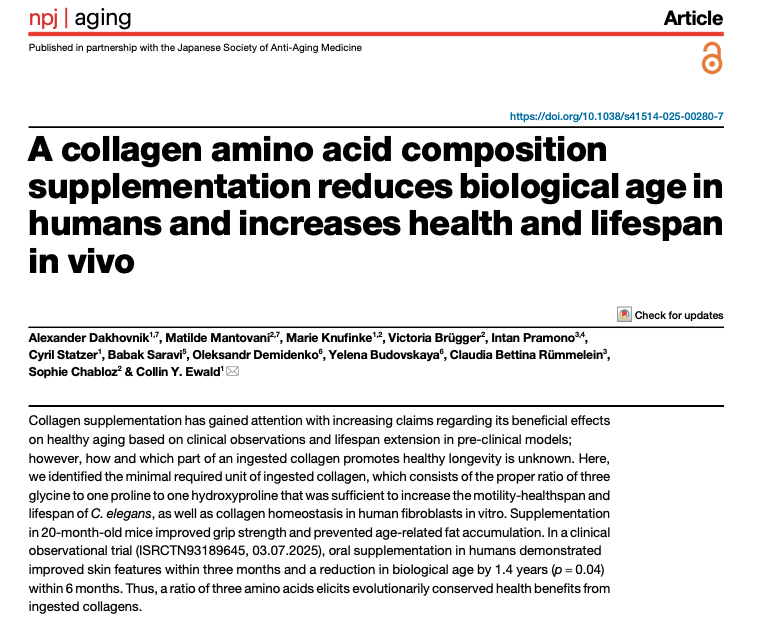
Supplementing the three primary collagen amino acids glycine, proline, and hydroxyproline in a 3:1:1 ratio produces consistent, measurable benefits across worms, mice, and humans. In humans, skin outcomes (wrinkles, texture, elasticity, and hydration) improved 4–6% within 1–3 months. The most striking result was a reduction in biological age by an average of 1.4 years after 6 months, with maximum reductions of 8.9 years in men and 12.1 years in women. Those with a biological age higher than their chronological age saw the largest improvements. In C. elegans, the 3:1:1 mix increased lifespan 6–27% (greater than whole collagen). In old mice, it preserved grip strength and reduced white adipose tissue. Glycine, proline, and hydroxyproline form the backbone of collagen and play roles in protein synthesis, one-carbon metabolism, and likely signaling pathways that influence tissue maintenance and repair. These animal and human data together provide a compelling translational story.
Dr. Rhonda Patrick tweet media
English
72
329
2.4K
475.8K
Collin Ewald retweetledi
Matt Kaeberlein
Matt Kaeberlein@mkaeberlein·
I really liked the way Jan Gruber explained "biological aging" clocks at day 1 of @LongevityDublin. What should a useful clock be able to do? (1) Identify existing disease (2) Detect early, hidden and subclinical disease in an interpretable/explainable manner (3) Provide individual prognostication for future health risks/mortaility (4) Be useful for personalized intervention testing (5) Provide sufficient confidence to justify risk/reward
English
8
7
52
4.7K
Collin Ewald
Collin Ewald@CollinEwald·
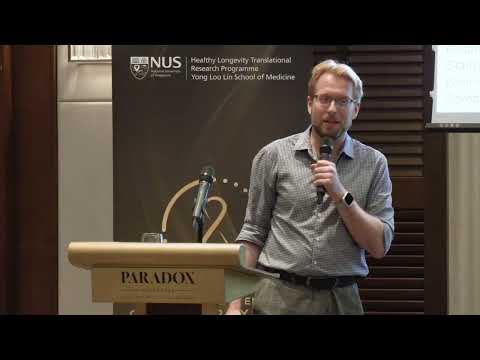
Wonderful talk by @jangruber467 who was able to model a mystery from my former lab. If its all damage accumulation, how can the lifespan of C. elegans be doubled at the end of life? A physics derived model can explain it! youtu.be/pXFE_dcDIDc?si…
YouTube video
YouTube
English
2
5
10
1.9K
Collin Ewald retweetledi
Tschopp Lab
Tschopp Lab@TschoppLab·
Exciting science on your end-of-year wish list?!? >> apply to our postdoc and PhD positions and start 2025 with a new job @UniBasel
Tschopp Lab@TschoppLab

Please RT: we have @snsf_ch -funded #Postdoc and #PhD positions in our lab, to investigate the gene regulatory dynamics during vertebrate skeletogenesis in a comparative setting (see doi.org/10.1101/2024.0… and doi.org/10.1101/2024.1… ) - apply by 31.12.24, start date by 1.2.25!

English
0
3
8
1.4K
Collin Ewald retweetledi
ARDD Meeting
ARDD Meeting@ARDD_Meeting·
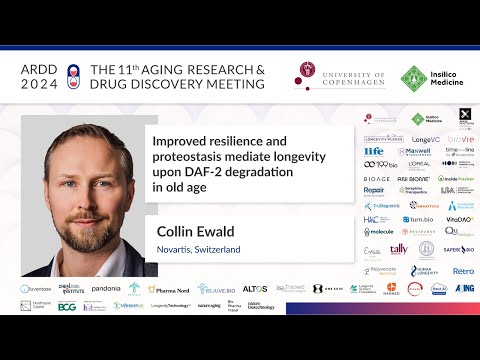
#ARDD2024 Collin Ewald at ARDD2024: Improved resilience and proteostasis mediate longevity upon DAF-2 degradation in old age youtu.be/2APxO5Tr8Z4
YouTube video
YouTube
ARDD Meeting tweet media
English
0
2
14
730
Collin Ewald retweetledi
Tom Van Agtmael
Tom Van Agtmael@TomVanAgtmael·
Roles for matrix/basement membrane proteins nidogen and laminin in sensing touch. C. elegans touch receptor neurons direct mechanosensory complex organization via repurposing conserved basal lamina proteins sciencedirect.com/science/articl…
Tom Van Agtmael tweet media
English
0
2
15
951
Collin Ewald retweetledi
Scholarship for PhD
Scholarship for PhD@ScholarshipfPhd·
How To Choose a Good Scientific Problem (1/3)
Scholarship for PhD tweet media
English
3
120
500
55.1K
Collin Ewald retweetledi
Andrea Maier
Andrea Maier@AndreaBMaier·
Quality of supplements targeting aging: Testing the amount of nicotinamide mononucleotide and urolithin A as compared to the label claim | GeroScience (springer.com)
Andrea Maier tweet media
English
6
4
27
7.6K