Klotzen, nicht kleckern! Anil Kelkar
12.9K posts

Klotzen, nicht kleckern! Anil Kelkar
@DerMovingFinger
Deutsch-Englisch Übersetzungen. MemoQ fan. Cricket. Big fan of PGW -the greatest English humourist ever. Also of Sudden. Suffering badly from solastalgia.


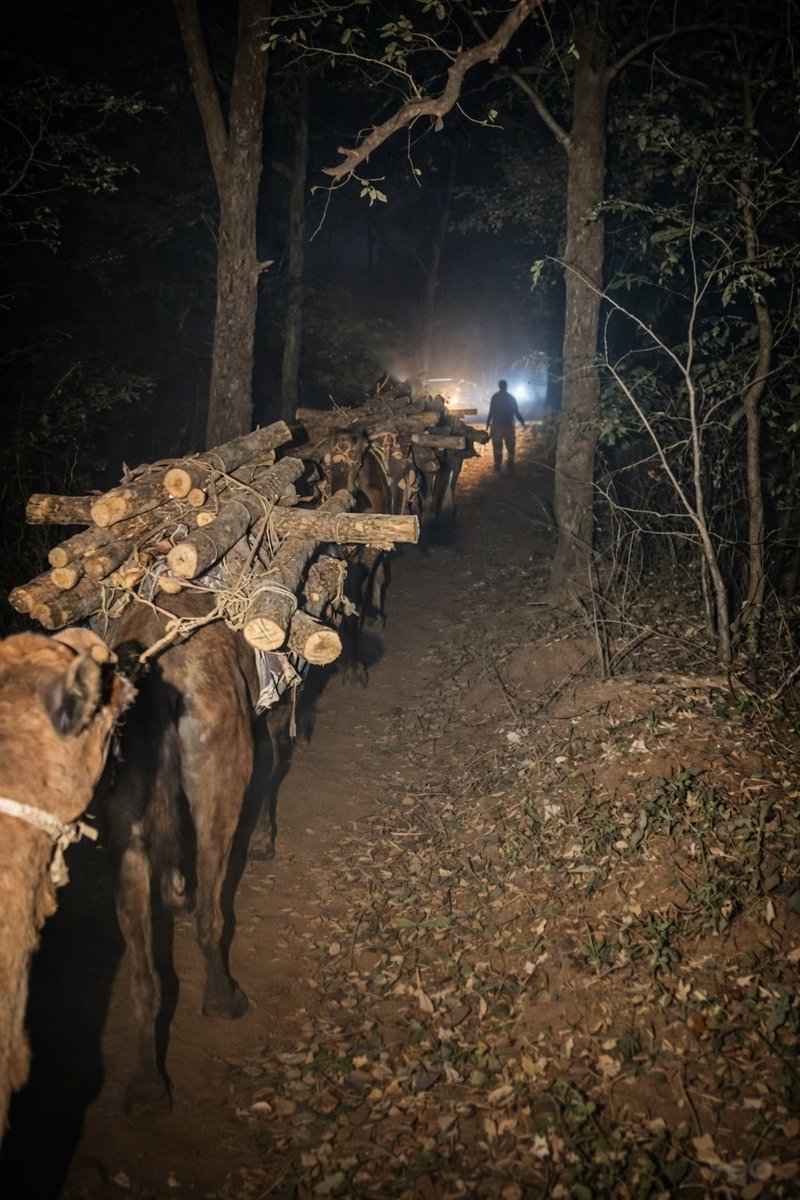
𝐀 𝐤𝐢𝐥𝐥𝐢𝐧𝐠 𝐢𝐬 𝐚𝐛𝐨𝐮𝐭 𝐭𝐨 𝐭𝐚𝐤𝐞 𝐩𝐥𝐚𝐜𝐞. Not in secrecy, but through files, stamps, and official approvals. More than 600 trees along Pune’s riverbanks—mute, rooted, and defenseless—are marked for felling. In a determined push to replicate the Sabarmati riverfront model, Political Leaders and authorities in Pune have set in motion an expansive Riverfront Development (RFD) along the Mula-Mutha river. Stretch by stretch, permissions are being issued—hundreds , thousands of trees cleared through due process, each sanctioned in the language of governance. What is unfolding is not beautification. It is erasure. As work advances, century-old trees—living archives of the city’s ecological past—are being cut down in succession. The riverbanks are being excavated, packed with concrete, and sealed with embankments. A living river is being straightjacketed into a narrow, engineered channel. Under the banner of “development,” Pune is steadily dismantling its own natural defenses. The project’s consultant, the Gujarat-based HCP Consultant, has effectively classified Pune’s riverine ecosystem—its dense canopy, its sacred groves, its biodiversity—as an "impediment". The logic is chillingly simple: if nature stands in the way, remove it. But who decides that a thriving ecosystem must give way to concrete? Who authorizes the transformation of a living landscape into a sterile corridor of cement? The consequences are no longer theoretical. Birds are abandoning their nests mid-season. Small animals are being driven out of shrinking habitats. The microclimate that once moderated heat and sustained moisture is being stripped away. And as this ecological unraveling accelerates, the city’s residents are left to confront a growing sense of unease. Yet, those elected to represent them remain conspicuously silent. Municipal corporators, state legislators, members of Parliament—those entrusted with public mandate—have offered little more than quiet acquiescence. The silence is not incidental; it is structural. Decisions of this magnitude are not made in a vacuum. The risks, however, are plain. Strip the riverbanks of vegetation, and flooding becomes inevitable. Replace green cover with concrete, and temperatures will rise. Destroy natural water channels, and drought will follow. This is not speculation; it is environmental arithmetic. But the calculus driving this project appears different—centered not on ecology, but on economics. Reclaimed land, commercial potential, curated public spaces: jogging tracks, gardens, and real estate value. The question is no longer what is being built, but at what cost—and for whom. Legal recourse has offered limited resistance. Courts have, in effect, deferred to regulatory procedure—directing authorities to secure environmental clearance from the State Environment Impact Assessment Authority (SEIAA) and proceed. The machinery moves forward. And so, the burden shifts to the citizens. Across Pune, voices are beginning to gather force. Residents are stepping out—raising objections, organizing peaceful protests, demanding accountability. What was once a quiet concern is hardening into public resistance. A critical moment now looms. A public hearing scheduled for tomorrow will decide the fate of 689 more trees slated for removal under the riverfront project. It is not merely a procedural exercise; it is a test of whether public participation can still influence the course of development. The stakes are no longer abstract. This is not just about trees. It is about the future of a river. And the survival of a city that may not yet realize what it is losing. #Pune #RFD #Trees @mohol_murlidhar @AUThackeray @rautsanjay61 @SidShirole @MDNagpure @prashantjagtapn @BalwadkarAmol @ChDadaPatil @Medha_kulkarni @SalimAli_Bird @MrMcgreely @SVYadwadkar @vandymini @mhemachari @suratkal @ameetgsingh @VinitaDeshmukh @AnathpindikaS @whattosayfolks @TamhiniGhat @PuneRivers @bonyuppal @SpeakUpPune @amardasbhalla @RajaSubramani22 @navipeth @sumedh_bp @Pushkaraj2020 @ultra__sonic @Jeevitnadi @pushkar_k09 @RupeshSarode03 @RupeshKesekar @mayurekbote @aparanjape @sanadiipbbiswas

𝐀 𝐤𝐢𝐥𝐥𝐢𝐧𝐠 𝐢𝐬 𝐚𝐛𝐨𝐮𝐭 𝐭𝐨 𝐭𝐚𝐤𝐞 𝐩𝐥𝐚𝐜𝐞. Not in secrecy, but through files, stamps, and official approvals. More than 600 trees along Pune’s riverbanks—mute, rooted, and defenseless—are marked for felling. In a determined push to replicate the Sabarmati riverfront model, Political Leaders and authorities in Pune have set in motion an expansive Riverfront Development (RFD) along the Mula-Mutha river. Stretch by stretch, permissions are being issued—hundreds , thousands of trees cleared through due process, each sanctioned in the language of governance. What is unfolding is not beautification. It is erasure. As work advances, century-old trees—living archives of the city’s ecological past—are being cut down in succession. The riverbanks are being excavated, packed with concrete, and sealed with embankments. A living river is being straightjacketed into a narrow, engineered channel. Under the banner of “development,” Pune is steadily dismantling its own natural defenses. The project’s consultant, the Gujarat-based HCP Consultant, has effectively classified Pune’s riverine ecosystem—its dense canopy, its sacred groves, its biodiversity—as an "impediment". The logic is chillingly simple: if nature stands in the way, remove it. But who decides that a thriving ecosystem must give way to concrete? Who authorizes the transformation of a living landscape into a sterile corridor of cement? The consequences are no longer theoretical. Birds are abandoning their nests mid-season. Small animals are being driven out of shrinking habitats. The microclimate that once moderated heat and sustained moisture is being stripped away. And as this ecological unraveling accelerates, the city’s residents are left to confront a growing sense of unease. Yet, those elected to represent them remain conspicuously silent. Municipal corporators, state legislators, members of Parliament—those entrusted with public mandate—have offered little more than quiet acquiescence. The silence is not incidental; it is structural. Decisions of this magnitude are not made in a vacuum. The risks, however, are plain. Strip the riverbanks of vegetation, and flooding becomes inevitable. Replace green cover with concrete, and temperatures will rise. Destroy natural water channels, and drought will follow. This is not speculation; it is environmental arithmetic. But the calculus driving this project appears different—centered not on ecology, but on economics. Reclaimed land, commercial potential, curated public spaces: jogging tracks, gardens, and real estate value. The question is no longer what is being built, but at what cost—and for whom. Legal recourse has offered limited resistance. Courts have, in effect, deferred to regulatory procedure—directing authorities to secure environmental clearance from the State Environment Impact Assessment Authority (SEIAA) and proceed. The machinery moves forward. And so, the burden shifts to the citizens. Across Pune, voices are beginning to gather force. Residents are stepping out—raising objections, organizing peaceful protests, demanding accountability. What was once a quiet concern is hardening into public resistance. A critical moment now looms. A public hearing scheduled for tomorrow will decide the fate of 689 more trees slated for removal under the riverfront project. It is not merely a procedural exercise; it is a test of whether public participation can still influence the course of development. The stakes are no longer abstract. This is not just about trees. It is about the future of a river. And the survival of a city that may not yet realize what it is losing. #Pune #RFD #Trees @mohol_murlidhar @AUThackeray @rautsanjay61 @SidShirole @MDNagpure @prashantjagtapn @BalwadkarAmol @ChDadaPatil @Medha_kulkarni @SalimAli_Bird @MrMcgreely @SVYadwadkar @vandymini @mhemachari @suratkal @ameetgsingh @VinitaDeshmukh @AnathpindikaS @whattosayfolks @TamhiniGhat @PuneRivers @bonyuppal @SpeakUpPune @amardasbhalla @RajaSubramani22 @navipeth @sumedh_bp @Pushkaraj2020 @ultra__sonic @Jeevitnadi @pushkar_k09 @RupeshSarode03 @RupeshKesekar @mayurekbote @aparanjape @sanadiipbbiswas


HDFC Bank In Focus - No wrongdoings says Atanu Chakroborty Atanu Chakroborty to @NDTVProfit @NDTVProfitIndia - HDFC Bank is an organization I nurtured for 5 years - I am not pointing out to any wrong doings at the bank - My ideologies did not match with the organization and hence it was time to part ways #HDFCBank


True 🤡 🤡

India at #12 with just 9M tourists despite unmatched culture, history and diversity- this chart says it all. To unlock our true tourism potential: - Shift from “places” to immersive experiences - Simplify visas & boost air connectivity - Fix infrastructure & last-mile access - Market India like a global brand - Make our country clean