EMPAK Strategies 💧🍀 retweetledi
EMPAK Strategies 💧🍀
234 posts

EMPAK Strategies 💧🍀
@EmpakStrategies
Smart Policy, Sustainable Outcomes |Climate Change| Economic Security | |Resilience & Sustainability|
Islamabad, Pakistan Katılım Aralık 2025
129 Takip Edilen53 Takipçiler

@UN_Water Pumping water uphill isn’t innovation. It’s compensation for broken planning.When cities ignore natural water flows, farmers pay the price and taxpayers fund the workaround? Why are we investing in pumps instead of fixing land use, drainage, and watershed management?
English

💧 Water flowing uphill—no fuel, no electricity.
In Pakistan, gravity-powered pumps are improving lives, supporting farming and building climate resilience.
🔗 buff.ly/PWSxSK7

English

“Reports don’t grow food”. agreed. But the data shows GCF isn’t just publishing reports:Over the last decade, GCF investments have: reached hundreds of millions of people with climate-resilient solutions, mobilized $40B+ in co-financing beyond its own commitments, Funded real assets: irrigation systems, climate-smart agriculture, early warning systems, and resilient infrastructure
The gap isn’t intent. it’s speed & last-mile delivery.
If farmers still don’t see drip irrigation, the question is: Where is the delivery pipeline breaking.... global funds or national execution
English

Since investing in our 1st projects over 10 years ago, GCF has helped shape global #climateaction, becoming the world’s climate fund for developing countries. Read #GCF10 Impact Report to see how our investments delivered transformative impact at scale 👉🏽 gcf.co/4cDZbZk

English

#Energy costs directly shape industrial competitiveness.
#Pakistan’s electricity #tariffs remain higher than regional peers, increasing production costs and limiting growth.
Can energy reform unlock Pakistan’s competitive potential?
#Economy #Energy #Pakistan #Competitiveness #EMPAK
@PIDEpk
@SDPIPakistan
@rezabaqir
@AtifRMian
@Ishrat_Husain
@WBG_ClimateEnv
@PakistanADB
@IEA
@MoWP15
@NEPRA5
@PlanComPakistan

English

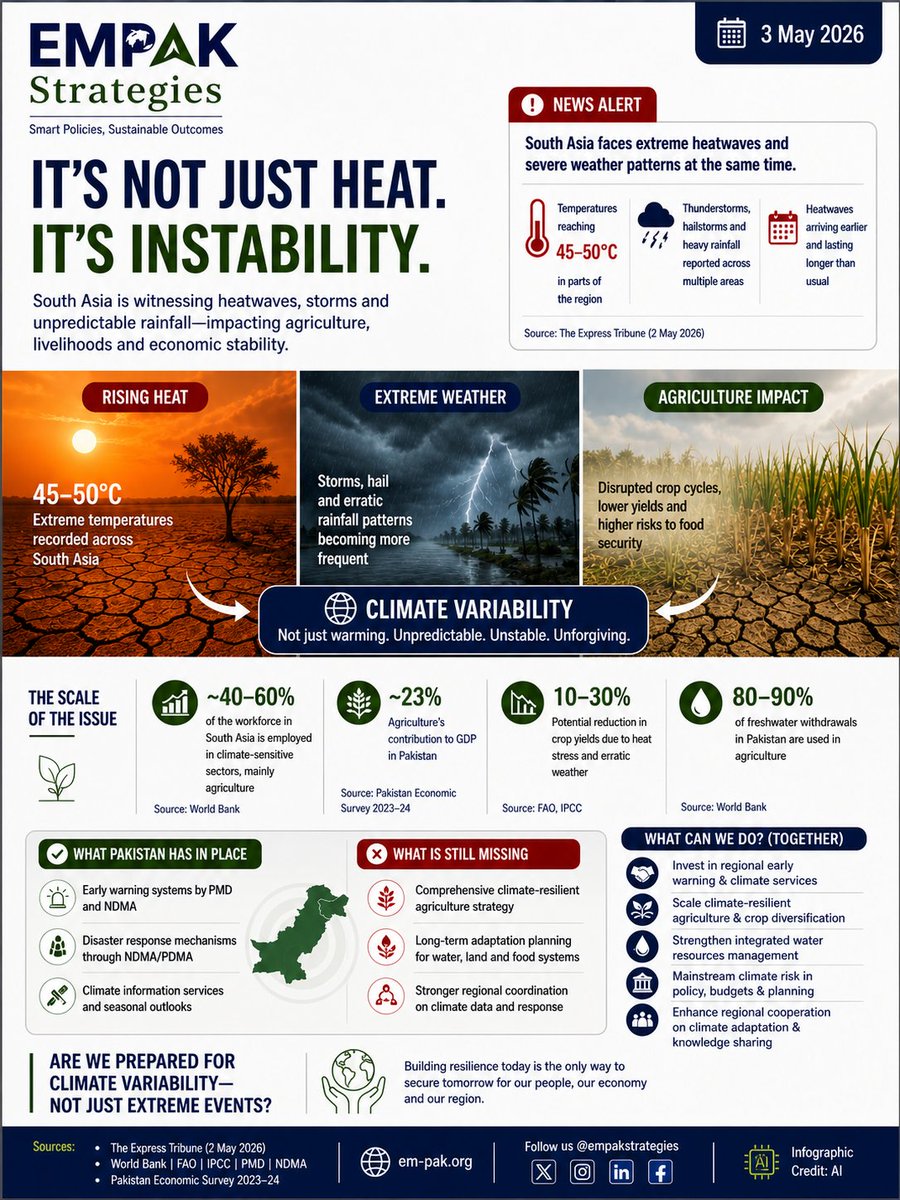
#SouthAsia is experiencing #heatwaves, #storms, and erratic #rainfall at the same time.
#Pakistan has early warning and response systems in place, but long-term climate adaptation—especially in #agriculture—remains limited.
Are we preparing for extreme events—or for long-term climate instability?
#Climate #SouthAsia #Pakistan #Agriculture #Resilience #EMPAK
@UNFCCC
@ClimateChangePK
@FAOclimate
@sherryrehman

English

Groundwater doesn’t collapse overnight. It’s policy failure in slow motion.
Punjab (India), Haryana, Rajasthan today.
Indus basin tomorrow?
South Asia is extracting water like it’s infinite while climate is cutting recharge in half.
Who’s pricing water correctly? Who’s regulating extraction? Or are we all just waiting for Day Zero?
English

Haryana is now India’s 3rd most groundwater-stressed state, with 61.5% of its assessment units overexploited, according to CGWA. Only Punjab and Rajasthan fare worse. @IndHydrogeology @CWCOfficial_GoI @Watervagabond
Read the full story here:
timesofindia.indiatimes.com/city/gurgaon/g…

English

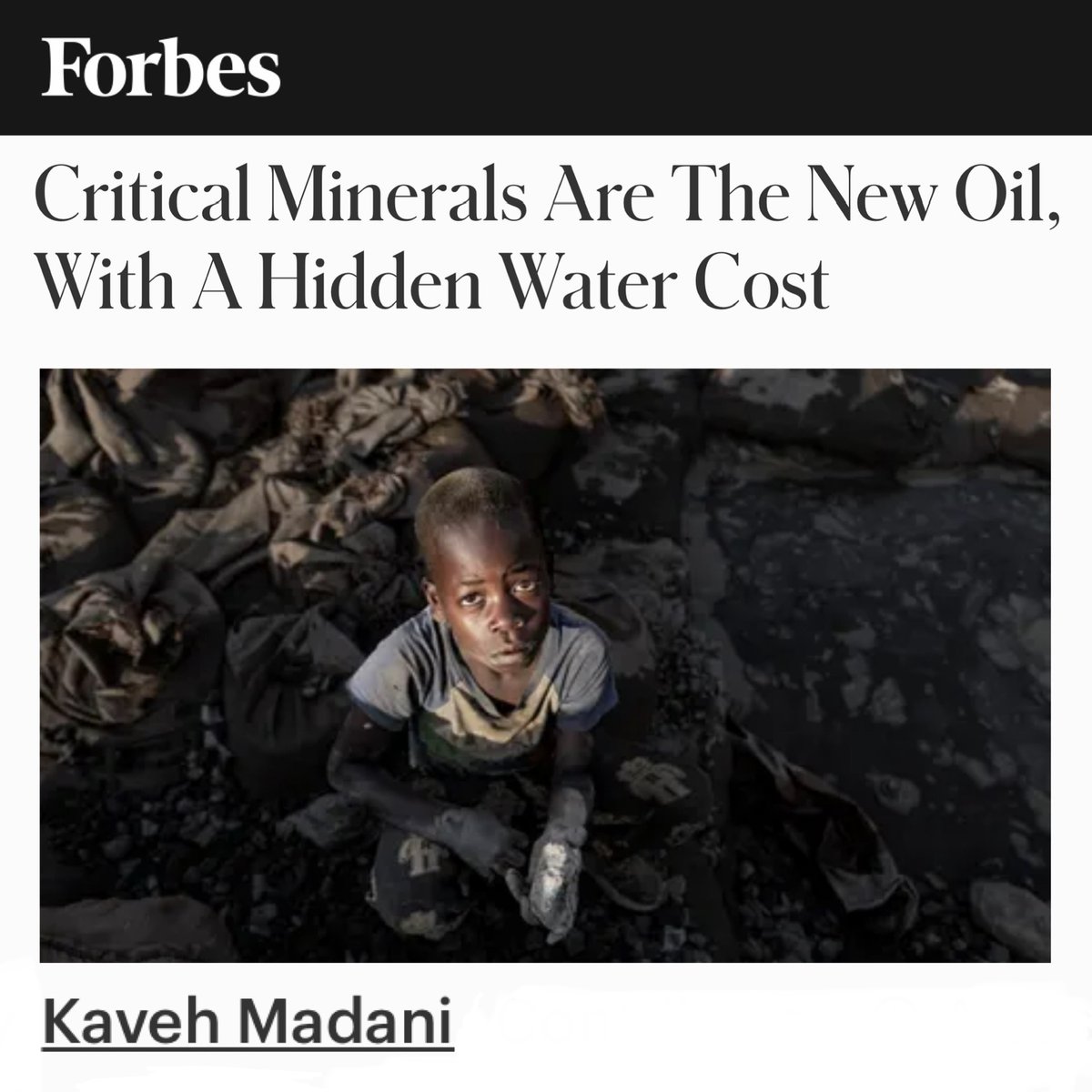
@UNUINWEH @Forbes @KavehMadani “Clean” tech powered by dirty supply chains isn’t clean. it’s outsourced damage.
We’re not decarbonizing. We’re relocating cost: water, labor, and ecosystems from North to South.
The real question: Are we measuring carbon or consequences?
English

"The uncomfortable question is whether today’s 'clean' technologies are truly clean. The new UNU-INWEH report on critical minerals finds evidence to that question that should give decision makers pause.”
Read our Director’s article for @Forbes: go.unu.edu/qHfRW

English

@AbiluTangwa Beautiful linebut policy doesn’t run on poetry.
If bees, trees, and water are truly “worth more,” why do our budgets, trade deals, and subsidies still price them at zero?
Until nature shows up on balance sheets, it will keep disappearing.
English

@WBG_ClimateEnv Food insecurity isn’t just about conflict but about broken input economics.When fertilizer jumps 60%, small farmers don’t “adjust” they exit, reduce yields, or pass the cost forward.We don’t have a food crisis.We have a production incentive crisis.Who’s fixing that?
English

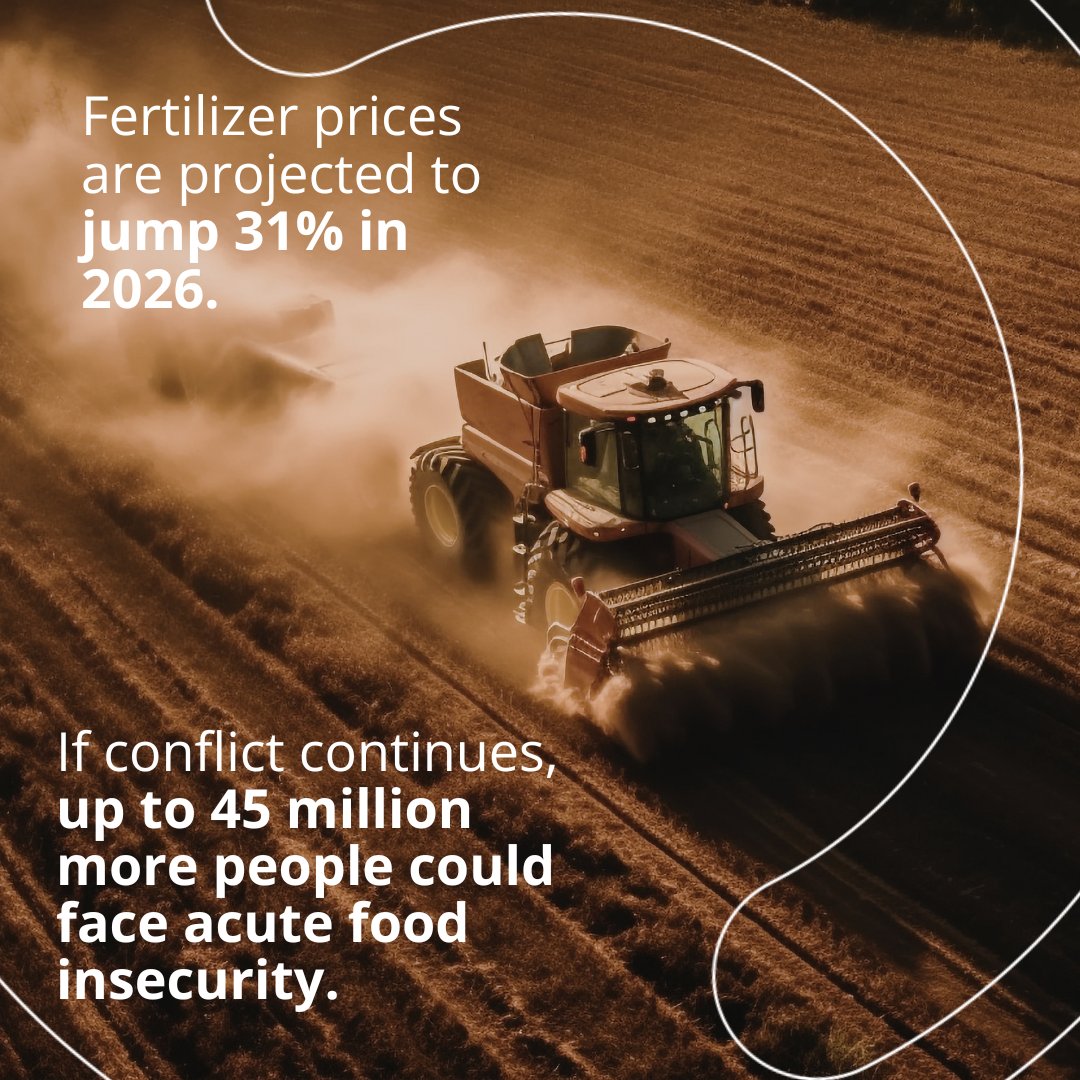
Fertilizer prices are projected to jump 31% in 2026, with urea prices up 60%. Fertilizer affordability will fall to its worst level since 2022.
If the conflict proves prolonged, up to 45 million more people could face acute food insecurity this year. wrld.bg/VjEE50YTS3i

English

@AbiluTangwa Try pricing what 300 million pollinations a day would cost artificially and suddenly ‘green’ looks like the cheapest infrastructure we have.
English

A single bee colony can pollinate 300 million flowers in a day.
Trees in cities can reduce air temp by up to 8°C.
These aren't just"nice to have"—they're the infrastructure of life. No amount of mined resources can replace them.
#EcosystemServices#Science

English

Lightning isn’t new. Exposure is.
When workers stand in open fields with zero protection, it’s not just climate risk but policy failure.
Early warning systems, safe shelters, and basic worker protection cost less than headlines after tragedy.
Why are we still reacting instead of designing resilience?
English

In 🇧🇩 Bangladesh, lightning (#Thunderbolt) is no longer just a natural event—it’s a rising climate risk.
From fields to open spaces, lives and livelihoods are increasingly exposed.
Preparedness, awareness & protection must come first.
#Lightning
#ClimateCrisis
#DisasterRisk
#ActNow
বজ্রপাত কি জলবায়ু সংকটের বার্তা deshrupantor.com/684817
English

Fair but that’s exactly the problem.
If protection is still a “subtext” and not the headline, the transition is being designed backwards. Markets move fast. Policy protection moves slow. The poor don’t have that luxury.
A just transition isn’t implied...it’s engineered. Otherwise, it’s just a cost transfer dressed up as climate action.
English

@EmpakStrategies @fionaharvey @climatemessages it wasn't about mechanisms, yet,
but the need for protection was in #4, #9, and a bit in #7
English

Ten things we learned at Santa Marta conference on transitioning away from fossil fuels theguardian.com/environment/20…
English

Replacing real trees with artificial ones isn’t innovation . It’s accounting for optics, not ecology.
You removed a living system that absorbs CO₂, supports biodiversity
& recharges groundwater and replaced it with a static structure that does none of that. Cost is $464k–$607k.
This isn’t climate action.
It’s expensive symbolism.
Who benefits from solutions that look green but don’t function green?
English

Artificial Trees instead of real Trees and at a huge cost
picture: Andy Gibson

GO GREEN@ECOWARRIORSS
Cork City Council invested a total of €446,577.02 in 5 air-purifying "CityTrees" (or "robot trees") before they were removed from the city center in May 2025 Would have cost them hardly nothing to plant real Trees corkbeo.ie/news/local-new…
English

“Breaking deadlocks” sounds gooduntil you ask who pays and who transitions first.
Global South countries aren’t blocking progress. They’re asking a fair question: Will climate ambition come with financing, technology transfer, and jobs?
Without that, “coalitions of the willing” risk becoming clubs of the already capable.
English

What we accomplished in Santa Marta is, simply put, historic.
We are building a coalition of ambitious countries willing to lead and break the consensus deadlock that has paralysed concrete action on fossil fuels in the UN negotiations.
theguardian.com/environment/20…
English

True but unless we link this shift to export markets, it won’t stick.
High-value agriculture means cold chains, standards, certification, logistics.Without trade integration, “diversification” stays a policy slogan.
We keep subsidizing what’s easy to grow, not what’s valuable to sell.
That’s why farmers stay poor and exports stay low-value.
Policy protects crops. Markets reward value.
English

Globally, most public support for agriculture still favors a handful of commodities. It’s time to shift toward investments that encourage innovation, diversification, and higher value jobs in the agriculture and food sector.
wrld.bg/BEYA50YTGKu
English

Agree but in Pakistan, infrastructure doesn’t bend, it displaces.
We build roads then land prices rise & people get pushed out.
We preserve heritage but don’t monetize it. Thus , it decays.
Can development create value without displacement?
Until then, “growth” will keep benefiting some and erasing others.
English

@ECOWARRIORSS I'd never sacrifice 1,000 years of ecology for temporary tarmac. True progress means infrastructure that bends around living heritage, not erases it.
English

They are the most amazing and unique trees on the planet
Many over 1,000 years old
But they must go to widen a road
This is what humans call progress growth and development
If they were 1,000 year old buildings
They would be protected and revered
Picture below just example
GO GREEN@ECOWARRIORSS
A majestic grove of 1,000-year-old redwoods in Northern California under imminent threat Giant redwoods – world’s most massive trees can reach heights of up to 300ft and have a lifespan of up to 3,500 years – have been around for over 200 million years act.biologicaldiversity.org/m49eux3MnkmNy6…
English

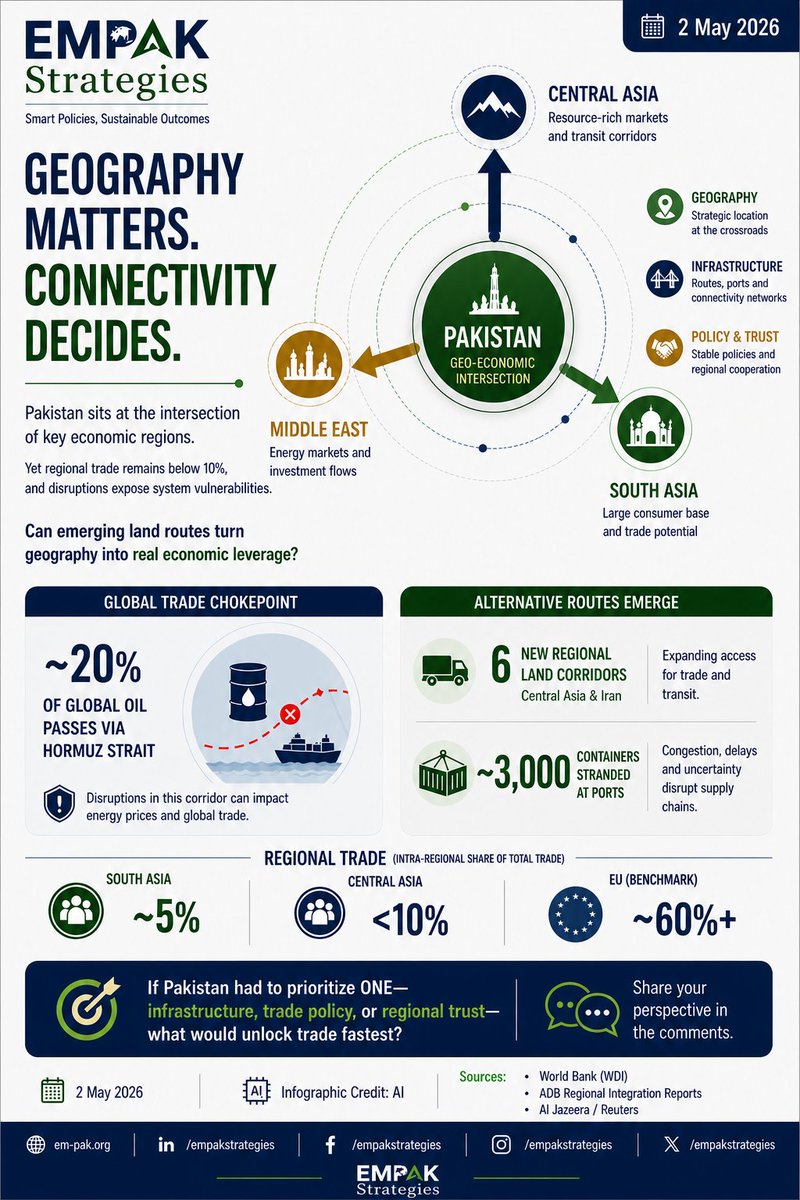
Pakistan connects three major economic regions, yet intra-regional trade remains below 10%.
Recent disruptions are pushing a shift toward alternative land routes.
Can connectivity finally turn geography into economic leverage?
#Trade #Connectivity #GeoEconomics #Pakistan #EMPAK
@PlanComPakistan
@mincompk
@jam_kamal
@betterpakistan

English

@uncclearn 685 million in extreme poverty isn’t a climate statistic. It’s a policy failure.
We don’t have a resource crisis ;we have a distribution crisis.
The poorest consume the least, but pay the highest price for climate shocks.
English

Nearly 685 million people still live in extreme poverty.
At the same time, natural resources are under growing pressure and climate change is increasing risks.
These challenges are connected. 🧵 #SustainableDevelopment #PoveryReduction

English

چونکہ پاکستان دنیا کے اُن دس ممالک میں شامل ہے جہاں موسمیاتی تبدیلی سب سے زیادہ شدت سے نمایاں ہو گی - ہمارے بعد ہماری آنے والی نسلیں بھی پانی کی قلت، غذائی کمیابی، شدید گرمی، طوفان اور سیلاب سے متاثر ہونگی - ان تمام آفات سے نبٹنے کے لئے ابھی سے کام شروع نہ کیا تو خوفناک نتائج کا سامنا کرنا پڑے گا
اردو

پاکستان میں موسمیاتی تبدیلی کے اثرات تیزی سے ظاہر ہورہے ہیں سندھ میں جاری معمول سے زیادہ سردی، چمن میں منفی 17 درجہ حرارت اور کوئٹہ میں ایک ماہ تاخیر سے ہونے والی معمول کی سخت سردی اس کی جیتی جاگتی مثال ہیں
#ClimateCrisis #ClimateEmergency #ClimateActionNow #WINTER #ActNow

Karachi, Pakistan 🇵🇰 اردو