Goodness

14.7K posts

Goodness banner
Goodness

Goodness

@GoodnessNwanebu

Building tools to help med students practice clerking, and patient care @useclerksmart • On a mission to reduce misdiagnosis by 30% • Doctor-in-training 👨‍⚕️

Somewhere down the rabbit hole Katılım Temmuz 2021
1.3K Takip Edilen1.3K Takipçiler
Sabitlenmiş Tweet
Goodness
Goodness@GoodnessNwanebu·
Every year, thousands of medical students graduate without enough safe, hands-on practice with real patients. Not because they’re unwilling, but because ward time is limited, opportunities are uneven, and only a few patients are willing to speak to students. Those who do eventually get exhausted from answering the same questions again and again - who wouldn't? And some students miss their chance entirely. When OSCEs (clinical exams) arrive, the pressure is brutal because many of the students didn't have the opportunity to practice. For students, this means walking into exams (and real life) less prepared. For medical colleges, it means uneven training quality and difficulty ensuring every graduate meets the same standard. I’m a medical student, and I face these challenges every day. That’s why I built ClerkSmart - to give medical students enough opportunity to engage with patients, reach diagnoses, and manage patients. ClerkSmart is an intelligent clinical reasoning simulator where students can clerk unlimited virtual patients, anytime, anywhere, 24/7. Every mistake becomes a learning moment with detailed feedback after each session. It’s practice without limits, so every student can build the confidence and diagnostic skills required of them early on in their careers.
English
6
16
56
3.9K
Goodness
Goodness@GoodnessNwanebu·
@needaubrey @marcportermagee Hey Aubrey! Great to see you come into Nigeria with Swoop! Wish you the best 🫡 Asides Lagos and Abuja, Port Harcourt and Uyo have strong delivery habits
English
0
0
0
3
Marc Porter Magee 🎓
Marc Porter Magee 🎓@marcportermagee·
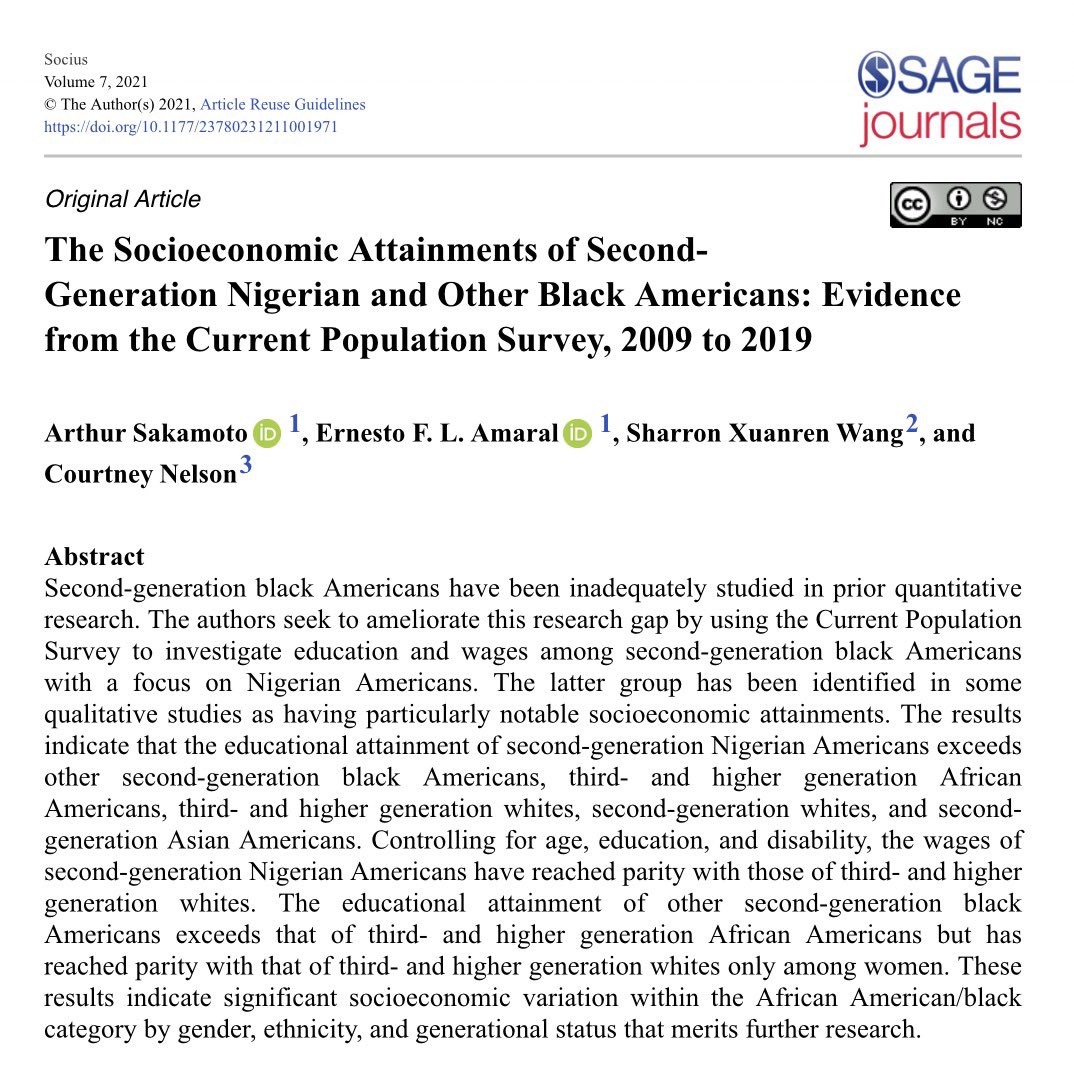
“the group that stands out the most is second-generation Nigerian Americans. Their educational attainment exceeds all other racial/ethnic groups, including Asian Americans”
Marc Porter Magee 🎓 tweet media
English
71
605
1.6K
138K
Temitope Jinadu
Temitope Jinadu@mide_TFE·
First ever Claude AI Hackathon in Nigeria today!
English
1
3
12
460
daniel
daniel@DanielEdrisian·
I've left OpenAI and the Codex team to build Blackstar: A new hardware company building the future of human-computer interaction. We believe that software is solved. Building apps is now easy, but the next meaningful improvement in human-AI communication requires changing the OS & hardware. That's why we're building a new device entirely. I'm also excited to announce our $12m seed round led by @AbstractVC, with participation from @naval, @SVAngel, @chapterone, and Timeless, among other amazing angels who've supported us from the old Alex days.
daniel tweet media
English
414
271
5.5K
922K
aarya
aarya@gd3kr·
i built something cool! steno is a lightning fast on-device transcription app for the iphone. you can swap it out for your keyboard in pretty much every app and it just works. had a lot of fun designing the interface. link below if you're interested -- shipping soon :)
English
84
47
1.4K
101.5K
Goodness
Goodness@GoodnessNwanebu·
Misdiagnosis is a preventable cause of mortality and morbidity across health systems. Estimates vary across different countries, but in the US as much as 17% of patients experience misdiagnosis. Evidence from LMICs suggests rates are significantly higher. While many things contribute to misdiagnosis, cognitive errors have been found to be the most common contributors (anywhere from 36% - 77% of the time). Cognitive errors are an inevitable feature of human decision-making under uncertainty. In healthcare however, their presence could cause harm to patients. The American Medical Association (@AmerMedicalAssn) found that just letting doctors know about these errors significantly reduces misdiagnosis rates. And that you could successfully check these errors by providing avenues for deliberate practice, structured reflective feedback and metacognition. journalofethics.ama-assn.org/article/believ… There’s been push to introduce this to medical schools where these clinical reasoning foundations are built, however, a continuous problem is brewing in medical education that hampers this. There’s a worldwide deficit of doctors, and in turn clinical supervisors; wards are getting busier, so incentives for teaching on the wards are lesser; and medical school enrolment quotas are climbing. This means that it is very difficult to achieve 1:1 structured feedback for students in these formative years (problem worse in LMICs). What students need, and currently cannot reliably access, is structured practice with feedback at the point of reasoning. ClerkSmart (@useclerksmart) exists to provide the deliberate practice and structured reflective feedback required for clinical reasoning training and education on cognitive biases at scale. Our goal is to support students who want to be amazing doctors, and medical schools who want to train doctors who are better decision makers. In doing so, we hope to reduce the incidence of misdiagnosis across the world, especially in the global south, and improve patient safety. ClerkSmart: clerksmart.xyz
English
0
4
5
226
Goodness
Goodness@GoodnessNwanebu·
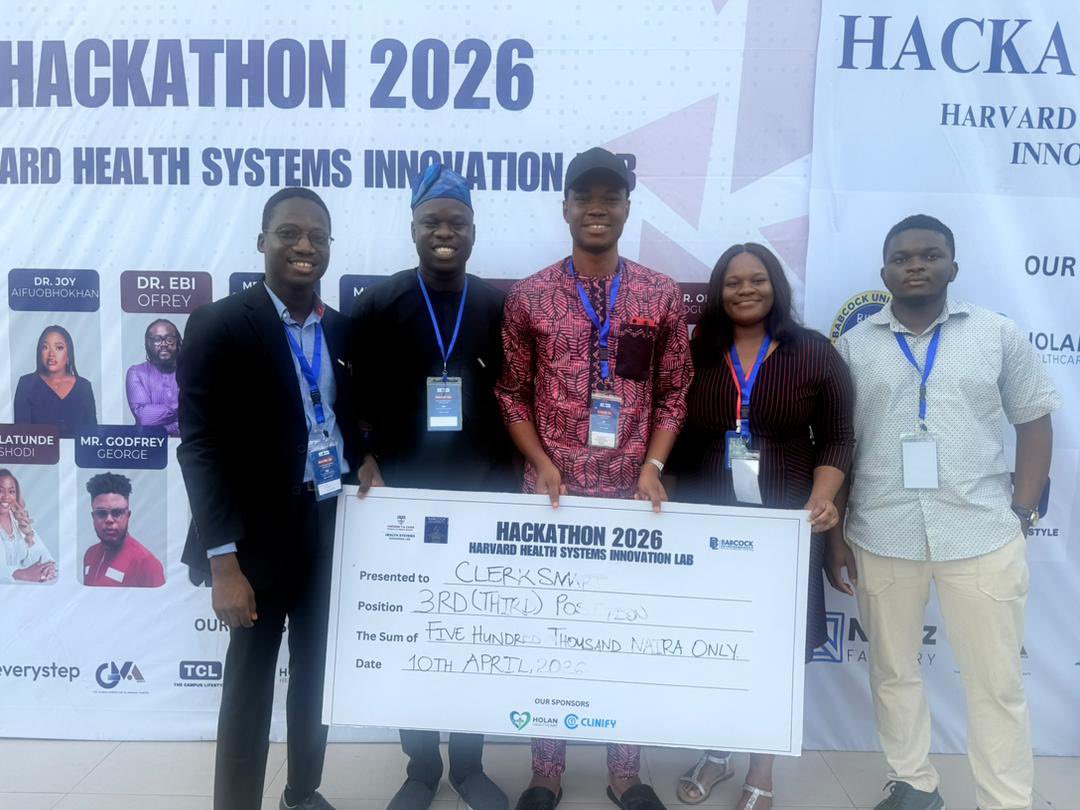
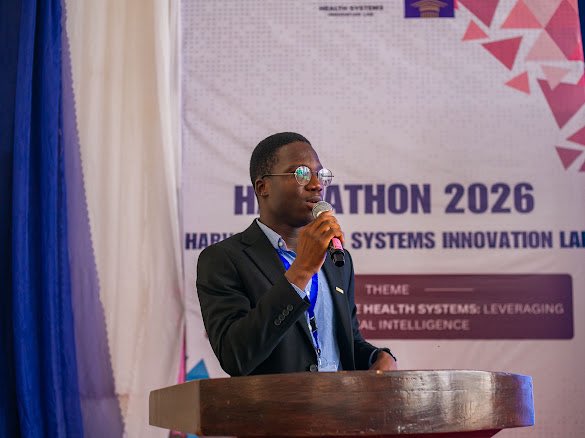
We finished 3rd in the Harvard health systems innovation labs hackathon @Harvard @HarvardChanSPH in the Ogun state hub held at @Babcock_Univ @useclerksmart is the infrastructure that helps medical schools train better doctors faster. This is one step forward to our goal.
Goodness tweet media
English
7
4
21
1.4K
Zeez, b💅🏾
Zeez, b💅🏾@Mi_heart_duh·
I started my family medicine posting today and already my head is all over the place If there’s any book on clerking you can recommend, I will appreciate it
Zeez, b💅🏾 tweet media
English
5
2
59
1.1K
Goodness
Goodness@GoodnessNwanebu·
@shiri_shh Y’all really wanna induce psychosis at scale
English
0
0
1
967
shirish
shirish@shiri_shh·
This is actually happening in China RIGHT NOW. A startup called Super Brain charges $3 for a basic AI clone of your deceased loved one You send them pictures, videos, or voice recordings and they build a version that looks, sounds, and talks exactly like your person who passed. people are using it to talk to their dead parents, grandparents, children. The grief market is a BILLION dollar industry nobody in the west is taking seriously.
English
579
1.5K
8.1K
2M
Emmanuel Owolabi
Emmanuel Owolabi@_emmaco4real_·
𝐁𝐮𝐢𝐥𝐝𝐢𝐧𝐠 𝐇𝐢𝐠𝐡-𝐕𝐚𝐥𝐮𝐞 𝐒𝐲𝐬𝐭𝐞𝐦𝐬: 𝐋𝐞𝐯𝐞𝐫𝐚𝐠𝐢𝐧𝐠 𝐀𝐫𝐭𝐢𝐟𝐢𝐜𝐢𝐚𝐥 𝐈𝐧𝐭𝐞𝐥𝐥𝐢𝐠𝐞𝐧𝐜𝐞 Is AI an afterthought? Was it ever intended to be the solution? Is it truly a solution in healthcare? More importantly, is it sustainable? These are critical questions that should guide our approach to building systems. Currently, many systems seem to be doing one of two things: • Rushing to “add AI” to appear innovative • Resisting it entirely, hoping it’s just a passing trend However, the core issue runs deeper. Are we adapting because AI is inevitable, or because we have clearly identified where it creates value? In healthcare, technology has never been the primary issue. The real challenges have always been access, efficiency, decision-making, and outcomes. AI should not merely be introduced as a feature; it must be integrated as a system-level solution. A high-value system does not ask: “How do we use AI?” Instead, it asks: “Where does intelligence reduce friction, improve outcomes, and scale impact?” This distinction is crucial. AI is not automatically a solution. It becomes one only when: • It addresses a real bottleneck • It integrates seamlessly into existing workflows • It enhances decision-making rather than complicating it • It remains sustainable beyond the hype If it fails to meet these criteria, it is simply noise. The future of healthcare will not be determined by who uses AI, but by those who use it intentionally, responsibly, and effectively. We are not building for trends; we are building systems that endure.
Emmanuel Owolabi tweet mediaEmmanuel Owolabi tweet mediaEmmanuel Owolabi tweet mediaEmmanuel Owolabi tweet media
English
2
4
10
287
Goodness
Goodness@GoodnessNwanebu·
No one can build for healthcare as effectively as clinicians themselves. We need the clinician developer now more than ever. I’m a medical student in Nigeria. Physician emigration + more students means I’m getting less bedside supervision than any cohort before me, and fewer patient interactions to learn from. So I’m building @useclerksmart, a virtual patient platform to make clinical reasoning trainable even when the ward is understaffed.
English
0
1
4
350
Samir C. Grover, M.D.
Samir C. Grover, M.D.@Samir_Grover·
Clinicians often discover problems (a) that they struggle with in their environments and (b) that potentially could be solved with software. Even a year ago, this was required them to work with software developers and it may have seemed insurmountable to find a solution. However, over the past year agentic AI and vibe coding have collapsed the distance between expertise in clinical work and the ability to create working software. With LLMs and vibe coding, clinicians can now create working prototypes and arguably even shippable solutions to tackle these. I think this creates a new-role that we need to train and govern. The "clinician-developer". For education we need a tiered pipeline that teaches the skills required for clinicians to be able to develop. We are starting a bit of this at SHN - an undergraduate summer program (900+ applicants for 50 seats this year), a medical school elective, and a post-residency fellowship with protected build time and dual clinical/dev mentorship. Governance IMO can be an enabler. Sandboxes, synthetic data, risk matrices, learning health systems create safe pathways for clinician-developers. The tools are ready now and the talent is there. I discuss the concept of the "clinician-developer" more on Substack here, still introductory and preliminary stuff: samirgrovermd.substack.com/p/the-clinicia…
Samir C. Grover, M.D. tweet media
English
12
37
154
13.6K
Goodness
Goodness@GoodnessNwanebu·
@c_asawa You’re doing amazing work, man 💯
English
0
0
1
16
Chaitanya Asawa
Chaitanya Asawa@c_asawa·
It’s a privilege to help build toward a future where clinical evidence is timely, relevant, and shaped by the conversation at the point of care. Abridge is bringing NEJM and JAMA evidence directly into clinical workflows, right where decisions happen. This adds a new layer of rigor to care delivery, making evidence more accessible, actionable, and aligned with how clinicians actually practice.
English
2
3
15
703
Goodness
Goodness@GoodnessNwanebu·
@isareksopuro Heyy, just checked get policy. Your design sense is immaculate 💯
English
0
0
0
13
isabelle
isabelle@isareksopuro·
i made a map to monitor data centers all around the world tracks construction + nearby power plants + local AI legislation, and follows the politicians behind their bans (+ if they're getting paid to do so!)
English
348
6.6K
19.3K
962.8K
Goodness
Goodness@GoodnessNwanebu·
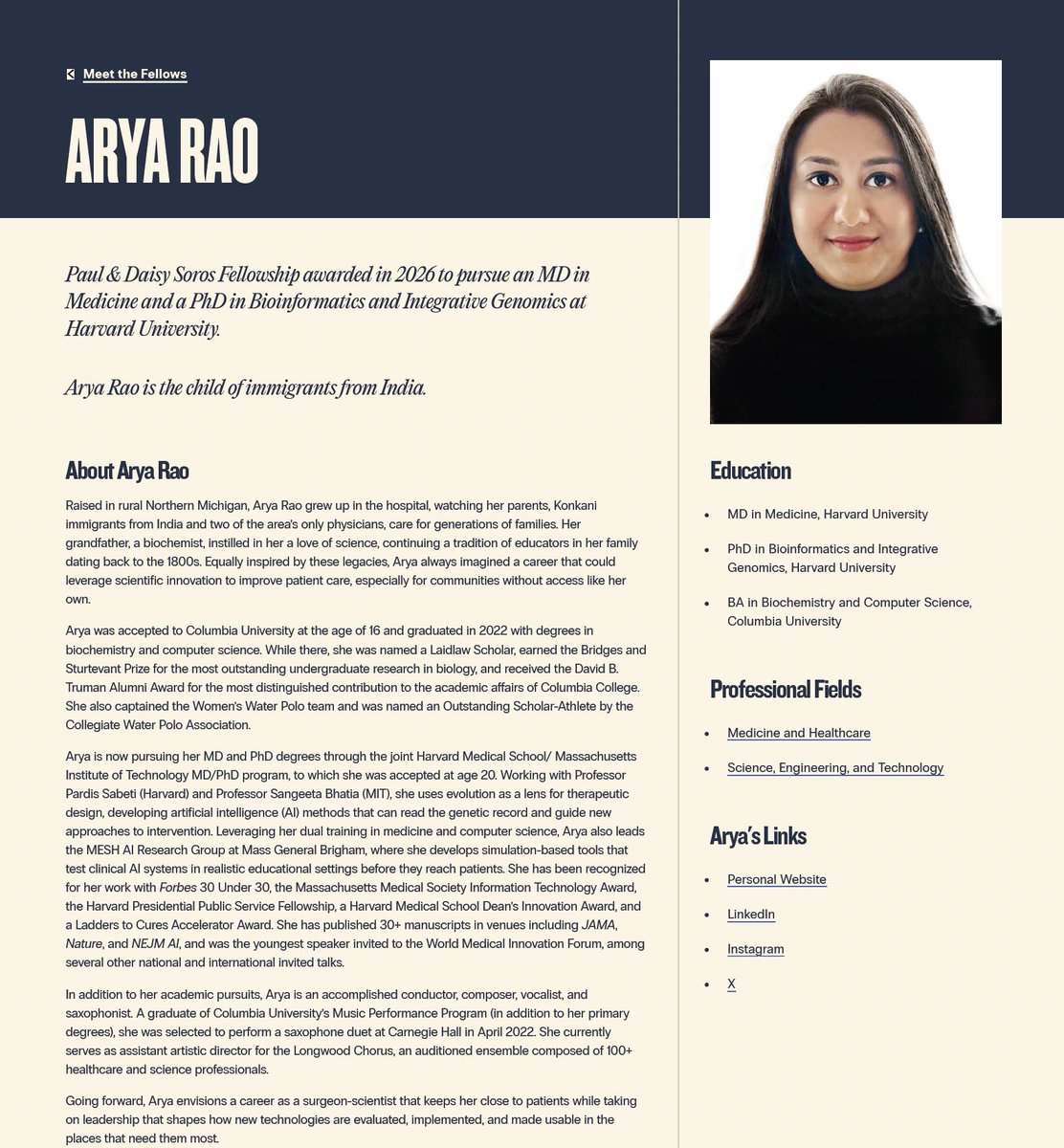
Hi Arya, amazing work you and your team have done! I’m working on @useclerksmart to build virtual patients so medical students can practice the whole clinical reasoning process, outside the hospital. The feedback we give is probably the most important part of the product, but to what depth we can go depends on the model (we currently use Gemini 2.5 flash). I’d love to talk sometime if you’re down. I think there’s an opportunity to not only access current SOTA models on clinical reasoning, but to also build one.
English
0
0
0
36
Arya Rao
Arya Rao@AryaRao_·
40+ million people ask ChatGPT health questions every day. OpenAI, Grok, and others are actively marketing these tools for patient-facing use. We wanted to know: how well can models reason through a clinical case? Now in @JAMANetworkOpen jamanetwork.com/journals/jaman…
English
4
7
22
1.6K
Eli Guerron
Eli Guerron@eliguerron·
A while ago I had the honor to be introduced to Tesla through Bas Ording. I did this exercise to add a bit more delight to the ventilation interface. Color to aid temperature, a directional curve warp in the controllers to accompany the finger direction and velocity, as well as metaballs (I have been trying to add metaball metaphors to interfaces for a while) to represent union and separation...
English
11
4
176
16.3K
Emmanuel Owolabi
Emmanuel Owolabi@_emmaco4real_·
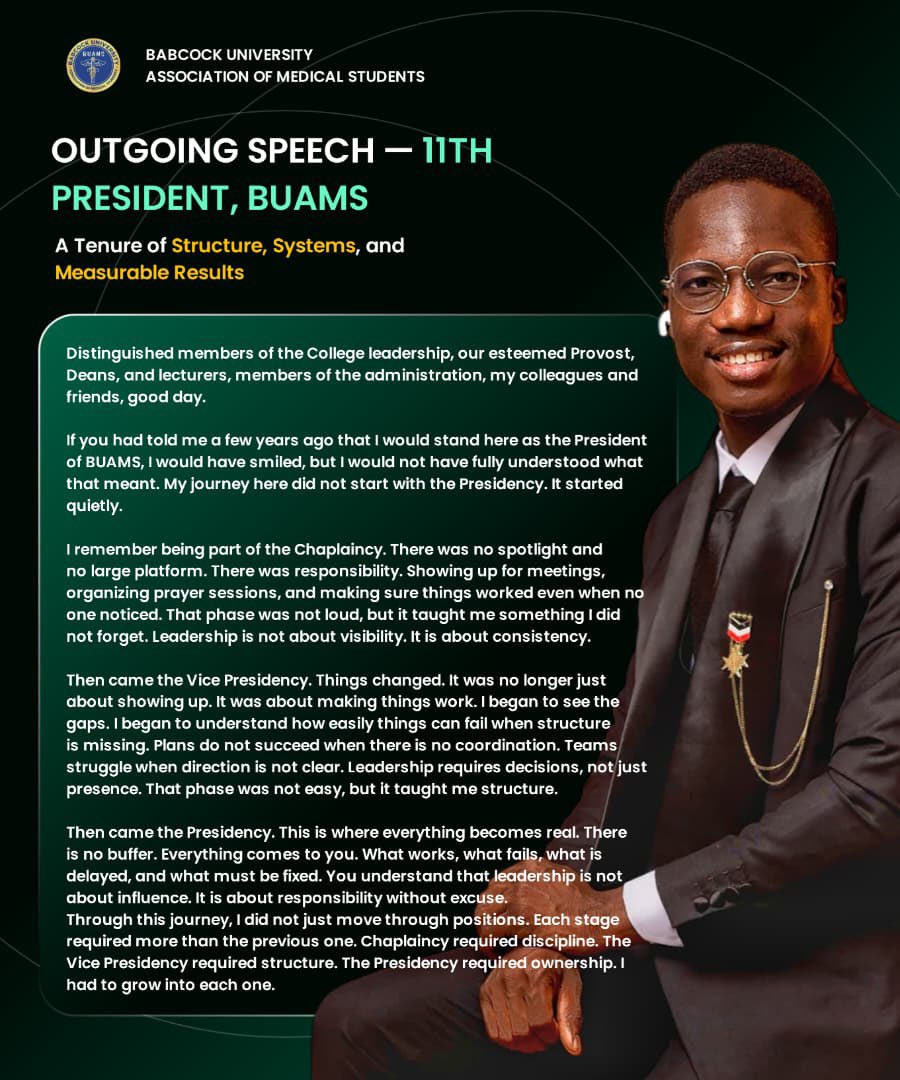
𝐎𝐧 𝐀𝐩𝐫𝐢𝐥 𝟗, 𝐈 𝐨𝐟𝐟𝐢𝐜𝐢𝐚𝐥𝐥𝐲 𝐡𝐚𝐧𝐝𝐞𝐝 𝐨𝐯𝐞𝐫 𝐚𝐬 𝐭𝐡𝐞 𝟏𝟏𝐭𝐡 𝐏𝐫𝐞𝐬𝐢𝐝𝐞𝐧𝐭 𝐨𝐟 𝐭𝐡𝐞 𝐁𝐚𝐛𝐜𝐨𝐜𝐤 𝐔𝐧𝐢𝐯𝐞𝐫𝐬𝐢𝐭𝐲 𝐀𝐬𝐬𝐨𝐜𝐢𝐚𝐭𝐢𝐨𝐧 𝐨𝐟 𝐌𝐞𝐝𝐢𝐜𝐚𝐥 𝐒𝐭𝐮𝐝𝐞𝐧𝐭𝐬 (𝐁𝐔𝐀𝐌𝐒). If I’m being honest, this journey did not start here. It started quietly. No title. No spotlight. Just responsibility. I was in the Chaplaincy. Showing up. Doing the work. Making sure things ran even when no one noticed. That season taught me something I carried through everything else: Leadership is not about being seen. It is about being consistent. Then came the Vice Presidency. Things changed. I started to see the gaps. How things fail when there is no structure. How teams struggle when direction is not clear. That phase taught me something else: Good intentions are not enough. Systems are what make things work. Then came the Presidency. No buffer. No excuses. Everything comes to you. What works. What fails. What must be fixed. And one decision shaped the entire tenure: We would not just run programs. We would build systems and deliver measurable results. So we got to work. We built a coordinated internal structure for the first time through operations and membership tracking. We made accountability real across committees. We strengthened welfare, not just in words but in action: • Direct support reaching 200+ students • A full outreach with 15+ medical personnel • Medical care, medications, and welfare packages delivered • Welfare hotline and feedback system launched • Financial support provided where needed We made finance structured: • Full documentation across the entire tenure • Spending aligned with approved budgets • Financial literacy and opportunities opened to students We fixed communication: • Monthly newsletters introduced • Town halls organized • Information became consistent, not scattered We also grew visibility and reach. Not by chance, but by consistency: • 350+ Instagram posts • 60+ TikTok posts • 1,500+ new Instagram followers • 200+ TikTok followers • 370+ LinkedIn followers built • Revival of BUAMS on X With: • 150,000+ reach • 20,000+ engagements • 41,000+ video views We invested in capacity. • 550+ participants in a multi-country LinkedIn workshop • Research training that led to students presenting across Africa • Sessions guiding students into international pathways Then came the flagship moments. The Clinical and Scientific Conference: • 283 registrations • over 400 total engagements • Participation across institutions The Health Week: • Over 1,000 physical engagements • Multiple full-capacity events • 15,000+ digital reach • Free health services, outreach, awareness, and student programs executed at scale We strengthened everything else too: • Sports competitions across institutions • Sponsored tournaments secured • Social and cultural platforms built • Academic support systems activated • Committees made functional, not symbolic And competitively: • 1st Runner-Up — BUSA Debate • Winners — BUSA Spelling Bee • Finalists — NiMSA Southwest At the end of it all: BUAMS is stronger, more structured, and financially better than it was inherited. I will miss BUAMS. Not just the meetings. Not the events. But the responsibility. The work. The opportunity to build something that affects others. To the next leadership: You are inheriting a working system. Understand it. Improve it. Do the work. And now, we move forward. Grateful for the journey. Grateful for the growth. Ready for what is next.
Emmanuel Owolabi tweet mediaEmmanuel Owolabi tweet mediaEmmanuel Owolabi tweet media
English
5
3
24
541
Goodness
Goodness@GoodnessNwanebu·
Good day, Dr Kashif (@KashPrime), I hope you’re well. I’m Goodness, a medical student and founder of @useclerksmart, I saw you built an entire med school curriculum with AI, which is impressive. On my end I’m researching LLM use in clinical education, especially around patient simulations and just in time feedback. I’ll love to talk to you about this. Can I reach out in the DMs?
English
0
0
0
34
Kashif Pirzada, MD
Kashif Pirzada, MD@KashPrime·
These are some great points. Students have far better resources than ever, with recorded lectures, Anki decks, YouTube tutorials, AI tools. Part of the grade inflation is that they are genuinely learning the material better. Wish these tools were around in my day!
Peter Sarris@peter_sarris

1/2 Over thirty years teaching in academia in Oxbridge I have observed massive degree grade inflation. I have observed three main reasons: 1) Students do genuinely work harder than they used to. The world beyond graduation is genuinely much tougher.

English
2
2
8
2.4K