Pete Hart

100 posts

Pete Hart

Pete Hart

@IntensivePerson

I've moved to BlueSky, but keeping this account to signpost there.

Bradford, England Katılım Kasım 2023
77 Takip Edilen27 Takipçiler
Pete Hart
Pete Hart@IntensivePerson·
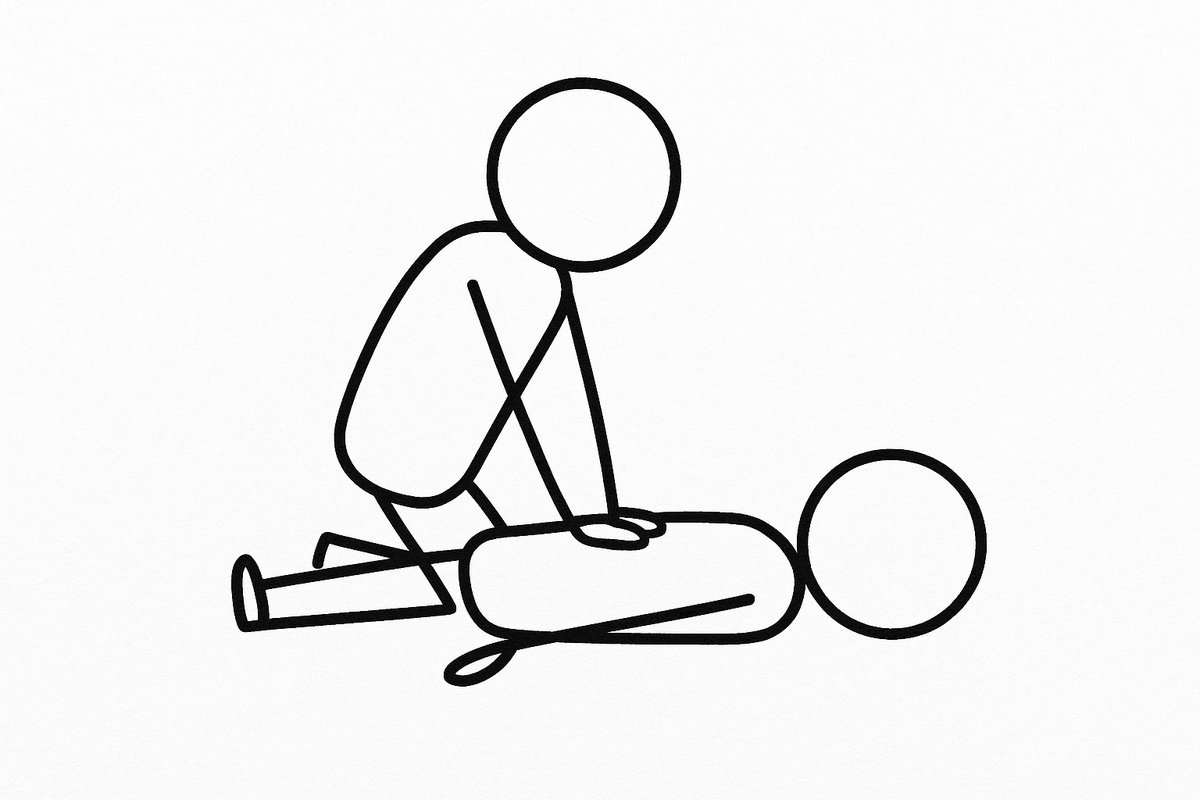
@ross_prager Hate it when people check the pupils during/immediately after CPR in the context of an awful blood gas, as if fixed/dilated pupils = irretrievable brain injury rather than just representing acidosis-related (?) brainstem/neuromuscular dysfunction.
English

1
0
1
270
Ross Prager
Ross Prager@ross_prager·
(3/x) We entered a 'refractory VF' period where we shocked and shocked and shocked. We tried everything: anti-arrhythmic, esmolol, dual defibrillation, and unfortunately ECMO wasn't available. Right as we were about to call the code (now almost 90 minutes of CPR) we did a final pulse check and the patient had a pulse! We did the usual post cardiac arrest care and tests: 1. Blood gas --> horrible 2. CT head --> early loss of gray white differentiation 3. Exam --> GCS3 without motor response 4. Pupils --> fixed and dilated We brought the patient to ICU
English
2
1
25
6.9K
Ross Prager
Ross Prager@ross_prager·
(1/x) Determining when to stop performing CPR for patients in cardiac arrest is hard and is not as precise as one might think... This one case from my medical school days changed how I think / approach this 👇
Ross Prager tweet media
English
14
78
429
80K
ʇɟıɥsI̍CͨMͫpɐɹɐd ≆ Dr Justin Kirk-Bayley
Time for another lung tweetorial! A patient was intubated for pulmonary aspiration. No more secretions were obtained, but the patient was 'stuck' at 30% FiO₂ Here's the lung ultrasound of the right base (left was normal) What does it show?
GIF
English
6
42
141
36.9K
Pete Hart
Pete Hart@IntensivePerson·
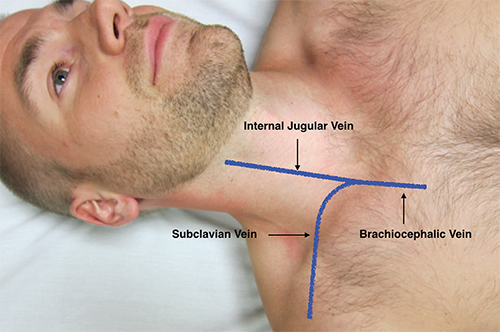
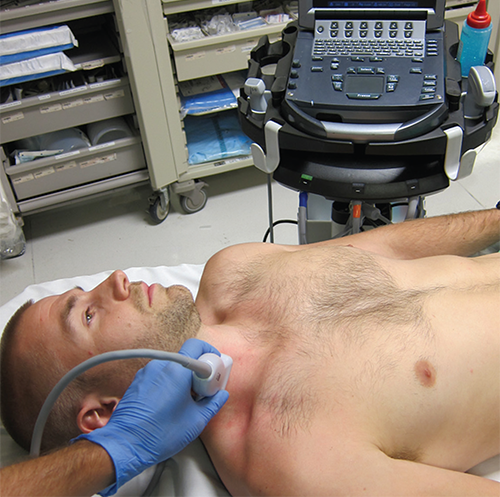
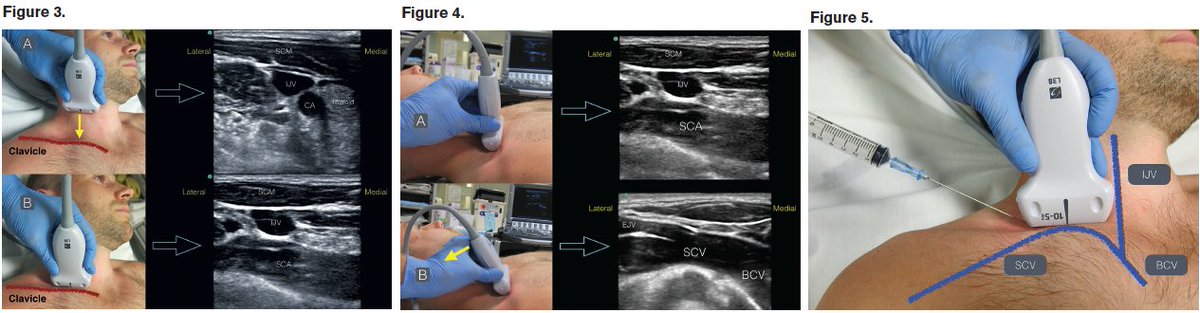
@NephroP Lots of studies also mention lower complication rates with SC vs IC but support these statements with studies which weren't head-to-head comparisons. Best available data shows no significant difference in complication rate.
English
0
0
1
20
Pete Hart
Pete Hart@IntensivePerson·
@NephroP Lots of enthusiasm about supraclavicular insertion which isn't necessarily supported by data. The advantages of subclavians have been demonstrated with infraclavicular-predominant studies and may not extend to the supraclavicular approach.
English
1
0
1
166
Bobert
Bobert@Bob_the_PA·
@IM_Crit_ Gotta love the wording. "the subdermal implant migrated from subcutaneous plane into one of the upper extremity veins."
English
2
0
1
241
Pete Hart
Pete Hart@IntensivePerson·
@drjgutt @PeterRobson29 I do think people are rightly passionate about the ethics of aggressive treatment in older people, but that does need to be balanced with professional courtesy and a humility that your own practice might well be unethical or illegal elsewhere.
English
0
0
2
154
Josh Guttman
Josh Guttman@drjgutt·
@IntensivePerson @PeterRobson29 Thank you. It’s Twitter so folks are mean for the sake of it. The point of the post was sharing interesting findings on ultrasound and more novel approaches to refractory vfib.
English
1
0
0
277
Pete Robson
Pete Robson@PeterRobson29·
This rockstar attitude to resus is sad. "Shame" that he got ROSC so couldn't try DS defib. Whacking the LUCAS and pads on an elderly nursing home resident is not in anyone's best interest. No thought of weighing up the harm Vs benefit and giving this patient a good end of life.
Josh Guttman@drjgutt

1/ Wild cardiac arrest with #POCUS playing a major role An elderly male was sent from the nursing home in cardiac arrest. Per the prehospital report that we got, the patient was in vfib and refractory to 5 defib attempts. The patient got amio as well as several doses of epi.

English
6
8
200
27.7K
Yüksek
Yüksek@yuksekyskay·
@IhabFathiSulima central cath, likely in the wrong place, in carotis arter
English
1
1
2
3.2K
Dr Ihab Suliman
Dr Ihab Suliman@IhabFathiSulima·
What is happening and what terribly can go wrong?
English
34
88
644
143.9K
Pete Hart
Pete Hart@IntensivePerson·
@chebbes @DrHuw Hi Chris. Are there guidelines for non-TIVA RSI? If not, should we expect any for TIVA RSI? 2015 DAS guidelines very non-directive re: drug choice. (I'm not a TIVA RSIer, just trying to figure out what the objections are, as I think RSI overall is extremely poorly defined).
English
0
0
0
35
Chris Hebbes
Chris Hebbes@chebbes·
@DrHuw It’s an interesting technique to use given the lack of guidance/recommendations for TIVA in rsi, and the fact that cricoid pressure is still part of nationally recognised guidance.
English
2
0
7
945
Pete Hart
Pete Hart@IntensivePerson·
@DrHuw Not a technique I would espouse, but those criticising this (or advocating for thio/sux) could do with being more specific about their reasons. CVS effects of rapid propofol/remi in a sick patient? Excessively slow induction?
English
0
0
1
108
Mike Donnino, MD
Mike Donnino, MD@mdonnino·
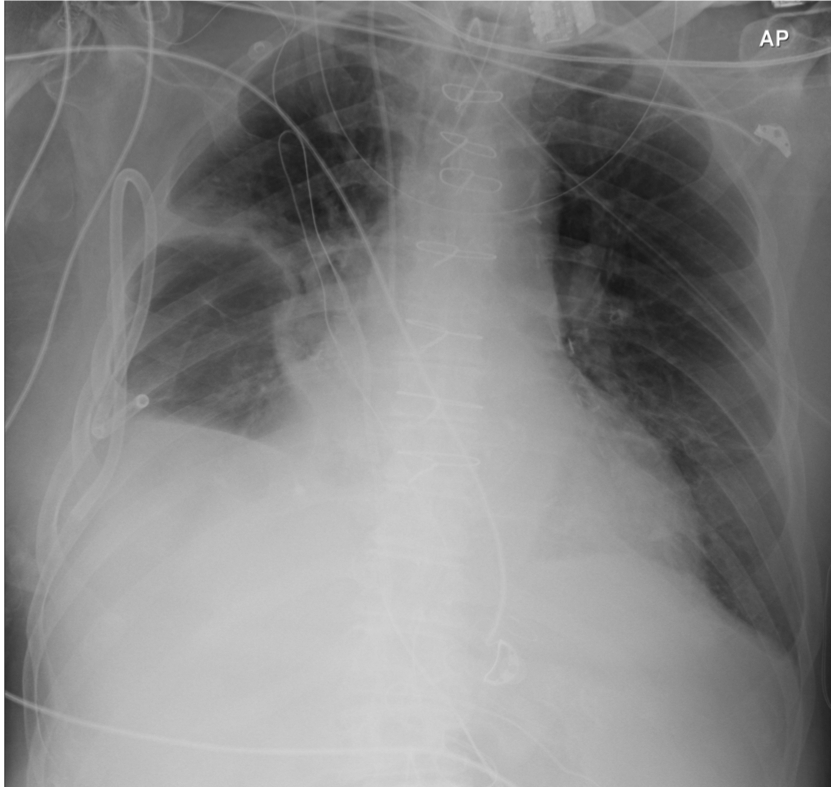
80 yr male recovering from sepsis (off pressors/weaning from vent) s/p pigtail for pneumothorax 2 days ago now with sudden hypotension (130/80 > 70/30) and severe hypoxia (SpO2 97% on Fio2 .4/PEEP 5 to SpO2 80% despite Fio2 of 1.0/PEEP 15). CXR as seen. Thoughts?
Mike Donnino, MD tweet media
English
12
6
59
30.7K
Pete Hart
Pete Hart@IntensivePerson·
Out of 241 reported incidents of CVC-related arterial trauma, in 75 cases initial checks (if any) failed to identify arterial cannulation. CXR most commonly implicated in this, with blood gas/transduction failing for mostly predictable reasons. What's your department's practice?
Pete Hart tweet media
English
0
0
0
103
Pete Hart
Pete Hart@IntensivePerson·
@doctimcook @AlCourtney @Anaes_Journal Ha, I did not know that was the reason. Largest published prospective study of CVC complications has only 15 cases of arterial trauma, and in the UK we have close to zero information on how, where, why and by whom CVCs are inserted. I'd be interested in your thoughts on it.
English
0
0
0
32
Pete Hart
Pete Hart@IntensivePerson·
@doctimcook @AlCourtney @Anaes_Journal Despite obvious interest in this, our paper was not (and couldn't be) primarily about RFs for arterial trauma; main conclusions concerned "falsely-reassuring" pre-dilatation + post-insertion checks, and predictors of outcome (stroke assoc w delayed Dx + drug administration).
English
0
0
1
23
Pete Hart
Pete Hart@IntensivePerson·
@doctimcook @AlCourtney @Anaes_Journal Some kind of denominator data relatively easy to acquire, but more difficult to "match" to NRLS incidents to permit useful statistical comparison. Surely at this point we just need a "proper" NAP on CVC complications designed to collect high-quality incident AND baseline data?
English
2
0
0
51
Pete Hart
Pete Hart@IntensivePerson·
@foi_requests @Anaes_Journal However in my view, we prevent arterial trauma not by identifying who does it most, or where it happens, but by optimising insertion technique - specifically robust and objective pre-dilatation checks. There is very little evidence out there currently on this.
English
0
0
0
19
Pete Hart
Pete Hart@IntensivePerson·
@foi_requests @Anaes_Journal "Thank you for your interest in my article", is how I believe I'm supposed to start this off.. The tables which largely describe the circumstances of insertion in these incidents are indeed of limited use until someone produces better denominator data.
English
1
0
0
19