j

3.9K posts

j banner
j

j

@JNutt4

AI Founder, Fractional Leader & Advisor | Ex-IBM AI/ML | Founded Rhove (Exited) | Backing Frontier AI, Enterprise Platforms, Hard Tech & Cleantech.

The Future Katılım Mayıs 2009
137 Takip Edilen297 Takipçiler
Sabitlenmiş Tweet
j
j@JNutt4·
So excited for @Rhove_App 's next chapter with @reAlpha! Both share a passion for empowering everyone to own real estate and believe the industry is perfectly positioned for disruption.
Rhove@Rhove_App

Exclusive Update‼️ As of Monday, Rhove will be joining forces with reAlpha to build a world where democratized real estate can not only exist but also thrive. We are excited to begin our next chapter, for continued updates on our journey head over to and follow @reAlpha 💫

English

0
0
2
424
j retweetledi
Tony Fadell
Tony Fadell@tfadell·
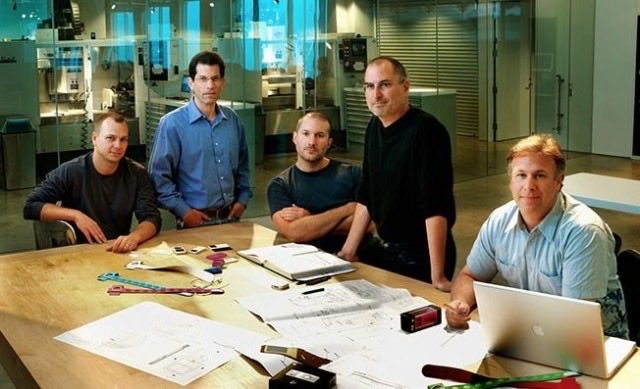
50 years of @Apple From the early days of the #iPod to bringing the #iPhone into the world, some of the most formative years of my career were spent there. The products and teams stay with you. But more importantly so does how Apple thinks. A few lessons that have held true for decades: 1) Start with the user, not the tech. The question isn’t “what can we build?” but “what problem actually matters?” 2) Focus is everything. Apple is defined as much by what it says no to as what it builds. 3) End-to-end matters. Hardware, software, services. It all has to work together. 4) Details are the product. What feels small is what users remember. 5) Debate hard. Commit fully. 6) Build for the long term. We’re in another moment of massive technological change. The fundamentals haven’t changed. The companies that win build things people actually use and can’t imagine living without. Congrats to everyone who has been part of Apple’s first 50 years! 🙌
Tony Fadell tweet media
English
75
553
4.3K
205.3K
j retweetledi
Aaron Levie
Aaron Levie@levie·
Jevons paradox is happening in real time. Companies, especially outside of tech, are realizing that they can now afford to take on software projects that they wouldn’t have been able to tackle before because now AI lets them do so. We’re going to start to use software for all new things in the economy because it’s incrementally cheaper to produce. Marketing teams at big companies will have engineers helping to automate workflows. Engineers in life sciences and healthcare will automate research. Small businesses will hire engineers for the first to build better digital experiences. And as long as AI agents still require a human who understands what to prompt, how to review when an agent goes off the rails, how it guide back, how to maintain the system that was built, how to fix the ongoing bugs, and more, we will still have humans managing these agents. This is why all the advice you get of not going into engineering is wrong. The world is going to increasingly be made up of software, and the people that understand it best will be in a strong economic position. This will happen in other roles as well where output goes up and demand increases.
Lenny Rachitsky@lennysan

Engineering job openings are at the highest levels we’ve seen in over 3 years There are over 67,000 (!!!) eng openings at tech companies globally right now, with 26,000 just in the U.S. We don’t know if there would have been more open roles if not for AI or if AI is actually leading to more open roles, but since the start of this year, the increase in open eng roles is accelerating even more.

English
224
659
4.7K
1M
j retweetledi
sam
sam@SamuelBeek·
The Cursor for Hardware is finally here! who wants to test?
English
363
443
4.3K
312K
j retweetledi
juan
juan@juanbuis·
the new ferrari interior design by jony ive and lovefrom is absolutely stunning *this* is what an apple car could've looked like
English
228
227
3.5K
1.2M
j retweetledi
Google Labs
Google Labs@GoogleLabs·
Just a pipe cleaner, a dream, and Project Genie: an early research prototype that generates photorealistic environments that can be explored in real-time. 😀 With Project Genie, turn everyday objects into characters in interactive environments. Snap a picture, build your character, and explore worlds only you could dream up. Go on pipe cleaner, live your best life! Learn more, currently available to Ultra subscribers in the US, 18+: labs.google/projectgenie
English
31
93
651
57.6K
j retweetledi
OpenAI
OpenAI@OpenAI·
Introducing OpenAI Frontier—a new platform that helps enterprises build, deploy, and manage AI coworkers that can do real work. openai.com/index/introduc…
English
570
789
6.2K
2.1M
Matt Turck
Matt Turck@mattturck·
someone recreated MTV and it's 🔥🔥🔥 streams 27,000 music videos, 24/7, across seven decades. No algorithm, no login. randomly throws in vintage commercials. wantmymtv.vercel.app
English
11
15
42
7.8K
j retweetledi
leonard langsdorf (e/acc)
leonard langsdorf (e/acc)@lenlangsdorf·
Memory vs Context Graph — short comparison Memory (as you wrote): stores facts, user preferences, session state, transcripts, and embeddings for retrieval. Great for personalization and continuity. Context graph: stores decision traces — inputs, policies evaluated, who approved them, the transient state at decision time, and links between decisions as precedent. It’s event-sourced, graph-structured, and built from agent trajectories (the sequence of touches and actions that led to decisions). Why both: Memory is necessary but insufficient; memory helps retrieval. A context graph turns historical traces into a world model you can query (“why did we do this?”) and simulate (“if we do X now, what likely happens?”).
English
4
9
47
4.4K
j retweetledi
Aakash Gupta
Aakash Gupta@aakashgupta·
Levie just made the best case for AI abundance I’ve seen… and he’s still underselling the real bottleneck. His Jevons Paradox frame is right. When you make something cheaper, demand expands to absorb the efficiency. Coal, compute, cloud software. The pattern holds. And yes, AI agents will drop the cost of non-deterministic work the way SaaS dropped the cost of deterministic work. But here’s what the data actually shows: 74% of companies struggle to achieve and scale value from AI, according to BCG’s 2024 adoption study. That’s not a cost problem. Task costs already dropped. It’s a human oversight problem. The bottleneck is that someone still has to specify what the AI should do, evaluate whether it did it correctly, integrate the output into a workflow, and make the final call. AI makes the execution cheap. But specification, evaluation, and integration remain human-bound. Deloitte’s enterprise research found that resistance to AI adoption stemmed from unfamiliarity, skill gaps, and lack of change management. Only a third of companies prioritized training. And the 2025 data is even more telling: fewer than 5% of firms reported net workforce reductions from AI. Instead, 37% reported task redistribution, with workers shifting toward oversight, integration, and decision-making roles. This means the Jevons Paradox for knowledge work has a different shape than Levie describes. Demand for AI task execution will absolutely explode. But demand for human judgment, context-setting, and quality verification will explode faster. The 10-person services firm can now build a prototype in days. But someone at that firm still has to know what to build, whether the prototype works, and how to deploy it. Those skills are scarcer than the tasks they enable. The real trade is that the companies who solve the oversight bottleneck, who build organizational capacity to specify, evaluate, and integrate at scale, will capture most of the value from cheap AI execution. The constraint moved from “can we afford to do this task?” to “do we have anyone who can tell if this task was done correctly?” Jevons works. But the coal equivalent here is the human attention required to make that output useful.
Aaron Levie@levie

x.com/i/article/2004…

English
26
40
450
147.8K
j retweetledi
Justine Moore
Justine Moore@venturetwins·
There's an insane new hack for prompting Nano Banana Pro. You can now save image references as "Elements" and tag them in prompts to get consistent characters, styles, and environments. I used it to put myself into Ghibli sets. How to do this on @krea_ai 👇
English
46
193
2.1K
149K